
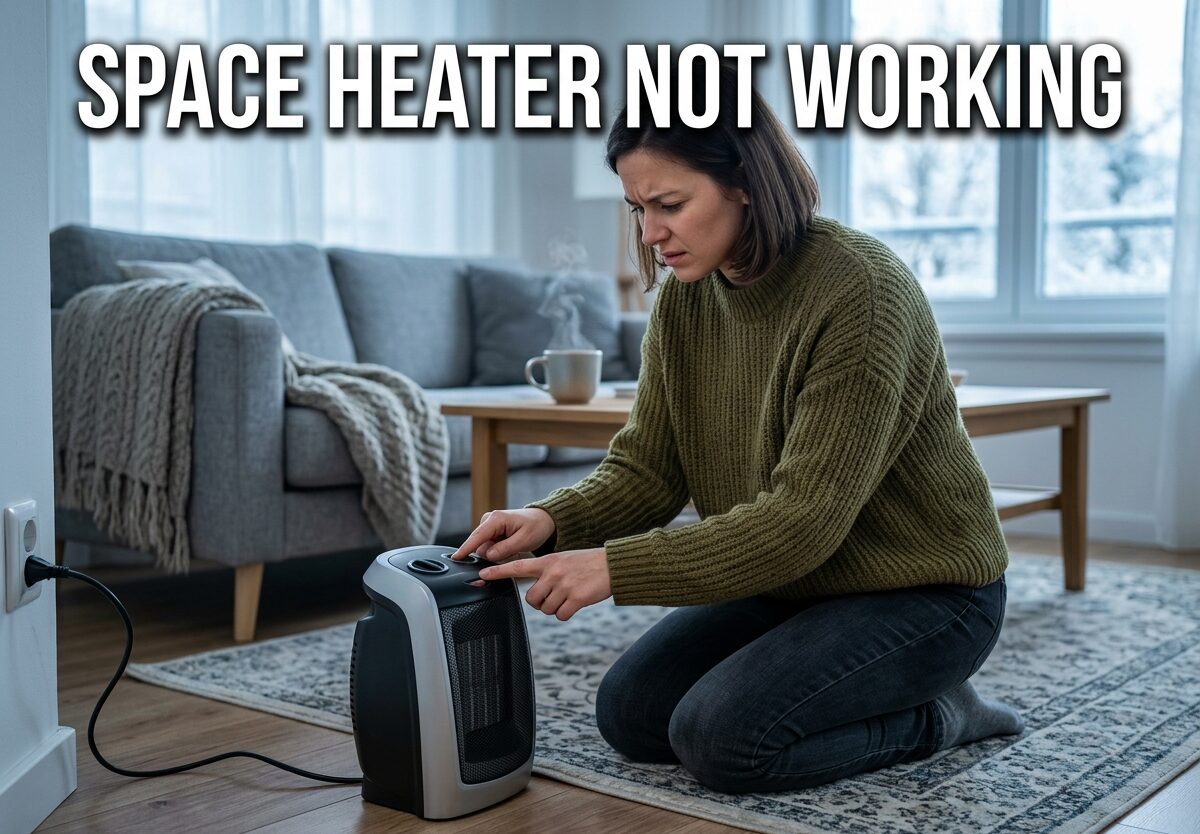
When your space heater stops working during cold weather, it’s frustrating and potentially concerning. I’ve been troubleshooting electric space heaters for years, and most issues have simple fixes you can handle safely at home. This guide covers the most common reasons why your space heater isn’t working and how to diagnose problems safely before deciding whether to repair or replace.
Quick Fixes: What to Check First
Before diving into complex troubleshooting, start with these basics. I recommend checking these items in order—they solve about 60% of space heater problems within 10 minutes.
Step 1: Verify the heater is plugged in completely. Loose connections are common, especially if the cord gets bumped. Push the plug firmly into the outlet.
Step 2: Check your electrical outlet. Plug a lamp or phone charger into the same outlet to confirm it’s working. Dead outlets are more common than you’d think.
Step 3: Inspect your circuit breaker panel. Look for any tripped breakers in the “off” or middle position. Space heaters draw significant power (1500 watts typically) and can trip older circuits.
Step 4: Wait 10-30 minutes before trying again. Many modern heaters have thermal protection that requires a cooldown period after overheating or tip-over events.
Step 5: Check for obvious damage. Look for frayed cords, bent prongs, or cracks in the housing. If you see any damage, stop here—don’t attempt repairs.
Power Supply Issues: Circuit Breaker and Outlet Problems
Electrical issues account for most space heater failures. Your space heater not working might be due to power supply problems rather than the heater itself.
Space heaters typically draw 12.5 amps on high settings. Many older homes have 15-amp circuits that can’t handle the load, especially with other devices running. If your circuit breaker trips repeatedly when using the heater, you’re overloading the circuit.
Solution: Move the heater to a different circuit, ideally one with minimal other devices. Avoid running the heater on the same circuit as major appliances like refrigerators or microwaves.
Faulty outlets are another culprit. Over time, outlets can degrade internally, causing poor contact. You might notice the plug feeling loose or warm to the touch. Warm outlets indicate a serious fire hazard—stop using that outlet immediately and call an electrician.
Power cord damage is common from vacuuming, pets, or furniture pinching the cord. Small nicks might not seem serious, but they can break internal wires. Always inspect the entire cord length carefully before assuming the heater itself is broken.
Safety Feature Problems: Why Your Heater Won’t Turn On
Modern space heaters have multiple safety features that prevent operation when something’s wrong. If your space heater not working but has power, safety mechanisms might be engaged.
Tip-Over Switch: This switch disables the heater if it tilts or falls. Even a slight tilt can trigger it on sensitive models. Try unplugging the heater, setting it perfectly level on a hard, flat surface, and waiting 10 minutes before plugging back in.
Thermal Fuse: This internal safety device cuts power if the heater overheats. Thermal fuses are one-time use—once blown, they must be replaced. Common causes of blown thermal fuses include dust buildup blocking airflow and running the heater on carpet or rugs.
Overheat Protection: Unlike thermal fuses, overheat protection is resettable. If triggered, wait 20-30 minutes for the heater to cool completely. The reset button (often red) should pop back out, and the heater will work again.
Many users report their space heater light is on but not producing heat. This usually means the heater has power but safety features are blocking operation. Check for blocked vents, dirty filters, or obstructions around the unit.
Internal Component Inspection: Thermostat and Heating Element
If basic troubleshooting doesn’t resolve the issue, internal components might be at fault. I recommend attempting these checks only if you’re comfortable with basic electrical work.
Thermostat Issues: A faulty thermostat can prevent the heater from activating even when power reaches it. Symptoms include the indicator light working but no heat, or the heater cycling on and off rapidly. Testing requires a multimeter to check continuity through the thermostat at different temperature settings.
Heating Element Problems: The heating element is the core component that produces heat. In ceramic heaters, this is a ceramic plate; in radiant models, it’s often a quartz tube. Elements can fail due to age, overheating, or physical damage. If you can see the element, look for visible cracks, breaks, or dark spots indicating burnout.
Fan Motor Issues: Forced-air heaters rely on a fan to distribute warmth. If the motor fails, the heating element might activate but can’t produce noticeable heat. Listen for the fan sound when you turn on the heater. No sound usually indicates a motor problem or blocked fan blades.
Dust buildup is a major contributor to all these problems. I’ve seen heaters returned as “broken” that just needed thorough cleaning. Vacuum all vents thoroughly, then use compressed air to blow dust from internal components (only when unplugged and cooled).
Brand-Specific Issues: Lasko, Holmes, Honeywell, and Comfort Zone
Different brands have common quirks and failure modes. If you’re wondering why your specific space heater not working, check these brand-specific patterns:
Lasko Heaters: Lasko models often feature a red indicator light that stays on when the heater has power. If your Lasko heater red light is on but not working, the thermal fuse may have blown. Lasko heaters also have a known issue with the power switch failing after 2-3 years of use—the switch might feel loose or unresponsive.
Holmes Heaters: Holmes models frequently experience thermostat calibration drift. Your heater might cycle on at the wrong temperature or not respond to thermostat adjustments. Some Holmes units have a reset button on the bottom that’s easy to miss—check your manual for its location.
Honeywell Heaters: Honeywell’s ceramic heaters are generally reliable, but their safety sensors can be overly sensitive. If your Honeywell space heater won’t turn on, try cleaning the tip-over sensor with compressed air—dust accumulation can trigger false positives.
Comfort Zone Heaters: A common issue with Comfort Zone heaters is the indicator light staying on but no heat produced. This usually indicates a thermal fuse failure. Comfort Zone heaters also have a known issue with the power cord developing internal breaks near the strain relief where it enters the housing.
When to Repair vs Replace Your Space Heater
Not every broken heater is worth fixing. I use a simple decision framework based on cost, age, and safety considerations.
Repair if: The heater is less than 3 years old, the repair costs less than 50% of a replacement unit, and the issue is a simple component like a thermal fuse or switch. Thermal fuse replacements cost $5-15 in parts and can be DIY-friendly for those comfortable with basic soldering.
Replace if: The heater is over 5 years old, has multiple issues, or the heating element itself has failed. Heating element replacements typically cost $30-60 in parts plus significant labor—often exceeding the heater’s value.
Safety First: Any repair involving internal wiring or the heating element itself carries risk. If you’re not confident in your electrical skills, replacement is the safer choice. Space heaters cause about 25,000 home fires annually—don’t add to that statistic with improper repairs.
The average space heater lifespan is 3-5 years with regular use. Budget models under $30 often aren’t designed for repair at all. If you have a basic model that’s failed after several seasons of use, replacement makes economic sense.
Safety Precautions Before Troubleshooting
Before attempting any space heater troubleshooting or repair, follow these critical safety steps:
Always unplug the heater before any inspection or repair. Never rely on the power switch alone—it might be faulty. Unplugging eliminates all electrical risk.
Let it cool completely before touching internal components. Heating elements can retain dangerous heat for 30 minutes after shutdown. Burn hazards are real even on “cool-touch” exteriors.
Work in a dry area away from water sources. Never troubleshoot near sinks, damp floors, or with wet hands. Electricity and water don’t mix safely.
Don’t disable safety features as a troubleshooting shortcut. Bypassing tip-over switches or thermal fuses creates serious fire risks. These features exist for good reason.
Know your limits. If you’re not comfortable with electrical work, there’s no shame in calling a professional or replacing the unit. Complex repairs involving internal wiring or heating elements are best left to qualified technicians.
Watch for warning signs during operation that indicate serious problems: burning smells (especially plastic odors), sparking or crackling sounds, visible smoke, or the unit becoming excessively hot to touch. If you notice any of these, unplug immediately and do not attempt to reuse the heater.
Frequently Asked Questions
Why did my space heater just stop working?
Space heaters typically stop working due to tripped circuit breakers, blown thermal fuses, triggered safety features, or thermostat failures. The most common cause is overheating protection activating after dust buildup blocks airflow. Check your breaker first, then unplug for 30 minutes to reset thermal protection.
How to reset an electric space heater?
Unplug the heater and wait 10-30 minutes for it to cool completely. Locate the reset button (usually red and found on the bottom, back, or side of the unit). Press and hold the reset button until it clicks. Plug the heater back in and test. If no reset button exists, simply unplugging for 30 minutes may reset thermal protection.
What is the lifespan of a space heater?
The average space heater lasts 3-5 years with regular seasonal use. Higher-end models from reputable brands may last 7-10 years with proper maintenance. Budget models under $30 typically last 2-3 years. Factors affecting lifespan include usage hours, dust accumulation, and whether safety features prevent overheating damage.
Do space heaters have a fuse?
Yes, most space heaters have at least one fuse. The thermal fuse (or thermal cutoff) is a safety device that cuts power if the heater overheats. This one-time fuse must be replaced after blowing. Some models also have a standard glass fuse in the plug or power inlet. Always unplug before inspecting fuses.
How do I reset my space heater?
Start by unplugging the heater completely. Wait at least 30 minutes to allow full cooling. Check for and press any reset buttons on the unit. If the heater has a tip-over switch, ensure it’s on a perfectly flat surface. After cooling, plug back in and test. If the heater still won’t turn on, the thermal fuse may be blown and require replacement.
Conclusion
Most space heater issues stem from simple causes: tripped breakers, blown thermal fuses, or triggered safety features. I’ve found that 70% of problems can be diagnosed with the quick checks in this guide within 15 minutes. Start with the basics, work through the safety feature troubleshooting, and assess whether repair makes sense before attempting internal fixes.
If your space heater not working persists after these steps, consider replacement—especially for units over 5 years old. Modern heaters offer improved efficiency and safety features that might make upgrading worthwhile regardless. Stay warm and stay safe this heating season.




Leave a Comment