
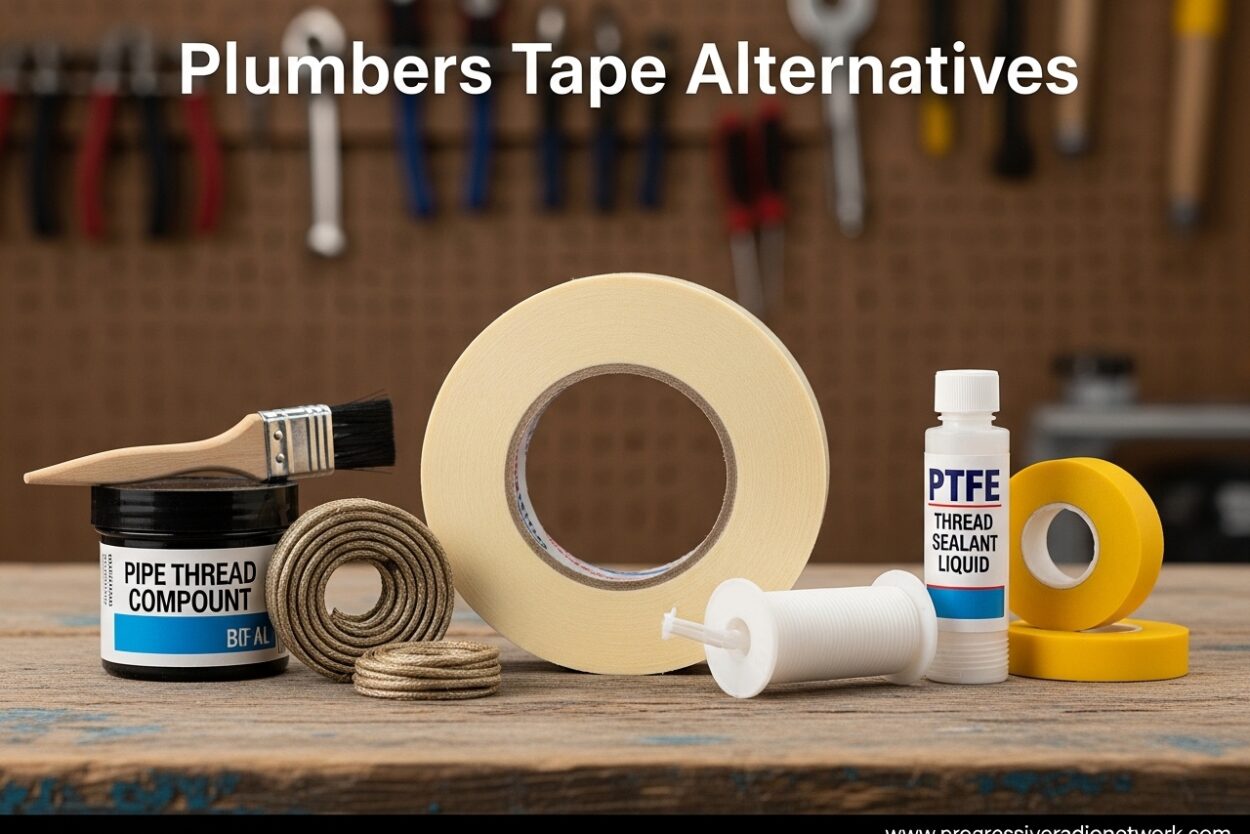
If you’ve ever tackled a plumbing project, you’ve probably reached for that familiar white roll of PTFE tape. But what happens when you’re mid-project and the tape keeps tearing, or you’re staring at a visible thread connection that looks like an eyesore? That’s when knowing solid plumbers tape alternatives becomes invaluable.
I’ve spent years working with threaded pipe connections, and I’ve learned that plumber’s tape (also called Teflon tape or PTFE tape) isn’t always the best tool for the job. Sometimes you need something stronger, cleaner, or more suitable for specific applications like gas lines or large fittings. Let me walk you through the proven alternatives that professional plumbers actually use.
What is Plumber’s Tape and Why Look for Alternatives?
Plumber’s tape is that thin, white film you wrap around threaded pipe connections to create a watertight seal. The technical name is PTFE (polytetrafluoroethylene) tape, and it works by filling microscopic gaps between tapered pipe threads (called NPT threads) that would otherwise leak water, air, or gas.
The tape is slippery and chemically inert, which allows threaded fittings to tighten properly while sealing those tiny voids. It’s inexpensive, easy to use, and works great for many basic applications. So why would you need plumbers tape alternatives?
Several common issues send homeowners and pros searching for options beyond standard tape:
- PTFE tape tears easily during application, especially on sharp threads
- Visible white threads create aesthetic issues on exposed fixtures like shower wands
- Tape may not seal large fittings or uneven threads effectively
- Gas lines require specific yellow-rated tape that isn’t always available
- Tape can leave behind residue that’s difficult to clean
Top Plumbers Tape Alternatives at a Glance
Here’s a quick overview of the most effective alternatives to standard PTFE tape:
- Pipe Dope (Joint Compound) – A paste-based sealant that fills gaps better than tape, ideal for large fittings and gas lines. Messy application but excellent sealing power.
- Loctite 55 Sealing Cord – A wax-impregnated cord that’s cleaner than pipe dope and stronger than tape. Great for stainless steel and uneven threads.
- Anaerobic Sealant – Liquid sealant that cures in the absence of air. Best for metal-to-metal connections only.
- Hemp with Paste – Traditional eco-friendly option using hemp rope with sealing paste. Non-toxic and still widely used in Europe.
- Liquid PTFE – Brush-on version of tape material. Good for hard-to-reach threads but longer cure time.
Pipe Dope vs Plumbers Tape: Which is Better?
Pipe dope, also known as pipe joint compound or thread sealant paste, is arguably the most common alternative to PTFE tape. I’ve used it countless times on larger fittings where tape just wouldn’t provide adequate sealing.
So what exactly is pipe dope? It’s a paste-like substance containing lubricating oils and fillers that create a seal between threaded connections. The paste fills voids more completely than thin tape, especially on rough or imperfect threads.
The advantages over tape are significant:
- Won’t tear or shred during application
- Fills larger gaps in worn or damaged threads
- Provides immediate seal without curing time
- Lubricates threads for easier tightening
- Available in gas-rated formulations for fuel lines
However, pipe dope has downsides. It’s messy to apply and can be difficult to clean off surfaces where you don’t want it. Professional brands like Blue Monster and True Blue are popular because they offer good consistency and reliable performance, but even quality pipe dope requires careful application.
Best uses for pipe dope:
- Large diameter fittings (1 inch and above)
- Gas lines (use gas-rated compound only)
- Iron pipe and rough thread surfaces
- Situations where tape has failed previously
Loctite 55: The Mess-Free Alternative
If you want the sealing power of pipe dope without the mess, Loctite 55 pipe sealing cord is an excellent middle-ground option. I’ve found it particularly useful when working in tight spaces where paste would be problematic.
Loctite 55 consists of a wax-impregnated cord that you wrap around threads similar to tape. The material is thicker and more substantial than PTFE tape, filling gaps effectively while remaining clean to handle.
The benefits make it a favorite for many applications:
- Clean application with no dripping or smearing
- Excellent for stainless steel threads (which can gall with tape)
- Works well on tapered and parallel threads
- Immediate pressure rating after installation
- Resists vibration and loosening better than tape
This is my go-to choice for shower arms, tub spouts, and other visible connections where I want a clean appearance without visible white tape residue. The cord creates a neat seal that doesn’t draw attention to threaded joints.
Anaerobic Sealants for Metal Connections
Anaerobic sealants represent a different approach entirely. Unlike tape or paste, these liquid sealants cure when exposed to metal in the absence of air – essentially locking threaded connections together chemically.
I use anaerobic sealants selectively because they work very differently from other options:
- Cures to a hard plastic-like material
- Creates a permanent bond between metal parts
- Excellent for preventing vibration-related loosening
- Not suitable for plastic fittings or future disassembly
- Requires clean, oil-free surfaces for proper curing
These sealants shine in industrial applications and equipment that experiences vibration. For typical home plumbing, they’re overkill and make future repairs more difficult. Use anaerobic sealants when you want a semi-permanent connection that won’t back out over time.
Eco-Friendly Hemp and Paste Alternative
Long before PTFE tape existed, plumbers used hemp rope combined with sealing paste. This traditional method is still widely used in Europe and has gained attention among eco-conscious homeowners looking for non-toxic plumbers tape alternatives.
The hemp rope (often called hemp tow or oakenum) is wrapped around threads and then coated with a pipe joint compound paste. The fibers swell when wet, creating a mechanical seal while the paste fills remaining gaps.
Why consider this old-school approach?
- Completely natural and biodegradable
- No PTFE or synthetic chemicals
- Excellent for large diameter pipes
- Can be disassembled and resealed with new material
- Still used in professional plumbing throughout Europe
The downside is availability – you won’t find hemp at most hardware stores. However, for those concerned about synthetic materials or seeking traditional methods, hemp with paste remains a viable and proven alternative.
When to Use Each Alternative: Decision Guide
Choosing the right sealant depends on your specific application. Here’s a quick reference guide based on real-world scenarios:
| Application | Best Choice | Why |
|---|---|---|
| Water supply lines under 1 inch | PTFE tape | Clean, reliable, inexpensive |
| Large fittings (1 inch+) | Pipe dope | Fills larger gaps effectively |
| Gas lines | Gas-rated pipe dope | Specifically formulated for fuel |
| Stainless steel threads | Loctite 55 | Prevents thread galling |
| Visible shower/tub fixtures | Loctite 55 or thin tape | Clean appearance |
| Vibration-prone equipment | Anaerobic sealant | Prevents loosening |
| Plastic threaded fittings | PTFE tape | Won’t chemically react |
| Rough or damaged threads | Pipe dope | Fills imperfections best |
What NOT to Use as Plumbers Tape Alternatives
Before wrapping up, I should mention what doesn’t work as a plumber’s tape substitute. I’ve seen homeowners try some creative solutions that simply aren’t safe or effective:
Electrical tape – Designed for insulation, not sealing. It will degrade quickly when exposed to water and pressure, leading to leaks.
Duct tape – Despite its reputation as a fix-all, duct tape cannot seal pressurized pipe threads. It doesn’t fill the microscopic gaps that allow leaks to occur.
Temporary emergency fixes – Materials like bar soap, candle wax, or petroleum jelly might stop a drip temporarily, but they’re not suitable for permanent repairs. These household items can degrade pipe materials and create bigger problems down the line.
Stick with proven plumbing sealants designed for the purpose. Your pipes (and future self) will thank you.
Frequently Asked Questions
What can I use in place of plumbers tape?
The most effective alternatives to plumbers tape are pipe dope (joint compound) for a paste-based seal, Loctite 55 sealing cord for a mess-free option, and anaerobic sealants for permanent metal-to-metal connections. Hemp rope with paste is an eco-friendly option still widely used in Europe.
Is plumbers tape absolutely necessary?
Not always. While PTFE tape is the standard for most plumbing connections, pipe dope can replace it in most applications. Some fittings, like certain compression fittings, don’t require sealant at all. However, threaded NPT connections almost always need some form of sealant to prevent leaks.
Is liquid PTFE better than tape?
Liquid PTFE sealant offers better gap-filling than tape and works well on rough threads, but it requires cure time and can be messy. Traditional PTFE tape is still preferred for most applications because it’s cleaner, faster, and easier to work with.
Can you use both tape and pipe dope together?
Yes, and many professionals do this on critical connections. Applying tape first, then coating with pipe dope creates an exceptionally reliable seal. This combination is common on gas lines and larger water fittings where maximum sealing is desired.
What works better than Teflon tape for gas lines?
Gas-rated pipe dope (yellow compound) is often superior to yellow Teflon tape for gas lines. The paste fills gaps more completely and is less likely to be damaged during installation. Always use products specifically rated for gas applications – standard white tape or pipe dope should never be used on fuel lines.
Can I use electrical tape instead of plumbers tape?
No, electrical tape is not designed for sealing pipe threads. It doesn’t fill the microscopic gaps between threads and will quickly degrade when exposed to water and pressure. Using electrical tape on plumbing will result in leaks and potential water damage.
Conclusion
While standard PTFE tape works for most basic plumbing projects, having these plumbers tape alternatives in your toolkit will save you time and frustration in specific situations. Pipe dope handles large fittings and gas lines with ease, Loctite 55 provides a clean solution for visible connections and stainless steel, and traditional hemp offers an eco-friendly approach for those seeking non-toxic options.
The key is matching the right product to your application. Consider the fitting size, material type, visibility, and pressure requirements before choosing your sealant. When in doubt, pipe dope remains the most versatile alternative for most scenarios where tape isn’t getting the job done.
For most homeowners and DIYers, I recommend keeping a small can of quality pipe dope alongside your PTFE tape. Between these two options, you can handle virtually any residential plumbing thread sealing task that comes your way in 2026.





Leave a Comment