
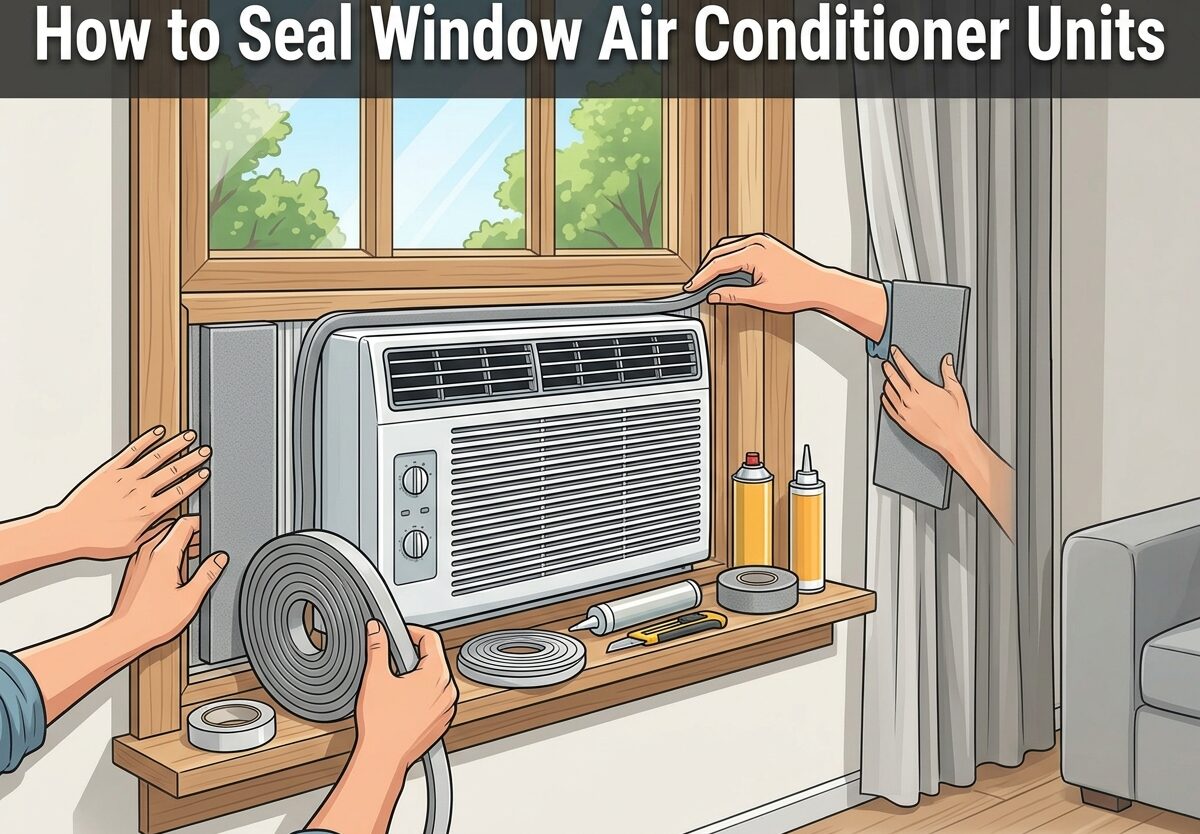
Learning how to seal window air conditioner gaps properly can reduce your cooling costs by up to 30% while keeping your home more comfortable. When I first installed my window AC unit, I noticed cool air escaping through every crack around the frame. After testing different sealing methods over several summers, I’ve learned which techniques actually work and which are just temporary fixes.
In this guide, I’ll show you exactly how to seal window air conditioner units using proven methods that last. Whether you’re dealing with accordion panels that won’t stay tight, gaps around the frame, or bugs finding their way through, you’ll find practical solutions here.
Why Sealing Your Window Air Conditioner Matters
Properly sealed window air conditioners maintain cooling efficiency by preventing conditioned air from escaping. Every gap around your AC unit allows cool air to leak out and warm air to seep in, forcing your unit to work harder and longer. This wasted energy translates directly to higher utility bills each month.
Beyond energy costs, unsealed gaps create other problems. Insects easily find their way through even tiny openings, turning your cooling comfort into a bug invasion. Noise from outside also penetrates more easily through poorly sealed units. I’ve noticed that properly sealed AC units run more quietly and maintain consistent temperatures throughout the room.
The accordion panels included with most window AC units are notorious for poor sealing. Their flexible design allows air to pass through the corrugated material, and they rarely fit window frames perfectly. Taking the time to properly seal window air conditioner gaps addresses all these issues at once.
Materials You’ll Need to Seal Window Air Conditioner Units
Gathering the right materials before starting makes the sealing process much smoother. Here’s what I recommend keeping on hand:
Foam Weatherstripping: Self-adhesive foam strips (1/2 to 1 inch thick) work best for sealing accordion panels and small gaps. Look for closed-cell foam that compresses without losing its shape over time.
Weather Seal Tape: Unlike duct tape, quality weather seal tape is designed specifically for HVAC applications. It withstands temperature changes without leaving sticky residue when removed. Duck Brand and Frost King both make reliable options.
Rigid Foam Board: For gaps larger than one inch, rigid foam insulation board provides superior sealing. You can cut it to size with a utility knife, and it creates a permanent barrier against air leaks.
Caulk: Choose exterior-grade silicone caulk for permanent sealing around the window frame. If you might remove the unit seasonally, latex caulk removes more easily. Polyurethane caulk offers the most durable option for year-round installations.
Additional Tools: A utility knife for cutting materials, measuring tape for accurate sizing, scissors for trimming weatherstripping, and a caulk gun for precise application complete your sealing kit.
How to Seal Window Air Conditioner Gaps
Sealing Accordion Panels
The accordion panels on each side of your AC unit are the biggest source of air leaks. Start by cleaning the panel surface with a damp cloth to remove dust and debris. Allow it to dry completely before applying any sealing materials.
Cut foam weatherstripping to match the height of each accordion panel. Peel off the backing and press the foam firmly onto the panel surface, working from top to bottom. For extra protection, cover the entire accordion panel with clear weather seal tape. This creates a smooth surface that blocks air while remaining removable.
I’ve found that covering accordion panels entirely with weather seal tape works better than just applying it to the edges. The tape prevents the accordion material from flexing and creating gaps. Reddit users in DIY communities have validated this approach, noting it significantly reduces both air leaks and noise transfer.
Filling Side Gaps
Even with extended accordion panels, many window AC units leave gaps on the sides. Measure the width of each gap carefully. For gaps under one inch, foam weatherstripping usually suffices. Cut strips slightly wider than the gap and compress them into place.
For larger gaps, rigid foam board provides a better solution. Cut the foam to size using a utility knife and a straightedge. Press the foam firmly into the gap, then secure it with weather seal tape along the edges. This creates a tight seal that won’t shift over time.
Some DIY enthusiasts recommend cutting a plywood board to fit the gap, then wrapping it with pipe insulation foam. This method works exceptionally well for irregular gaps and provides excellent insulation. The foam-wrapped wood creates a snug fit while the insulation prevents thermal transfer.
Sealing Top and Bottom Openings
The space above and below your AC unit often goes unnoticed but contributes significantly to air leakage. For the top gap, extend a piece of rigid foam board from the top of the unit to the window frame. Cut it precisely for a tight fit, then seal the edges with caulk if the installation is permanent.
The bottom gap requires special attention to drainage. Your window AC unit needs to slope slightly downward to allow condensation to drain. When sealing the bottom, use compressible foam that doesn’t block the drainage holes. I’ve found that weatherstripping placed behind the unit (not directly under it) seals air leaks while maintaining proper drainage.
For permanent installations, apply exterior caulk around the perimeter where the unit meets the window frame. Smooth the caulk with a wet finger for a professional finish. If you plan to remove the unit seasonally, use removable weatherstripping instead of permanent caulk.
Addressing Large and Irregular Gaps
Older homes with non-standard window sizes often present challenging gaps. Spray foam sealant fills irregular spaces effectively, but use it cautiously. Once cured, spray foam is extremely difficult to remove and can damage window frames if you need to take the unit out.
For a removable solution, use multiple layers of rigid foam board stacked to fill the gap. Secure each layer with weather seal tape. This approach allows you to remove the unit later without damaging your windows.
Some users have success combining materials: rigid foam for the main gap, weatherstripping for smaller spaces, and tape to hold everything together. The key is ensuring no direct air path remains between indoors and outdoors.
Detecting Air Leaks with the Candle Test
After sealing your window AC unit, verify that all gaps are closed using the candle test. This simple method reveals hidden leaks that aren’t visible to the naked eye. Wait for a windy day if possible, or create airflow by running the AC fan.
Light a candle and hold it near the edges of your window AC unit. Move slowly around the perimeter, watching the flame carefully. If the flame flickers or bends toward the unit, you’ve found an air leak. Mark these areas with a pencil and apply additional sealing material.
Perform this test after any sealing work to confirm your effectiveness. I recommend retesting seasonally, as materials can shift or degrade over time. The candle test is quick, easy, and saves you from wasting energy on unnoticed leaks.
Seasonal Considerations: Summer vs Winter Sealing
How you seal window air conditioner units depends on whether the installation is temporary or permanent. For summer-only use, prioritize removable sealing methods. Foam weatherstripping and weather seal tape work well because you can remove them without damage in fall.
When preparing to seal window air conditioner for winter, you have two options. If removing the unit entirely, clean the sealing materials from your window frame and store them for next year. If leaving the unit in place year-round, switch to more permanent solutions like rigid foam board and exterior caulk.
Winter installations benefit from additional insulation around the unit. Rigid foam board prevents cold air infiltration better than flexible weatherstripping alone. Some users create a custom insulation panel using foam board wrapped in reflective material, which reflects heat back into the room during winter months.
Remember that window AC units aren’t designed for extreme cold. If you live in a region with harsh winters, removing the unit entirely and sealing the window with a proper cover or storm window provides better protection.
Window-Specific Sealing Tips
Different window types present unique challenges when sealing AC units. Double-hung windows are the most common installation location and typically work well with standard sealing techniques. The key is ensuring both the upper and lower sashes are properly sealed around the unit.
Sliding windows require special attention because the AC unit sits differently in the frame. Use rigid foam board on the side opposite the unit to create a flush surface. Seal the moving track carefully to avoid interfering with window operation.
Tilt windows need drainage consideration. These windows are designed to open slightly inward for cleaning, and your AC installation shouldn’t block this feature. Use compressible sealing materials that accommodate the tilt mechanism while still blocking air leaks.
Casement windows are the most challenging for window AC installations. The crank mechanism often interferes with standard units. If you must use a casement window, consider building a custom wooden frame that holds the AC unit while allowing the window to close around it properly.
Common Mistakes to Avoid When You Seal Window Air Conditioner Units
Using duct tape is the most common mistake I see. Duct tape deteriorates quickly in sunlight and temperature extremes, leaving behind sticky residue that’s difficult to remove. Invest in quality weather seal tape designed specifically for HVAC applications.
Over-tightening accordion panels causes them to buckle and create gaps. The panels should extend fully without forcing. If they don’t reach your window frame, add rigid filler pieces rather than stretching the accordions beyond their design.
Blocking drainage holes creates moisture problems that can damage your walls. Always check where condensation drains and ensure your sealing materials don’t obstruct this path. Water damage is far more expensive than the energy savings from improper sealing.
Using permanent materials for temporary installations creates a nightmare when removal time comes. If you plan to take out your AC unit seasonally, avoid spray foam and permanent caulks. Removable weatherstripping costs the same and saves hours of frustration later.
Frequently Asked Questions
How do you seal around a window air conditioner?
Start by cleaning all surfaces around the AC unit. Apply foam weatherstripping to accordion panels and cover with weather seal tape. Fill side gaps with rigid foam board cut to size. Seal top and bottom openings while maintaining drainage. Use caulk for permanent installations or removable weatherstripping for seasonal setups.
Do AC window seals work?
Yes, properly sealed window AC units can reduce energy loss by 10-30%. Sealing prevents cool air from escaping and warm air from entering, allowing your unit to work more efficiently. Seals also block insects, reduce noise transfer, and maintain consistent room temperature.
What to put on sides of window air conditioner?
Use foam weatherstripping on accordion panels, then cover entirely with weather seal tape. For gaps larger than one inch, cut rigid foam board to fit and secure with tape. Some DIYers use plywood wrapped in pipe insulation for irregular gaps. Avoid duct tape as it deteriorates quickly.
How to seal window air conditioner from bugs?
Cover accordion panels completely with weather seal tape to eliminate all openings. Fill gaps around the unit with rigid foam board or compressible weatherstripping. Apply exterior caulk around the perimeter for permanent installations. The candle test helps identify remaining entry points insects could use.
How to seal window air conditioner for winter?
For winter, either remove the unit entirely and store it, or upgrade to permanent sealing using rigid foam board and exterior caulk. Add extra insulation around the unit with foam panels. If removing, clean all sealing materials from your window frame. For year-round installations, consider a custom cover to block drafts during winter months.
Does AC leak sealer really work?
Yes, sealing air leaks around window AC units significantly improves efficiency and reduces energy costs. Proper sealing prevents the 10-30% energy loss typical of unsealed installations. The key is using appropriate materials for your situation and ensuring all gaps are completely closed.
Conclusion
Learning how to seal window air conditioner units properly is one of the most effective ways to improve cooling efficiency and reduce energy costs. The right combination of foam weatherstripping, weather seal tape, and rigid foam board addresses virtually any gap configuration you might encounter.
Start by identifying all air leaks using the candle test, then choose appropriate materials based on whether your installation is temporary or permanent. Remember to maintain proper drainage and avoid permanent sealants if you plan to remove the unit seasonally.
The effort you put into sealing your window AC unit pays back quickly through lower utility bills and improved comfort. Plus, you’ll enjoy fewer bugs, less noise, and a more effective cooling system throughout the summer.





Leave a Comment