
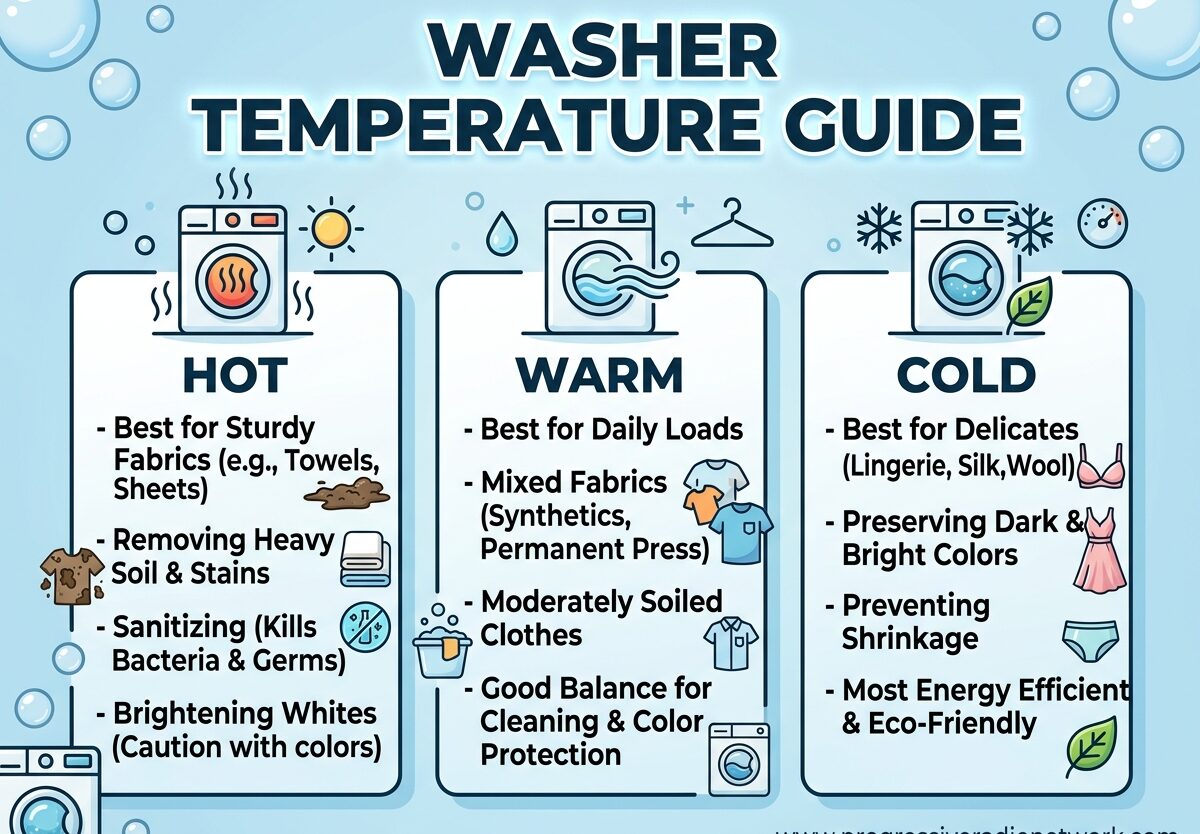
Standing in front of your washing machine, staring at the temperature dial, you’ve probably wondered which setting is actually right for your clothes. I used to default to warm water for everything, thinking it was the safe middle ground. After researching and testing different approaches, I’ve learned that choosing the right water temperature makes a huge difference in clothing longevity, cleaning effectiveness, and energy costs. This washer temperature guide breaks down exactly when to use each setting so you can make confident decisions every laundry day.
Washer Temperature Settings Overview
Washing machines typically offer three to five temperature options, each serving specific purposes. Understanding what each setting actually means in terms of water temperature is the first step to better laundry results. Most modern washers have standardized temperature ranges that work across different brands and models.
Quick Temperature Reference:
- Hot: 130°F and above (54°C+)
- Warm: 90-110°F (32-43°C)
- Cold: 60-85°F (15-30°C)
- Tap Cold: Whatever comes out of your pipes (varies by season)
- Extra Cold: 60°F and below (15°C and below)
These ranges can vary slightly between washing machine brands, but they serve as reliable guidelines for laundry temperature settings. The actual water temperature also depends on your home’s water heater setting and incoming water temperature from municipal sources.
Hot Water Settings (130°F+ / 54°C+)
Hot water is the most powerful cleaning setting on your washing machine. At 130°F and above, water effectively kills bacteria, dust mites, and other allergens that can survive in cooler temperatures. I’ve found hot water essential for certain specific laundry situations where sanitization matters more than fabric preservation.
Use hot water for white cotton sheets, towels, and heavily soiled work clothes. This setting is ideal for items that can withstand high heat and need deep cleaning. If someone in your household has been sick, washing bedding and towels in hot water helps prevent the spread of germs. Cloth diapers also require hot water to ensure proper sanitization.
Hot water is particularly effective for removing oil-based stains and heavy soil. Grease, motor oil, and cooking oil break down much better at higher temperatures. I’ve noticed that mechanics’ uniforms and kitchen towels come significantly cleaner when washed in hot water with a quality detergent.
The trade-off is increased energy consumption. Heating water accounts for about 90% of the energy used during a wash cycle. Hot water cycles can also cause more wear on fabrics over time and may contribute to shrinkage, especially with natural fibers like cotton and wool. Always check care labels before committing to hot water.
Warm Water Settings (90-110°F / 32-43°C)
Warm water offers the best balance between cleaning power and fabric care. This temperature range is warm enough to activate most laundry detergents effectively while being gentle enough for most everyday clothing items. I’ve found warm water to be the most versatile setting in my laundry routine.
This temperature works well for synthetic fabrics, permanent press items, and moderately soiled clothing. Most everyday clothing—t-shirts, jeans, casual wear—cleans thoroughly in warm water without the risk of significant shrinkage or fading. The warmth helps dissolve detergent and suspend soil, allowing it to be rinsed away effectively.
Warm water is particularly good for removing body oils and sweat that accumulate in everyday clothing. If your family is active and clothes see regular wear, warm water provides enough cleaning power to remove odors and light staining without the harshness of hot water. I’ve found that gym clothes and children’s play clothes respond well to this temperature.
Energy consumption is moderate with warm water settings. You’ll use less energy than hot water cycles while still getting effective cleaning results. For households looking to reduce energy costs without sacrificing cleaning performance, warm water represents a good compromise. The water is still warm enough to ensure detergent enzymes work at optimal efficiency.
Cold Water Settings (60-85°F / 15-30°C)
Cold water washing has gained popularity as energy costs rise and laundry detergents improve. Modern detergents contain enzymes specifically designed to work in lower temperatures, making cold water more effective than ever before. I’ve transitioned about 70% of my laundry to cold water with excellent results.
Use cold water for dark-colored clothing to prevent fading and dye transfer. Dark jeans, black t-shirts, and brightly colored items maintain their color much longer when washed in cold water. This temperature is also essential for delicate fabrics like wool, silk, and certain synthetic blends that could be damaged by heat.
Cold water is ideal for lightly soiled clothing and items that are worn briefly. If you’re washing clothes that have only been worn for a few hours or aren’t visibly stained, cold water provides sufficient cleaning. This includes items like pajamas, sweaters worn over other clothes, and seasonal items being stored away.
One consideration with cold water is actual water temperature. In winter, “cold” water from your tap might be 45°F (7°C) or lower, which can affect detergent performance. Most modern washers have a “tap cold” setting that uses water exactly as it comes from your pipes, while a regular “cold” setting may add some warm water to maintain a minimum effective temperature. I’ve found that below 60°F (15°C), some detergents don’t dissolve as completely, so pre-dissolving powder detergent can help.
The energy savings from cold water washing are significant. You can reduce water heating costs by up to 90% compared to hot water cycles. Over a year, switching to cold water for most laundry can save $100-200 on utility bills depending on your local rates and laundry frequency. The environmental impact is also substantial, with fewer greenhouse gas emissions from reduced water heating.
Fabric-by-Fabric Temperature Guide
Different fabrics require different temperature considerations. Understanding your clothing materials helps you choose the right setting every time. I keep this mental reference guide when sorting laundry to ensure each item gets appropriate care.
Cotton: Most cotton can handle warm water, with white cotton tolerating hot water. Colored cottons do better in warm or cold water to prevent fading. Pre-shrunk cotton items are less likely to shrink further, but new cotton clothing should be washed in cold water for the first few cycles.
Synthetic Fabrics (Polyester, Nylon, Spandex): These materials generally prefer cold or warm water. Hot water can cause synthetic fibers to break down faster and may activate shrinkage in blends containing spandex. Activewear and performance fabrics should be washed in cold water to preserve moisture-wicking properties.
Wool: Always use cold water for wool unless the care label specifically states otherwise. Hot water will cause wool to shrink dramatically and can felt the fibers. Many wool items are labeled “dry clean only” and should not be machine washed regardless of temperature.
Silk and Delicates: Cold water is essential for these fabrics. Silk can be damaged by warm water, and delicate items like lingerie and lightweight blouses require gentle treatment. If machine washing delicates, use the shortest cycle with cold water and a mesh laundry bag.
Denim: Jeans and other denim items do best in cold water. This preserves the dark indigo dye and prevents premature fading. I’ve found that turning jeans inside out before washing in cold water extends their life significantly. Warm water is acceptable for heavily soiled work jeans, but expect more fading over time.
Bedding and Towels: White sheets and towels can be washed in hot water for sanitization. Colored bedding should use warm water to maintain color while still getting thorough cleaning. Blankets and comforters should follow their care labels, with many requiring cold or warm water only.
Stain Removal by Temperature
The type of stain you’re dealing with should influence your water temperature choice. I’ve learned that using the wrong temperature can actually set certain stains, making them impossible to remove. Different stains respond differently to heat, so understanding this can save your clothes.
Protein-based stains (blood, sweat, dairy): Always start with cold water. Heat cooks protein, causing it to bond with fabric fibers and become permanent. I rinse blood-stained items in cold water immediately, then treat with cold water wash. If the stain persists after cold washing, you can try warm water, but never start with hot.
Oil-based stains (grease, cooking oil, makeup): These need warm to hot water to break down. Oil doesn’t dissolve well in cold water, so warm temperatures help melt and lift the grease. Pre-treating with dish soap or a dedicated stain remover before washing in warm water gives the best results.
Tannin stains (coffee, tea, wine, fruit juice): Warm water works best for these stains. Cold water can actually set tannin stains, especially if they’ve had time to dry. I’ve found that washing coffee-stained items in warm water with oxygen-based bleach removes most tannin stains effectively.
Mud and dirt: Start by rinsing mud-stained items in cold water to remove loose soil. Hot water can bake mud into fabric fibers. After the initial rinse, wash in warm water with a good detergent to remove remaining soil. Heavily mud-stained work clothes may benefit from a pre-soak.
Ink and dye: Cold water is crucial for ink stains. Heat can cause ink to spread and set permanently. Treat ink stains with alcohol-based products and wash in cold water. For dye transfer (when colors bleed onto other clothes), rewash immediately in cold water with color-safe bleach.
Energy Efficiency and Cost Savings
Water temperature choices directly impact your energy bills and environmental footprint. I tracked my laundry energy use for three months and found that switching from mostly warm/hot to mostly cold water reduced my water heating costs by about 75%. The savings were substantial enough to notice on my monthly utility bill.
Heating water accounts for approximately 90% of the energy used in a typical washing machine cycle. A hot water cycle might use 3-5 kWh of energy, while a cold water cycle uses only 0.3-0.5 kWh. Over the course of a year, a family doing 8-10 loads per week could save $150-250 by using cold water for most laundry.
Beyond cost savings, reducing hot water use lowers your household’s carbon footprint. Water heating is typically the second-largest energy expense in homes after heating and cooling. By choosing cold or warm water instead of hot, you’re directly reducing fossil fuel consumption and greenhouse gas emissions associated with electricity generation or gas heating.
Modern high-efficiency washing machines are designed to work optimally with cooler water. They use less water overall and have improved agitation that compensates for reduced temperature. If you have an older machine, you might notice slightly less cleaning power with cold water, but pre-treating stains and using quality detergent can bridge this gap.
For households wanting to maximize savings without sacrificing results, I recommend a tiered approach: use cold for 70% of loads (darks, lights, lightly soiled items), warm for 25% (synthetics, everyday colors, moderate soil), and reserve hot for the remaining 5% (whites, heavily soiled items, sanitizing needs). This strategy balances cleaning effectiveness with energy efficiency.
Frequently Asked Questions
What temperature is each washer setting?
Most washing machines have hot (130°F+/54°C+), warm (90-110°F/32-43°C), cold (60-85°F/15-30°C), and tap cold (incoming water temperature) settings. Exact temperatures vary by brand and model.
Is cold water effective for cleaning clothes?
Yes, modern detergents work effectively in cold water. Cold water cleans everyday clothing well, saves energy, prevents fading, and protects delicate fabrics. Pre-treat stains for best results.
When should I use hot water for laundry?
Use hot water for white sheets, towels, heavily soiled work clothes, cloth diapers, and items that need sanitization. Hot water kills bacteria and removes oil-based stains effectively.
What temperature is best for colored clothes?
Cold or warm water is best for colored clothes. Cold water prevents fading and dye transfer, while warm water provides good cleaning for everyday colored items without excessive color loss.
Does hot water shrink clothes?
Yes, hot water can cause shrinkage, especially with natural fibers like cotton and wool. New clothing should be washed in cold water for the first few cycles to minimize shrinkage risk.
Is 30°C hot or cold for laundry?
30°C (86°F) is considered a cold or cool wash setting. It’s warmer than tap cold but cooler than warm, making it suitable for colors and items that need gentle cleaning.
What temperature kills bacteria in laundry?
Water temperature of 140°F (60°C) or higher effectively kills most bacteria and germs. Some washing machines have sanitize cycles that reach even higher temperatures for disinfection.
How do I read laundry care symbols for temperature?
Look for symbols with dots in the wash tub: one dot = cold (30°C/85°F), two dots = warm (40°C/105°F), three dots = hot (50°C/120°F), four dots = extra hot (60°C/140°F). An X through the tub means do not wash.
Conclusion
The right washer temperature depends on fabric type, soil level, and your priorities for cleaning versus fabric care. This washer temperature guide gives you the foundation to make informed decisions for every load. Start with care labels, consider the fabric and stain type, then choose the lowest effective temperature. Your clothes will last longer, your energy bills will be lower, and you’ll still get clean, fresh laundry every time.






Leave a Comment