
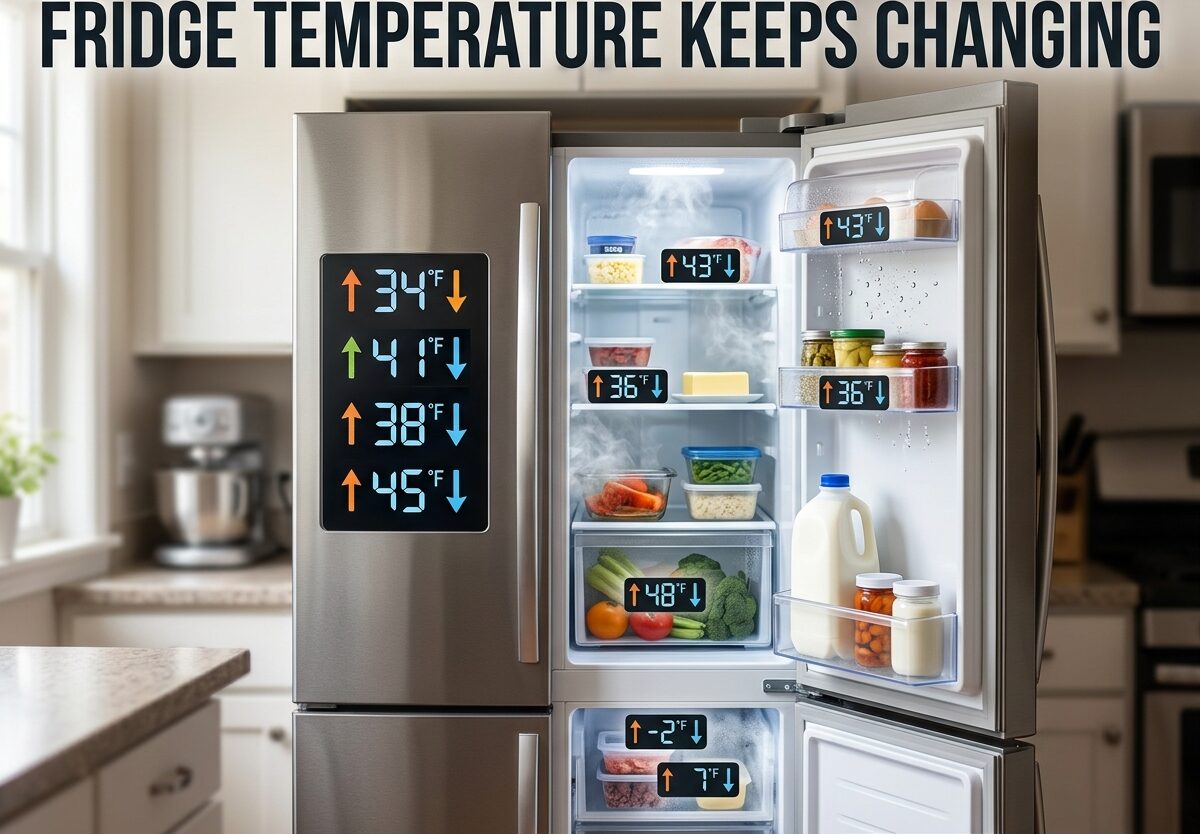
You reach into your refrigerator for a cold drink, expecting that refreshing chill, but something feels off. The milk seems warmer than usual, and yesterday’s leftovers don’t feel as cold as they should. When you check the display, the temperature reading seems different every time you look. If your fridge temperature keeps changing, you’re not alone – this is one of the most common refrigerator problems homeowners face.
Temperature fluctuations in your refrigerator can be frustrating and potentially costly. Food spoilage, wasted groceries, and the worry of whether your fridge is dying are real concerns. I’ve researched this issue extensively, consulting appliance repair communities and technical documentation to bring you a comprehensive guide to understanding and fixing refrigerator temperature fluctuations.
In this article, I’ll walk you through the six most common causes of temperature swings, help you distinguish between normal cycling and actual problems, and give you practical steps to diagnose and fix the issue. We’ll cover everything from simple door seal tests to knowing when it’s time to call a professional.
Fridge Temperature Keeps Changing: The Top 6 Causes
When your refrigerator temperature keeps changing, the culprit is usually one of six issues. Understanding these causes will help you quickly identify what’s happening with your appliance and determine the best course of action.
1. Worn or Damaged Door Seal (Gasket)
The most common cause of refrigerator temperature fluctuations is also one of the easiest to diagnose and fix. Your refrigerator door seal, also called the gasket, is that rubber strip around the door frame that creates an airtight seal when closed. Over time, this seal can wear out, crack, or become loose, allowing cold air to escape and warm air to enter.
When the door seal fails, your refrigerator has to work harder to maintain temperature. The compressor runs more frequently, trying to compensate for the constant air loss. This leads to noticeable temperature swings as the system struggles to keep up.
How can you tell if your door seal is the problem? Try the dollar bill test. Close a dollar bill in your refrigerator door so that half is inside and half is outside. Then gently pull it out. If it slides out easily with little resistance, your seal needs replacing. Test this at multiple points around the door frame.
I recommend checking your door seal every few months as part of routine maintenance. Clean it with warm, soapy water to remove any debris that might prevent a proper seal. If cleaning doesn’t solve the problem, replacement gaskets are relatively inexpensive and can be installed by most homeowners.
2. Blocked Air Vents and Overfilled Fridge
Your refrigerator relies on a system of air vents to circulate cold air throughout the compartments. When these vents become blocked, either by food items or by overfilling, the cold air cannot reach all areas evenly. This creates temperature pockets – some areas stay cold while others warm up.
The main issue I see is homeowners packing their refrigerator too full. While it might seem efficient to maximize storage space, your refrigerator needs empty space for air to circulate properly. Think of it like a crowded room – when too many people are packed in, the air can’t flow freely.
Check your refrigerator’s air vents, typically located on the back wall of the main compartment. Make sure no items are directly blocking these vents. Rearrange your food so that there’s at least an inch of clearance around vent openings.
For optimal performance, aim to keep your refrigerator about 75% full. This allows proper air circulation while maintaining enough thermal mass to help stabilize temperatures when the door is opened. If you must store more food, consider using a secondary refrigerator or freezer.
3. Dirty Condenser Coils
The condenser coils are responsible for releasing heat from your refrigerator. These coils, typically located either on the back of the appliance or underneath it, are essential for efficient operation. When they become coated in dust, pet hair, and debris, they can’t release heat effectively.
Dirty coils force your refrigerator’s compressor to work harder and run longer to maintain temperature. This increased workload can cause temperature fluctuations as the system struggles to keep up with cooling demands. It also significantly reduces energy efficiency and can shorten the lifespan of your compressor.
I recommend cleaning your condenser coils at least twice a year, or more frequently if you have pets that shed. Use a vacuum with a crevice attachment or a specialized coil cleaning brush to gently remove dust and debris. For coils located underneath the refrigerator, you may need to remove the kick plate at the bottom front to access them.
This simple maintenance task can dramatically improve your refrigerator’s performance. Many homeowners are surprised at how much better their appliance runs after a thorough coil cleaning. If your fridge temperature keeps changing and it’s been more than a year since your last coil cleaning, this should be your first step.
4. Temperature Settings Accidentally Adjusted
Sometimes the answer is simpler than we think. Modern refrigerators with digital temperature displays are easily adjusted accidentally – by leaning against the control panel, during cleaning, or by curious children. Even older models with dial controls can be bumped or turned unintentionally.
What’s the optimal refrigerator temperature? The USDA recommends keeping your refrigerator at 40°F or below to ensure food safety. Most experts suggest setting it between 35-37°F for optimal food preservation and energy efficiency. Your freezer should be at 0°F.
If your refrigerator has a digital display, check what temperature it’s actually set to, not just what the current temperature reading shows. Some models show both the set temperature and the actual temperature. For dial-controlled models, the settings typically range from 1 (warmest) to 5 or 9 (coldest). Setting it around 4 or middle range is usually ideal.
After adjusting the temperature, give your refrigerator 24 hours to stabilize before checking again. It takes time for the temperature to equalize throughout the compartments. If the settings look correct but temperature fluctuations persist, move on to checking other potential causes.
5. The Normal Defrost Cycle
Here’s something that surprises many homeowners: your refrigerator is supposed to warm up periodically. All modern refrigerators have an automatic defrost cycle that runs roughly every 8-12 hours. During this cycle, which typically lasts 20-30 minutes, the refrigerator intentionally warms up slightly to melt frost buildup on the evaporator coils.
This temporary temperature increase is completely normal. During defrost, you might notice the temperature reading rise by several degrees. The compressor shuts off, the defrost heater activates, and temperatures naturally creep upward. Once the cycle completes, cooling resumes and temperatures return to normal.
Smart temperature monitors have revealed this normal cycling to many homeowners who weren’t aware of it before. If you’re using a smart thermometer like Govee and notice regular temperature spikes every 8-10 hours, this is likely just your defrost cycle operating as designed.
However, if your refrigerator temperature keeps changing more frequently than every 8 hours, or if the temperature rises significantly above 45°F during these cycles, there may be an issue with your defrost system components. Problems with the defrost thermostat, timer, or heater can cause excessive warming or improper defrosting.
6. Faulty Temperature Sensor (Thermistor) or Control Board
Modern refrigerators rely on electronic components to monitor and control temperature. The thermistor is a temperature sensor that tells the control board when to activate cooling. When this sensor fails or becomes inaccurate, it can send incorrect temperature readings, causing the refrigerator to cool too much, too little, or inconsistently.
A faulty thermistor is one of the more technical causes of temperature fluctuations. Symptoms include temperatures that don’t match the display reading, the refrigerator running continuously or hardly running at all, or temperature swings that don’t correlate with door openings or defrost cycles.
The main control board acts as your refrigerator’s brain, coordinating all functions. When it begins to fail, you might experience various issues including temperature problems, erratic display behavior, or the refrigerator not responding to control inputs. Control board failure often requires professional diagnosis and replacement.
Testing a thermistor typically requires a multimeter and knowledge of the expected resistance values at different temperatures. While some experienced DIY enthusiasts can tackle this repair, it’s often best left to professionals, especially if your refrigerator is still under warranty.
What Temperature Should Your Refrigerator Be?
Understanding proper refrigerator temperatures is crucial for food safety. The United States Department of Agriculture (USDA) recommends keeping your refrigerator at 40°F or below. Bacteria that cause foodborne illness grow most rapidly between 40°F and 140°F, known as the “danger zone.”
For optimal food preservation and quality, aim for 35-37°F in your refrigerator compartment. This range keeps food safely below the danger zone while preventing items from freezing near the back or in specific compartments. Your freezer should maintain 0°F for long-term food storage.
It’s important to note that temperatures can vary throughout your refrigerator. The door shelves are typically the warmest area, while the back and bottom shelves tend to be coldest. This is why proper placement of different foods matters. Keep highly perishable items like dairy, meat, and leftovers on the main shelves where temperatures are most consistent.
Investing in a simple refrigerator thermometer can give you more accurate readings than your appliance’s built-in display. Place one on each shelf to understand your refrigerator’s temperature zones. This information can help you arrange foods more strategically and identify genuine temperature problems versus normal variations.
Normal vs. Abnormal Fluctuations: When to Worry
Not all temperature changes indicate a problem. Normal refrigerator operation includes some degree of fluctuation. Understanding the difference between normal cycling and concerning patterns can save you unnecessary worry and service calls.
Normal fluctuations include: Temperature rises of 5-8 degrees during defrost cycles (every 8-12 hours), temporary increases after adding large amounts of room-temperature food, slight variations between different shelves or areas, and minor fluctuations after the door has been opened multiple times in succession.
Community discussions on platforms like Reddit reveal that many homeowners worry unnecessarily about these normal patterns. The key is context – defrost-related fluctuations occur predictably and return to normal quickly. Temperature variations between the top and bottom shelves are also normal, often differing by 5-10 degrees.
Abnormal fluctuations that warrant attention include: Temperatures consistently rising above 40°F, rapid temperature swings that don’t correlate with normal cycles, the refrigerator running continuously without reaching set temperature, or temperatures that don’t stabilize within 24 hours of adjusting settings or loading food.
If your refrigerator temperature keeps changing outside these normal patterns, or if you notice food spoiling faster than expected, it’s time to investigate further. Use the diagnostic checklist below to systematically check potential issues.
Brand-Specific Issues (Samsung, GE, Whirlpool, Frigidaire)
While temperature problems affect all refrigerator brands, some issues are more common with specific manufacturers. Understanding these brand-specific patterns can help narrow down your troubleshooting approach.
Samsung refrigerators frequently experience issues with their ice makers affecting overall cooling. The ice maker assembly can develop problems that impact the refrigerator’s temperature regulation. Many Samsung owners report temperature fluctuations related to the defrost sensor and damper assembly. Some models have known issues with the main control board causing erratic temperature behavior.
GE refrigerator owners often discuss temperature fluctuations related to the damper door that controls airflow between the freezer and fresh food compartments. When this component fails, temperatures can become inconsistent. Some GE models also have issues with the temperature control board failing, causing the display to show incorrect temperatures.
Whirlpool refrigerators generally have fewer temperature-related issues, but when they occur, they’re often linked to the evaporator fan motor or the adaptive defrost control. Whirlpool’s more recent models with electronic controls can experience thermistor problems similar to other brands.
Frigidaire refrigerators, especially older models, are known for having issues with the start relay and capacitor. When these components fail, the compressor may not start properly, leading to significant temperature fluctuations. The temperature control thermostat in Frigidaire models can also be a source of problems.
Quick Diagnostic Checklist
When your fridge temperature keeps changing, work through this systematic checklist to identify the issue:
Step 1: Check the Door Seal
Perform the dollar bill test around all sides of the door gasket. If the bill slides out easily anywhere, replace the seal. Also visually inspect for cracks, tears, or deformation in the rubber.
Step 2: Verify Temperature Settings
Check that your refrigerator is set to 35-37°F and freezer to 0°F. Confirm these haven’t been accidentally changed. If you have a digital model, note both the set temperature and actual temperature reading.
Step 3: Inspect Air Vents
Locate all air vents in both compartments. Ensure no food items are blocking them. Check that items aren’t packed so tightly that air cannot circulate. Clear at least one inch around all vent openings.
Step 4: Clean Condenser Coils
Locate your condenser coils (back of fridge or underneath). Vacuum or brush off all dust and debris. If you haven’t cleaned them in the past year, do this now regardless of other symptoms.
Step 5: Monitor Defrost Cycles
If you have a temperature display, watch for patterns. Note when temperature rises occur and how long they last. Normal defrost cycles happen every 8-12 hours and last 20-30 minutes.
Step 6: Check for Error Codes
Digital displays often show error codes when components fail. Consult your owner’s manual or search online for your specific model’s error codes. These can point directly to the failing component.
Step 7: Listen for Unusual Sounds
Pay attention to your refrigerator’s sounds. Clicking, buzzing, or unusually loud compressor operation can indicate component failure. A silent compressor that should be running is also a significant warning sign.
Daily and Weekly Maintenance Tips
Preventing temperature fluctuations is easier than fixing them. Incorporating these maintenance habits into your routine can help your refrigerator run more consistently and extend its lifespan.
Daily Habits:
Minimize door openings. Each time you open the door, cold air escapes and warm air enters. Decide what you need before opening the door, and retrieve multiple items at once rather than making multiple trips. Let hot foods cool to room temperature before placing them in the refrigerator – putting hot food directly inside causes significant temperature spikes.
Check door seal closure. Ensure the door is fully closed each time. Sometimes items stored in the door can prevent proper sealing. Make sure nothing is blocking the door from closing completely.
Wipe up spills immediately. Sticky residues can accumulate on door gaskets, preventing proper sealing. Clean spills as they occur to maintain good hygiene and door function.
Weekly Tasks:
Check expiration dates and remove expired food. Over time, expired and spoiled foods can affect your refrigerator’s air quality and potentially impact temperature regulation. A weekly check helps you stay on top of food safety.
Inspect door gaskets. Run a visual check of the door seals for any visible damage, debris, or residue. Clean them with warm, soapy water to maintain flexibility and sealing ability. A clean seal works better.
Check temperature readings. Note the temperature display or check your thermometer. Establish what normal looks like for your refrigerator so you can quickly identify when something changes.
Monthly Tasks:
Clean condenser coils. Even if you don’t have pets, dust accumulates monthly. A quick vacuum of the coils takes just a few minutes but can prevent many cooling issues. Make it part of your monthly cleaning routine.
Organize and declutter. Remove items you don’t need regularly. Ensure proper air circulation by not overfilling compartments. A well-organized refrigerator runs more efficiently and maintains consistent temperatures.
Level your refrigerator. If your refrigerator isn’t level, the door may not close properly. Use a level to check from front to back and side to side. Adjust the leveling legs as needed.
FAQs
What are the signs of a dying refrigerator?
Constant loud noises, frequent cycling on and off, food spoiling quickly even at proper temperature settings, condensation inside the refrigerator, visible frost buildup in unexpected places, the refrigerator running continuously without reaching desired temperature, or significant increases in energy bills. If your refrigerator is over 10-15 years old and experiencing multiple issues, replacement may be more cost-effective than repair.
Why is my refrigerator not keeping a consistent temperature?
The most common causes are worn door seals allowing cold air to escape, blocked air vents preventing proper circulation, dirty condenser coils reducing efficiency, or faulty temperature sensors sending incorrect readings. Start by checking the door seal with a dollar bill test, then ensure vents aren’t blocked by food items. If these check out, clean the condenser coils and verify temperature settings haven’t been accidentally changed.
Why is my fridge hot on the sides?
Some warmth on the sides and front of your refrigerator is actually normal, especially on models with condenser coils embedded in the walls. This is how the refrigerator releases heat. However, if the sides become excessively hot to the touch, it may indicate dirty condenser coils, poor ventilation around the appliance, or a failing condenser fan. Ensure your refrigerator has adequate clearance from walls and cabinets for proper airflow.
Is it normal for fridge temperature to fluctuate between 35 and 42 degrees?
Yes, some fluctuation within this range is considered normal. Temperature variations of 5-8 degrees can occur during defrost cycles, which typically happen every 8-12 hours. Different areas of the refrigerator also maintain different temperatures – the door is warmest while the back is coldest. However, if temperatures consistently rise above 40°F or fluctuate more frequently than every 8 hours, investigate potential issues with door seals, vents, or components.
Conclusion
When your fridge temperature keeps changing, it can be concerning, but most causes are either normal operation or easily fixable issues. Start with the basics: check your door seal, verify temperature settings, ensure vents aren’t blocked, and clean those condenser coils. These simple steps resolve the majority of temperature fluctuation problems.
Remember that some temperature variation is normal. Defrost cycles cause temporary warm-ups every 8-12 hours, and different areas of your refrigerator naturally maintain different temperatures. What matters is that your food stays safely below 40°F and that temperatures return to normal quickly after fluctuations.
If you’ve worked through the diagnostic checklist and your refrigerator temperature keeps changing despite your best efforts, it may be time to call a professional. Faulty components like thermistors, control boards, or compressors require specialized knowledge and tools to repair safely. Professional repairs typically cost between $200-500 depending on the issue and your location.
By understanding how your refrigerator works and performing regular maintenance, you can prevent many temperature issues before they start. Your refrigerator is one of the hardest-working appliances in your home – taking good care of it ensures it will keep your food safe and fresh for years to come.


Leave a Comment