
If you’re smelling gas near stove, your safety comes first. This isn’t something to ignore or hope goes away on its own. I’ll walk you through exactly what to do, how to tell if it’s a serious issue, and when to call for professional help.
Gas leaks can cause fires, explosions, and carbon monoxide poisoning. Understanding the difference between normal operation and a dangerous situation could save your home and your life. Let’s cover everything you need to know.
Immediate Actions If You’re Smelling Gas Near Stove
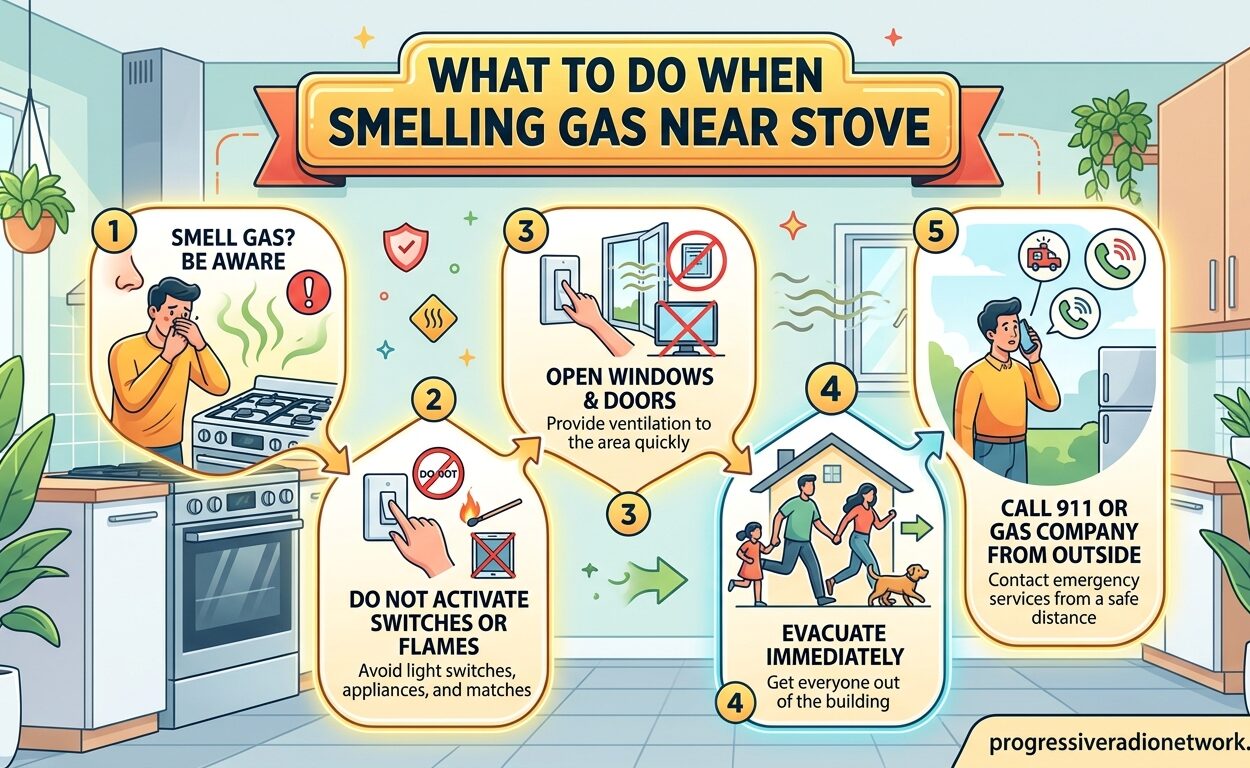
If you smell gas right now, follow these steps immediately:
Step 1: Get everyone out. Don’t wait. Don’t investigate. Get all people and pets out of the house immediately. Leave doors open as you exit to help ventilate.
Step 2: Don’t create sparks. This means NO lights, NO switches, NO electronics, NO matches or lighters. Even a tiny spark can ignite accumulated gas. Don’t unplug anything. Don’t use your phone inside.
Step 3: Leave the area. Move at least 100 feet away from your home. If you’re in an apartment or condo, get out of the building entirely and move to a safe distance.
Step 4: Call for help. Once you’re safely away, call your gas company’s emergency line or 911. They’ll send someone to check for leaks immediately. Most gas companies provide this service free of charge.
Step 5: Wait for the all-clear. Don’t re-enter your home until emergency responders or gas company technicians tell you it’s safe.
Is It Normal to Smell Gas Near Your Stove?
Not all gas smells indicate a dangerous leak. Understanding the difference can save you from unnecessary panic while keeping you safe from real threats.
Normal gas smells are: Brief and happen when you first light a burner. You might smell gas for a second or two before the flame catches. This is normal and should stop immediately once the burner ignites. New stoves may also have a slight smell during the first few uses as protective coatings burn off.
Abnormal gas smells are: Continuous or recurring odors that don’t go away. Smelling gas near stove when it’s completely off is a red flag. Any smell that persists for more than a few seconds after lighting indicates a problem. Strong odors that seem to be getting worse over time need immediate attention.
According to discussions on home improvement forums, many homeowners report that a faint smell when first lighting the stove is normal. However, continuous smell—even a faint one—when the stove is off is never normal and warrants investigation.
Signs of a Gas Leak
Gas leaks give you multiple warning signs. Learn to recognize them:
The rotten egg smell: Natural gas is odorless, but utility companies add mercaptan—a chemical that smells like rotten eggs or sulfur—specifically so you can detect leaks. If you notice this distinctive smell near your stove, you have a gas leak.
Hissing sounds: A hissing or whistling sound from your stove or gas lines means gas is escaping under pressure. This is a serious sign of a leak and requires immediate action.
Dead plants: If plants near your gas stove or along the gas line route are dying for no apparent reason, gas could be leaking into the soil or air around them.
Physical symptoms: Exposure to natural gas can cause dizziness, nausea, headaches, fatigue, and difficulty breathing. If these symptoms improve when you leave your home and return when you’re back, suspect a gas leak.
Higher gas bills: An unexplained increase in your gas bill might indicate a leak somewhere in your system, even if you can’t smell it strongly.
Common Causes of Gas Smells Near Stoves
Understanding what causes gas smells helps you identify and address problems quickly.
Faulty igniter: The igniter creates the spark that lights your gas burner. When it’s failing, it might delay ignition, allowing gas to build up before lighting. This causes a burst of gas smell when the burner finally catches. A faulty igniter needs replacement by a qualified technician.
Loose gas connections: Over time, the connections between your gas line and stove can loosen. This is especially common in older homes or after the stove has been moved for cleaning. These loose connections allow small amounts of gas to escape.
Damaged gas line: Gas lines can deteriorate, crack, or become damaged. Flexible connector lines are particularly vulnerable to wear and should be inspected regularly. If your stove is more than 10-15 years old, the gas line might need replacement.
Unlit burner: Sometimes a burner doesn’t light properly but the gas keeps flowing. This might happen if food debris blocks the burner ports or if the ignition system fails. The unburned gas accumulates and creates that characteristic smell.
Improper installation: If your stove was recently installed or moved, improper connection to the gas line could cause leaks. This is why professional installation is essential.
New oven break-in: Brand new ovens often emit smells during the first few uses as manufacturing residues burn off. This typically dissipates after 3-5 heating cycles and is different from a persistent gas smell.
Dirty burner ports: Food spills and grease can clog the small ports in your burners. This causes incomplete combustion and can create gas odors even when the stove is working properly.
How to Check for a Gas Leak
If you suspect a minor leak but don’t smell strong gas, you can perform a simple test. However, if you smell strong gas, don’t test— evacuate and call for help immediately.
The soapy water test:
Step 1: Mix one tablespoon of dish soap with one cup of water in a spray bottle or bowl.
Step 2: Make sure your stove is turned completely off and the area is well-ventilated.
Step 3: Apply the soapy water to all visible gas connections, including where the gas line connects to your stove and along any exposed piping.
Step 4: Watch carefully for bubbles forming. Any bubbles that appear and grow indicate gas escaping from that point.
Step 5: If you find bubbles, turn off your gas supply at the main shutoff valve (usually located near your gas meter) and call a professional immediately.
This test works because escaping gas causes the soap solution to bubble, making even tiny leaks visible. It’s safe, effective, and used by professionals for initial leak detection.
What NOT to Do When You Suspect a Gas Leak
Mistakes during a gas leak can be deadly. Avoid these actions:
Don’t use electrical switches: Turning lights on or off creates tiny sparks in the switch. These sparks can ignite accumulated gas. Leave switches exactly as they are.
Don’t use your phone inside: Phones can generate sparks. Once you’re safely outside, you can call for help. Never make a call from inside a building that smells of gas.
Don’t try to find the leak yourself: Unless you’re performing the soapy water test on visible connections with minimal smell, leave leak detection to professionals. Gas can accumulate in pockets you can’t detect without proper equipment.
Don’t ignore the smell: Gas leaks don’t fix themselves. Even if the smell seems to go away, the underlying problem remains and could worsen at any time.
Don’t use open flames: Never light matches, candles, or cigarettes to “test” for gas. This is extremely dangerous and can cause explosions.
Don’t start your car in an attached garage: If you have an attached garage and smell gas, don’t start your car inside. The ignition could trigger an explosion if gas has accumulated in the garage.
When to Call a Professional
Some situations require professional help immediately. Call your gas company’s emergency line or 911 if:
The smell is strong: If you can clearly smell the rotten egg odor throughout your home, evacuate first and call from outside.
You hear hissing: Hissing sounds indicate pressurized gas escaping and need professional attention right away.
Multiple symptoms: If household members are experiencing dizziness, nausea, headaches, or breathing problems, get out immediately and call emergency services.
You can’t locate the source: If you smell gas but can’t determine where it’s coming from, professionals have detection equipment to find hidden leaks.
You’re in a rental: If you rent your home, call your landlord first, but don’t wait if the smell is strong. Most areas require landlords to address gas leaks immediately. If your landlord is unresponsive, call the gas company directly.
For less urgent issues—like a slightly delayed igniter or a faint smell only when lighting the burner—contact a qualified appliance repair technician. They can inspect and repair your stove safely.
Carbon Monoxide and Gas Leaks
Gas leaks and carbon monoxide are related but different dangers. While natural gas itself isn’t carbon monoxide, incomplete combustion from malfunctioning gas appliances can produce this deadly gas.
The connection: When your gas stove doesn’t burn fuel completely—due to dirty burners, poor ventilation, or malfunctioning components—it creates carbon monoxide instead of harmless carbon dioxide.
Why it’s dangerous: Carbon monoxide is odorless, colorless, and tasteless. You won’t know it’s building up until you experience symptoms: headache, dizziness, nausea, confusion, and eventually unconsciousness. This is why carbon monoxide detectors are essential in any home with gas appliances.
Prevention: Ensure your kitchen has proper ventilation. Never use your gas oven as a heating source. Keep burners clean and adjust them so flames burn blue, not yellow or orange. Install carbon monoxide detectors near your kitchen and on every level of your home.
Testing: If your gas flame is yellow or orange instead of blue, this indicates incomplete combustion and possible carbon monoxide production. Have your stove serviced immediately.
Remember: carbon monoxide detectors don’t detect natural gas leaks, and gas leak detectors don’t detect carbon monoxide. You need both types of protection for complete safety.
FAQ
How do I tell if my stove is leaking gas?
Look for the rotten egg smell of mercaptan added to natural gas. Listen for hissing sounds near gas connections. Check for dying houseplants near the stove. Perform a soapy water test on visible connections—bubbles indicate a leak. Watch for physical symptoms like dizziness or headaches that improve when you leave home.
Who should I call if my oven smells like gas?
Call your gas company’s emergency line first if the smell is strong or persistent. Most gas companies provide free emergency leak detection and response. If the smell is overwhelming or you feel unwell, call 911 and evacuate immediately. For minor smells only when lighting the oven, contact a qualified appliance repair technician.
Is it normal to smell a little gas when lighting the stove?
A brief gas smell for a second or two when lighting a burner is normal. This happens as gas flows before ignition occurs. However, the smell should stop immediately once the burner lights. Any smell that persists for more than a few seconds, or any smell when the stove is completely off, is not normal and requires attention.
How do I know if my gas oven is leaking carbon monoxide?
You cannot see, smell, or taste carbon monoxide. The only way to detect it is with a working carbon monoxide detector. Signs of possible carbon monoxide production include yellow or orange flames instead of blue, soot buildup around the oven, or excessive moisture on windows near the kitchen. Install CO detectors and test them monthly.
Can a small gas leak be dangerous?
Yes, even small gas leaks are dangerous. Small leaks can grow larger over time. Gas is flammable and can explode if enough accumulates and ignites. Continuous exposure to natural gas can cause health problems. Small leaks also indicate a problem that won’t fix itself. Any gas leak, no matter how small, should be inspected by a professional.
Conclusion
Smelling gas near stove demands attention and action. Know the difference between normal brief odors when lighting burners and the persistent smells that indicate trouble. Trust your senses—if something seems wrong, it probably is.
Install both gas leak detectors and carbon monoxide detectors. Know where your gas shutoff valve is located. Keep your gas company’s emergency number saved in your phone. These simple precautions protect your home and family.
When in doubt, evacuate and call for help. Gas companies would rather respond to a false alarm than miss a dangerous leak. Your safety is worth the inconvenience.



Leave a Comment