
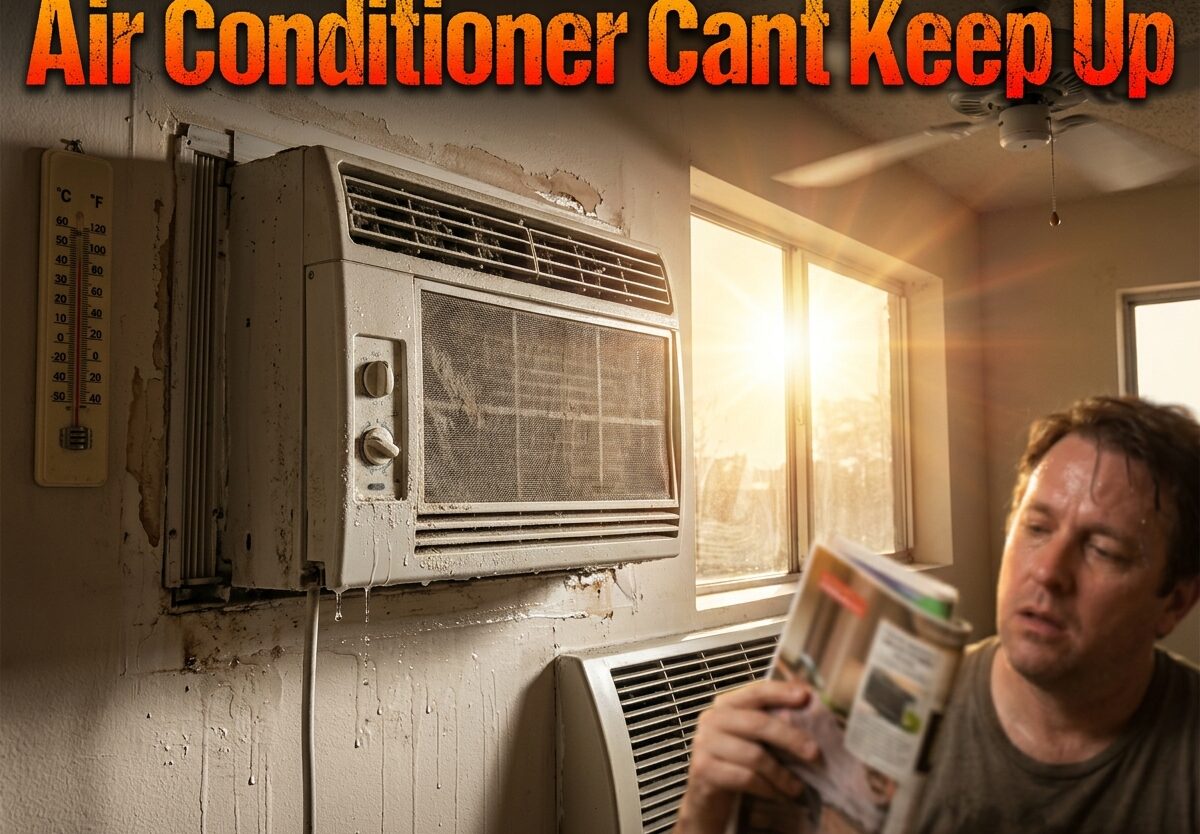
It’s 95 degrees outside, your air conditioner has been running nonstop for hours, and your thermostat still reads 78 degrees. You’re sweating, frustrated, and wondering if something is wrong with your AC system. This scenario plays out in countless homes every summer, leaving homeowners questioning whether their air conditioner can’t keep up due to a real problem or just extreme weather.
The truth is, there are several reasons why your AC might struggle to maintain your desired temperature. Some are completely normal during heat waves, while others indicate issues that need attention. Understanding the difference can save you money on unnecessary service calls and help you identify when professional help is actually needed.
Let me walk you through everything you need to know about why air conditioners struggle in hot weather and how to tell the difference between normal operation and a real problem.
Is It Normal for Your AC to Struggle in Extreme Heat?
Yes, it is actually normal for your air conditioner to struggle somewhat during extreme heat waves. Most residential AC units are designed to maintain your home’s temperature when it’s up to about 95 degrees outside. When temperatures climb into the 100+ degree range, your system has to work much harder and may not be able to achieve your typical thermostat setting.
Here’s the key metric HVAC professionals use: the temperature differential (also called temperature split). A properly functioning AC should deliver air that’s 18-22 degrees cooler than the air it takes in. So if your home is 80 degrees, the air coming out of your vents should be around 58-62 degrees. This 20-degree rule is your best indicator of whether your AC is actually working properly, regardless of what temperature it reaches on the thermostat.
If you’re measuring this temperature split and getting readings in the 18-22 degree range, your AC is doing its job even if it can’t reach 72 degrees during a 100-degree heat wave. However, if the differential is less than 15 degrees, something is definitely wrong.
Top Reasons Your Air Conditioner Can’t Keep Up
Dirty or Clogged Air Filter
The most common reason your AC struggles is also the easiest to fix. A dirty air filter restricts airflow, making your system work harder to circulate air throughout your home. When airflow is reduced, your AC can’t properly cool the air, and you’ll notice the system running constantly without reaching your desired temperature.
I’ve seen countless cases where simply changing a clogged filter instantly solved cooling problems. Your filter should be checked monthly and replaced every 1-3 months depending on factors like pets, allergies, and home size. A $15 filter change can save you hundreds in unnecessary service calls.
Dirty Condenser Coils
The outdoor unit of your AC system contains condenser coils that release the heat absorbed from your home. When these coils become coated in dirt, debris, or vegetation, they can’t effectively release heat. This causes your system to work harder while producing less cooling.
Signs of dirty coils include your outdoor unit struggling to start, making unusual noises, or noticeably reduced cooling performance. You can gently clean the coils with a garden hose (turn off the power first), but be careful not to bend the delicate aluminum fins.
Low Refrigerant or Leaks
Your AC system doesn’t consume refrigerant – it circulates it continuously. If your refrigerant level is low, it means you have a leak. Low refrigerant prevents your system from absorbing heat effectively, resulting in poor cooling performance.
Warning signs of low refrigerant include ice forming on the refrigerant lines, hissing sounds from the unit, and warm air blowing from vents. Refrigerant leaks require professional repair – an HVAC technician will need to find and fix the leak, then recharge the system to the exact refrigerant level specified by the manufacturer.
Thermostat Issues
Sometimes the problem isn’t your AC at all – it’s the thermostat. Incorrect settings, dead batteries, or poor thermostat placement can all cause cooling problems. If your thermostat is located near a heat source (direct sunlight, lamp, or appliance), it may think your home is warmer than it actually is and keep the AC running unnecessarily.
Test your thermostat by placing a separate thermometer nearby to verify the temperature readings match. Also check that it’s set to “cool” rather than “fan” or “off” mode, and replace batteries annually.
Poor Insulation or Ductwork Problems
Your AC might be working perfectly, but your home could be losing cooled air through leaky ducts, poor insulation, or air leaks around windows and doors. In fact, the average home loses about 20-30% of conditioned air through duct leaks alone.
Signs of ductwork issues include uneven cooling between rooms, higher than normal energy bills, and rooms that never seem to reach the desired temperature. Professional duct sealing and adding insulation to your attic can dramatically improve your AC’s performance without requiring any changes to the cooling system itself.
Aging or Undersized AC Unit
AC units typically last 15-20 years with proper maintenance. As systems age, they gradually lose efficiency and cooling capacity. If your unit is more than 12-15 years old and struggling, it might be approaching the end of its useful life.
Similarly, if your AC was undersized from the start (common with additions or poorly designed installations), it will always struggle in extreme heat. A properly sized AC should be able to maintain your thermostat setting up to at least 95 degrees outside. If it can’t, even after addressing all the issues above, you may need a larger system.
Quick Ways to Help Your AC Keep Up
While you’re addressing any underlying issues, here are immediate steps you can take to help your AC perform better:
- Change your air filter – This takes 30 seconds and is the most common cause of AC problems.
- Clear around the outdoor unit – Remove leaves, debris, and vegetation at least 2 feet from the unit.
- Close blinds on sunny windows – This reduces heat gain significantly, especially on south and west-facing windows.
- Use ceiling fans – Fans make you feel cooler while allowing you to set your thermostat 2-4 degrees higher.
- Run appliances at night – Avoid using ovens, dryers, and dishwashers during the hottest part of the day.
- Check your air vents – Make sure no vents are blocked by furniture or closed off completely.
When to Call a Professional HVAC Technician
While many AC issues have simple DIY solutions, some problems require professional expertise. Call a licensed HVAC technician if you notice:
- Your AC is blowing warm air despite the temperature differential being above 15 degrees
- You see ice forming on the refrigerant lines or outdoor unit
- You hear unusual noises like grinding, squealing, or banging
- The system is short-cycling (turning on and off frequently)
- You suspect a refrigerant leak (hissing sounds, reduced cooling over time)
- Your energy bills have spiked significantly without explanation
FAQs
Professional maintenance annually can prevent most of these issues and extend your system’s lifespan by years. The average service call costs $75-150, while replacing a neglected AC system costs $5,000-10,000.
Is it normal for my AC to not be able to keep up?
Yes, it’s normal for your AC to struggle when outdoor temperatures exceed 95 degrees. Most residential units are designed to cool effectively up to about 95 degrees. During heat waves of 100+ degrees, your AC may run constantly without reaching your usual thermostat setting. The key is to check the temperature differential – if the air coming from vents is 18-22 degrees cooler than room temperature, your AC is working properly.
How to cool a house down when the AC can’t keep up?
Close blinds and curtains on sunny windows, especially south and west-facing ones. Use ceiling fans to circulate air and make rooms feel cooler. Run heat-producing appliances like ovens and dryers at night. Ensure all air vents are open and unobstructed. Consider cooking outdoors or using microwaves instead of ovens. Take cool showers and stay hydrated. These steps can reduce indoor temperature by 3-5 degrees while helping your AC work more efficiently.
What is the 3 minute rule for air conditioners?
The 3-minute rule means waiting at least 3 minutes before restarting your AC after it turns off. This protects the compressor from damage caused by rapid restart attempts. When you turn the thermostat down after the AC has been running, wait 3 full minutes before adjusting it again. Many modern thermostats have built-in delays that enforce this rule automatically. Following it prevents compressor overheating and extends your AC’s lifespan.
Why does my AC run all day but can’t cool the house?
This usually indicates your AC is working but not cooling effectively, which points to specific problems. The most common causes are a dirty air filter restricting airflow, dirty condenser coils preventing heat release, or low refrigerant levels due to a leak. Check your filter first and replace if dirty. If that doesn’t help, measure the temperature at a supply vent – if it’s not 18-22 degrees cooler than room temperature, you likely have a refrigerant issue or dirty coils requiring professional service.
Conclusion
When your air conditioner can’t keep up, it’s frustrating but not always a sign of a serious problem. Start by checking the basics: your air filter, the area around your outdoor unit, and your thermostat settings. Measure the temperature differential to determine if your AC is actually working properly. Remember that some struggle during extreme heat waves is completely normal for residential systems.
Regular maintenance – including annual professional service and monthly filter changes – can prevent most cooling problems before they start. When in doubt, call a licensed HVAC technician rather than risking further damage to your system. Your AC works hard during 2026 summer months, and a little attention goes a long way toward keeping your home comfortable and your energy bills in check.



Leave a Comment