
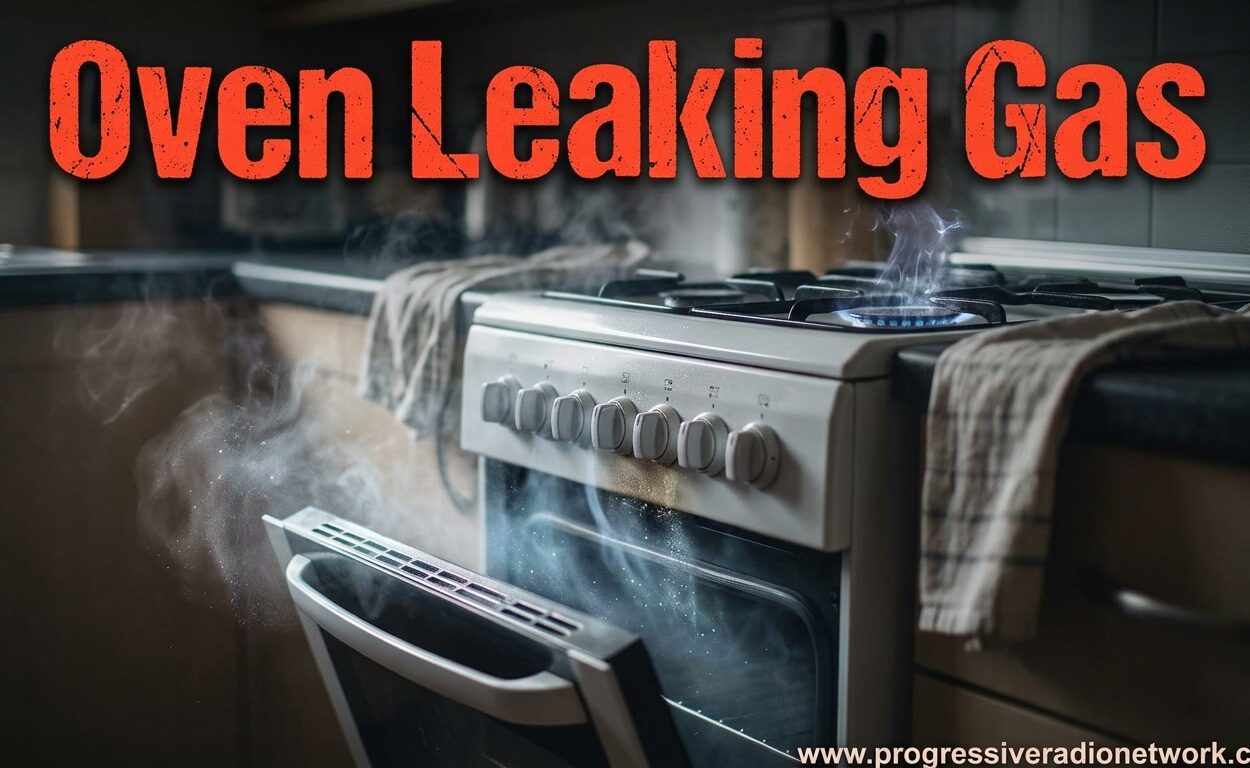
If you smell gas coming from your oven, your safety comes first. I understand the anxiety that comes with detecting a potential gas leak in your home. In this guide, I’ll walk you through exactly what to do if your oven is leaking gas, what causes the smell, and how to tell the difference between normal operation and a dangerous situation.
What To Do Immediately If You Suspect a Gas Leak
If you smell rotten eggs or sulfur from your oven, follow these steps right away:
1. Get everyone out immediately. Don’t try to find the source or turn anything off. Just leave the house.
2. Don’t use any electrical switches. This includes light switches, appliances, or your phone inside the house. A single spark can ignite accumulated gas.
3. Leave doors open as you exit. This helps ventilate the area as you leave.
4. Call 911 or your gas company from outside. Once you’re at a safe distance away from the house, call for emergency help. Most gas companies have 24/7 emergency lines and will respond at no cost.
5. Don’t re-enter until cleared. Wait for the gas company or fire department to tell you it’s safe to go back inside.
These aren’t optional steps. Gas leaks can cause explosions and carbon monoxide poisoning. I’ve seen too many forum posts from people who dismissed a gas smell and wished they hadn’t. When in doubt, get out and call the professionals.
Understanding Gas Smells: What’s Normal and What’s Not
Natural gas and propane are actually odorless. Gas companies add mercaptan, a chemical that smells like rotten eggs or sulfur, specifically so you can detect leaks. This distinctive smell is your warning system that something is wrong.
Some gas smell during ignition can be normal. When you first turn on your oven, you might notice a brief puff of gas odor that dissipates within seconds. This happens as the igniter lights the gas and is completely normal.
What’s not normal is a continuous gas smell that doesn’t go away, gets stronger over time, or appears when your oven is turned off. If the smell persists for more than a few seconds after ignition, or if you notice it when the oven hasn’t been used recently, you likely have a leak that needs immediate attention.
Oven Leaking Gas: 7 Common Causes
Understanding what causes gas smells can help you identify the problem faster. Based on appliance technician discussions and real user experiences, here are the most common reasons your oven might smell like gas:
1. Faulty Igniter (Most Common)
A failing igniter is the culprit about 95% of the time according to appliance repair forums. The igniter glows to light the gas, but when it weakens, it doesn’t get hot enough to ignite the gas immediately. This allows unburned gas to accumulate before finally lighting, creating that telltale gas smell.
Signs of a bad igniter include: weak orange glow instead of bright yellow, delayed ignition (you hear clicking for longer than usual), or the oven taking longer than normal to preheat.
2. Loose Gas Connections
Over time, the connections between your gas line and oven can loosen. This often happens after moving the oven for cleaning or repairs. Even a tiny gap can allow gas to escape. This is particularly dangerous because the leak continues even when your oven is turned off.
If you’ve recently moved your oven or had any work done near it, check that all connections are secure. However, this is a job for a qualified technician, not a DIY fix.
3. Dirty Oven Cavity
A buildup of food debris and grease can cause odors that mimic gas smells. When burnt residue accumulates on the burner or oven walls, it can create sulfur-like smells during heating. This is especially common if you use your oven’s self-cleaning cycle infrequently.
The solution here is simple: give your oven a thorough cleaning. Remove racks and scrub the interior with warm, soapy water or an oven cleaner. If the smell disappears after cleaning, you know it wasn’t a gas leak.
4. Aluminum Foil Blocking Vents
Many people line their oven bottom with aluminum foil to catch spills, but this can block ventilation holes. When vents are obstructed, combustion becomes incomplete and can produce unusual odors. The foil can also reflect heat back into components, causing damage over time.
If you use foil in your oven, make sure it’s not covering any vents or holes. Better yet, use a proper oven liner designed for your specific model.
5. New Oven Break-In Odors
Brand new ovens often emit smells during the first few uses. Protective coatings, insulating materials, and manufacturing residues burn off, creating odors that some people mistake for gas. These smells typically dissipate after 3-5 heating cycles.
To minimize new oven smells, run the oven empty at 400°F for about an hour with windows open. This burns off most manufacturing residues before you start cooking food.
6. Gas Valve Issues
The gas valve controls the flow of gas to your burners. When it malfunctions, it can fail to close completely, allowing gas to leak even when your oven is off. Valve problems often start intermittently but worsen over time.
A faulty gas valve is a serious issue requiring immediate professional repair. Don’t attempt to fix or replace a gas valve yourself – this is definitely a job for a certified technician.
7. Recent Paint or Staining Work
If you’ve recently had painting or staining done near your kitchen, the fumes can interact with your oven’s burner. The combination of fresh paint or stain fumes with gas combustion can create unusual odors that smell like gas or chemicals.
These smells should dissipate within a few days as the paint cures. In the meantime, ventilate your kitchen well when using the oven and consider running a fan.
Gas Smell When Preheating: Is It Normal?
It’s common to notice a brief gas smell when preheating, especially if your oven hasn’t been used in a while. This happens because gas accumulates in the burner before the igniter lights it. As long as the smell disappears within 10-15 seconds and doesn’t return, it’s typically normal.
However, if the gas smell during preheating is strong, persists longer than a few seconds, or happens every time you use the oven, something is wrong. The most likely culprit is a failing igniter that’s not reaching the proper temperature to ignite the gas quickly enough.
Why Does My Oven Smell Like Gas When It’s Off?
A gas smell when your oven is turned off is never normal and indicates a leak somewhere in your gas line or components. This is the most dangerous scenario because gas can accumulate unchecked for hours or even days.
Possible causes include: a faulty gas valve that won’t close completely, loose connections in your gas line, or a small crack in a gas-carrying component. None of these are DIY fixes. If you smell gas when your oven is off, turn off the gas supply at the shut-off valve, evacuate, and call your gas company immediately.
I’ve read forum posts from people who noticed this smell for days before taking action. Don’t make that mistake. Gas off + gas smell when off = emergency.
Oven Leaking Gas When Turned On
If you specifically notice gas leaking when you turn the oven on, the issue is likely in your burner assembly or igniter system. This could be a delayed ignition problem where gas flows but doesn’t light immediately, allowing unburned gas to escape.
Other possibilities include a misaligned burner that’s not receiving gas properly, or a damaged burner tube. These issues usually produce a noticeable hissing sound along with the gas smell. Both scenarios require professional diagnosis and repair.
Health Effects of Gas Exposure: What You Need to Know
Exposure to natural gas leaks can cause various symptoms that shouldn’t be ignored. Common health effects include:
Headaches and dizziness are often the first signs. Nausea, fatigue, and difficulty concentrating can follow. You might also experience breathing problems or chest pain, especially if you have asthma or other respiratory conditions.
It’s important to understand the difference between gas leak symptoms and carbon monoxide (CO) poisoning. Both can occur from gas appliance problems, but CO is odorless and colorless. CO poisoning symptoms include confusion, blurred vision, loss of consciousness, and cherry-red skin coloration.
Every home should have both a gas leak detector and a CO alarm installed. These inexpensive devices can literally save your life by alerting you to dangerous conditions before you notice symptoms yourself.
How to Test for a Gas Leak: The Soapy Water Test
If you suspect a minor leak but don’t smell gas strongly enough to trigger emergency protocols, you can perform a simple test yourself. The soapy water test is a reliable method for detecting small gas leaks:
Step 1: Mix a solution of dish soap and water in a spray bottle. You want a soapy mixture that will bubble easily.
Step 2: Turn off your oven and make sure the area is well-ventilated. Locate the visible gas connections where the line attaches to your oven.
Step 3: Spray the soapy water onto the gas connections, valves, and any visible fittings. Don’t forget the connection at the back of the oven.
Step 4: Watch carefully for bubbles. If you see bubbles forming and growing at any connection point, you’ve found a leak. The escaping gas causes the soap mixture to bubble.
Step 5: If you find a leak, turn off the gas supply at the shut-off valve immediately and call a professional. Do not attempt to tighten or repair gas connections yourself unless you have proper training.
This test can reveal small leaks that might not produce a strong odor yet. If you find bubbles, even small ones, you have a leak that needs repair.
When to Call a Professional
Some oven issues are DIY-friendly, but gas problems generally aren’t. Call a professional technician if you notice any of these situations:
The gas smell persists or returns after cleaning. Your igniter shows signs of failure (weak glow, delayed ignition). You suspect a gas valve issue. You’ve found a leak with the soapy water test. The oven was recently moved or reinstalled. You’re uncomfortable performing any diagnosis yourself.
Gas appliance repairs typically cost between $150-400 depending on the problem. An igniter replacement, the most common repair, usually runs $150-250. While this isn’t cheap, it’s far less expensive than the alternative of ignoring a real gas leak.
Frequently Asked Questions
What happens if your oven is leaking gas?
A gas leak from your oven means unburned fuel is escaping into your kitchen. This creates an explosion hazard and can cause carbon monoxide buildup. Even small leaks can accumulate to dangerous levels over time, causing headaches, dizziness, and nausea. In severe cases, gas leaks lead to fires, explosions, and carbon monoxide poisoning.
Is it okay to smell a little gas from the oven?
A brief gas odor during ignition that disappears within 10-15 seconds is normal. However, any continuous gas smell, odor when the oven is off, or smells that get stronger over time are NOT normal and indicate a problem. If you’re unsure whether the smell is normal, err on the side of caution and contact your gas company.
Can a very small gas leak make you sick?
Yes, even small gas leaks can cause health problems over time. Symptoms include persistent headaches, dizziness, nausea, fatigue, and difficulty concentrating. Children, elderly people, and those with respiratory conditions are especially vulnerable. Small leaks can also grow into larger, more dangerous ones if left unrepaired.
How long to air out a house after a gas burner is left on?
Open all windows and doors and leave the house ventilated for at least 1-2 hours if a gas burner was left on without ignition. Use fans to help circulate fresh air. Don’t return until the gas smell has completely dissipated. If you’re unsure whether all the gas has cleared, call your gas company to inspect before reoccupying the space.
Conclusion
Oven leaking gas is a serious issue that demands immediate attention. Understanding what causes gas smells and knowing the difference between normal operation and a dangerous leak can help keep your household safe. Remember that brief ignition puff is normal, but any continuous gas smell – especially when your oven is off – requires action.
If you suspect your oven is leaking gas, don’t wait. The peace of mind that comes from professional inspection is worth far more than the repair cost. Install gas leak detectors and carbon monoxide alarms, perform regular visual inspections of your gas connections, and address any unusual smells immediately.
Have you dealt with a gas leak issue before? What was your experience? Let me know in the comments below.




Leave a Comment