
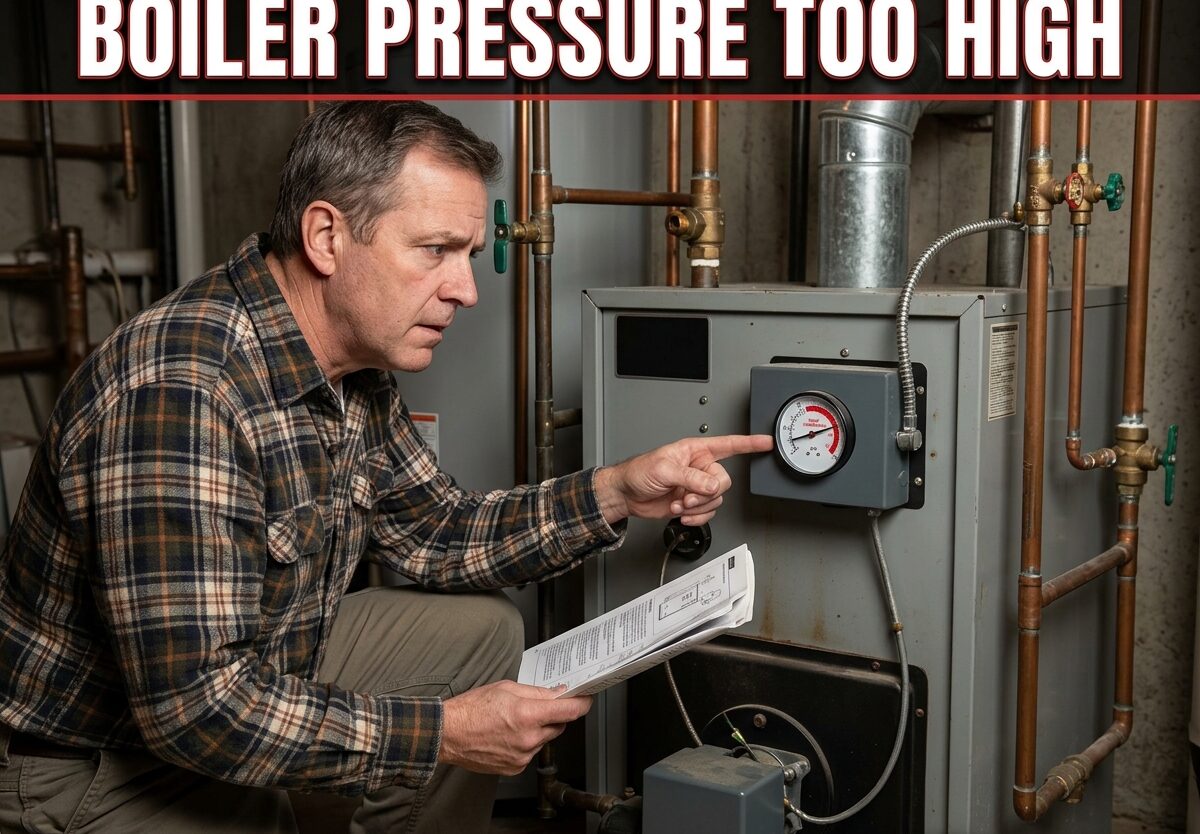
Noticed your boiler pressure sitting higher than usual and feeling concerned about what to do next? You’re not alone – high boiler pressure is one of the most common issues homeowners face with their heating systems, and understanding the cause and solution can save you time, money, and unnecessary worry.
In this comprehensive guide, I’ll walk you through exactly what normal boiler pressure looks like, why pressure climbs too high, the safest ways to bring it back down, and importantly, when you need to call in a professional. Having worked with heating systems for years, I’ve seen countless cases of boiler pressure too high, and I can reassure you that most situations are easily resolved with the right knowledge.
Boiler pressure too high typically means your system is running above 2 bar when cold, or approaching 3 bar when the heating is on. While this might feel alarming, modern boilers have built-in safety features designed to prevent damage, so the key is knowing how to respond appropriately rather than panicking about potential catastrophes.
What Is Normal Boiler Pressure?
Normal boiler pressure for most modern combi and system boilers sits between 1 and 2 bar when the heating is off and the system is cold. This is the ideal operating range that ensures efficient circulation of hot water throughout your radiators and taps without putting unnecessary strain on components.
When your heating kicks on and water begins to warm up, you’ll naturally see the pressure rise slightly – typically to around 1.5 to 2 bar. This increase is completely normal and expected, as heated water expands within the sealed system. The expansion vessel in your boiler is specifically designed to accommodate this temporary pressure increase.
Reading your pressure gauge is straightforward once you know what to look for. Most boilers have either an analogue gauge with a needle or a digital display showing the current pressure. The gauge will usually have a green zone indicating the safe range (typically 1-2 bar), and you want to see your needle sitting comfortably within this area when the system is cold.
For those with older boilers or systems converted from different setups, you might occasionally see pressure measured in PSI rather than bar. The conversion is simple: 1 bar equals approximately 14.5 PSI. So if you’re seeing readings around 14-29 PSI, you’re actually in the normal range – the equivalent of 1-2 bar.
5 Signs Your Boiler Pressure Is Too High
Recognizing when your boiler pressure is too high before it causes serious issues can save you from more significant problems down the line. Here are the clearest indicators that your system pressure has climbed above safe levels.
The most obvious sign is your pressure gauge needle sitting in the red zone or reading above 2.5 bar when the system is cold. Many modern digital displays will also show a warning message or error code when pressure exceeds safe limits, making it impossible to miss the issue.
You might notice water dripping or flowing from the pressure relief valve (PRV) – typically a small copper pipe that exits externally through your wall. This valve is designed to release water when pressure becomes excessive, so seeing drips or a steady flow indicates your boiler has activated this safety mechanism.
Some boilers will display specific fault codes related to high pressure. Common codes include F1, F22, or E119 (depending on your brand), which typically indicate pressure issues or that the boiler has locked out due to safety parameters being exceeded.
Unusual noises from your boiler, particularly gurgling or banging sounds, can sometimes indicate pressure problems. While these can also stem from other issues, combined with high gauge readings, they strongly suggest excessive pressure is affecting system performance.
Finally, if your heating feels uneven or certain radiators aren’t warming properly despite the boiler running, this can indicate circulation problems caused by pressure that’s too high. The system struggles to distribute hot water efficiently when pressure exceeds design parameters.
Why Is My Boiler Pressure Too High?
Understanding the root cause of your high boiler pressure is essential for choosing the right fix and preventing recurrence. I’ve identified the most common culprits during years of troubleshooting heating systems, and addressing the correct cause will save you from repeatedly dealing with the same issue.
The most frequent cause I encounter is simply overfilling the system during recent repressurisation. When you’ve bled radiators or had work done on your heating system, you may have added too much water through the filling loop. This is incredibly common and easily resolved by releasing some water back out of the system.
A faulty or partially open filling loop valve represents another leading cause of high pressure. The filling loop is the mechanism used to add water to your system, and if its valve hasn’t been fully closed after use, it can continue allowing water into your system, causing pressure to creep up over time. I’ve seen many cases where homeowners didn’t realize they needed to tighten these valves completely after repressurising.
Expansion vessel problems are more serious but equally common causes of consistently high boiler pressure. The expansion vessel contains a cushion of air that accommodates the natural expansion of water when heated. When this vessel loses its air charge or the diaphragm fails, it can’t perform its function, causing pressure to rise dramatically whenever your heating operates.
Since the expansion vessel is a pressurized component, testing and recharging it requires specialist equipment and knowledge. If you suspect expansion vessel issues, this is typically a job for a qualified professional rather than a DIY fix.
A faulty pressure relief valve can also contribute to pressure problems. While the PRV is designed to release excess pressure, if it’s sticking, partially blocked, or damaged, it may not activate properly when needed. Conversely, if the PRV is failing to close completely after activating, it can cause pressure to drop initially and then lead to overpressurisation issues as you attempt to correct the low pressure.
Plate heat exchanger faults in combi boilers can sometimes cause pressure issues, particularly when the heating is on. If the domestic hot water and central heating circuits aren’t separating properly, pressure can transfer between systems unexpectedly. This typically requires professional diagnosis and repair.
Finally, a system blockage can cause pressure to rise in certain parts of your heating system while potentially dropping in others. Sludge buildup, particularly in older systems with pipework that hasn’t been properly maintained, can restrict water flow and create abnormal pressure readings. A professional power flush might be needed to resolve this issue.
How to Fix Boiler Pressure Too High
Now that we’ve identified the potential causes, let’s address the practical steps you can take to safely reduce high boiler pressure. I’ll guide you through the most effective methods, starting with the simplest approaches before moving to more involved solutions.
Method 1: Bleed Your Radiators
This is often the quickest and easiest way to reduce pressure if your system has been overfilled. When you bleed radiators, you release both air and water from the system, which naturally lowers the overall pressure. Here’s the correct procedure:
Step 1: Turn off your boiler and allow it to cool completely. Working on a hot system is dangerous and can cause scalding.
Step 2: Locate your radiators and identify the bleed valve – typically a small square peg at the top corner of each radiator.
Step 3: Place a cloth or container beneath the valve to catch water.
Step 4: Insert your radiator key into the valve and turn slowly anti-clockwise (about a quarter turn) until you hear a hissing sound.
Step 5: Wait until water starts to flow steadily from the valve, then close it by turning clockwise.
Step 6: Check your pressure gauge – it should have dropped. Repeat on additional radiators if needed until pressure is back in the green zone.
Method 2: Use the Drain-Off Valve
Many boilers have a built-in drain-off valve that allows you to release water directly from the system. This method is more precise than bleeding radiators and can be faster for significant pressure reduction.
Step 1: Locate the drain-off valve beneath your boiler. It’s typically a small tap or valve with a hose connection point.
Step 2: Attach a hose to the valve and direct the other end to a suitable drain point.
Step 3: Slowly open the valve while watching your pressure gauge.
Step 4: Close the valve once pressure drops to around 1.5 bar.
Step 5: Remove the hose and check for any leaks around the valve.
Method 3: Check Your Filling Loop
Sometimes the solution isn’t releasing water but ensuring no more is entering the system. A filling loop valve that hasn’t been fully closed can be the culprit.
Step 1: Locate your filling loop – typically a flexible silver braided hose connecting your mains water supply to your heating system.
Step 2: Check both valves at each end of the filling loop. They should be fully closed (typically perpendicular to the pipe).
Step 3: If either valve is open or partially open, close it completely by turning it clockwise until fully seated.
Step 4: Monitor your pressure over the next few hours to ensure it stops rising.
Method 4: Check the Pressure Relief Valve
If your pressure relief valve has been dripping, it may need to be reset or checked for proper operation. However, this component requires careful handling.
Step 1: Locate the PRV – typically connected to a copper pipe exiting through an external wall.
Step 2: If water is dripping, the valve may have activated. Try gently operating the valve lever (if present) to ensure it’s not stuck.
Step 3: If the valve continues to drip or leaks constantly, it may need replacement – this is typically a professional job.
After attempting any of these methods, always check your pressure gauge to confirm the reading is back in the safe range. Then monitor your system over the next few days to ensure pressure remains stable. If pressure continues to rise or fluctuate dramatically, this indicates a more serious underlying issue requiring professional attention.
Is High Boiler Pressure Dangerous?
This is the question I hear most often from concerned homeowners, and I want to give you a clear, reassuring answer based on how modern boilers are actually designed to operate. While extremely high pressure can theoretically cause damage, your boiler has multiple safety mechanisms specifically engineered to prevent dangerous situations.
Modern boilers are designed with pressure relief valves that automatically activate at around 3 bar, releasing water to prevent pressure from rising to dangerous levels. This means that even if you neglect your boiler pressure for some time, the system has built-in protection against catastrophic failure. The dripping or flowing water from the external pipe that many people find concerning is actually this safety feature working as intended.
The realistic danger zone for boilers begins well above 3 bar – typically around 4-5 bar, which would require multiple safety failures to occur. The pressure relief valve, combined with the boiler’s pressure sensor and automatic lockout function, makes reaching genuinely dangerous levels extremely unlikely in a properly maintained system.
That said, consistently running your boiler at high pressure (above 2.5 bar) can cause premature wear on components over time. The pump, seals, and heat exchangers all work harder under excessive pressure, potentially reducing their lifespan. You might also experience more frequent system faults and error codes as pressure sensors trigger safety warnings.
The most common real-world consequence of prolonged high pressure is increased stress on system joints and connections, which can lead to minor leaks developing over time. While not immediately dangerous, these leaks should be addressed promptly to prevent water damage and efficiency loss.
Regarding the common fear of explosion – while theoretically possible under extreme circumstances involving multiple failed safety mechanisms, boiler explosions are exceptionally rare in modern systems. The multiple layers of protection, regular safety inspections, and design standards make this a genuinely unlikely scenario in residential settings.
However, if your boiler pressure is consistently exceeding 3 bar, or if the pressure relief valve is constantly dripping, this does indicate a problem that needs attention – not because of immediate danger, but because it suggests your system isn’t functioning correctly and may be heading toward more serious issues if left unaddressed.
When to Call a Professional
While many pressure issues can be resolved with DIY approaches, certain situations definitely require professional expertise. Recognizing when to call in a qualified engineer can save you from causing more significant problems or attempting repairs that are beyond typical homeowner capabilities.
If you’ve attempted to reduce your boiler pressure using the methods above and it continues to rise back up, this indicates an underlying issue that needs professional diagnosis. Persistent high pressure despite bleeding radiators and draining water typically points to expansion vessel problems, filling loop faults, or heat exchanger issues that require specialist equipment to properly repair.
Any time you suspect expansion vessel problems, you should call a Gas Safe registered engineer. The expansion vessel contains a pressurized air bladder that requires specific equipment to test and recharge. Without the proper tools and knowledge, attempting to service this component can be ineffective and potentially dangerous.
If your boiler is displaying error codes related to pressure that don’t clear after you’ve reduced the pressure, or if the boiler has gone into lockout mode and won’t restart, professional assistance is warranted. These symptoms often indicate sensor faults or control board issues that require diagnostic equipment to properly identify and resolve.
Visible water leaks from anywhere other than the pressure relief valve outlet should be professionally assessed. While PRV dripping is normal when it activates, leaks from joints, the heat exchanger, or other components suggest failure that needs proper repair to prevent water damage and efficiency loss.
If you’re unsure about any aspect of your boiler’s operation or uncomfortable performing any of the steps outlined, there’s no shame in calling a professional. Gas boilers are complex systems that combine water, electricity, and gas – if you’re not confident in your abilities, professional assistance is always the safer choice.
For persistent pressure issues that occur seasonally (particularly in winter when heating use increases), an annual service can help identify and address developing problems before they become serious. A qualified engineer can test the expansion vessel, check the pressure relief valve operation, and ensure your entire system is functioning correctly.
Frequently Asked Questions
How do I bring the pressure down on my boiler?
The quickest way is to bleed one or more radiators using a radiator key. Turn off your boiler, insert the key into the bleed valve at the top of the radiator, turn slowly until water flows, then close. Check your pressure gauge and repeat if needed until pressure drops to 1-1.5 bar. Alternatively, use the drain-off valve beneath your boiler to release water directly.
What happens if boiler pressure goes above 3 bar?
At 3 bar, your boiler’s pressure relief valve should automatically activate, releasing water through the external pipe to reduce pressure. This is a safety mechanism designed to prevent damage. You may notice dripping or flowing water from the copper pipe through your wall. If pressure exceeds 3 bar frequently or the PRV is constantly dripping, you should investigate the cause or call a professional.
Is 2.5 bar too high for a boiler when running?
2.5 bar when the heating is running is slightly elevated but generally not immediately dangerous. Pressure naturally rises when heating is on, and 2.5 bar is within the range where safety features haven’t activated. However, it’s higher than ideal and should be reduced to 1.5-2 bar when cold. If pressure consistently reaches 2.5 bar when hot, investigate causes like overfilling or expansion vessel issues.
Can a boiler explode if the pressure is too high?
Boiler explosions are extremely rare in modern systems due to multiple safety features. The pressure relief valve activates at around 3 bar to prevent excessive pressure buildup, and boilers have automatic lockout functions. For an explosion to occur, multiple safety mechanisms would need to fail simultaneously. While consistently high pressure should be addressed to prevent wear and damage, the immediate risk of explosion is minimal in properly maintained systems.
Should boiler pressure rise when heating is on?
Yes, it’s completely normal for boiler pressure to rise slightly when the heating is on. As water heats up, it expands, causing pressure to increase typically from around 1 bar when cold to 1.5-2 bar when hot. This is why your boiler has an expansion vessel – to accommodate this normal expansion. Pressure rising by 0.5-1 bar when heating is operating is expected and not a cause for concern.
Why is my boiler pressure rising when heating is off?
If pressure continues rising when the heating is off, this typically indicates a filling loop problem. Check that both valves on your filling loop are fully closed – if either is partially open, it may be slowly adding water to your system. Another cause could be a faulty filling loop valve allowing water to pass through even when closed. If the valves appear closed but pressure still rises, you may need a replacement valve – this is a professional repair.
Conclusion
Boiler pressure too high is a common issue that most homeowners will encounter at some point, but as we’ve covered throughout this guide, it’s rarely an emergency and usually straightforward to resolve. The key is understanding what normal pressure looks like for your system, being able to identify when pressure has climbed too high, and knowing the appropriate steps to take to bring it back to a safe range.
Remember that normal boiler pressure sits between 1-2 bar when cold, and may rise slightly when heating is on – this is completely expected. What matters is monitoring your system and taking action when pressure consistently exceeds these parameters or when you notice the signs we’ve discussed, such as pressure relief valve dripping or unusual boiler behavior.
Most cases of high boiler pressure can be resolved with simple DIY approaches like bleeding radiators, draining water via the drain-off valve, or ensuring filling loop valves are fully closed. These methods are safe, effective, and within the capabilities of most homeowners. However, recognizing when professional help is needed – particularly for expansion vessel issues, persistent pressure problems, or error codes that won’t clear – is equally important for maintaining your system properly.
Modern boilers are designed with multiple safety features that make genuinely dangerous situations extremely unlikely. Your pressure relief valve, expansion vessel, and automatic lockout functions all work together to keep your system operating safely. Rather than worrying about worst-case scenarios, focus on regular monitoring and maintenance to catch issues early before they develop into more significant problems.
By following the guidance in this article, you should feel confident addressing boiler pressure too high issues as they arise, knowing when you can safely handle the situation yourself and when it’s time to call in a Gas Safe registered engineer. With this knowledge, you can keep your heating system running efficiently and avoid the stress that often accompanies seeing that pressure gauge climbing into the red zone.



Leave a Comment