
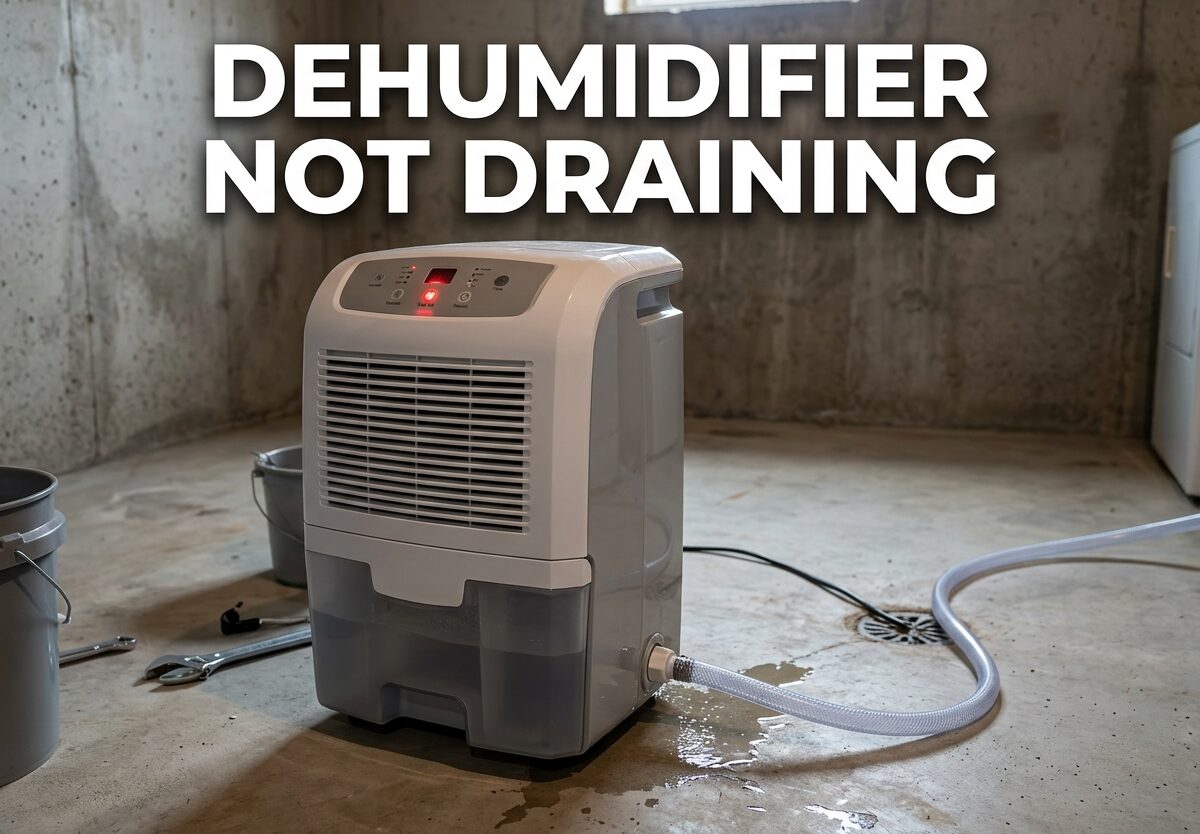
Your dehumidifier should be pulling excess moisture from the air and channeling it down the drain. When water starts collecting in the bucket instead of draining properly, you have a problem that needs fixing. This guide walks you through every common cause of dehumidifier not draining and the exact steps to resolve each one.
I’ve reviewed real user experiences from homeowners on forums like Reddit and DIY discussion boards to understand what actually works. The solutions here come from actual troubleshooting experiences, not just generic advice. Let’s get your dehumidifier draining again.
Understanding Dehumidifier Drainage Systems
Before you can fix a dehumidifier not draining, you need to understand which type of system your unit uses. The drainage method determines where problems are most likely to occur.
Gravity Drain Systems
Most dehumidifiers rely on gravity to move water from the unit to a floor drain or outside. The drain hose runs from the dehumidifier downward, using gravity to pull water through. If the hose is positioned incorrectly or blocked, water backs up into the bucket.
These systems require the hose to maintain a constant downward slope. Even a small uphill section can stop the flow entirely. That’s why many homeowners create a “roller coaster” loop in their drain hose to ensure proper drainage.
Pump Drain Systems
Some dehumidifiers have an internal condensate pump that pushes water upward and then out through the drain hose. These units can drain into a sink, window, or even upward to a different level of your home.
Pump systems are more complex and have more potential failure points. The pump itself can fail, the hose can clog, or the pump float mechanism can stick. When a pump-equipped unit starts filling the bucket instead of draining, the problem is often with the pump itself rather than gravity issues.
Manual Bucket Systems
Some portable dehumidifiers use only a bucket for water collection. These require manual emptying, which becomes frustrating when you expect automatic drainage.
If your unit has both bucket and drain options but the bucket keeps filling, the drainage path may be blocked or the unit may not be configured correctly for external drainage.
Common Causes of Dehumidifier Drainage Problems
Based on real user reports from forums and support discussions, several issues consistently cause dehumidifiers to stop draining.
Hose Positioning Issues
The most frequently reported problem involves incorrect hose positioning. The drain hose must slope downward away from the unit. If it kinks, bends upward, or has a high spot, water cannot flow through by gravity alone.
Homeowners with GE and Frigidaire units commonly report this issue. A simple loop in the hose, like a roller coaster track, often solves the problem by preventing air locks and maintaining proper flow direction.
Algae and Sludge Buildup
Over time, algae, mold, and sludge accumulate inside drain hoses. This buildup narrows the passage and eventually blocks it completely. Forum users describe clearing out “chunks of algae and fungus” from their hoses.
This is especially common in humid climates and when the unit runs frequently. The dark, damp interior of the hose creates perfect conditions for biological growth.
Kinks and Compression
A drain hose can develop kinks or become compressed against a wall. Even a slight compression reduces the internal diameter and restricts water flow. Pets, furniture movement, or simply aging hoses can cause this issue.
Float Mechanism Problems
In units with both bucket and drain options, a float mechanism controls whether water goes to the bucket or through the drain. If this float sticks or fails, water always goes to the bucket regardless of hose attachment.
Pump Failure
Internal condensate pumps have moving parts that wear out. When a pump fails, the unit may continue to collect water in the bucket. Pump-equipped units like some Tosot and higher-capacity Frigidaire models are particularly susceptible to this issue.
How to Fix a Dehumidifier Not Draining
Follow these troubleshooting steps in order. Most drainage problems are resolved by step three, but working through each step ensures you find the actual cause.
Step 1: Check Hose Position and Gravity Drainage
First, examine the drain hose from end to end. Ensure it runs downward from the unit without any sections that rise upward. The hose should not be coiled or looped in a way that creates a high point.
If you see a loop or high spot, reposition the hose to maintain a continuous downward slope. Many homeowners find that creating a small downward loop before the hose exits the unit prevents air locks that stop drainage.
Verify that the hose end is not submerged in water or pressed against a surface that could block flow. The hose must exit freely into a drain or container.
Step 2: Inspect for Kinks and Blockages
Run your hand along the entire length of the hose. Feel for any kinks, sharp bends, or compressed sections. Even soft kinks can restrict flow enough to cause problems.
Disconnect the hose and inspect both ends. Check the connection point on the unit for any debris or damage. Many units have a drain port that can accumulate mineral deposits or biofilm over time.
Step 3: Clear a Clogged Drain Hose
If you suspect algae or sludge buildup, clean the hose thoroughly. Disconnect the hose from both ends. Use a flexible bottle brush or pipe cleaner to scrub the interior.
Flush the hose with a mixture of warm water and white vinegar. For stubborn clogs, use a small amount of bleach solution, then rinse thoroughly to remove any residue. Reattach the hose and test drainage.
Some homeowners use a wet vacuum to clear heavily clogged lines. Insert the hose attachment into the drain hose and vacuum from the outlet end to pull out accumulated debris.
Step 4: Test the Drainage System
After making adjustments, run the dehumidifier for several hours and monitor the water collection. Check both the bucket and the drain outlet to see where water is going.
If using gravity drainage, place a container at the hose end to catch water. If the unit drains properly into the container, the issue was likely positioning. If no water flows but the bucket fills, continue to the pump troubleshooting section.
Troubleshooting Pump Drainage Issues
When your dehumidifier has a pump system and the bucket fills despite the hose being attached, the pump or its components need attention.
Check the Pump Connection
Verify that the drain hose is properly connected to the pump outlet. Some units have a grey joint or connection point that can loosen over time. Ensure the connection is secure and the rubber gasket is in good condition.
Inspect the pump discharge point. Some pumps have a small screen or filter that catches debris. Clean this component if you find buildup.
Reset the Pump Function
Many dehumidifiers with pumps have a reset button. Consult your owner’s manual for the location. The reset button is often on the side of the unit near the pump housing or behind the bucket compartment.
Press and hold the reset button for 10-15 seconds. Then restart the unit and allow it to run for a few minutes to see if the pump activates.
Identify Pump Failure Signs
If the pump hums but does not activate, the motor may be failing. Some units make grinding or clicking noises when the pump motor is damaged. In these cases, professional repair or pump replacement is typically required.
Some users report that their pump-equipped units never properly drained even when new. This may indicate a manufacturing defect that requires service from the manufacturer or a qualified technician.
Preventing Future Drainage Problems
Once you have resolved your dehumidifier not draining issue, take steps to prevent recurrence. Regular maintenance extends the life of your unit and ensures reliable operation.
Installing a P-Trap
A P-trap maintains a water seal that prevents sewer gases from entering your home and helps maintain proper drainage flow. This is especially important when connecting to a floor drain or other drainage system.
Install the P-trap as close to the dehumidifier as possible. Ensure the trap always contains water. In dry climates or during winter, water in the trap may evaporate, allowing odors to escape. Periodically refill the trap with water to maintain the seal.
Cold Weather Considerations
In unheated spaces, water in the drain hose can freeze and block the line. If your dehumidifier runs in a garage or basement during cold months, insulate the drain hose or use a heated hose designed for this purpose.
When temperatures drop below freezing, consider draining the unit completely before extended periods of non-use. This prevents ice from damaging the pump or cracking the housing.
Regular Maintenance Schedule
Clean the drain hose and pump components every three months during heavy use. Wipe down the bucket and inspect the float mechanism. Replace the air filter as recommended by the manufacturer, as a clogged filter reduces airflow and can cause the unit to overheat.
Address drainage issues immediately when they appear. Waiting often allows small problems to become major repairs. If your dehumidifier stops draining repeatedly, there may be an underlying issue requiring professional attention.
When to Call a Professional
Some dehumidifier drainage problems require professional diagnosis and repair. Knowing when to call a pro saves time and prevents potential damage.
Contact a professional if the pump motor has failed and the unit is still under warranty. Attempting repairs yourself may void the warranty. Also call for any issues involving electrical components, as dehumidifiers contain capacitors that store dangerous charges even when unplugged.
If your unit has a sealed refrigeration system problem alongside drainage issues, a licensed HVAC technician should handle the repair. Internal refrigerant issues are not drainage problems but can cause the unit to stop cooling and producing condensate entirely.
For rental properties, notify your landlord or property management company. Many maintenance issues are their responsibility, especially for major appliances.
Frequently Asked Questions
How to fix a dehumidifier that won’t drain?
Start by checking hose position. The drain hose must slope downward continuously without kinks or high spots. Clear any visible clogs with a brush and vinegar solution. If your unit has a pump, press the reset button. Most drainage problems are resolved by correcting hose positioning or clearing simple blockages.
Why is my dehumidifier filling up with water so quickly?
A dehumidifier filling quickly usually indicates high humidity levels in your space, which is actually normal operation. However, if the unit should be draining but fills instead, check that the drain hose is properly connected and positioned downward. Verify the bucket float mechanism is not stuck in the bucket position.
How do I get my dehumidifier to drain through the hose?
Ensure the hose is connected to the correct drain port. Route the hose downward from the unit without any upward sections. Create a small downward loop near the unit to prevent air locks. If using a pump model, verify the pump is activating and the hose outlet is not blocked.
How to unclog a dehumidifier drain hose?
Disconnect the hose from both ends. Use a flexible bottle brush to scrub the interior. Flush with warm water and white vinegar to dissolve algae and sludge buildup. For stubborn clogs, flush with a mild bleach solution, then rinse thoroughly. Reattach and test drainage.
How do I reset a dehumidifier?
Unplug the unit and wait 30 seconds. This allows internal capacitors to discharge. Plug it back in and turn the unit on. For pump-equipped models, locate and press the pump reset button, usually found near the pump housing. Consult your owner’s manual for model-specific reset procedures.
Why does my dehumidifier fill the bucket when the hose is attached?
The hose may be kinked, clogged, or incorrectly positioned. The drain port connection could be loose or damaged. If your unit has a float mechanism, it may be stuck in the bucket position. On pump models, the pump itself may have failed. Check each of these areas systematically to identify the cause.
Conclusion
A dehumidifier not draining is usually caused by simple issues like hose positioning, minor clogs, or float mechanism problems. Working through the troubleshooting steps in this guide resolves most drainage issues without professional help.
The key is systematic diagnosis. Check hose position first, then look for kinks and blockages. Clean algae buildup from the hose regularly to prevent future problems. For pump-equipped units, verify the pump is functioning before assuming a complete failure.
If your dehumidifier continues to have drainage problems despite following these steps, the issue may be more serious. In these cases, contact the manufacturer or a qualified appliance repair technician. With proper maintenance, most dehumidifiers provide years of reliable service without drainage issues.



Leave a Comment