
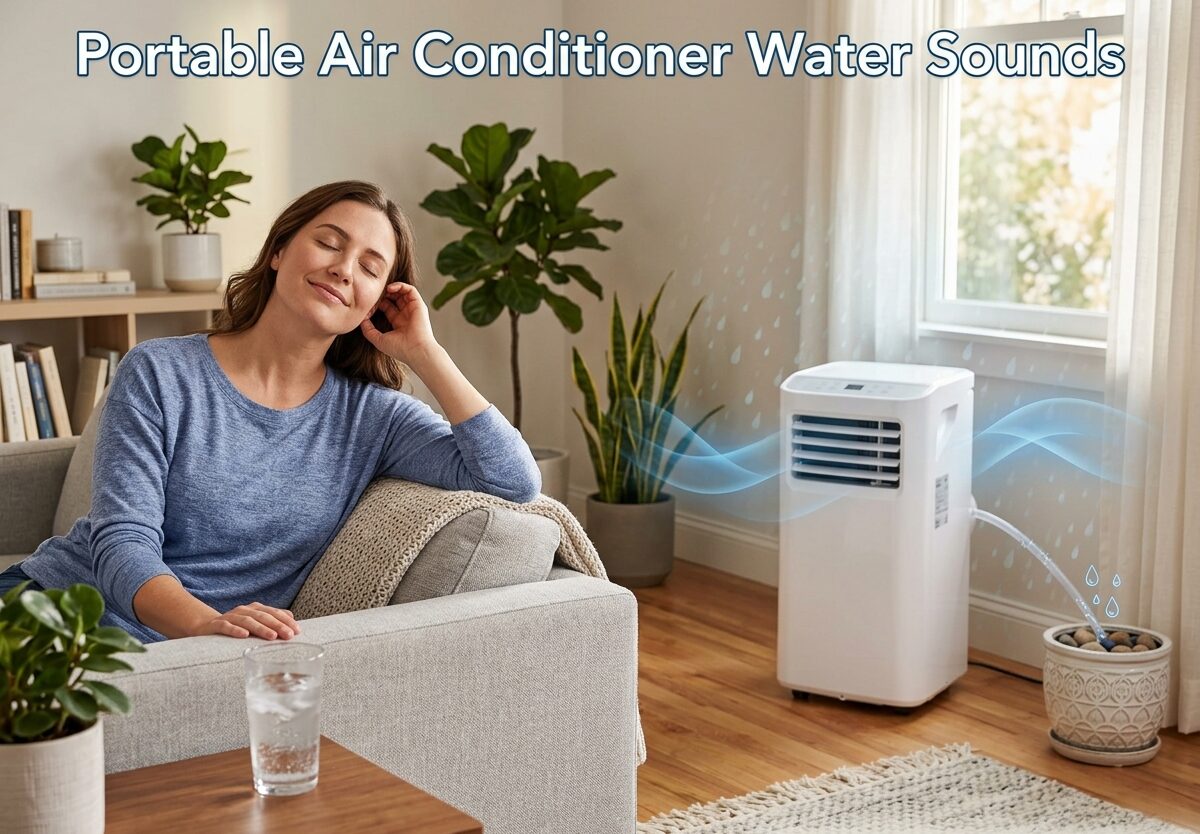
If you’ve just set up a portable air conditioner and are hearing water sounds, you’re not alone. These noises are completely normal for most portable AC units and are actually a sign that your unit is working properly to remove humidity from your room. The water sounds you hear typically come from condensation being collected and either drained away or splashed onto the condenser coil to help cool your unit more efficiently.
In this guide, I’ll explain exactly what causes portable air conditioner water sounds, which noises are normal versus concerning, and practical steps you can take to reduce disruptive sounds when they become bothersome.
Portable Air Conditioner Water Sounds
Portable air conditioners naturally produce water sounds as part of their cooling process. When your AC cools warm air, it removes moisture which creates condensation. This water needs to go somewhere, and the sounds you hear are usually just water moving through your unit’s drainage system or being splashed around for evaporative cooling purposes.
Most portable air conditioner water sounds fall into five main categories: dripping, sloshing, gurgling, running water sounds, and hissing. Understanding which type of sound your unit is making is the first step in determining whether everything is operating normally or if there might be an issue that needs attention.
Is It Normal to Hear Water Sounds in Your Portable AC?
Yes, it is completely normal to hear water sounds in your portable air conditioner. In fact, hearing water movement is often a good sign that your unit is actively removing humidity from the air, which is one of its primary functions. Portable ACs work by pulling warm, humid air across cold evaporator coils, causing moisture to condense and collect in the drain pan.
The sound you’re most likely hearing is from the slinger ring, a small plastic ring attached to the condenser fan blade that picks up water from the drain pan and throws it against the hot condenser coil. This design helps cool the coil more efficiently while also evaporating some of the collected water, which means you don’t have to empty the drain tank as frequently. The splashing sound this creates is completely normal and expected during operation.
Water sounds are typically more noticeable on humid days when your unit is removing more moisture from the air, and they may become louder after the unit has been running for an extended period. New portable AC owners are often surprised by these sounds, but rest assured they’re part of normal operation for most models.
Types of Portable Air Conditioner Water Sounds
Dripping Sounds
Dripping sounds are the most common and normal water noise you’ll hear from your portable AC. This occurs as condensation drips from the cold evaporator coils into the drain pan below. You might hear a steady drip-drip-drip sound, especially when the unit first starts cooling or when humidity levels are high. This is exactly what your unit is designed to do and indicates proper operation.
The dripping sound might change in pitch or frequency depending on how much water is being produced and the shape of your drain pan. Some units have a sloped drain pan that directs water toward the drainage hole, which can create a trickling sound similar to a small stream. These dripping and trickling sounds are nothing to worry about and are actually signs that your dehumidification system is working effectively.
Sloshing Sounds
Sloshing sounds occur when there’s a significant amount of water collected in the bottom of your portable AC unit. This usually happens when the drain pan is filling up or when water is being moved around by the slinger ring. You might hear a splashing or wave-like sound, especially when you move the unit or when the fan speed changes.
The sloshing sound is typically louder in portable ACs compared to window units because portable units have more internal space for water to collect. This water movement sound is most noticeable right after the unit has been running for a while on a humid day. Some users describe it as sounding like water swishing in a half-full water bottle that’s being moved around.
While sloshing can be annoying, especially at night, it’s generally not a cause for concern. However, if the sloshing becomes extremely loud or is accompanied by water leaking from your unit, it may be time to empty the drain tank or check for drainage issues.
Gurgling or Bubbling Sounds
Gurgling sounds resemble water bubbling through a narrow tube, similar to drinking from a nearly empty cup with a straw. This sound often indicates that air is mixing with water in your drainage system. A mild gurgling sound is usually normal, but loud or persistent gurgling might point to a partial clog in your condensate drain line.
When your portable AC’s drain line becomes partially blocked, water can’t flow freely and air pockets form, creating that gurgling noise as water pushes past the obstruction. This is more likely to happen if you haven’t cleaned your drain line recently or if you live in an area with hard water that can cause mineral buildup over time.
Bubbling sounds can also occur when refrigerant moves through the expansion valve in your cooling system. This is normal during the cooling cycle and is typically a quiet, rhythmic bubbling sound rather than the louder gurgling associated with drain issues.
Running Water Sounds
Running water sounds that resemble a faucet left on can indicate several different situations, some normal and some problematic. A quiet running water sound is often just the slinger ring doing its job, picking up condensation and flinging it against the condenser coil for evaporative cooling. This is normal operation.
However, loud running water sounds can indicate that your drain pan is overflowing or that water isn’t draining properly. This is especially concerning if you also notice water leaking from your unit onto the floor. When your portable AC can’t drain fast enough, water accumulates and may spill over the edges of the drain pan.
Running water sounds can also occur when a frozen evaporator coil begins to thaw. If your AC was low on refrigerant or had airflow issues, the coil might have frozen up. When the unit cycles off, this ice melts rapidly, creating a sudden rush of water that can sound like running water for a short period.
Hissing Sounds
Hissing sounds are different from the other water-related noises and deserve special attention. A hissing sound that resembles air escaping from a tire can indicate a refrigerant leak in your system. This is potentially serious because low refrigerant levels can cause your evaporator coil to freeze up, leading to water leaks and potential compressor damage.
Unlike the other water sounds which are typically normal, hissing usually indicates a problem that needs professional attention. If you hear hissing along with reduced cooling performance, ice formation on your unit, or higher than normal energy bills, contact a qualified HVAC technician to inspect your portable AC for refrigerant leaks.
What Causes Water Sounds in Portable Air Conditioners?
Understanding the root causes of water sounds helps you distinguish between normal operation and actual problems. The primary cause is condensation, which occurs whenever warm, humid air comes into contact with the cold evaporator coils in your portable AC. As the air cools, moisture condenses on the coils just like water droplets form on a cold drink glass on a hot day.
This condensation drips into the drain pan located at the bottom of your unit. Most portable ACs use a slinger ring system where the condenser fan blade has a plastic ring that dips into the drain pan and flings water onto the hot condenser coil. This helps cool the coil more efficiently while also evaporating some of the collected water. The splashing action of the slinger ring is responsible for many of the normal water sounds you hear.
Water sounds can become louder or more noticeable when humidity levels are high because your unit is removing more moisture from the air. Similarly, after extended use or on particularly hot days, more condensation is produced, resulting in more water in the system and therefore more water-related noise.
Clogged drain lines are another common cause of water sounds, particularly gurgling noises. Over time, algae, mold, and mineral deposits can build up in the drain tube, restricting water flow. This causes water to back up in the drain pan and creates various water sounds as air and water struggle to move through the partially blocked passage.
Frozen evaporator coils can also cause unusual water sounds. When refrigerant levels are low or airflow is restricted, the evaporator coil may freeze over. When the compressor cycles off, this ice melts rapidly, sometimes creating a sudden rush of water that sounds like running water temporarily.
Normal vs Concerning Water Sounds: How to Tell the Difference
Not all water sounds are cause for concern, but it’s important to recognize when a noise might indicate a problem. Normal water sounds are typically consistent, rhythmic, and don’t change dramatically over time. They include gentle dripping, mild sloshing, and quiet splashing from the slinger ring. These sounds are usually most noticeable when humidity is high or when the unit first starts up.
Concerning water sounds are often accompanied by other symptoms. Watch out for these warning signs that indicate your portable AC might need attention:
Loud gurgling that gets worse over time (suggests a developing clog)
Hissing sounds (possible refrigerant leak)
Running water sounds accompanied by water leaking on the floor
Sudden changes in the type or volume of water sounds
Water sounds combined with reduced cooling performance
Sounds that occur even when the unit isn’t running
If you notice any of these concerning signs along with water sounds, it’s best to investigate further or contact a professional. Normal water sounds might be annoying at times, especially at night, but they don’t require repairs and are simply part of how portable air conditioners function.
How to Fix and Reduce Water Sounds in Your Portable AC
While many water sounds are normal, there are steps you can take to reduce disruptive noises when they become bothersome. Here are practical solutions I’ve found effective for minimizing portable air conditioner water sounds:
Step 1: Empty the Drain Tank Regularly
The simplest fix for loud sloshing sounds is to empty the internal drain tank or external water container. When the drain pan fills up, water movement sounds become much more pronounced. Check your unit’s water collection tank and empty it before it reaches maximum capacity. Most portable ACs have an indicator light that alerts you when the tank is full, but don’t wait for this signal if water sounds are bothering you.
On very humid days, you might need to empty the tank every few hours. Some users find it helpful to establish a routine, such as checking the tank every morning and evening during peak cooling season. Keeping water levels low reduces sloshing and splashing sounds significantly.
Step 2: Clean the Condensate Drain Line
If you’re hearing gurgling sounds, a clogged drain line is likely the culprit. Cleaning the drain line is a straightforward DIY task that can restore proper water flow and eliminate those bubbling noises. Start by locating the drain hose outlet on the back of your unit.
Mix a solution of equal parts white vinegar and warm water. Use a turkey baster or funnel to pour this solution into the drain line. The vinegar will help dissolve algae, mold, and mineral buildup that’s restricting water flow. Let the solution sit for about 30 minutes, then flush with plain warm water. Repeat this process monthly to prevent future clogs and keep water flowing smoothly.
For stubborn clogs, you might need to use a wet/dry vacuum to suction out the blockage. Simply attach the vacuum hose to the drain outlet and run it for a minute or two to pull out any debris. This method is particularly effective if your drain line has a significant buildup that the vinegar solution can’t clear.
Step 3: Check and Replace Air Filters
Dirty air filters restrict airflow, which can cause your evaporator coil to freeze and create water problems when the ice melts. Check your unit’s air filter monthly and clean or replace it as needed. A clean filter ensures proper airflow and prevents many water-related issues before they start.
Most portable AC filters are washable. Simply remove the filter, rinse it with warm water, and let it dry completely before reinstalling. If your filter is damaged or excessively dirty, replacement filters are typically available from the manufacturer or home improvement stores.
Step 4: Ensure Proper Unit Positioning
Your portable AC should be placed on a level surface for optimal drainage. If the unit is tilted or uneven, water may pool in areas where it shouldn’t, creating unusual sounds. Use a level to check your unit’s positioning and adjust the feet or place a shim under one corner if needed.
Also ensure the unit isn’t placed against a wall or furniture that could block the ventilation. Proper airflow around the unit helps it operate efficiently and reduces the likelihood of freeze-ups that can cause water problems. Leave at least six inches of clearance on all sides of your portable AC.
Step 5: Consider a Drain Hose Kit
Some portable AC owners find that installing a continuous drain hose eliminates most water sounds by automatically draining condensation away. Many portable ACs are compatible with drain hose kits that allow water to flow continuously to a floor drain or window. This eliminates the need to manually empty the tank and reduces the amount of water sitting in the drain pan, which in turn reduces sloshing sounds.
Check your owner’s manual to see if your unit supports continuous drainage. If it does, you can purchase a drain hose kit designed for your specific model. Installation is typically straightforward and involves connecting the hose to the drain outlet and routing it to an appropriate drainage location.
When to Call a Professional
While most water sounds are normal or can be addressed with the DIY steps above, certain situations require professional help. If you hear hissing sounds that suggest a refrigerant leak, contact an HVAC technician immediately. Refrigerant handling requires special equipment and certification, and attempting DIY repairs can be dangerous and may void your warranty.
Additionally, if you’ve tried cleaning the drain line and the gurgling persists, or if you notice water leaking from inside the unit (not just from an overflowing tank), professional inspection is recommended. These symptoms may indicate internal problems that require specialized knowledge and tools to repair properly.
Common Water Sound Issues by Brand
While the general principles of portable AC water sounds apply across all brands, some manufacturers have design characteristics that affect water noise levels. Here are some brand-specific notes based on common user experiences:
Black+Decker portable ACs are frequently mentioned in online discussions about water sounds. Many owners report noticeable sloshing sounds, especially in models with the bucketless design that uses continuous drainage. The slinger ring system in Black+Decker units tends to be quite audible, particularly on humid days when the unit is removing more moisture.
Midea portable air conditioners also generate significant water sounds according to user reports. The Midea units often use a dual-hose design which can create different water movement patterns compared to single-hose models. Some users find that Midea units make more gurgling sounds when the drain lines start to clog, so regular maintenance is especially important for these models.
Hisense portable ACs generally have quieter operation overall, but they can still produce noticeable dripping and sloshing sounds. Hisense models often have larger drain pans which can hold more water before needing to be emptied, potentially reducing sloshing frequency but making the sound more pronounced when it does occur.
Regardless of brand, all portable air conditioners will produce some water sounds during operation. Understanding what’s normal for your specific model will help you identify when something changes and potentially needs attention.
Frequently Asked Questions About Portable AC Water Sounds
Why is my portable AC making water sounds?
Portable ACs make water sounds because they remove humidity from the air as they cool. This condensation collects in the drain pan where it’s either drained away or splashed onto the condenser coil by the slinger ring. These sounds are normal and indicate your unit is working properly.
Is it normal for my AC to sound like it has water in it?
Yes, it’s completely normal for portable ACs to sound like they have water inside. This is caused by the slinger ring picking up condensation and flinging it against the hot condenser coil for evaporative cooling. The splashing sound this creates is part of normal operation.
Why do I hear water sloshing in my air conditioner?
Sloshing sounds occur when there’s water collected in the bottom drain pan of your portable AC. This happens as condensation accumulates during operation. The sloshing is typically louder when the drain pan is getting full or when you move the unit. It’s usually normal unless accompanied by water leaks.
How do I stop the water noise from my portable AC?
To reduce water noise, empty the drain tank regularly to keep water levels low. Clean the condensate drain line with vinegar and water to eliminate gurgling from clogs. Ensure your unit is level for proper drainage. For continuous operation, consider installing a drain hose kit that automatically removes water.
Why does my AC gurgle like water?
Gurgling sounds typically indicate a partially clogged condensate drain line. When the drain is blocked, air mixes with water creating a bubbling noise as it tries to flow through. Clean the drain line with vinegar and water or use a wet/dry vacuum to remove the clog. Regular monthly cleaning prevents gurgling sounds.
Should I be worried about hissing sounds from my AC?
Yes, hissing sounds are concerning and may indicate a refrigerant leak. Unlike other water sounds which are normal, hissing suggests a problem that needs professional attention. If you hear hissing along with reduced cooling, ice formation, or higher energy bills, contact an HVAC technician to inspect for refrigerant leaks.
How often should I drain my portable air conditioner?
Drain frequency depends on humidity levels. On moderately humid days, you might need to empty the tank every 8-12 hours. On very humid days, you may need to drain it every 1-3 hours. Some units have indicator lights, but don’t wait for the alert if water sounds are bothersome. Regular draining reduces sloshing noise.
Conclusion
Portable air conditioner water sounds are a normal part of operation for most units. The dripping, sloshing, and splashing noises you hear are typically just signs that your AC is successfully removing humidity from the air. The slinger ring mechanism, which throws condensation onto the hot condenser coil for evaporative cooling, is responsible for many of these water-related sounds.
While most water sounds are nothing to worry about, it’s important to recognize when noises might indicate a problem. Hissing sounds, loud gurgling that worsens over time, and running water sounds accompanied by leaks are warning signs that deserve attention. Regular maintenance like cleaning the drain line, replacing air filters, and keeping the unit level can prevent many water sound issues before they start.
If your water sounds are bothering you, try emptying the drain tank more frequently, installing a continuous drain hose, or scheduling maintenance during cooler months when the unit isn’t in constant use. With proper care, your portable AC will provide cool comfort for years to come with only normal, expected water sounds as part of its operation.



Leave a Comment