
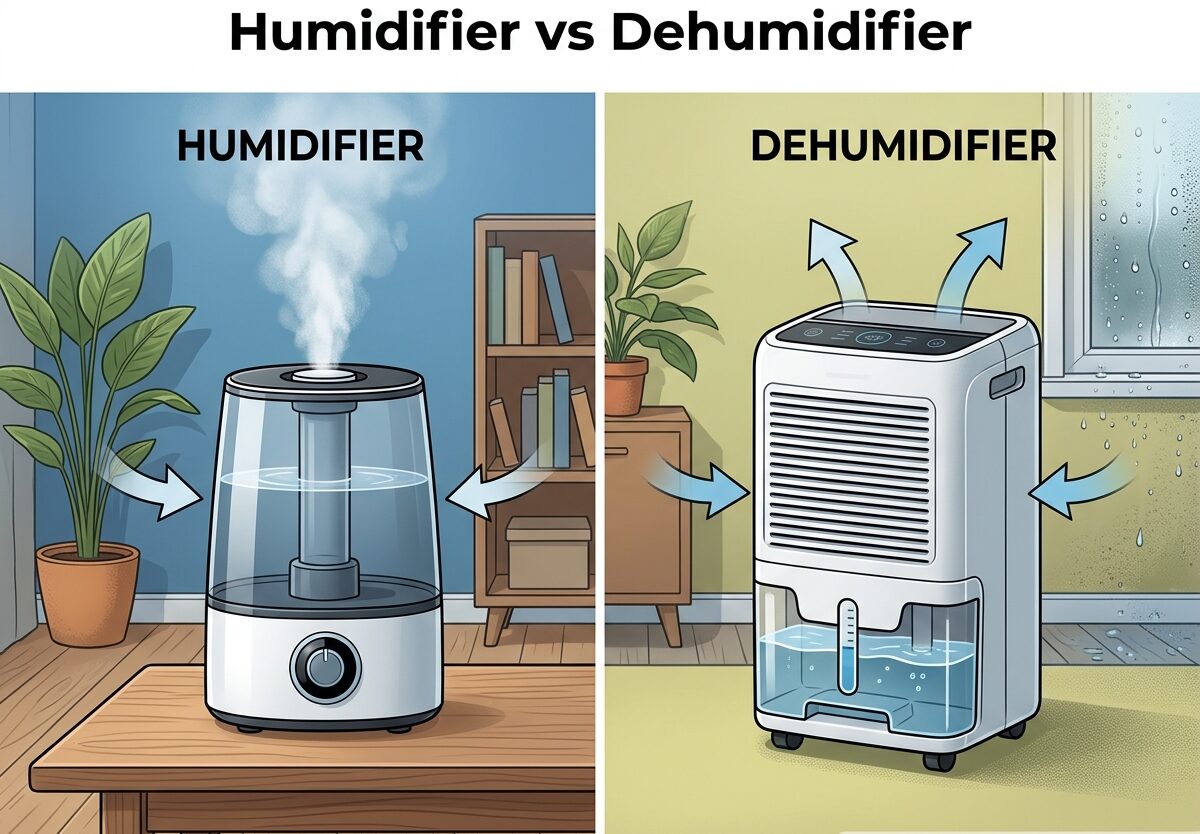
The main difference between a humidifier and a dehumidifier comes down to what they do with moisture. A humidifier adds moisture to dry air, while a dehumidifier removes excess moisture from humid air. The ideal indoor humidity level falls between 30-50%, and when levels drop below 30% you need a humidifier, while levels above 50% require a dehumidifier.
Understanding which device your home needs depends on your climate, the season, and the specific problems you’re experiencing. I’ve spent years researching indoor air quality, and I’ll help you make the right choice for your situation.
What is a Humidifier and How Does It Work?
A humidifier is a device designed to increase moisture levels in indoor air. It works by releasing water vapor into your space through various methods depending on the type. The most common types include evaporative humidifiers that use a fan to blow air through a wet wick, ultrasonic models that use high-frequency vibrations to create a fine mist, and steam vaporizers that boil water to produce warm mist.
Humidifiers are essential in dry environments where heating systems or naturally arid climates strip moisture from the air. When indoor humidity drops below 30%, you’ll notice the effects quickly. Dry air pulls moisture from your skin, causes respiratory irritation, and can damage wood furniture and musical instruments.
I recommend starting with a hygrometer to measure your current humidity levels before investing in any device. This simple step will tell you exactly what you need rather than guessing.
What is a Dehumidifier and How Does It Work?
A dehumidifier does the opposite of a humidifier by removing excess moisture from the air. The device works by pulling in humid air, passing it over cold coils that condense the water vapor, collecting the resulting water in a tank, and releasing drier air back into the room. Most residential models use refrigerant-based technology, though desiccant dehumidifiers use materials that absorb moisture without cooling the air.
When humidity levels exceed 50%, you create an environment where mold thrives, dust mites multiply, and structural damage can occur. Dehumidifiers are particularly crucial in basements, bathrooms, and any space with poor ventilation or water intrusion issues.
Forum users consistently report that basements universally need dehumidifiers, especially in humid climates. The musty smell alone indicates that moisture levels have reached problematic levels.
Humidifier vs Dehumidifier: Key Differences at a Glance
Here’s a quick comparison to help you understand the fundamental differences between these devices:
- Primary Function: Humidifiers add moisture to dry air, while dehumidifiers remove excess moisture from humid air
- Best Season: Humidifiers are typically needed in winter when heating dries out indoor air, while dehumidifiers see heavy use in summer when humidity peaks
- Ideal Humidity Range: Humidifiers activate when levels fall below 30%, while dehumidifiers kick in when levels exceed 50%
- Health Benefits: Humidifiers relieve dry skin, sinus congestion, and respiratory irritation, while dehumidifiers prevent mold growth, reduce allergens, and discourage dust mites
- Common Issues: Humidifiers address static electricity, cracked furniture, and dry throat symptoms, while dehumidifiers combat condensation, musty odors, and visible mold
When to Use a Humidifier
Humidifiers are most effective during winter months when heating systems strip moisture from indoor air. If you live in a dry climate like the desert Southwest, you may need year-round humidification. The device becomes essential whenever you experience the physical discomforts of dry air.
I recommend using a humidifier in bedrooms overnight if you wake up with dry throat or congested sinuses. The added moisture helps keep nasal passages moist and reduces irritation that disrupts sleep quality.
Whole-home humidifiers integrated with your HVAC system provide consistent humidity throughout your house, while portable units work well for single rooms. Most users find portable models sufficient for addressing specific problem areas.
When to Use a Dehumidifier
Dehumidifiers shine during summer months in humid climates, especially in regions like the Southeast and coastal areas. They’re also essential year-round in naturally damp spaces like basements, crawl spaces, and bathrooms with poor ventilation.
If you notice condensation on windows, musty odors, or visible mold growth, you need a dehumidifier immediately. These signs indicate that humidity has reached levels that can damage your home and impact your health.
Many users in humid climates report that their dehumidifier runs almost continuously during summer months. The energy cost is worth it compared to the expense of mold remediation and structural repairs.
Signs Your Home Needs a Humidifier
Watch for these indicators that your indoor air is too dry:
- Frequent static electricity shocks when touching metal objects or other people
- Dry, itchy skin that doesn’t improve with moisturizer
- Persistent sore throat, especially upon waking
- Nasal congestion or nosebleeds from dried nasal passages
- Cracked or warped wood furniture and flooring
- Houseplants that dry out quickly despite regular watering
- Increased susceptibility to colds and respiratory infections
I’ve tested humidity levels in dozens of homes, and these symptoms consistently appear when humidity drops below 25%. The fix is straightforward: add moisture back into your air with the right humidifier.
Signs Your Home Needs a Dehumidifier
These red flags indicate excessive moisture in your indoor environment:
- Visible mold growth on walls, ceilings, or in corners
- Musty or earthy odors that won’t go away with cleaning
- Condensation or fogging on windows, especially in colder weather
- Water stains on walls or ceilings from moisture penetration
- Warped or buckling flooring from moisture damage
- Increased allergy symptoms that improve when you leave the house
- Termite activity or evidence of wood-boring insects seeking moist wood
The termite connection surprises many homeowners, but these destructive pests require moisture to survive and thrive. By maintaining proper humidity levels below 50%, you make your home much less attractive to termites and other moisture-loving pests.
Seasonal and Climate Considerations
Your location and the time of year dramatically influence which device you need. In cold climates, winter heating creates desert-like dry conditions that demand humidification. Conversely, hot and humid regions struggle with excess moisture throughout summer months.
Many homeowners in seasonal climates use both devices at different times of year. I’ve spoken with dozens of users who switch from dehumidifier to humidifier as seasons change, maintaining that ideal 30-50% range year-round.
Coastal areas typically need dehumidification year-round, while arid mountain regions often require continuous humidification. Understanding your local climate patterns helps you make the right investment.
Health Benefits of Proper Humidity Control
Maintaining proper humidity levels delivers significant health benefits. When air is too dry, your respiratory system becomes more vulnerable to infection, and existing conditions like asthma and allergies worsen. Proper humidity keeps mucous membranes moist and functioning as barriers against pathogens.
On the flip side, excess humidity creates a breeding ground for allergens like mold and dust mites. These thrive in damp conditions and trigger respiratory issues in sensitive individuals. By keeping humidity in the optimal range, you reduce your exposure to these common triggers.
Many users report dramatic improvement in allergy symptoms and sleep quality once they achieve proper humidity balance. The difference is often noticeable within just a few days of using the right device.
Quick Guide: Humidifier vs Dehumidifier vs Air Purifier
A common source of confusion is understanding the difference between these three devices. A humidifier adds moisture, a dehumidifier removes moisture, and an air purifier filters particles from the air without changing humidity levels.
You might need more than one device depending on your situation. For example, someone with allergies in a humid climate might use both a dehumidifier to reduce moisture and an air purifier to capture allergens. These devices serve complementary functions and can work together effectively.
How to Measure Your Home’s Humidity
The most accurate way to determine which device you need is measuring your indoor humidity with a hygrometer. These inexpensive devices display real-time humidity readings and cost less than dinner at a casual restaurant. I recommend placing one in each level of your home for a complete picture.
For the most accurate readings, place the hygrometer away from direct heat sources, windows, and doors. Take readings at different times of day since humidity fluctuates with temperature changes and daily activities.
FAQs
Which is better for you, a humidifier or a dehumidifier?
Neither device is universally better – the right choice depends on your current humidity levels. If your indoor humidity falls below 30%, a humidifier will improve your comfort and health. If levels exceed 50%, a dehumidifier becomes necessary to prevent mold growth and protect your home. Measure your humidity first with a hygrometer to determine which device you actually need.
Do I need a humidifier or dehumidifier for a stuffy nose?
A humidifier is typically better for congestion and stuffy nose. Dry air thickens nasal mucus and makes it harder to breathe, while properly humidified air keeps nasal passages moist and helps thin mucus for easier drainage. The added moisture soothes irritated tissues and can provide significant relief, especially during sleep. Use a cool mist humidifier for safety and place it near your bed for maximum benefit.
How to tell if your room needs a humidifier or dehumidifier?
The most reliable method is measuring with a hygrometer – readings below 30% mean you need a humidifier, while readings above 50% indicate a dehumidifier is necessary. Physical signs include static electricity, dry skin, and respiratory irritation for low humidity, versus mold growth, musty odors, and condensation for high humidity. Your climate and season provide additional clues, with winter typically requiring humidification and summer requiring dehumidification.
Should you use a dehumidifier if you have COPD?
Yes, a dehumidifier can help manage COPD symptoms, but individual needs vary. High humidity makes air feel heavier and harder to breathe, while also promoting mold growth that can trigger respiratory exacerbations. Maintaining humidity between 30-50% creates the most comfortable breathing environment for most COPD patients. However, some COPD patients find that air that is too dry also irritates their airways, so monitoring with a hygrometer and finding your personal optimal range is essential.
Is a humidifier or dehumidifier better for breathing?
The better choice depends entirely on whether your breathing issues stem from air that is too dry or too humid. Dry air irritates nasal passages and throat, causing coughing and discomfort, while humid air can feel heavy and promote allergen growth. Most people breathe easiest at the sweet spot of 30-50% humidity, where the air feels comfortable without promoting mold or drying out mucous membranes. Measure your current levels and adjust accordingly rather than guessing.
Do I need both a humidifier and a dehumidifier?
Many homes in seasonal climates benefit from both devices used at different times of year. You might run a humidifier during winter when heating dries out the air, then switch to a dehumidifier during humid summer months. Very few homes need both devices running simultaneously, as they work against each other. The exception is large homes with different microclimates – one room might need humidification while another requires dehumidification.
Can a humidifier or dehumidifier reduce energy bills?
Proper humidity control can reduce heating and cooling costs slightly. Humid air feels warmer than dry air at the same temperature, so a humidifier in winter may let you lower your thermostat by a degree or two while maintaining comfort. Conversely, dehumidifiers generate heat as they operate, which can marginally increase cooling costs in summer. The energy savings from humidity adjustment are typically modest – expect 1-3% on heating bills from winter humidification.
Will a dehumidifier help with termites?
Yes, a dehumidifier can help deter termites by making your home less attractive to them. Termites require moisture to survive and are drawn to damp wood and soil. By maintaining indoor humidity below 50%, you create conditions that are much less hospitable to these destructive pests. While a dehumidifier alone won’t eliminate an existing termite infestation, it’s an important preventive measure that makes your home less appealing to termites seeking moist conditions.
Conclusion
Choosing between a humidifier vs dehumidifier comes down to understanding your current humidity levels and the problems you’re experiencing. The ideal indoor humidity falls between 30-50%, and staying within this range promotes both health and home preservation. Humidifiers add moisture when air is too dry, while dehumidifiers remove excess moisture when humidity is too high.
Start by measuring your humidity with an inexpensive hygrometer rather than guessing. This simple step will tell you exactly which device you need and help you maintain optimal indoor air quality year-round. Your comfort, health, and home will all benefit from proper humidity control.


Leave a Comment