
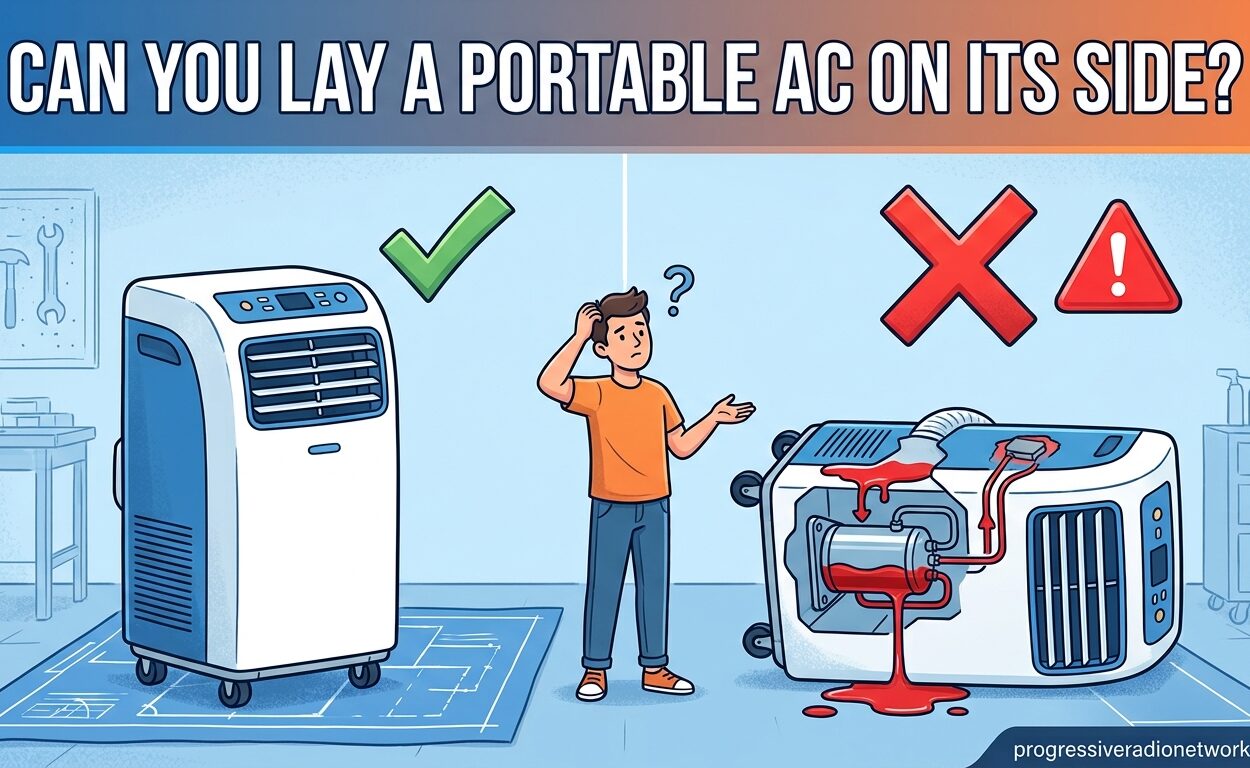
If you’re moving or storing your portable air conditioner, you might be wondering about the safest way to handle it. Can you lay a portable AC on its side? The short answer is no – you should avoid laying a portable air conditioner on its side whenever possible. When a portable AC unit is laid horizontally, the internal compressor oil can migrate out of position, refrigerant flow becomes disrupted, and sensitive components may shift. If you must transport your unit on its side, it needs to stand upright for 12-24 hours before operation to allow fluids to settle back into place.
This guide explains exactly why laying your portable AC on its side is risky, what damage can occur, and the proper procedures for transport and storage. I’ve researched manufacturer guidelines from companies like Haier and GE, plus real-world experiences from HVAC professionals and portable AC owners.
Can You Lay a Portable AC on Its Side?
No, you should not lay a portable AC on its side except during brief transport situations. Portable air conditioners are designed to operate and remain stored in an upright position only. The internal components – specifically the compressor, refrigerant lines, and cooling coils – rely on gravity and proper fluid distribution to function correctly.
When you lay a portable AC unit on its side, several things can go wrong simultaneously. The compressor oil, which lubricates critical moving parts, flows away from where it’s needed. Refrigerant can pool in sections of the tubing where it shouldn’t be. Internal fixtures and components may shift under their own weight. According to manufacturer guidelines from Haier Appliances, if transport on the side is unavoidable, the unit must stand upright for an equal amount of time as it was on its side before plugging it in.
GE and other major manufacturers recommend a minimum 24-hour upright settling period after any transport where the unit was not perfectly vertical. This isn’t a suggestion – it’s a requirement to prevent permanent damage to your portable air conditioner.
Why Laying a Portable AC on Its Side Causes Damage
The damage from laying a portable AC on its side isn’t always immediately visible, but it can be permanent and expensive to repair. Understanding what happens inside your unit helps explain why manufacturers are so strict about upright positioning.
Compressor Damage
The compressor is the heart of your portable AC system, and it’s also the most vulnerable component when the unit is laid on its side. Your compressor relies on a precise amount of oil to lubricate its internal pistons, bearings, and moving parts. This oil is designed to circulate in a specific pattern when the unit operates in an upright position.
When you lay the unit on its side, gravity causes the compressor oil to migrate away from the components it needs to lubricate. Some oil may flow into the refrigerant lines or accumulate in areas where it shouldn’t be. The problem becomes critical when you turn the unit back on – the compressor starts running without proper lubrication, causing metal-on-metal contact that can destroy the internal components within minutes.
I’ve seen cases where compressors failed after just 15-30 minutes of operation following improper transport. Replacing a compressor often costs more than buying a new portable AC unit, making this one of the most expensive mistakes you can make.
Refrigerant System Issues
Your portable AC’s refrigerant operates under carefully controlled pressure and flow conditions. The refrigerant travels through evaporator coils (where it absorbs heat) and condenser coils (where it releases heat) in a continuous loop. This system depends on the refrigerant being in the right state – liquid or gas – at the right points in the cycle.
Laying your portable AC on its side disrupts this delicate balance. Liquid refrigerant can pool in sections of tubing designed for gas flow, while refrigerant meant to be liquid may become trapped in the wrong areas. The filter drier, which removes moisture and contaminants from the refrigerant, can become jammed or clogged when flooded with displaced refrigerant.
The result is reduced cooling performance, strange noises, and potentially complete system failure. Even if your unit appears to work after being laid on its side, the inefficient refrigerant flow can cause long-term damage that shortens the lifespan of your portable air conditioner.
Cooling Coil and Internal Component Damage
Your portable AC contains copper cooling coils and aluminum fins that are precisely positioned for optimal airflow and heat transfer. These components aren’t designed to support the weight of the unit when horizontal. When laid on its side, the pressure from internal components can deform coils, bend fins, and create small refrigerant leaks.
Internal fixtures that secure the compressor, fan motor, and other components can also shift or loosen. The filter drier – a small but critical component that cleans your refrigerant – can become jammed when debris or refrigerant floods it in the wrong position. A jammed filter drier restricts refrigerant flow and can cause pressure buildup that damages the entire system.
Another immediate issue you’ll notice: any water in the drainage reservoir will spill out when the unit is horizontal. Most portable AC units hold 1-2 cups of condensate water, which will leak onto floors, carpets, or furniture if the unit is laid on its side.
How Long to Wait After Transporting on Side
The settling time requirement is non-negotiable. If your portable AC was laid on its side during transport, you must allow sufficient time for fluids to return to their proper positions before operating the unit.
Here’s what manufacturers and HVAC professionals recommend:
- Minimum 12 hours for very short transport durations (under 30 minutes on its side)
- 24 hours is the standard recommendation for most situations
- Haier’s rule: Keep the unit upright for the same amount of time it was on its side
- GE’s rule: Always wait 24 hours upright before plugging in, regardless of transport duration
During this settling period, keep the portable AC in its normal upright position in a room-temperature environment. Don’t plug it in, don’t turn it on, and don’t tilt it in any direction. The compressor oil needs time to flow back to the compressor housing, and the refrigerant needs to redistribute throughout the system.
I know waiting is frustrating when you want cool air immediately, but running the unit too early can cause catastrophic compressor damage in minutes. Think of the settling time as insurance for your portable AC – it’s inconvenient, but much better than replacing the entire unit.
What to Do If You Already Laid Your Portable AC on Its Side
Don’t panic, but don’t turn it on either. If you’ve already transported or stored your portable AC on its side, follow these steps to minimize potential damage:
- Stand the unit upright immediately – Carefully return it to its normal vertical position
- Wait 24 hours minimum – Let it settle longer if it was on its side for an extended period
- Inspect for visible damage – Check for dents, leaks, or loose parts before plugging in
- Test cautiously – After the waiting period, run the unit on fan-only mode for 15 minutes before trying cooling
- Monitor performance – Listen for unusual noises and check that it’s cooling properly
Warning Signs of Damage
After following the above steps, watch for these signs that your portable AC may have been damaged:
- Loud clicking or clanking sounds when the compressor starts – indicates internal damage
- Compressor hums but doesn’t start – the compressor may be seized from lack of lubrication
- Reduced cooling performance – unit runs but doesn’t cool as effectively as before
- Frequent cycling on and off – suggests refrigerant flow problems
- Water leaking where it shouldn’t – internal drainage may be damaged
- Burning smell or unusual odors – electrical components may have been affected
If you notice any of these warning signs, stop using the unit immediately and contact a qualified HVAC technician. Continuing to operate a damaged portable AC can cause further damage and may create safety hazards.
How to Transport a Portable AC Safely
Proper transport prevents damage and saves you money. Follow these guidelines when moving your portable air conditioner:
- Keep it upright whenever possible – This should always be your first priority
- Secure the unit during transport – Use straps or bungee cords to prevent tipping
- Use original packaging – If you still have the box and foam inserts, use them
- Add padding if needed – Blankets or furniture pads protect against bumps
- Drain water first – Remove all water from the reservoir before moving
- Avoid sudden movements – Gentle acceleration and braking prevent shifting
- Keep windows or vents open – If transporting in a closed vehicle, allow airflow
- Lift with your legs – Portable ACs weigh 50-80 pounds – get help if needed
When I help clients move portable ACs, I always recommend using a hand truck or appliance dolly. These tools let you keep the unit upright while making it easier to maneuver. If you must lay the unit down to fit it in a vehicle, choose the back or side (never the front where controls are), keep it horizontal for the shortest time possible, and remember the 24-hour settling rule.
Proper Storage Guidelines for Portable AC Units
Storage is different from transport – and the rules are stricter. While you might get away with brief horizontal transport during a move, storing a portable AC on its side is never recommended.
Proper storage guidelines:
- Always store upright – Never lay a portable AC on its side for extended periods
- Choose a cool, dry location – Avoid garages or attics with extreme temperatures
- Cover the unit – Use the original cover or a breathable cloth to prevent dust buildup
- Drain all water – Empty the reservoir completely before storage
- Clean the filters – Wash and dry air filters before storing to prevent mold
- Avoid direct sunlight – UV rays can degrade plastic components over time
- Check periodically – Inspect for pests, moisture, or damage during long storage
Storing your portable AC correctly during the off-season ensures it will be ready to perform when you need it again. Units stored on their side often develop problems that aren’t discovered until summer arrives – exactly when you need reliable cooling.
Warranty Considerations
Improper positioning can void your warranty. Most portable AC manufacturers include specific language about upright operation in their warranty terms. If your unit fails and the manufacturer determines it was operated or stored on its side, they may deny your warranty claim.
Check your warranty documentation for specific guidelines, but most manufacturers require:
- Upright operation at all times – The unit must be used in its normal vertical position
- Proper transport procedures – Following manufacturer guidelines for moving
- Adequate settling time – Waiting the recommended period after transport before use
- No modification or tampering – Using the unit only as designed
If you’re unsure whether your situation might be covered under warranty, contact the manufacturer before attempting any repairs. Document your transport and storage procedures to show you followed proper guidelines.
Frequently Asked Questions
How long can a portable air conditioner lay on its side?
There is no safe duration for keeping a portable AC on its side. The longer it remains horizontal, the greater the risk of damage. For brief transport (under 30 minutes), follow the 24-hour upright settling rule. For longer periods, the risk increases significantly. If your unit was on its side for more than an hour, consider having it inspected by a professional before operation.
Can you lay down a portable AC unit for transport?
Yes, but only when absolutely necessary and for the shortest time possible. If you must lay your portable AC on its side for transport, choose the back or side of the unit (never the front with controls), secure it to prevent shifting, and keep it horizontal for minimal time. Most importantly, stand the unit upright and wait 24 hours before plugging it in. Never operate the unit while it’s on its side.
Do portable air conditioners need to be stored upright?
Yes, portable AC units must always be stored upright. Storage is different from brief transport – leaving a unit on its side for weeks or months during off-season storage will cause compressor oil to migrate and refrigerant to pool incorrectly. Even if it worked after being laid down briefly, extended horizontal storage creates cumulative damage that shortens the unit’s lifespan. Always store in a cool, dry place in the normal vertical position.
What happens if you turn on a portable AC immediately after moving it?
Turning on a portable AC immediately after moving – especially if it was on its side – can destroy the compressor in minutes. Without proper settling time, the compressor lacks lubrication and may seize instantly. You might hear loud grinding or clicking noises, or the compressor may simply hum without starting. Either scenario means expensive repairs or complete unit replacement. Always wait at least 24 hours after any transport where the unit wasn’t perfectly vertical.
Can storing a portable AC on its side damage it?
Yes, storing a portable AC on its side will cause damage. Unlike brief transport, long-term horizontal storage allows compressor oil to fully migrate out of the compressor housing and refrigerant to settle in the wrong parts of the system. The filter drier can become permanently clogged, and internal components may shift under their own weight over time. Even if the unit appears to work after being returned upright, damage has occurred that will shorten its lifespan and reduce efficiency.
Conclusion
Can you lay a portable AC on its side? The answer remains clear: avoid it whenever possible. The risk of compressor damage, refrigerant system issues, and internal component failure simply isn’t worth it. Your portable air conditioner represents a significant investment, and proper handling ensures years of reliable cooling performance.
Remember the key points: always transport upright when you can, wait 24 hours after any horizontal transport, never store your unit on its side, and watch for warning signs of damage if an accident occurs. These simple guidelines protect your portable AC from the most common causes of premature failure.
Whether you’re moving to a new home, storing your unit for winter, or just rearranging your space, taking the time to handle your portable AC correctly pays off in reliable cooling and avoided repair bills. When in doubt, keep it upright – your portable air conditioner will thank you with years of dependable service.



Leave a Comment