
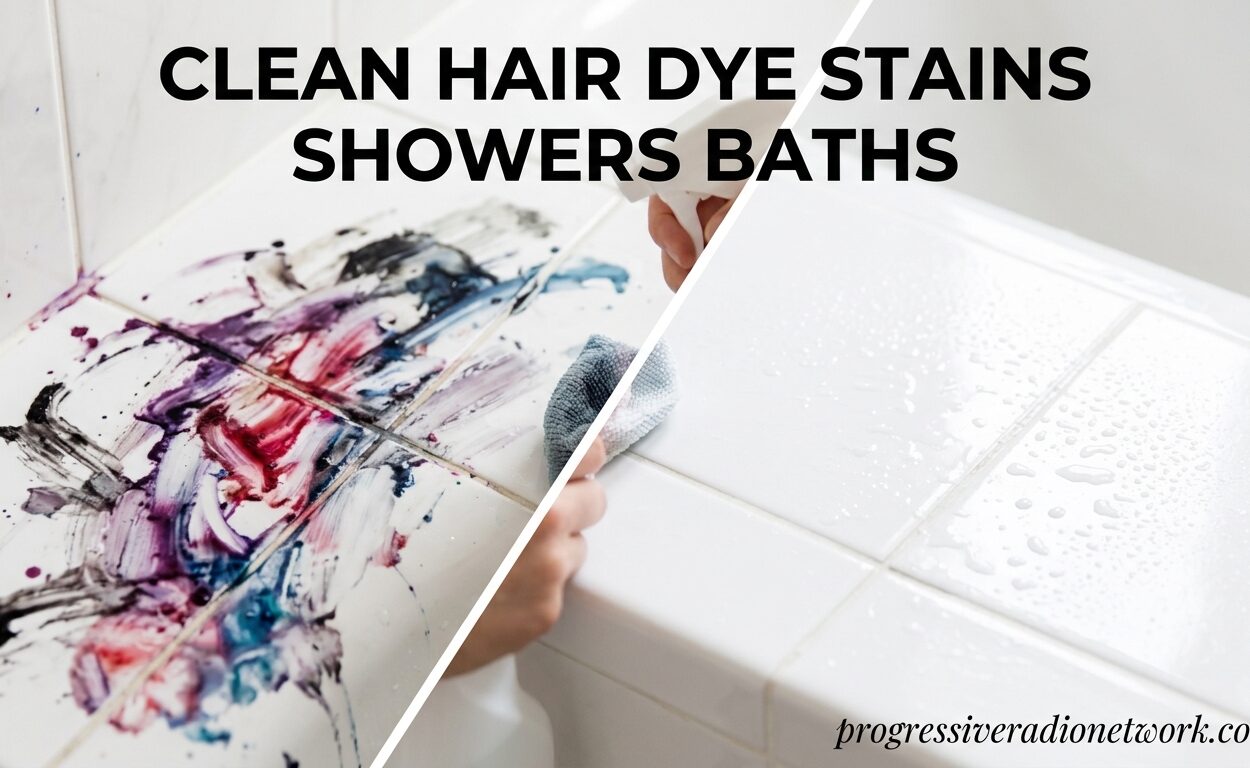
Discovering a splotch of bright pink or deep brown hair dye on your pristine bathtub creates instant panic. I’ve been there, staring at a fresh stain and wondering if my security deposit was about to vanish. Learning how to clean hair dye stains from showers and baths properly saves you from permanent discoloration and expensive professional cleaning services.
Hair dye contains strong pigments designed to bond with hair fibers, but those same chemicals grab onto bathroom surfaces with equal determination. The good news? Fresh stains respond remarkably well to quick action, and even set-in stains usually surrender to the right approach. After testing dozens of methods and researching real user experiences, I’ll walk you through everything that actually works.
Why Hair Dye Stains Bathroom Surfaces (September 2026)
Hair dye molecules penetrate microscopic pores in porcelain, acrylic, fiberglass, and ceramic surfaces. This chemical bonding process mimics how dye attaches to your hair shaft, creating permanent color change if left untreated. Fresh stains remain on the surface layer, making them relatively easy to remove with the right cleaning agents.
Surface porosity matters immensely. Older tubs with worn glaze, unsealed grout, and fiberglass surfaces absorb dye more readily than brand-new porcelain. Red and pink dyes contain the most stubborn pigments, which explains why forum users consistently report these colors as the most challenging to remove.
Temperature during application also affects staining. Hot water opens surface pores, allowing deeper dye penetration. This explains why stains from a steaming hot rinse often prove more stubborn than those from cooler water temperatures.
Emergency Quick Fixes: Act Within 10 Minutes
Catching a hair dye stain immediately gives you the best chance of complete removal. I recommend keeping these supplies on hand before you even start coloring your hair. Speed is your biggest advantage.
Step 1: Flush with hot water immediately. The moment you spot dye on your tub or shower surface, turn the water to its hottest setting and rinse the area thoroughly. This removes loose pigment before it bonds.
Step 2: Apply dish soap directly. Squirt Dawn dish soap (original blue formula works best) directly onto the wet stain. Let it sit for 30 seconds to break down oils in the dye formula.
Step 3: Scrub gently with a non-abrasive sponge. Work in circular motions, applying moderate pressure. Avoid abrasive scrubbers that can damage the surface glaze.
Step 4: Rinse and assess. Wash away the soap and check if the stain faded. Most fresh stains respond completely to this quick treatment.
Step 5: Repeat if needed. If traces remain, move to vinegar and baking soda method below.
Vinegar and Baking Soda: The Most Reliable Method
This combination creates a chemical reaction that lifts dye from surfaces without harsh chemicals. I’ve used this method successfully on porcelain, acrylic, and fiberglass showers. The fizzing action helps break the bond between dye and surface.
Mix equal parts white vinegar and baking soda to form a thick paste. The mixture will bubble vigorously—that’s exactly what you want. Apply the paste directly to the stain, covering it completely with a layer about 1/4 inch thick.
Let the paste sit for 15-20 minutes. During this time, the acetic acid in vinegar penetrates the stain while the baking soda provides gentle abrasion. You’ll notice the paste starting to discolor as it pulls dye from the surface.
Scrub gently with a soft sponge or cloth in circular motions. For stubborn areas, use a soft-bristled toothbrush to work the paste into grout lines or textured surfaces. Rinse thoroughly with warm water and assess the results.
Most stains disappear after one treatment. If the stain persists, repeat the process. This method is safe for virtually all bathroom surfaces and won’t damage protective glazes.
Rubbing Alcohol and Hand Sanitizer Methods
Isopropyl alcohol dissolves hair dye effectively because the dye is oil-based. This works particularly well on fresh stains and semi-permanent dyes. I keep rubbing alcohol in my cleaning kit specifically for this purpose.
Apply rubbing alcohol directly to the stain using a cloth or cotton ball. Let it sit for 1-2 minutes to penetrate the dye. Scrub gently with a sponge, applying alcohol as needed to keep the area saturated.
Hand sanitizer works surprisingly well too, thanks to its high alcohol content. It’s easier to apply than liquid alcohol and clings better to vertical shower walls. Squeeze a generous amount over the stain, wait 2 minutes, then scrub and rinse.
This method excels at removing dye from fiberglass and acrylic surfaces where abrasive cleaners might cause damage. Always test in a small inconspicuous area first, especially on older tubs with worn finishes.
Hydrogen Peroxide Paste for Stubborn Stains
Hydrogen peroxide acts as a gentle bleach, oxidizing hair dye pigments without the harshness of chlorine bleach. This method works well on set-in stains that survived other treatments. I recommend the 3% concentration commonly found in drugstores.
Mix hydrogen peroxide with baking soda to create a spreadable paste. Use roughly 2 parts peroxide to 1 part baking soda. Apply to the stain and let it sit for 20-30 minutes. You might notice some bubbling as the peroxide reacts to the dye.
Scrub gently with a soft sponge, paying attention to edges where stain concentration is highest. Rinse completely with cool water. Avoid using this method on natural stone surfaces or colored grout, as peroxide can cause slight fading.
For particularly stubborn stains, cover the paste with plastic wrap while it sits. This prevents evaporation and keeps the peroxide active longer. Leave it for up to an hour before scrubbing.
Bar Keepers Friend for Tough Jobs
Bar Keepers Friend contains oxalic acid, which dissolves tough stains including hair dye. This commercial cleaner consistently ranks as the most effective option in forum discussions. I’ve seen it remove week-old stains that nothing else touched.
Sprinkle the powder generously over the stained area. Add small amounts of water to create a paste directly on the surface. Let it sit for 5-30 minutes depending on stain severity—the longer the better for set-in stains.
Scrub with a wet sponge or cloth, using circular motions. The powder provides mild abrasion while the oxalic acid breaks down the dye. Rinse thoroughly with plenty of water, removing all powder residue.
Use caution with this product on worn tubs or scratched surfaces. The abrasive quality can damage already compromised glazes. Always test in a small area first and wear gloves to protect your skin.
Surface-Specific Cleaning Guidelines
Different bathroom materials require different approaches. Using the wrong method can permanently damage your tub or shower. Here’s what I’ve learned from years of cleaning various surfaces.
Porcelain and ceramic tubs: These durable surfaces tolerate most cleaning methods. Vinegar and baking soda work excellently, and Bar Keepers Friend is safe for intact glazes. Avoid harsh abrasives on worn or cracked porcelain.
Acrylic tubs: These scratch easily and require gentle treatment. Stick to vinegar solutions, rubbing alcohol, or hydrogen peroxide. Never use abrasive powders, steel wool, or stiff brushes on acrylic surfaces.
Fiberglass showers: Fiberglass is porous and stains easily, but also scratches easily. Use non-abrasive methods exclusively. Rubbing alcohol and hand sanitizer work particularly well on fiberglass without causing damage.
Shower tile grout: Grout absorbs dye rapidly and proves difficult to clean. Create a thick baking soda and vinegar paste, apply it directly to grout lines, and let it sit for 30 minutes. Scrub with a grout brush or old toothbrush. For stubborn grout stains, hydrogen peroxide paste works well but test on colored grout first.
How to Clean Hair Dye Stains Showers Baths: Set-In Stains
Stains that sat overnight require more aggressive treatment. The dye has fully penetrated surface pores and formed stronger chemical bonds. Don’t panic—even these usually respond to persistent treatment.
Start with Bar Keepers Friend paste, leaving it for the maximum recommended time. If that fails, create a paste using oxygen bleach (OxiClean) and water. Apply thickly, cover with plastic wrap, and let it work overnight.
For truly stubborn stains, toilet bowl cleaner with bleach can work on white porcelain surfaces only. Apply carefully with a sponge, avoiding contact with colored fixtures or grout. Leave for 15 minutes, scrub gently, and rinse extremely thoroughly.
Never mix bleach with other cleaners, especially vinegar or ammonia. This creates dangerous fumes. Ventilate the bathroom well when using any bleach-based products.
Prevention: Protect Your Bathroom Before Dyeing
Preventing stains is infinitely easier than removing them. After dealing with my share of accidental dye spills, I’ve developed a routine that keeps my bathroom pristine.
Apply petroleum jelly to surfaces: Coat the tub edge, faucet, and any areas where dye might drip with a thick layer of petroleum jelly. The jelly creates a barrier that dye can’t penetrate. Wipe it away after rinsing your hair.
Line your tub with plastic: Use a heavy-duty trash bag or plastic drop cloth to line the bathtub bottom. Tape it securely around the edges. This catches all drips and splashes during rinsing.
Use a spray bottle for rinsing: Instead of dunking your head under the faucet, use a spray bottle to direct water precisely where needed. This minimizes runoff onto tub surfaces.
Cover drain areas: Dye collects around drains and creates stubborn stains. Place a washcloth or paper towel over the drain opening before starting.
Keep cleaning supplies nearby: Store vinegar, baking soda, and rubbing alcohol within arm’s reach. If you spot a drip, you can address it immediately before it sets.
Rental Property Protection Tips
As a renter, I understand the anxiety about potential damage fees. Taking proper precautions and documenting the process protects your security deposit.
Before dyeing your hair, photograph the bathtub and shower area to document existing condition. After cleaning any stains, take follow-up photos showing the restored condition. Keep dated photos of both conditions.
Consider portable options like using a large plastic storage bin as a rinse basin. This contains all dye runoff and makes disposal simple. Place the bin in the bathtub or shower to catch any spills.
If stains prove impossible to remove, address the situation with your landlord immediately. Honest communication often leads to better outcomes than attempting to hide damage. Many landlords appreciate proactive problem-solving.
For more cleaning tips and tools, check out our cleaning guide for streak-free surfaces which covers techniques that apply to various bathroom surfaces.
Frequently Asked Questions
How to get rid of hair dye stains in a bathtub?
The fastest method is flushing with hot water immediately, then applying a vinegar and baking soda paste. Let it sit 15 minutes, scrub gently, and rinse. For stubborn stains, Bar Keepers Friend paste left for 30 minutes typically removes the dye completely.
What removes hair dye stains from a shower?
Rubbing alcohol works excellently on fresh shower stains. Apply directly, wait 2 minutes, scrub gently, and rinse. For fiberglass showers, hand sanitizer is equally effective and easier to apply on vertical surfaces. Vinegar and baking soda paste also works well on all shower surfaces.
How to get hair dye out of shower grout?
Grout requires special treatment because it’s highly porous. Make a thick paste of baking soda and vinegar, apply to grout lines, and let sit 30 minutes. Scrub with a grout brush or old toothbrush. Hydrogen peroxide paste also works but test on colored grout first to avoid fading.
Will bleach remove hair dye from tub?
Chlorine bleach can remove hair dye from white porcelain tubs, but use caution. Toilet bowl cleaner with bleach works when applied for 15 minutes, then rinsed thoroughly. Never use bleach on colored fixtures, acrylic tubs, or fiberglass as it causes permanent discoloration. Never mix bleach with other cleaners.
How long does it take for hair dye to permanently stain a tub?
Hair dye begins bonding with surfaces within 5-10 minutes. Fresh stains removed within this timeframe usually come completely clean. After 30 minutes, stains become more stubborn but typically still removable with proper treatment. Stains left overnight often require multiple treatments or stronger cleaners like Bar Keepers Friend.
Conclusion
Learning how to clean hair dye stains from showers and baths properly saves you from permanent bathroom discoloration and potential fees. The key is immediate action with the right cleaning method for your specific surface. Fresh stains respond to vinegar and baking soda, while set-in stains might require Bar Keepers Friend or hydrogen peroxide treatments.
Always match your cleaning approach to your tub material—porcelain tolerates stronger treatments than acrylic or fiberglass. When in doubt, start with the gentlest method and progress gradually. Prevention remains the best strategy, so take five minutes to protect surfaces before your next hair coloring session.
Have you successfully removed stubborn hair dye stains using a method not mentioned here? Consider treating yourself to some spa and beauty gift ideas to transform your bathroom into a proper self-care space for future hair coloring sessions.



Leave a Comment