
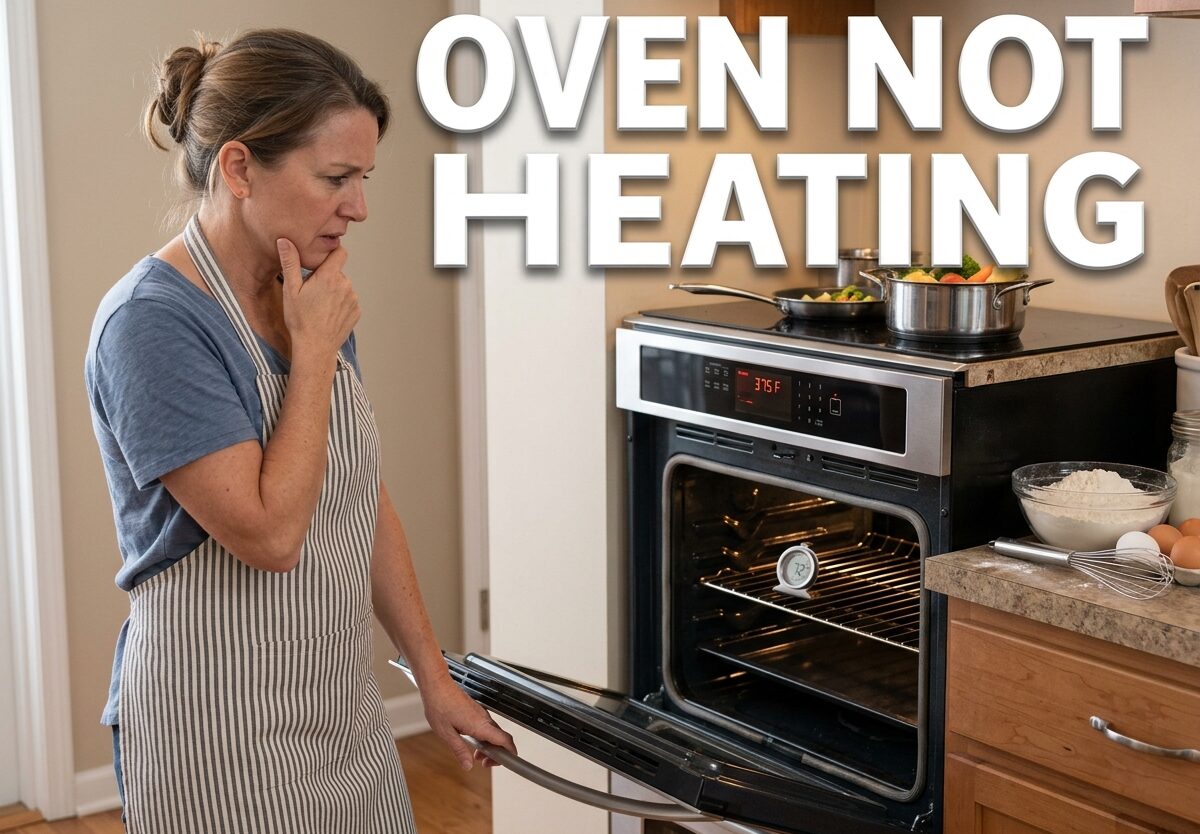
You’ve got dinner planned, the oven is preheating, and then… nothing. A cold oven is one of the most frustrating appliance problems, leaving you wondering what went wrong and how to fix it fast. I’ve helped countless homeowners diagnose oven issues, and most heating problems stem from a handful of common causes.
This guide will walk you through the most likely reasons your oven isn’t heating, whether you have an electric or gas model. I’ll explain what to check first, when you can safely fix it yourself, and when it’s time to call a professional. Let’s get your oven working again.
Safety First Before Troubleshooting
Before diving into any oven diagnostics, I need to share some crucial safety precautions. These aren’t suggestions – they’re essential steps to protect yourself from injury or worse.
For electric ovens: Always turn off the circuit breaker at your electrical panel before removing any panels or touching components. Even when the oven is “off,” there can be live voltage inside. I’ve seen too many people skip this step and regret it.
For gas ovens: Turn off the gas supply valve before doing any inspection work. If you smell gas at any point, leave your home immediately and call your gas company from outside. Gas leaks aren’t something to mess around with.
Now that we’ve covered the safety basics, let’s start with the simplest checks and work our way to more complex issues.
Oven Not Heating: Check Power Supply First
It sounds obvious, but I can’t tell you how many times a “broken” oven just wasn’t getting power. Before assuming the worst, check these basics first.
Check your circuit breaker: Go to your electrical panel and look for the breaker labeled “oven” or “range.” If it’s tripped (in the middle position), flip it fully off, then back on. Oven breakers often trip due to power surges or overheating.
Test the outlet: For electric ovens plugged into an outlet (common for older models), plug in a small appliance to verify the outlet has power. A dead outlet means a wiring issue that needs professional attention.
Inspect the power cord: Look for any visible damage, fraying, or burn marks on the power cord where it connects to the oven. Damaged cords are fire hazards and need immediate replacement.
If your stove burners work but the oven doesn’t, you likely have a power issue specific to the oven circuit. This narrows down the problem significantly.
Electric Oven Not Heating: Heating Element Problems
When your electric oven turns on but won’t heat, the heating elements are the most common culprit. Electric ovens have two heating elements – the bake element at the bottom and the broil element at the top – and either can fail.
Signs of a bad bake element: When you turn on the oven, the bake element should glow bright red within a few minutes. If it stays dark or only partially heats, the element is likely burned out. You might also see visible damage like blisters, cracks, or burn marks on the element surface.
Broil element issues: If your broiler doesn’t work but baking does, the broil element at the top of the oven has probably failed. These elements typically cost $30-60 and are relatively straightforward to replace yourself.
Testing with a multimeter: For a definitive test, unplug your oven and use a multimeter to check for continuity. A good element should read 10-30 ohms. If your meter shows infinite resistance (no continuity), the element is bad and needs replacement.
I’ve replaced many heating elements over the years, and most DIYers can handle this repair in about 30 minutes with just a screwdriver. Just make sure to purchase the exact replacement part for your oven model.
Gas Oven Not Heating: Igniter Failure is Most Common
Gas ovens work differently than electric models. Instead of heating elements, they use an igniter (often called a glow bar) to light the gas burner. When the igniter fails, the oven can’t heat at all.
How gas oven igniters work: When you turn on the oven, the igniter should glow bright orange. Once it reaches the proper temperature, it signals the gas valve to open and lights the gas. This entire process usually takes 30-60 seconds.
Weak igniter symptoms: Here’s the tricky part – a failing igniter might still glow, but not reach the temperature needed to open the gas valve. If your igniter glows but the oven never heats up, the igniter is likely weak and needs replacement.
Testing the igniter: A working igniter should draw 2.5-3.0 amps. If it draws less than 2.5 amps, it’s not generating enough heat to open the gas valve safely. This test requires an amp meter, which is why many people opt for professional diagnosis.
Gas oven igniters typically cost $40-80, and while some homeowners replace them themselves, I generally recommend professional service for gas appliances due to the safety risks involved.
Temperature Sensor and Thermostat Issues
Modern ovens use temperature sensors (also called thermistors) to monitor oven heat and communicate with the control board. When these sensors fail, your oven might not heat properly or might not heat at all.
Sensor location: The temperature sensor is a thin metal rod protruding from the back wall of the oven, usually in the upper left or right corner. It’s about 3-6 inches long and easy to spot.
Testing the sensor: With the oven off and cool, use a multimeter to test the sensor. At room temperature, it should read around 1,000-1,100 ohms. If the reading is significantly different (especially infinite resistance), the sensor is faulty.
Thermostat problems: Older ovens use mechanical thermostats that can fail over time. If your oven heats unevenly or never reaches the set temperature, the thermostat might be the issue. Thermostat replacement typically costs $150-300 professionally.
Control board relay failure: I’ve seen many cases where both heating elements test fine, but the oven still won’t heat. This usually indicates a failed relay on the electronic control board. Control board replacement is complex and costs $200-400, making it a borderline repair vs. replace decision for older ovens.
Oven Door Seal and Heat Loss Problems
While less common, a damaged door seal (also called a gasket) can cause heating problems. If heat escapes through the door, your oven will struggle to reach or maintain temperature.
Inspect the door gasket: Look around the oven door perimeter for the rubber or silicone seal. Check for cracks, tears, flattening, or gaps. A damaged gasket allows heat to escape and can significantly affect oven performance.
Test for leaks: With the oven heated, carefully run your hand around the door edge (without touching). If you feel significant heat escaping, the gasket needs replacement. Door gaskets cost $20-50 and are easy to install yourself.
Check door alignment: Sometimes the door itself becomes misaligned due to worn hinges or bent door frames. If your door doesn’t close flush with the oven frame, heat will escape. Hinge replacement might be needed in severe cases.
When to Call a Professional for Oven Repair
After troubleshooting hundreds of ovens, I’ve learned which repairs are DIY-friendly and which require professional expertise. Here’s my honest assessment of when to call a pro.
Call a professional for:
- Gas oven repairs – The risk of gas leaks or carbon monoxide isn’t worth saving a few dollars
- Control board replacement – Complex electrical work requiring specialized knowledge
- Wiring issues – If you find burnt or damaged wiring, stop and call a professional
- Complex diagnosis – If multiple components seem to fail simultaneously, you need expert troubleshooting
DIY-friendly repairs include:
- Heating element replacement – Straightforward with basic tools
- Door gasket replacement – Simple and inexpensive
- Temperature sensor replacement – Usually accessible and easy to swap
- Circuit breaker resets – Basic electrical panel work
Professional oven repair typically costs $150-400 including parts, depending on the issue and your location. Get multiple quotes and ask about warranty on the repair before agreeing to service.
Repair vs Replace: Cost Guide by Oven Age
One of the most common questions I hear is whether it’s worth fixing an oven that won’t heat. Here’s my rule of thumb based on oven age and repair costs.
Under 5 years old: Almost always worth repairing. These ovens have many years of life left, and $150-400 in repairs beats $1,500-3,000 for a new oven. Plus, newer ovens might have warranty coverage.
5-10 years old: Repair if the cost is under $300. For more expensive repairs, consider the oven’s original quality and whether you like its features. Mid-range to high-end ovens are worth fixing; budget models might not be.
Over 10 years old: Only repair if the cost is under $200 and the oven is otherwise in good condition. At this age, other components are likely to fail soon, and you’re better off investing in a new, more energy-efficient model.
Consider replacement if: Your oven has other issues (uneven cooking, loud noises, broken display), parts are discontinued, or you want to upgrade to modern features like convection or smart connectivity.
FAQs
Why does my oven turn on but not heat up?
When your oven turns on but doesn’t heat, it usually means the heating element (electric) or igniter (gas) has failed. Other common causes include a tripped circuit breaker, blown thermal fuse, or malfunctioning temperature sensor. The control board might also have a failed relay preventing power from reaching the heating components.
Can I fix my oven myself?
Simple repairs like replacing heating elements, door gaskets, or temperature sensors are DIY-friendly if you’re comfortable with basic tools and safety procedures. However, gas oven repairs, control board replacement, and wiring issues should be left to professionals due to safety risks. Always turn off power before attempting any repairs.
Is it worth replacing the heating element in my oven?
Heating elements cost $30-60 and are easy to replace, making them very worth fixing if your oven is otherwise in good condition. Element replacement typically takes less than 30 minutes and can extend your oven’s life by years. I recommend replacing both bake and broil elements if one fails and the oven is over 8 years old.
How much does it cost to fix an oven that doesn’t heat up?
DIY heating element replacement costs $30-60 for parts. Professional repair ranges from $150-400 depending on the issue. Heating element replacement runs $100-200 professionally, igniter replacement costs $150-250, and control board replacement runs $250-400. Always get a detailed quote before authorizing repairs.
Why does my oven take forever to preheat?
Slow preheating usually indicates a weak heating element, failing igniter, or temperature sensor sending incorrect data. Other causes include heat loss through damaged door seals or failing thermostat calibration. If preheating takes longer than 15-20 minutes, have the oven diagnosed before complete failure occurs.
Conclusion: Getting Your Oven Heating Again
An oven not heating is frustrating, but most issues have straightforward solutions once you identify the culprit. Start with the simple checks – power supply, circuit breaker, and visible element damage – before moving to more complex diagnostics.
For electric ovens, heating elements are the most common problem and are easy to replace yourself. Gas oven igniter failure is equally common but I recommend professional service due to safety considerations. Temperature sensors and thermostats can also fail, though less frequently.
If you’re unsure about any repair or dealing with a gas oven, there’s no shame in calling a professional. The $150-400 repair cost is far less than the risk of injury or causing further damage to your appliance. With proper diagnosis and repair, your oven should be heating properly again for years to come.


Leave a Comment