
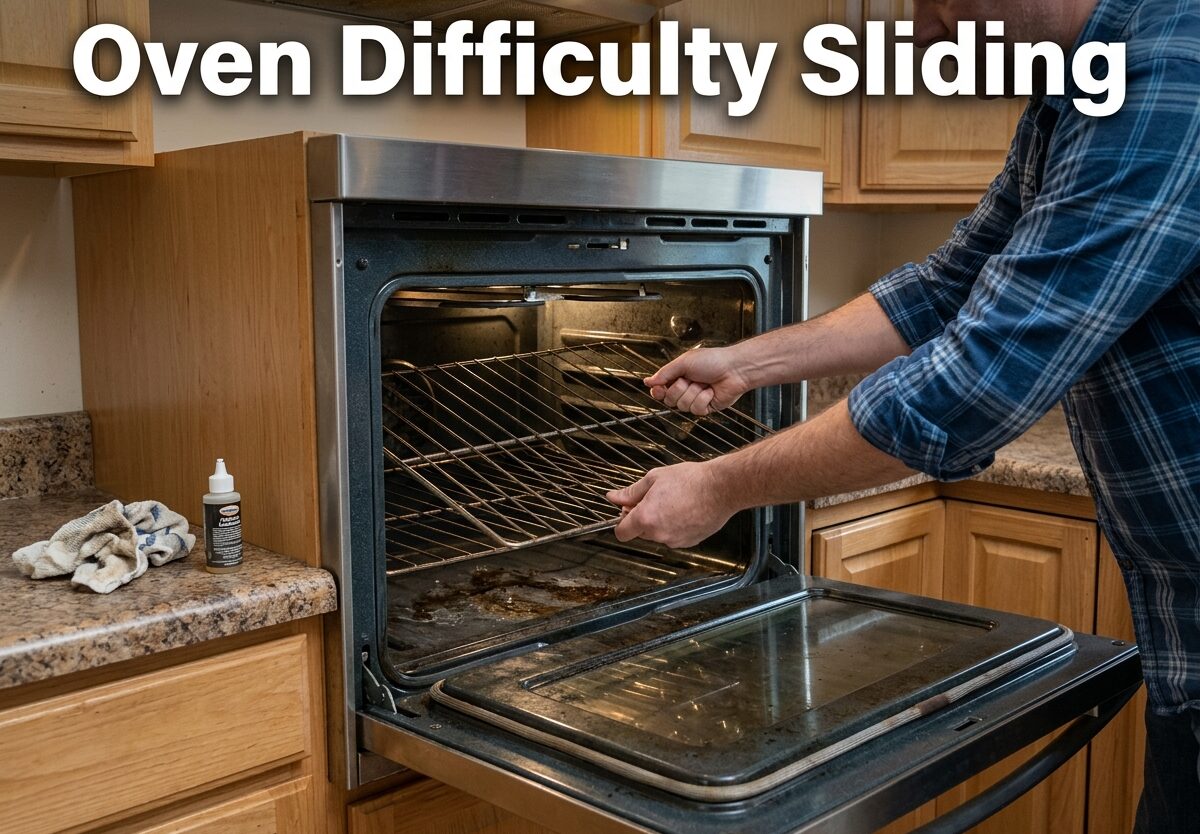
Dealing with oven racks that won’t slide smoothly is one of the most frustrating kitchen experiences. You go to check on your roasted vegetables or slide in a fresh batch of cookies, and the rack jams, scrapes against the walls, or requires way too much force to move. I’ve dealt with this issue in multiple kitchens over the years, and it’s especially common after running a self-cleaning cycle or with older ovens that have seen years of heavy use.
The good news is that oven difficulty sliding is usually an easy fix. In most cases, your oven racks just need proper cleaning and lubrication. This guide covers exactly why racks get stuck, the safest ways to get them gliding smoothly again, and what products you should never use on your oven.
Why Do My Oven Racks Become Difficult to Slide?
Understanding why your oven racks are sticking helps you choose the right solution. Several common culprits cause oven difficulty sliding, and identifying which one affects your oven makes the fix much easier.
The self-clean cycle is the number one cause. Those extreme temperatures (up to 900°F) can cause metal expansion and warping. Plus, any food residue carbonizes into a gritty, abrasive layer that creates friction between the rack and the oven walls.
Food debris buildup accumulates gradually over time. Grease splatters, sugar spills, and crumbs settle into the rack tracks and harden. This buildup acts like sandpaper, making every slide a struggle.
Normal wear and oxidation affects older ovens. Over years of heating and cooling cycles, the metal rack edges and oven wall supports can develop rough spots or rust-like discoloration that increases friction.
Extension and telescoping racks have additional moving parts. Ball bearings, glides, and rollers can accumulate debris or lose their factory lubrication, causing these premium racks to perform worse than basic flat racks.
How to Make Oven Racks Slide Easier
The simplest and safest solution for most oven difficulty sliding issues is vegetable oil lubrication. This method works for standard flat racks on both gas and electric ovens, and it’s food-safe when applied correctly.
Here’s the step-by-step process I’ve used successfully:
Step 1: Let your oven cool completely. Never attempt to lubricate hot racks or touch interior oven surfaces while warm.
Step 2: Remove all oven racks and set them on a protected surface. Old towels or newspaper work well to catch any drips.
Step 3: Clean the rack edges with warm soapy water and a sponge or steel wool pad. Pay special attention to the sides that contact the oven walls. You want to remove any loose debris, grease, or carbon buildup before lubricating.
Step 4: Dry the racks thoroughly with a clean towel. Any moisture left on the metal will prevent the oil from adhering properly.
Step 5: Apply a small amount of vegetable oil to a paper towel or clean cloth. You only need a few drops per rack side—less is more here.
Step 6: Wipe the oiled cloth along the outer edges of each rack where it contacts the oven supports. Cover the full length of both sides with a thin, even coating.
Step 7: Reinstall the racks and test the movement. They should glide noticeably easier. If needed, apply one more thin coat.
Important: Wipe away any excess oil with a dry paper towel. You want a thin film, not visible drips or puddles. Too much oil can smoke or create odors during the next heating cycle.
Cleaning Oven Rack Tracks and Supports
Sometimes the problem isn’t the racks themselves but the tracks and supports inside the oven cavity. These horizontal ledges on the side walls collect grease, food particles, and carbonized residue over time.
For thorough cleaning that resolves oven difficulty sliding:
Materials needed: Warm water, mild dish soap, steel wool pad or non-abrasive scrubber, clean towels, flashlight (optional but helpful).
Step 1: Ensure the oven is completely cool and remove all racks.
Step 2: Mix warm water with a few drops of dish soap in a bowl or sink.
Step 3: Dip your steel wool pad or scrubber into the soapy water and wring out excess liquid.
Step 4: Scrub each rack support track on both oven walls. Use firm pressure and focus on removing any buildup, discoloration, or rough spots. A flashlight helps you see what you’re working on.
Step 5: Wipe cleaned tracks with a damp cloth to remove loosened debris.
Step 6: Dry thoroughly with a clean towel. Any moisture left in the tracks can lead to rust or oxidation.
Step 7: While you have the racks out, clean the rack supports themselves (the angled metal pieces on the walls that hold the racks). These often get overlooked but can contribute significantly to oven difficulty sliding.
Extension Rack vs Flat Rack Lubrication
Not all oven racks are created equal, and lubrication methods vary by rack type. Using the wrong approach can damage expensive components or make the problem worse.
Flat racks (the standard chrome-plated steel racks found in most ovens) respond well to the vegetable oil method described above. Their simple design means fewer places for debris to hide and easier lubrication access.
Extension racks and telescoping racks feature rolling mechanisms and ball bearing systems. These premium racks are designed to glide forward when the oven door opens, making it easier to access food without reaching into a hot oven.
For extension racks experiencing difficulty sliding:
Check for debris first. Food particles can jam the rollers and prevent smooth extension. Use compressed air or a vacuum with a narrow attachment to clean around the moving parts.
Use graphite lubricant only. Never use vegetable oil on extension racks—the oil can gum up the ball bearings and attract more debris. Graphite lubricant (available as a dry powder or spray) is designed for high-temperature applications and won’t interfere with the mechanical components.
Many manufacturers including GE offer specific graphite lubricant products (like GE part WB02T10303) formulated for oven rack applications.
Ball bearing racks require special care. If your racks have visible ball bearings or roller mechanisms, avoid liquid lubricants entirely. These systems typically use factory-installed dry lubricants that can’t be easily replenished at home. If cleaning doesn’t resolve the issue, contact the manufacturer about replacement rack glides.
What NOT to Use on Oven Racks
Safety is critical when addressing oven difficulty sliding. Using the wrong products can create fire hazards, damage your oven, or release toxic fumes at high temperatures.
Never use WD-40 or standard penetrating oils. These products are petroleum-based and can ignite at oven temperatures. They also create unpleasant odors and potentially harmful fumes when heated. The WD in WD-40 stands for “Water Displacement,” not “oven lubricant”—it’s designed for entirely different purposes.
Avoid olive oil, butter, or cooking sprays. While these are food-safe, they have low smoke points and will burn off quickly during normal oven use, leaving behind sticky, carbonized residue that makes the problem worse. They can also create unpleasant smells and potentially trigger smoke alarms.
Skip household sprays and cleaners. Products like PAM or other cooking sprays aren’t designed for the high-heat environment of oven rack tracks. They’ll bake onto surfaces and create more friction, not less.
Don’t use automotive lubricants. Grease, lithium spray, or other garage lubricants aren’t food-safe and can contaminate your cooking environment. They also tend to melt and run at oven temperatures, creating a mess and potential safety hazards.
Vegetable oil (canola, corn, or soybean oil) remains the safest DIY option for standard flat racks. It has a high smoke point (around 450°F), is food-safe, and provides adequate lubrication without dangerous fumes.
Troubleshooting Persistent Oven Difficulty Sliding
If you’ve cleaned your racks, lubricated them properly, and they’re still sticking, there may be other issues at play.
Check if your oven is level. An unlevel oven can cause racks to bind or slide unevenly. Use a smartphone app or a traditional bubble level on the oven rack or oven floor. If your oven isn’t level, adjust the leveling legs (on freestanding ranges) or consult a professional for built-in models.
Verify proper rack installation. Most ovens have specific rack positions with angled supports. Racks installed backward or on the wrong tracks won’t slide smoothly. Check your owner’s manual to confirm correct rack orientation for your model.
Inspect for warping or damage. Examine your racks for visible bending, warping, or damage. Warped racks from extreme temperature changes (especially after self-cleaning cycles) may never slide perfectly again. Replacement racks are relatively inexpensive and often the best long-term solution.
Consider rack replacement. If racks are heavily damaged, heavily corroded, or the chrome plating is flaking off, lubrication won’t help. Damaged racks can scratch your oven’s interior enamel coating, creating more problems. Most major appliance brands sell replacement racks that fit specific models.
When to call a professional: If you’ve tried all the above solutions and still experience oven difficulty sliding, especially with a newer oven, there may be an underlying mechanical issue. Extension rack mechanisms, oven door alignment, or internal track problems may require professional diagnosis and repair.
Preventive Maintenance for Smooth-Sliding Oven Racks
Once you’ve resolved your oven difficulty sliding issues, regular maintenance prevents future problems. I recommend adding oven rack care to your quarterly kitchen cleaning routine.
Every 3 months: Remove racks and wipe down the edges with a damp cloth to prevent grease and debris buildup. Inspect for any signs of damage or wear.
After self-cleaning cycles: Expect some rack sticking and reapply vegetable oil lubrication as needed. The extreme heat of self-cleaning removes previous lubrication, so this is normal maintenance.
Annual deep cleaning: Once a year, give your oven rack tracks a thorough cleaning with soapy water and steel wool as described earlier. This prevents gradual buildup that leads to oven difficulty sliding over time.
Avoid overloading racks. Excessively heavy bakeware can warp racks over time, especially when combined with high heat. Distribute weight evenly and use the rack positions designed for heavy items (usually the lowest positions).
FAQs
How do I get my oven racks to slide easier?
Clean rack edges with warm soapy water, dry thoroughly, then apply a thin coating of vegetable oil to the sides where racks contact oven supports. Remove excess oil and reinstall racks for smoother sliding.
How do you lubricate a sliding oven rack?
For flat racks, use vegetable oil applied with a paper towel to rack edges. For extension racks with ball bearings, use only graphite lubricant specifically designed for high-temperature applications. Never use WD-40 or cooking sprays.
Can you use WD-40 on oven racks?
No, never use WD-40 on oven racks. WD-40 is petroleum-based and can ignite at oven temperatures, creating a fire hazard. It also produces harmful fumes when heated. Use only food-safe vegetable oil for flat racks or graphite lubricant for extension racks.
Why do oven racks stick after self-cleaning?
Self-cleaning cycles reach extreme temperatures up to 900°F, causing metal expansion and warping. The heat also carbonizes any food residue into abrasive grit that increases friction. Reapplying vegetable oil lubrication after the cycle resolves this issue.
What is the best lubricant for oven racks?
For standard flat racks, vegetable oil (canola, corn, or soybean) is the safest and most effective option. For extension racks with moving parts, use dry graphite lubricant specifically designed for high-temperature applications. Avoid WD-40, cooking sprays, and automotive lubricants.
How to slide an oven without scratching the floor?
Place a non-slip mat or drawer liner under the oven before sliding. Alternatively, use furniture sliders or a piece of wax paper under the oven feet. For wall ovens, ensure the mounting is secure and consult a professional if alignment is causing floor scratches.
Conclusion
Oven difficulty sliding is a common annoyance that doesn’t require expensive repairs or replacement parts. In most cases, a thorough cleaning and proper lubrication with vegetable oil will have your racks gliding smoothly again. The key is identifying whether you have standard flat racks (vegetable oil works great) or extension/telescoping racks (graphite lubricant required).
Remember that oven racks naturally become more difficult to slide after self-cleaning cycles—this is normal and easily remedied. Regular maintenance every few months prevents gradual buildup and extends the life of your racks. If you’ve tried cleaning and lubrication without improvement, inspect for warping or damage and consider replacement racks as a cost-effective solution.
Safety should always come first. Never use WD-40, cooking sprays, or petroleum-based products in your oven. Stick with food-safe vegetable oil for standard racks and manufacturer-recommended graphite lubricant for extension systems. With the right approach and regular care, your oven difficulty sliding issues will be resolved for good.




Leave a Comment