
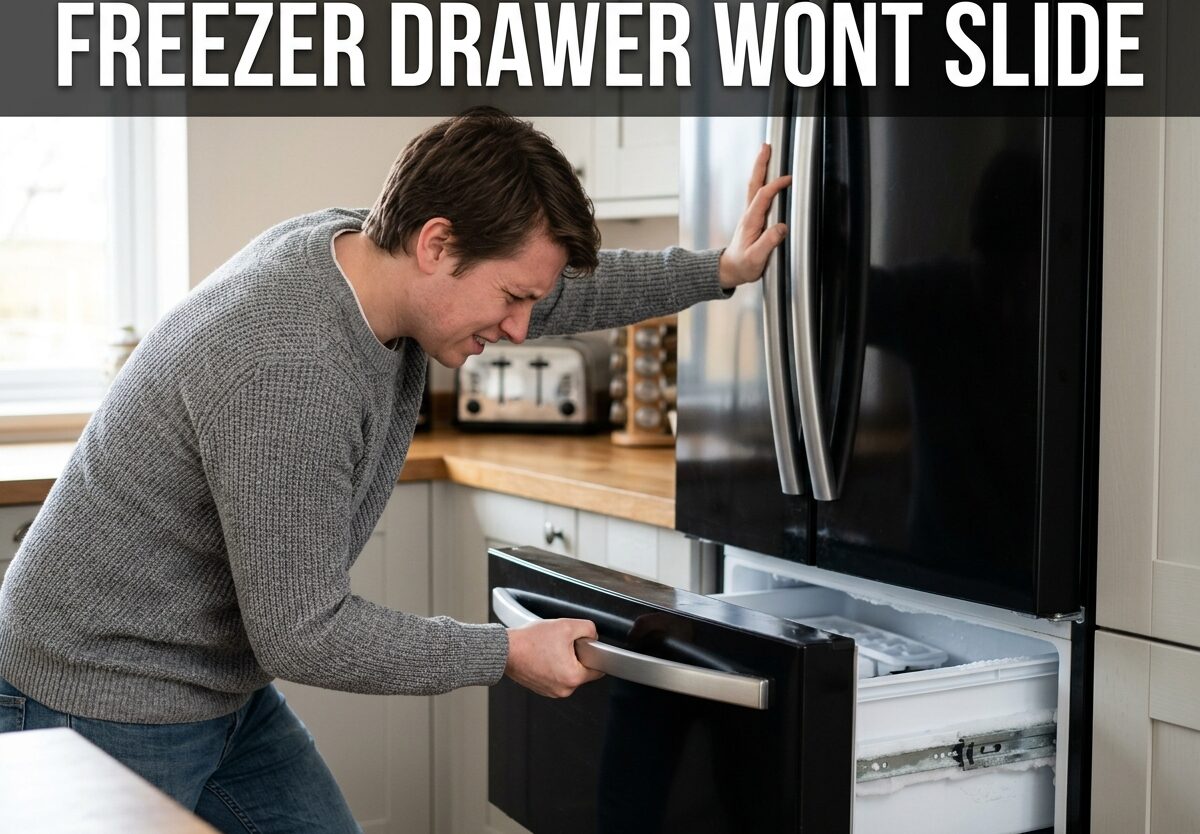
Nothing feels more frustrating than reaching into your freezer and finding the drawer completely stuck. I’ve been there, standing with melting groceries in hand, tugging at a freezer drawer that won’t budge an inch. When your freezer drawer won’t slide, it’s usually one of several common issues that you can diagnose and fix yourself.
This guide covers everything you need to know about fixing a freezer drawer that won’t slide, from quick assessments to complete repairs. Whether you have a bottom freezer drawer stuck on one side or a French door freezer drawer that won’t open at all, these solutions will help you get your appliance working smoothly again.
Common Causes of Freezer Drawer Sticking
Before you start forcing that drawer or calling a repair technician, understanding why freezer drawers get stuck is essential. Based on my research and real user experiences, most issues fall into five main categories.
Ice Buildup and Frost Accumulation
The most common reason a freezer drawer won’t slide is ice buildup. Frost forms on the tracks, rails, and around the drawer edges when warm air enters the freezer compartment. This happens frequently with door gaskets that aren’t sealing properly.
Ice can accumulate in the track channels, creating physical resistance that prevents smooth movement. In severe cases, the drawer literally freezes to the track system, requiring defrosting before any movement is possible.
Track and Rail Misalignment
Freezer drawers operate on a track and rail system that requires precise alignment. Over time, these components can shift due to normal use, vibration from the compressor, or accidental impacts when removing or replacing the drawer.
Misaligned tracks cause the drawer to bind or stick at certain points in the travel range. You might notice the drawer slides smoothly partway then jams, or it only opens an inch before stopping completely.
Damaged Rollers and Glide Mechanisms
Most modern freezer drawers use plastic rollers or ball-bearing glides to enable smooth sliding. These components wear out over time, especially if you frequently overload the drawer or have ice buildup putting extra strain on the system.
Worn rollers create resistance, and in some cases, they can crack or break entirely. Damaged glide mechanisms might cause the drawer to tilt or bind, making it difficult or impossible to open.
Gasket Seal Issues
The rubber gasket around your freezer door creates an airtight seal. When this gasket becomes damaged, dirty, or loses its flexibility, warm air enters the freezer compartment. This leads to excess frost and ice formation that affects drawer operation.
A faulty gasket also creates suction that can make the drawer feel stuck even when the tracks are clear. Many users report their freezer drawer feels “locked” when the real issue is a compromised door seal.
Food Debris and Obstruction
Sometimes the solution is simple. Food items can fall behind the drawer or get wedged in the track system. Large packages positioned incorrectly can prevent the drawer from fully closing or opening.
I’ve seen cases where a frozen item fell into the track channel, creating a physical blockage. Always check for obvious obstructions before assuming you have a mechanical problem.
How to Diagnose Your Freezer Drawer Problem
Before attempting any repairs, spend five minutes diagnosing the issue. This quick assessment will tell you whether you’re dealing with ice buildup, mechanical damage, or a simple obstruction.
Quick Assessment Steps
Start by gently pulling on the drawer. Does it move at all, or is it completely frozen in place? If the drawer opens slightly (an inch or two) then stops, you likely have ice buildup in the tracks or a misalignment issue.
Check the door gasket for signs of wear, tears, or debris. Run your hand around the seal to feel for gaps. A compromised gasket usually means ice buildup is your primary problem.
Look inside the freezer for visible frost patterns. Heavy frost on the back wall or ceiling indicates a sealing issue. Frost concentrated around the drawer tracks points directly to your sticking problem.
Try wiggling the drawer side to side while pulling gently. If it moves slightly in any direction, the tracks are likely misaligned rather than damaged. Complete lack of movement in any direction suggests ice buildup or broken components.
Step-by-Step Guide to Fixing a Stuck Freezer Drawer
Now that you’ve identified the likely cause, follow these steps to fix your freezer drawer. I’ve organized this guide from least invasive to most involved solutions.
Step 1: Prepare Your Freezer and Protect Your Food
Before you start working, you’ll need to deal with the food in your freezer. If you have a cooler with ice packs, transfer your frozen items there. If not, wrap everything in towels and place it in the coldest part of your kitchen.
Unplug your refrigerator for safety. This prevents any accidental activation while you’re working and eliminates the risk of electric shock. Never attempt repairs on a plugged-in appliance.
Step 2: Remove Visible Obstructions
Take everything out of the freezer drawer. Look for items that might have fallen behind the drawer or into the track channels. Remove any visible debris from the tracks using a vacuum with a narrow attachment or a soft brush.
Check for oversized items that might be preventing proper drawer operation. Sometimes simply rearranging how you load the drawer can solve sticking issues.
Step 3: Defrost the Freezer Drawer Mechanism
If ice buildup is your culprit, defrosting is essential. You have two options: the slow method (unplugging and waiting 24 hours) or the fast method (using gentle heat).
For the fast method, place bowls of hot water inside the freezer compartment and close the door. Change the water every 15-20 minutes as it cools. Never use a hair dryer or heat gun directly on freezer components, as this can damage plastic parts and create safety hazards.
After 1-2 hours, check if the drawer moves freely. If it still feels stuck, continue the defrosting process. Patience here prevents damage to the track system.
Step 4: Inspect and Clean the Tracks and Rails
Once ice is cleared, thoroughly inspect the track system. Look for cracks, breaks, or warping in the plastic components. Check for debris that might have been hidden under ice.
Clean the tracks with warm soapy water and a soft cloth. Avoid abrasive cleaners or scrubbers that can damage the surface. Dry everything completely before reassembly to prevent new ice formation.
Step 5: Check and Lubricate the Drawer Slides
Proper lubrication makes a significant difference in drawer operation. Use a food-grade silicone lubricant specifically designed for freezer applications. Avoid petroleum-based products, which can damage plastic components and contaminate your food.
Apply a thin layer of lubricant to the tracks and any visible rollers or glides. Work the drawer in and out several times to distribute the lubricant evenly. Wipe away any excess to prevent attracting debris.
Step 6: Test the Drawer Operation
Before reloading your freezer, test the drawer operation. It should slide smoothly with minimal resistance. If you still feel sticking or resistance, the problem might be deeper in the mechanism.
Check for proper alignment by observing the drawer as it opens and closes. It should move straight without tilting or binding. Any sideways movement indicates track misalignment that needs adjustment.
Step 7: Realign or Replace Damaged Parts
If cleaning and lubrication didn’t solve the problem, you may need to realign or replace components. Many freezer drawers have adjustable tracks that can be loosened, repositioned, and retightened.
For damaged rollers or broken track components, replacement parts are usually available through the manufacturer or appliance parts suppliers. Most drawer systems use simple clips or screws for removal and installation.
Lubrication Methods for Freezer Drawers
Proper lubrication prevents future sticking issues and extends the life of your drawer mechanism. Not all lubricants are safe for freezer use, so choose carefully.
Safe Lubricant Options
Food-grade silicone spray is the best choice for freezer drawers. It remains effective at low temperatures and won’t contaminate your food if small amounts transfer from the tracks. Apply sparingly, as excess attracts debris and can create a gummy mess.
White lithium grease works well for metal-on-metal contact points but should be used sparingly and only where food contact is impossible. Never use WD-40 or similar petroleum-based products in your freezer.
Some appliance manufacturers recommend dry lubricants like graphite powder for certain drawer systems. Check your owner’s manual for manufacturer-specific recommendations.
Application Techniques
Clean tracks thoroughly before applying any lubricant. Dirt mixed with lubricant creates an abrasive paste that accelerates wear. Apply lubricant to the tracks, rollers, and any visible friction points.
Work the drawer through several full open-close cycles to distribute the lubricant evenly. Wipe away any excess with a clean cloth. Reapply every 6-12 months as preventive maintenance.
Preventive Maintenance Tips
Once your freezer drawer is sliding smoothly again, these preventive measures will help prevent future sticking issues. Regular maintenance takes just minutes but can save hours of troubleshooting later.
Check Door Gaskets Regularly
Inspect your door gaskets every three months for signs of wear, tears, or loss of flexibility. Clean gaskets monthly with warm soapy water to remove debris that prevents proper sealing. Test the seal by closing the door on a dollar bill, it should offer resistance when pulled out.
Maintain Proper Temperature Settings
Keep your freezer at 0°F (-18°C) for optimal performance. Temperatures that are too warm cause excess frost, while temperatures that are too cold can create ice buildup that affects drawer operation.
Avoid Overloading the Drawer
Heavy loads strain the track system and rollers. Distribute weight evenly and avoid exceeding the drawer’s rated capacity. Most freezer drawers are designed for 30-50 pounds depending on the model.
Schedule Regular Cleaning
Clean the entire freezer compartment every 3-6 months, including the tracks and drawer mechanisms. Remove crumbs and debris that can interfere with smooth operation. This is also a good time to check for any developing issues.
Brand-Specific Considerations
Different refrigerator brands have unique drawer mechanisms and known issues. Understanding your brand’s specific design can help you troubleshoot more effectively.
LG Freezer Drawers
LG refrigerators often experience gasket seal issues on one side, particularly the left door gasket on French door models. Many LG owners report sticking resolved after cleaning the gasket channel with warm soapy water and ensuring proper alignment.
Samsung Freezer Drawers
Samsung bottom freezer drawers sometimes stick when the drawer closer mechanism becomes misaligned. Check the claw-shaped closer component to ensure it’s oriented correctly when the drawer is pulled out.
Whirlpool and KitchenAid
These brands use a glide rail system that can accumulate ice behind the back panel. If your Whirlpool drawer sticks, check for ice buildup on the tubes behind the freezer’s interior back panel.
GE and Sub-Zero
GE and Sub-Zero models emphasize proper basket orientation in the lower track system. Make sure the lower freezer basket is fully seated in the slides before attempting operation.
When to Call a Professional
While most freezer drawer issues are DIY-friendly, some situations require professional repair. If you’ve tried all the troubleshooting steps without success, or if you notice any of these warning signs, it’s time to call a technician.
Broken track components that require disassembly of the freezer liner, damaged internal components that aren’t accessible without special tools, or recurring issues that return shortly after repair all indicate professional service is needed. Additionally, if your refrigerator is still under warranty, DIY repairs might void your coverage.
Frequently Asked Questions
Why is my freezer drawer getting stuck?
Freezer drawers typically get stuck due to ice buildup in the tracks, misaligned rails, damaged rollers, or a faulty door gasket that allows warm air in and causes frost accumulation.
What can I use to lubricate my freezer drawers?
Use food-grade silicone spray specifically designed for freezer applications. Avoid petroleum-based products like WD-40, which can damage plastic components and contaminate food.
How to open a jammed freezer drawer?
First, unplug the refrigerator for safety. Remove visible obstructions, then defrost using bowls of hot water (never direct heat). Once ice clears, gently work the drawer while checking for debris in tracks.
How do I get my freezer drawer unstuck?
Start by defrosting the freezer for 1-2 hours using bowls of hot water. Clean tracks with warm soapy water, lubricate with food-grade silicone, and test operation. Forcing a stuck drawer can damage tracks.
How to stop freezer drawers from sticking?
Maintain proper door gaskets, clean tracks quarterly, lubricate with silicone every 6-12 months, avoid overloading, and keep freezer at 0F. Preventive maintenance prevents most sticking issues.
Why won’t my freezer drawer open?
Complete inability to open usually indicates severe ice buildup freezing the drawer to tracks, broken rollers, or track damage. Defrost thoroughly before assessing mechanical damage.
Conclusion
A freezer drawer that won’t slide is a frustrating problem, but most issues are solvable with basic troubleshooting and maintenance. Start with the simplest solutions, checking for ice buildup and cleaning the tracks before moving to more complex repairs.
Regular preventive maintenance, including gasket inspection, track cleaning, and proper lubrication, will keep your freezer drawer operating smoothly for years. When your freezer drawer won’t slide after trying these solutions, professional repair may be needed for track replacement or internal component issues.



Leave a Comment