
If your home doesn’t have a chimney or you’re looking for a safer water heating option, a direct vent water heater might be exactly what you need. These specialized units offer a sealed combustion system that draws air from outside and vents exhaust through the same wall penetration, making them ideal for tightly sealed homes, manufactured housing, and installations where traditional venting isn’t possible.
After researching water heater venting systems extensively, I’ve found that many homeowners don’t understand the critical differences between venting types or when a direct vent system becomes the right choice. This guide covers everything you need to know about direct vent water heaters, from how the technology works to installation requirements and cost considerations.
What Is a Direct Vent Water Heater
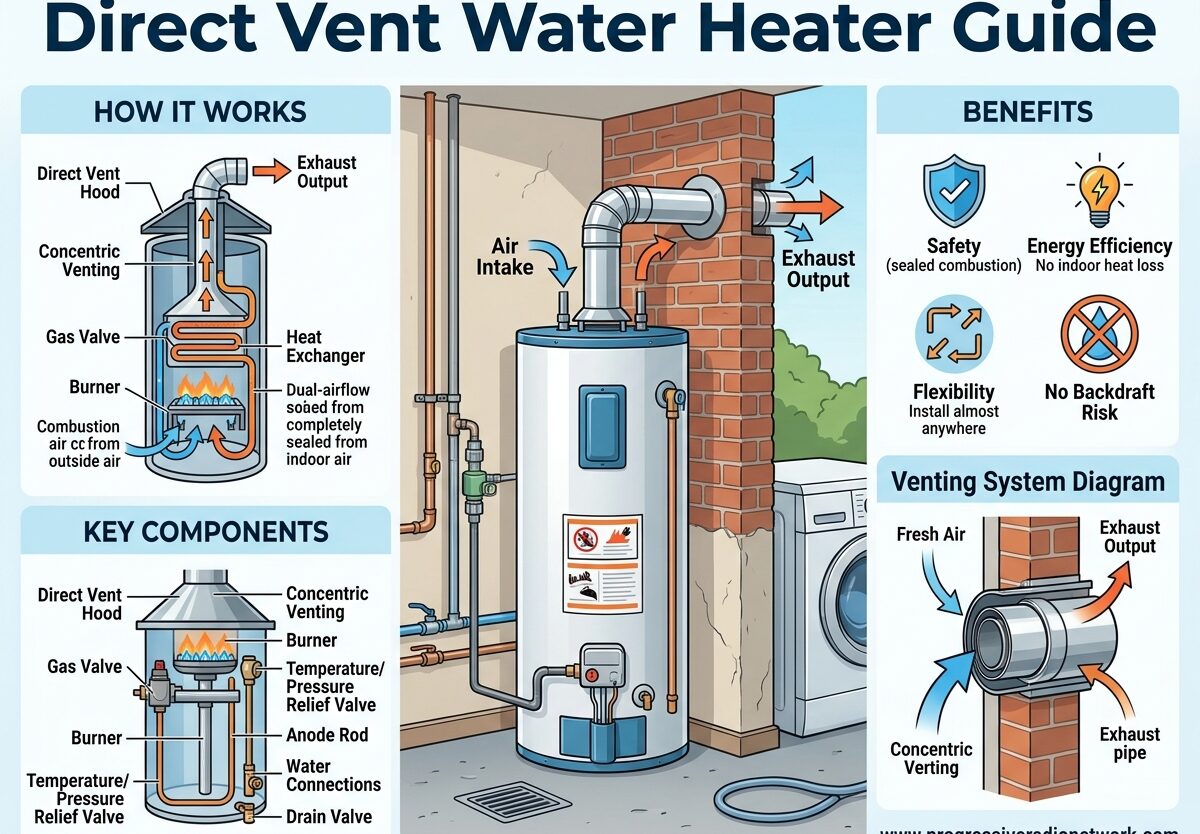
A direct vent water heater is a gas-powered unit that uses a sealed combustion system to both draw in fresh air and exhaust combustion gases through a specially designed coaxial vent pipe. Unlike atmospheric vent water heaters that rely on natural buoyancy and indoor air, direct vent systems are completely self-contained.
The key feature that sets these units apart is the coaxial venting configuration. This pipe-within-a-pipe design allows the water heater to pull combustion air from outside through the outer chamber while pushing exhaust gases out through the inner pipe. The entire combustion process happens in a sealed chamber that never mixes with your home’s indoor air.
This sealed combustion design makes direct vent water heaters particularly valuable for manufactured homes, mobile homes, and tightly constructed modern houses that don’t have adequate air exchange for atmospheric venting. They’re also the go-to choice when installing a water heater in an interior closet, basement, or garage where traditional vertical chimney venting isn’t available.
Another important distinction is that direct vent water heaters use passive venting rather than powered venting. They don’t require an electric fan or blower to move exhaust, which means they continue operating during power outages and won’t add to your electrical bill. The natural thermal buoyancy of hot gases creates the draft needed for proper venting.
Direct vent systems are specifically designed to prevent backdrafting, a dangerous condition where exhaust gases are pulled back into the home instead of being vented outside. This safety feature alone makes them worth considering for any home where combustion safety is a concern.
How Direct Vent Water Heaters Work
The operation of a direct vent water heater centers around its sealed combustion chamber and the coaxial vent pipe that connects it to the outdoors. When the thermostat calls for heat, the gas valve opens and either the standing pilot light or electronic igniter activates the burner assembly.
As combustion begins, fresh air is drawn in through the outer pipe of the coaxial vent system. This outside air travels down the outer chamber and enters the sealed combustion chamber, where it mixes with natural gas or propane at the burner. The burning fuel heats the water in the tank while creating hot exhaust gases as a byproduct.
These exhaust gases rise naturally through the inner pipe of the vent system and exit your home through a wall or roof termination point. The entire process relies on thermal buoyancy rather than mechanical assistance. Hot gases naturally rise, creating the draft that pulls fresh air in and pushes exhaust out.
The sealed combustion chamber is what makes this system so safe. Because it never draws air from your living space, there’s no risk of the water heater pulling combustion gases back into your home or competing with other appliances for indoor air. This separation also improves efficiency since the incoming air isn’t pre-warmed by your home’s heating system.
Most direct vent water heaters use a piezo igniter or electronic ignition rather than a traditional standing pilot light, which further improves efficiency. The combustion process is regulated by a gas control valve that monitors water temperature and adjusts the flame accordingly to maintain consistent hot water delivery.
The vent termination on the exterior of your home is designed to prevent wind from affecting the draft. Many systems include concentric terminations that keep the intake and exhaust separated while protecting them from rain, snow, and debris. This all-weather design ensures reliable operation regardless of outdoor conditions.
Direct Vent Water Heater Installation Requirements
Installing a direct vent water heater requires careful planning and adherence to specific building codes. The most obvious requirement is access to an exterior wall or roof for vent penetration. Unlike atmospheric vent units that can connect to an existing chimney, direct vent systems need their own dedicated path to the outdoors.
The vent pipe itself must be rated for direct vent applications. Common materials include PVC, CPVC, stainless steel, or specialized polypropylene piping depending on the specific water heater model and local code requirements. The coaxial design means you’ll need a single wall or roof penetration that accommodates the larger outer pipe diameter.
Clearance requirements are critical for safety and proper operation. Most direct vent water heaters need specific distances from combustible materials, typically requiring several inches of clearance around the unit and additional space for service access. The vent terminal must also be positioned according to manufacturer guidelines and local building codes.
Wall penetration requires careful attention to waterproofing and structural integrity. The hole through your exterior wall needs proper flashing and sealing to prevent water intrusion while maintaining the required clearances from windows, doors, and other building features. Many local codes specify minimum distances from these openings to prevent exhaust gases from re-entering the home.
Gas supply line sizing is another consideration. While direct vent units don’t require electrical connections for operation, they do need properly sized gas piping to deliver adequate fuel volume. The existing gas line may need upgrading if you’re converting from a smaller atmospheric vent unit to a larger direct vent model.
Building code requirements vary by region and are particularly strict for manufactured and mobile homes. These structures often require direct vent systems specifically designed and certified for that use. Always check local codes before purchasing or installing, and hire a licensed plumber or HVAC technician who understands direct vent requirements.
Direct Vent vs Power Vent vs Atmospheric Vent Comparison
Understanding the differences between water heater venting types helps you choose the right system for your home. Each venting method has specific advantages, limitations, and ideal use cases.
Direct Vent Water Heaters use sealed combustion with coaxial venting that both intakes air and exhausts gases through the same pipe. They’re ideal for homes without chimneys and for tight construction where indoor air quality is a concern. Direct vents work through passive thermal buoyancy, require no electricity for venting, and excel at preventing backdrafting. However, they cost more upfront than atmospheric vent units and require wall or roof penetration for venting.
Power Vent Water Heaters also use sealed combustion but rely on an electric fan to force exhaust out through a dedicated vent pipe. They can vent horizontally through a wall similar to direct vents, making them suitable for homes without chimneys. The advantage of power venting is flexibility. They can vent further distances and use smaller pipes since the fan provides mechanical assistance. The downside is that they require electricity and won’t work during power outages unless equipped with battery backup. Power vents also tend to be noisier due to the fan operation and have higher operating costs.
Atmospheric Vent Water Heaters are the traditional design that relies on natural buoyancy to vent exhaust vertically through a chimney. They’re the simplest and least expensive option, requiring no electricity or special venting materials. However, atmospheric vents need an existing chimney or vertical vent, use indoor air for combustion, and pose higher backdrafting risks in tightly sealed homes. They’re becoming less common in new construction but remain popular for straightforward replacements where chimney access exists.
When choosing between direct vent and power vent, consider your electrical reliability and noise tolerance. Direct vents are simpler and more reliable long-term, while power vents offer more installation flexibility. Atmospheric vent remains the budget choice when chimney access is available, but safety concerns make it less attractive for modern construction.
Efficiency differences between venting types are relatively small when comparing units with similar energy factors. The sealed combustion of direct and power vent designs provides some efficiency advantage by preventing heat loss through air exchange, but the difference is often outweighed by other design factors like tank insulation and burner efficiency.
Direct Vent Water Heater Pros and Cons
Like any home appliance, direct vent water heaters come with distinct advantages and limitations. Understanding these helps determine if this venting type matches your specific needs and situation.
Pros:
Safety stands out as the primary advantage. The sealed combustion system eliminates any risk of carbon monoxide entering your living space, making direct vent systems the safest option for occupied areas. Backdraft prevention is automatic since the system never relies on indoor air for combustion.
Installation flexibility is another major benefit. You can place a direct vent water heater in locations that would be impossible for atmospheric vent units, including interior closets, basements, and garages. This freedom allows for more efficient floor plans and better utilization of space.
Energy efficiency receives a boost from sealed combustion. Since the system doesn’t continuously exchange indoor air, your heating and cooling system doesn’t work as hard to maintain temperature. While the efficiency gain isn’t dramatic, it adds up over years of operation.
No electrical requirement for venting means your water heater continues operating during power outages. Unlike power vent systems that go dead without electricity, direct vents rely on simple physics that continues working regardless of electrical service.
Reduced heat loss compared to atmospheric venting occurs because the incoming combustion air isn’t being drawn from your conditioned living space. Your furnace or boiler doesn’t need to heat replacement air that would otherwise be pulled in through leaks and vents.
Cons:
Higher upfront cost is the most significant drawback. Direct vent water heaters typically cost significantly more than comparable atmospheric vent units, with prices ranging from $900 to over $1,000 before installation.
Installation complexity increases with direct vent systems. Cutting holes through exterior walls, installing specialized vent piping, and ensuring proper clearances makes for a more involved installation process. This complexity means professional installation is essentially mandatory, adding to the total cost.
Limited venting distances can be problematic in some installations. Unlike power vent systems that can push exhaust considerable distances, direct vents rely on passive draft and work best with relatively short vertical rises. This limitation restricts placement options in some home layouts.
Wall or roof penetration is permanent and requires careful planning. Once you cut a hole for venting, reversing the decision involves significant repair work. This permanence means you need to be confident in the unit’s location before installation begins.
Fewer model options exist compared to atmospheric vent water heaters. Because direct vent systems represent a smaller market segment, manufacturers produce fewer models with fewer feature variations. This limited selection might mean compromising on capacity, recovery rate, or other specifications.
Direct Vent Water Heater Cost Factors
The price of a direct vent water heater includes several components beyond the base unit cost. Understanding these factors helps with budget planning and value assessment.
The water heater itself typically ranges from $900 to $1,200 for standard 40 to 50-gallon residential models. Higher-capacity units, premium brands, and models with extended warranties can push this figure toward $1,500. These prices are significantly higher than comparable atmospheric vent units, which often cost several hundred dollars less.
Installation costs vary based on your specific situation. Simple replacement of an existing direct vent unit might run $500 to $800 for a licensed plumber. However, first-time installation involving wall penetration, new gas lines, and vent piping can easily exceed $1,500. The complexity of cutting through exterior walls and ensuring proper sealing adds both time and materials to the job.
Venting materials represent another expense. Coaxial vent pipes, termination fittings, wall thimbles, and sealants add $200 to $500 depending on the installation length and materials selected. Stainless steel vent piping costs more than PVC but offers greater durability and is required for some high-temperature applications.
Building permits and inspections may be required depending on your local jurisdiction. These costs typically range from $100 to $300 and ensure your installation meets all safety codes. While permit requirements add to the initial expense, they provide assurance that the work was done correctly.
When evaluating value, consider the long-term safety benefits and energy savings. While a direct vent water heater costs more upfront than an atmospheric vent unit, the reduced risk of carbon monoxide exposure and improved efficiency in tight homes provide real value over the system’s 10 to 15-year lifespan. The cost difference becomes relatively small when spread over a decade of safe, reliable operation.
Replacement costs should factor into your decision as well. Since direct vent systems require specialized venting through exterior walls, switching to a different venting type later would involve significant additional expense. Choosing direct vent means committing to this venting approach for future replacements as well.
Common Direct Vent Water Heater Problems and Solutions
While direct vent water heaters are generally reliable, they can experience issues that affect performance or safety. Recognizing these problems early prevents inconvenience and potential hazards.
Vent blockage is one of the most serious issues. Leaves, debris, ice, or even bird nests can obstruct the vent termination, preventing proper exhaust flow. Symptoms include soot around the unit, unusual burner sounds, or the burner shutting down unexpectedly. The solution involves inspecting and cleaning the vent terminal and ensuring proper clearance around the exterior opening.
Insufficient hot water often indicates combustion problems rather than tank issues. If the burner isn’t firing properly or the gas pressure is inadequate, you’ll experience lukewarm water or slow recovery. Check that the gas valve is fully open and that the pilot light or igniter is functioning correctly. Professional service may be needed to check gas pressure and burner condition.
Condensation issues can occur with high-efficiency direct vent units. Excessive condensation might indicate improper venting, oversizing, or inadequate combustion air. This moisture can corrode components and reduce efficiency. Ensuring proper vent pipe slope and checking that the unit matches your hot water demand typically resolves these issues.
Pilot light problems affect older direct vent models with standing pilots. If the pilot won’t stay lit, the thermocouple might be faulty, or there could be draft issues around the combustion chamber. Newer models with electronic ignition avoid this problem entirely. If pilot issues persist, professional service is recommended to check the gas control valve and ignition system.
Unusual sounds during operation warrant investigation. Rumbling or popping often indicates sediment buildup in the tank, while whistling might signal venting restrictions. Regular tank flushing helps prevent sediment issues, and vent inspection ensures proper airflow. Any sounds accompanied by burner problems require immediate professional attention.
Error codes on digital models provide specific diagnostic information. Modern direct vent water heaters with electronic controls display fault codes that pinpoint the problem. Consult your owner’s manual for code explanations, but don’t attempt repairs involving gas components unless you’re qualified to do so.
Direct Vent Water Heater Maintenance Tips
Regular maintenance extends the life of your direct vent water heater and ensures safe, efficient operation. While professional service is important, several maintenance tasks can be performed by homeowners.
Annual inspections by a qualified technician should include checking the vent system for proper draft, inspecting the combustion chamber for corrosion or damage, and verifying that all safety devices function correctly. This professional check-up catches developing problems before they become serious.
Vent pipe inspection involves checking both the exterior and accessible interior portions of the vent system. Look for signs of corrosion, loose connections, or physical damage. The exterior terminal should be clear of debris and maintain proper clearance from vegetation and other obstructions.
Temperature pressure relief valve testing should be performed annually. This critical safety device prevents dangerous pressure buildup. Simply lift the test lever briefly to ensure water flows freely and then closes tightly. If the valve leaks or doesn’t operate smoothly, replacement is necessary.
Anode rod inspection every few years prevents tank corrosion. This sacrificial metal rod attracts corrosive elements that would otherwise attack the tank lining. Replacing a depleted anode rod significantly extends tank life, making it one of the most valuable maintenance tasks for water heater longevity.
Temperature settings affect both efficiency and safety. Most manufacturers recommend setting the thermostat to 120F to prevent scalding while minimizing standby heat loss. Higher temperatures increase scald risk and accelerate tank corrosion without providing meaningful benefits for most households.
Water quality issues like hard water can reduce efficiency and shorten lifespan. If you have hard water, consider a water softener or regular tank flushing to remove sediment. Sediment buildup reduces heating efficiency and can cause premature tank failure through overheating of the tank bottom.
Direct Vent Water Heater Buying Guide
Choosing the right direct vent water heater involves matching capacity to your household’s needs while ensuring compatibility with your installation location.
First hour rating (FHR) is more important than tank capacity when selecting a water heater. This measurement indicates how much hot water the unit can supply in one hour of peak usage. Calculate your peak demand by adding up the flow rates of fixtures you typically use simultaneously, then choose a model with an FHR that exceeds this number.
Tank capacity options typically range from 30 to 50 gallons for residential direct vent models. Smaller 30 to 40-gallon tanks work well for one to two people, while 50-gallon models better serve families of three or more. Consider your usage patterns and whether simultaneous showers and laundry are common in your household.
Fuel type must match your available gas service. Natural gas models are most common and cost less to operate than propane versions. If you have propane or are considering converting, ensure the model you select is rated for propane use and that the proper conversion kit is available.
Recovery rate affects how quickly the heater recharges after heavy use. Higher BTU input ratings provide faster recovery, which matters if your household frequently uses large amounts of hot water in a short period. Consider recovery rate alongside first hour rating when comparing models.
Energy factor (EF) ratings indicate overall efficiency, with higher numbers representing better efficiency. While direct vent units generally have similar efficiency ratings within their class, choosing a model with a higher EF reduces operating costs over the life of the water heater. The difference in annual operating costs between high and standard efficiency models typically justifies any additional upfront cost.
Warranty length provides insight into expected longevity. Most direct vent water heaters offer warranties ranging from 6 to 12 years on the tank. Longer warranties indicate greater confidence in durability and often include better internal components. Consider warranty coverage alongside price when comparing models.
FAQ
Is a direct vent water heater better?
Direct vent water heaters are safer than atmospheric vent models because they use sealed combustion that prevents carbon monoxide from entering your living space. They’re also more efficient in tightly sealed homes since they don’t rely on indoor air. However, whether they’re better depends on your situation. If you have a chimney and adequate indoor air, an atmospheric vent might be more cost-effective. If you need side wall venting or want the safest option, direct vent is superior.
Can you direct vent a hot water heater?
Not all water heaters can be direct vented. Only models specifically designed as direct vent water heaters can use this venting method. These units have sealed combustion chambers and special gas control valves designed for the unique air requirements of direct vent systems. You cannot convert a standard atmospheric vent water heater to direct vent operation. The combustion chamber design, gas valve, and burner assembly are fundamentally different between the two types.
Why are direct vent water heaters so expensive?
Direct vent water heaters cost more due to their specialized design and manufacturing complexity. The sealed combustion chamber requires precision engineering to maintain proper air separation, and the coaxial venting system adds components not found in atmospheric vent units. Additionally, direct vent models represent a smaller market segment, meaning manufacturers can’t achieve the same economies of scale. The safety features, quality control requirements, and specialized components all contribute to the higher price point.
What problems can occur with direct vent heaters?
Common issues include vent blockage from debris or ice, improper venting that affects combustion, condensation problems, and pilot light failures in older models. Vent blockage is particularly serious as it can cause unsafe combustion. Direct vent systems can also develop issues if the wall penetration isn’t properly sealed, leading to water infiltration or air leaks. Regular maintenance and professional installation prevent most of these problems.
Do direct vent water heaters need electricity?
Direct vent water heaters do not require electricity for the venting system itself, which is one of their advantages over power vent models. However, some modern direct vent units use electronic ignition for the burner rather than a standing pilot light. These models need minimal electricity for ignition but will continue heating water during power outages if equipped with a standing pilot or battery backup for the ignition system. Always check specific model requirements regarding electrical needs.
How long do direct vent water heaters last?
Direct vent water heaters typically last 10 to 15 years with proper maintenance. The sealed combustion system actually helps longevity by preventing corrosion from indoor air pollutants. Factors affecting lifespan include water quality, usage patterns, maintenance frequency, and whether the anode rod is replaced as needed. Models with longer warranties often feature better tank protection and can last beyond the 15-year mark with regular professional maintenance.
Conclusion
Direct vent water heaters offer a compelling solution for homes without chimneys, tightly sealed construction, or anyone prioritizing safety in their water heating system. The sealed combustion technology provides real protection against carbon monoxide exposure while allowing flexible placement options that aren’t possible with traditional atmospheric vent units.
Whether a direct vent water heater is the right choice depends on your specific situation. For manufactured homes, interior installations, or homes with air quality concerns, the benefits often justify the higher upfront cost. However, if you have an existing chimney and adequate indoor air exchange, a traditional atmospheric vent unit might be more economical.
I recommend consulting with a licensed plumber or HVAC contractor who can assess your home’s specific needs and local building code requirements. Professional installation is essential for safe operation and warranty coverage, so factor this cost into your decision from the start.
The direct vent water heater continues to be an important option for modern homes, offering safety and flexibility that traditional venting methods can’t match. As homes become more tightly constructed for energy efficiency, sealed combustion systems like direct vent will only become more relevant for safe, comfortable living.

Leave a Comment