
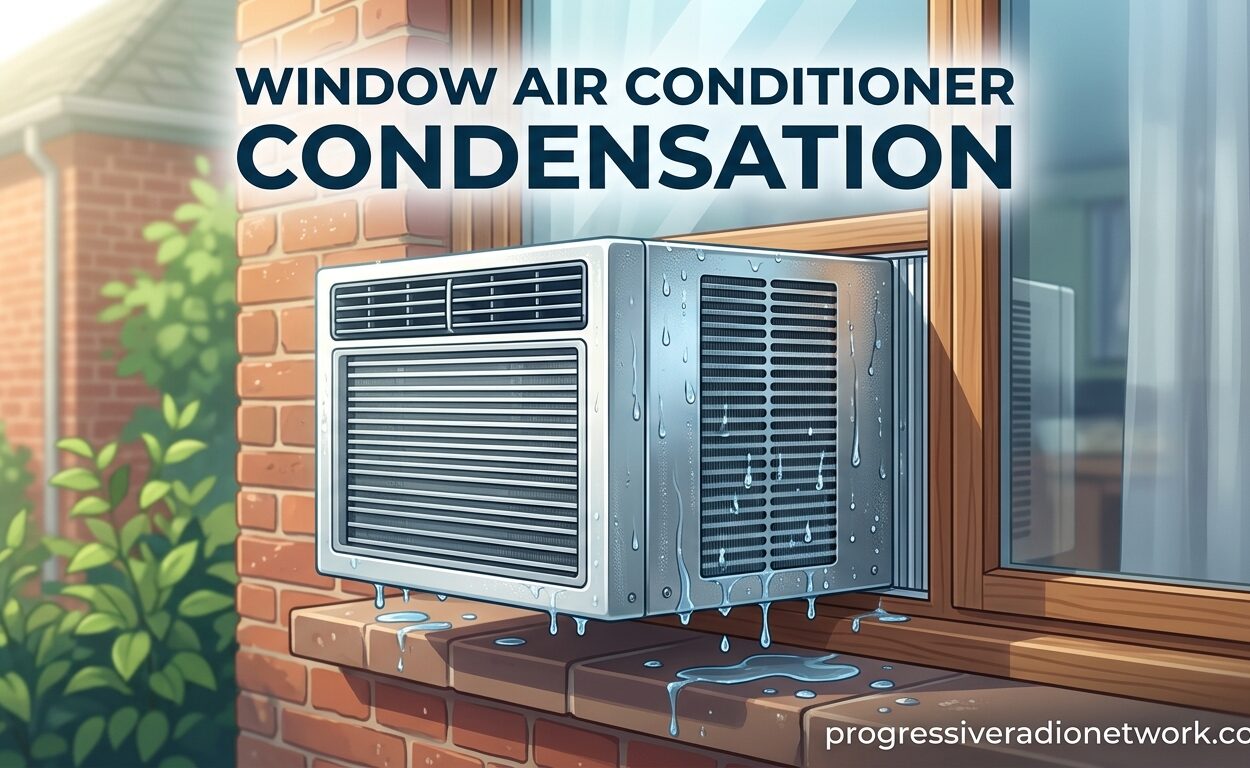
If you’ve noticed water dripping from your window air conditioner or pooling on the window sill, you’re not alone. This is one of the most common concerns homeowners have during summer months. Understanding window air conditioner condensation helps you determine whether your unit is working properly or if there’s a problem that needs attention.
In this guide, you will learn why condensation forms, how much is normal, and what you can do to prevent water damage to your home.
What Is Window Air Conditioner Condensation?
Window air conditioner condensation is the natural byproduct of your AC cooling warm, humid air. When moisture-laden air meets the cold evaporator coils inside your unit, the water vapor turns to liquid and drips into the drain pan.
Your window AC works by pulling warm air across refrigerant-filled evaporator coils. As the air cools, moisture in the air condenses on the cold coil surfaces, similar to how water droplets form on a cold glass on a hot day.
This condensation, also called condensate, is collected in the drain pan at the bottom of your unit and should drain outside through holes or a drain hose. The amount of condensation your unit produces depends on humidity levels and how hard your AC is working.
Is Window Air Conditioner Condensation Normal?
Yes, window air conditioner condensation is completely normal and actually a sign your unit is working as designed. In fact, a properly functioning window AC in a humid climate can produce several gallons of water per day.
Normal condensation appears as water dripping steadily from the outside of the unit or flowing through a drain hose to the exterior. You might also notice the evaporator coils inside the unit are wet when you remove the filter.
What’s NOT normal is water dripping inside your home, pooling in the window frame, or overflowing the drain pan back into your house. If you notice water inside your window, on your floor, or running down your wall, you likely have a drainage problem that needs attention.
What Causes Window Air Conditioner Condensation
Window air conditioner condensation forms when warm, humid air comes into contact with the cold evaporator coils inside your unit. This temperature differential causes water vapor in the air to condense into liquid droplets, just like the beads of water that form on the outside of a cold beverage can.
The primary factors that influence how much condensation your window AC produces include indoor humidity levels, outdoor temperature, and how often your unit runs. On hot, humid days when your AC runs continuously, you’ll notice more condensation than on drier, cooler days.
The dew point plays a crucial role in condensation formation. When the temperature of the evaporator coils drops below the dew point of the air passing over them, moisture in the air condenses. This is why you’ll see more condensation on humid days even if the outdoor temperature is the same.
Other causes of excess window air conditioner condensation include poor ventilation, high indoor humidity from cooking or showering, and improperly sized units that run too frequently or too briefly to effectively remove moisture.
Problems Caused by Excess Condensation
While some condensation is normal, excessive or improperly drained condensation can lead to serious problems in your home. The most concerning issue is mold and mildew growth, which can begin within 24-48 hours when moisture accumulates.
Mold growing in or around your window air conditioner can spread to window frames, drywall, and even furniture. This creates health risks for anyone in your home, especially those with allergies or respiratory conditions. Documented cases have shown that condensation problems can lead to extensive mold remediation costing thousands of dollars.
Water pooling from poor drainage can also damage your window frames and walls. Wooden window sills may rot, drywall can become saturated and crumble, and paint may peel away from moisture damage. Over time, even structural damage can occur if the problem is ignored.
Additionally, a unit with drainage issues won’t cool as efficiently. When water backs up into the evaporator coils, it can reduce cooling performance and increase your energy bills. The unit may also work harder, potentially shortening its lifespan.
How to Stop Window Air Conditioner Condensation
Preventing excessive window air conditioner condensation starts with proper installation and maintenance. The following solutions have proven effective through years of troubleshooting these issues.
Check the tilt angle: Your window AC should be tilted slightly downward toward the outside. This allows condensation to flow naturally toward the drain holes and away from your home. The ideal tilt is about a quarter-inch drop for every foot of unit width. Use a level on top of the unit to verify the angle.
Clean the drain holes: Most window air conditioners have small drain holes in the rear of the base pan. These can become clogged with dust, dirt, algae, or debris. Use a straightened paperclip or small wire to gently clear any blockages. This maintenance task should be done monthly during the cooling season.
Reduce indoor humidity: Lower humidity levels mean less condensation. Use exhaust fans when cooking or showering, fix any plumbing leaks, and consider running a dehumidifier in especially humid areas. Your AC will work less hard and produce less water.
Check seals and insulation: Gaps around your window AC allow warm, humid air to enter and create excess condensation. Use foam weather stripping or an AC insulation kit to seal gaps between the unit and window frame. This also improves energy efficiency.
Install a drain hose: If your unit doesn’t drain properly, you can attach a flexible drain hose to the drain port. This directs water away from your window and foundation. Make sure the hose slopes downward and isn’t kinked or blocked.
How to Fix Window Air Conditioner Drainage Issues
If you are already experiencing drainage problems with your window air conditioner, follow these troubleshooting steps to identify and fix the issue.
Step 1: Check the drain holes. Locate the small holes in the rear of the base pan. If water is pooling inside the unit, these holes are likely clogged. Use a paperclip, toothpick, or pipe cleaner to clear any debris. Flush with warm water to remove stubborn clogs.
Step 2: Inspect the drain pan. Remove the front grille and filter to access the interior. Look for cracks or damage to the drain pan that might cause leaks. Small cracks can sometimes be sealed with waterproof epoxy, but severely damaged pans may require professional replacement.
Step 3: Verify proper tilt. Place a level on top of your window AC. If it’s level or tilted inward, adjust the support bracket or shims to create a slight outward tilt. This gravity-fed drainage is essential for proper water removal.
Step 4: Install a drain kit. For persistent drainage issues, consider installing a magnetic drain kit or universal AC drain hose. These inexpensive accessories attach to your unit and direct condensation away from your window. Many homeowners find this solution eliminates their drainage problems completely.
When to call a professional: If you have tried these solutions and water is still leaking inside, or if you notice refrigerant hissing sounds, ice forming on coils, or the unit isn’t cooling properly, contact a qualified HVAC technician. These issues may indicate refrigerant leaks or mechanical problems beyond DIY repair.
Winter Condensation on Window Air Conditioners
Condensation issues can also occur during winter months, especially if you leave your window AC installed year-round. Cold outdoor temperatures combined with warm indoor air create the perfect conditions for condensation on the exterior of your unit.
Winter condensation typically forms on the outside of the window AC when warm indoor air escapes around the unit and meets the cold outdoor air. This can lead to water pooling on your exterior window sill and potential moisture damage to your home’s exterior.
The best solution is to remove your window AC during winter months. If removal isn’t possible, invest in a quality window AC cover that seals tightly around the unit. This prevents warm air from reaching the cold exterior surfaces and stops condensation from forming.
For year-round installations, also check that weather stripping around the unit remains in good condition. Replace any worn or damaged stripping to maintain a proper seal between your indoor and outdoor environments.
FAQs
How to stop condensation on window air conditioner?
Stop condensation by ensuring your window AC is tilted slightly downward toward the outside. Clean the drain holes monthly with a paperclip to prevent clogs. Reduce indoor humidity by using exhaust fans and running a dehumidifier. Seal gaps around the unit with weather stripping to prevent warm air infiltration.
Why is my AC window unit sweating?
Your window AC unit sweats when warm, humid air comes into contact with the cold evaporator coils or exterior surfaces. This is the same principle that causes water droplets on a cold glass. Sweating is normal during humid weather, but excessive sweating may indicate poor insulation, improper tilt, or clogged drain holes.
Is it normal for window AC to have condensation?
Yes, window air conditioner condensation is completely normal and expected. Your AC removes moisture from the air as it cools, producing water that should drain outside. Normal condensation appears as steady dripping from the exterior or flowing through a drain hose. What’s not normal is water dripping inside your home or pooling in the window frame.
How do I stop my air conditioner from dripping condensation?
Stop dripping by clearing clogged drain holes with a paperclip or wire. Ensure your unit is tilted slightly downward toward the outside. Install a drain hose or kit to direct water away from your window. Check that the drain pan isn’t damaged or overflowing. Reduce indoor humidity to decrease the amount of condensation produced.
Does condensation on windows mean the house is too cold?
Not necessarily. Window condensation when the AC is running typically means indoor humidity is too high, not that your house is too cold. Condensation forms when warm, moist air contacts the cool window surface. Reducing indoor humidity through proper ventilation and dehumidification is usually more effective than raising the temperature.
Should a window air conditioner drip water outside?
Yes, a window air conditioner should drip water outside during normal operation. This is the condensation being removed from the air and properly drained away from your home. The dripping may be more noticeable on humid days or when the unit runs continuously. What’s concerning is water dripping inside rather than outside, which indicates a drainage problem.
Conclusion
Window air conditioner condensation is a normal part of how these units work, but excessive or improperly drained water can cause real problems. By understanding the causes and implementing proper maintenance, you can keep your home dry and your AC running efficiently.
Remember that some water production is expected, especially in humid climates. Focus on proper installation with the correct tilt angle, regular drain hole cleaning, and humidity control to prevent issues. If you have tried these solutions and still experience problems, don’t hesitate to contact a professional HVAC technician.
With the right knowledge and maintenance, window air conditioner condensation doesn’t have to be a source of stress or damage to your home.


Leave a Comment