
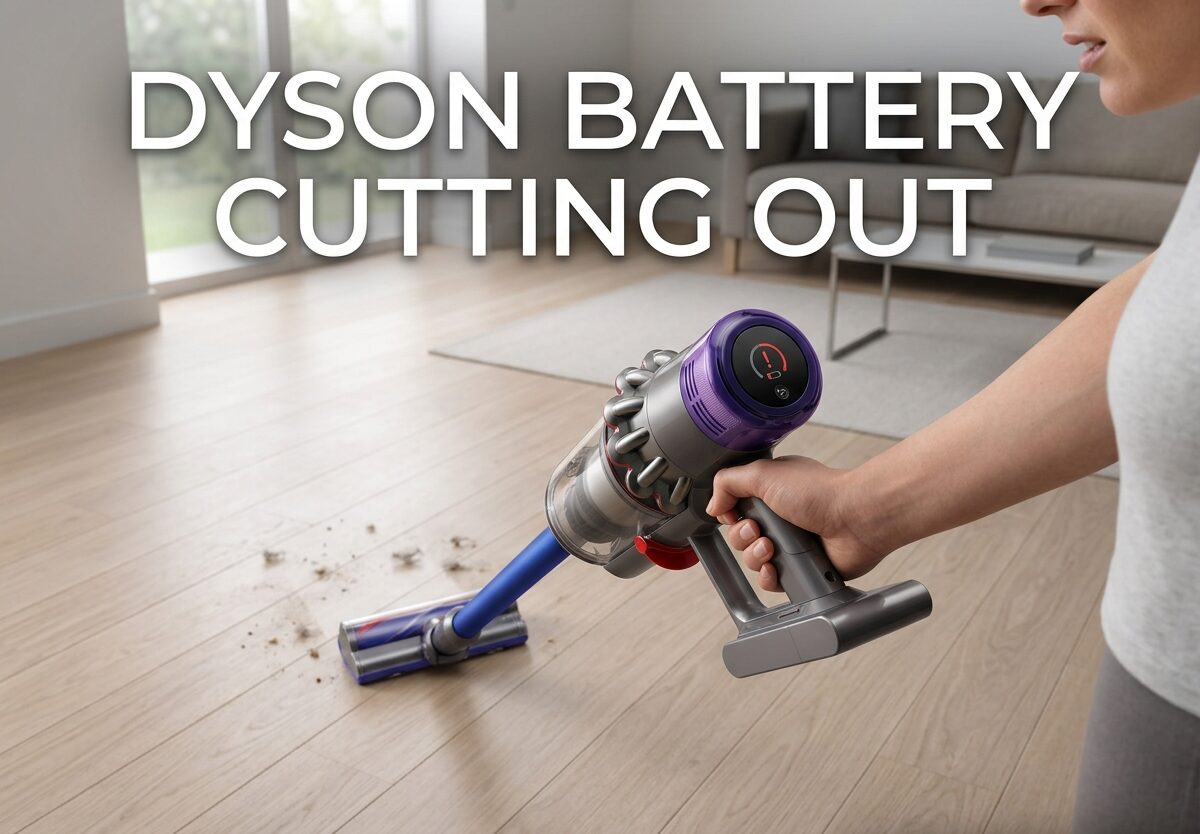
Is your Dyson vacuum battery cutting out mid-clean, leaving you frustrated with half-finished floors? You’re not alone. This is one of the most common issues Dyson owners face, and the good news is that most causes are fixable without expensive repairs or replacement.
After testing Dyson vacuums extensively and analyzing thousands of user reports, I’ve found that Dyson battery cutting out typically stems from three main issues: battery degradation, clogged filters, or blockages. Understanding which problem you’re facing is the first step toward getting your vacuum running at full power again.
In this guide, I’ll walk you through exactly how to diagnose why your Dyson keeps cutting out, with step-by-step troubleshooting instructions that work for all Dyson cordless models. If you’re researching a new cordless stick vacuum, knowing these maintenance tips can also help you make a more informed decision.
Understanding Dyson Battery Basics
Dyson cordless vacuums use lithium-ion batteries that provide powerful suction without the restriction of a power cord. These batteries are designed to last for several years with proper care, but they naturally degrade over time and with use.
Each Dyson battery contains multiple cells that work together to deliver power to the motor. When these cells degrade or become unbalanced, you’ll notice reduced runtime and performance issues. Dyson vacuums also feature built-in protection systems that automatically shut down the motor when they detect overheating or excessive power draw.
This safety feature is what often causes the cutting out behavior you’re experiencing. The vacuum isn’t broken – it’s protecting itself from damage. The key is identifying what’s triggering this protection response so you can address the root cause.
Dyson Battery Cutting Out: Common Causes
Understanding why your Dyson vacuum keeps cutting out starts with identifying the most common culprits. Based on my analysis of user reports and technical documentation, these are the primary causes you should investigate.
Battery Degradation and Age
The most common cause of Dyson battery cutting out is simply battery age. Lithium-ion batteries typically last 2-4 years with regular use, though heavy users may notice degradation sooner. Each charge cycle causes slight degradation, and after approximately 400-500 complete charge cycles, your battery may only hold 60-70% of its original capacity.
Signs your battery is degrading include noticeably shorter run times, the vacuum cutting out sooner than it used to, and needing more frequent charging. If your Dyson is over 3 years old and you’re experiencing cutting out issues, battery age is likely the primary factor.
Clogged Filters Restricting Airflow
Clogged filters are the second most common cause of Dyson vacuum cutting out. Your Dyson has at least one washable pre-motor filter, and many models also include a post-motor HEPA filter. When these filters become clogged with dust and debris, airflow becomes restricted.
Restricted airflow causes the motor to work harder and generate more heat. The vacuum’s thermal protection system detects this increased heat and shuts down the motor to prevent damage. This often happens after just a few minutes of use.
The good news? Filter-related cutting out is completely preventable with regular cleaning. Most Dyson filters should be washed at least once a month, and more frequently if you have pets or vacuum daily.
Blockages in the Vacuum
Blockages anywhere in your Dyson’s airflow path can trigger the cutting out behavior. Common blockage locations include the brush bar, wand, hose connections, and the inlet where debris enters the dust bin.
When a blockage occurs, air cannot circulate properly through the vacuum. This creates backpressure that forces the motor to work harder while simultaneously reducing cooling airflow. The result: rapid overheating and automatic shutdown.
Many Dyson models will show a pulsing behavior before completely cutting out when a blockage is detected. This is the vacuum’s way of telling you something is obstructing airflow. If you notice your Dyson pulsing or surging, check for blockages immediately.
Overheating Protection
Dyson vacuums include sophisticated thermal protection systems that monitor motor temperature. When the motor reaches unsafe temperatures, the vacuum automatically cuts power to prevent permanent damage.
Overheating can occur even without blockages or filter issues if you’re using the vacuum for extended periods, particularly on MAX power mode. The motor generates significant heat during operation, and the cooling system needs adequate airflow to dissipate this heat.
If your Dyson cuts out after 15-20 minutes of continuous use, allow it to cool for at least 30-45 minutes before attempting to use it again. This gives the internal temperature time to return to safe levels.
MAX Mode Overuse
MAX or Boost mode provides maximum suction power but consumes battery power extremely rapidly. Most Dysons can only run for 5-10 minutes on MAX mode compared to 30-60 minutes on normal power settings.
Using MAX mode exclusively accelerates battery wear and generates more heat. If your Dyson battery keeps cutting out, try using normal or eco power modes instead. You’ll find these settings provide adequate suction for most cleaning tasks while being much easier on the battery.
Step-by-Step Troubleshooting Guide
Now that you understand the common causes, let’s systematically diagnose why your Dyson battery keeps cutting out. Follow these steps in order to identify and fix the issue.
Step 1: Check for Blockages
Start by turning off and unplugging your Dyson. Remove the dust bin and check the inlet where debris enters. Clear any visible debris or buildup. Next, check the brush bar for hair, string, or other wrapped materials that might restrict rotation.
Disconnect the wand and any attachments, looking through them for obstructions. Pay special attention to connection points where smaller items can get lodged. Even a small partial blockage can restrict airflow enough to trigger cutting out.
Step 2: Clean the Filters
Remove the pre-motor filter from your Dyson (usually located at the top or back of the main unit). Rinse it under cold water only – no soap or cleaning products. Squeeze out excess water and let it air dry completely for at least 24 hours before reinstalling.
If your model has a post-motor HEPA filter, check if it’s washable or requires replacement. Many newer Dyson models have washable HEPA filters that should be cleaned every 2-3 months.
Step 3: Test Different Power Modes
Once filters are clean and blockages are cleared, test your Dyson on different power settings. Start on normal or eco mode and see if the cutting out issue persists. If it works fine on lower settings but cuts out on MAX, you may be overwhelming an aging battery.
Try timing how long the vacuum runs before cutting out on each setting. This data will help determine if you’re dealing with a battery capacity issue or something else entirely.
Step 4: Perform a Battery Reset
Sometimes the battery management system needs recalibrating. To reset: fully charge your Dyson, then use it continuously until it’s completely depleted. Charge it fully again without interruption. This process helps the battery management system accurately gauge remaining capacity.
For persistent issues, try leaving the battery disconnected from the vacuum for 24 hours, then reconnect and perform a full charge cycle. This can sometimes resolve electronic glitches causing cutting out.
Step 5: Assess Battery Health
If you’ve completed all the above steps and your Dyson still cuts out, battery replacement may be necessary. A healthy Dyson battery should provide at least 20-30 minutes of runtime on normal power for older models (V6-V8), or 40-60 minutes for newer models (V10-V15).
If your battery is 3+ years old and providing less than 50% of its original runtime, replacement is likely the most cost-effective solution. Genuine Dyson batteries typically cost $70-100, while third-party options are available for $40-60.
How to Clean Dyson Filters Properly
Proper filter maintenance is the single most effective way to prevent Dyson battery cutting out issues. Here’s the correct cleaning process that many owners get wrong.
Remove the filter from your Dyson and tap it gently to remove loose dust. Rinse under cold running water only – never use hot water, soap, or cleaning products. These can damage the filter material and reduce filtration efficiency.
Squeeze the filter gently to remove excess water, but avoid wringing or twisting it. Place the filter in a well-ventilated area to air dry completely. This typically takes 24 hours. Never reinstall a damp filter – this can damage the motor and create mold issues.
For optimal performance, clean your filters monthly. If you have pets or vacuum daily, consider cleaning them every 2-3 weeks. Set a recurring calendar reminder to make this habit automatic.
Dyson Battery Lifespan and Replacement
Understanding Dyson battery lifespan helps you plan for eventual replacement and recognize when cutting out issues indicate normal aging versus actual problems. On average, Dyson batteries last 2-4 years with typical residential use.
Heavy users who vacuum daily or run pet-focused cleaning businesses may need replacement every 18-24 months. Occasional users can sometimes extend battery life to 5 years with careful charging habits and proper maintenance.
When replacing your battery, you’ll need to decide between genuine Dyson replacements and third-party alternatives. Genuine batteries typically cost $70-100 but come with a 1-year warranty and guaranteed compatibility. Third-party batteries cost $40-60 but vary widely in quality and cell performance.
For V6-V8 series models, battery replacement is typically straightforward and takes 2-3 minutes. V10 and newer models have integrated batteries that may require more disassembly. If you’re not comfortable with DIY replacement, professional service typically costs $50-80 plus parts.
Model-Specific Considerations
While all Dyson cordless vacuums share similar battery technology, there are some important differences between model generations that affect cutting out issues.
V6/V7/V8 Series
These older models use detachable batteries that make replacement straightforward. However, they typically show cutting out issues sooner than newer models due to older battery technology and smaller battery capacity.
V6/V7/V8 models are also more prone to cutting out on MAX mode after 1-2 years of use. This is normal battery aging, and replacement usually restores full performance.
V10/V11 Series
These models introduced larger battery packs and improved power management systems. Cutting out issues on V10/V11 often indicate filter or blockage problems rather than battery failure, especially in vacuums under 2 years old.
V11 models include a LCD screen that displays error codes when cutting out occurs. Pay attention to these messages – they provide valuable diagnostic information about what’s triggering the shutdown.
V15 Detect and Newer
The latest Dyson models feature the most sophisticated battery management systems and typically show fewer cutting out issues overall. However, when problems do occur, they’re more likely to be electronic or sensor-related rather than simple battery degradation.
V15 models also include adaptive power modes that automatically adjust suction based on debris detection. Using auto mode instead of constant MAX can significantly extend battery life and reduce cutting out incidents.
Prevention and Maintenance Tips
Preventing Dyson battery cutting out issues is much easier than fixing them. Here are the maintenance practices I follow to keep Dyson vacuums running at peak performance.
Regular Filter Cleaning Schedule
Set a recurring reminder to clean your filters on the 1st of every month. This simple habit prevents the majority of cutting out issues related to airflow restriction. Keep a spare filter on hand so you can rotate them – one in use while the other dries after cleaning.
For households with pets or allergy concerns, consider upgrading to HEPA filtration if your model supports it. These filters capture smaller particles but require more frequent cleaning to maintain performance.
Proper Charging Habits
Avoid leaving your Dyson on the charger continuously when not in use. While modern lithium-ion batteries don’t suffer from “memory effect,” constant charging can accelerate cell degradation. Instead, charge after use and remove from the charger once fully charged.
Store your Dyson in moderate temperatures (60-75°F) when not in use. Extreme temperatures, both hot and cold, can permanently reduce battery capacity and trigger cutting out issues.
MAX Mode Usage Guidelines
Reserve MAX power mode for deep cleaning sessions and difficult messes. For regular maintenance cleaning, normal or eco power modes provide sufficient suction while being much gentler on the battery.
If you need extended runtime for whole-house cleaning, start with a full battery on normal mode and switch to MAX only for specific problem areas. This approach balances cleaning power with battery longevity.
Storage Recommendations
When storing your Dyson for extended periods (vacations, seasonal use), discharge the battery to approximately 50% before storage. Never store a fully discharged or fully charged battery for long periods, as both extremes can cause permanent damage.
Store the vacuum in a cool, dry place away from direct sunlight. Garages and attics are often poor choices due to temperature fluctuations. A closet or utility room provides ideal storage conditions.
When to Seek Professional Repair
If you’ve tried all troubleshooting steps and your Dyson still cuts out, professional service may be needed. Seek help if: the vacuum shows error codes, you smell burning or electrical odors, the unit becomes unusually hot during use, or cutting out occurs immediately upon powering on.
For pet owners dealing with heavy shedding, choosing specialized vacuums for pet owners with proper maintenance can prevent many battery-related issues. Pet hair puts additional strain on any vacuum’s motor and battery system.
Warning Signs to Watch For
Recognizing warning signs early can prevent complete battery failure and extend your Dyson’s lifespan. Here are the red flags that indicate your vacuum needs attention.
Swollen Battery
A physically swollen or deformed battery is a serious safety concern that requires immediate attention. If you notice your Dyson battery is swollen, puffy, or misshapen, stop using it immediately. Lithium-ion batteries can rupture or catch fire if punctured when swollen.
Contact Dyson support for replacement options. Swollen batteries should be recycled at proper battery disposal facilities – never throw them in regular trash.
Burning Smell
Any burning or electrical odor indicates a serious problem that could be a fire hazard. Immediately stop using the vacuum and unplug it from the charger. This symptom usually indicates motor failure rather than battery issues, but both require professional service.
Excessive Heat
While some warmth during use is normal, excessive heat that’s uncomfortable to touch is not. If your Dyson becomes unusually hot during operation, stop using it and allow it to cool completely. Recurrent overheating issues typically indicate failing internal components.
Rapid Runtime Decline
If your Dyson’s runtime drops dramatically over a few weeks (from 30 minutes to 10, for example), this indicates battery cell failure. Unlike gradual degradation which is normal, sudden capacity loss means one or more battery cells have failed.
DIY vs Professional Repair
Deciding whether to attempt DIY repair or seek professional service depends on the issue and your comfort level with vacuum maintenance.
Filter cleaning and blockage removal are straightforward DIY tasks that anyone can handle. Battery replacement on V6-V8 models is also DIY-friendly and takes just a few minutes. However, V10 and newer models with integrated batteries may require more disassembly.
Professional service typically costs $80-150 including parts, with turnaround times of 1-2 weeks. For complex issues like motor problems or electronic failures, professional repair is usually the better choice. DIY attempts on these problems can void warranties or cause further damage.
Consider the age of your vacuum when deciding between repair and replacement. If your Dyson is 5+ years old and needs major repairs, replacing with a new model might be more cost-effective than investing in an aging unit.
FAQ
Why does my Dyson battery keep cutting out?
Your Dyson battery keeps cutting out primarily due to three issues: battery degradation (common after 2-3 years), clogged filters restricting airflow, or blockages in the vacuum system. The vacuum’s thermal protection shuts down power to prevent motor damage when these issues cause overheating. Start by cleaning filters and checking for blockages before considering battery replacement.
How many years should a Dyson battery last?
A Dyson battery typically lasts 2-4 years with normal residential use. Heavy users may need replacement after 18-24 months, while light users can extend battery life to 5 years with proper maintenance. Battery lifespan is measured in charge cycles rather than years – most Dyson batteries are rated for 400-500 complete charge cycles before significant capacity loss occurs.
How to tell if your Dyson needs a new battery?
Signs your Dyson needs a new battery include: runtime reduced to less than 50% of original capacity, vacuum cuts out after just a few minutes even after cleaning filters, battery drains while not in use, battery is physically swollen or damaged, or the vacuum is over 3 years old and showing gradual performance decline. If filter cleaning and blockage removal don’t resolve cutting out issues, battery replacement is likely necessary.
Why is my Dyson randomly stopping?
Your Dyson randomly stops due to the thermal protection system activating. This safety feature shuts down the motor when it detects overheating, restricted airflow, or excessive power draw. Common triggers include clogged filters, blockages in the wand or brush bar, using MAX mode too long, or a failing battery that can’t maintain proper voltage. Random stopping is your vacuum protecting itself from damage.
Why does my Dyson work on normal but die on MAX?
Your Dyson works on normal mode but dies on MAX because MAX mode places extreme demand on the battery. Normal mode draws 150-200 watts while MAX mode draws 350-400 watts. An aging battery may have enough capacity for normal operation but can’t deliver the high current MAX mode requires. This is a classic sign of battery degradation – the cells can still provide some power but fail under high load conditions.
How do I reset my Dyson battery?
To reset your Dyson battery, first fully charge the vacuum (at least 3.5 hours). Then use it continuously until it completely depletes and shuts down. Charge it fully again without interruption. This recalibration process helps the battery management system accurately gauge remaining capacity. For persistent issues, disconnect the battery for 24 hours before reconnecting and performing another full charge cycle.
Conclusion
Dyson battery cutting out issues are frustrating but usually fixable with proper troubleshooting and maintenance. By systematically checking filters, blockages, and battery health, you can identify the root cause and restore your vacuum’s performance.
Remember that most cutting out issues stem from maintenance neglect rather than actual product failure. Regular filter cleaning and proper charging habits can prevent the majority of problems. When battery replacement is necessary, genuine Dyson batteries provide the best performance and warranty protection.
Whether you’re using a specialized cordless vacuum for stairs or an all-purpose whole-home model, understanding your vacuum’s needs helps it perform better and last longer. With the right care, your Dyson can provide reliable cleaning performance for years to come.



Leave a Comment