
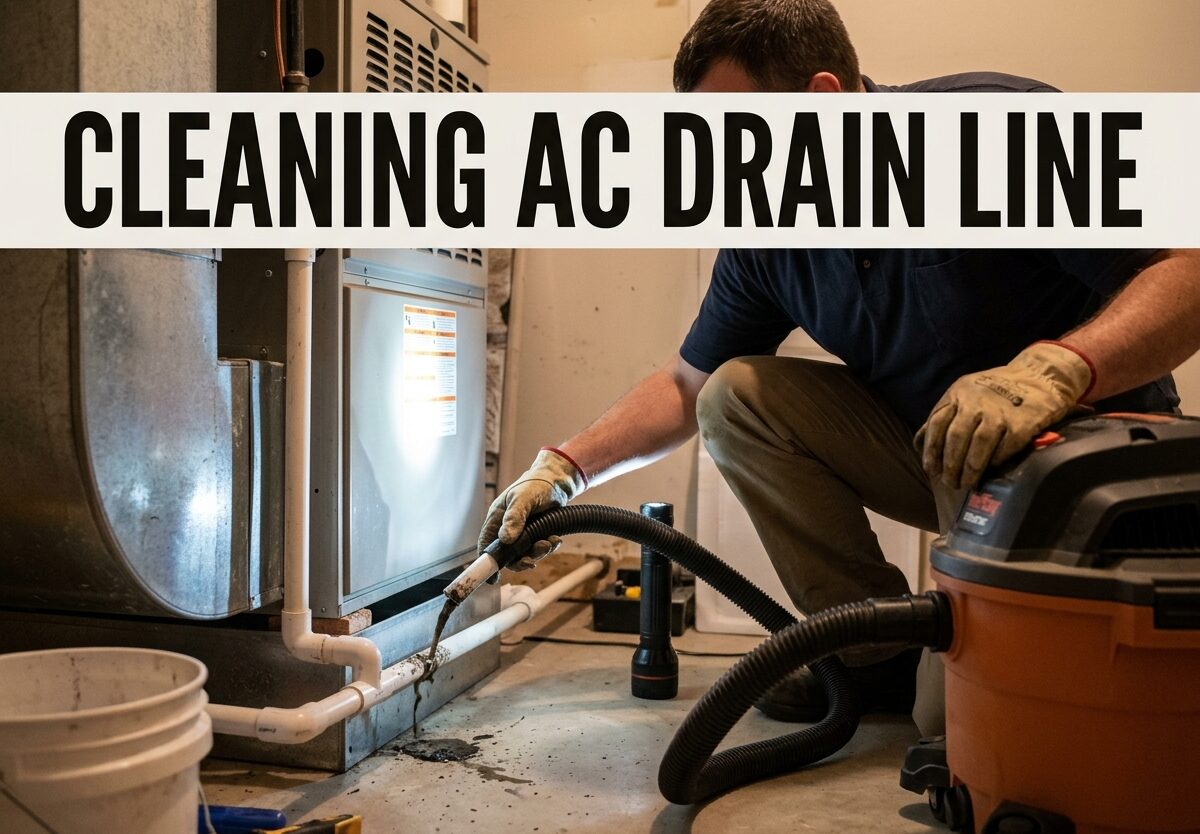
Learning the proper method for cleaning AC drain lines can save you hundreds of dollars in repairs and prevent water damage to your home. I’ve spent over 15 years maintaining HVAC systems, and clogged drain lines remain one of the most common issues I encounter. A clogged condensate drain can shut down your AC, cause water to leak into your walls, and create the perfect environment for mold growth.
The good news? You can handle most AC drain line clogs yourself with basic household tools and about 30 minutes of your time. Let me walk you through everything you need to know about keeping your AC drain line flowing freely.
Signs Your AC Drain Line Needs Cleaning
Recognizing the early warning signs of a clogged drain line can help you address the problem before water damage occurs. I’ve seen homeowners ignore these signs for weeks, leading to expensive repairs that could have been prevented.
The most obvious indicator is water pooling around your indoor AC unit or near the outdoor condensate drain exit. You might notice musty odors coming from your vents when the AC runs, which suggests mold or algae growth in the drain line. Your AC may also shut off unexpectedly, as many systems have a safety float switch that kills power when water backs up in the drain pan.
Other red flags include reduced cooling efficiency, higher humidity levels in your home, or visible dripping from the ceiling near where your air handler is located. If you see any of these signs, it’s time to clean your drain line immediately.
Tools and Materials Needed
Before starting the AC drain line cleaning process, gather these materials. You probably already have most of these items around your home.
- Distilled white vinegar – 1-2 cups for flushing
- Funnel – Makes pouring easier into small openings
- Wet/dry vacuum – For stubborn clogs (shop vac)
- Hot water – Helps dissolve buildup
- Rags or towels – For cleanup
- Flashlight – To inspect the drain line
- Pipe brush or plumber’s snake – Optional, for tough clogs
- Bleach – Alternative to vinegar (use with caution)
Safety First: Turn Off Power
This is the most critical step in the entire process. Before touching any part of your AC system, turn off the power at the thermostat and the circuit breaker. Working on electrical components while power is running can result in serious injury or damage to your system.
I recommend shutting off the breaker completely rather than just the thermostat, as some components may still have power even when the thermostat is off. Wait at least 5 minutes after shutting off power before beginning work to allow any capacitors to discharge.
How to Clean AC Drain Line: Step-by-Step Process
Step 1: Locate the Drain Line
Your AC drain line is typically a PVC pipe, usually white or gray, that extends from your indoor air handler unit to the outdoors. In most homes, you’ll find it near the outdoor condenser unit or exiting through an exterior wall. The indoor end connects to your air handler’s drain pan, while the outdoor end should drip water when your AC is running normally.
Some systems have an access port shaped like a T or Y near the indoor unit – this is your clean-out access point. If you can’t locate your drain line, check your AC unit’s manual or look for a pipe dripping water outside when the AC is running.
Step 2: Access the Clean-Out Port
Most modern AC systems have a clean-out port with a removable cap. This is typically a T-shaped fitting near where the drain line exits the indoor unit. Remove the cap carefully – there may be standing water inside that will spill out.
Place towels or rags underneath to catch any spills. If your system doesn’t have a clean-out port, you can disconnect the drain line at the indoor unit, though this requires more effort and may create a larger mess. For systems without an access point, pouring your cleaning solution from the outdoor end (where the line exits) can also work.
Step 3: Flush with Vinegar Solution
Pour 1-2 cups of distilled white vinegar into the drain line through the clean-out port or funnel. The vinegar will kill algae, mold, and bacteria while helping dissolve sludge buildup. Let it sit for at least 30 minutes – longer is better if you have time.
After the vinegar has worked its magic, flush the line with hot (not boiling) water. Start with about 2 cups and observe how quickly it drains. If it drains slowly, you may have a partial clog that requires additional attention. The hot water helps dissolve the organic material that the vinegar has loosened.
Step 4: Use Wet/Dry Vacuum for Stubborn Clogs
If the vinegar flush doesn’t clear the clog, it’s time to break out the wet/dry vacuum. This method is remarkably effective and has saved me from calling professionals countless times. Position your shop vac at the outdoor end of the drain line.
Create a tight seal using a rag or duct tape around the vacuum hose and the drain pipe opening. Turn on the vacuum and let it run for 2-3 minutes. The suction will pull the clog backward through the line. Once you hear the sound change (indicating the line is clear), flush again with hot water from the indoor end to remove any remaining debris.
Step 5: Check the Drain Pan
While you’re working on the drain line, inspect the drain pan underneath your indoor unit. This pan catches any water that doesn’t make it through the drain line. Look for standing water, debris, or signs of mold growth.
Clean the drain pan with a mixture of hot water and mild detergent. Rinse thoroughly and check that the overflow drain (if present) isn’t blocked. A dirty drain pan can harbor mold and bacteria that will recirculate through your home’s air supply, affecting your indoor air quality.
Step 6: Test Water Flow
Once you’ve completed the cleaning process, it’s time to verify everything is working properly. Pour about 2 cups of water into the drain line from the indoor end and watch the outdoor exit point.
You should see clear water flowing freely within a few seconds. If water backs up or drains slowly, repeat the vacuum process. Once water flows freely, replace the clean-out cap securely. Turn your AC back on and monitor it for the next hour to ensure everything is operating correctly.
Vinegar vs Bleach: Which is Better for AC Drain Lines?
The debate between vinegar and bleach for cleaning AC drain lines has been ongoing for years. Both have their place, but understanding their differences will help you choose the right solution for your situation.
| Feature | White Vinegar | Bleach |
|---|---|---|
| Effectiveness | Kills 82% of mold species | Kills nearly 100% of mold/bacteria |
| Safety | Non-toxic, safe for pipes | Can damage some components over time |
| Cost | $3-5 per gallon | $4-6 per gallon |
| Residue | Leaves mild cleaning power | Can leave harmful fumes |
| Frequency | Safe for monthly use | Use quarterly at most |
Vinegar is my top recommendation for regular maintenance because it’s safe for your pipes and won’t corrode your system components. The mild acidity breaks down algae and slime while killing most mold species. Plus, it’s environmentally friendly and safe to handle without special precautions.
Bleach is more powerful but comes with risks. It can corrode metal components and some newer PVC formulations. Most importantly, NEVER mix bleach with vinegar – this creates deadly chlorine gas. If you choose to use bleach for a stubborn clog, dilute it with equal parts water and rinse thoroughly afterward. Limit bleach treatments to once or twice per year.
How Often Should You Clean Your AC Drain Line?
The frequency of AC drain line cleaning depends on your climate and usage patterns. In my experience working with homeowners across different regions, here’s what I recommend:
- Humid climates – Clean monthly during cooling season
- Moderate climates – Clean every 2-3 months
- Dry climates – Clean once or twice per year
- Heavy AC users – Monthly maintenance regardless of climate
Preventive maintenance is far easier than dealing with a full clog. Pouring ½ cup of vinegar down your drain line once a month can prevent algae buildup before it becomes a problem. I recommend adding this simple task to your monthly home maintenance routine.
Spring cleaning before the cooling season begins is particularly important. This ensures your system starts the season with a clean slate and reduces the likelihood of mid-summer clogs when you need your AC most.
When to Call a Professional
While most AC drain line clogs are manageable DIY projects, some situations require professional expertise. If you’ve tried the methods above without success, it’s time to call an HVAC technician. Persistent clogs may indicate a deeper problem with your system’s installation or drainage design.
Also seek professional help if you notice water damage to walls or ceilings, as this may require restoration work beyond simple drain cleaning. If your AC unit is located in an area that’s difficult or unsafe to access, don’t risk injury – let a trained technician handle it.
Finally, if you experience recurring clogs despite regular maintenance, a professional can assess whether your drain line needs to be rerouted, resized, or if additional components like a condensate pump might solve the problem permanently.
FAQ
What can I use to clean out my AC drain line?
You can use distilled white vinegar, bleach (diluted with water), hot water, or a combination of these. For stubborn clogs, a wet/dry vacuum or plumber’s snake works well. Commercial AC drain line cleaners are also available but household products are usually sufficient and safer for your system.
Is vinegar or bleach better for cleaning AC drain lines?
Vinegar is generally better for regular maintenance because it’s safe for pipes, kills 82% of mold, and won’t corrode components. Bleach is more powerful for severe clogs but can damage some system materials over time. Never mix vinegar and bleach – this creates deadly chlorine gas.
How often should I clean my AC condensate drain line?
Clean your drain line monthly during peak cooling season in humid climates, every 2-3 months in moderate climates, and once or twice yearly in dry climates. Heavy AC users should perform monthly maintenance regardless of climate. Spring cleaning before cooling season is especially important.
How do I clean sludge out of my AC drain pipe?
Start by pouring 1-2 cups of vinegar and letting it sit for 30 minutes. Flush with hot water. For stubborn sludge, use a wet/dry vacuum from the outdoor drain end. If that doesn’t work, a plumber’s snake can break through tough blockages. Always turn off power before starting work.
What happens if my AC drain line is clogged?
A clogged AC drain line causes water to back up into your home, potentially damaging walls, ceilings, and floors. Your AC may shut off due to the safety float switch, and standing water creates ideal conditions for mold growth. Ignoring clogs can lead to expensive repairs and health issues from mold exposure.
Conclusion
Regular cleaning of AC drain lines is essential home maintenance that prevents water damage, system failures, and mold growth. By following this step-by-step guide, you can handle most clogs yourself using simple household tools and materials.
Remember to always turn off power before starting work, use vinegar for regular maintenance, and address clogs at the first sign of trouble. Monthly preventive maintenance is far easier than dealing with a backup during the hottest days of summer.
Your AC system works hard to keep your home comfortable – show it some love with regular drain line maintenance. Your wallet, your home, and your indoor air quality will all benefit from this simple but essential task.




Leave a Comment