
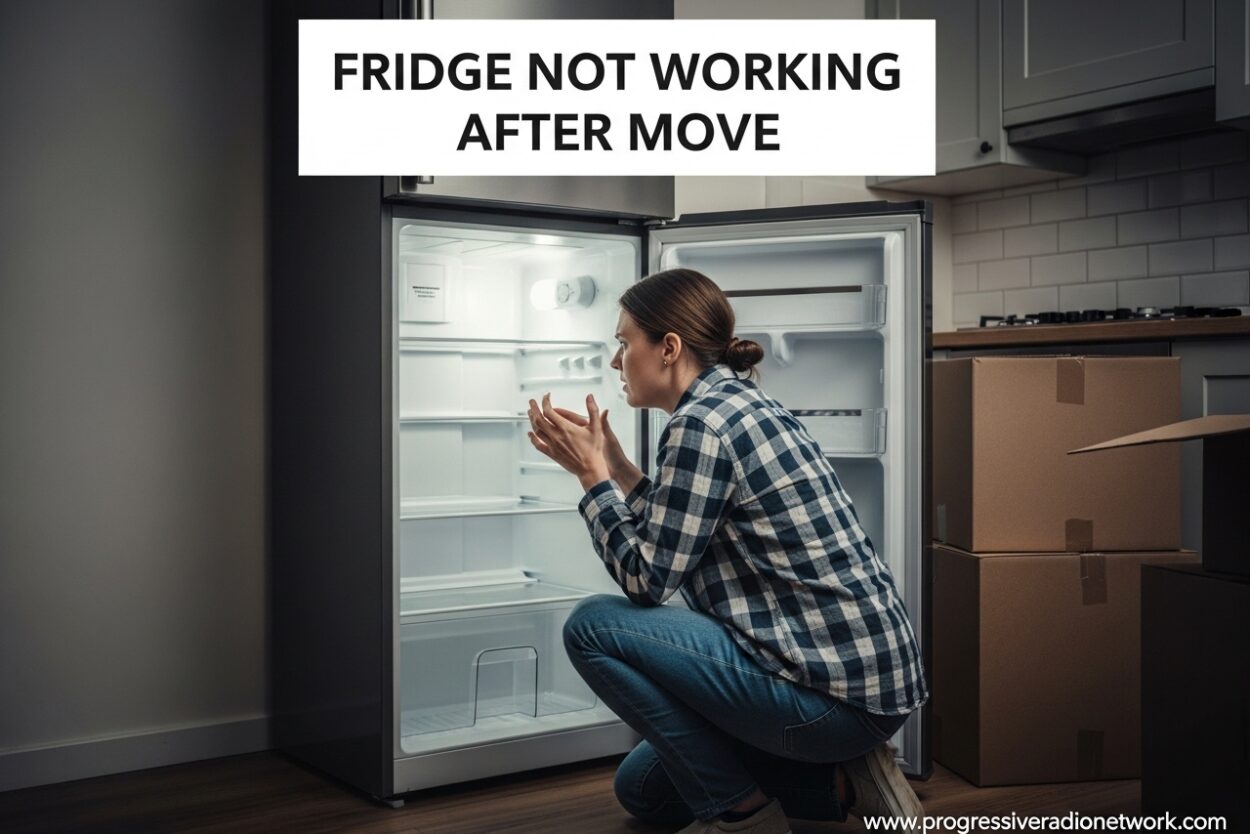
You’ve just finished moving into your new home, exhausted but relieved the heavy lifting is done. You go to grab a cold drink from the refrigerator, only to discover your fridge isn’t working. This frustrating scenario happens to thousands of people every year, and I’ve seen it countless times during my years in appliance repair.
A fridge not working after a move is typically caused by one of three issues: the compressor oil hasn’t settled after being tilted during transport, electrical connections loosened from vibration, or components were damaged during the move. The good news is that most of these problems are either preventable with proper settling time or fixable with basic troubleshooting.
In this guide, I’ll walk you through exactly why this happens, how long you should wait before plugging in your refrigerator, and step-by-step troubleshooting to get your fridge running again. You’ll also learn when to tackle repairs yourself versus when it’s time to call a professional.
Why Your Fridge May Not Work After Moving
Understanding why your refrigerator stopped working after a move helps prevent panic and points you toward the right solution. The most common culprit is what happens inside your fridge’s sealed system when it’s tilted or laid on its side during transport.
Your refrigerator’s compressor contains oil that lubricates its internal components. When your fridge sits upright normally, this oil settles at the bottom of the compressor where it belongs. But during a move, if the fridge is tilted beyond 45 degrees or laid completely on its side, that oil can flow into the refrigerant lines.
This oil migration creates a serious problem. The refrigerant lines are designed to carry only refrigerant gas and liquid. When oil enters these lines, it can block refrigerant flow and prevent proper cooling. Even worse, if you plug in the fridge immediately after moving, the compressor will try to run without proper lubrication, which can cause permanent damage.
Beyond oil migration, moving creates other issues. The vibration from transport can loosen electrical connections, especially at the compressor start relay and condenser fan. Items inside the fridge may have shifted and blocked air vents. In some cases, the door gasket may have been damaged, preventing proper sealing.
Fridge Not Working After Move: Settling Time Guidelines
The most critical factor after moving your refrigerator is patience. I know you want to get your fridge running and start unpacking those groceries, but plugging in too soon can turn a temporary issue into permanent damage.
If your refrigerator was transported completely upright and never tilted more than 45 degrees, you should wait at least 4 hours before plugging it in. This gives any slight oil movement time to settle back into the compressor.
However, if your fridge was laid on its side or tilted significantly during the move, you must wait 24 hours before plugging it in. This non-negotiable waiting period allows the oil to completely drain from the refrigerant lines back into the compressor. I’ve seen countless cases where homeowners plugged in after just 2-3 hours and ended up with a failed compressor.
Here’s the proper procedure: position your fridge in its final location, ensure it’s level, leave both doors slightly open to prevent mold growth, and set a timer. Do not plug it in until the full waiting period has elapsed. This simple step prevents the majority of post-move refrigerator failures.
Step-by-Step Troubleshooting Guide
Once you’ve allowed proper settling time, follow these steps in order to diagnose why your fridge isn’t cooling. I recommend working through each step before moving to the next, as the most common issues appear first.
Step 1: Verify Power Supply and Outlet
Before assuming your fridge has a mechanical problem, confirm it’s actually receiving power. Check that the plug is fully inserted into the outlet. Test the outlet with another appliance like a lamp to verify it’s working. Check your home’s electrical panel for any tripped breakers.
I’ve seen numerous cases where the refrigerator was fine, but the outlet was dead due to a tripped GFCI or blown breaker. If the outlet tests dead, reset the breaker or GFCI and try again. If the outlet still doesn’t work, you may need an electrician before blaming the refrigerator.
Step 2: Check Temperature Settings
During a move, temperature dials can get bumped or adjusted accidentally. Locate your fridge’s temperature control, typically inside the fresh food compartment, and verify it’s set to the recommended setting (usually around 37°F for the fridge, 0°F for the freezer).
Digital controls may have been reset during the move. If your fridge has a digital display, check if it’s showing error codes. Some models require a reset procedure after being unplugged—consult your owner’s manual for model-specific instructions.
Step 3: Inspect Door Seal Alignment
The door gasket creates an airtight seal that keeps cold air in. During a move, the door may have warped slightly or the gasket may have shifted. Close the door on a dollar bill and try to pull it out. If it slides out easily, your seal isn’t tight enough.
Inspect the gasket for any visible damage, tears, or debris that might prevent proper sealing. Clean the gasket with warm soapy water to ensure there’s no residue preventing contact. In some cases, simply adjusting the leveling feet can improve door alignment and restore the seal.
Step 4: Clean Condenser Coils
Your fridge’s condenser coils dissipate heat from the refrigeration system. When these coils get coated in dust and debris during a move, heat transfer becomes inefficient and cooling suffers.
Locate the coils either on the back of the fridge or behind a kick plate at the bottom front. Use a vacuum with a brush attachment or a coil cleaning brush to gently remove all dust and debris. This simple maintenance step resolves cooling issues in about 15% of post-move cases I’ve encountered.
Step 5: Listen for Compressor Sounds
Move close to your fridge and listen carefully. Can you hear the compressor running? A healthy compressor makes a steady humming sound. If you hear clicking sounds repeated every few minutes, your start relay may be failing.
A compressor that runs continuously but doesn’t cool indicates a refrigerant issue or sealed system problem. No sound at all with the lights working suggests the compressor isn’t receiving power or has failed. Each sound pattern points to different potential problems.
Step 6: Test Start Relay
The start relay is a small component attached to the compressor that helps it start running. This part commonly loosens or fails after a move due to transport vibration. Access the relay by removing the rear access panel at the bottom of the fridge.
The relay should be firmly attached to the compressor. If it’s loose, tighten the connection. Shake the relay—if it rattles, it’s failed internally and needs replacement. Start relays are inexpensive and relatively easy to replace yourself, making this a worthwhile diagnostic step.
Testing Specific Components
If basic troubleshooting hasn’t resolved your issue, you may need to test specific components. These tests require basic tools but can pinpoint the exact problem.
To test the start relay more thoroughly, use a multimeter to check for continuity. Set your multimeter to the ohms setting and test between the relay’s terminals. A reading of zero or infinity indicates a failed relay. Any reading between the terminals typically means the relay is functional.
Testing the compressor itself requires more advanced knowledge. Use your multimeter to check the three compressor terminals for proper resistance readings. You should get three different readings, and the highest reading should equal the sum of the other two. If the readings don’t match this pattern, your compressor has failed internally.
Check the condenser fan by removing the rear panel while the fridge is plugged in. The fan should be spinning whenever the compressor runs. If the compressor runs but the fan doesn’t, you may have a faulty fan motor or a problem with the fan’s power supply.
For freezer-bottom refrigerators, also check the evaporator fan behind the back panel inside the freezer. This fan circulates cold air throughout the fridge. If it’s not running but the freezer is cold, you’ve found your problem.
Brand-Specific Considerations
Different refrigerator brands have unique vulnerabilities after a move. Understanding these brand-specific patterns can save you diagnostic time.
Whirlpool refrigerators commonly experience start relay failures after moving. The relay connection becomes loose from vibration, causing the compressor to click without starting. Fortunately, this is an inexpensive and easy repair.
Samsung refrigerators may require a control board reset after being unplugged for an extended period. Try holding the power freeze and power cool buttons simultaneously for 10 seconds to reset the system. Some Samsung models also have a specific settling time requirement—consult your manual.
LG refrigerators with inverter compressors are more sensitive to transport damage. If your LG fridge was laid on its side, the 24-hour waiting period is absolutely critical. These compressors are more expensive to replace if damaged.
Frigidaire units commonly experience condenser fan motor issues after moves. The fan blade can become misaligned from transport, creating noise and reducing cooling efficiency. Check that the fan blade spins freely and isn’t contacting any surrounding components.
When to Call a Professional
Some post-move refrigerator problems require professional expertise. Knowing when to call a technician can save you money and prevent further damage.
If your compressor has failed internally, you’re typically looking at a $500-800 repair bill. At this point, consider the age of your refrigerator—if it’s over 10 years old, replacement may be more economical than repair.
Signs of compressor failure include: the compressor never runs but has power, it runs continuously without cooling, or it makes loud clanking or grinding noises. These symptoms indicate serious mechanical problems beyond DIY repair.
Refrigerant leaks also require professional service. If you notice oil residue on your refrigerator’s components or ice buildup on the refrigerant lines, you may have a leak. Repairing a refrigerant leak requires specialized equipment and EPA certification to handle refrigerants.
If your fridge is still under warranty, contact the manufacturer or an authorized service provider immediately. DIY repairs can void your warranty, and some manufacturers cover damage that occurs during transport if the unit was properly prepared for moving.
Mini Fridge Considerations
Mini fridges have some unique vulnerabilities during moves. Their smaller compressors are more susceptible to damage from being tilted, and their compact design makes them more likely to be laid completely on their side during transport.
If your mini fridge isn’t working after a move, follow the same 24-hour settling rule if it was tilted. However, be aware that mini fridge compressors are often non-repairable—if the compressor fails, replacement is usually the only option.
Check that your mini fridge is placed on a level surface. These units are more sensitive to being out of level than full-sized refrigerators. Use a bubble level to verify, and adjust the leveling feet if necessary.
Safety Precautions for DIY Troubleshooting
Before attempting any refrigerator repair, follow these essential safety precautions. Refrigerators contain electrical components and sharp edges that can cause injury if you’re not careful.
Always unplug your refrigerator before performing any work beyond basic visual inspection. Never work on the electrical components while the fridge is plugged in. Use insulated tools when testing electrical connections.
Wear protective gloves to avoid cuts from sharp sheet metal edges. Refrigerator cabinets have numerous sharp points that can easily cause injury. Safety glasses are also recommended when working underneath the unit where debris may fall.
Never bypass safety features or attempt to modify the refrigerator’s design. If you’re uncomfortable with any repair step, it’s better to call a professional than risk injury or further damage to your appliance.
FAQ
Why did my fridge stop working after I moved it?
Your fridge likely stopped working because the compressor oil flowed into the refrigerant lines when the unit was tilted during transport. This oil blocks refrigerant flow and prevents cooling. Other common causes include loose electrical connections from vibration, a jostled condenser fan, or the start relay becoming disconnected.
How long does it take for a fridge to settle after moving?
If your refrigerator was transported completely upright and never tilted beyond 45 degrees, wait at least 4 hours before plugging it in. If your fridge was laid on its side or tilted significantly during the move, wait 24 hours before plugging it in. This allows the oil to completely drain from the refrigerant lines back into the compressor.
How to hard reset a fridge?
To reset your refrigerator, first unplug it from the power outlet for 5-10 minutes. This allows the electrical system to fully discharge. For digital models, some brands like Samsung require holding specific button combinations (power freeze and power cool simultaneously for 10 seconds). After resetting, wait 24-48 hours for the fridge to reach proper cooling temperatures.
What happens if you don’t let a fridge sit after moving it?
Plugging in a refrigerator too soon after moving (especially if it was tilted) can cause permanent compressor damage. The compressor will try to run without proper oil lubrication, leading to overheating and mechanical failure. A new compressor costs $500-800 plus labor, so waiting the recommended 4-24 hours is inexpensive insurance.
How long to reconnect a fridge after moving?
The minimum reconnection time is 4 hours if the fridge was kept upright during the entire move. If the refrigerator was tilted beyond 45 degrees or laid on its side, wait 24 hours before reconnecting. During this waiting period, keep the doors slightly open to prevent mold growth and ensure the fridge is level on the floor.
Conclusion
Dealing with a fridge not working after a move is stressful, but most issues are either preventable with proper settling time or fixable with basic troubleshooting. Remember the golden rule: if your fridge was tilted during transport, wait 24 hours before plugging it in. This single step prevents the majority of post-move compressor failures.
Start with the basics: verify power, check temperature settings, clean the coils, and listen for compressor sounds. If these steps don’t resolve the issue, test the start relay and inspect the fan motors. For problems beyond these basic checks, or if you suspect compressor failure, call a professional technician.
By following this systematic approach, you’ll either get your fridge running again or identify when professional repair is needed. Either way, you’ll make an informed decision and avoid costly mistakes.






Leave a Comment