
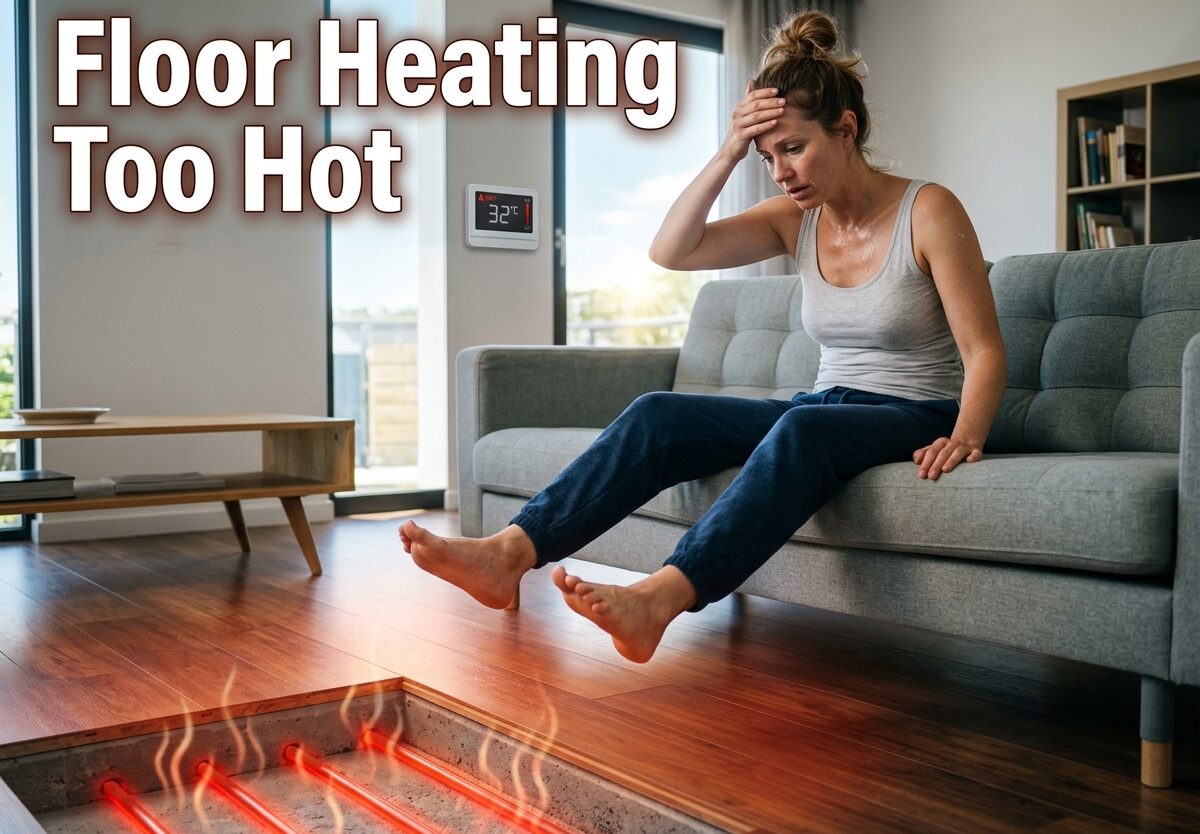
Floor heating too hot is typically caused by a malfunctioning thermostat, incorrectly placed temperature sensor, or water temperature set above the safe maximum of 130-140F in hydronic systems. When your radiant floor heating produces excessive heat, it can damage flooring materials, waste energy, and create uncomfortable living conditions. I’ve seen this problem hundreds of times, and in most cases, the fix is straightforward once you identify the root cause.
Why Is My Floor Heating Too Hot?
The most common reason floor heating becomes too hot involves the thermostat not accurately reading floor temperature. This happens when the temperature sensor is placed in a location that doesn’t represent actual floor conditions, or when the thermostat itself needs recalibration. In hydronic systems, the water temperature entering the floor loops might be set too high at the boiler or mixing valve.
Another frequent issue involves the thermal mass of concrete slabs. Once heated, concrete retains heat for hours. If your system continues circulating hot water even after the thermostat reaches the set temperature, the floor will keep getting hotter due to this stored heat. This is especially common in homes with thick concrete slabs where the temperature sensor is located in the wall rather than the floor itself.
Zone control failures can also cause overheating. When a zone valve or actuator fails to close properly, hot water continues flowing through that loop even when the thermostat is satisfied. I’ve found this is particularly common in systems where one zone becomes uncomfortably hot while others remain comfortable.
Electric vs. Hydronic System Differences
Electric floor heating systems typically have fewer components that can fail, but when they do overheat, it’s usually due to a faulty floor sensor or the thermostat not properly limiting power to the heating elements. Electric mats with damaged wiring can create hot spots that exceed safe temperatures.
Hydronic systems have more potential failure points. The mixing valve, boiler temperature setting, pump speed (Grundfos or Danfos settings), and zone controls all affect floor temperature. Reddit users frequently report confusion about pump settings, with many having their Grundfos pump set incorrectly or Danfos controllers left in “auto” mode when manual adjustment would be more appropriate.
Signs Your Floor Heating is Overheating
The most obvious sign is a floor that’s uncomfortable to walk on barefoot. While radiant floors should feel warm, they should never feel hot to the touch. If you find yourself avoiding walking on certain areas or needing to wear socks to protect your feet, the system is likely running too hot.
Other warning signs include unusual smells coming from the floor area, particularly with wood or laminate flooring. These materials can release volatile organic compounds when overheated. You might also notice warping, cupping, or gaps developing between floorboards as they expand and contract from excessive heat.
Your energy bills can also indicate overheating. If your heating costs have increased significantly without a change in usage patterns, your floor heating system may be running longer or hotter than necessary. One Reddit user reported their hallway was “ludicrously hot” while other rooms remained comfortable, indicating a zone-specific overheating issue.
How to Adjust Floor Heating Temperature
For Electric Systems
Start by checking your thermostat’s floor sensor setting. Most electric floor thermostats allow you to view the actual floor temperature versus the air temperature. If these readings don’t match how the floor feels, the sensor may be faulty or poorly positioned.
Step 1: Locate the thermostat’s floor temperature reading. Compare it to how the floor actually feels using an infrared thermometer if available.
Step 2: Access the thermostat’s calibration settings. This is usually found in the advanced or installer menu. Adjust the temperature offset until the displayed temperature matches the actual floor temperature.
Step 3: Lower the maximum floor temperature setting if available. Many thermostats allow you to set a maximum limit that the system cannot exceed, typically around 85F for comfort and safety.
Step 4: If these adjustments don’t resolve the issue, the floor sensor itself may need replacement. This requires accessing the wiring connection, usually located near the thermostat or in a junction box.
For Hydronic Systems
Hydronic systems require checking multiple components. Start by locating your mixing valve or boiler temperature setting. The water temperature entering your floor loops should typically be set between 100-120F for standard installations, never exceeding the safe maximum of 130-140F.
Step 1: Check the boiler or water heater temperature setting. This is often set higher than necessary for floor heating. Lower it to the recommended range for your specific flooring type.
Step 2: Inspect the mixing valve if your system has one. This device blends hot boiler water with cooler return water to achieve the right floor temperature. If it’s stuck or malfunctioning, it may be sending water that’s too hot into your floor loops.
Step 3: Adjust your circulation pump settings. For Grundfos pumps, setting 1 or 2 is usually sufficient for residential floor heating. Higher settings increase flow rate and heat transfer. For Danfos controllers, consider switching from “auto” to manual mode to have direct control over pump speed.
Step 4: Check zone valves and actuators. With the thermostat calling for heat, each zone should receive warm water. When the thermostat is satisfied, the zone valve should close completely. Manually feel the pipes to verify this is happening.
Step 5: Bleed air from the system. Air pockets can cause uneven heating and sometimes lead to overheating in certain areas as the system compensates for cold spots.
Floor Materials and Heat Tolerance
Different flooring materials have vastly different heat tolerances. Tile and stone flooring can handle the highest temperatures, often up to 125F surface temperature without issues. This makes them ideal for radiant floor heating applications.
Hardwood floors require more careful temperature control. Most hardwood manufacturers recommend keeping surface temperatures below 80-85F to prevent warping, cupping, or gapping between boards. Engineered hardwood generally handles heat better than solid hardwood but still requires temperature moderation.
Laminate and vinyl flooring are particularly sensitive to overheating. These materials can soften, warp, or release chemicals when temperatures exceed their safe operating range, typically around 81F. Always check the manufacturer’s specifications for radiant floor heating compatibility.
Travertine and other natural stones work exceptionally well with underfloor heating. Their thermal properties help distribute heat evenly, and they can withstand higher temperatures without damage. However, even with stone flooring, it’s important to stay within recommended temperature ranges to maximize efficiency and comfort.
When to Call a Professional
Simple thermostat adjustments and basic troubleshooting are safe DIY tasks. If you can identify and fix the problem by adjusting settings, recalibrating your thermostat, or making minor pump adjustments, you can likely handle the repair yourself.
However, certain issues require professional expertise. If you need to replace a floor sensor in an electric system, this often requires accessing wiring connections that may be behind walls or under flooring. A qualified electrician can ensure the repair is done safely and correctly.
Hydronic system problems involving the boiler, manifold, or hidden piping should always be handled by a professional HVAC technician. These systems operate under pressure and require specialized knowledge to repair safely. If you’re unsure about adjusting your Grundfos pump, Danfos controller, or mixing valve, professional help is the safer choice.
Zone valve replacement and manifold repairs also require professional expertise. These components are often difficult to access and may require draining and refilling the system, which is best left to experienced technicians.
Preventing Future Overheating Problems
Regular maintenance is the best prevention for floor heating issues. I recommend checking your thermostat settings at the start of each heating season to ensure they’re still appropriate for your needs and flooring type.
Monitor your energy bills for unexpected increases, which can indicate system problems. Keep an eye on your floor’s appearance, watching for any signs of warping, gaps, or discoloration that might indicate excessive heat exposure.
Consider upgrading to a smart thermostat with floor sensing capabilities if your current thermostat is outdated. These devices provide more precise temperature control and can alert you to potential problems before they cause damage.
For hydronic systems, annual professional maintenance can catch issues early. A technician can verify proper water temperature, check pump operation, and ensure all zone controls are functioning correctly. This preventive approach is far less expensive than repairing damage caused by chronic overheating.
Understanding your specific system type and its quirks goes a long way toward preventing problems. Whether you have electric mats or hydronic tubing, knowing how your system should operate helps you identify when something is wrong before serious damage occurs.
Frequently Asked Questions
Why is my heated floor getting too hot?
Your heated floor is getting too hot because of a malfunctioning thermostat, incorrectly placed temperature sensor, or water temperature set above 130-140F in hydronic systems. The thermostat may not be accurately reading floor temperature, or zone controls may be failing to close properly when the desired temperature is reached.
Can you use travertine with underfloor heating?
Yes, travertine works exceptionally well with underfloor heating. Natural stone like travertine has excellent thermal properties that distribute heat evenly and can withstand typical radiant floor temperatures without damage. Stone flooring is actually one of the best choices for radiant heating systems.
Do heated floors help with allergies?
Yes, heated floors can help with allergies. Radiant floor heating doesn’t rely on forced air, which means it doesn’t circulate dust, allergens, or other airborne particles throughout your home. This can reduce allergy symptoms for many people compared to forced-air heating systems.
Is 72 too high for heat in winter?
72F is not too high for winter indoor temperature, though it’s at the higher end of typical thermostat settings. For floor heating specifically, the concern is not the air temperature but the floor surface temperature. Floor surfaces should typically stay below 85F regardless of your thermostat setting.
Can floor heating damage hardwood floors?
Yes, floor heating can damage hardwood floors if temperatures exceed 80-85F at the floor surface. Excessive heat causes hardwood to warp, cup, or develop gaps between boards. Always follow the flooring manufacturer’s recommendations for radiant heating compatibility and temperature limits.
How hot should radiant floor heating get?
Radiant floor heating should typically maintain a surface temperature between 75-85F for comfort and safety. The maximum safe temperature is around 85F for most flooring materials, though tile and stone can tolerate slightly higher temperatures. Water temperatures in hydronic systems should not exceed 130-140F.
Conclusion
Floor heating too hot is a common problem with identifiable causes and solutions. Whether you’re dealing with an electric mat system or hydronic tubing, the issue typically stems from thermostat calibration, sensor placement, or water temperature settings. By understanding your system type and following the troubleshooting steps outlined above, you can resolve most overheating issues yourself or know when to call a professional.
The key is addressing the problem promptly. Ignoring overheating can damage expensive flooring materials and waste energy. With proper adjustments and ongoing maintenance, your radiant floor heating can provide comfortable, efficient warmth for years to come without the discomfort and risks associated with excessive temperatures.





Leave a Comment