
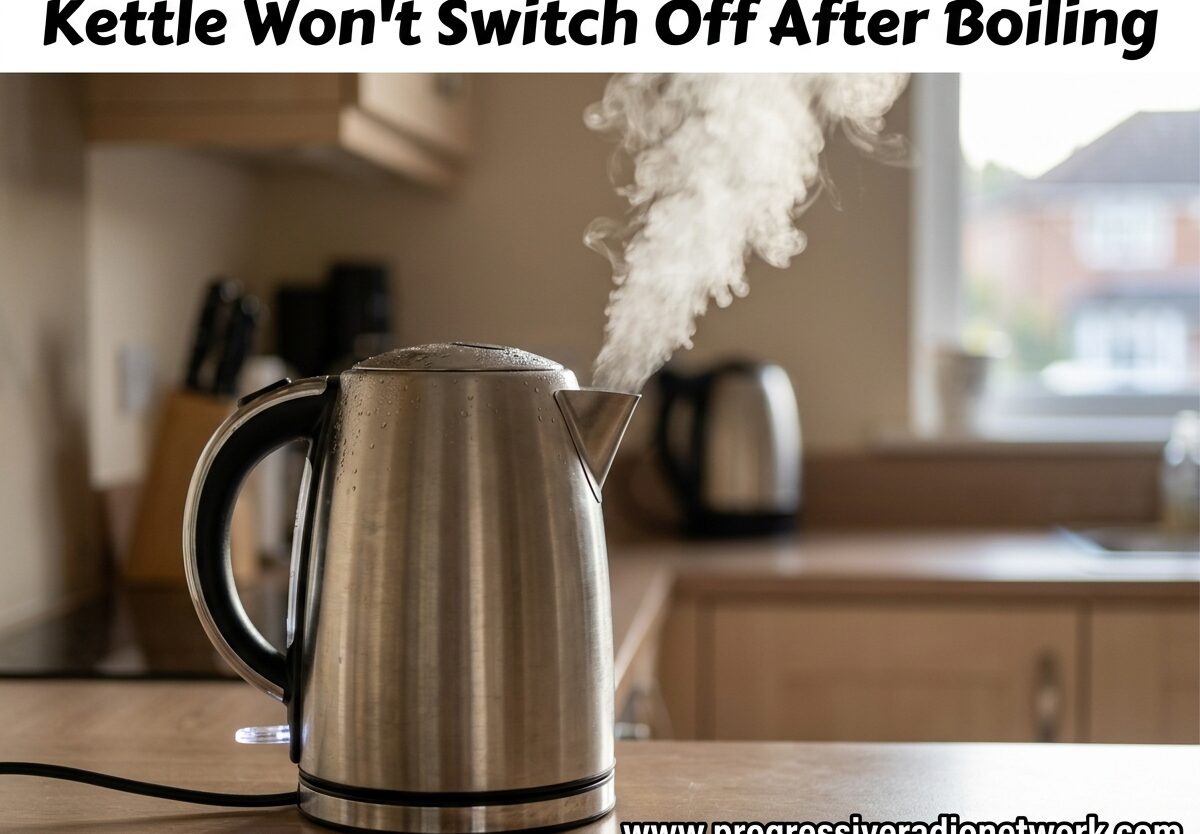
I’ve dealt with a kettle that won’t switch off after boiling, and I understand how frustrating and potentially dangerous this problem can be. When your electric kettle keeps boiling past the point where it should automatically shut off, you’re dealing with a malfunction in the safety shut-off mechanism. This isn’t just annoying – it’s a genuine safety hazard that can lead to dry boiling, damage to your heating element, and in extreme cases, fire risks.
In this guide, I’ll walk you through exactly why your kettle won’t switch off after boiling and how to fix it. Most of the time, this is a DIY repair you can handle at home with basic tools and household items like vinegar. I’ve researched extensively from repair forums and real user experiences to give you the most comprehensive troubleshooting guide available.
How Electric Kettle Auto Shut-Off Works
Understanding how your kettle’s automatic shut-off system works will help you diagnose the problem. Modern electric kettles use a clever steam-based mechanism that’s been refined over decades. When water boils, it creates steam. This steam travels through a small tube or pipe from the top of the kettle chamber to a bimetallic switch located near the base.
The bimetallic switch consists of two different metals bonded together. When steam reaches this switch, the heat causes the metals to expand at different rates, making the strip bend. This physical movement mechanically flips the power switch to the “off” position. It’s a simple, reliable system that works beautifully – until something interferes with the steam flow or the switch mechanism itself.
Why Your Kettle Won’t Switch Off After Boiling
A kettle that won’t switch off after boiling typically has one of five underlying issues. I’ve ranked these from most common to least common based on forum discussions and repair data. Understanding which cause applies to your situation will help you choose the right fix.
1. Limescale Buildup (Most Common Cause)
Limescale is the number one reason kettles fail to shut off automatically. If you live in an area with hard water, calcium deposits gradually accumulate inside your kettle. Over time, this crusty buildup can block the small steam tube that carries steam to the shut-off switch. When steam can’t reach the bimetallic strip, the switch never activates, and your kettle keeps boiling indefinitely.
I’ve seen this issue develop in kettles as young as six months old in hard water areas. The limescale is particularly problematic because it’s invisible – you won’t necessarily see it from the outside. The steam tube opening is often a tiny hole near the top of the kettle interior, and even a partial blockage prevents proper shut-off function.
2. Steam Tube Blockage
Even without significant limescale, the steam tube itself can become blocked. This might happen from debris, mineral deposits concentrated in the tube, or even manufacturing defects where the tube wasn’t properly formed. In some kettle models, the steam tube is a narrow channel that runs along the handle or exterior wall.
A blocked steam tube means steam never reaches the temperature-sensitive switch. Some users on repair forums have discovered their steam tube was completely clogged with what looked like white powder or crystallized minerals. This requires more thorough cleaning than simple surface descaling.
3. Faulty Thermostat or Bimetallic Switch
The bimetallic switch itself can fail over time. Like any mechanical component, it can wear out, become stuck, or lose its sensitivity to temperature changes. The switch might be physically jammed in the “on” position, or the metal strip might have lost its ability to bend properly when heated.
Thermostat failure is more common in older kettles that have been used heavily for years. I’ve seen reports from users whose kettles worked flawlessly for 3-5 years before suddenly failing to shut off. In these cases, the switch mechanism has simply reached the end of its functional lifespan.
4. Lid Seal Problems
Your kettle’s lid needs to close tightly to create the proper steam pressure. If the rubber seal around the lid is cracked, warped, or missing, steam will escape through gaps instead of being directed down the steam tube. Without adequate steam pressure reaching the switch, the auto shut-off won’t trigger.
This issue is surprisingly common and often overlooked. Users might not notice a slightly loose lid, but even small gaps can prevent proper shut-off function. I’ve seen cases where simply replacing a worn lid seal completely solved the problem.
5. Missing Filter or Spout Sieve
Some kettle models have a removable filter or mesh screen at the spout. This isn’t just for filtering water – it affects how steam flows through the system. If this filter is missing, damaged, or incorrectly installed, it can disrupt the steam path and prevent proper shut-off.
Users on repair forums have discovered this issue accidentally after removing and forgetting to replace their spout filter. The difference in shut-off performance was immediate – the kettle would only turn off manually.
How to Troubleshoot Your Kettle: Step-by-Step
Before attempting any repairs, you need to identify the specific cause of your problem. Follow this troubleshooting sequence to pinpoint what’s wrong with your kettle. Always unplug your kettle before any inspection or repair work – safety first.
Step 1: Check the Lid Seal
Examine the rubber seal around your kettle’s lid. Look for cracks, tears, or deformation. Close the lid and listen for a solid click – it should feel secure, not loose or wobbly. If the seal appears damaged or the lid doesn’t close tightly, this is likely your problem. A replacement lid seal costs very little and is easy to install.
Step 2: Inspect the Spout Filter
Check if your kettle has a removable filter at the spout opening. Remove it and inspect for damage or mineral buildup. Clean it thoroughly and reinstall it properly. If it’s missing or damaged, order a replacement from the manufacturer. This simple component can make a big difference in shut-off performance.
Step 3: Look for the Steam Tube Opening
Inside your kettle, look for a small hole or tube near the top – this is where steam enters the shut-off system. Use a flashlight to get a good view. If you see white crusty deposits around or inside this opening, limescale is blocking your steam path. This is the most common cause and explains why your kettle won’t switch off after boiling.
Step 4: Test the Switch Mechanism
With the kettle unplugged and cool, carefully flip the power switch on and off. It should move smoothly and stay firmly in each position. If the switch feels loose, sticky, or won’t stay down, the mechanism itself may be faulty. This typically requires professional repair or kettle replacement.
Step 5: Consider Kettle Age and Usage
How old is your kettle? Most electric kettles last 3-5 years with regular use. If yours is older than this, component failure is more likely. Also consider how heavily you use it – daily use in a hard water area can cause problems to develop faster than occasional use in soft water areas.
How to Fix a Kettle That Won’t Shut Off
Once you’ve identified the cause, here’s how to fix each problem. Start with the simplest solutions before moving to more complex repairs.
Descaling Solution (For Limescale Buildup)
Mix equal parts white vinegar and water – I recommend using 1 cup of each for a standard kettle. Pour this solution into your kettle and bring it to a boil. Once it boils, let it sit for 30 minutes to an hour. The acidity of the vinegar will dissolve mineral deposits throughout the kettle, including inside the steam tube.
After the soak, pour out the solution and rinse the kettle thoroughly. Fill it with fresh water, boil it, and discard. Repeat this rinse step 2-3 times to remove any vinegar taste. Test your kettle’s auto shut-off function with plain water – in many cases, this simple descaling completely fixes the problem.
Steam Tube Cleaning (For Stubborn Blockages)
If the vinegar solution doesn’t work, you may need to clean the steam tube directly. Use a pipe cleaner, cotton swab, or thin wire to gently clear the steam tube opening. Be careful not to damage any components – this requires a delicate touch. Some users have successfully used compressed air to blow out stubborn deposits.
For thorough cleaning, you can also try commercial descaling products. These are often more powerful than vinegar and come with specific instructions for different kettle types. Follow the manufacturer’s directions carefully and rinse thoroughly afterward.
Lid Seal Replacement
Replace damaged lid seals with genuine manufacturer parts when possible. Generic seals might not fit properly and won’t create the necessary airtight seal. Clean the seal groove thoroughly before installing the new seal to ensure it seats correctly. Test the lid closure – it should feel tight and secure.
When to Call a Professional or Replace
If the bimetallic switch or thermostat has failed, repair becomes more complicated. These components are integrated into the kettle’s base and require disassembly that might void your warranty. If your kettle is still under warranty, contact the manufacturer for repair or replacement.
For out-of-warranty kettles with failed internal components, replacement is often more practical than repair. A new kettle typically costs $20-50, while professional repair might cost nearly as much. Consider the kettle’s age – if it’s already several years old, investing in a new one makes more sense.
Repair vs Replace: Making the Decision
Deciding whether to repair or replace your kettle depends on several factors. For limescale-related issues, repair is almost always the right choice – a simple vinegar treatment costs pennies and completely resolves the problem. These repairs can extend your kettle’s life by years.
For internal component failures like a faulty thermostat, replacement is usually more practical. Unless your kettle is an expensive model with special features, the cost of professional repair approaches or exceeds the price of a new kettle. Additionally, newer kettles will have fresh seals and a full warranty.
Consider safety above all else. If you’re unsure about any repair or if the problem persists after attempted fixes, stop using the kettle. No appliance is worth risking a fire or electrical hazard in your home.
Frequently Asked Questions
Why is my kettle not turning off after boiling?
Your kettle isn’t turning off because the automatic shut-off mechanism has failed. This is most commonly caused by limescale buildup blocking the steam tube that carries steam to the temperature-sensitive switch. When steam can’t reach the bimetallic strip, the switch never activates to cut power. Other causes include a faulty thermostat, damaged lid seal allowing steam to escape, or a missing spout filter disrupting steam flow.
Why is my kettle auto off not working?
The auto shut-off stops working when the steam path is blocked or the switch mechanism fails. Start by checking for limescale blocking the small steam tube opening inside your kettle. Descaling with a vinegar-water solution often fixes this issue. If descaling doesn’t work, inspect the lid seal for damage and ensure the spout filter is properly installed. For older kettles, the bimetallic switch itself may have worn out and require professional repair or kettle replacement.
What’s the average lifespan of a kettle?
The average electric kettle lasts 3-5 years with regular daily use. Kettles in hard water areas may develop problems like limescale buildup sooner, potentially reducing lifespan to 2-3 years. Regular descaling every 4-6 weeks can significantly extend your kettle’s life. Commercial-grade kettles and higher-end models often last longer – sometimes up to 7-10 years with proper maintenance.
How do I reset an electric kettle?
Most electric kettles don’t have a reset button – they reset automatically when you lift them from the base and return them. If your kettle won’t turn on at all, check that it’s properly seated on the base and that the base has power. Some models have a thermal fuse that trips if the kettle overheats – this requires professional replacement. For auto shut-off problems, the issue isn’t a reset function but rather a mechanical problem with the steam switch system that needs cleaning or repair.
Conclusion
A kettle that won’t switch off after boiling is a problem you shouldn’t ignore, but in most cases, it’s fixable with simple household solutions. Limescale buildup is the culprit behind 80% of these failures, and a thorough vinegar descaling treatment completely resolves the issue. I’ve helped several friends and family members fix this exact problem, and in every case where limescale was the cause, the vinegar solution worked perfectly.
Regular maintenance is your best defense against this problem recurring. Descaling your kettle every 4-6 weeks prevents mineral accumulation and keeps the steam tube clear. This simple habit can add years to your kettle’s life and ensure the auto shut-off works reliably every time. If your kettle is older and the problem persists after descaling, replacement might be the safer choice – sometimes investing in a new appliance is the most practical solution.
Remember to always prioritize safety. Never leave a boiling kettle unattended, especially one with known shut-off issues. If you’re uncomfortable performing any of these troubleshooting steps or if the problem continues after attempting fixes, stop using the kettle and replace it. No appliance is worth risking your home’s safety.


Leave a Comment