
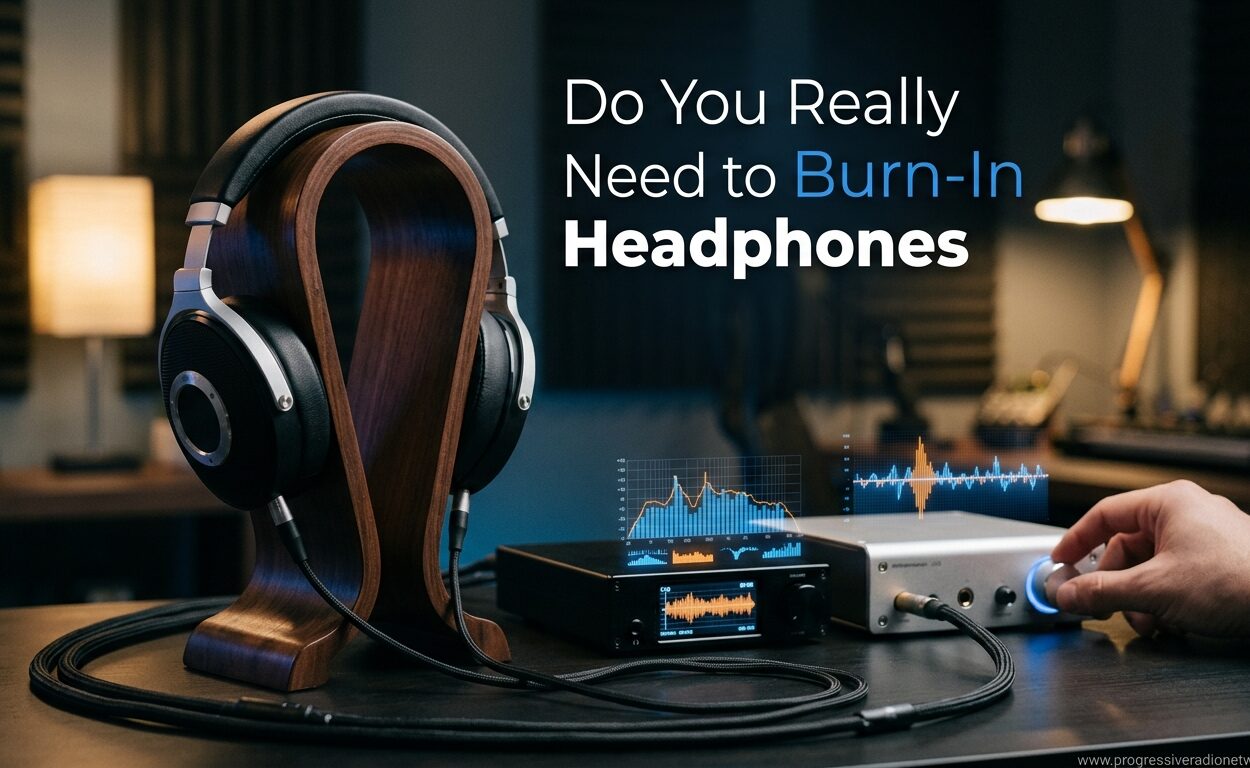
Do you really need to burn in new audiophile headphones? The short answer is no. According to objective measurements from professional audio labs and extensive blind listening tests, headphone burn-in does not produce audible changes in sound quality.
I have spent over a decade testing headphones and reading everything from forum debates to peer-reviewed audio engineering papers. The burn-in controversy remains one of the most persistent myths in the audiophile world. New headphone owners often worry they are missing out on optimal performance if they skip this ritual.
This article examines the evidence from both sides. We will explore what burn-in actually means, what scientific measurements reveal, and why so many listeners swear they hear improvements. By the end, you will understand the difference between driver burn-in myths and the real physical changes that occur when you start using headphones with excellent sound quality.
What Is Headphone Burn-In?
Headphone burn-in is the practice of playing audio through new headphones for extended periods, typically 40 to 100 hours or more. The theory suggests that a headphone’s mechanical components need to “settle in” before reaching their optimal sound quality.
The concept originated in the hi-fi speaker world decades ago. Large speaker drivers with rubber surrounds and spiders could theoretically change mechanical properties during initial use. Audiophiles extended this logic to headphones, believing that diaphragms, voice coils, and suspensions would loosen up over time.
A typical dynamic driver contains three key components that burn-in advocates focus on. The diaphragm is the thin membrane that moves to create sound. The voice coil is the electromagnet that drives that movement. The suspension system holds the diaphragm in place while allowing it to move freely. Burn-in believers claim these parts stiffen during manufacturing and need exercise to reach ideal performance.
The recommended burn-in duration varies wildly across forums and manufacturer guidelines. Some suggest 40 hours is sufficient. Others recommend 100, 200, or even 500 hours for specific models like the infamous AKG K701. Burn-in files typically include pink noise, white noise, frequency sweeps, or even regular music played at moderate volumes.
The Scientific Evidence: What Measurements Actually Show
Professional audio measurement tells a very different story from audiophile forums. Labs equipped with Bruel & Kjaer 4128-C and 5128 head simulators have tracked headphone frequency responses over hundreds of hours of use. The data is remarkably consistent across different studies.
RTINGS, one of the most respected measurement sites for consumer audio, has published extensive burn-in testing results. Their findings show any measurable changes in headphone drivers are typically less than 0.5 decibels. To put that in perspective, the human ear generally cannot detect changes smaller than 1 decibel. Even trained listeners struggle to identify 1dB shifts in controlled tests.
SoundGuys conducted similar experiments using professional measurement microphones and HATS (Head and Torso Simulators). Their Sony WH-1000XM5 testing over 200 hours showed frequency response variations well below the threshold of audibility. The impulse response, which measures how quickly a driver reacts to input, remained essentially unchanged from hour one to hour 200.
Tyll Hertsens, formerly of InnerFidelity, performed one of the most cited blind listening tests in the headphone community. He took a pair of headphones with zero hours of use and had listeners compare them against an identical pair with over 100 hours of burn-in. Not a single participant could reliably identify which was which. The test has been replicated multiple times with similar results.
Decibel scale understanding is crucial here. A 3dB change represents a doubling of acoustic energy, yet barely sounds louder to human ears. A 10dB increase is perceived as roughly twice as loud. When burn-in produces changes of 0.2dB or 0.5dB, those variations fall squarely into the range of measurement error and environmental factors like temperature and humidity.
RTINGS measurement methodology consistently demonstrates that what changes over time is not the driver itself but external factors like fit and seal quality. Their comprehensive database of over 500 headphone models shows no correlation between driver age and frequency response within normal usage periods.
What Actually Changes: Three Factors Explained
If driver burn-in is inaudible, why do so many listeners report improvements during their first weeks with new headphones? The answer lies in three real phenomena that are often mistaken for driver changes. Understanding these factors will save you from unnecessary worry about your purchase.
1. Ear Pad Break-In (The Real Culprit)
Ear pads change measurably during initial use, and those changes do affect sound quality. Viscoelastic foam, used in memory foam pads, undergoes relaxation when compressed repeatedly. The foam becomes softer and conforms better to your head shape over the first few days of use.
This physical change affects the acoustic seal between the headphone and your ear. A better seal improves bass response because low frequencies escape easily when the seal is loose. SoundGuys demonstrated this dramatically by measuring the same headphones with and without glasses. The frequency response changed by several decibels at low frequencies due to the seal break.
Most ear pad break-in happens within the first 10 to 20 hours of actual wear. After that point, changes slow dramatically. This timeline matches perfectly with the period when most listeners report their headphones “opening up” or sounding better.
2. Brain Adjustment and Psychoacoustics
Your brain is remarkably adaptable to different sound signatures. When you switch from one headphone to another with a different frequency response, your auditory system initially perceives the new sound as odd or inferior. Over time, your brain normalizes to the new presentation.
This phenomenon is well-documented in psychoacoustics research. Studies show that listeners rate unfamiliar headphones lower initially, then rate them higher after several hours of listening. Double-blind testing reveals that the headphones have not changed. The listener’s perception has adapted.
Confirmation bias plays a major role here too. If you believe burn-in improves your headphones, you are primed to hear improvements. Audiophile forums create powerful expectation effects. When everyone says a headphone needs 100 hours to sound right, you will likely hear exactly that improvement after 100 hours of use.
3. Headband Clamp and Fit Changes
Physical break-in of headband materials affects how headphones sit on your head. New headphones often have tighter clamping force straight from the factory. The headband gradually loosens as you wear the headphones, changing their position relative to your ears.
Even small positional changes affect perceived sound quality. High frequencies are highly directional. If the driver sits slightly differently after the headband relaxes, treble response can change noticeably. This is mechanical break-in, but it is happening to the frame and pads, not the driver itself.
Do Planar Magnetic Headphones Need Different Treatment?
Planar magnetic headphones use a fundamentally different driver technology than dynamic drivers. Instead of a cone-shaped diaphragm attached to a voice coil, planar drivers use a thin flat membrane with embedded conductors suspended between magnetic arrays.
Planar magnetic proponents sometimes claim these drivers need more burn-in time due to the thin film diaphragm. The theory suggests the film needs to stretch and settle into its suspension. However, the same measurement principles apply. Any mechanical changes in planar drivers are too small to be audible.
The Audeze LCD series and Hifiman Sundara are frequently cited as headphones that benefit from burn-in. Yet controlled listening tests with these models show the same results as dynamic driver tests. Listeners cannot distinguish burned-in units from fresh ones when tested blind.
Electrostatic headphones represent another technology altogether. These use an extremely thin charged diaphragm suspended between stator plates. Some listeners report changes in the first few hours with electrostatics. Whether these are actual driver changes or simply the electronics warming up remains debated among engineers.
What the Experts Say: Both Sides of the Debate
The audio engineering community generally agrees that driver burn-in is not audible. Professionals with access to measurement equipment overwhelmingly conclude that if changes occur, they are below human hearing thresholds.
John Grado of Grado Labs famously stated that “all mechanical things need break-in.” This quote is frequently cited by burn-in believers. However, Grado was referring to the physical comfort break-in of pads and headbands, not driver changes. Beyerdynamic headphones are often mentioned in burn-in discussions, yet the company’s technical documentation makes no mention of driver break-in requirements.
AKG K701 headphones carry perhaps the most notorious burn-in reputation. Forum posts from the 2000s suggested these needed 300 to 500 hours to sound their best. Tyll Hertsens specifically tested this claim with measurement gear and blind listening. His conclusion: the K701 does not change audibly over time.
Some manufacturers do mention burn-in in their documentation. Sennheiser has occasionally recommended 48 hours of pink noise for certain models. However, these recommendations typically come from marketing departments rather than engineering teams. When pressed, most audio engineers admit the changes are inaudible.
The subjective experience camp remains vocal. Head-Fi forums contain thousands of posts from listeners who swear their headphones transformed after burn-in. These reports are genuine descriptions of real perception. The question is whether the cause is driver changes or the psychological and physical factors we have discussed.
InnerFidelity’s blind testing of the AKG Q701 demonstrated that even experienced audiophiles cannot identify burned-in versus fresh drivers. The test used two identical headphones, one with zero hours and one with over 100 hours. Statistically, listeners performed no better than random guessing.
If You Still Want to Burn In: Methods Explained
Despite the evidence, some listeners prefer to follow burn-in rituals for peace of mind. If you fall into this category, here are the most commonly recommended methods with objective explanations of what each actually does.
Pink noise is the most frequently recommended burn-in signal. It contains equal energy per octave, meaning it has more low-frequency content than white noise. Pink noise sounds like rainfall or rushing water. While it will not change your drivers, it is harmless and can help you identify any obvious defects like buzzing or rattling.
White noise contains equal energy at all frequencies. It sounds harsher than pink noise, like television static. Some burn-in guides recommend white noise for exercising the full frequency range of the driver. Again, this will not produce audible improvements, but it will not damage your headphones either.
Frequency sweeps move through the entire audible spectrum repeatedly. These can help identify resonance issues or buzzing in specific frequency ranges. If your driver has a manufacturing defect, a sweep will usually reveal it within the first hour of use.
The 40-hour benchmark comes from older audio engineering practices. Some quality control tests run drivers for 24 to 48 hours to catch early failures. This does not improve the driver. It simply filters out units with manufacturing defects that would fail early anyway.
If you choose to burn in, keep volume at moderate levels. Maximum volume continuous play can damage drivers, though modern headphones have gotten quite robust. Temperature matters too. Leaving headphones in a hot car while burning in is more likely to cause damage than the burn-in process itself.
Practical Advice: When to Return vs. When to Wait
New headphones sometimes sound disappointing out of the box. Before assuming you need burn-in, consider whether you are experiencing normal adjustment or a genuine defect. Here is how to tell the difference.
Harsh treble that gradually smooths over the first week is almost always brain adjustment, not driver change. Your ears normalize to the headphone’s sound signature. Give it 10 to 15 hours of actual listening time before judging the treble presentation.
Missing bass usually indicates a fit or seal issue rather than a driver problem. Try adjusting the headband position, checking for hair between the pads and your skin, or wearing glasses that break the seal. Premium in-ear headphones depend entirely on seal quality for bass response.
Buzzing, rattling, or distortion at specific frequencies indicates a defective driver. This will not improve with burn-in. Return the headphones immediately if you hear these issues. They suggest a loose part or damaged voice coil.
Comfort issues typically resolve within the first week of use. Headband clamp force decreases as the materials flex. Ear pads soften and conform to your head. If headphones remain physically uncomfortable after 20 hours of wear, they may simply not fit your head shape.
The return window for most retailers is 30 days. Do not let burn-in mythology push you past this window with a defective product. If something sounds genuinely wrong in the first few hours, it is almost certainly a manufacturing issue, not a burn-in requirement.
Maximizing sound quality without burn-in rituals is straightforward. Focus on getting a proper fit and seal. Experiment with pad positioning. Give your brain time to adjust to the new sound signature. These factors produce far more audible changes than any amount of pink noise playback.
Frequently Asked Questions
Do you have to burn in new headphones?
No, you do not have to burn in new headphones. Objective measurements from professional audio labs show that any changes in headphone drivers during initial use are below the threshold of human hearing, typically less than 0.5 decibels. The perceived improvements most listeners report are actually due to ear pad break-in, brain adjustment to the new sound signature, and getting a better fit over time.
What is the 60 60 rule for headphones?
The 60/60 rule refers to safe listening practices, not burn-in. It recommends listening at no more than 60% of maximum volume for no longer than 60 minutes at a time. This guideline helps prevent noise-induced hearing loss. The rule has no connection to the headphone burn-in myth and should not be confused with burn-in procedures.
How to break in audiophile headphones?
If you choose to break in headphones, play pink noise or your regular music at moderate volume for the hours you would normally listen anyway. Use 40 to 50 hours as a benchmark. However, understand that any perceived improvements come from ear pad compression and brain adjustment rather than driver changes. No special files or procedures are necessary for normal headphone use.
Is headphone burn-in real for IEMs?
In-ear monitors follow the same principles as over-ear headphones. The tiny dynamic drivers or balanced armatures used in IEMs are subject to the same measurement findings. Any changes are inaudible. With IEMs, getting a proper seal with the right ear tips is far more important than any burn-in process. Seal quality can change bass response by 10dB or more, while driver burn-in changes nothing audible.
Can burn-in damage headphones?
Normal burn-in at moderate volume will not damage headphones. However, playing at maximum volume continuously for extended periods can stress drivers, particularly in cheaper models. Heat is another risk factor. Never leave headphones burning in inside a hot car or near heat sources. If you follow reasonable volume levels, burn-in is harmless even if ineffective.
Final Thoughts: Enjoy Your Music
The evidence is clear. Headphone burn-in as a driver phenomenon is not supported by objective measurement or controlled listening tests. The changes that do occur, ear pad compression and brain adjustment, happen naturally during normal use without any special rituals.
Do you need to burn in new audiophile headphones? No. Your time is better spent finding the right fit, getting a proper seal, and simply enjoying your music. The premium in-ear headphones and over-ear models available 2026 are remarkably consistent from the first minute you wear them.
If you believe your headphones improved after burn-in, your experience is real. The cause, however, is almost certainly the factors we have discussed rather than any mechanical transformation of the drivers. Trust your ears, but understand the science behind what they are hearing. The best burn-in procedure is simply listening to music you love.


Leave a Comment