
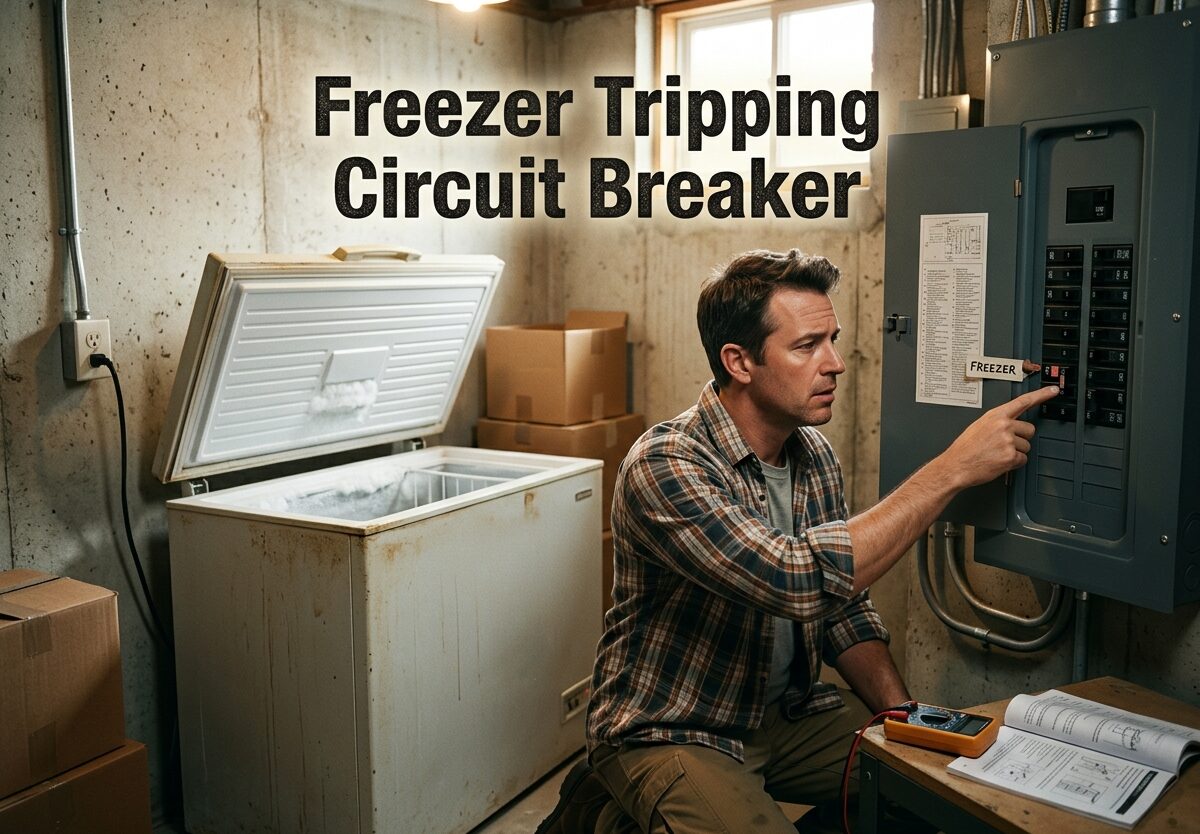
There’s nothing quite like discovering a freezer full of spoiled food because the circuit breaker tripped while you were sleeping. I’ve seen this happen countless times, and the frustration is understandable. When your freezer keeps tripping the circuit breaker, it’s not just an inconvenience – it’s a warning sign that something needs attention.
Circuit breakers are designed to protect your home from electrical fires and damage. When a freezer trips the breaker repeatedly, it means the electrical system is detecting a problem that could be dangerous. Understanding the root cause helps you decide whether to tackle the fix yourself or call in a professional.
This guide will walk you through the most common causes of freezer breaker trips, how to diagnose the issue based on when trips occur, and what steps you can take to resolve the problem safely.
How Circuit Breakers Protect Your Freezer and Home
Circuit breakers monitor the flow of electricity through wires in your home. When too much current flows (overload) or electricity takes an unintended path (short circuit), the breaker trips to prevent wires from overheating and potentially causing a fire.
Freezers require significant electrical power, especially during startup. The compressor alone can draw 3-5 times its normal running current when first turning on. This startup surge is normal, but if components begin failing, the current draw can exceed safe limits and trip the breaker.
There are two main types of breaker trips:
- Overload: Too many devices drawing power on the same circuit
- Short circuit: Electricity bypassing the normal path due to damaged wiring or failed components
A short circuit is more serious and typically causes an immediate trip when the freezer is plugged in or when a specific component activates. An overload might happen after the freezer has been running normally for hours.
Timing-Based Diagnosis: When Trips Occur Matters
The timing of when your freezer trips the breaker provides crucial clues about what’s wrong. I’ve found this diagnostic approach helps narrow down the problem quickly without needing specialized tools.
Immediate Trip When Plugged In
If the breaker trips the moment you plug in the freezer, you likely have a direct short circuit. This could be a damaged power cord, a shorted compressor, or a problem with the outlet itself. The freezer may have been working fine previously, and something suddenly failed.
Trips After Running for Several Hours
When the freezer runs normally for hours before tripping, the issue is often related to the defrost cycle. Most freezers enter defrost mode every 8-12 hours. If the defrost heater has developed a short to ground, it will trip the breaker when activated.
This pattern is especially common with freezers plugged into GFCI outlets, which are more sensitive to ground faults than standard circuit breakers.
Trips When Compressor Starts
If the breaker trips specifically when the compressor kicks on (you’ll hear a click followed by the breaker tripping), the problem is likely with the start components. This includes the start relay, run capacitor, or the compressor itself.
A failing start relay can cause the compressor to lock up and draw excessive current. The start capacitor provides the extra boost needed for compressor startup – when it fails, the compressor may struggle and trip the breaker.
Night-Time Tripping
Many users report their freezer trips the breaker only at night. This often correlates with defrost cycle timing, electrical load variations during nighttime hours, or even temperature-sensitive components failing in cooler garage conditions.
7 Common Causes of Freezer Circuit Breaker Trips
1. Defrost Heater Failure (Most Common GFCI Cause)
The defrost heater melts ice buildup on the evaporator coils. When this heater develops a short circuit, current leaks to the metal chassis of the freezer. Standard circuit breakers may not detect this small leak, but GFCI outlets will trip immediately.
Forum users consistently report this as the number one cause of GFCI trips. The heater typically fails after years of heating and cooling cycles, causing the insulation to break down.
2. Compressor or Start Relay Problems
The compressor is the heart of your freezer, and when it starts failing, electrical problems follow. Common compressor issues include:
- Shorted internal windings
- Seized bearings causing excessive current draw
- Ground fault within the compressor housing
The start relay tells the compressor when to run. When it fails closed, the compressor may attempt to start continuously, drawing excessive current and tripping the breaker.
3. Damaged Power Cord or Plug
Inspect your freezer’s power cord carefully. Look for:
- Kinks or sharp bends that expose wires
- Pinched cords from the freezer being pushed against walls
- Burn marks or discoloration on the plug prongs
- Rodent damage (common in garages and basements)
Even a small break in the insulation can cause a short circuit when the cord moves or vibrates during compressor operation.
4. Faulty Outlet or Wiring Issues
Sometimes the freezer is fine, but the electrical outlet is the problem. Loose wire connections, corroded contacts, or damaged wiring inside the wall can cause intermittent trips. This is especially common in older homes or damp locations like garages.
Test the outlet by plugging the freezer into a different circuit. If it doesn’t trip, the original outlet or wiring is likely the culprit.
5. Dirty Condenser Coils
When condenser coils are covered in dust and pet hair, the compressor has to work harder to dissipate heat. This increases electrical draw and can trip breakers, especially older or sensitive ones.
Dirty coils are a simple fix – vacuum or brush them clean annually. This also improves energy efficiency and extends the life of your freezer.
6. Ice Maker Heater Malfunction
Freezers with ice makers have a heating element that loosens ice for harvesting. Like the defrost heater, this element can short to ground and cause breaker trips. The issue typically occurs during the ice harvest cycle.
7. Weak or Aging Circuit Breaker
Breakers can weaken over time. A breaker that trips under normal load might be failing itself. This is more likely if the breaker feels warm to the touch, shows signs of discoloration, or is more than 20 years old.
Electrical forums are filled with stories of homeowners replacing appliances only to discover the breaker was the problem all along.
GFCI Outlet Issues: Why Garage Freezers Are Affected
Garage freezers frequently trip GFCI outlets even when the freezer works perfectly fine. The National Electrical Code requires GFCI protection in garages for safety, but this creates a known compatibility issue with freezers.
Why does this happen? All appliances have some normal leakage current – a tiny amount of electricity that flows to the ground wire. GFCI outlets are designed to trip when they detect leakage greater than 5mA. Some freezers, especially older models, operate right at this threshold.
When the defrost heater activates, leakage current increases. If it exceeds 5mA, the GFCI trips. This doesn’t mean the freezer is defective – it means the GFCI is doing its job, but perhaps too sensitively for this application.
Solutions include replacing the GFCI with a standard outlet (if local code permits and you install a GFCI breaker instead), moving the freezer to a non-GFCI circuit, or having an electrician assess the situation. Never simply remove GFCI protection without understanding the safety implications.
Step-by-Step Troubleshooting Guide
Step 1: Verify the Breaker Issue
Confirm the breaker is actually tripping, not just being turned off. Reset the breaker fully – flip it all the way OFF, wait 30 seconds, then flip to ON. If it doesn’t stay on or trips immediately when the freezer starts, proceed with troubleshooting.
Safety Warning: If you smell burning, see smoke, or the breaker panel feels hot, stop immediately and call an electrician.
Step 2: Test with a Different Outlet
Move the freezer to a different circuit, preferably one without a GFCI if you’re troubleshooting garage issues. Use a heavy-duty extension cord temporarily and run the freezer through a complete defrost cycle (8-12 hours).
If the freezer doesn’t trip the new circuit, the problem is with your original outlet or house wiring. This is a job for a licensed electrician.
Step 3: Inspect the Power Cord
Unplug the freezer and examine the entire length of the power cord. Look for damage, kinks, burn marks, or areas where the cord has been pinched. Pay special attention where the cord enters the freezer cabinet.
If you find any damage, the power cord should be replaced by a qualified appliance technician. Do not attempt to repair a power cord with electrical tape.
Step 4: Check Condenser Coils
Locate the condenser coils – usually on the back of the freezer or behind a removable grill at the bottom. If they’re covered in dust and debris, clean them using a vacuum with a brush attachment or a coil cleaning brush.
Clean coils reduce compressor strain and can prevent breaker trips caused by excessive current draw. Make this part of your annual maintenance routine.
Step 5: Listen for Compressor Sounds
When the compressor should start (usually after the door has been closed for a few minutes), listen carefully:
- Click but no hum: Possible start relay or capacitor issue
- Humming then clicking off: Compressor may be seized
- Loud bang or pop: Possible compressor failure (unplug immediately)
Unusual sounds often indicate compressor problems that require professional service.
Step 6: When to Use a Multimeter
If you’re comfortable with electrical testing, a multimeter can help diagnose component failures. Set it to continuity or ohms mode and test:
- Defrost heater: Should show continuity (typically 20-40 ohms)
- Thermostat: Should show continuity when cold, open when warm
- Start relay: Should show specific resistance values (check manufacturer specs)
If any component shows no continuity or zero ohms (direct short), that component likely needs replacement.
Testing Components with a Multimeter
A digital multimeter is an invaluable tool for diagnosing electrical issues in freezers. Before testing, always unplug the freezer and discharge any capacitors to avoid shock.
Testing the Defrost Heater
Locate the defrost heater behind the freezer’s rear panel. Disconnect the wires and set your multimeter to measure resistance (ohms). A working defrost heater typically reads between 20-50 ohms. If it reads infinite (no continuity) or zero ohms (short), the heater is defective and should be replaced.
Testing the Compressor
Access the compressor terminals by removing the terminal cover. You’ll see three pins labeled Common, Start, and Run. Test resistance between:
- Common to Start: Should be 2-5 ohms
- Common to Run: Should be 1-3 ohms
- Start to Run: Should be the sum of the above (3-8 ohms)
If any terminal shows zero ohms to the compressor casing (ground), the compressor has an internal short and will need replacement – a job typically requiring professional service.
Safety First
Only perform electrical testing if you’re comfortable working with electricity. When in doubt, it’s always safer and more cost-effective in the long run to call a professional appliance repair technician.
When to Call a Professional
Some freezer issues are best handled by professionals. Call an appliance repair technician if:
- The compressor needs replacement (expensive and requires specialized tools)
- You’re not comfortable with electrical testing or component replacement
- The freezer is under warranty (DIY repairs may void coverage)
- Multiple components have failed simultaneously
Consider freezer replacement if repair costs exceed 50% of a new freezer’s price, especially if the unit is over 10 years old. New freezers are more energy efficient and may save you money in the long run.
Call a licensed electrician if:
- The outlet or house wiring is suspected to be the problem
- You need to modify electrical circuits
- You’re unsure about local electrical codes
- The breaker panel shows signs of damage or overheating
Prevention Tips to Avoid Future Breaker Trips
Preventing freezer breaker trips is largely about maintenance and proper installation:
- Use a dedicated circuit: Freezers should ideally have their own 15-amp circuit to prevent overload from other appliances.
- Clean condenser coils annually: Dirty coils force the compressor to work harder and draw more current.
- Inspect power cords regularly: Check for damage and ensure cords aren’t pinched or crushed.
- Avoid extension cords: Permanent use of extension cords is a fire hazard and can cause voltage drop that increases current draw.
- Consider garage installation requirements: If placing a freezer in a garage, ensure proper electrical setup and temperature considerations.
- Replace aging breakers: If your home’s electrical panel is more than 20 years old, have an electrician evaluate the breakers.
FAQ
Following these prevention tips not only reduces breaker trips but also extends the life of your freezer and improves energy efficiency.
Why does my freezer keep tripping my breaker?
What are the signs of a failing freezer compressor?
How do I stop my freezer from tripping my GFCI?
What amp breaker should a freezer be on?
How often should a refrigerator compressor kick on?
Is it dangerous if my freezer keeps tripping the breaker?
Conclusion
A freezer that keeps tripping the circuit breaker is telling you something is wrong. Whether it’s a faulty defrost heater, a failing compressor, or an electrical issue in your home, the problem won’t resolve itself. Ignoring it risks food spoilage, appliance damage, and potentially serious electrical hazards.
Start by noting when the trips occur – immediate, delayed, or during startup. This timing clue narrows down the likely cause and helps you decide whether to attempt DIY troubleshooting or call a professional. For most homeowners, issues like dirty coils, damaged cords, or outlet problems are manageable. Compressor replacement and internal electrical work should be left to qualified technicians.
Remember that electrical safety should always come first. If you’re unsure about any step in the diagnosis or repair process, it’s worth the cost of a professional service call to ensure the job is done safely and correctly. Your freezer and your home will be safer for it.

Leave a Comment