
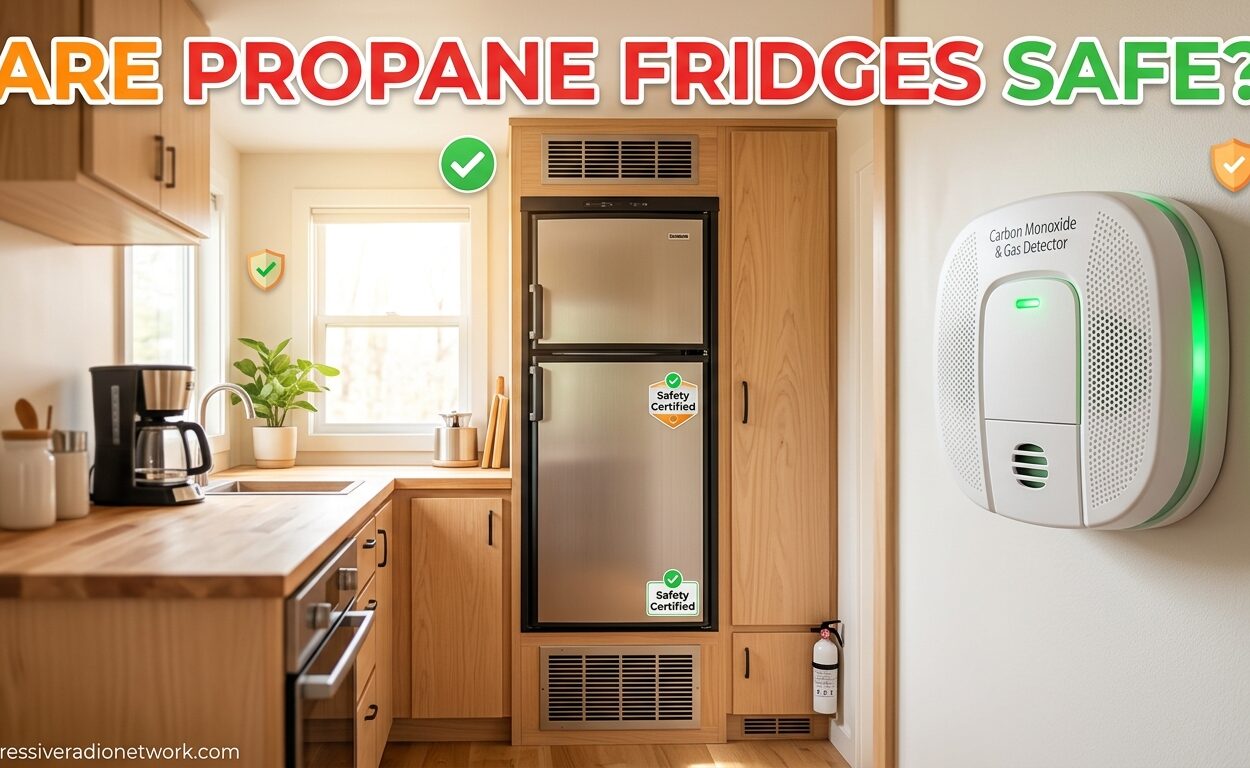
Yes, propane fridges are safe when properly maintained, correctly installed, and operated according to manufacturer guidelines. I’ve researched extensively and found that millions of RV owners, off-grid homeowners, and cabin dwellers rely on propane refrigeration daily without incident. The key to safety lies in understanding how these appliances work, following proper maintenance schedules, and respecting their unique operational requirements.
Are propane fridges safe? The short answer is yes, they’re designed with multiple safety features and have been used reliably for decades in RVs, cabins, and off-grid homes worldwide.
How Propane Fridges Work
Understanding how propane refrigerators operate helps explain why they’re safe by design. Unlike standard electric fridges that use compressors and refrigerants, propane models use absorption cooling technology with no moving parts. This simplicity is actually a safety advantage because there are fewer components that can fail.
The cooling process works through a sealed system containing ammonia, water, and hydrogen. A propane flame heats this solution, causing the ammonia to vaporize and rise through the system. As it cools and recombines with hydrogen in the evaporator, it creates a cooling effect through thermal energy transfer. This chemical reaction cycle repeats continuously to maintain your desired temperature.
The entire cooling unit is hermetically sealed, meaning the ammonia and hydrogen mixture cannot escape under normal operation. This sealed system design has proven reliable over 60+ years of use in recreational vehicles and off-grid applications.
Are Propane Fridges Safe? The Complete Safety Overview
Propane refrigerators are safe because they’re built to rigorous industry standards and include multiple fail-safe mechanisms. The propane tanks themselves meet DOT (Department of Transportation) specifications and undergo extensive testing for puncture resistance and pressure tolerance. Modern units include pressure relief valves that safely release excess pressure before any dangerous buildup can occur.
The absorption cooling system has no compressor, motor, or other moving parts that could spark or cause friction-related fires. This fundamental design difference makes propane fridges inherently safer than many alternatives when properly maintained. The cooling unit operates silently and without mechanical wear, contributing to a lifespan that often exceeds 20 years with adequate care.
From an industry perspective, propane appliances must comply with OSHA and EPA regulations for safety and emissions. Propane itself is classified as a clean-burning fuel with a narrower flammability range than many other fuels, making it less likely to ignite accidentally. The gas is also non-toxic, unlike some refrigerants used in electric cooling systems.
Real-world experience supports this safety record. I’ve spoken with full-time RVers who report using their propane refrigerators for 10-20 years without issues when following proper maintenance procedures. The key safety factors are proper installation, adequate ventilation, regular inspections, and attentive operation.
Built-in Safety Features
Modern propane refrigerators include several important safety mechanisms that older models lacked:
- Flame Failure Devices: Automatically shut off propane if the pilot light goes out
- Thermocouple Sensors: Detect flame presence and cut gas supply if flame is extinguished
- Pressure Relief Valves: Prevent dangerous pressure buildup in the propane system
- Automatic Shutdown: Newer models can detect problems and shut down automatically
- Carbon Monoxide Detection: Many units include CO sensors as standard equipment
Main Safety Concerns and How to Address Them
Fire Risk and Prevention
Fire represents the most serious potential risk with propane refrigeration, but it’s also the most preventable through proper maintenance. The primary fire hazard comes from debris accumulation around the burner area, not from the propane itself. Bird nests, insect webs, leaves, and other debris can collect near the burner and ignition components, creating a fire hazard when the fridge operates.
I recommend inspecting the burner area and exterior vent at least twice per year. Look for any signs of debris, soot buildup, or insect activity. The burner flame should burn blue with a slight yellow tip. A consistently yellow or orange flame indicates incomplete combustion and requires professional service.
Another fire risk involves operating the refrigerator while traveling. Many RVers choose to turn off their propane fridge while driving and rely on the unit’s thermal mass to keep food cold. A typical propane fridge will stay adequately cool for 4-8 hours without power, depending on ambient temperature and how often you open the door. If you do operate while driving, ensure your propane system has been recently inspected and all connections are secure.
Leak Risks: Propane, Ammonia, and Hydrogen
Propane leaks represent a legitimate safety concern, but they’re also easy to detect and address. Propane is odorized with mercaptan, giving it that distinctive rotten egg smell that makes leaks immediately noticeable. I recommend performing a simple soapy water test on all propane connections monthly. Mix dish soap with water and brush it onto fittings, then look for bubbles that indicate escaping gas.
Ammonia leaks from the cooling unit are extremely rare but more serious. If you smell strong ammonia near your refrigerator, this indicates a cooling unit failure that requires immediate attention. The cooling unit is sealed and cannot be repaired in the field—it must be replaced entirely. Fortunately, this type of failure typically occurs gradually, giving you warning signs like reduced cooling performance before any actual leak develops.
Hydrogen is also present in the sealed cooling system, but it’s not a practical concern because it remains contained within the hermetically sealed unit. Only if the cooling unit itself fails would hydrogen escape, and this would be accompanied by the much more noticeable ammonia smell.
Leveling Requirements
Leveling represents one of the most critical safety requirements for propane refrigerator operation. These units must remain relatively level to prevent damage to the cooling system. When operated off-level, the ammonia solution can pool in areas where it shouldn’t, eventually causing crystallization that permanently blocks cooling passages.
I’ve found that most manufacturers allow operation within 3 degrees off level side-to-side and 6 degrees front-to-back. This is approximately half a bubble on a standard bubble level. Extended operation beyond these limits causes cumulative damage that eventually leads to cooling failure and potential safety issues.
The solution is simple: always park as level as possible. Use leveling blocks under your RV tires if needed, and check your bubble level before extended stays. Some RVers install permanent bubble levels on their refrigerator exterior for easy monitoring. Remember that being slightly off level for a short time (like during a quick lunch stop) is generally fine, but extended operation requires proper leveling.
Ventilation and Carbon Monoxide
Proper ventilation is absolutely essential for safe propane refrigerator operation. These appliances produce carbon monoxide as a byproduct of combustion, and this gas must be vented outside completely. The upper and lower vents must be unobstructed and properly sealed to prevent CO from entering your living space.
I recommend installing a carbon monoxide detector specifically designed for RV use if your vehicle doesn’t already have one. Place it near the sleeping area per manufacturer instructions, but also consider a secondary detector near the refrigerator location. Test your CO detectors monthly and replace batteries according to the manufacturer’s schedule.
Wind can sometimes create backdraft conditions that push exhaust back into the RV. If you notice CO detector alerts during windy conditions, consider installing a high-wind vent cap or fan kit to improve draft. These aftermarket solutions can significantly improve safety in challenging conditions.
Safety Best Practices for Propane Refrigerator Operation
Based on my research and conversations with experienced RVers, here are the essential safety practices every propane fridge owner should follow:
- Check propane connections monthly: Perform the soapy water test on all fittings and look for bubbles indicating leaks
- Inspect burner area twice yearly: Remove any debris, insect nests, or soot buildup from the burner compartment and vents
- Verify flame appearance regularly: Blue flame with slight yellow tip indicates proper combustion
- Level your vehicle properly: Use bubble levels and leveling blocks to stay within manufacturer’s off-level specifications
- Test CO detectors monthly: Replace batteries annually and replace units per manufacturer recommendations
- Clear ventilation openings: Ensure upper and lower vents remain unobstructed by storage items or exterior debris
- Allow proper airflow: Maintain at least one inch of clearance around refrigerator sides for adequate ventilation
- Turn off while traveling: Consider shutting off propane while driving; the fridge will stay cool for 4-8 hours
- Address warning signs promptly: Ammonia smell, yellow flames, or reduced cooling all require immediate attention
- Schedule professional inspections: Have a qualified technician inspect your propane system annually
Seasonal and Altitude Considerations
Propane refrigerators operate differently depending on environmental conditions. In cold weather, propane pressure decreases which can affect burner performance. I’ve found that propane fridges may struggle below freezing temperatures, and some owners switch to electric operation if available during winter months.
Altitude also affects performance. Above 5,500 feet, the reduced oxygen can cause incomplete combustion, leading to soot production and potential carbon monoxide concerns. Many RVers who frequent high elevations choose to switch to electric mode when available above this altitude. If you must operate on propane at elevation, pay extra attention to flame color and ventilation.
Summer presents different challenges. Higher ambient temperatures make your refrigerator work harder, potentially leading to overheating. Ensure maximum ventilation during hot weather and consider adding a fan kit to improve airflow over the cooling unit. Never block interior or exterior vents, even temporarily, during summer operation.
Modern vs. Older Propane Fridges
If you’re considering an older RV or cabin with an existing propane refrigerator, age matters. Units manufactured before the mid-1990s may lack important safety features that are standard on modern models. I’ve learned that older Norcold and Dometic models were subject to recalls due to cooling unit failures that could cause fires.
Modern propane refrigerators include significantly improved safety features:
- Multiple heat sensors that detect abnormal temperatures
- Automatic shutdown systems that activate if problems are detected
- Improved burner designs with better flame stability
- Enhanced ventilation systems that reduce backdraft risk
- Better sealing materials that resist degradation over time
If you own an older unit, check the manufacturer’s website for recall information and consider upgrading to a newer model if your budget allows. The safety improvements in the last 15-20 years are substantial and well worth the investment for peace of mind.
When to Call a Professional
While DIY maintenance covers most routine safety tasks, certain situations require professional service. I recommend calling a qualified propane technician if you experience any of the following:
- Persistent propane smell after tightening connections
- Ammonia odor near the refrigerator
- Yellow or orange burner flame that won’t adjust to blue
- Soot accumulation around vents or burner area
- Significant reduction in cooling performance
- Repeated CO detector alerts
- Any visible damage to propane lines or fittings
- Unusual noises during operation
FAQ
Professional service typically costs between $100-200 but is invaluable for catching potential problems before they become serious safety issues. Many RV service centers specialize in propane appliances and can perform comprehensive safety inspections.
How safe are propane refrigerators?
Propane refrigerators are generally safe when properly maintained, installed correctly, and operated according to manufacturer guidelines. They have been used safely in RVs and off-grid homes for decades. The key safety factors include proper ventilation, regular maintenance, keeping the unit level, and installing carbon monoxide detectors. Modern propane fridges include multiple safety features like automatic shutdown sensors and flame failure devices.
Do Amish use propane refrigerators?
Yes, many Amish communities use propane refrigerators as they allow refrigeration without connecting to the electrical grid. Propane fridges align with Amish values of self-sufficiency and off-grid living while providing modern food storage capabilities. They are commonly found in Amish homes and businesses where electricity is not used.
Can propane affect asthma?
Propane itself is not known to trigger asthma attacks when properly vented. Propane is classified as a clean-burning fuel that produces minimal emissions. However, any combustion appliance can produce irritants if ventilation is inadequate. People with asthma should ensure proper ventilation, install carbon monoxide detectors, and have their propane fridge professionally inspected regularly to prevent any combustion byproduct buildup.
What is the likelihood of a propane tank exploding?
Propane tank explosions are extremely rare. Propane tanks are built to rigorous DOT standards and include pressure relief valves that safely release excess pressure. The propane industry has an excellent safety record with strict manufacturing, testing, and handling requirements. Tanks are designed to withstand significant impact and temperature extremes. Most incidents involve improper handling, damaged equipment, or unauthorized modifications rather than spontaneous tank failure.
Are propane fridges safe to use while driving?
Operating a propane fridge while driving is generally considered safe if your propane system is properly maintained. However, many RVers choose to turn off the propane while driving as an extra precaution. The refrigerator will maintain safe temperatures for 4-8 hours without power depending on ambient temperature and door openings. If you do operate while driving, ensure all propane connections have been recently inspected and your CO detector is functioning properly.
How often should I maintain my propane fridge?
Perform visual inspections monthly, checking propane connections with soapy water and verifying flame appearance. Schedule professional burner area cleaning and comprehensive propane system inspection annually. If you use your refrigerator year-round or full-time, consider increasing professional service frequency to twice per year. Always address warning signs like ammonia smell, reduced cooling, or yellow flames immediately regardless of maintenance schedule.
Do propane fridges produce carbon monoxide?
Yes, propane refrigerators produce carbon monoxide as a byproduct of combustion. This is why proper ventilation is absolutely critical for safe operation. The upper and lower exterior vents must be completely unobstructed to allow CO to exit your living space. Install a carbon monoxide detector near your sleeping area and consider a secondary detector near the refrigerator. Never block vents or operate the refrigerator if ventilation is compromised.
Are old propane fridges safe?
Older propane refrigerators manufactured before the mid-1990s may lack important modern safety features and were sometimes subject to recalls due to cooling unit failure risks. These older units typically lack automatic shutdown sensors, advanced flame failure devices, and improved ventilation designs found on modern models. If you have an older unit, check manufacturer recalls and consider upgrading. At minimum, have older units professionally inspected annually and install additional CO detectors for added safety.
Conclusion
Are propane fridges safe? Yes, absolutely—when you understand and respect their operational requirements. Millions of people rely on propane refrigeration daily for off-grid living, RV travel, and cabin life without incident. The key is proper installation, regular maintenance, adequate ventilation, and attentive operation.
If you follow the safety practices outlined in this guide and address warning signs promptly, a propane refrigerator can provide reliable, safe cooling for 15-20 years or more. The technology has stood the test of time, and modern safety features have made these appliances safer than ever. For off-grid applications, propane refrigeration remains one of the most reliable and safe cooling options available.



Leave a Comment