
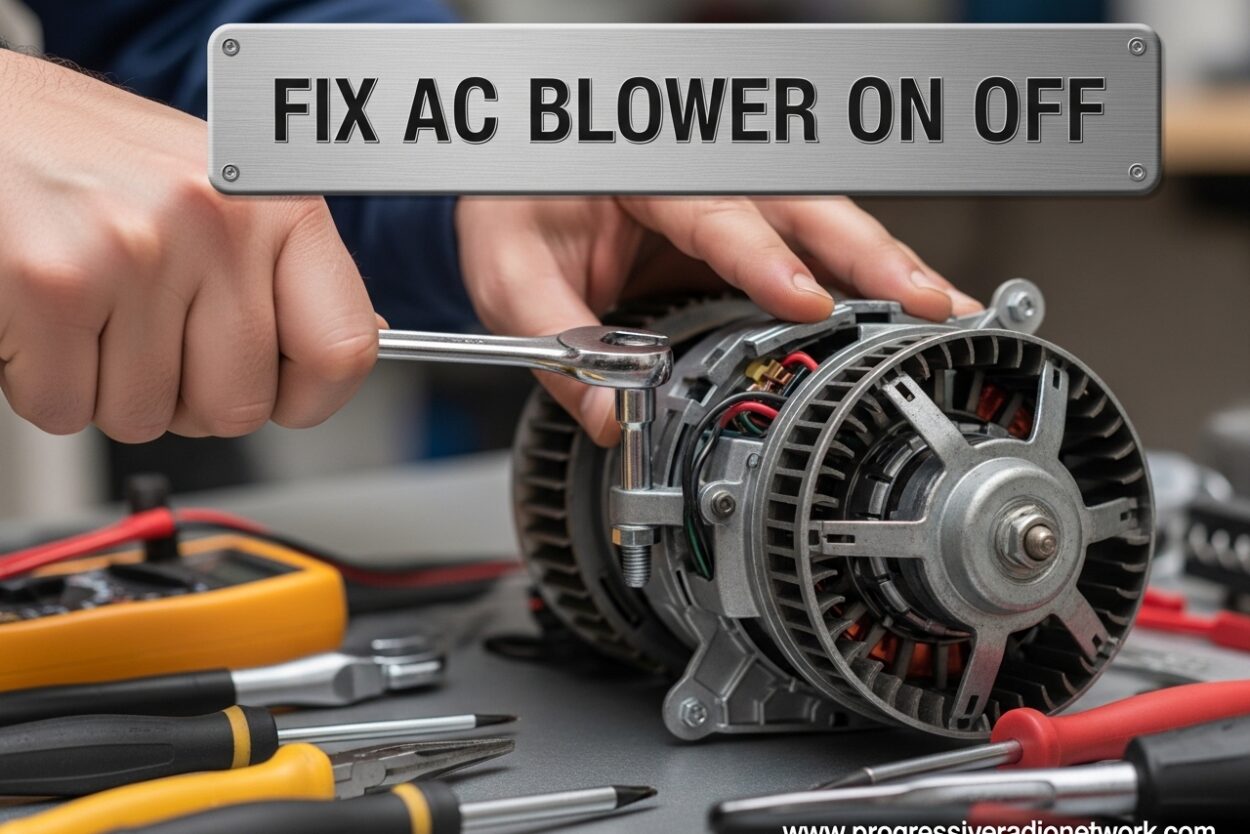
Your AC blower turning on and off repeatedly is more than just annoying. It can signal real problems with your HVAC system that won’t fix themselves. I’ve seen this cycling pattern leave homes with inconsistent temperatures, frozen coils, and some pretty expensive energy bills.
This guide covers the common reasons your AC blower keeps shutting off and what you can do about it. Whether it’s a simple fix or time to call a professional, you’ll know exactly what’s happening and your next steps.
How Your AC Blower Should Work
Understanding normal operation helps you spot when something’s wrong. Your AC blower motor works with your thermostat to circulate conditioned air throughout your home. When your thermostat calls for cooling, the blower fan should run continuously until the set temperature is reached.
In “auto” mode, the blower cycles on with the compressor and off when cooling is complete. In “on” mode, the blower runs continuously regardless of cooling cycles. The problem isn’t normal cycling. The problem is when your blower starts and stops randomly or shuts off before reaching the desired temperature.
Why Your AC Blower Keeps Cycling On and Off
An AC blower that turns on and off repeatedly typically points to one of several underlying issues. Based on my research and real user experiences, these are the most common culprits causing that frustrating cycling pattern.
Overheating Motor with Thermal Protection
Most modern blower motors have built-in overheating protection. When the motor runs too hot, a thermal switch shuts it down to prevent permanent damage. Once it cools down, it restarts, creating that on-off cycle you’re experiencing.
Overheating often happens because of restricted airflow from dirty filters, blocked vents, or a failing motor drawing too much current. Users on HVAC forums report this as one of the most common reasons for random cycling.
Failing Capacitor
The capacitor is a small but critical component that stores and releases electrical energy to start and run your blower motor. When capacitors wear out, the motor may start but then shut off shortly after because it can’t maintain consistent power.
A failing capacitor typically causes the blower to struggle starting, make humming sounds, or run intermittently before shutting down completely. This is a relatively inexpensive fix if caught early.
Bad Relay Switch
The relay switch controls power flow to your blower motor. When it fails, it can cause the blower to cycle randomly or get stuck in the on position. One Reddit user mentioned their blower motor issue was resolved by replacing a simple $10 relay.
Relay problems often cause inconsistent behavior. The blower might work fine sometimes and cycle uncontrollably other times. This intermittent nature can make diagnosis tricky.
Thermostat Problems
Sometimes the problem isn’t the blower at all. A faulty thermostat can send incorrect signals to your HVAC system, causing rapid cycling. Issues include incorrect settings, dead batteries, placement problems, or internal malfunction.
Before assuming the worst, check your thermostat settings. Ensure it’s in the correct mode and that the temperature differential isn’t set too tight, which can cause short cycling.
Fix AC Blower On Off: Step-by-Step Troubleshooting
Before calling a professional, work through these diagnostic steps. I’ve organized them from easiest to most complex, so you can potentially solve the problem without spending money.
Step 1: Check Your Thermostat
Start with the simplest explanation. Verify your thermostat is set to “cool” and “auto” mode. Check that the set temperature is at least 3-5 degrees above the current room temperature to ensure the system should be running.
Replace batteries if your thermostat uses them. Look for any error codes or warning lights on the display. If you have a smart thermostat, check for firmware updates or connectivity issues that might cause erratic behavior.
Step 2: Inspect and Replace Your Air Filter
A clogged air filter is one of the most common causes of blower problems. Restricted airflow causes the motor to work harder and overheat, triggering that thermal protection shutdown. Hold your filter up to light. If you can’t see through it clearly, it’s time to replace it.
I recommend checking your filter monthly and replacing it at least every 90 days. Homes with pets or allergies may need monthly replacements. A clean filter prevents countless HVAC issues and extends your system’s lifespan.
Step 3: Test the Blower in Fan-Only Mode
Switch your thermostat to “fan only” mode. This bypasses the cooling system and runs only the blower fan. If the blower runs consistently without cycling, the problem likely lies with the cooling system or thermostat, not the blower motor itself.
If the blower still cycles in fan-only mode, focus your investigation on the motor, capacitor, or relay. This simple test can save significant diagnostic time.
Step 4: Listen for Unusual Sounds
Pay attention to what your blower sounds like when it does run. A humming sound without fan movement suggests a bad capacitor or seized motor. Squealing or grinding indicates bearing problems. Clicking sounds when the blower tries to start often point to relay issues.
These audio clues can help pinpoint the problem before you spend money on parts or professional diagnosis. Document what you hear to share with a technician if needed.
Step 5: Check for Frozen Coils
Look at your indoor evaporator coil through the access panel or observe the refrigerant lines. If you see ice buildup, your blower may be shutting off due to low airflow or refrigerant problems. Frozen coils can cause the system to cycle rapidly as it tries to protect itself.
Turn off your AC immediately if you spot ice. Let the coils thaw completely before running the system again, or you risk damaging the compressor. Frozen coils often indicate low refrigerant or severe airflow restrictions.
Reset Procedures for Your AC Blower
Sometimes a simple reset resolves cycling issues. The power reset method is widely shared on DIY forums and can temporarily fix blower problems caused by minor electrical glitches or overheating protection that hasn’t fully reset.
Turn off your thermostat and locate your HVAC system’s breaker. Flip the breaker off and wait at least 30 minutes. This extended wait time allows the blower motor’s thermal protection to fully reset and any capacitors to discharge completely. After 30 minutes, flip the breaker back on, wait another 5 minutes, then restart your thermostat.
For thermostat-specific resets, check your manufacturer’s instructions. Many smart thermostats have a reset function accessed through the menu. A thermostat reset can resolve software glitches causing erratic behavior.
Diagnosing Motor vs Resistor vs Capacitor
Distinguishing between these three components helps you understand repair costs and complexity. A bad capacitor typically causes slow starts or humming sounds. The motor may struggle to begin running then shut down after a few minutes.
A failing blower motor resistor usually causes speed issues. The blower might only work on high speed or not work at all on certain settings. This is more common in vehicles but can affect some HVAC systems with variable-speed blowers.
Motor failure usually involves more serious symptoms. Burning smells, severe noise, or complete failure to start suggest the motor itself needs replacement. Motors are the most expensive repair but also the most definitive solution when properly diagnosed.
When to Call a Professional
Some situations require professional expertise. If you’ve worked through the troubleshooting steps above without resolution, it’s time to call an HVAC technician. Complex electrical issues, refrigerant problems, and motor replacements are best left to trained professionals.
Professional repair becomes necessary when you lack the tools or comfort level for electrical testing. A technician can use a multimeter to test continuity, check voltage readings, and perform more advanced diagnostics that most homeowners shouldn’t attempt.
Expect to pay between $75 and $150 for a diagnostic visit. This fee often applies toward the repair cost if you proceed with the technician’s recommendations.
Repair Costs and Considerations
Understanding potential costs helps you make informed decisions about repairs versus replacement. Capacitor replacement typically costs between $150 and $300 including parts and labor. Relay switch repairs are similar, often falling in the $100 to $250 range.
Blower motor replacement is significantly more expensive, typically costing between $500 and $1,200 depending on your system type and motor quality. High-efficiency ECM motors cost more than traditional PSC motors but offer better energy efficiency.
Consider the age of your system when facing major repairs. If your HVAC unit is over 10-15 years old and needs a motor replacement, investing in a new system might provide better long-term value, especially if you’ve had other recent repairs.
Preventive Maintenance Tips
Regular maintenance prevents most blower problems. Change your air filter every 1-3 months depending on household factors like pets and allergies. Schedule annual professional maintenance to catch small issues before they become major problems.
Keep your outdoor unit clean and clear of debris. Ensure vents throughout your home aren’t blocked by furniture or curtains. Proper airflow reduces strain on your blower motor and extends its lifespan.
Consider upgrading to a smart thermostat with maintenance reminders. These systems can alert you to filter changes and schedule professional service before problems develop.
FAQ
How do I reset my AC blower?
Turn off your thermostat and flip the HVAC breaker switch off. Wait at least 30 minutes to allow the blower motor’s thermal protection to fully reset. Flip the breaker back on, wait 5 minutes, then restart your thermostat. For thermostat-specific resets, check your manufacturer’s instructions or menu options.
How much does it cost to fix a blower motor?
Blower motor replacement typically costs between $500 and $1,200 including parts and labor. Simpler repairs like capacitor replacement range from $150 to $300. Relay switch repairs usually cost between $100 and $250. A diagnostic visit typically costs $75 to $150, which often applies toward repair costs.
Why is my AC blower not staying on?
Your AC blower isn’t staying on most commonly due to overheating protection activating from a failing motor, restricted airflow from dirty filters, or electrical problems. Other causes include a bad capacitor that can’t maintain consistent power, a failing relay switch, or a malfunctioning thermostat sending incorrect signals.
How do you tell if it’s the blower motor or resistor bad?
A bad blower motor typically shows symptoms like humming without movement, burning smells, or complete failure to start. A bad resistor usually causes speed-specific problems where the blower works on some speeds but not others. Motor issues often involve more severe noises, while resistor problems typically just affect speed control functionality.
Is it dangerous if my AC blower keeps turning on and off?
Cycling itself isn’t immediately dangerous, but it signals underlying problems that can cause damage if ignored. The main risks include frozen coils from reduced airflow, compressor damage from short cycling, and potential electrical issues from failing components. Extended operation with cycling problems can lead to complete system failure and more expensive repairs.
Final Thoughts
Fix AC blower on off problems start with understanding the root cause. Whether it’s a simple filter change, capacitor replacement, or professional motor repair, addressing cycling issues promptly prevents more serious damage to your HVAC system.
The troubleshooting steps in this guide help you identify whether you’re dealing with a quick DIY fix or something requiring professional help. Regular maintenance remains your best defense against blower problems and extends the life of your entire HVAC system.
If you’ve worked through these steps without resolution, don’t continue forcing your system to cycle. Calling a professional now can prevent more expensive repairs down the road and get your home comfortable again without the constant on-off frustration.

Leave a Comment