
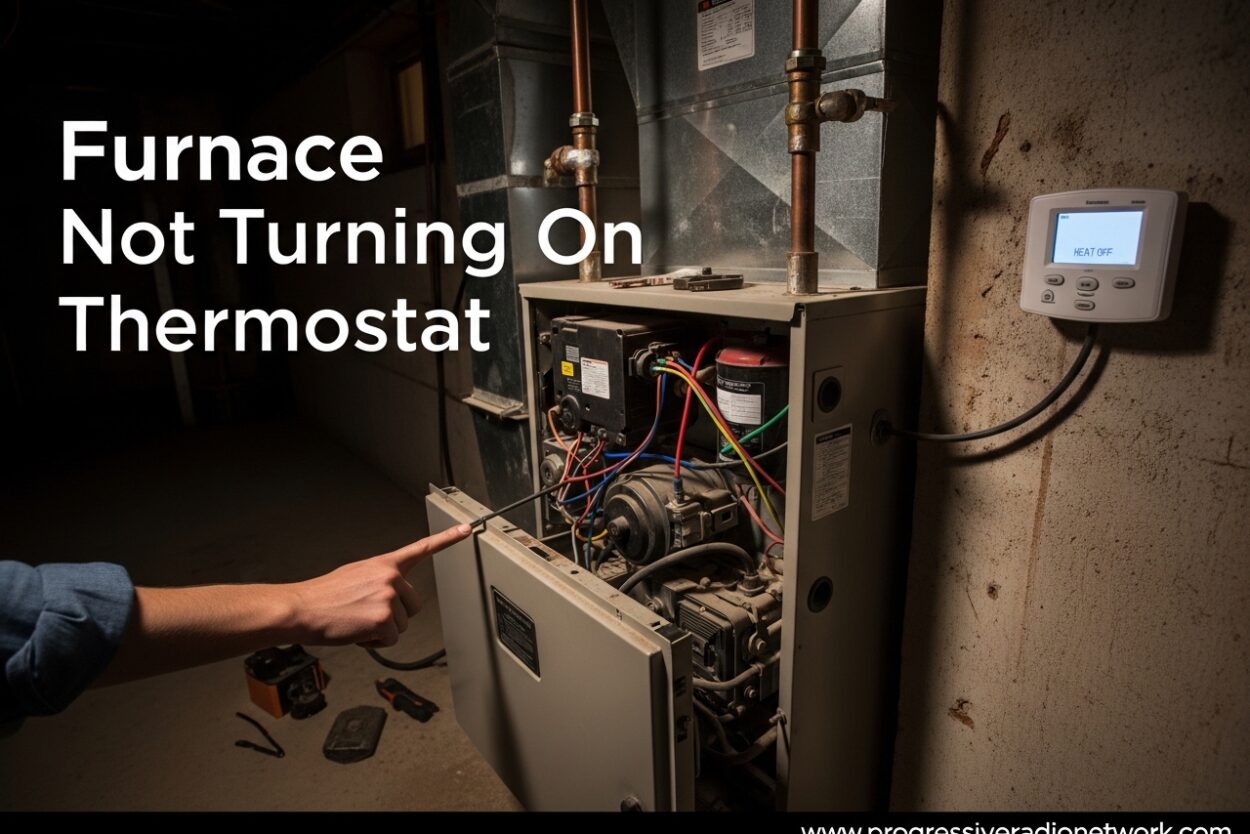
When your thermostat is calling for heat but the furnace sits silent, it’s one of the most frustrating homeowner experiences – especially during cold winter months. This issue typically stems from problems between your thermostat and furnace, ranging from simple power issues to component failures. I’ll walk you through exactly what to check and when to call a professional.
A furnace not turning on when the thermostat signals for heat usually falls into one of three categories: power delivery problems, thermostat malfunctions, or furnace safety switch activation. The good news is that most homeowners can diagnose and often fix these issues themselves without needing an expensive service call.
Quick Diagnostic Checklist: 5 Things to Check in 5 Minutes
Before diving into detailed troubleshooting, run through these quick checks. These simple steps resolve nearly 40% of furnace startup issues and take less than five minutes total.
1. Verify thermostat power and display
Check that your thermostat display is lit and responsive. A blank screen with no backlight indicates power issues. For battery-powered models, replace batteries and wait 2-3 minutes for the thermostat to power up. For wired thermostats, check if a recent power outage may have affected the system.
2. Confirm temperature setting is above room temperature
This seems obvious, but double-check that your set temperature is actually higher than the current room temperature displayed. Raise the setting by 5-10 degrees above the current reading to trigger a definite call for heat. Listen for the telltale click that indicates the thermostat is sending the signal.
3. Check system mode setting
Ensure your thermostat is set to “HEAT” mode, not “COOL,” “OFF,” or “AUTO.” Some smart thermostats have separate heating and cooling setpoints – verify you’re adjusting the heat setting. In “AUTO” mode, some systems won’t call for heat if the outside temperature isn’t detected as cold enough.
4. Locate and check the furnace power switch
Most furnaces have a dedicated wall switch near the unit, often looking like a light switch. This switch can get bumped accidentally during storage or maintenance. Flip it off, wait 30 seconds, then flip it back on. You should hear the furnace respond with a hum or click as power is restored.
5. Check your electrical panel for tripped breakers
Your furnace typically has its own circuit breaker in your main electrical panel. Look for any breakers in the middle position or labeled “furnace,” “HVAC,” or “air handler.” Flip any tripped breakers fully off, then back on. If the breaker trips again immediately, you have a more serious electrical issue requiring professional service.
Furnace Not Turning On Thermostat: Power Issues and Solutions
Power delivery problems account for over half of all furnace startup failures. When your thermostat signals for heat but nothing happens, the issue often lies in the electrical chain connecting your thermostat to the furnace.
Tripped Circuit Breaker
A tripped breaker is the most common power issue. Furnace breakers can trip due to power surges, electrical storms, or simply age-related wear. After flipping the breaker back on, wait 2-3 minutes before testing the furnace – some systems have a built-in delay before restarting. If the breaker trips repeatedly, stop and call an electrician or HVAC technician as this indicates a dangerous electrical fault.
Furnace Disconnect Switch
Located within sight of your furnace (usually on or near the unit), this safety switch allows service technicians to completely cut power to the furnace. If this switch is off, your thermostat may click and display normally, but the furnace will never respond. Toggle it off and on deliberately – some switches can appear “on” when they’re actually in a neutral position.
Blown Fuse in the Furnace Control Board
Many modern furnaces have a small automotive-style fuse (3-5 amp) protecting the control board. A power surge or component short can blow this fuse, cutting power to the thermostat circuit. The fuse is typically located on the control board inside the furnace blower compartment. Turn off all power before inspecting – a blown fuse will have a broken filament visible through the plastic casing. Replace only with the exact same amperage rating.
Thermostat Battery Issues
Battery-powered thermostats typically use AA or AAA alkaline batteries lasting 1-2 years. When batteries die, some models lose all programming while others retain settings but can’t send the heat signal. Always replace all batteries at once, not just one – mixing old and new batteries can cause unreliable operation. For programmable thermostats, dead batteries may require you to reprogram your schedule after replacement.
Power Outage Aftermath
After power outages, some furnaces enter a lockout mode requiring manual reset. Turn off the furnace at the thermostat, then flip the furnace disconnect switch off for 5 minutes. This allows the control board to fully discharge and reset. When you restore power, the furnace should go through its normal startup sequence. Some smart thermostats may also need to reconnect to WiFi after extended outages.
Thermostat Problems That Prevent Furnace Operation
When power is confirmed but the furnace still won’t respond, the thermostat itself becomes the prime suspect. Understanding how your thermostat communicates with the furnace helps pinpoint the exact failure point.
Incorrect Thermostat Settings
Beyond basic mode selection, some thermostats have additional settings that can prevent furnace operation. Programmable models may have time periods where heating is disabled. Check for “hold,” “vacation,” or “away” modes that override normal scheduling. Some units have separate heating and cooling programs – verify you’re adjusting the heat program, not cooling.
Dead or Dying Batteries
Even when a thermostat display remains lit, weak batteries may not provide sufficient voltage to trigger the furnace relay. This is especially common in digital thermostats with backlit displays. Replace batteries annually as preventive maintenance, not just when the display shows “low battery.” Use fresh name-brand batteries – budget batteries often have insufficient voltage for reliable thermostat operation.
Loose Wiring Connections at Thermostat
Over time, thermostat wires can loosen from their terminals due to temperature changes and vibration. Carefully remove your thermostat from the wall plate and inspect the wire connections. Each wire should be securely fastened under its terminal screw with no stray wire strands touching other terminals. Common terminal labels include R (power), W (heat), Y (cooling), G (fan), and C (common). The R-W connection is what activates your furnace.
Thermostat Not Level (Mercury Types)
Older thermostats using mercury switches must be mounted perfectly level to function correctly. If your thermostat was bumped or shifted, the mercury may not make contact when the temperature dial is turned. Use a small bubble level to verify the thermostat is level side-to-side and front-to-back. Mercury thermostats are being phased out due to environmental concerns – consider upgrading to a digital model.
Smart Thermostat Power Issues
Smart thermostats like Nest, Ecobee, and Honeywell often require a C-wire (common wire) for consistent power. Without this wire, many smart thermostats steal power from the heating circuit, which can cause intermittent operation or prevent furnace startup entirely. Symptoms include the thermostat working fine in spring/fall but failing during extreme cold when the furnace runs constantly. Installing a C-wire or using an external power adapter typically resolves this issue.
Faulty Thermostat Replacement
If you recently replaced your thermostat and the furnace stopped working, the new unit may be incompatible with your system. Older furnaces with millivolt gas valves require specific thermostats. Some high-efficiency furnaces need two-stage thermostats to operate properly. Always verify compatibility before thermostat replacement, and keep your old thermostat handy until you confirm the new one works correctly.
Furnace-Specific Issues When Thermostat Works
When your thermostat is definitely sending the signal (you hear the click, see “heat on” displayed, or have verified voltage), the problem lies within the furnace itself. These issues require accessing the furnace compartment – always turn off power first for safety.
Dirty Flame Sensor Preventing Ignition
The flame sensor is a thin metal rod that detects whether the burners have ignited. Over time, carbon deposits build up on this sensor, preventing it from properly detecting flame. The furnace control board then shuts down the gas valve as a safety measure. This is one of the most common causes of furnace startup failure. Cleaning the flame sensor with fine steel wool or emery cloth often resolves the issue. The sensor is typically located near the burner assembly and has a single white wire connecting it.
Faulty Igniter or Hot Surface Igniter
Modern furnaces use hot surface igniters (glow plugs) instead of pilot lights. These silicon carbide or silicon nitride elements glow white-hot to ignite the gas. They typically last 3-7 years before failing. A cracked igniter may still glow but won’t reach proper temperature. Inspect the igniter for visible cracks or dark spots – any physical damage means replacement is necessary. Universal igniters are available, but OEM parts typically last longer.
Tripped Limit Switch Due to Overheating
The high-limit switch is a safety device that shuts down the furnace if it overheats. Common causes include restricted airflow from dirty filters, closed vents, or blocked return air ducts. When the limit switch trips, the furnace may try to restart multiple times before locking out. Some limit switches have a manual reset button – others reset automatically once the furnace cools down. Addressing the airflow restriction is essential, or the limit switch will trip again.
Clogged Air Filter Restricting Airflow
A severely restricted air filter is the leading cause of furnace overheating and limit switch trips. As the filter becomes clogged, the furnace works harder to pull air through the system, causing heat buildup. The limit switch then shuts down the furnace to prevent damage or fire. Always replace 1-inch filters monthly and larger media filters every 3-6 months. Write the installation date on the filter frame so you never forget when it was last changed.
Faulty Pressure Switch or Draft Inducer
High-efficiency furnaces use a draft inducer motor to vent exhaust gases safely. The pressure switch verifies that proper draft is established before allowing ignition. If the draft inducer motor fails, the pressure switch won’t close, and the furnace won’t ignite. Common symptoms include the furnace making no noise at all when called for heat, or the draft inducer running continuously without ignition. A blocked vent pipe (bird’s nest, ice buildup) can also cause pressure switch failure.
Control Board Failure or Error Codes
The furnace control board is the brain that coordinates all furnace operations. When it fails, the entire system becomes unresponsive. Many control boards display error codes through blinking LED lights that help pinpoint the problem. Common error codes include issues with ignition, flame sensing, or airflow. While some control board problems can be repaired, complete failure typically requires replacement by a qualified technician.
How to Test If Your Thermostat Is Working
Isolating whether the problem lies with your thermostat or furnace saves significant diagnostic time. These testing methods help you determine which component needs attention.
Listen for the Click Sound
When you raise the temperature setting above room temperature, you should hear an audible click from the thermostat within 1-2 seconds. This click indicates the thermostat is completing the electrical circuit between R and W terminals, sending the heat signal to the furnace. No click suggests the thermostat isn’t sending the signal – either due to incorrect settings, dead batteries, or internal failure.
Check Display for Power and Error Messages
A blank display with fresh batteries indicates thermostat failure. Similarly, error messages like “E1,” “LO,” or “COMM FAILURE” point to specific problems. Some thermostats display “CALL” or “HEAT” when actively requesting heat. If your display shows no change when you adjust temperature, the thermostat may not be registering your inputs or communicating with the furnace.
Remove Thermostat and Test R-W Connection
For a more definitive test, remove the thermostat from its wall plate but leave the furnace power on. Using a short piece of wire, briefly connect the R (usually red) and W (usually white) terminals together. This simulates the thermostat calling for heat. If the furnace starts, the thermostat is faulty. If the furnace doesn’t start, the problem lies in the furnace, wiring, or power supply. This test bypasses the thermostat completely but should only be done briefly – extended connection can damage equipment.
Use Multimeter to Verify 24V Signal
For technically inclined homeowners, a multimeter provides definitive testing. Set your multimeter to AC voltage (24V range). Test between R and C terminals at the thermostat – you should read approximately 24V AC. Then test between R and W while the thermostat is calling for heat – again, you should read approximately 24V AC. No voltage at R-C indicates a power supply issue. Voltage at R-C but not at R-W when calling for heat indicates thermostat failure.
When to Suspect Thermostat vs Furnace Issue
As a general rule, if you hear the thermostat click but nothing happens at the furnace, suspect furnace issues. If the thermostat doesn’t click or display changes when you adjust temperature, focus on the thermostat. Smart thermostats that show “heating” on screen but no furnace activity usually indicate furnace problems. However, some smart thermostats display “heating” even when not actually sending the signal, making the click test more reliable.
Common Furnace Error Codes and What They Mean
Modern furnaces communicate problems through error codes displayed via blinking LED lights on the control board. Learning to read these codes helps you communicate effectively with service technicians and sometimes perform DIY repairs.
Carrier/Bryant Error Codes
Carrier and Bryant furnaces use a series of short and long blinks to indicate errors. Three short blinks typically indicate a pressure switch problem. Four blinks often mean an open limit switch or high-temperature condition. One long blink followed by three short blinks usually indicates ignition failure. Consult your specific model’s service guide for complete code listings, as they can vary between models.
Goodman/Amana Error Codes
Goodman and Amana furnaces typically use a two-digit LED display. Code 1 indicates an ignition failure. Code 2 means the draft inducer isn’t operating. Code 3 points to pressure switch problems. Code 4 indicates an open limit switch. Code 9 usually signifies a rollout switch or high-temperature safety trip. These codes remain displayed until the issue is resolved or power is cycled to the furnace.
Lennox Error Codes
Lennox furnaces communicate through flashing red LEDs. One flash indicates ignition lockout due to repeated failed attempts. Two flashes typically mean the pressure switch is stuck closed. Three blinks often indicate a pressure switch stuck open. Four blinks usually point to an open limit switch. The control board’s error history can often be accessed by pressing a specific button combination – consult your manual for the procedure.
Trane/American Standard Error Codes
Trane and American Standard use a system of blinking lights similar to Carrier. Slow blinking usually indicates normal operation. Rapid blinking typically signals a fault condition. The exact pattern varies by model series. Some newer models include an alphanumeric display showing specific error messages. Note that Trane sometimes codes multiple errors together – for example, a pressure switch issue might also trigger ignition lockout.
How to Find Error Codes on Your Furnace
The LED indicator is typically located on the furnace control board, visible through a small viewing window in the blower compartment access door. Some models require you to remove the access door to see the LEDs. Always turn off furnace power before removing access doors. When the furnace attempts and fails to start, the error code will usually flash repeatedly. Some models require you to press a reset button to retrieve stored codes from previous failed attempts.
When to Call a Professional HVAC Technician
While many furnace startup issues are DIY-friendly, some situations require professional expertise. Knowing when to call a technician prevents dangerous situations and potentially more expensive damage.
Gas Smell or Carbon Monoxide Detector Activation
If you smell gas or your carbon monoxide detector alarms, evacuate immediately and call your gas company or emergency services from outside. Do not flip any switches, use phones, or create any sparks near the furnace area. Gas leaks and carbon monoxide are life-threatening emergencies that require professional emergency response. Don’t re-enter your home until emergency responders declare it safe.
Repeated Tripping of Limit Switch
If your limit switch trips repeatedly after you’ve replaced the air filter and checked all vents, you may have a more serious issue. Possible causes include a failing heat exchanger (cracked allowing combustion air into household air), undersized ductwork, or an oversized furnace. These issues require professional diagnosis with specialized equipment. Continuing to reset the limit switch without addressing the root cause can damage your furnace and create safety hazards.
Control Board Failure Signs
If your furnace control board shows no signs of life (no LEDs, no response to thermostat signals), has visible burn marks, or displays random error codes that change without intervention, professional service is required. Control board replacement requires matching exact specifications to your furnace model. While some technically skilled homeowners can handle this repair, improper installation can create fire hazards or damage the furnace beyond repair.
Complex Wiring Issues
If you discover melted wires, scorched connections, or confusing wiring that doesn’t match standard color coding, stop and call a professional. Previous DIY modifications by homeowners can create dangerous situations that aren’t immediately obvious. Professional HVAC technicians have the training and tools to safely rewire furnace controls and ensure proper grounding and polarity.
Cost Estimates for Common Repairs
Understanding typical repair costs helps you decide between DIY and professional service. Flame sensor cleaning typically costs $100-150 if done professionally but takes less than 10 minutes DIY. Igniter replacement runs $200-400 including parts and labor. Control board replacement costs $400-800 depending on the furnace model. Pressure switch replacement typically runs $150-300. Annual preventive maintenance usually costs $100-150 but can prevent many of these issues entirely.
Preventing Future Furnace Startup Issues
Regular maintenance prevents most furnace startup problems and extends equipment life. These simple practices keep your heating system reliable through many heating seasons.
Regular Air Filter Replacement Schedule
Set calendar reminders for filter changes based on your filter type and household conditions. 1-inch fiberglass filters need monthly replacement. Pleated filters last 2-3 months. Media filters (4-5 inches thick) typically last 6-12 months. Homes with pets, smokers, or allergy sufferers may need more frequent changes. A clean filter prevents airflow restrictions that cause overheating and limit switch trips.
Annual Professional Maintenance
Schedule professional furnace maintenance before heating season begins. Technicians perform comprehensive inspections, cleaning, and testing that homeowners can’t easily duplicate. This includes checking heat exchangers for cracks, measuring combustion efficiency, testing safety controls, and verifying proper airflow. Annual maintenance typically pays for itself in prevented repairs and improved efficiency.
Thermostat Battery Replacement Reminders
Replace thermostat batteries annually, even if the low battery indicator hasn’t appeared. Many homeowners do this when they change smoke detector batteries each fall. Fresh batteries ensure reliable operation when you need heat most. Keep spare batteries in the same room as your thermostat for quick replacement.
Keep Furnace Area Clean and Accessible
Maintain a 3-foot clearance around your furnace. Never store cleaning supplies, boxes, or flammable materials near the furnace. Ensure all vents and returns are unobstructed by furniture, curtains, or rugs. Good airflow is essential for proper furnace operation. Blocked vents create pressure imbalances that can cause premature failure or safety hazards.
Test Heating System Before Cold Season
Test your furnace in early fall before you need it. Raise the thermostat to verify the furnace starts and runs properly. This gives you time to address any issues before cold weather arrives. If you discover problems during this test, you have time to schedule professional service during off-peak periods when technicians are more available and rates may be lower.
FAQ
Why is my thermostat not kicking my furnace on?
The most common reason is incorrect thermostat settings – verify it’s set to ‘heat’ mode and the temperature is set above room temperature. Other causes include dead batteries, tripped circuit breakers, a turned-off furnace power switch, or a dirty air filter triggering safety limits. Start with checking power, then verify settings before moving to more complex troubleshooting.
Will a furnace run with a dead thermostat?
No, a furnace cannot run without a functioning thermostat. The thermostat acts as the control switch that sends the 24-volt signal telling the furnace when to activate. If your thermostat display is blank, replace the batteries first. For battery-powered thermostats, dead batteries mean no signal reaches the furnace. For wired thermostats, a complete failure means the furnace cannot receive the ‘call for heat’ signal.
How to tell if a thermostat is bad?
Signs of a faulty thermostat include: blank display with fresh batteries, unresponsive temperature adjustments, furnace doesn’t respond when temperature is raised, furnace short cycles (turns on/off repeatedly), or room temperature doesn’t match thermostat reading. To confirm, remove the thermostat and briefly connect the R and W wires – if the furnace starts, the thermostat is faulty.
What are the signs of a dying furnace?
Signs your furnace may be failing include: age over 15-20 years, frequent repairs costing more than half replacement cost, unusual noises (banging, rattling, squealing), yellow burner flame instead of blue, consistently rising energy bills, uneven heating throughout your home, or the furnace running constantly without reaching temperature. Multiple issues together often indicate replacement is more cost-effective than continued repairs.
Why does my thermostat click but furnace doesn’t start?
A clicking thermostat means it’s sending the signal, but the furnace isn’t responding. This isolates the problem to the furnace side, not the thermostat. Common causes include: tripped furnace safety switch (limit switch), dirty flame sensor preventing ignition, faulty igniter, pressure switch stuck closed, or a bad furnace control board. Check your furnace for error codes or blinking LED lights that indicate specific failure points.
Can a dirty air filter prevent furnace from turning on?
Yes, a severely clogged air filter can prevent your furnace from turning on. Restricted airflow causes the furnace to overheat rapidly, triggering the high-limit safety switch which shuts down the furnace to prevent damage. This is a protective measure. If you’ve recently changed your filter and the furnace now won’t start, check if the limit switch needs to be reset. Always replace filters every 1-3 months depending on type and household conditions.
Conclusion
When facing a furnace not turning on thermostat issue, systematic troubleshooting typically identifies the problem within minutes. Start with the quick diagnostic checklist – power, settings, and basic connections resolve most cases. If these don’t solve the problem, move on to testing whether the thermostat or furnace is the culprit using the methods outlined above.
Remember that safety comes first. If you smell gas or your carbon monoxide detector activates, evacuate immediately and call emergency services. For complex electrical issues, control board failures, or repeated safety switch trips, professional service is the wisest choice. However, many common problems like dirty flame sensors, tripped breakers, or dead thermostat batteries are easily resolved by homeowners following proper procedures.
By understanding how your thermostat and furnace work together, you can quickly diagnose issues, make informed repair decisions, and keep your home comfortable throughout the heating season. The key is knowing which problems are DIY-friendly and which require professional expertise – now you have that knowledge.
Leave a Comment