
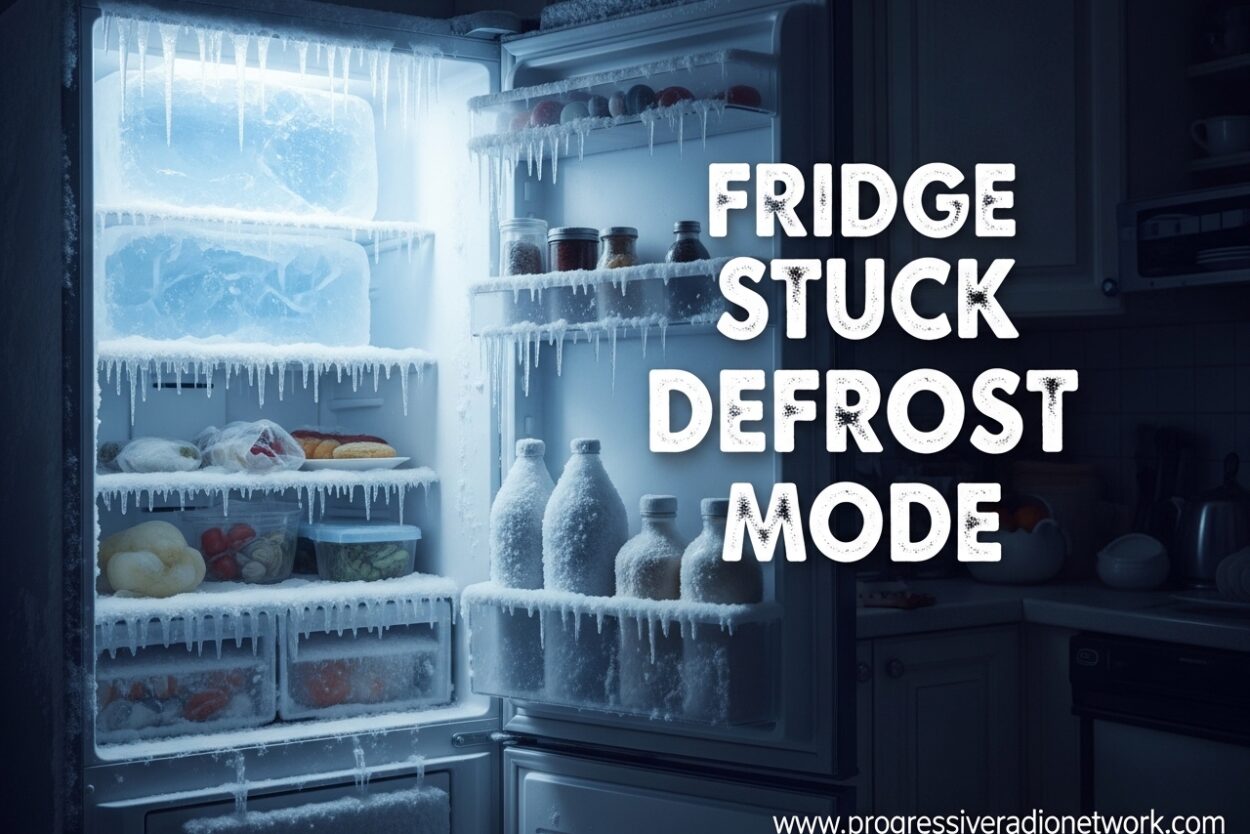
Your freezer is warming up, ice is melting, and food is starting to thaw. You open the fridge door and notice something feels off.
If your refrigerator seems stuck in defrost mode, you’re not alone. This is one of the most common fridge problems that homeowners face.
I’ve seen this happen countless times over the years working with appliance repair. A fridge stuck in defrost mode means the heating element that melts ice on the evaporator coils stays on continuously.
This causes the freezer to warm up, leading to food spoilage and wasted money. The good news is that most of the time, this issue can be diagnosed and fixed without calling a professional.
In this guide, I’ll walk you through exactly what causes a refrigerator to get stuck in defrost mode. I’ll also cover how to identify the problem and provide step-by-step troubleshooting to get your fridge running properly again.
What Is Fridge Stuck Defrost Mode?
Refrigerators enter defrost mode periodically to remove ice buildup on the evaporator coils. This is a normal and necessary function. During the defrost cycle, the compressor turns off, the defrost heater turns on, and ice melts from the coils.
The cycle typically lasts 20-30 minutes and happens every 8-24 hours depending on your model. When a fridge gets stuck in defrost mode, this cycle doesn’t end properly.
The defrost heater continues running or the compressor fails to restart. This causes the freezer temperature to rise, leading to melting ice, thawing food, and water pooling in your freezer.
The defrost system has three main components: the defrost timer (or electronic control), the defrost thermostat, and the defrost heater. These work together to initiate and end the defrost cycle. When any component fails, the cycle can get stuck in the “on” position.
Electronic vs Mechanical Defrost Systems
Older refrigerators typically use a mechanical defrost timer. This is a small motor-driven device with a dial that advances through the defrost cycle. You can often hear it clicking, and many models have a manual advance screw.
Newer refrigerators use electronic control boards to manage defrost cycles. These are more precise but can be trickier to diagnose. Electronic models may have diagnostic modes that display error codes, while mechanical timers can often be manually advanced for testing.
5 Signs Your Fridge Is Stuck in Defrost Mode
Identifying the problem early can save your food from spoiling. Here are the telltale signs that your refrigerator is stuck in defrost mode:
1. Freezer Temperature Rising
The most obvious sign is your freezer warming up above 0°F (-18°C). You might notice ice cream getting soft or frozen foods starting to thaw. The freezer door might also feel warm to the touch.
This is the defrost heater running continuously instead of cycling off. Normally the heater should only run for 20-30 minutes at a time.
2. Food Thawing and Ice Melting
Frozen food begins to thaw, and ice cubes melt into water. You might find water pooling in the bottom of the freezer or dripping down into the fresh food section.
This water comes from melting frost that should have drained away. The problem occurs when the defrost cycle never completed properly.
3. Refrigerator Section Not Cooling
Even though the fresh food section might seem cooler than the freezer, it’s still not maintaining proper temperature. Air circulation between freezer and fridge compartments is disrupted when the compressor doesn’t run.
4. Compressor Not Running
Listen carefully near the back bottom of your fridge. If you don’t hear the compressor running (that steady hum that normally cycles on and off), your fridge may be stuck in defrost mode where the compressor is intentionally turned off.
5. Fridge Runs Continuously Without Cooling
In some cases, the compressor runs continuously but the fridge never reaches proper temperature. This can happen when the defrost thermostat fails, causing the system to think it needs to defrost constantly.
What Causes a Refrigerator to Stay in Defrost Mode
Understanding the root cause helps you fix the problem right the first time. Based on forum discussions and repair experiences, here are the most common causes:
Defrost Timer Failure
The defrost timer is the most common culprit. This component controls when the defrost cycle starts and ends. When the timer motor fails or the contacts stick, the fridge can get stuck in permanent defrost mode.
Symptoms of a bad defrost timer include the fridge never exiting defrost mode. Sometimes the fridge never enters defrost mode at all, which causes frost buildup instead. Mechanical timers can be tested by manually advancing them with a screwdriver.
Defrost Thermostat Failure
The defrost thermostat (also called a bi-metal or limiter) is a safety device that prevents the heater from getting too hot. It’s supposed to open (turn off the heater) when the coils reach a certain temperature, typically around 40-50°F.
When the thermostat fails, it can either stay closed (causing overheating) or stay open (preventing defrost). A thermostat that stays closed will keep the heater running continuously, exactly like what happens when the fridge gets stuck in defrost mode.
Main Control Board Issues
On electronic models, the main control board manages the defrost cycle. Power surges, electrical issues, or just component failure can cause the board to malfunction. Samsung and LG refrigerators are particularly prone to control board issues based on forum discussions.
Symptoms of a bad control board include erratic temperature display and unresponsive controls. The fridge might also do unusual things like running the compressor and fan at odd times.
Temperature Sensor Problems
Modern refrigerators use temperature sensors to monitor coil and compartment temperatures. If a sensor fails or gives incorrect readings, the control board might think the fridge needs to defrost continuously.
Sensor issues are more common in newer electronic models. These can be tested with a multimeter by checking resistance changes at different temperatures.
How to Reset Fridge Defrost Mode
Before replacing any parts, try these reset methods. Many forum users report that a simple power reset fixes their issue, at least temporarily. If the problem returns, you’ll know a part likely needs replacement.
Basic Power Reset Method
This is the first thing to try and works for many situations:
Step 1: Locate your refrigerator’s power cord. It’s usually at the bottom back of the unit, plugged into a wall outlet.
Step 2: Unplug the refrigerator from the wall outlet. Wait at least 5 minutes. This allows the electronic controls to fully reset and any capacitors to discharge.
Step 3: While waiting, check that both fridge and freezer doors are closed properly. Open doors can confuse the defrost system.
Step 4: Plug the refrigerator back in. You should hear the compressor start within a few minutes. Listen for the normal compressor hum.
Step 5: Monitor the temperature for the next few hours. The freezer should start cooling down within an hour. If it doesn’t, proceed to further troubleshooting.
Manual Timer Advance (Mechanical Timers Only)
If your fridge has a mechanical defrost timer, you can manually advance it out of defrost mode:
Step 1: Locate the defrost timer. Common locations include behind the temperature control panel, inside the fresh food section near the thermostat, or behind the kick plate at the bottom front of the fridge.
Step 2: Look for a small slot or screw on the timer body. This is the manual advance.
Step 3: Use a flathead screwdriver to slowly turn the advance screw. You’ll hear a click when you reach the defrost position. Continue turning until you hear another click (exiting defrost).
Step 4: Wait 10-15 minutes and check if the compressor starts running. If it does, the timer was likely stuck in the defrost position and needs replacement.
Forced Defrost Mode Activation
Some modern refrigerators have a forced defrost mode that can be activated through button combinations. This is useful for diagnostic purposes:
Samsung models: Press and hold the Power Freeze and Power Cool buttons simultaneously for 8-10 seconds until you hear a chime. The display will show “OF” indicating forced defrost mode.
LG models: Press the Refrigerator and Freezer buttons simultaneously and hold for 5 seconds. Some models require pressing the Express Freeze button 5 times within 3 seconds.
Whirlpool/KitchenAid: Some models have a diagnostic mode. Try pressing the light switch 5 times and then the temperature adjustment buttons in a specific sequence.
To exit forced defrost mode, either unplug the fridge for 5 minutes or repeat the button combination. Consult your owner’s manual for model-specific instructions.
Step-by-Step Troubleshooting Guide
If reset methods don’t solve the problem permanently, you’ll need to test the components. This requires basic tools and some comfort with appliance repair. Always unplug the refrigerator before performing any electrical tests.
Testing the Defrost Timer
For mechanical timers: Locate the timer and identify the four terminals. Using a multimeter set to continuity mode, test for continuity between common and defrost terminals while manually advancing the timer. You should have continuity only when the timer is in the defrost position.
For electronic controls: Check for error codes on the display. Many modern models have a diagnostic mode that can be accessed by holding specific button combinations. Look for defrost-related error codes in your owner’s manual.
If the timer doesn’t advance properly or shows no continuity change when advanced, replace the defrost timer.
Testing the Defrost Thermostat
The defrost thermostat is located on the evaporator coils behind the back panel inside the freezer. To test it:
Step 1: Unplug the refrigerator and remove the freezer back panel (usually held by screws or plastic clips).
Step 2: Locate the defrost thermostat clipped to the coils. It’s a small device with two wires coming out of it.
Step 3: Disconnect the wires and test for continuity with a multimeter. At room temperature, you should have continuity (closed circuit).
Step 4: For a more accurate test, place the thermostat in a freezer for 15 minutes, then test again. It should have no continuity when cold (open circuit).
If the thermostat shows continuity when it should be open (or vice versa), or shows no continuity at room temperature, replace it.
Checking the Defrost Heater
The defrost heater is a glass tube containing a heating element, also located on the evaporator coils:
Step 1: With the refrigerator unplugged and the back panel removed, locate the heater running along the coils.
Step 2: Disconnect the wires and test for continuity with a multimeter. You should have continuity (low resistance).
Step 3: Check for any visible damage to the glass tube, such as cracks, breaks, or burn marks.
If the heater shows no continuity (open circuit) or has visible damage, replace the defrost heater assembly.
Inspecting Temperature Sensors
Modern refrigerators use thermistors (temperature sensors) that change resistance based on temperature:
Step 1: Locate the sensors, usually clipped to the coils or inside compartments. They have two wires and look like small plastic bullet-shaped devices.
Step 2: Measure resistance at room temperature with a multimeter. Typical readings are 10k-15k ohms at room temperature.
Step 3: For testing accuracy, compare readings to the specifications in your service manual, as values vary by model.
If readings are way off specifications or show no continuity, replace the faulty sensor.
Brand-Specific Troubleshooting Tips
Different refrigerator brands have unique quirks when it comes to defrost issues. Here are brand-specific tips based on common forum discussions:
Samsung Refrigerators: Samsung models are notorious for main control board issues. If your Samsung fridge gets stuck in defrost mode, try the hard reset first (unplug for 10 minutes). If that doesn’t work, check for error codes like “OF” or “5E” on the display.
Many Samsung models have the defrost components located behind a rear access panel on the back of the fridge, not inside the freezer.
LG Refrigerators: LG models often have the defrost timer and thermostat located together on the evaporator coils. The defrost sensor on LG fridges is a common failure point.
Check for error codes like “Er FS” (freezer sensor) or “Er dH” (defrost heater). LG models sometimes have a diagnostic test mode that can be accessed by pressing and holding specific buttons.
Whirlpool/KitchenAid/Maytag: These brands share many components. Their older models often use mechanical timers located behind the temperature control housing in the fresh food section.
Newer models use electronic controls with adaptive defrost that learns usage patterns. If the adaptive defrost fails, it can be reset by unplugging for 5 minutes or performing a hard reset through the control panel.
Frigidaire/Gallery/Professional: Frigidaire models typically have easy access to the defrost components. The timer is often behind the temperature control dial, and the defrost components are accessed through the freezer back panel.
Some Frigidaire models have a separate defrost timer that can be manually advanced to test.
DIY vs Professional Repair: Cost Comparison
Deciding whether to tackle this repair yourself or call a professional depends on your comfort level with appliance repair. Here’s what you can expect:
DIY Repair Costs:
- Defrost Timer: $20-60 for the part, 30-60 minutes to replace
- Defrost Thermostat: $15-40 for the part, 45-90 minutes to replace
- Defrost Heater: $30-80 for the part, 1-2 hours to replace
- Main Control Board: $80-250 for the part, 1-2 hours to replace
Professional Repair Costs:
- Service Call: $80-150 just for diagnosis
- Defrost Timer Replacement: $150-250 total (parts + labor)
- Defrost Thermostat/HVater: $200-350 total
- Control Board Replacement: $300-500 total
For simple timer or thermostat replacements, DIY can save you $100-200. Control board replacements are more complex but still doable for experienced DIYers.
If you’re uncomfortable working with electricity or refrigerators, or if the repair requires brazing (working with refrigerant lines), calling a professional is the safer choice.
When to Call a Professional Technician
While many defrost issues are DIY-friendly, some situations require professional help:
Call a pro if:
- You’ve tried all troubleshooting steps and the problem persists
- Your refrigerator uses sealed system components (compressor issues, refrigerant leaks)
- You’re uncomfortable working with electrical components
- The repair requires specialized tools like refrigerant recovery equipment
- Your fridge is still under warranty (DIY repairs can void coverage)
- The repair cost approaches 50% or more of a new refrigerator’s cost
A qualified technician can quickly diagnose the problem using specialized equipment and has access to OEM parts. They can also identify if multiple components have failed, which is common in older refrigerators.
Preventing Future Defrost Issues
Once you’ve fixed the immediate problem, these maintenance tips can help prevent future defrost issues:
Keep Coils Clean: Dirty condenser coils make the compressor work harder and can affect defrost cycling. Clean the coils annually using a coil brush or vacuum.
Check Door Seals: Worn or damaged door gaskets allow warm air in, causing excess frost buildup and more frequent defrost cycles. Test seals by closing a dollar bill in the door and pulling it out. If it slides easily, replace the gasket.
Don’t Overstuff: Blocking air vents with too much food prevents proper air circulation and can confuse temperature sensors. Leave space between items and keep vents clear.
Avoid Frequent Door Opening: Every time you open the door, warm humid air enters. This increases frost buildup and defrost cycle frequency. Try to grab everything you need in one trip.
Address Issues Promptly: If you notice your freezer building up excessive frost or running longer than usual, investigate early. Small issues are easier and cheaper to fix than complete failures.
FAQ
Can a refrigerator get stuck in defrost mode?
Yes, refrigerators can get stuck in defrost mode. This happens when the defrost timer, thermostat, or control board fails, causing the heating element to run continuously and the freezer to warm up.
How to reset fridge defrost?
Unplug the refrigerator for at least 5 minutes, then plug it back in. For mechanical timers, locate the timer and use a screwdriver to manually advance it out of the defrost position. For electronic models, a simple power reset often works.
Why is my defroster stuck on?
Your defroster is likely stuck on due to a faulty defrost timer that won’t advance out of defrost mode, a failed defrost thermostat that stays closed, or a malfunctioning main control board on electronic models.
Where is the defrost timer located?
On older models, the defrost timer is often behind the temperature control panel inside the fresh food section. On newer models, it may be behind the kick plate at the bottom front, or the function may be handled by the electronic control board.
How long does defrost mode last on a refrigerator?
A normal defrost cycle lasts 20-30 minutes and occurs every 8-24 hours depending on your model. If your freezer stays warm for longer than 30 minutes without the compressor running, the fridge may be stuck in defrost mode.
What causes a refrigerator to stay in defrost mode?
The most common causes are a faulty defrost timer that won’t advance, a defective defrost thermostat that stays closed, a failed main control board on electronic models, or a malfunctioning temperature sensor providing incorrect readings.
How do I test a defrost thermostat with a multimeter?
Disconnect the thermostat wires and test for continuity. At room temperature, it should show continuity (closed circuit). For accurate testing, freeze it for 15 minutes and test again. It should show no continuity when frozen (open circuit).
Will unplugging my fridge reset the defrost cycle?
Yes, unplugging your refrigerator for at least 5 minutes will reset the electronic controls and often exit a stuck defrost mode. However, if the underlying component failure (timer, thermostat, or board) isn’t fixed, the problem will likely recur.
Conclusion
A fridge stuck in defrost mode is frustrating and potentially costly if food spoils, but it’s usually fixable. The key is identifying which component has failed: the defrost timer, thermostat, control board, or temperature sensor. Start with a simple power reset, then work through the troubleshooting steps to isolate the problem.
For DIY enthusiasts, replacing a defrost timer or thermostat is straightforward and can save significant money. Control board replacements are more complex but still manageable. If you’re unsure or uncomfortable with electrical work, calling a professional technician is always the safer choice.
Remember that addressing defrost issues promptly can prevent more serious problems down the road. Regular maintenance like cleaning coils and checking door seals helps keep your refrigerator running efficiently and may prevent future defrost problems from occurring.



Leave a Comment