
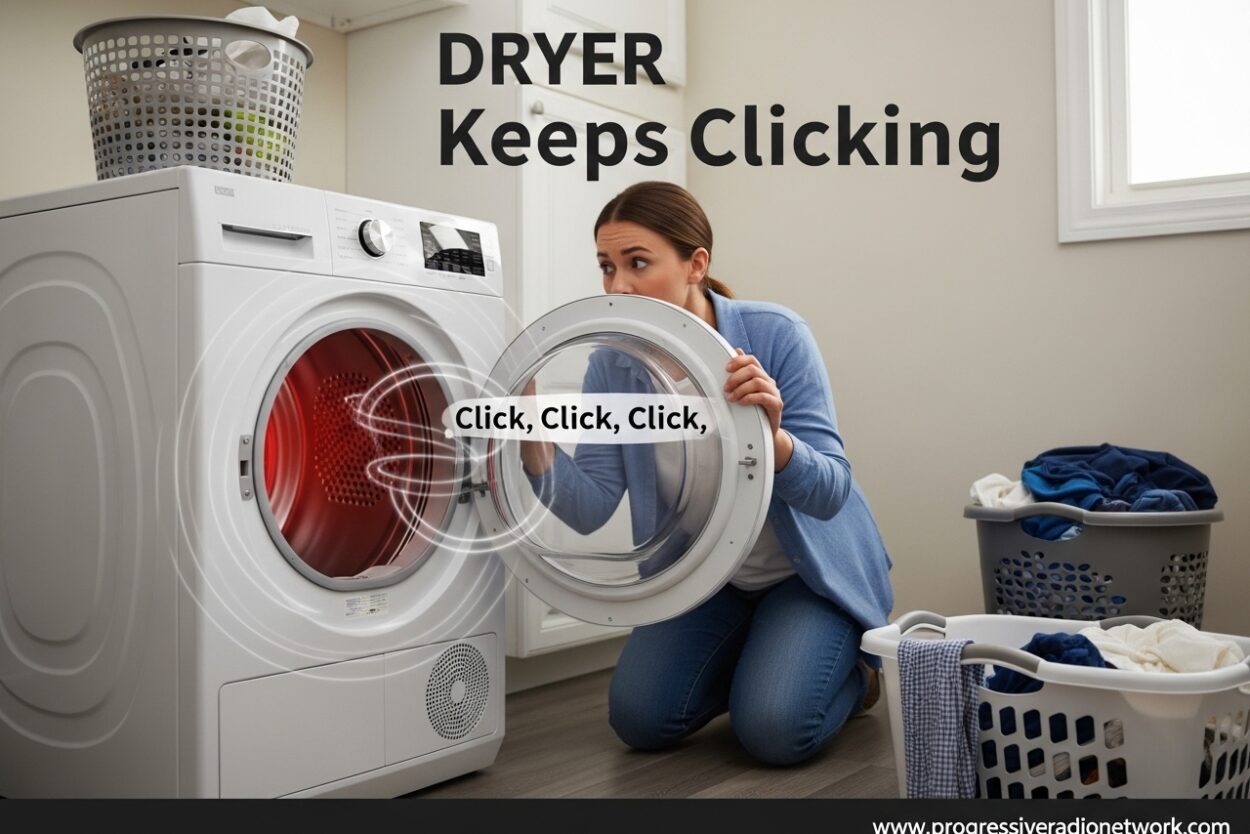
You’re folding laundry when you hear it – click, click, click. That rhythmic sound coming from your dryer wasn’t there yesterday. A dryer keeps clicking for several reasons, ranging from harmless normal operation to signs that a component is about to fail. I’ve spent 15 years diagnosing appliance noises, and clicking is one of the most common complaints homeowners report. The good news is that most clicking sounds are fixable, either with a simple DIY repair or an affordable service call.
Understanding why your dryer is clicking matters because it can signal anything from a loose coin in the drum to a worn part that could cause more damage if ignored. Some clicking patterns indicate you need immediate attention, while others are simply part of normal operation. Let me walk you through exactly what’s causing that sound and what you should do about it.
Safety First: Before You Inspect Your Dryer
Before you do anything else, unplug your electric dryer from the wall outlet or turn off the gas supply valve if you have a gas model. This isn’t just a precaution – it’s absolutely necessary. I’ve seen too many people reach into a dryer while it’s still connected to power. Don’t become another statistic.
For gas dryers, you’ll also want to let the unit cool completely if it was recently running. The gas valve area can remain hot for 30 minutes or more after a cycle ends. If you smell gas at any point, leave your home immediately and call your gas company from outside.
Keep a flashlight nearby for inspecting dark areas inside the drum cabinet. You’ll also need a putty knife for prying open the access panel on most models. Having a few basic tools ready will make your inspection much easier and safer.
Common Causes of Dryer Clicking
After diagnosing hundreds of clicking dryers, I’ve found that most cases stem from a handful of common issues. Here’s what typically causes that clicking sound:
- Small objects caught in drum baffles: Coins, buttons, zippers, and safety pins often get lodged in the drum fins. These items create a metallic click or clink as the drum rotates. I once found a safety pin that had been clicking for months before the owner called me.
- Worn drum rollers: Most dryers have 2-4 rollers supporting the drum. When the roller bearings wear out, they produce a rhythmic clicking or rumbling sound. This is especially common in dryers over 7 years old. The clicking typically gets louder as the drum spins faster.
- Faulty idler pulley: The idler pulley maintains tension on the drive belt. When its bearing fails, you’ll hear a steady clicking or chirping noise. This part costs about $15-30 but can cause extensive damage if it breaks completely.
- Damaged drive belt: A belt with frayed edges or cracks can click as it passes over pulleys. Belt issues often produce a clicking that coincides with drum rotation. You might also notice the drum not spinning smoothly.
- Gas valve operation (gas dryers only): If you have a gas dryer, the gas valve solenoid normally makes a soft clicking sound when it opens and closes. This is completely normal and happens every time the burner cycles on and off during operation.
- Blower wheel issues: The blower wheel moves air through your dryer. If it’s loose, damaged, or has debris buildup, it can create a clicking noise. This often sounds more like a rapid tick-tick-tick that continues even after the drum stops.
- Worn drum glides: Drum glides (or slides) provide a smooth surface for the drum to rotate on. When these wear thin, metal-on-metal contact produces clicking or scraping sounds. This is common in Whirlpool and Maytag models over 5 years old.
- Foreign objects in lint trap housing: Items can fall past the lint screen into the housing below. I’ve found everything from screws to dryer sheets lodged in the blower area. This often creates an irregular clicking pattern.
Gas vs Electric Dryers: Different Clicking Patterns
The type of dryer you own makes a significant difference in diagnosing clicking sounds. Gas dryers naturally produce some clicking that electric dryers don’t, while electric models have their own unique clicking patterns.
Gas dryer clicking is normal during operation. The gas valve solenoid makes an audible click when it opens to allow gas flow and closes to shut it off. You’ll typically hear this click every few minutes as the burner cycles to maintain temperature. This clicking should be relatively soft and consistent.
Abnormal gas dryer clicking sounds different – it’s usually louder, more frequent, or accompanied by other issues like the dryer not heating properly. If your gas dryer clicks but doesn’t ignite, or if the clicking is continuous rather than periodic, you may have a faulty valve solenoid or ignition issue that needs professional attention.
Electric dryer clicking is never considered normal operation. While you might hear a single click when you press the start button (this is the relay engaging), any clicking during operation indicates a mechanical issue. Electric dryers don’t have gas valves, so all operational clicking points to worn components or foreign objects.
Some brands also have characteristic clicking patterns. Samsung dryers often develop clicking from the idler pulley around the 5-year mark. Whirlpool models are prone to drum roller issues that produce clicking. Maytag dryers commonly experience worn glides that create a scraping-clicking combination. LG dryers tend to have fewer clicking issues overall, but when they do occur, it’s often related to the drive motor.
Step-by-Step Troubleshooting Guide
Ready to diagnose your clicking dryer? Follow these steps in order. This is the exact process I use when I arrive at a customer’s home, and it will help you pinpoint the issue efficiently.
Step 1: Identify when the clicking occurs. Does it happen only when the drum is spinning? Does it continue after the dryer stops? Is it present when you press start but the drum doesn’t move? Clicking that coincides with drum rotation usually points to drum components (rollers, glides, objects in baffles). Clicking when off suggests electrical issues or thermal expansion.
Step 2: Check for foreign objects. This is the easiest fix and the first thing to rule out. Remove the lint screen and shine your flashlight into the housing. Look for any loose items. Then manually rotate the drum and listen for changes in the clicking pattern. If the clicking changes or stops when you rotate the drum by hand, you likely have an object in the drum baffles.
Step 3: Inspect the drum movement. With the dryer still unplugged, reach inside and try to lift the drum slightly. There should be minimal play – maybe 1/8 inch of movement. Excessive movement suggests worn drum rollers or glides. Try rotating the drum by hand and feel for rough spots or resistance.
Step 4: Access the internal components. On most dryers, you’ll need to remove the front or rear access panel. Consult your owner’s manual for specific instructions. Once inside, visually inspect the belt for fraying, cracks, or glazing. Check the idler pulley by spinning it – it should rotate smoothly without any wobble or resistance.
Step 5: Test the blower wheel. Located near the bottom of the dryer cabinet, the blower wheel should spin freely on its shaft. Any wobbling or clicking when spun indicates a problem. Look for built-up lint or debris around the blower housing.
Step 6: Check electrical connections. If your dryer clicks but won’t start, inspect the door switch, start switch, and thermal fuse. A faulty door switch is a common culprit – it should make an audible click when activated. Test components with a multimeter if you have one, or visually inspect for burn marks or loose connections.
When to Call a Professional
Some dryer clicking issues are DIY-friendly, while others require professional expertise. Knowing the difference can save you money and prevent injury.
Call a professional if: You’re uncomfortable working with appliances, you don’t have the proper tools, the issue involves gas lines or components, you’ve attempted DIY fixes without success, or the dryer is under warranty (DIY repairs may void it).
Dryer clicking is potentially dangerous if: You smell burning plastic or rubber, see smoke or sparks, notice excessive heat outside the dryer, hear grinding combined with clicking, or have a gas dryer and smell gas. These are all red flags that indicate immediate professional attention is needed.
Typical repair costs: Replacing drum rollers runs $100-200 parts and labor. Idler pulley replacement costs $80-150. Drum glides typically cost $120-250 to replace professionally. Drive belt replacement runs $90-180. Blower wheel replacement costs $150-300. These prices vary by region, appliance brand, and service provider.
What to expect from a service call: Most technicians charge a diagnostic fee of $50-100, which is often waived if you proceed with the repair. The technician should provide a written estimate before beginning work. Ask about warranty on parts and labor – reputable companies offer at least 90 days coverage.
Preventive Maintenance to Avoid Future Clicking
The best way to deal with dryer clicking is to prevent it from happening in the first place. Regular maintenance extends your dryer’s lifespan and prevents most clicking issues.
Clean the lint trap before every load. This simple habit prevents lint buildup in the blower housing and reduces strain on your dryer’s components. I recommend washing the lint screen with warm, soapy water monthly to remove fabric softener residue that can clog the mesh.
Inspect and clean the vent system annually. A clogged vent causes your dryer to work harder, accelerating wear on moving parts. Disconnect the vent from the back of the dryer and remove any lint buildup. Use a vent cleaning brush to clean the vent pipe that leads outside.
Check drum components every 2-3 years. If you’re comfortable with basic DIY, remove the access panel and inspect the belt, pulleys, and rollers for signs of wear. Replacing these parts before they fail completely prevents more extensive damage.
Level your dryer properly. An unlevel dryer causes uneven wear on drum components and can create clicking sounds. Use a bubble level on top of the dryer and adjust the leveling legs until the bubble is centered.
Don’t overload your dryer. Excessive weight strains the drum, belt, and motor. I recommend filling the drum no more than halfway for best results and longest component life.
When it’s time to replace your dryer, brands like Speed Queen and Miele are known for durability and quiet operation. However, even the most reliable dryers develop clicking issues after 8-12 years of regular use.
Frequently Asked Questions
Why does my dryer keep making a clicking noise?
The most common causes include small objects caught in the drum baffles, worn drum rollers or glides, a faulty idler pulley, a damaged drive belt, or issues with the blower wheel. In gas dryers, normal operation of the gas valve also produces clicking. Start by checking for loose items in the drum, then inspect internal components if the clicking persists.
Is a noisy dryer a fire hazard?
Some dryer noises can indicate fire risks, especially if accompanied by burning smells, excessive heat, or visible smoke. Clicking alone is rarely a fire hazard unless combined with these warning signs. However, a clogged vent system – which can cause various noises – is a legitimate fire risk and should be addressed immediately. If you smell burning or see sparks, unplug the dryer and call a professional.
How much does it cost to replace dryer drum bearings?
Professional replacement of dryer drum bearings typically costs $150-300, including parts and labor. The exact cost depends on your dryer model, region, and service provider. If you’re comfortable with DIY repair, the bearings themselves cost $20-50, but this is an intermediate-level repair that requires disassembling the dryer cabinet. Drum bearing replacement typically takes 1-2 hours for a professional technician.
Why is my dryer clicking and not starting?
If your dryer clicks when you press start but won’t run, the issue is likely electrical rather than mechanical. Common causes include a faulty door switch, defective start switch, blown thermal fuse, or start relay problems. The clicking you hear is probably the relay attempting to engage. Test the door switch first by listening for a click when you close the door. If the door switch works, use a multimeter to test the thermal fuse and start switch for continuity.
Conclusion
Most dryer clicking issues have straightforward solutions once you identify the cause. Whether it’s a loose coin in the drum or worn rollers that need replacement, addressing the problem promptly prevents more extensive damage to your appliance. Remember to always prioritize safety by unplugging before inspecting, and don’t hesitate to call a professional if you’re unsure about any repair. With the information in this guide, you’re well-equipped to diagnose and resolve most dryer keeps clicking issues and get back to quiet, efficient laundry days.
Leave a Comment