
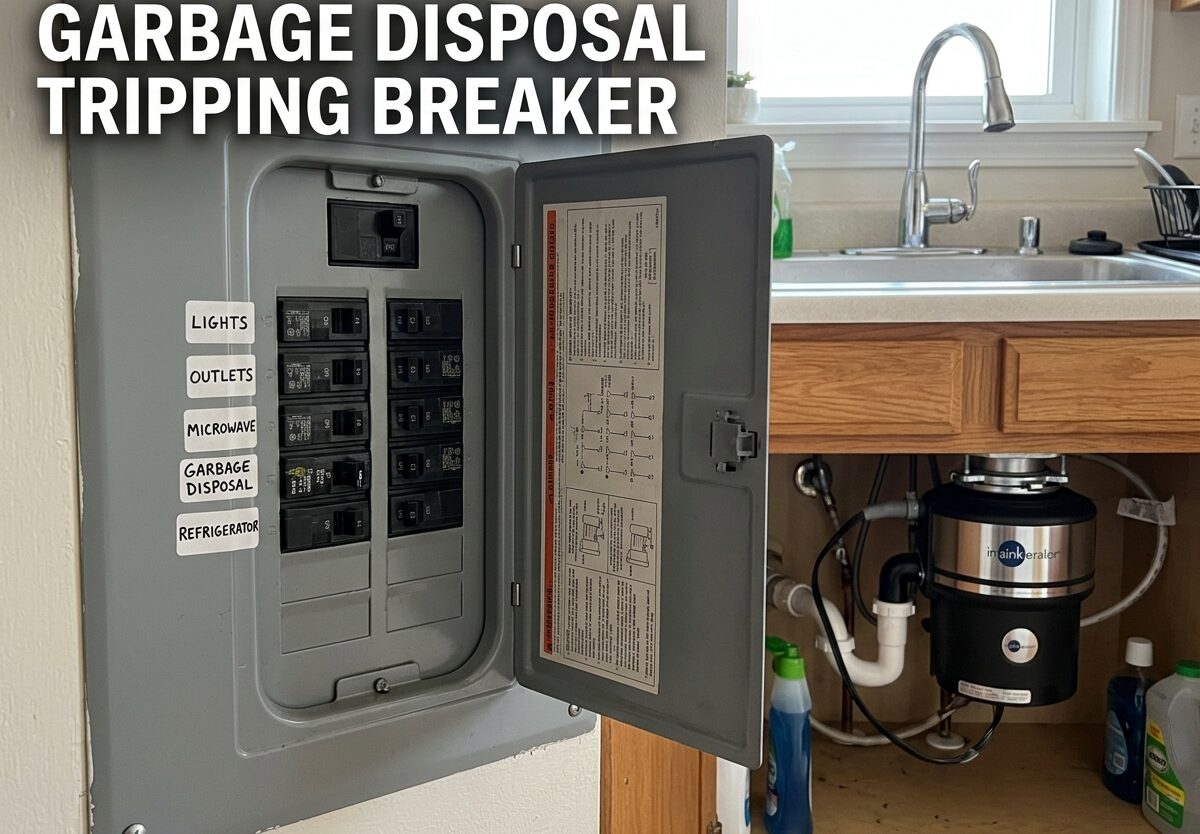
Your garbage disposal tripping breaker is a safety warning you shouldn’t ignore. This frustrating problem usually stems from a few common causes: a jammed impeller, motor overload, electrical short, or a faulty component. In most cases, you can diagnose and fix the issue yourself without calling a professional.
I’ve helped troubleshoot dozens of garbage disposal electrical issues over the years, and I’ll walk you through exactly what’s happening and how to fix it safely. Before we dive in, here’s the most important rule: always turn off the breaker before attempting any repairs.
Why Does My Garbage Disposal Keep Tripping the Breaker?
A garbage disposal tripping breaker happens when the unit draws more electrical current than the circuit can safely handle. The breaker trips to prevent overheating, fires, or electrical damage. This safety mechanism activates for several specific reasons that we’ll cover in detail.
Understanding the difference between the circuit breaker tripping and the disposal’s reset button popping is crucial. The main breaker protects your home’s electrical system, while the reset button protects the disposal motor itself. Both can trip from the same underlying issues.
Most Common Causes
A jammed shredding plate or impeller is the number one culprit. When something gets wedged between the grinding plates, the motor can’t turn freely. This causes it to draw excessive current and trip the breaker instantly. Common jamming items include fruit pits, bones, utensils, and fibrous vegetable matter like corn husks or celery strings.
Motor overload occurs when you run the disposal too long or process too much food at once. Most disposals need 30-60 seconds of rest after 2-3 minutes of continuous operation. Pushing beyond these limits causes overheating, which triggers both the internal overload protector and sometimes the main breaker.
Electrical shorts develop when water leaks into the motor housing or when wiring insulation deteriorates. These shorts create an unintended path for electricity, causing massive current spikes that immediately trip the breaker. This is especially common in older disposals or units with damaged power cords.
Worn motor bearings increase friction and current draw as the disposal ages. After 10-15 years of use, the bearings can seize completely, causing the motor to lock up and trip the breaker. This usually means the disposal needs replacement rather than repair.
A faulty overload protector or safety switch can cause nuisance tripping even when nothing is wrong. These internal components can fail over time, becoming overly sensitive and tripping under normal operating conditions.
GFCI Outlet vs Standard Circuit Breaker: What’s the Difference?
Many homeowners confuse GFCI outlet trips with standard circuit breaker trips. A GFCI (Ground Fault Circuit Interrupter) monitors current flow and trips when it detects even small imbalances that could indicate a ground fault. Standard breakers only trip from significant overloads or short circuits.
If your garbage disposal is plugged into a GFCI outlet, it might trip the GFCI instead of the main breaker. This often happens when water causes a minor ground fault that doesn’t draw enough current to trip the breaker but is dangerous enough for the GFCI to catch. GFCI protection is actually recommended for disposals because it provides faster, more sensitive protection against ground faults.
To identify which is tripping, check your electrical panel first. If the breaker hasn’t flipped, look for a GFCI outlet in your kitchen that has popped out. Some homes have GFCI breakers in the panel, which combine both functions in one device.
How to Fix Garbage Disposal Tripping Breaker: Step-by-Step Guide
Step 1: Safety First – Turn Off Power
Before attempting any troubleshooting, turn off the disposal’s circuit breaker at your electrical panel. If you’re unsure which breaker it is, turn off the main power to be safe. Never work on an electrical appliance while it’s connected to power. This step is non-negotiable for your safety.
If your disposal has a wall switch, flip it off as well. For plug-in models, unplug the unit from the outlet. This redundant safety measure prevents accidental startup while you’re working near the grinding chamber.
Step 2: Check for Obvious Jams
Shine a flashlight down into the disposal chamber. Look for any visible objects blocking the grinding plates. Common items include utensils, bottle caps, fruit pits, or large food chunks. If you see something, use long needle-nose pliers to remove it. Never put your hands inside the disposal, even when power is off—the blades can still cause injury.
Look for signs of what caused the jam. Fibrous materials wrapped around the shredding plate, grease buildup, or bone fragments can indicate what to avoid putting down the disposal in the future.
Step 3: Use the Hex Wrench to Manually Rotate
Most disposals have a hex socket on the bottom center specifically for manual rotation. Insert the hex wrench (also called an Allen wrench) that came with your unit, or buy a 1/4-inch hex wrench from any hardware store. Try turning the wrench clockwise and counterclockwise.
If the wrench won’t turn, the impeller is jammed solid. Apply gentle pressure in both directions—never force it. Sometimes alternating between directions helps break loose whatever is stuck. If you feel resistance decrease and then increase again, you’re likely making progress on a jam.
Many homeowners don’t realize their disposal came with this wrench, which often gets tucked away in a cabinet or thrown out. If you can’t find yours, they’re inexpensive and universal for most disposal brands.
Step 4: Reset the Overload Protector
After clearing any jams, locate the red reset button on the bottom of the disposal unit. This button pops out when the overload protector trips. Press it firmly until you feel it click into place. If it won’t stay depressed, wait 10-15 minutes for the motor to cool down, then try again.
The reset button is connected to a thermal overload protector that cuts power when the motor overheats. This can happen from jams, overuse, or simply age-related motor issues. If the button continues to trip repeatedly without any apparent cause, the internal protector might be failing.
Step 5: Test the Outlet
Plug a different appliance into the same outlet to verify it’s working properly. A lamp or phone charger works well for this test. If the test device doesn’t work, the problem might be with your electrical wiring rather than the disposal itself.
For hardwired disposals, use a multimeter to test for voltage at the connection point. If you’re not comfortable working with electrical testing, this might be the time to call a professional. Faulty outlets or wiring can cause persistent tripping issues.
Step 6: Inspect Wiring Connections
With power still off, remove the disposal’s cover plate to examine the internal wiring. Look for any signs of damage like frayed insulation, burn marks, or loose connections. Water damage often shows as corrosion on metal terminals or white/green deposits on wires.
Tighten any loose wire nuts and check that all connections are secure. If you see damaged wiring, this is often beyond DIY repair and requires professional attention. Attempting to repair damaged wiring without proper knowledge can create fire hazards.
When to Call a Professional for Garbage Disposal Tripping Breaker
Some garbage disposal tripping breaker situations require professional expertise. If you’ve tried all the troubleshooting steps and the problem persists, it’s time to call an electrician or plumber. Persistent tripping often indicates deeper issues that aren’t visible from outside the unit.
Signs you need professional help include burning smells, visible sparks, or the disposal being less than 5 years old (which might still be under warranty). Professional diagnosis can save you money by identifying repairable issues versus complete replacement needs.
If the breaker trips immediately when you flip the switch, even with the disposal unplugged, you have a serious wiring problem that requires immediate professional attention. This indicates a short circuit in your home’s wiring, not the disposal itself.
Preventive Maintenance to Avoid Future Breaker Trips
Preventing garbage disposal tripping breaker issues is easier than fixing them. Run cold water for 15-20 seconds before and after using the disposal. Cold water helps solidify grease and fat so they can be chopped up and flushed through, rather than coating the internal components.
Avoid putting problematic items down the disposal: fibrous vegetables (celery, corn husks, asparagus), potato peels, pasta, rice, bones, fruit pits, coffee grounds, and eggshells. These items either jam the mechanism or expand inside the unit, causing overloads.
Run your disposal regularly even if you don’t use it daily. This prevents rust buildup and keeps the moving parts lubricated. Once a week, grind a few ice cubes to clean the grinding chamber and sharpen the blades naturally.
FAQs
What’s the average lifespan of a garbage disposal?
Most garbage disposals last 10-15 years with proper maintenance. Budget models may fail in 8-10 years, while premium units can last 15-20 years. If your disposal is over 12 years old and tripping the breaker, replacement is usually more cost-effective than repair.
How do you reset a garbage disposal when it is tripping?
First turn off the breaker. Check for jams using a flashlight and remove any objects with pliers. Insert a 1/4-inch hex wrench into the bottom socket and rotate both directions to free the impeller. Wait 15 minutes for cooling, then press the red reset button firmly until it clicks. Restore power and test.
Can you run your dishwasher if your garbage disposal is broken?
Yes, you can run your dishwasher with a broken garbage disposal, but only if your dishwasher drains independently. Most dishwashers drain through the disposal, so you’ll need to manually disconnect the drain hose and route it elsewhere. Otherwise, water will back up into your sink.
Can an electrician fix a garbage disposal?
Electricians can diagnose and fix electrical issues with garbage disposals, including wiring problems, faulty connections, and tripping breakers. However, for mechanical issues like jams or worn bearings, a plumber or appliance repair technician might be more appropriate. Many companies offer combined services.
Why does my garbage disposal trip the breaker when not in use?
If your disposal trips the breaker when not in use, you likely have a water leak causing an electrical short. Water dripping onto the motor or wiring creates a ground fault that trips the breaker immediately. This is a serious issue requiring professional repair to prevent electrical hazards.
Conclusion: Fixing Your Garbage Disposal Tripping Breaker
Dealing with a garbage disposal tripping breaker doesn’t have to be frustrating. Most cases stem from simple jams or overloads that you can fix yourself with basic tools and safety precautions. Start with the hex wrench method, check the reset button, and work through the troubleshooting steps systematically.
Remember that persistent tripping often signals deeper problems. If your disposal is over 12 years old, replacement might be more economical than repeated repairs. Newer models offer better efficiency, quieter operation, and improved safety features that prevent future tripping issues.
Regular maintenance is your best defense against future problems. Avoid problematic foods, use cold water, and run your disposal regularly. These simple habits can extend your disposal’s lifespan and prevent the headache of a tripped breaker. When in doubt, professional help is always cheaper than electrical damage or water damage from neglected issues.


Leave a Comment