
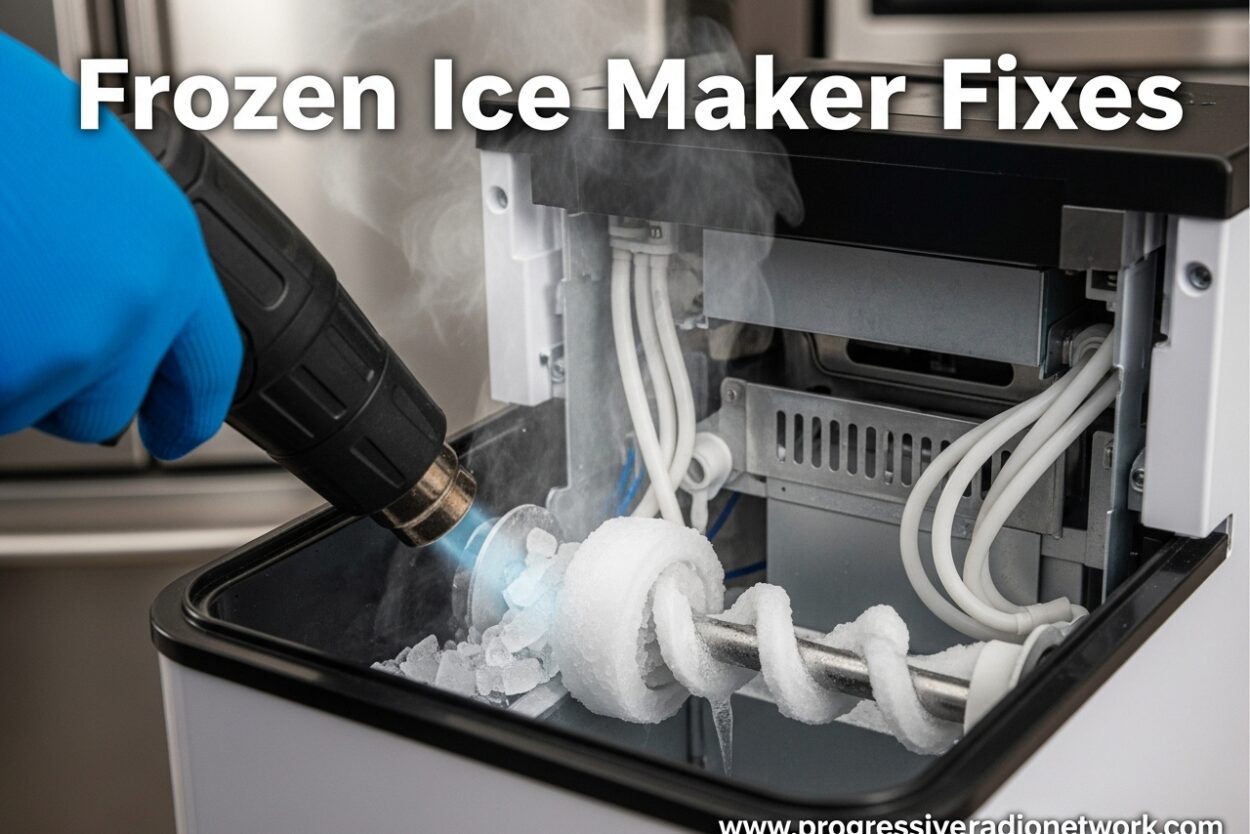
There’s nothing worse than reaching for ice on a hot day only to find your ice maker has frozen over. I’ve been there, and it’s frustrating. After dealing with this issue multiple times across different refrigerator brands, I’ve compiled the most effective frozen ice maker fixes that actually work.
Whether your ice maker is completely solid, the water line is blocked, or you’re dealing with a recurring freezing problem, this guide will walk you through everything you need to know. I’ll cover quick defrosting methods, brand-specific troubleshooting, and preventive measures to stop it from happening again.
Signs Your Ice Maker is Frozen
Before you start fixing the problem, you need to confirm that freezing is actually the issue. Here are the telltale signs I’ve learned to look for over the years.
The most obvious sign is no ice production even though the freezer is working perfectly. You might also see visible ice buildup in the ice maker compartment or notice that the ice cubes are fused together in a solid block. Sometimes you’ll hear the ice maker struggling to cycle, making unusual sounds as it tries to eject ice that’s stuck fast.
Another common indicator is water leaking into the freezer. When the fill tube freezes, water can’t reach the ice mold and instead spills over, creating frozen puddles on the freezer floor. I’ve also seen cases where the ice maker arm is stuck in one position and won’t move.
How to Defrost Ice Maker: Quick Methods That Work
When you need your ice maker working again fast, these are the methods I’ve found most effective. Choose based on how much time you have and how severe the freeze is.
Hair Dryer Method (Fastest)
This is my go-to method when I need ice quickly. Unplug your refrigerator first – safety first. Then use a hair dryer on the low or medium heat setting, directing the warm air at the frozen areas. Keep the dryer moving constantly and maintain about 6 inches of distance from components to prevent damage.
Focus on the fill tube, ice maker housing, and any visible ice buildup. This typically takes 10-15 minutes. I’ve found that melting the ice too quickly can cause water to pool in places it shouldn’t, so take your time.
Warm Water Method (Safest)
For a gentler approach that won’t risk damaging any components, use warm (not boiling) water. Fill a cup or bowl with warm water and carefully pour it over the frozen fill tube and ice maker assembly. Place towels underneath to catch the melting water.
This method takes longer – usually 20-30 minutes – but it’s completely safe for all components. I recommend this method if you’re uncomfortable using electrical appliances near your refrigerator or if the ice buildup is minimal.
Forced Defrost Mode (Most Thorough)
Many modern refrigerators have a built-in forced defrost mode that’s designed exactly for this situation. The process varies by brand, but typically involves pressing specific button combinations on your control panel.
For most models, you’ll enter diagnostic mode by holding certain buttons for 3-5 seconds, then navigate to the forced defrost option. This runs a dedicated defrost cycle that can take 20-45 minutes. I’ve found this to be the most complete solution for stubborn ice buildup.
Frozen Water Inlet Tube: Specific Fixes
The water inlet tube is the most common culprit when it comes to frozen ice makers. This small tube delivers water to the ice maker, and when it freezes, no ice can be produced.
To locate the fill tube, look at the back wall of your freezer where the ice maker attaches. You’ll see a small tube coming from the refrigerator wall. If it’s frozen solid, you’ll typically see ice at the opening or feel no flexibility when you gently touch it.
For a frozen fill tube, I recommend the warm water method combined with a turkey baster. This allows you to direct warm water precisely into the tube. Fill the baster with warm water and squeeze it gently into the fill tube. Repeat until water flows freely through.
If the fill tube keeps freezing repeatedly, this often indicates a problem with the water inlet valve or the freezer temperature being set too low. The ideal freezer temperature for ice maker operation is between 0°F and 5°F.
Ice Maker Reset Procedure
After defrosting your ice maker, a reset is often necessary to get it cycling properly again. I always recommend this step after any defrosting procedure.
For most refrigerators, the reset process is simple. Locate the reset button – it’s usually a small button on the ice maker itself or accessible through the refrigerator’s control panel. Press and hold for 10 seconds until you hear a chime or see lights flash.
If your model doesn’t have a dedicated reset button, try turning off the ice maker switch for 30 seconds, then turning it back on. For Samsung models, the reset is often done through the control panel by holding specific buttons simultaneously.
After resetting, give your ice maker 6-12 hours to produce the first batch of ice. This seems like a long time, but it’s normal. The first harvest cycle after a reset takes longer than usual.
Brand-Specific Frozen Ice Maker Fixes
Different brands have unique designs and common issues. After working with various refrigerator brands, I’ve identified the most effective brand-specific approaches.
Samsung Ice Maker Frozen Issues
Samsung ice makers are notorious for freezing problems. I’ve personally dealt with this issue multiple times. The most common Samsung issue is ice buildup in the ice bucket housing and frozen auger motors.
Samsung’s forced defrost mode is particularly effective. Press and hold the Energy Saver and Power Cool buttons simultaneously for 8-10 seconds. The display will show “Fd” indicating forced defrost mode. Let it run for about 20 minutes before manually canceling by pressing the same buttons again.
Many Samsung owners report needing to defrost every few weeks. This is often due to a design issue with the ice maker assembly. If the problem persists after multiple defrost cycles, you may need the updated ice maker kit that Samsung released to address this chronic issue.
Whirlpool Ice Maker Troubleshooting
Whirlpool ice makers generally freeze due to temperature issues or water flow problems. The most common Whirlpool issue is the fill tube freezing where it enters the freezer compartment.
For Whirlpool models, I recommend checking the freezer temperature first. If it’s set below 0°F, adjust it to between 2°F and 5°F. This slight increase often prevents recurring freeze-ups without affecting food preservation.
Whirlpool also offers a specific reset procedure: turn off the ice maker, wait 30 seconds, then turn it back on while simultaneously pressing the paddle arm three times. This should trigger a reset cycle.
Frigidaire and GE Ice Maker Fixes
Frigidaire ice makers commonly freeze at the water inlet valve location, which is typically at the back of the refrigerator. Access this panel and use the warm water method on the valve and connecting lines.
GE ice makers often experience freezing due to a faulty water inlet valve that doesn’t close completely, allowing continuous dripping that freezes. If you suspect this issue, listen for water running when the ice maker isn’t cycling – this indicates a valve problem that usually requires professional replacement.
Preventing Future Ice Buildup
After dealing with a frozen ice maker multiple times, I’ve learned that prevention is much easier than repeated defrosting. Here are the strategies that work best.
First, maintain proper freezer temperature. The ideal range is 0°F to 5°F. I check mine monthly with an appliance thermometer. Temperatures below 0°F significantly increase the risk of components freezing.
Regular cleaning makes a huge difference. Every three months, I clean the ice maker compartment with warm water to remove any mineral buildup or ice fragments. This simple maintenance prevents the small accumulations that lead to bigger freezes.
Replace your water filter every 6 months or as recommended by the manufacturer. A clogged filter can restrict water flow, leading to incomplete fills that freeze more easily. I set a calendar reminder so I never forget this important maintenance task.
For Samsung owners specifically, keep the ice maker door slightly ajar when not in use for extended periods. Many users report this simple trick prevents the humidity buildup that leads to freezing.
Seasonal changes affect ice maker performance too. During humid summer months, I defrost preventively every 4-6 weeks, even if no problems are visible. This proactive approach has eliminated unexpected freeze-ups for me.
When to Call a Professional
While most frozen ice maker issues can be resolved DIY, some situations require professional expertise. After years of troubleshooting, I’ve learned to recognize these scenarios.
If you’ve defrosted your ice maker multiple times and it freezes again within days, there’s likely an underlying mechanical issue. Common culprits include a faulty water inlet valve, malfunctioning thermostat, or defective defrost heater. These components require specialized diagnostic tools and replacement parts.
Water leaks that persist after defrosting indicate a more serious problem. If you notice water pooling in the fridge compartment, on the floor, or visible damage to water lines, call a professional immediately. Water damage can quickly escalate from a minor inconvenience to a major repair.
Ice maker replacement may be necessary if you’ve had recurring issues for more than 6 months despite proper maintenance. The cost of repeated service calls often exceeds the price of a new ice maker assembly, which typically runs $150-$300 plus installation.
Commercial ice machines should always be serviced by professionals. Their complex systems and food safety requirements make DIY fixes inadvisable. Commercial ice machine repair typically costs $200-$500 depending on the issue.
FAQ
What is the best way to unfreeze an ice maker?
The most effective method is using a hair dryer on low heat setting. Unplug your refrigerator first, then direct warm air at the frozen areas while keeping the dryer moving constantly. This typically melts ice within 10-15 minutes. For stubborn ice, use warm water with a turkey baster to target the fill tube specifically.
How do you fix an ice maker that keeps freezing up?
Start by checking your freezer temperature – it should be between 0°F and 5°F. If temperature is correct, clean the ice maker compartment thoroughly and replace the water filter if it’s been over 6 months. For recurring issues, the water inlet valve may need replacement by a professional. Samsung owners specifically may need the updated ice maker assembly kit.
Can I use a hair dryer to defrost my ice maker?
Yes, a hair dryer is actually one of the most effective defrosting methods. Use the low or medium heat setting, maintain 6 inches distance from components, and keep it moving constantly. Always unplug your refrigerator first for safety. Avoid concentrating heat on plastic components for extended periods to prevent warping or damage.
Can I run vinegar through my ice maker to clean it?
Vinegar can help remove mineral buildup and mild odors from your ice maker. Mix equal parts white vinegar and water, then run this solution through the ice maker if your model has a cleaning cycle. After running vinegar solution, flush thoroughly with clean water and discard the first 2-3 batches of ice. Never use vinegar in ice makers with electronic components that could be damaged by acidity.
Conclusion
Dealing with a frozen ice maker is frustrating, but with these frozen ice maker fixes, you can resolve most issues quickly and effectively. The key is identifying the problem early, using the right defrosting method for your situation, and following up with proper maintenance to prevent recurrence.
Start with the quickest solution – usually the hair dryer method – and move to more thorough approaches if needed. Remember that Samsung models have specific challenges that may require the updated assembly kit, while other brands often just need temperature adjustments or water filter replacements.
If you find yourself defrosting repeatedly despite proper maintenance, don’t hesitate to call a professional. The cost of replacing a faulty water inlet valve or thermostat is often less than the frustration and potential water damage from continued issues.
With regular preventive care and these troubleshooting techniques, your ice maker should provide reliable service for years. Keep this guide bookmarked for the next time your ice maker freezes – you’ll be back to enjoying ice-cold drinks in no time.




Leave a Comment