
If you’ve just moved into a new home or realized it’s been months since you last thought about your HVAC system, you’re probably trying to find furnace filter locations but coming up empty. I’ve been there – standing in my basement, staring at my furnace, wondering where on earth the filter could be hiding.
You’re not alone in this frustration. Based on my research of homeowner forums, finding furnace filter locations is one of the most common challenges for new homeowners and renters alike.
Let me walk you through exactly where to look and how to identify your filter once you find it.
Why Finding Your Furnace Filter Matters
Before we dive into locations, let’s talk about why this matters. A clean furnace filter is your first line of defense for indoor air quality and HVAC efficiency. When your filter is clogged with dust, pet dander, and allergens, your system has to work harder to push air through.
This means higher energy bills and potential damage to your HVAC equipment. I’ve seen estimates that a dirty filter can increase energy consumption by 5-15% and significantly shorten your system’s lifespan.
The good news? Once you find furnace filter locations and establish a replacement routine, it becomes a quick 5-minute task every 1-3 months.
What Does a Furnace Filter Look Like?
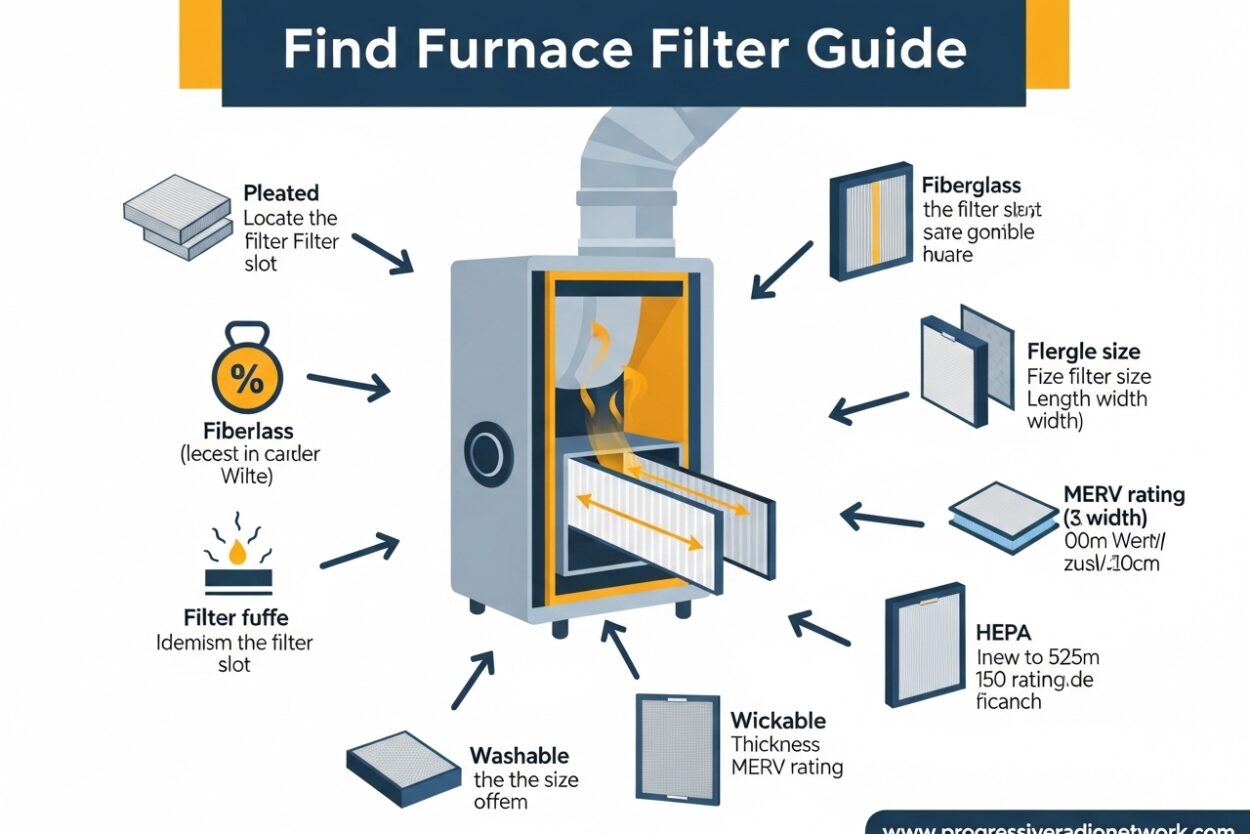
Before you start hunting, it helps to know what you’re looking for. Most furnace filters are rectangular panels made of fiberglass or pleated material, framed in cardboard or metal. Common sizes range from 16×20 inches to 20×25 inches, though many other dimensions exist.
You’ll typically see an arrow printed on the filter frame indicating airflow direction. Some filters are white, while others might be gray or blue depending on the material.
If you’re still unsure what to look for, imagine a thick, framed sheet that resembles a window screen but with denser material.
Find Furnace Filter: The 4 Most Common Locations
When you’re trying to find furnace filter locations, you’ll typically discover the filter in one of four places. Let me walk you through each location with detailed instructions.
1. Behind the Return Air Vent or Grille
This is the most common location and the easiest to access. Look for the large vent cover on your wall, ceiling, or floor – usually bigger than your other supply vents. This is your return air grille, and the filter is often tucked right behind it.
To check this location, simply remove the grille cover. Some pop off with gentle pressure, while others might require removing a few screws. Once the cover is off, you should see the filter sitting in a track or slot.
I’ve found this location in about 60% of homes, especially in newer constructions. It’s designed for easy homeowner access since you can change the filter without needing to go near the furnace itself.
2. In the Blower Compartment
If you didn’t find a filter behind your return vents, head to your furnace unit itself. The blower compartment – where the fan is located – is a very common filter location, especially in vertical furnaces.
Look for a removable access panel on the front, side, or bottom of your furnace. The panel might have clips, latches, or screws holding it in place. Behind this panel, you should see a slot where the filter slides in either vertically or horizontally.
For horizontal furnaces (often installed in attics or crawl spaces), the filter slot is typically located where the return duct connects to the furnace unit.
3. Inside the Air Handler Closet
Many homes have a dedicated closet or utility area housing the air handler unit. If your HVAC equipment is tucked away in a closet, the filter is likely inside or at the unit’s return air intake.
Open the closet door and look for the air handler unit. You might see the filter slot immediately on the exterior, or you may need to remove an access panel similar to the blower compartment method.
In apartment and condo settings, this is actually the most common location I’ve found. The air handler might be in a hallway closet, laundry room, or even a dedicated utility closet.
4. In Attic or Crawl Space Units
Homes with HVAC equipment in the attic or crawl space present a unique challenge. Your filter is likely at the return air drop where the duct connects to the unit.
If you’re accessing an attic unit, be extremely careful on step-joists or flooring. Crawl space access might require moving through a small opening, so be prepared with proper lighting and protective clothing.
Safety first: If your attic temperatures are extreme (very hot in summer, very cold in winter), consider scheduling your filter check during milder weather or hire a professional.
How to Find Your Furnace Filter by System Type
Different HVAC systems have their filter in different positions. Understanding your system type can help narrow your search.
Vertical Furnaces
Vertical furnaces stand upright and are common in basements and utility closets. The filter is typically located at the bottom of the unit where the return air enters.
Look for a narrow slot either in the blower compartment door or directly above it. The filter will slide vertically into position.
Horizontal Furnaces
Horizontal units lie on their side and are often found in attics or crawl spaces. The filter is usually located where the return duct connects to the furnace, typically on the side of the unit.
You’ll slide the filter horizontally into the slot. These can be trickier to access due to space constraints.
Split Systems
Split systems have components both inside and outside your home. The indoor unit (air handler or furnace) will contain the filter, usually at the return air connection point.
Focus your search on the indoor unit – the outdoor condenser doesn’t have any filters.
Mobile Home Specifics
Mobile home HVAC systems are often more compact, with the furnace integrated into a hallway closet. The filter is typically located either in the return grille of the closet door or in a narrow slot at the bottom of the unit.
Mobile home filters are often smaller than standard sizes, so measure carefully before ordering replacements.
Can’t Find Your Furnace Filter? Troubleshooting Guide
Sometimes, despite checking all the common locations, you simply can’t find a filter anywhere. Don’t panic – this happens more often than you’d think.
Your System Might Not Have a Factory Filter Slot
It’s surprising, but not all HVAC systems come with a built-in filter location. Some older systems were installed without any filter housing, especially in homes built before the 1990s.
If your system falls into this category, you have a few options: Install a filter grille in your return duct, add a filter rack in the return ductwork, or consult an HVAC professional about retrofit options.
Multiple Filter Systems
Some larger homes have multiple HVAC zones with multiple filters. You might find filters in several return grilles throughout the house or at multiple furnace units.
If you’ve found one filter, don’t stop there – check your other return vents and equipment to see if additional filters exist.
Hidden Behind Insulation
Attic units sometimes have filter slots buried under insulation. Carefully pull back insulation around the return air connection to look for a filter housing.
If you find this situation, consider creating an access door or marker to make future replacements easier.
When to Call a Professional
If you’ve checked all these locations and still can’t locate your filter, or if accessing potential locations feels unsafe, it’s time to call an HVAC technician. They can quickly identify your filter location (or confirm that none exists) and recommend solutions.
I typically recommend professional help if: your equipment is in a hard-to-reach area, you’re uncomfortable removing panels, or you suspect your system lacks a filter housing entirely.
Identifying Your Filter Size and Type
Once you’ve located your filter, you’ll need to identify its size and type for replacement. Here’s how to get it right.
Reading the Filter Label
Most filters have the dimensions printed right on the frame. You’ll see numbers like 16x20x1, which represent width x height x thickness in inches.
Write down these exact dimensions before removing the old filter or heading to the store.
Measuring If No Label Exists
If your filter is old and the label is worn or missing, measure the filter yourself. Measure to the nearest 1/8 inch and note the thickness as well.
Pro tip: Take a photo of your filter with your phone for reference when shopping. This helps ensure you get the right type and size.
Understanding MERV Ratings
You’ll also see a MERV rating on most filters, ranging from 1-16. Higher MERV ratings capture smaller particles but can restrict airflow if your system isn’t designed for them.
For most residential systems, a MERV 8-11 filter provides good filtration without straining your HVAC equipment.
Filter Direction Matters
Always note the arrow direction on your old filter before removing it. The arrow should point toward the furnace/air handler (in the direction of airflow).
Installing a filter backward restricts airflow and can damage your system over time.
When and How Often to Replace Your Filter
Now that you can find furnace filter locations, how often should you actually replace it? The standard recommendation is every 1-3 months, but several factors affect this timeline.
Homes with pets, allergies, or high dust levels need more frequent changes – sometimes monthly. Standard homes without special considerations can often go 2-3 months between replacements.
Signs it’s time to change your filter: visible dust buildup, reduced airflow from vents, increased energy bills, or if you can’t remember the last time you changed it.
Setting a phone reminder for the first of each month, or ordering quarterly filter subscriptions, can help you stay on top of this important maintenance task.
Frequently Asked Questions
How do I find out what furnace filter I need?
Check your existing filter for size dimensions printed on the frame (like 16x20x1). If no label exists, measure the filter’s length, width, and thickness to the nearest 1/8 inch. Take a photo of your filter before shopping to ensure you get the right type and size.
Where is the furnace filter located in an apartment?
In apartments, the filter is typically inside the air handler unit in a utility closet or behind a return air grille in a hallway ceiling. Check the closet where your HVAC equipment is housed first, looking for a removable panel or slot where the filter would be installed.
Do all furnaces have filters?
Surprisingly, no. Some older HVAC systems were installed without factory filter slots, particularly homes built before the 1990s. If you can’t locate a filter after checking all common locations, your system may not have one installed – consult an HVAC professional about retrofit options.
Can a furnace have more than one filter?
Yes, larger homes with multiple HVAC zones often have multiple filters. You might find filters in several return grilles throughout the house or at multiple furnace units. Always check all return vents and equipment to identify every filter in your system.
Which direction should my furnace filter face?
The arrow on your filter frame should point toward the furnace or air handler (in the direction of airflow). This means the arrow points away from the return duct and toward the equipment. Installing backward restricts airflow and can damage your system.
What size air filter for Goodman furnace?
Goodman furnaces don’t use a universal filter size – the correct size depends on your specific installation. Check your existing filter for dimensions (printed on the frame) or measure the filter slot. Common Goodman sizes include 16x25x1, 20x25x1, and 16x20x1, but always verify for your system.
How do I know if my furnace filter is dirty?
Hold your filter up to a light source – if you can’t see light through it, it’s time to replace. Also look for visible dust buildup, gray discoloration, or if it’s been more than 3 months since your last change. Reduced airflow from vents is another sign your filter needs replacing.
What happens if I put my filter in backwards?
Installing a filter backward restricts airflow because the filter material is designed to work in one direction. This reduces efficiency, increases energy costs, strains your HVAC system, and can lead to premature equipment failure. Always follow the arrow direction on the filter frame.
Conclusion
Learning to find furnace filter locations in your home is one of those essential homeowner skills that pays dividends for years to come. Whether your filter is tucked behind a return grille, nestled in the blower compartment, or hidden in an attic air handler, you now have the knowledge to track it down.
Remember the four most common locations: return air vents, blower compartments, air handler closets, and attic/crawl space units. If you still can’t find your furnace filter after checking these spots, don’t hesitate to consult an HVAC professional who can assess your specific system.
Once you’ve located your filter, set up a regular replacement schedule based on your home’s needs. Your HVAC system will run more efficiently, your air quality will improve, and you’ll avoid costly repairs down the road.
Happy hunting, and may your filters always be clean and your airflow unrestricted.


Leave a Comment