
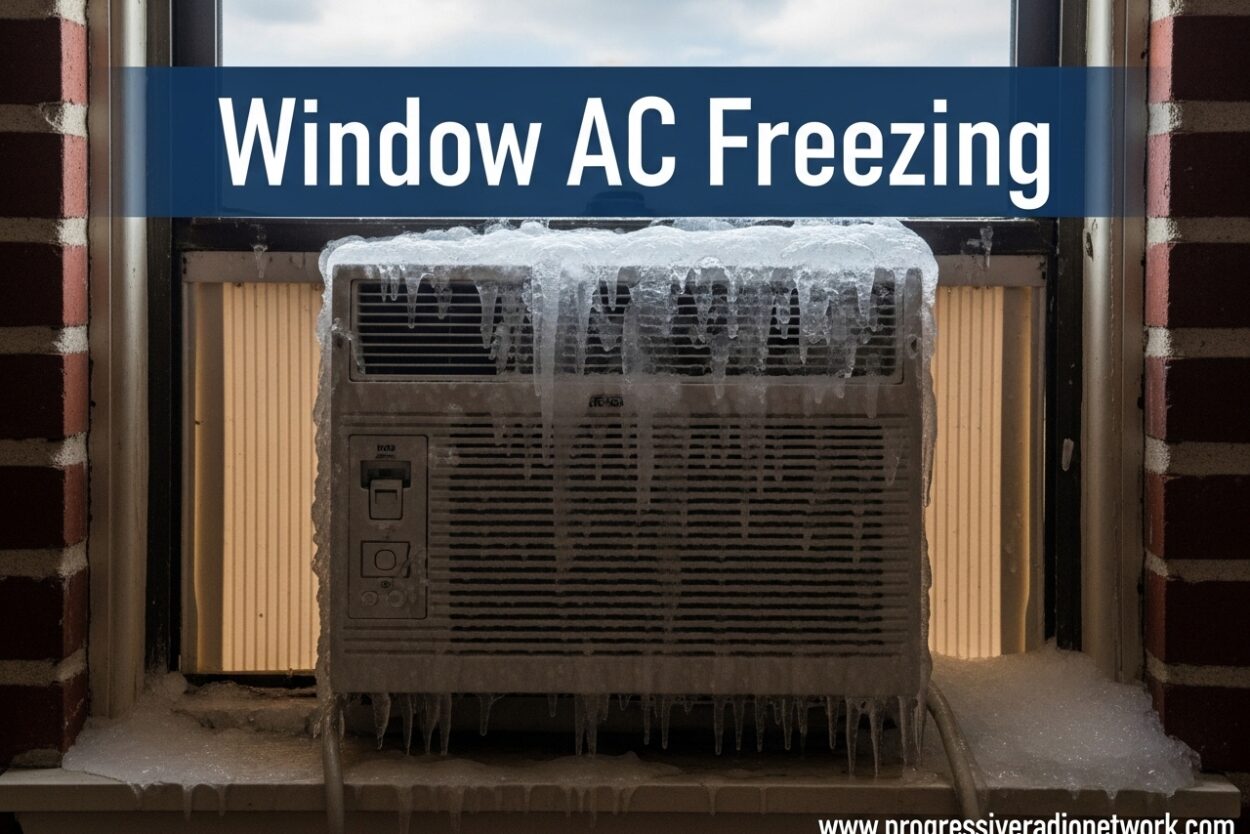
Nothing kills your summer comfort faster than window AC freezing up right when you need it most. I’ve dealt with this frustrating problem myself, watching ice creep across the coils while my room gets hotter instead of cooler. Window AC freezing happens when ice builds up on the evaporator coils, blocking airflow and stopping your unit from cooling properly. In this guide, I’ll walk you through exactly why this happens and how to fix it fast.
Signs Your Window AC is Frozen
Before you start troubleshooting, confirm that window AC freezing is actually your problem. These are the telltale signs I’ve learned to spot over years of maintaining AC units.
Visible ice buildup on the front or back of your unit is the most obvious indicator. You might see frost on the coils through the vents or ice forming on the exterior panels. Reduced airflow is another red flag – even with the fan on high, you’ll feel weak air coming from the unit. Water leaking inside your home often accompanies freezing issues as melting ice drips where it shouldn’t.
Listen for unusual sounds too. A frozen AC often makes strange noises like hissing, bubbling, or clicking as ice interferes with normal operation. If your AC runs continuously but never reaches your set temperature, freezing could be the culprit.
What Causes Window AC Freezing
Understanding the science behind window AC freezing helps you prevent it from happening again. The core issue comes down to temperature and pressure in your evaporator coils.
Here’s the simple version: your AC works by absorbing heat from indoor air and releasing it outside. The refrigerant in your system expands in the evaporator coils, getting extremely cold. When warm air flows over these coils, the refrigerant absorbs the heat and carries it away.
Window AC freezing occurs when something disrupts this process. The Joule-Thomson effect explains the science – when refrigerant expands rapidly, its temperature drops. Under normal conditions, this controlled cooling works perfectly. But when airflow is restricted, refrigerant levels are low, or outdoor temperatures drop too far, the coils get colder than freezing point. Any moisture in the air then crystallizes into ice, creating a vicious cycle that makes the problem worse.
7 Common Causes of Window AC Freezing
After troubleshooting dozens of window units over the years, I’ve identified these seven culprits as the most common causes of window AC freezing. Understanding which one affects your unit helps you fix it faster.
1. Dirty or Clogged Air Filter
The number one cause of window AC freezing is also the easiest to fix. A dirty air filter restricts airflow across your evaporator coils, preventing them from absorbing heat properly. When heat absorption drops, coil temperatures plummet below freezing and ice starts forming.
I recommend checking your filter every month during peak cooling season. If you hold it up to light and can’t see through it, it’s time to clean or replace it. This simple maintenance step prevents the majority of window AC freezing issues I encounter.
2. Low Refrigerant Levels
Low refrigerant creates a pressure drop in your system that causes rapid cooling and freezing. This usually indicates a leak somewhere in your unit – refrigerant doesn’t just disappear over time. You might notice hissing sounds, reduced cooling performance, or ice forming in specific patterns on the coils.
Unfortunately, this isn’t a DIY fix. Refrigerant handling requires EPA certification and specialized equipment. If you suspect low refrigerant is causing your window AC freezing, you’ll need to call a professional technician who can locate and repair the leak before recharging the system.
3. Blocked Airflow and Vents
Window units need unrestricted airflow on both sides to function properly. Inside your room, furniture, curtains, or dust buildup can block intake vents. Outside, debris like leaves, pollen, or even bird nests can restrict exhaust airflow. When air can’t circulate freely, the same freezing problem occurs as with a dirty filter.
I’ve seen cases where well-meaning homeowners placed their AC behind curtains or furniture to hide it, inadvertently causing window AC freezing. Ensure at least two feet of clearance around your unit, and clean both interior and exterior vents regularly with a vacuum or soft brush.
4. Outdoor Temperature Below 60F
This one surprises many people, but running your window AC when outdoor temperatures drop below 60F (15C) almost guarantees freezing issues. Window AC units are designed to operate in specific temperature ranges, and the refrigerant pressure drops too low in cool weather.
Forum discussions across HVAC communities confirm this 58-60F threshold repeatedly. If you need cooling on cool spring or fall days, consider using fan mode only or opening windows instead. Running your AC when it’s too cold outside can cause permanent compressor damage beyond just window AC freezing.
5. Faulty Thermostat or Sensor
Your thermostat controls when the compressor cycles on and off based on temperature readings. A malfunctioning thermostat or temperature sensor can cause the compressor to run continuously, even when the coils are freezing over. I’ve seen this happen with both mechanical and digital thermostats.
Sometimes the issue is simple – a dead battery in a digital thermostat or loose wiring. Other times, the sensor itself fails and needs replacement. If your AC runs non-stop regardless of temperature settings, test your thermostat by temporarily replacing it with a known working unit.
6. Dirty Evaporator Coils
Even with clean filters, dust eventually penetrates to the coils themselves. Over time, this buildup acts like insulation, preventing heat transfer and causing the same freezing cascade as restricted airflow. Dirty coils are especially common in older units or those located in dusty environments.
Cleaning coils requires accessing the internal components of your AC unit. While possible for experienced DIYers, it involves removing covers and working near electrical components. If you’re uncomfortable with this process, professional cleaning typically costs between $100-200 and prevents future window AC freezing issues.
7. Frozen Condensate Drain Line
Your AC removes moisture from the air as it cools, and this water normally drains away through the condensate line. When this line freezes or clogs with algae and debris, water backs up into your unit. The excess moisture then freezes on the cold coils, accelerating the icing problem.
You’ll often notice water dripping inside your home or around the unit when this happens. Clearing the drain line usually involves locating the outdoor end and using a wet-dry vacuum or flushing it with a mixture of bleach and water. Regular maintenance prevents this common cause of window AC freezing.
How to Thaw a Frozen Window AC (Step-by-Step)
Once you’ve identified window AC freezing as your problem, you need to thaw it properly before attempting repairs. Follow these steps to safely thaw your unit and prevent further damage.
Step 1: Turn off the AC immediately. Continuing to run a frozen unit can cause compressor failure – one of the most expensive repairs possible. Switch the unit to “off” at the thermostat and unplug it from the wall for safety.
Step 2: Set the fan to “on” only. If your unit has a fan-only setting, turn it on. The circulating air will help thaw the ice faster without adding more cold refrigerant to the coils. This simple step reduces thawing time significantly.
Step 3: Let it thaw for 2-6 hours. Depending on how much ice has formed, complete thawing takes several hours. I recommend leaving it overnight if possible. Place towels around the unit to catch melting water and protect your walls and floor from water damage.
Step 4: Check the drain line. Once ice has melted, you’ll likely see water draining from the unit. Ensure the drain line is clear and flowing properly. If water backs up, use a wet-dry vacuum to clear any blockages.
Step 5: Clean or replace the air filter. Since dirty filters are the leading cause of window AC freezing, address this now before restarting your unit. Clean washable filters with warm water and mild soap, or replace disposable filters with new ones.
Step 6: Inspect for damage. While the unit is thawed and accessible, look for signs of refrigerant leaks (oily residue), damaged coils, or other issues that might have contributed to the freezing problem.
Step 7: Restart and monitor. Plug the unit back in and turn it on. Watch carefully for the next few hours to ensure ice doesn’t start forming again immediately. If freezing recurs quickly, you likely have a more serious issue requiring professional repair.
When to Call a Professional vs DIY Fix
Not all window AC freezing problems require professional help, but some definitely do. Understanding the difference saves you money on simple fixes while preventing costly damage from attempted repairs beyond your skill level.
You can safely handle dirty filters, blocked vents, and basic coil cleaning yourself. These tasks require minimal tools and experience while addressing the majority of common window AC freezing causes. However, refrigerant issues, electrical problems, and compressor repairs need professional attention.
Certain red flags indicate you should call a technician immediately. If your AC makes loud buzzing or grinding sounds after thawing, this suggests compressor damage. Frequent freezing within days of cleaning the filter indicates refrigerant leaks. Units still under warranty should always be serviced by authorized technicians to preserve coverage.
Professional repair costs typically range from $150-500 depending on the issue. Refrigerant recharge runs $200-400, while compressor replacement can exceed $600. If your unit is over 10 years old and needs major repairs, replacement might be more cost-effective than fixing the window AC freezing problem.
How to Prevent Window AC Freezing
Preventing window AC freezing is much easier than dealing with it after it happens. These simple maintenance steps keep your unit running efficiently all summer long.
Clean or replace your air filter every 1-3 months during cooling season. This single step prevents the majority of freezing issues. Keep at least two feet of clearance around your unit for proper airflow, both inside and outside your home.
Check your outdoor temperature before running the AC. When temps drop below 60F, use fan mode instead of cooling. Schedule professional maintenance before each cooling season – technicians can catch small problems before they cause window AC freezing.
Listen to your unit. Unusual sounds often precede freezing problems. Address issues early rather than waiting for complete failure. These preventive habits extend your AC’s lifespan and prevent mid-summer breakdowns.
FAQ
How do I stop my window air conditioner from freezing up?
Clean or replace your air filter monthly, ensure proper airflow around the unit, and never run your AC when outdoor temperatures drop below 60F. Check that vents aren’t blocked by curtains or furniture, and schedule annual professional maintenance to catch refrigerant leaks or coil issues before they cause freezing.
How long does it take for window AC to unfreeze?
Most window AC units thaw completely within 2-6 hours after being turned off. Using the fan-only setting can speed up this process by circulating air across the coils. For severe ice buildup, leave the unit off overnight to ensure complete thawing before attempting to restart it.
Why does my window air conditioner keep freezing up?
Recurring freezing usually indicates an underlying issue like low refrigerant levels from a leak, a malfunctioning thermostat causing continuous compressor operation, or severely dirty coils. If cleaning the filter doesn’t resolve the problem within a week, professional diagnosis is recommended to identify the specific cause.
Can I fix frozen AC myself?
Yes, you can safely thaw and troubleshoot basic causes yourself. Start by turning off the unit, letting it thaw completely, and cleaning or replacing the air filter. Ensure vents aren’t blocked and the outdoor temperature is above 60F. However, refrigerant leaks, electrical issues, and compressor problems require professional repair.
Why does my AC freeze at night but not during the day?
Nighttime freezing typically occurs because outdoor temperatures drop below the 60F threshold that window AC units are designed to operate in. As temperatures fall, refrigerant pressure drops too low, causing coils to ice over. This is especially common in spring and fall when days are warm but nights get cool. Run fan mode only during these conditions.
Conclusion
Window AC freezing doesn’t have to ruin your summer comfort. By understanding the causes, knowing how to thaw your unit properly, and following preventive maintenance, you can keep your air conditioner running efficiently all season long. Start with the simple fixes – check that filter, clear those vents, and watch the outdoor temperature. When in doubt, calling a professional prevents bigger problems down the road.



Leave a Comment