
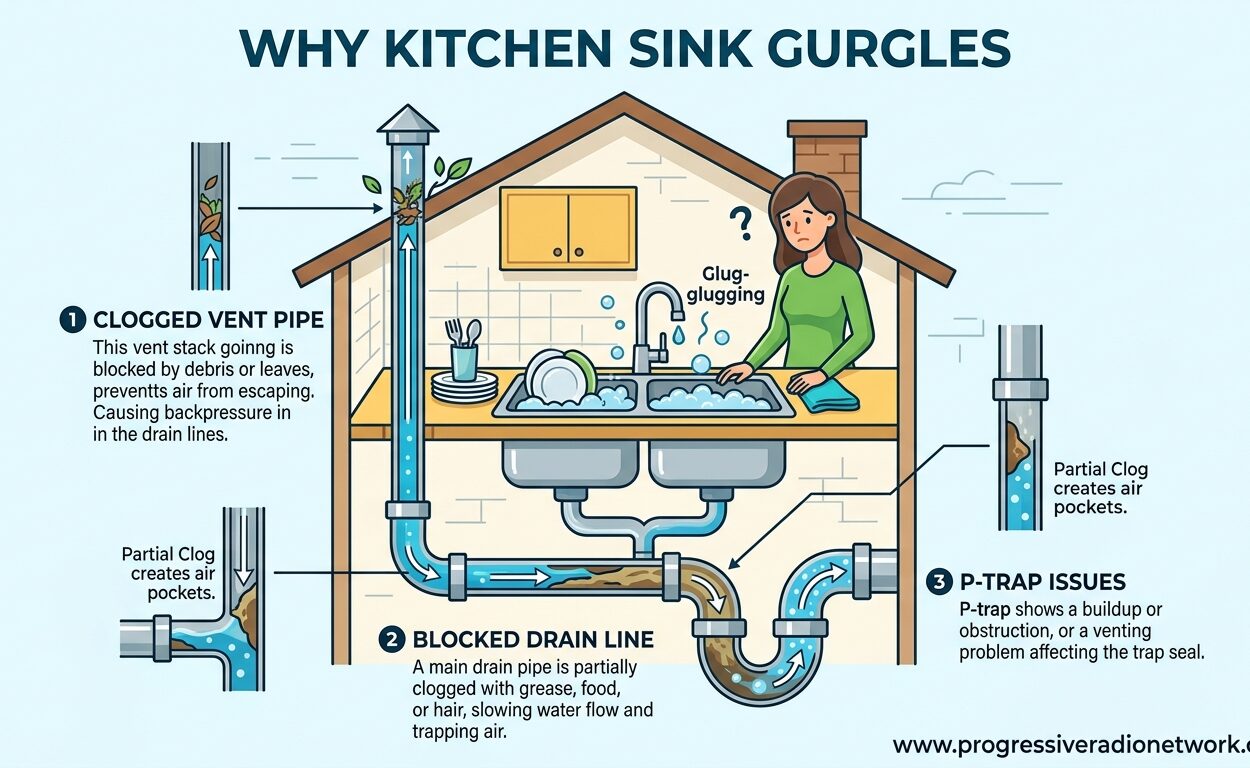
You’re washing dishes after dinner when you hear it—that bubbling, gurgling sound coming from your kitchen drain. It’s unsettling, and you’re not alone. This phenomenon affects countless homeowners, and understanding why your kitchen sink gurgles can help you address the problem before it worsens.
A gurgling sink typically indicates trapped air somewhere in your plumbing system, struggling to escape through water in your drain pipes. The sound occurs when air pushes through the water seal in your P-trap, creating that distinctive bubbling noise you hear.
In most cases, kitchen sink gurgles point to one of five main causes: partial clogs restricting water flow, blocked vent pipes preventing proper airflow, P-trap issues allowing air escape, failed air admittance valves, or problems with shared drain lines. We’ll walk through each cause and show you exactly what to do about it.
What a Gurgling Sink Actually Means
That gurgling noise is your plumbing system telling you something is disrupting normal airflow. Healthy plumbing relies on a balance between water flow and air pressure. When something throws off this balance, you’ll hear the results.
Think of your drain pipes like a straw. When you drink normally, liquid flows smoothly. But if you block the top of the straw while drinking, you get that gurgling sound as air struggles to replace the liquid. Your plumbing works similarly—water needs air to flow freely through drain pipes.
The gurgling sound you hear is air being forced through water in your P-trap. This U-shaped pipe under your sink holds water that blocks sewer gases from entering your home. When negative pressure builds up in your drain system, it pulls air through this water seal, creating bubbles and that concerning noise.
Key Terms to Understand:
- P-trap: The U-shaped pipe beneath your sink that holds standing water to block sewer gases
- Vent pipe: A pipe extending through your roof that allows air to enter your plumbing system
- Negative pressure: Low pressure created when water flows down drains, sucking air through available openings
- AAV (Air Admittance Valve): A one-way valve allowing air intake without roof venting
- Water seal: The trapped water in your P-trap that prevents sewer gas escape
Top 5 Causes of Kitchen Sink Gurgling
After analyzing hundreds of homeowner reports and consulting with plumbing professionals, we’ve identified the five most common reasons your kitchen sink gurgles. Understanding these causes will help you diagnose and fix the issue more effectively.
- Partial Clog in Drain Pipe – The most common culprit is a partial blockage restricting water flow. Food debris, grease buildup, and soap scum gradually accumulate in your drain pipe, creating a narrowing passage. When water drains, it moves slower than normal, creating negative pressure behind it. This pressure pulls air through the P-trap water seal, producing the gurgling sound. Unlike a complete clog where water won’t drain at all, partial clogs allow drainage but with airflow disruption that causes the noise.
- Blocked Vent Pipe – Your plumbing system needs air to function properly. Vent pipes extend through your roof and allow fresh air to replace the water leaving through drains. When these vents become blocked by leaves, bird nests, debris, or even snow, air can’t enter the system. The resulting negative pressure forces air through the nearest available path—your sink’s P-trap—creating the gurgling sound. Vent blockages often affect multiple fixtures simultaneously, so you might notice gurgling in other drains too.
- P-Trap Issues – The P-trap under your sink requires the right amount of water to maintain its seal. If the water level drops too low (from evaporation during infrequent use, a small leak, or improper installation), the seal breaks and air moves freely through the trap. This creates gurgling as air passes through where water should be. Conversely, if the P-trap is clogged with debris, water can’t flow through properly, causing turbulence and noise. Dry P-traps are especially common in vacation homes or guest bathrooms that aren’t used regularly.
- Failed Air Admittance Valve (AAV) – Modern homes often use AAVs instead of traditional vent pipes in certain locations. These one-way valves allow air to enter the plumbing system when negative pressure develops but prevent sewer gases from escaping. When an AAV fails or becomes stuck closed, it can’t admit air properly. This creates the same negative pressure issues as a blocked vent pipe, resulting in gurgling. AAVs typically last 10-20 years but can fail sooner due to mechanical issues or debris accumulation.
- Shared Drain Line Problems – In many homes, the kitchen sink shares a drain line with other fixtures like the dishwasher, washing machine, or even bathrooms. When a large volume of water from another fixture enters the shared drain, it can create pressure waves that affect your kitchen sink. This is particularly noticeable when your washing machine drains or when someone flushes a toilet connected to the same main drain line. The sudden rush of water creates temporary pressure imbalances that manifest as gurgling in your sink.
Why Kitchen Sink Gurgles in Specific Situations
The timing of your sink’s gurgling can tell you a lot about what’s causing it. Certain scenarios point to specific problems, making diagnosis easier. Let’s break down the most common situations homeowners experience.
When the Toilet Flushes
If your kitchen sink gurgles every time someone flushes the toilet, you likely have a shared drain line or vent issue. Toilets release a large volume of water quickly, which can create pressure waves in shared plumbing. When your home’s drain vents are partially blocked or undersized, the rapid water flow from flushing creates negative pressure that pulls air through your sink’s P-trap.
This problem is especially common in older homes where plumbing upgrades haven’t kept pace with modern fixtures. It can also indicate a developing clog in the main drain line that both fixtures share. If the gurgling started recently or is getting worse over time, the main line may be gradually accumulating debris.
When the Washing Machine Drains
Washing machines drain 15-40 gallons of water in a single cycle, creating significant flow through your pipes. If your kitchen sink gurgles when the washing machine drains, it typically means they share a drain line and the system can’t handle that volume smoothly. The surge of water from the machine can create turbulence and pressure changes that manifest as gurgling at your sink.
This scenario often reveals undersized drain piping or improperly sloped pipes that slow drainage. In some cases, the washing machine drain hose may be connected too close to the sink’s drain connection, causing competitive drainage. The problem worsens if there’s already a partial clog in the shared drain, leaving less room for the washing machine’s water volume.
At Night
Night-time gurgling puzzles many homeowners, but it has logical explanations. During the day, regular water use keeps your drains flowing freely and maintains water seals in P-traps. At night, reduced water use allows P-trap water levels to drop through evaporation, especially in fixtures with infrequent use. Lower water levels make the seal more susceptible to pressure changes.
Temperature also plays a role. Cools night temperatures can cause pipes to contract slightly, potentially affecting how water sits in P-traps. Additionally, municipal water pressure often increases at night when overall demand drops. This higher pressure can affect how fixtures drain when you do use them, potentially creating different sound patterns.
Wind effects on roof vents also contribute to night-time gurgling. Stronger nighttime winds, especially in open areas, can affect vent pipe performance by creating pressure fluctuations that travel through your plumbing system.
But Drains Fine
One of the most confusing situations is when your sink gurgles but water seems to drain normally. This scenario almost always points to vent problems rather than drain clogs. If water flows freely but you hear gurgling, air isn’t entering your plumbing system properly through the vents.
When vents are blocked, air gets pulled through P-traps instead of through the vent pipes, creating noise without affecting drainage speed significantly. This doesn’t mean the problem is minor—blocked vents can lead to sewer gas leaks into your home and will eventually affect drainage as conditions worsen.
Is a Gurgling Sink Dangerous?
While the gurgling sound itself won’t harm you, what’s causing it can pose real risks to your home and health. The danger level depends on the underlying issue and how long it’s been developing.
Sewer Gas Exposure – Your P-trap’s water seal exists for a critical reason: it blocks toxic sewer gases from entering your living space. When gurgling indicates a compromised water seal or vent issue, these gases can escape into your home. Sewer gas contains methane, hydrogen sulfide, and ammonia, which can cause headaches, dizziness, and respiratory irritation with prolonged exposure.
Septic Tank Warning Signs – If your home uses a septic system, gurgling sinks can be an early warning sign of tank failure. When septic tanks reach capacity or the drain field fails, wastewater has nowhere to go and backs up through the lowest points—often your sinks and tubs. We’ve heard from homeowners who ignored gurgling for weeks, only to experience devastating sewage backups that required expensive remediation.
Escalating Drain Problems – What starts as a minor partial clog causing occasional gurgling can develop into a complete blockage. The gradual accumulation of debris restricts flow more each day until water stops draining entirely. Catching these problems early saves you from emergency plumbing bills and potential water damage from overflowing drains.
Pipe Damage from Pressure – Repeated pressure imbalances in your plumbing system stress pipe joints and connections. Over time, this can cause leaks at weak points. Underground leaks are particularly problematic as they can go undetected while causing significant structural damage and foundation issues.
The good news is that most gurgling issues are fixable when addressed promptly. Even potentially serious problems like main line clogs or vent blockages are manageable when caught early. The key is recognizing when you can handle it yourself and when to call a professional.
How to Stop Kitchen Sink from Gurgling: DIY Solutions
Before calling a plumber, try these proven DIY methods to address gurgling sinks. We’ve ordered them from easiest to more involved, so start with the first solution and work your way through if needed.
- Restore P-Trap Water Seal – The simplest fix takes literally seconds. Pour a large pot of water down your sink drain to refill the P-trap. If the water seal had simply evaporated (common in infrequently used sinks), this restores the barrier and should stop the gurgling. For added effectiveness, pour 2-3 cups of water followed by another pot-full 10 minutes later to ensure complete filling.
- Boiling Water Flush – Heat a full kettle of water to boiling and slowly pour it down the drain in 2-3 stages, waiting 10-15 seconds between pours. The hot water helps dissolve soap scum, grease buildup, and soft obstructions that might be causing partial clogs. This is especially effective for kitchen sinks where grease accumulation is common. For maintenance, repeat monthly.
- Baking Soda and Vinegar Treatment – Pour 1/2 cup of baking soda down the drain, followed immediately by 1/2 cup of white vinegar. Cover the drain with a stopper or cloth—this forces the reaction down into the pipes rather than bubbling up. Wait 15 minutes while the fizzing action breaks down organic matter, then flush with a full kettle of boiling water. This natural method clears partial clogs without harsh chemicals.
- Check Visible Vent Access – If you can safely access your roof, inspect the vent pipe opening for debris. Using a flashlight, look for leaves, twigs, bird nests, or other blockages. Clear any visible obstructions with a plumber’s snake or garden hose. Never reach into vents blindly—there could be sharp debris or animals inside. If you’re not comfortable on roofs, skip this step and call a professional.
- Inspect AAV Function – If your sink uses an Air Admittance Valve (usually a small cap on a pipe under the sink or in a cabinet), check if it’s functioning properly. With the sink running, listen for clicking sounds that indicate the valve is opening and closing. If it stays silent or appears stuck, the valve may need replacement. AAVs are relatively inexpensive and can be swapped out by most homeowners.
- Remove and Clean P-Trap – Place a bucket under the sink to catch water. Loosen the slip nuts on both sides of the P-trap by hand (use channel-lock pliers gently if needed). Remove the trap and clean it thoroughly with a bottle brush and hot water. Check for any debris or buildup in the trap or the connecting pipes. Reassemble the trap, hand-tightening the nuts. Run water to check for leaks before calling it done.
Important Safety Notes: Never use chemical drain cleaners if you’ve already tried other methods—the mixing of different chemicals can create dangerous fumes. If you suspect a complete blockage (water isn’t draining at all), skip DIY methods and call a plumber to avoid making the problem worse.
Preventing Future Gurgling Issues
Prevention is always easier than repair. These simple habits can keep your plumbing system quiet and functioning properly for years to come.
Mind What Goes Down the Drain – The kitchen sink sees more abuse than any other drain in your home. Avoid putting grease, oil, or fat down the drain—these solidify in pipes and create stubborn clogs. Scrape plates thoroughly before washing, and use a drain catch to catch food particles. Coffee grounds, pasta, rice, and fibrous vegetables like celery are particular troublemakers.
Regular Maintenance Routine – Once a month, flush your kitchen drain with boiling water. This simple habit prevents buildup from taking hold. Every few months, do the baking soda and vinegar treatment as a preventive measure. These small steps take just minutes but can prevent major plumbing headaches.
Keep P-Traps Filled – Run water in any sink or drain that hasn’t been used in a while. Vacation homes, guest bathrooms, and basement drains need regular water flow to maintain the protective seal in P-traps. A quick 30-second flush with running water every few weeks is all it takes.
Watch Your Vent Pipes – Trim back any tree branches that hang over your roof near vent pipes. These can drop leaves and debris that accumulate in vent openings. If you notice reduced performance after storms, check for storm debris that might have blown into vents.
When to Call a Professional Plumber
While many gurgling issues are DIY-friendly, some situations require professional expertise. Calling a plumber at the right time can save you money and prevent bigger problems.
Persistent or Worsening Gurgling – If you’ve tried the DIY solutions and gurgling continues or gets worse, there’s likely a deeper issue that requires professional diagnosis. Main line clogs, vent blockages deep in your system, or failing septic components need specialized equipment to address properly.
Multiple Fixtures Affected – When gurgling occurs in multiple drains simultaneously, or when using one fixture causes another to gurgle, the problem is likely in your main drain line or vent system. These are more complex issues that benefit from professional camera inspection and repair.
Sewage Smell or Backup – If you notice sewage odors or actual backup occurs, this indicates a serious problem that requires immediate professional attention. These situations can create health hazards and cause significant property damage if not addressed promptly.
Older Homes with Unknown Plumbing – If you live in an older home and aren’t familiar with its plumbing history, professional diagnosis can be worthwhile. Some older homes have S-traps instead of P-traps (a code violation that causes chronic problems), have undersized vent pipes, or have other outdated configurations that contribute to gurgling issues.
Professional plumbers have specialized tools like video inspection cameras that can see inside your pipes, identifying exact problem locations. They also have professional-grade drain snakes and hydro-jetting equipment that can clear stubborn blockages that DIY methods can’t touch. While there’s a cost involved, the peace of mind and permanent fix often make it worthwhile.
Frequently Asked Questions
How do you stop a kitchen sink from gurgling?
Start with the simplest fix: pour a large pot of water down the drain to refill the P-trap. If that doesn’t work, flush with boiling water to dissolve grease buildup. For stubborn cases, use baking soda (½ cup) followed by vinegar (½ cup), wait 15 minutes, then flush with boiling water. If gurgling persists, check if your vent pipe is blocked or if you need professional drain cleaning.
Should I call a plumber for a gurgling sink?
Call a plumber if gurgling continues after trying DIY fixes, affects multiple fixtures simultaneously, or is accompanied by sewage smells or slow drainage. If your home uses a septic system, gurgling can indicate tank problems requiring professional attention. Also seek help if you’re uncomfortable working on roofs to check vents, or if your home has older plumbing with unknown configurations.
What does it mean when the kitchen sink gurgles?
Gurgling means air is being forced through water in your drain pipes, typically due to negative pressure. This happens when something disrupts normal airflow in your plumbing system. Common causes include partial clogs restricting water flow, blocked vent pipes preventing air intake, P-trap issues breaking the water seal, or problems with shared drain lines creating pressure imbalances.
How to tell if a P-trap is clogged?
Signs of a clogged P-trap include slow drainage, gurgling sounds when water drains, foul odors coming from the sink, and water backing up. Remove the P-trap (place a bucket underneath first) and inspect for debris or buildup. Clean it thoroughly with a bottle brush and hot water, then reassemble. If the P-trap looks clear but problems persist, the clog may be further down the drain line.
Why does my kitchen sink gurgle when I flush the toilet?
This happens when your kitchen sink and toilet share a drain line or vent system. Toilets release a large volume of water quickly, creating pressure waves in shared plumbing. If vents are partially blocked or undersized, this creates negative pressure that pulls air through your sink’s P-trap, causing gurgling. It can also indicate a developing clog in the main drain line that both fixtures share.
Can a gurgling sink fix itself?
Sometimes yes—if the gurgling is caused by a dried-out P-trap from infrequent use, simply running water can restore the water seal and stop the noise. Temporary vent blockages from leaves or debris might also clear on their own. However, most causes of gurgling indicate actual problems that will worsen over time. Partial clogs grow larger, vent issues affect drainage, and septic problems become emergencies. Don’t assume the problem will resolve without attention.
Conclusion
A gurgling kitchen sink is more than just annoying—it’s your plumbing system signaling that something needs attention. Whether it’s a partial clog, blocked vent, P-trap issue, or shared drain problem, identifying the cause is the first step toward a solution.
Most gurgling issues can be resolved with simple DIY methods like flushing the drain with boiling water, using baking soda and vinegar, or restoring the P-trap water seal. These quick fixes often solve the problem within minutes and cost almost nothing.
When DIY methods don’t work, or if you notice multiple fixtures affected, sewage smells, or worsening symptoms, don’t hesitate to call a professional plumber. Early intervention prevents small problems from becoming expensive emergencies, especially for homes with septic systems or older plumbing configurations.
By understanding what causes your kitchen sink to gurgle and knowing which solutions to try first, you can address most issues quickly and keep your plumbing system running quietly and efficiently for years to come.

Leave a Comment