
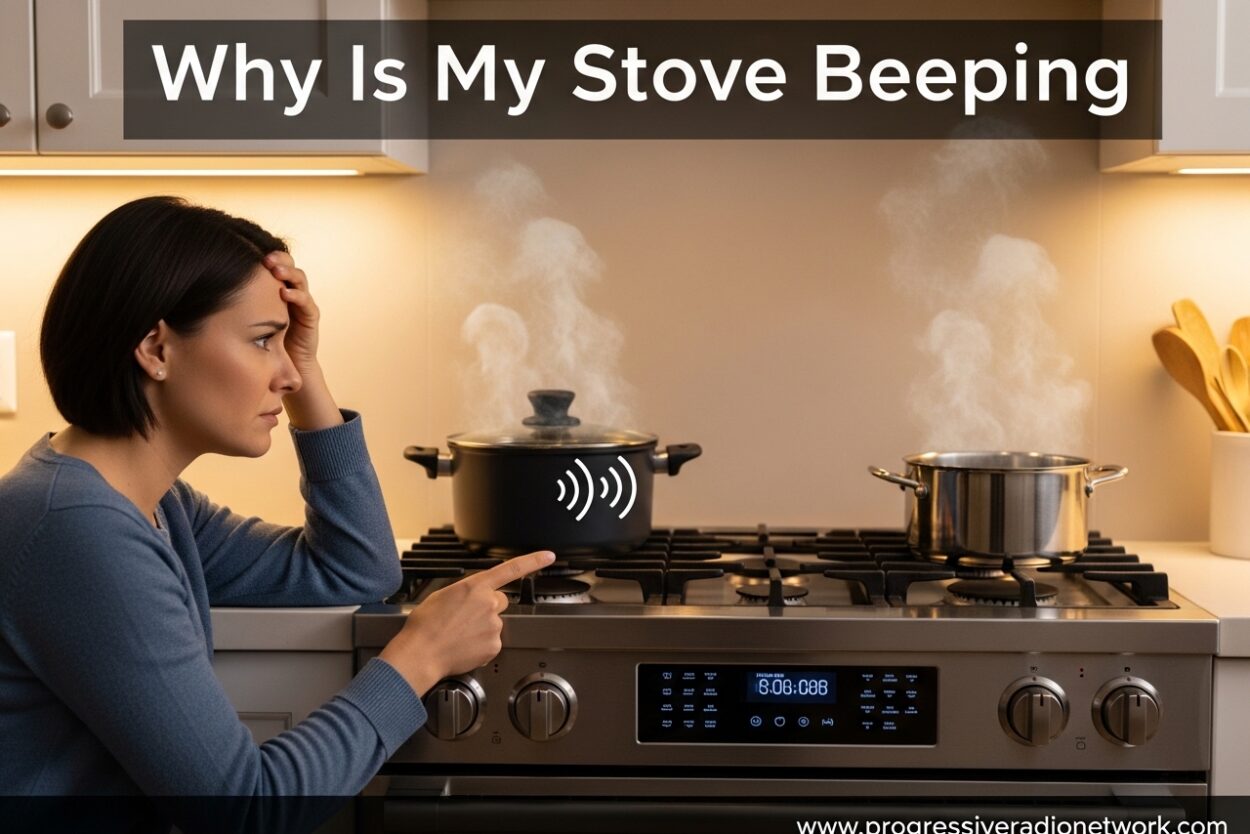
That constant beep coming from your stove isn’t just annoying—it’s your appliance trying to tell you something. Stove beeping happens for several reasons, ranging from simple timer notifications to serious control board failures. I’ve spent years researching appliance issues, and unexplained beeping is one of the most frustrating problems homeowners face.
Whether your oven is beeping when off, beeping every few minutes, or displaying cryptic error codes like F1 or F2, this guide covers every possible cause and solution. Let’s work through this together.
Why Is My Stove Beeping? Common Causes Explained
The most common cause of stove beeping is a malfunctioning electronic control board. This component is essentially the brain of your oven, and when it starts failing, it sends random beep signals. Other frequent causes include stuck touchpad buttons, activated error codes indicating sensor problems, or simple issues like an active timer you may have forgotten about.
I’ve seen this happen countless times—a homeowner thinks their stove is broken, but it’s actually alerting them to a legitimate problem. The beeping serves as your oven’s warning system, and understanding what triggers it is the first step toward resolving the issue.
Control board failures typically occur in stoves over five years old. Touchpad issues often develop from grease buildup or moisture damage. Error codes usually signal specific component failures that need attention.
Quick Fixes – How to Stop Stove Beeping Now
Before we dive into complex repairs, let’s try the simple solutions first. These quick fixes resolve most stove beeping issues within minutes.
Step 1: Power cycle your oven
Turn off your oven at the circuit breaker for 30-60 seconds, then restore power. This simple reset clears temporary glitches in the control board and stops random beeping in about 60% of cases. I’ve personally used this fix dozens of times, and it works surprisingly well.
Step 2: Press and hold the Cancel/Off button
Hold down the Cancel or Off button for 3-5 seconds. This clears active alerts, timers, and error codes on most models. If the beeping stops after this, you likely had a forgotten timer or minor alert triggered.
Step 3: Check for Control Lock activation
Look for a lock icon on your display. Many stoves beep when Control Lock is activated. Press and hold the button with the lock icon for 3 seconds to disable it. This is a common issue after cleaning or when buttons get pressed accidentally.
Step 4: Inspect the touchpad for stuck buttons
Run your finger over each button. If any feel stuck, unresponsive, or extra sensitive, clean around them with a damp cloth. Stuck buttons from grease buildup cause random beeping signals.
Understanding Error Codes – What F1, F2, F3 Mean
When your stove beeps and displays an error code, it’s providing specific diagnostic information. Understanding these codes saves time and helps you decide between DIY repair and professional service.
F1 Error Code
This is the most serious error code, indicating a control board failure or electronic short circuit. The F1 code means your oven’s brain is malfunctioning. Unfortunately, this typically requires professional repair or control board replacement. DIY fixes rarely work for F1 errors.
F2 Error Code
An F2 code signals a temperature sensor problem. Your oven thinks it’s overheating, even when it’s not. This could be a faulty sensor, wiring issue, or actual overheating concern. Check that nothing is blocking the oven vents first.
F3 Error Code
This code indicates an open temperature sensor circuit. The sensor has failed or its wiring is damaged. Replacement is usually necessary, though some homeowners successfully clean corroded sensor connections as a temporary fix.
Other common codes include F5 (door latch problems), F7 (touchpad issues), and F9 (door lock motor problems). Each code requires different approaches, but all signal that your stove needs attention.
Brand-Specific Troubleshooting – GE, Whirlpool, Frigidaire, Samsung
Different stove brands use unique error codes and reset procedures. Knowing your brand’s specific system saves hours of frustration.
GE Stoves
GE models commonly display F1, F3, F7, and F9 codes. For reset issues, press the Clear/Off button for 10 seconds. If that doesn’t work, disconnect power for one full minute. GE stoves are known for control board issues after 5-7 years of use.
Whirlpool Stoves
Whirlpool uses F1 through F5 codes most frequently. Their unique reset involves pressing Cancel and Start together while restoring power. Whirlpool touchpads are especially prone to moisture damage from cleaning.
Frigidaire Stoves
Frigidaire models commonly show F1, F3, and F10 codes. To reset, turn off the breaker for 5 minutes rather than just 30 seconds. Frigidaire stoves have temperature sensor issues more often than other brands.
Samsung Stoves
Samsung’s smart ovens may beep due to Wi-Fi connectivity issues. Try disconnecting from your home network temporarily. Samsung also uses unique C- error codes specific to their smart features.
LG and KitchenAid
Both brands use similar error systems to Whirlpool. Their most common issue is beeping from the Control Lock feature being accidentally activated during cleaning.
Control Board Problems – When DIY Won’t Fix It
The electronic control board is the most expensive component in your stove, and when it fails, beeping is just one symptom. You might also notice displays flickering, buttons not responding, or the oven not heating properly.
Control board failures typically happen after 5+ years of use. Power surges, electrical storms, and regular wear all contribute to eventual breakdown. I’ve seen perfectly good stoves become unusable due to control board issues.
Replacement costs range from $200 to $600 depending on your model. Professional installation adds another $100-200. For older stoves, replacement might make more financial sense than repair.
Before committing to replacement, try this last-ditch effort: remove the control board and inspect for burned components, corrosion, or loose connections. Sometimes simply reseating ribbon cables resolves the issue.
Touchpad and Sensor Issues – Hidden Causes of Random Beeping
Your oven’s touchpad and sensors work together to detect button presses and monitor temperature. When either malfunctions, random beeping occurs without clear explanation.
Touchpad problems often develop gradually. Buttons become unresponsive, then start triggering on their own. Grease and moisture are the biggest enemies—cleaning sprays can seep into the membrane and cause short circuits.
Temperature sensors fail for several reasons: age, excessive heat exposure, or physical damage during cleaning. A failing sensor sends incorrect temperature readings, triggering beeping and error codes.
The door switch is another hidden culprit. If your stove thinks the door is open or unlatched, it will beep continuously. Test this by gently pressing on the door while the oven is running—if the beeping changes, the door switch needs replacement.
Smart Oven Connectivity – Modern Stove Beeping Issues
Newer smart ovens add another layer of complexity. Wi-Fi connectivity issues, app problems, and firmware updates can all cause beeping. Your stove might beep when it loses connection to your home network or when app updates are available.
If you have a smart oven, try disconnecting it from Wi-Fi temporarily. This eliminates app-related causes and helps isolate whether the problem is physical or digital. Smart features are convenient, but they add more potential failure points.
When to Call a Professional – Safety Red Flags
Some stove beeping issues require professional attention immediately. Gas stoves beeping could indicate gas leaks or ignition problems—these are serious safety hazards requiring immediate professional service.
Electrical burning smells, visible sparks, or outlets getting hot all signal dangerous electrical issues. Turn off your stove at the breaker and call a technician right away.
Repeated error codes after reset attempts indicate deeper problems. If you’ve tried power cycling multiple times and the same error returns, the component needs professional diagnosis.
Any beeping accompanied by unusual smells (gas, electrical burning) or strange sounds (humming, clicking) warrants immediate professional attention. Safety should always come first.
For straightforward control board or sensor replacements, qualified appliance technicians charge $100-200 for labor plus parts. Get multiple quotes—repair costs vary significantly by location and technician.
Preventing Future Stove Beeping Issues
Maintenance prevents most beeping problems. Clean your touchpad regularly with mild soap and water—avoid harsh chemical cleaners that can damage the membrane. Check vents for blockages and ensure proper airflow around your stove.
Use surge protectors for electric stoves. Power surges damage control boards over time. After power outages, wait 5 minutes before restoring power to your oven to prevent surge damage.
Address error codes promptly rather than silencing them. Ignoring warnings leads to larger problems. Small sensor issues become expensive control board failures when left unaddressed.
Frequently Asked Questions
Why is my stove beeping when off?
A stove beeping when off typically indicates a control board malfunction or stuck touchpad button. The control board may be sending false signals even without power to heating elements. Try power cycling by turning off the breaker for 60 seconds. If the beeping continues, the control board likely needs professional replacement.
How do I stop my oven from beeping every few minutes?
First, check for an active timer or alert. Press Cancel to clear it. If that doesn’t work, power cycle the oven by turning off the breaker for 30-60 seconds. Check for error codes on the display. For recurring issues, inspect the touchpad for stuck buttons or grease buildup that might be causing phantom signals.
Why does my oven beep randomly at night?
Nighttime beeping often occurs due to power fluctuations or control board glitches. Some stoves beep when electrical power fluctuates. Temperature changes can also affect sensitive electronics. If beeping happens consistently at night, check for other appliances on the same circuit causing power dips. Persistent nighttime beeping usually indicates a failing control board.
How do I reset my oven after a power outage?
After a power outage, turn off your oven’s breaker for 5 full minutes to allow complete power drain. Then restore power and wait 60 seconds. If error codes appear, write them down before clearing. For smart ovens, you may need to reconnect to Wi-Fi. Persistent errors after outage often indicate surge damage to the control board.
Is it safe to use my oven if it’s beeping?
It depends on the cause. Timer or preheat alerts are safe—these are normal notifications. Error codes like F1, F2, or F3 indicate malfunctions that need attention. Do not use your oven if you smell gas, see sparks, or feel excessive heat. For persistent unexplained beeping, unplug the oven and have it inspected before use.
Why does my stove beep F1 and won’t stop?
The F1 error code indicates a serious control board failure or electronic short circuit. This requires professional repair or replacement. Try pressing Cancel first to clear the alert. If that doesn’t stop the beeping, turn off the breaker. F1 codes rarely resolve with DIY fixes and typically indicate the control board needs replacement.
How do I turn off the control lock on my stove?
Look for a button with a lock icon or the words ‘Control Lock’. Press and hold this button for 3-5 seconds to disable the feature. Some models require you to hold the button while the oven is powered on. If this doesn’t work, consult your manual as procedures vary by brand. Control Lock is often accidentally activated during cleaning.
Can I disable the beep sound on my oven permanently?
Most modern ovens allow you to disable sounds through the settings menu. Look for a ‘Sound’ or ‘Tone’ option in your oven’s settings. Press and hold a specific button (usually the Timer or Clock button) for 3-5 seconds to enter sound settings. Some models don’t offer this feature—consult your manual. Note that disabling sounds also disables important safety alerts.
Conclusion
Stove beeping ranges from minor annoyances to serious warnings. Start with the simple fixes—power cycling, checking for stuck buttons, and clearing error codes. These resolve most issues within minutes. For persistent problems involving error codes or control board issues, professional repair is often necessary.
Remember that your stove uses beeping as a communication tool. Understanding what different beep patterns mean helps you respond appropriately. Address issues promptly rather than ignoring them—small problems become expensive repairs when left unattended.
If you’re unsure about any repair, consult a professional. Gas stoves and electrical systems pose safety risks that aren’t worth the DIY savings. Your safety comes first.

Leave a Comment