
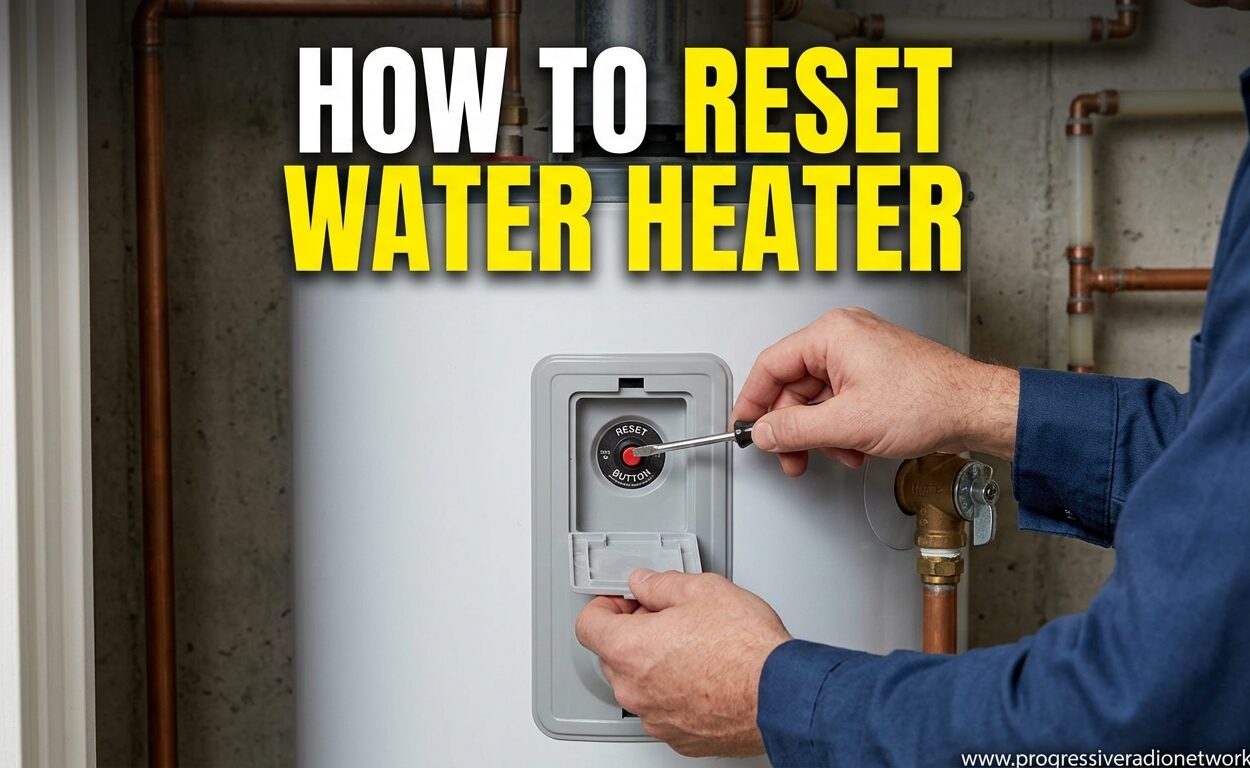
Waking up to a cold shower because your water heater stopped working overnight is frustrating. I’ve been there, and I know how urgent it feels to get hot water running again. Learning how to reset water heater properly can save you time, money, and a call to the plumber.
The reset button on your water heater is a critical safety device designed to protect your home from dangerous overheating situations. When this button trips, it means something triggered the safety mechanism and your water heater shut itself down to prevent damage or injury.
In this guide, I’ll walk you through everything you need to know about resetting your water heater safely. You’ll learn why the reset button trips, how to diagnose the problem, and exactly what steps to take based on your specific water heater type.
What Is the Water Heater Reset Button (High-Limit Switch/ECO)
The reset button on your water heater is actually called the high-limit switch or ECO (Energy Cut Off) switch. It’s a safety device that monitors water temperature inside your tank and shuts off power if things get too hot.
Think of it like a circuit breaker for your water heater. When water temperature exceeds approximately 180°F (82°C), the thermal sensor triggers the switch to cut power to the heating elements. This prevents scalding hot water from reaching your faucets and protects the tank from damage due to excessive pressure buildup.
The reset button is typically red and located behind the upper access panel on electric water heaters. When it trips, the button pops out slightly, indicating the circuit has been broken. Pressing it back in restores the circuit and allows power to flow again, assuming the underlying problem has been resolved.
What many homeowners don’t realize is that the reset button tripping is actually a symptom, not the problem itself. Something caused your water to overheat, and simply resetting the button without addressing the root cause means it will likely trip again.
Understanding Electric vs Gas Water Heater Resets
Before diving into the reset process, it’s important to know that electric and gas water heaters have completely different reset procedures. The mechanisms work differently, and confusing the two could lead to ineffective troubleshooting or even safety hazards.
Electric water heaters use the high-limit switch (ECO) I described above. This is an electrical safety device connected to the thermostat that cuts power to heating elements when temperature gets too high. The reset button is electrical and requires accessing the internal components behind the access panel.
Gas water heaters don’t have an electrical reset button in the same way. Instead, they have a thermal cutoff switch that may need to be reset manually, but more commonly, reset issues involve the pilot light, thermocouple, or gas valve. Some newer gas models do have a reset button, but it works differently than electric units.
For this guide, I’ll focus primarily on electric water heater reset procedures since that’s where the term “reset button” most commonly applies. However, I’ll include specific guidance for gas units later in this article.
Safety First: How to Turn Off Power Before Resetting
I cannot stress this enough: working with water heaters involves both electricity and water, a combination that demands serious respect for safety procedures. Before you do anything else, you must turn off power to your water heater.
Locate your home’s electrical panel and find the double-pole breaker labeled “water heater.” It should be a 240-volt breaker, typically 30 amps, with two interconnected switches. Flip both switches to the OFF position.
Don’t just trust that the breaker is off. I recommend using a non-contact voltage tester to verify no power is reaching the water heater before touching any electrical components. This simple step could save your life.
If you’re uncomfortable working with electrical panels or don’t have a voltage tester, this is the point where you should consider calling a professional. No amount of money saved is worth risking electrical shock.
How to Reset Your Electric Water Heater: Step-by-Step Guide
Now that power is off and you’ve verified it’s safe to proceed, let’s walk through the complete reset process. Follow these steps carefully, and don’t skip the safety verification at the beginning.
- Turn off power at the circuit breaker – As mentioned above, locate your water heater’s double-pole breaker in the electrical panel and flip it to the OFF position. Verify with a voltage tester.
- Remove the upper access panel – Using a screwdriver, remove the screws holding the upper access panel in place on the side of your water heater. Set the panel and screws aside where they won’t get lost.
- Push back the insulation – Behind the panel, you’ll find thick insulation. Carefully push it aside or remove it temporarily to expose the thermostat and reset button. Be gentle, as this insulation helps your water heater operate efficiently.
- Locate the red reset button – You should see a red button on the thermostat, usually located near the upper heating element. If it has tripped, the button may be slightly protruding or positioned differently than surrounding components.
- Press and release the reset button – Press the button firmly until you feel or hear it click. This click indicates the circuit has been restored. Some guides recommend holding for several seconds, but a firm press and release is typically sufficient.
- Replace insulation and access panel – Carefully reposition the insulation over the thermostat and components, then replace the access panel and secure it with screws.
- Restore power at the circuit breaker – Flip the water heater breaker back to the ON position. You should hear the water heater begin working within a few minutes.
- Wait for hot water – Depending on your tank size and the temperature setting, it may take 1-2 hours for the water to fully reheat. Be patient before testing your hot water.
If your reset button won’t push in or trips again immediately after resetting, this indicates a more serious problem that I’ll address in the troubleshooting section below.
How to Reset Your Gas Water Heater: Different Process
Gas water heater reset procedures differ significantly from electric models. Instead of an electrical reset button, most gas units use a different safety system involving the pilot light, thermocouple, and gas valve.
If your gas water heater has stopped producing hot water, the issue is more likely related to the pilot light going out rather than a tripped reset button. Check the small viewing window at the bottom of the tank to see if the pilot flame is burning.
To relight the pilot light, turn the gas control knob to the “pilot” setting, press it down, and use the built-in igniter or a long lighter to ignite the pilot flame. Continue holding the knob down for 30-60 seconds to allow the thermocouple to heat up, then release it slowly. If the pilot stays lit, turn the knob to the “on” position.
Some newer gas water heaters do have a reset button, typically located near the gas control valve. If your model has one and it has tripped, pressing it follows similar principles to electric models, but always consult your manufacturer’s instructions first since procedures vary by brand.
Why Does the Reset Button Trip? Common Causes Explained
Understanding why your reset button tripped in the first place is crucial to preventing future occurrences. The reset button doesn’t trip randomly; something specific triggered the high-limit switch.
The most common cause is a grounded heating element. When the metal casing of a heating element develops a crack or fault, it can allow electricity to flow directly to the water tank ground. This creates a short circuit that causes rapid, uncontrolled heating, triggering the reset button almost immediately.
A faulty thermostat is another frequent culprit. If the thermostat fails in the closed position, it continues sending power to the heating element even after the water reaches the set temperature. This causes overheating and trips the safety switch.
Sediment buildup is a less obvious but equally problematic cause. Over time, minerals in your water settle at the bottom of the tank, creating a layer of sediment that insulates the lower heating element. This causes the element to work harder and overheat, potentially tripping the reset button.
Loose wiring connections can also cause problems. If electrical connections at the thermostat or heating elements become loose, they can create resistance that generates excessive heat, triggering the safety mechanism.
What to Do If the Reset Button Won’t Push In
This is one of the most common questions I hear about water heater issues. If your reset button won’t depress when you press it, or if it clicks back out immediately after releasing, this indicates a serious problem that requires further investigation.
A reset button that won’t stay in typically means the high-limit switch is still detecting an unsafe condition. The safety device is doing its job by preventing you from restoring power to a potentially dangerous situation.
The most likely cause in this scenario is a grounded heating element. As mentioned earlier, a grounded element creates a short circuit that causes immediate overheating. The reset button trips instantly because the dangerous condition still exists.
To confirm whether a grounded element is your problem, you’ll need to test both heating elements using a multimeter. Turn off power, disconnect the wires from each element, and test for continuity between each element terminal and the metal tank ground. If you get continuity (the beeper sounds), the element is grounded and must be replaced.
Other potential causes include a faulty thermostat that’s stuck in the “call for heat” position, severely burned wiring connections, or in rare cases, a defective high-limit switch itself.
If you’re not comfortable performing these tests with a multimeter, or if you’ve identified the problem but aren’t confident in your repair skills, this is the time to call a professional plumber or electrician.
How to Reset After a Power Outage
Power outages can sometimes cause water heater reset buttons to trip, especially if the outage was accompanied by a power surge when electricity was restored. Lightning strikes and grid switching can create voltage spikes that trip the high-limit switch.
If your water heater isn’t working after a power outage, the first step is to check your circuit breaker. The surge may have tripped the breaker at the panel, which would prevent power from reaching the water heater at all.
If the breaker is on but you still have no hot water, proceed with the standard reset procedure outlined earlier. Power surge events can trigger the high-limit switch even without a prolonged outage.
Consider installing a whole-house surge protector if you live in an area with frequent electrical storms or unstable power. This can protect not just your water heater but all your appliances from damaging voltage spikes.
Tankless Water Heater Reset Instructions
Tankless water heaters have completely different reset procedures than traditional tank models. Instead of a manual reset button, most tankless units use electronic controls and error codes to communicate problems.
If your tankless water heater has stopped working, check the digital display for an error code. Common codes include problems with flow sensors, ignition issues, or overheating conditions. The specific code will tell you what type of reset is needed.
Many tankless units have a simple power reset procedure: turn off the unit using the power button or switch, wait 30-60 seconds, then turn it back on. This clears minor electronic glitches and allows the unit to restart normally.
For more serious error codes, you may need to perform a manual reset by turning off power at the circuit breaker, waiting several minutes, then restoring power. Some units also have a small reset button near the electronic controls, but always consult your manufacturer’s manual before attempting this.
Tankless water heaters are sophisticated appliances with complex electronic controls. If you’re seeing persistent error codes or the unit won’t reset after basic troubleshooting, professional service is typically recommended.
How Long Does It Take for Water to Reheat After Reset?
After successfully resetting your water heater, you’ll need to wait before testing whether the reset solved the problem. Recovery time varies based on several factors.
A standard 40-50 gallon electric water heater typically takes 1-2 hours to fully reheat cold water. If you were without hot water for an extended period, the entire tank may be cold, requiring the full recovery time.
Several factors affect recovery time. Tank size is obvious, but the temperature setting also matters. Higher temperature settings (above 130°F) require more energy and time to reach. Incoming water temperature plays a role too; winter groundwater is colder than summer water, requiring more heating time.
If your water heater has two heating elements (upper and lower), recovery may be faster because both elements can work simultaneously during initial heating. However, once the water reaches temperature, only one element operates at a time to maintain the set temperature.
After waiting the appropriate recovery time, test your hot water at the tap closest to the water heater first. This gives you the most accurate indication of whether the unit is functioning properly before testing more distant fixtures.
When to Call a Professional Plumber
While resetting a water heater is often a DIY-friendly task, certain situations require professional expertise. Knowing when to call a plumber can save you from dangerous situations and more expensive repairs down the road.
If your reset button trips repeatedly (more than once or twice in a short period), this indicates a persistent problem that professional diagnosis can address. A grounded heating element or faulty thermostat won’t fix itself and will continue causing the reset button to trip.
Any signs of water leaking from your water heater warrant immediate professional attention. Leaks can indicate tank failure, which is not repairable and requires full unit replacement. Continuing to operate a leaking water heater risks water damage to your home and potential electrical hazards.
If you’re uncomfortable performing any of the steps outlined in this guide, particularly working with electrical components or testing with a multimeter, there’s no shame in calling a professional. Water heaters involve both high-voltage electricity and scalding-hot water under pressure, making them potentially dangerous for inexperienced DIYers.
Finally, if your water heater is more than 10-12 years old and experiencing frequent problems, replacement may be more cost-effective than continued repairs. A professional can assess your unit’s condition and help you make an informed decision.
Frequently Asked Questions
How can I reset my hot water heater?
Turn off power at the circuit breaker, remove the upper access panel, push aside insulation, press the red reset button until it clicks, replace insulation and panel, then restore power. Wait 1-2 hours for water to reheat.
How long does it take for a hot water heater to reset?
The actual reset takes less than a minute, but recovery time is 1-2 hours for the water to fully reheat. Factors affecting this include tank size, temperature setting, and incoming water temperature.
Do water heaters need to be reset?
Not under normal conditions. A properly functioning water heater should rarely need resetting. Frequent reset needs indicate an underlying problem like a grounded element, faulty thermostat, or sediment buildup requiring attention.
How do you test reset on a water heater?
Turn off power and verify with a voltage tester. Remove the upper access panel and insulation. Press the red reset button firmly until it clicks. Replace components, restore power, and wait for recovery. If it trips again immediately, you have a grounded element or faulty thermostat.
What happens if you reset your water heater?
Resetting restores power to heating elements after the high-limit switch has tripped. The water heater resumes normal operation, reheating water to the set temperature. If the underlying problem isn’t fixed, the button will trip again.
Is it safe to reset a water heater myself?
Yes, if you follow proper safety procedures. Always turn off power at the circuit breaker first and verify with a voltage tester. If you’re uncomfortable with electrical work or the button won’t stay reset, call a professional.
Why does my water heater reset button keep tripping?
Constant tripping indicates a persistent problem. Common causes include a grounded heating element, faulty thermostat, loose wiring connections, or excessive sediment buildup. Testing with a multimeter can identify the specific issue.
Where is the reset button on a water heater?
On electric water heaters, the red reset button is located behind the upper access panel on the side of the tank. Remove the panel screws, push aside the insulation, and look for a red button on or near the upper thermostat.
Conclusion
Learning how to reset water heater is a valuable skill for any homeowner, but understanding why the reset button tripped in the first place is even more important. A single reset after a power surge or unusual event may be nothing to worry about, but repeated trips signal a problem that needs attention.
The reset button is your water heater’s way of telling you something is wrong. Whether it’s a grounded heating element, faulty thermostat, sediment buildup, or loose wiring, identifying and fixing the underlying cause is the only way to prevent future disruptions to your hot water supply.
If you’re comfortable with basic electrical work and have a multimeter, many common water heater problems are diagnosable and repairable as DIY projects. But there’s no shame in calling a professional when a problem is beyond your skill level or involves potentially dangerous situations.
Regular maintenance, including annual flushing to remove sediment and periodic inspection of electrical connections, can help prevent many issues that cause reset button trips. Taking care of your water heater means it will take care of you, providing reliable hot water for years to come.




Leave a Comment