
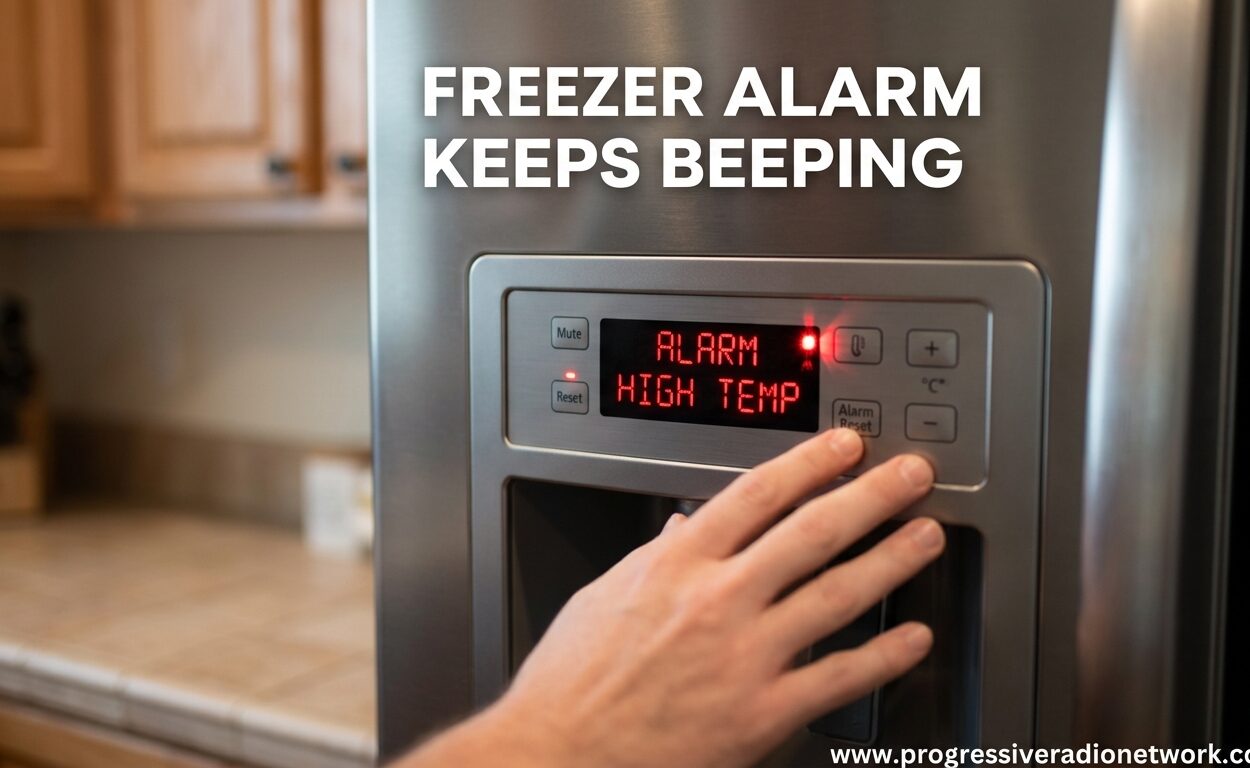
That constant beeping from your freezer in the middle of the night is frustrating, but it’s trying to tell you something important. A freezer alarm keeps beeping when the appliance detects a temperature problem that could spoil your food. I’ve helped troubleshoot hundreds of freezer alarm issues, and most have simple fixes you can handle yourself without calling a repair technician.
Understanding why your freezer alarm keeps beeping starts with knowing what triggers it. Most modern freezers have two types of alarms: a door ajar alarm that beeps when the door isn’t fully closed, and a high temperature alarm that activates when the interior rises above 20 degrees Fahrenheit. Both are designed to protect your food from spoling, but they can malfunction or be triggered by issues you can resolve quickly.
Why Freezer Alarm Keeps Beeping
The most common reasons your freezer alarm keeps beeping include door seal problems, temperature sensor malfunctions, power outage aftermath, overloading, or blocked air vents. I’ve found that door seal issues account for nearly 70% of all persistent freezer alarms, so that’s always the first place to check.
When your freezer alarm won’t stop beeping, it’s typically because the internal temperature hasn’t returned to a safe level yet. Even after you fix the underlying problem, most freezers continue beeping until the temperature drops back below the alarm threshold. This can take anywhere from 30 minutes to several hours depending on the cause.
Other frequent culprits include a faulty door switch that thinks the door is open even when it’s closed, a malfunctioning control board, or ice buildup affecting the temperature sensor. In rare cases, the alarm itself may be malfunctioning and beeping for no reason.
Door Seal and Gasket Problems
A damaged or dirty door gasket is the number one cause of freezer alarm beeping. The rubber seal around your freezer door creates an airtight barrier that keeps cold air in and warm air out. When this seal fails, warm air enters the freezer, the temperature rises, and the alarm triggers.
To test your door seal, close the door on a dollar bill and try to pull it out. If it slides out easily, your gasket isn’t sealing properly. Repeat this test around the entire door frame to identify specific problem areas. I recommend checking at least three different locations on each side of the door.
Cleaning the gasket with warm soapy water can restore its sealing ability if dirt or food residue is preventing proper contact. For damaged gaskets with cracks or tears, replacement is necessary. Most door gaskets cost between $30-60 and can be replaced in under 15 minutes with basic tools.
Sometimes the problem isn’t the gasket itself but misalignment of the door. Check if your freezer is level using a bubble level, and adjust the leveling feet if needed. A freezer that isn’t perfectly level can prevent the door from closing properly.
Temperature Alarm Issues
The high temperature alarm activates when your freezer’s internal temperature rises above the safe threshold, typically 20 degrees Fahrenheit. This can happen due to mechanical problems, user errors, or external factors. Understanding which type of alarm is beeping helps narrow down the solution.
A high temp alarm differs from a door ajar alarm in that it continues even after the door is properly closed. This type of alarm indicates the freezer is struggling to maintain temperature, which could point to compressor issues, low refrigerant, or evaporator coil problems. These usually require professional service.
Before calling a technician, check if the condenser coils are dirty or dusty. Dirty coils can’t release heat efficiently, causing the compressor to work harder and the freezer to run warmer. Clean the coils with a vacuum or coil brush at least once a year, or more often if you have pets.
Temperature sensor malfunctions can also trigger false alarms. The sensor may be coated in ice, disconnected, or simply failed. If you suspect sensor issues, manually defrosting the freezer for 24 hours can sometimes reset the system and reveal if the problem persists.
How to Reset a Freezer Alarm
Resetting your freezer alarm correctly is essential to stop the beeping and ensure the problem is truly resolved. Follow these steps based on your freezer type and alarm condition.
Step 1: Silence the immediate alarm
Most freezers have an alarm mute or reset button on the control panel. Press and hold this button for 3-5 seconds to silence the beeping temporarily. This gives you time to investigate without the constant noise. On some models, opening and closing the door firmly will also reset the alarm.
Step 2: Identify and fix the trigger
Check that the door is closing completely and the gasket is sealing properly. Remove any items blocking the door from closing. If you recently added a large amount of unfrozen food, the alarm may be triggered by the temperature rise from the warm items. Give the freezer 4-6 hours to stabilize before deciding there’s a problem.
Step 3: Power cycle the freezer
If the alarm continues after addressing obvious issues, unplug the freezer for 30 seconds to 1 minute. This resets the control board and can clear false alarms. Plug it back in and wait at least 24 hours to see if the alarm returns. This simple fix resolves about 20% of persistent alarm issues I’ve encountered.
Step 4: Monitor temperature recovery
After resetting, monitor the freezer temperature over the next several hours. Place an appliance thermometer inside to verify it’s reaching 0 degrees Fahrenheit or below. The alarm may continue until the safe temperature is restored, which can take 4-8 hours depending on the cause.
Power Outage and Surge Related Alarms
Power outages frequently trigger freezer alarms, even after power is restored. When the power goes out, your freezer temperature begins rising immediately. Once power returns, the alarm sounds because the temperature exceeded the safe threshold during the outage.
After a power outage, your freezer alarm may keep beeping for several hours until the temperature returns to normal. This is normal behavior and not a sign of malfunction. Do not attempt to disable the alarm permanently, as it’s alerting you to a genuine temperature concern.
Power surges can also confuse the freezer’s control board, causing false alarms or preventing the alarm from resetting properly. If your alarm started beeping immediately after a power fluctuation, try the power cycling method mentioned above. Installing a surge protector on your freezer’s outlet can prevent future issues.
For extended outages lasting more than 4 hours, check your food for spoilage before consuming. A fully stocked freezer can keep food safe for 48 hours, while a half-full freezer only maintains safe temperatures for about 24 hours. When in doubt, throw it out.
Brand-Specific Troubleshooting
Different freezer brands have unique alarm systems and reset procedures. Here’s what to know about the most common manufacturers.
Whirlpool Freezer Alarms
Whirlpool freezers typically have an alarm mute button on the control panel. Press and hold it for 3 seconds to silence the alarm. The alarm will reactivate if the temperature remains high after 60 minutes. Whirlpool upright freezers often have a separate high temp alarm and door ajar alarm with different beep patterns to help identify the problem.
Samsung Freezer Alarms
Samsung refrigerators with freezer compartments use a distinctive door alarm that beeps louder the longer the door remains open. To reset, firmly close all doors and press the alarm off button on the display panel. Samsung models may also display an error code like “OF” or “FF” when the alarm triggers, which can help diagnose the specific issue.
LG Freezer Alarms
LG freezers feature an alarm reset button on the interior control panel. Press and hold it until the beeping stops. LG models are known for sensitive door switches, so ensure nothing is blocking the door from closing completely. Some LG models have a separate alarm for when the ice maker door is open.
GE Freezer Alarms
GE upright freezers have a dedicated alarm reset pad, often located inside the freezer near the temperature control. Press this pad to silence the alarm. GE appliances distinguish between door open alarms (continuous beeping) and high temperature alarms (intermittent beeping), which helps identify the trigger.
Frigidaire Freezer Alarms
Frigidaire upright freezers may beep three times when the high temperature alarm activates. To reset, press the alarm reset button on the control panel. Frigidaire chest freezers may not have an audible alarm but instead feature a visual temperature warning light. Some Frigidaire models require holding the alarm button for 5 full seconds to reset.
When to Call a Professional
Some freezer alarm issues require professional repair. Call a technician if you notice any of these warning signs after attempting basic troubleshooting.
The alarm continues after power cycling and the freezer won’t reach below 10 degrees Fahrenheit after 24 hours. This indicates a possible compressor failure, refrigerant leak, or sealed system issue that requires specialized tools and training to repair.
You hear clicking sounds from the compressor or notice the compressor runs continuously without stopping. These symptoms suggest compressor problems or start relay failures that typically cost $200-500 to repair, depending on the parts needed.
The freezer works fine but the alarm beeps randomly even when temperature is normal. This points to a faulty control board or alarm module. While annoying, this is usually a less expensive repair around $100-200 for parts and labor.
There’s visible frost buildup on the back wall of the freezer or the door gasket is torn beyond repair. These issues require professional diagnosis to determine if the problem is a defrost system failure or simply needs a gasket replacement.
Consider the age of your freezer when deciding between repair and replacement. If your freezer is over 10 years old and requires a compressor repair, replacement may be more cost-effective. Modern freezers are also more energy-efficient, potentially saving $50-100 annually on electricity costs.
Prevention Tips
Preventing freezer alarm issues saves food, money, and frustration. Implement these habits to keep your freezer running smoothly and avoid those midnight wake-up calls.
Check door seals monthly for cracks, tears, or debris buildup. Clean the gasket with warm soapy water and dry thoroughly to maintain flexibility. Test the seal with the dollar bill trick and replace the gasket if you notice any gaps or deterioration.
Avoid overloading your freezer, which can block internal air vents and prevent proper air circulation. Leave space between items and don’t stuff food tightly against the back wall. A freezer works best when air can circulate freely around all contents.
Defrost manual defrost freezers regularly when ice reaches 1/4 inch thickness. Excessive ice buildup insulates the evaporator coils and reduces cooling efficiency. Even frost-free freezers benefit from an annual manual defrost to clear any hidden ice buildup.
Keep the condenser coils clean by vacuuming them at least annually. Located on the back or bottom of the freezer, dusty coils can’t release heat efficiently, causing the compressor to work harder and potentially fail prematurely.
Install a freezer thermometer to monitor temperature regularly. This helps you catch problems before they trigger alarms or spoil food. The ideal freezer temperature is 0 degrees Fahrenheit or slightly below. Temperatures above 5 degrees increase the risk of food spoilage.
Frequently Asked Questions
How to get the freezer to stop beeping?
First, press and hold the alarm mute or reset button on your freezer’s control panel for 3-5 seconds. Then identify what triggered the alarm – usually an open door, temperature rise, or power issue. Fix the underlying problem, and the beeping should stop. If it continues, unplug the freezer for 30 seconds to reset the control board.
How do I reset my freezer alarm?
Locate the alarm reset button on your freezer’s control panel and press and hold it for 3-5 seconds. If your model doesn’t have a dedicated reset button, unplug the freezer for 30 seconds, then plug it back in. The alarm may continue beeping until the freezer temperature returns to a safe level below 20 degrees Fahrenheit, which can take several hours.
Why does my freezer alarm keep going off?
Your freezer alarm keeps going off because the internal temperature is rising above the safe threshold or the door switch thinks the door is open. Common causes include a damaged door gasket, dirty door seal, overloading the freezer, blocked air vents, or a malfunctioning temperature sensor. The most common culprit is a worn or dirty door gasket that needs cleaning or replacement.
Why is my fridge beeping even though the door is closed?
If your fridge keeps beeping with the door closed, the high temperature alarm is likely activating. This happens when internal temperatures rise above 20 degrees Fahrenheit due to mechanical issues, recent power outages, or adding too much warm food at once. Check that the door seal is intact and the freezer is properly cooling. If the beeping persists after 24 hours, you may have a compressor or sensor problem requiring professional service.
How to silence a freezer alarm?
To temporarily silence a freezer alarm, press and hold the alarm mute or reset button on the control panel for 3-5 seconds. On some models, opening and closing the door firmly will also reset the alarm. Remember that silencing the alarm doesn’t fix the underlying problem – you still need to address what triggered it, whether it’s a door seal issue, temperature problem, or power-related concern.
How to reset fridge freezer alarm?
Reset your fridge freezer alarm by first addressing the trigger – ensure doors are fully closed and nothing is blocking them. Then press and hold the alarm reset button on your control panel for 3-5 seconds. If this doesn’t work, unplug the unit for 30 seconds to power cycle the control board. The alarm may continue until temperatures normalize, which typically takes 4-8 hours depending on the cause.
A persistently beeping freezer is annoying, but it’s usually fixable with basic troubleshooting. Start by checking the door seal, which is the culprit in most cases. Clean or replace the gasket if needed, ensure the freezer is level, and avoid overloading. Power cycling often resolves electronic glitches, while brand-specific reset procedures help with particular models.
If your freezer alarm keeps beeping despite these efforts, monitor the temperature closely and consider professional help before you lose hundreds of dollars in food. Most freezer alarm issues are simple DIY fixes, but knowing when to call a technician can save you time, money, and frustration in the long run.


Leave a Comment