
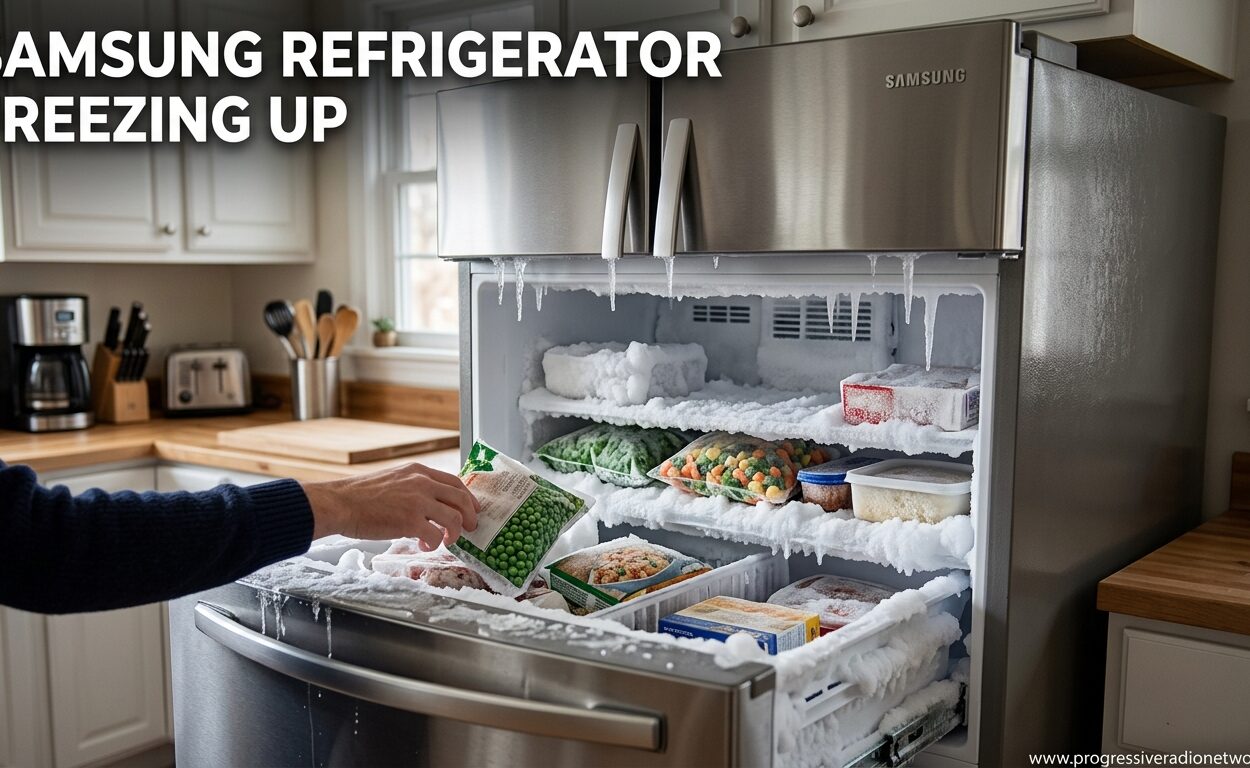
Dealing with a Samsung refrigerator freezing up is one of the most frustrating appliance issues homeowners face. You open your fridge expecting fresh vegetables, but instead find frozen lettuce and icy milk. This problem affects thousands of Samsung refrigerator owners, particularly those with French door and side-by-side models manufactured between 2015 and 2022.
The Samsung refrigerator freezing up issue typically manifests as ice buildup on the back wall of the fridge compartment, food freezing in the crisper drawers, or inconsistent temperatures throughout the unit. I’ve researched this extensively, and what I’ve found is that most cases stem from a few specific causes that you can often fix yourself without calling a technician.
What makes this problem particularly annoying is its tendency to recur even after professional repairs. Many owners report spending hundreds on repairs only to experience the same freezing issues months later. Understanding the root cause is essential for finding a permanent solution rather than just a temporary fix.
Why Does My Samsung Refrigerator Keep Freezing Up?
There are five primary causes for Samsung refrigerators freezing up, ranging from simple settings issues to factory defects that require professional intervention. The most common culprit is a temperature sensor that was installed incorrectly at the factory, positioned too low on the copper tubing, which causes it to read inaccurate temperatures and trigger excessive cooling cycles.
Other frequent causes include blocked air vents, faulty door seals allowing warm air infiltration, a malfunctioning defrost system, or the defrost drain becoming clogged with ice and debris. I’ve seen cases where simply reorganizing food items away from air vents solved the problem, while other situations required complete evaporator coil replacement.
The factory defect affecting the temperature sensor placement is particularly prevalent in Samsung French door models from 2016-2020. When the sensor sits too low on the evaporator tubing, it detects colder temperatures than actually exist in the fridge compartment, causing the compressor to run longer than necessary and creating excessive frost buildup.
Identifying Freezing Symptoms
Recognizing the early warning signs of Samsung refrigerator freezing up can help you address the problem before it causes significant food spoilage. The most obvious symptom is visible frost or ice accumulation on the back interior panel of the refrigerator compartment, typically in the upper middle section.
You might notice food items freezing unexpectedly, especially in the crisper drawers or on the upper shelves. Leafy vegetables become frozen and translucent, dairy products develop ice crystals, and liquids may partially freeze. Some owners report their refrigerator temperature displaying one temperature while actual conditions are much colder.
Pay attention to any unusual sounds from your Samsung fridge, such as the compressor running continuously or clicking frequently. These audible cues often indicate the cooling system is working overtime to compensate for a malfunction, which can lead to the freezing issue worsening over time.
Quick Temperature Check
Before diving into complex troubleshooting, start with the simplest solution: verify your temperature settings are correct. The ideal refrigerator temperature is 38°F (3°C), while the freezer should be set to 0°F (-18°C). Samsung refrigerators have digital temperature displays that show the current setting, but these don’t always reflect the actual temperature inside.
I recommend placing a separate appliance thermometer in the center of the refrigerator compartment to get an accurate reading. If your Samsung fridge is set below 35°F, it’s almost certainly going to cause freezing issues. Adjust the temperature upward gradually, waiting 24 hours between adjustments to see if the problem resolves.
Sometimes the temperature display itself can be malfunctioning, showing one temperature while the actual compartment temperature is significantly different. If you suspect this issue, the separate thermometer will confirm whether the display is accurate or if you’re dealing with a sensor problem.
Door Seal Inspection
Faulty door seals are a leading cause of Samsung refrigerator freezing up problems. When the gasket doesn’t seal properly, warm humid air enters the refrigerator compartment, condenses on the cold surfaces, and freezes. Over time, this creates a cycle of continuous frost buildup that your defrost system can’t handle.
Test your door seals using the simple dollar bill test: close a dollar bill in the door and pull it out. You should feel resistance as the seal grips the bill. Repeat this test around the entire door perimeter, paying special attention to the corners where seal problems often begin. If the bill slides out easily anywhere, your gasket needs replacement.
Inspect the rubber seal visually for cracks, tears, or areas where it has become compressed and no longer springs back when pressed. Clean the seals with warm soapy water to remove any debris that might prevent proper contact, but if the rubber is damaged, replacement is the only reliable fix.
Airflow and Vent Clearance
Proper airflow is essential for your Samsung refrigerator to maintain consistent temperatures. Most Samsung models have air vents located on the back wall of both the refrigerator and freezer compartments. When these vents become blocked by food items or ice buildup, cold air can’t circulate properly, leading to freezing in some areas and inadequate cooling in others.
I’ve seen many cases where owners have pushed items too close to the back wall, partially or completely blocking the air vents. This disrupts the designed airflow pattern and causes the temperature sensor to receive inaccurate readings. Ensure at least two inches of clearance between stored items and the back wall of your refrigerator.
The area between the refrigerator and freezer compartments also requires proper ventilation. This is where the fan circulates air between the two sections, and any obstruction here can cause temperature imbalances. Check that nothing has fallen behind the drawers or shelves that might be restricting this critical airflow pathway.
Power Cycle Reset
Sometimes a simple reset can resolve Samsung refrigerator freezing up issues, especially if they’re caused by a temporary electronic glitch. The power cycling process is straightforward: unplug your refrigerator from the electrical outlet or turn off the dedicated circuit breaker for 5-10 minutes, then restore power.
This reset allows the electronic control board to reboot and can clear minor errors in the temperature management system. After restoring power, wait at least 24 hours before assessing whether the freezing issue has resolved. During this time, avoid opening the doors frequently to allow the refrigerator to stabilize.
The power cycle is particularly effective if your Samsung refrigerator recently experienced a power surge or outage. These events can sometimes cause the control board to malfunction temporarily, and the reset allows it to recalibrate. If the freezing continues after the reset, you’re likely dealing with a hardware issue rather than an electronic glitch.
Forced Defrost Method
When your Samsung refrigerator has significant ice buildup, the standard defrost cycle may not be sufficient. Samsung refrigerators have a forced defrost mode that activates an extended defrost cycle, typically lasting 20-30 minutes, which can melt accumulated ice that the normal cycle can’t handle.
To activate forced defrost on most Samsung models, press and hold the Energy Saver and Power Freeze buttons simultaneously for 8-10 seconds. The display will show “Fd” indicating forced defrost mode is active. For models without these specific buttons, the combination might be Power Cool and Power Freeze, or Refrigerator and Freezer buttons simultaneously.
During forced defrost, you’ll hear the compressor turn off and the defrost heater activate. The refrigerator interior will warm up slightly as the ice melts, which is normal. You might see water dripping into the drain pan beneath the unit. After the cycle completes, the refrigerator will resume normal cooling operation. If significant ice buildup remains, you may need to run a second forced defrost cycle.
Defrost Drain Cleaning
A clogged defrost drain is a common cause of Samsung refrigerator freezing up issues. When the drain tube becomes blocked with ice, food debris, or mold, water from the defrost cycle can’t properly drain away. This water refreezes and creates additional ice buildup, exacerbating the freezing problem.
The defrost drain is typically located behind the rear interior panel of the freezer compartment, near the bottom center. To access it, you’ll need to remove all items from the freezer, then remove the screws holding the rear panel in place. Gently pull the panel away to reveal the evaporator coils and defrost drain hole beneath them.
Clean the drain using a turkey baster filled with hot water to flush out debris, or carefully use a pipe cleaner or flexible brush to remove obstructions. For stubborn clogs, a mixture of hot water and baking soda can help break down the blockage. Once cleared, pour hot water through the drain to confirm it’s flowing freely into the drain pan beneath the refrigerator.
Sensor and Thermistor Issues
The temperature sensor (thermistor) is one of the most critical components in your Samsung refrigerator’s cooling system. This small device monitors the temperature inside the refrigerator and signals the control board when to activate the compressor. When the sensor fails or provides inaccurate readings, the refrigerator can run excessively, causing freezing issues.
A well-documented factory defect affects many Samsung refrigerators where the sensor was positioned too low on the evaporator coil tubing during manufacturing. This incorrect placement causes the sensor to detect temperatures that are colder than the actual air temperature in the refrigerator compartment, triggering excessive cooling cycles and frost buildup.
Testing the thermistor requires a multimeter to measure resistance at different temperatures. At room temperature (around 70°F), the resistance should be approximately 5,000-10,000 ohms. At refrigerator temperature (around 38°F), it should measure around 15,000-20,000 ohms. If readings fall outside these ranges, the sensor needs replacement.
The permanent fix for the positioning issue involves relocating the sensor higher on the evaporator tubing, approximately 2-3 inches above its original position. This relocation allows the sensor to more accurately measure the actual refrigerator temperature rather than the coldest point near the coil. Many appliance technicians are now aware of this fix and can perform it during a service call.
Evaporator Coil Inspection
The evaporator coils are where the actual cooling happens in your Samsung refrigerator. When these coils become covered in ice or frost, they can’t absorb heat effectively, causing the refrigerator to work harder and potentially leading to the freezing up issue. Inspecting the coils requires removing the rear interior panel of the freezer compartment.
After removing all items from your freezer and taking off the rear panel, you’ll see the evaporator coils and the fan that circulates air over them. In a properly functioning system, you should see a light, even coating of frost on the coils. Heavy ice buildup, particularly in uneven patches, indicates a problem with the defrost system.
If you see significant ice accumulation on the coils, manually defrost the refrigerator by leaving it unplugged with the doors open for 24-48 hours. Place towels around the base to catch melting water. After complete defrosting, plug the refrigerator back in and monitor whether the ice buildup returns within a week.
Warning: Working near exposed electrical components and sharp metal parts can be dangerous. If you’re uncomfortable with this procedure, it’s best to call a professional technician. The evaporator coils and associated components are delicate and can be easily damaged by improper handling.
Model-Specific Issues
Different Samsung refrigerator models experience freezing issues for different reasons. French door models with the ice maker in the refrigerator compartment are particularly prone to freezing because the ice maker’s cold air can spill into the main refrigerator area, especially if the flap between sections doesn’t seal properly.
Side-by-side Samsung refrigerators often develop freezing issues in the refrigerator section due to problems with the damper door that controls airflow from the freezer. When this damper fails or sticks open, excessive cold air enters the refrigerator compartment, causing freezing. Models with Twin Cooling Plus can experience imbalances where one section works correctly while the other freezes.
Bottom freezer models may develop freezing in the refrigerator compartment due to issues with the evaporator fan motor. If this fan slows down or stops, cold air doesn’t circulate properly, leading to temperature inconsistencies and potential freezing in some areas while other areas remain too warm.
Samsung Ice Maker Lawsuit
Many Samsung refrigerator owners aren’t aware that a class action lawsuit was filed regarding ice maker issues that contribute to freezing problems. The lawsuit alleges that certain Samsung refrigerator models have defective ice makers that leak, causing water to freeze in the refrigerator compartment and creating frost buildup issues.
The affected models include various French door and side-by-side Samsung refrigerators manufactured between 2015 and 2020, particularly those with ice makers located in the refrigerator compartment rather than the freezer. The lawsuit claims that Samsung was aware of these defects but failed to properly inform consumers or provide adequate repairs.
If your Samsung refrigerator is experiencing freezing issues related to the ice maker, check whether your model is included in the lawsuit settlement. You may be eligible for a free repair or reimbursement for previous repairs. Contact Samsung customer service with your model and serial numbers to determine if your refrigerator qualifies under the settlement terms.
When to Call a Professional
While many Samsung refrigerator freezing up issues can be resolved through DIY troubleshooting, certain problems require professional expertise. If you’ve tried the basic fixes—temperature adjustment, door seal inspection, vent clearance, forced defrost—and the freezing continues, it’s likely time to call a technician.
Professional service is definitely warranted if you suspect issues with sealed system components like the compressor, evaporator coils, or refrigerant lines. These repairs require specialized tools and EPA certification for handling refrigerants. Similarly, electrical problems with the control board or wiring should be handled by qualified technicians due to safety concerns.
Expect to pay between $150-300 for a professional diagnostic and repair, depending on your location and the specific problem. If your Samsung refrigerator is still under warranty (typically 1 year full coverage, with 5-10 years on the sealed system), contact Samsung first to arrange service at no cost. Extended warranties or home appliance insurance policies may also cover these repairs.
Prevention and Maintenance
Preventing Samsung refrigerator freezing up issues is easier than fixing them. Establish a regular maintenance schedule that includes cleaning the condenser coils beneath or behind the refrigerator every 6-12 months. These coils dissipate heat, and when they’re covered in dust, the refrigerator works harder, potentially causing temperature irregularities.
Monitor your refrigerator temperatures weekly using a separate appliance thermometer rather than relying solely on the digital display. Keep food items away from air vents and maintain the recommended 2-inch clearance from the back wall. Check door seals monthly for signs of wear or damage, and clean them regularly to ensure proper contact.
Consider running a forced defrost cycle every 3-4 months as preventive maintenance, even if you’re not experiencing freezing issues. This helps prevent minor ice accumulation from becoming a major problem. For older Samsung models known to have sensor placement issues, having a technician relocate the sensor proactively can prevent future freezing problems.
Frequently Asked Questions
Why does my Samsung refrigerator keep freezing up?
The most common cause is a factory defect where the temperature sensor is positioned too low on the evaporator coil, causing inaccurate temperature readings. Other causes include blocked air vents, faulty door seals, a malfunctioning defrost system, or a clogged defrost drain.
What is the lawsuit about Samsung refrigerator ice maker freezing up?
A class action lawsuit was filed against Samsung for defective ice makers in certain French door and side-by-side models manufactured between 2015-2020. The ice makers can leak, causing water to freeze in the refrigerator compartment and create frost buildup. Affected owners may qualify for free repairs or reimbursement.
How do you fix a refrigerator that keeps freezing?
Start by checking temperature settings should be 38°F. Inspect door seals using the dollar bill test. Ensure air vents aren’t blocked by food items. Try a power cycle reset by unplugging for 10 minutes. If issues persist, run a forced defrost cycle or clean the defrost drain. For sensor or evaporator issues, contact a professional.
What is the common problem with Samsung fridges?
The most widely reported issue is the temperature sensor being installed incorrectly at the factory, positioned too low on the copper tubing. This causes the sensor to read inaccurate temperatures and trigger excessive cooling, resulting in frost buildup and food freezing. This issue particularly affects French door models from 2016-2020.
How to reset Samsung fridge freezer?
Unplug your refrigerator or turn off the circuit breaker for 5-10 minutes, then restore power. This resets the electronic control board and can clear minor errors. For a forced defrost reset, press and hold Energy Saver and Power Freeze buttons simultaneously for 8-10 seconds until Fd appears on the display.
Why is my Samsung fridge suddenly freezing everything?
Sudden freezing usually indicates a component failure. The defrost system may have malfunctioned, causing ice to block airflow. The temperature sensor might have failed, providing inaccurate readings. The damper door between freezer and fridge could be stuck open. Check for error codes on the display and try a forced defrost cycle before calling service.
How long does forced defrost take on Samsung refrigerator?
Forced defrost typically takes 20-30 minutes to complete. During this cycle, the compressor turns off and the defrost heater activates to melt accumulated ice. The display will show Fd during the cycle. If heavy ice buildup remains, you may need to run a second cycle after the first completes.
Where is the defrost drain on a Samsung fridge?
The defrost drain is located behind the rear interior panel of the freezer compartment, near the bottom center beneath the evaporator coils. To access it, remove all freezer items, unscrew and remove the rear panel, and look for a small drain hole in the floor beneath the coils. Use hot water or a pipe cleaner to clear any blockages.
Conclusion
Samsung refrigerator freezing up problems are frustrating but often solvable without expensive professional repairs. Start with the simple fixes: verify your temperature is set to 38°F, check door seals with the dollar bill test, ensure vents aren’t blocked, and try a power cycle reset. These basic steps resolve many cases and should always be your first approach.
For persistent freezing issues, the forced defrost mode is an effective tool that can clear significant ice accumulation. If you’re comfortable with basic DIY tasks, cleaning the defrost drain or inspecting the evaporator coils might reveal the source of your problem. However, if you suspect sensor issues or sealed system problems, professional service is the wisest choice.
Remember that many Samsung refrigerators from 2016-2020 have a known factory defect with sensor positioning that causes chronic freezing issues. If your refrigerator falls into this category, having a technician relocate the sensor to the correct position provides a permanent solution. Don’t waste money on repeated temporary fixes when addressing the root cause will resolve the issue for good.






Leave a Comment