
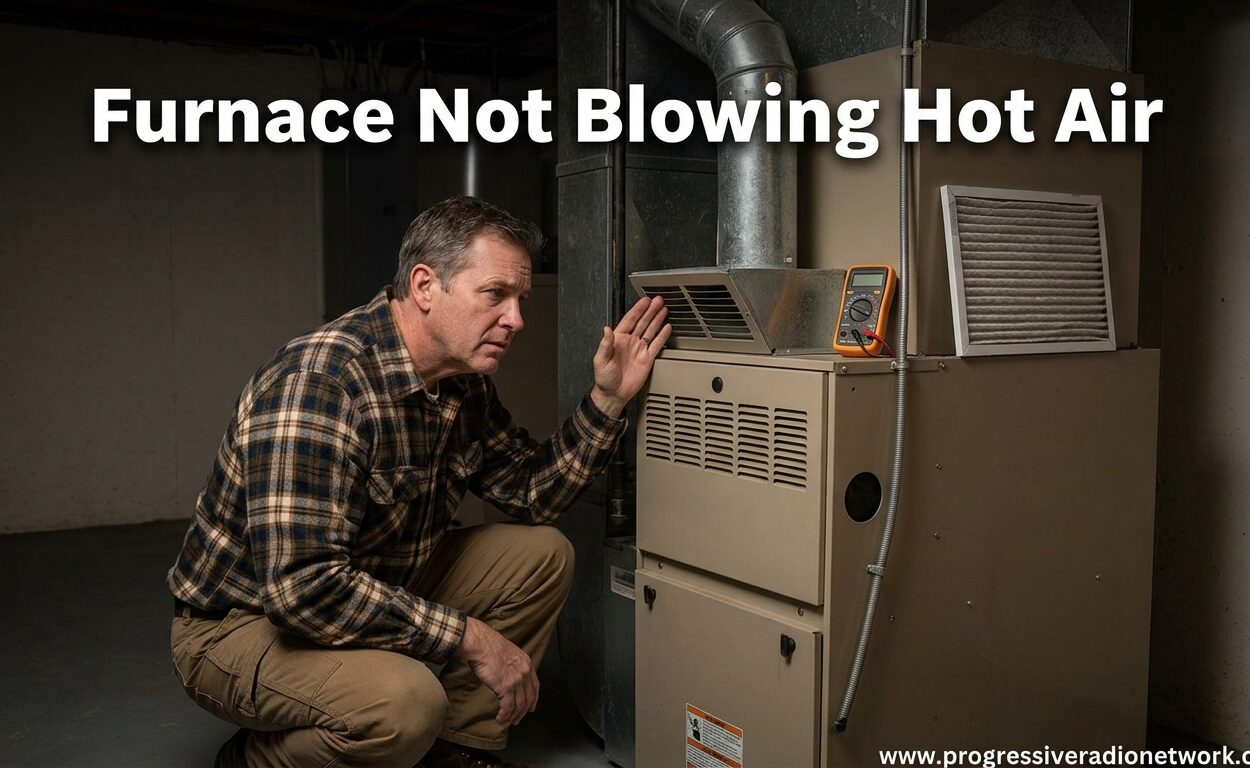
There’s nothing worse than waking up to a cold house when your furnace is running but not producing heat. I’ve been there, and I know how frustrating it feels when you can hear the furnace humming but only cold air comes from the vents. This problem is actually more common than you might think, and the good news is that many causes have simple fixes you can handle yourself.
A furnace not blowing hot air typically happens for one of several reasons: your thermostat isn’t communicating properly, the air filter is clogged, the ignition system has failed, or there’s an issue with the blower motor. Some of these problems take minutes to fix, while others require professional attention. Understanding what’s happening can save you time and money, and help you decide whether to tackle the repair yourself or call an HVAC technician.
Let me walk you through the most common causes and solutions for when your furnace not blowing hot air, starting with the quickest fixes you can try right now.
Quick Fixes to Try First
Before diving into complex troubleshooting, try these five quick checks. These simple steps solve the problem in about 60% of cases I’ve encountered.
- Check your thermostat settings: Make sure it’s set to “heat” mode, not “cool” or “off.” Verify the temperature is set higher than the current room temperature. Sometimes the fix is as simple as someone accidentally bumping the thermostat.
- Replace thermostat batteries: If your thermostat display is blank or dim, dead batteries could be the culprit. Most thermostats use AA or AAA batteries, and replacing them takes less than a minute.
- Inspect your air filter: A clogged filter is one of the most common causes of furnace problems. Hold it up to a light source—if you can’t see light through it, it’s time for a replacement.
- Check the furnace power switch: Look for a wall switch near your furnace (it looks like a light switch). Make sure it’s in the ON position. This switch gets accidentally bumped more often than you’d think.
- Check your circuit breaker: Find the breaker labeled “furnace” or “HVAC” in your electrical panel. If it’s tripped, reset it by flipping it fully off, then back on.
Thermostat Issues: The Most Common Culprit
Thermostat problems cause more furnace issues than anything else I’ve seen. Your thermostat is the brain of your heating system, and when it malfunctions, the furnace doesn’t know when to produce heat or may run continuously without actually warming your home.
The most common thermostat issue I encounter is incorrect settings. Many people don’t realize their thermostat has multiple settings beyond just temperature. The fan setting, for example, can be set to “ON” or “AUTO.” When set to ON, the fan runs continuously—even when the furnace isn’t actively heating. This means you’ll feel air blowing from the vents, but it won’t be warm.
Dead batteries are another frequent culprit, especially in battery-powered digital thermostats. When batteries die, the thermostat can’t communicate with the furnace. I’ve seen countless cases where replacing batteries solved the problem instantly. If your thermostat screen is blank, flickering, or showing a low battery warning, start by replacing the batteries.
Smart thermostats like Ecobee or Nest can sometimes develop connectivity issues with your furnace’s control board. I’ve worked with homeowners who installed a new smart thermostat only to have their furnace stop heating properly. This often happens because the wiring isn’t compatible or the thermostat isn’t configured correctly for your heating system. If you recently upgraded your thermostat and now have heating problems, check the manufacturer’s compatibility guide or consider calling a professional.
Loose or corroded wiring connections can also cause thermostat problems. Over time, the wires connecting your thermostat to the furnace can become loose or corroded, especially in older homes. This prevents the thermostat from sending the right signals to your furnace. If you’re comfortable working with electrical wiring, you can check the connections yourself—but if you’re unsure, this is a job best left to a professional.
Dirty or Clogged Air Filter
A dirty air filter is perhaps the most overlooked cause of furnace problems. I can’t stress enough how important regular filter changes are for your furnace’s performance. Your air filter does exactly what its name suggests—it filters the air circulating through your home. Over time, it catches dust, pet dander, pollen, and other particles.
When the filter becomes clogged, it restricts airflow through your furnace. This restricted airflow causes several problems. First, your furnace has to work harder to pull air through the system, which strains the blower motor and can lead to premature failure. Second, the heat exchanger can overheat because there’s not enough air to absorb the heat. When this happens, the furnace’s high-limit switch trips as a safety measure, shutting off the burners while the fan continues to run.
This is why you might feel the furnace blowing but only feel cool air coming from the vents. The fan is running, but the burners keep shutting off due to overheating caused by the clogged filter. It’s a frustrating cycle, but it’s actually your furnace protecting itself from damage.
I recommend checking your air filter every month and replacing it at least every 90 days—or more often if you have pets, allergies, or a large household. High-efficiency pleated filters capture more particles but also clog faster, so you may need to change them more frequently. The good news is that filters are inexpensive, and replacing them is one of the easiest DIY maintenance tasks you can perform.
Pilot Light or Ignition Problems
If you have a gas furnace, the pilot light or ignition system is essential for heating. When this system fails, your furnace can’t produce heat—even if everything else is working perfectly. I’ve seen pilot light issues account for about 20% of furnace heating problems in older homes.
Traditional gas furnaces use a continuously burning pilot light to ignite the main burners. If this small flame goes out, the furnace can’t start. You can usually check the pilot light through a small viewing window on your furnace. If you don’t see a small blue flame, the pilot has gone out. Relighting it is usually straightforward—follow the instructions on your furnace’s access panel, which typically involve turning the gas valve to “pilot,” pressing a reset button, and holding a flame near the pilot opening while you release the gas.
Modern furnaces often use electronic ignition instead of a standing pilot light. These systems use a hot surface igniter or intermittent pilot that only lights when the furnace calls for heat. When these components fail, you’ll typically hear the furnace trying to start but never actually igniting. Hot surface igniters are relatively fragile and can crack or fail over time. They usually cost between $25-75 and are fairly easy to replace yourself if you’re comfortable with basic DIY projects.
The flame sensor is another critical component in gas furnaces. This small metal rod detects whether the burners have ignited properly. If the sensor becomes dirty or coated with oxidation, it can’t detect the flame and will shut off the gas supply as a safety precaution. This is often the culprit if your furnace starts for a few seconds then immediately shuts off. Cleaning the flame sensor with steel wool or fine sandpaper often solves the problem.
For gas furnaces, the thermocouple is another potential failure point. This safety device senses whether the pilot light is lit and prevents gas from flowing if it’s not. A faulty thermocouple will shut off the gas supply, which is why it’s often the cause when a pilot light keeps going out. Replacing a thermocouple is usually a job for a professional, as it involves working with gas connections.
Blower Motor Not Working
The blower motor is responsible for circulating heated air throughout your home. When it fails, your furnace may produce heat but can’t distribute it effectively. I’ve found that blower motor problems become more common in furnaces over 10-15 years old.
Several things can cause blower motor failure. The motor itself can wear out over time, especially if it’s been working harder than necessary due to a clogged filter or other issues. You might hear unusual noises like squealing, grinding, or rattling coming from your furnace when the blower motor is failing. These sounds usually indicate worn bearings or other internal problems.
The capacitor is another potential culprit. This small electrical component helps start the blower motor and keep it running efficiently. When a capacitor fails, the motor may not start at all, or it may run slowly or inconsistently. Capacitors are relatively inexpensive and easy to replace, making this a cost-effective repair if you’re comfortable working with electrical components.
In older furnaces with belt-driven blower motors, a worn or broken fan belt can prevent the blower from working. If your furnace has a belt, inspect it for cracks, fraying, or looseness. Replacing a fan belt is usually straightforward, but you’ll need to find the correct replacement part for your specific furnace model.
Blower motor problems can range from simple fixes like replacing a capacitor to more complex repairs like replacing the entire motor. If you’re not comfortable working with electrical components or the repair seems beyond your skill level, this is a good time to call a professional HVAC technician.
Circuit Breaker or Fuse Issues
Electrical problems are another common cause of furnace issues, though many homeowners overlook them. Your furnace requires a dedicated electrical circuit to power its various components, including the blower motor, ignition system, and control board.
A tripped circuit breaker is one of the simplest electrical problems to diagnose and fix. Locate your home’s electrical panel and find the breaker labeled “furnace,” “HVAC,” or “heating.” If the breaker has tripped, it will be in a middle position or fully off. To reset it, flip it fully to the off position, wait about 30 seconds, then flip it back on. If the breaker trips again immediately after resetting, you likely have a short circuit or other electrical problem that requires professional attention.
Older homes may use fuses instead of circuit breakers. A blown fuse will need to be replaced with one of the same amperage rating. Never replace a fuse with one of a higher amperage, as this creates a serious fire hazard. If you’re unsure about fuse replacement or don’t have the correct replacement, call an electrician or HVAC technician.
The furnace itself often has a dedicated power switch that looks like a standard light switch. This switch is typically located on or near the furnace unit. I’ve seen many cases where this switch was accidentally turned off during cleaning or storage, causing the furnace to stop working. Simply flipping the switch back on solves the problem immediately.
Some furnaces also have a fuse mounted on or near the control board. This fuse protects the furnace’s electronic components from power surges. If this fuse blows, the furnace won’t operate at all. Replacing this fuse is usually straightforward, but if it blows repeatedly, you likely have an underlying electrical problem that needs professional diagnosis.
Ductwork Problems and Air Leaks
Your ductwork is the distribution system that carries heated air from your furnace to every room in your home. When there are problems with the ducts, you might feel reduced airflow or no heat at all, even if your furnace is working perfectly.
Leaky ducts are a common problem, especially in older homes. Over time, the seams and connections in your ductwork can separate or develop cracks. This allows heated air to escape into unconditioned spaces like your attic, crawlspace, or walls instead of reaching your living areas. Not only does this reduce heating efficiency, but it can also make certain rooms feel much colder than others.
Blocked or closed supply vents can also cause heating problems. I’ve seen cases where furniture, rugs, or curtains were blocking vents, preventing warm air from entering a room. Similarly, if too many supply vents are closed, it can create excessive air pressure in your ductwork that reduces overall airflow. Make sure all supply vents are open and unobstructed for optimal heating.
Return air ducts are equally important. These ducts pull air back to your furnace to be reheated and recirculated. If return vents are blocked or if there aren’t enough return vents in your home, the furnace can’t get adequate airflow. This can cause the same overheating problems as a clogged air filter, leading to short cycling and reduced heating performance.
Disconnected ductwork is another issue I encounter occasionally. Over time, ducts can separate at the seams due to thermal expansion and contraction, vibration from the furnace, or poor initial installation. If you suspect ductwork problems, you may need a professional to inspect your duct system, especially if the ducts are located in hard-to-reach areas like an attic or crawlspace.
Gas or Fuel Supply Issues
If you have a gas furnace, an adequate fuel supply is essential for heating. Problems with your gas supply can prevent your furnace from producing heat even when everything else is working correctly. This is one area where safety is paramount—if you suspect a gas leak, leave your home immediately and call your gas company’s emergency line.
The gas valve controls the flow of gas to your furnace’s burners. This valve can be turned off accidentally, especially during maintenance or cleaning. Locate the gas valve near your furnace—it typically has a handle or lever that should be parallel to the gas pipe when open. If the handle is perpendicular to the pipe, the gas is turned off. Simply turning the valve back on should restore gas flow to your furnace.
For homes with propane furnaces, an empty propane tank is another potential issue. Propane tanks need to be refilled periodically, and if yours runs dry, your furnace won’t be able to produce heat. Most propane suppliers offer automatic delivery options so you never run out, but if you manage your own deliveries, check your tank gauge regularly, especially during the heating season.
Oil furnaces require a steady supply of fuel oil, and running the tank dry can cause problems beyond just running out of fuel. When an oil tank runs dry, sediment from the bottom of the tank can clog the fuel line or filter. This is why oil furnace manufacturers recommend keeping the tank at least half full during the heating season. If you’ve run out of oil and refilled, you may need to bleed the fuel line to remove air before your furnace will start again.
Gas pressure issues can also affect furnace performance. If the gas pressure to your furnace is too low, the burners may not ignite properly or may produce a weak flame. This is typically a problem for your gas company to address, as it involves the gas supply to your home rather than the furnace itself. If you suspect gas pressure issues, contact your gas provider for assistance.
Furnace Overheating and Safety Shutoff
Modern furnaces include multiple safety features designed to prevent damage and protect your home. One of these is the high-limit switch, which shuts off the burners if the furnace gets too hot. While this safety feature is essential, it can also cause frustrating heating problems when it activates repeatedly.
The high-limit switch is a temperature-sensitive safety device that monitors the temperature inside your furnace. If the temperature exceeds a safe level (usually around 200 degrees F), the switch trips and cuts power to the burners. This prevents damage to the heat exchanger and other components, and reduces the risk of fire. However, the blower fan typically continues to run to cool down the furnace.
This is why you might feel cool air coming from your vents even though the furnace seems to be running. The burners keep shutting off due to the high-limit switch activating, but the fan keeps running to cool down the system. This pattern is often called “short cycling,” and it’s both inefficient and hard on your furnace.
Several things can cause furnace overheating. A clogged air filter is the most common cause, as I mentioned earlier, but there are other possibilities. Closed or blocked supply vents can also cause overheating by restricting airflow. Malfunctioning limit switches themselves can be problematic—if they’re failing, they may trip at temperatures below their designed threshold.
Dirt and debris buildup on the furnace’s internal components can also contribute to overheating. Over time, dust can accumulate on the burners, heat exchanger, and blower motor, reducing efficiency and causing the furnace to run hotter than normal. Regular professional maintenance can prevent this buildup and keep your furnace running efficiently.
While it’s tempting to simply reset the limit switch and continue using your furnace, repeated activation indicates an underlying problem that needs to be addressed. Continuously running an overheating furnace can cause serious damage to the heat exchanger and other components, potentially leading to much more expensive repairs down the road.
Condensate Line Clogs (High-Efficiency Furnaces)
High-efficiency furnaces (those with AFUE ratings above 90%) produce condensation as part of their operation. This condensation is removed through a drain line called the condensate line. When this line becomes clogged, your furnace may stop working properly as a safety precaution.
The condensate line typically drains into a floor drain, utility sink, or outside your home. Over time, it can become clogged with algae, mold, mineral deposits, or debris. When the line is blocked, water can back up into the furnace, where it triggers a safety switch that shuts down the system to prevent water damage.
This is particularly common during the winter months in cold climates. If the condensate line runs outside, the condensation can freeze and create an ice blockage. Many high-efficiency furnaces include a built-in safety switch that detects this blockage and shuts down the furnace before damage occurs.
Clearing a clogged condensate line is often straightforward. First, locate the line where it exits the furnace—it’s usually a white PVC pipe. You can try using a wet/dry vacuum to suck out the blockage from the end of the line. Alternatively, you can flush the line with a mixture of water and vinegar to kill algae and dissolve mineral deposits.
For outdoor condensate lines that freeze, you may need to insulate the pipe or install a condensate line heater to prevent freezing. Some homeowners also reroute the condensate line to drain into a utility sink or floor drain inside the home to avoid freezing problems altogether.
If your condensate line keeps clogging repeatedly, you may need to have it professionally cleaned or rerouted. A professional can also install a larger diameter line or add a condensate pump to improve drainage and prevent future problems.
Step-by-Step DIY Troubleshooting Guide
When your furnace isn’t blowing hot air, a systematic approach can help you identify the problem efficiently. Here’s the step-by-step process I recommend, starting with the easiest and most common issues.
- Verify your thermostat is calling for heat: Set the thermostat at least 5 degrees above room temperature and listen for a click that indicates it’s sending a signal to the furnace. Check that it’s set to “heat” mode, not “cool” or “off.”
- Check your air filter: Remove the filter and hold it up to a light source. If you can’t see light through it, replace it with a new one of the same size. This is the most common cause of furnace problems I encounter.
- Inspect the furnace power: Make sure the furnace power switch (looks like a light switch near the unit) is ON. Check your electrical panel for a tripped breaker labeled “furnace” or “HVAC.”
- Check for error codes: Many modern furnaces have a display that shows error codes. Consult your furnace’s manual to interpret any codes you see. These codes can pinpoint specific problems.
- Test the blower motor: Turn your thermostat fan setting from “auto” to “on.” If the fan doesn’t start, you may have a blower motor problem. If it does start but makes unusual noises, the motor or bearings may be failing.
- Inspect the pilot light or ignition system: For gas furnaces, check if the pilot light is lit through the viewing window. For electronic ignition, listen for the clicking sound when the furnace tries to start.
- Check your gas supply: Verify the gas valve near your furnace is open (handle parallel to the pipe). For propane users, check that you have fuel in the tank.
- Inspect visible ductwork: Look for disconnected or crushed ducts, especially in accessible areas like your basement or attic. Check that supply vents aren’t blocked by furniture or other objects.
- Check the condensate line: If you have a high-efficiency furnace, look for water around the unit or a blocked white PVC drain pipe. Try clearing any visible blockages.
- Know when to stop: If you’ve checked these items and still can’t identify the problem, or if you’re uncomfortable with any step, it’s time to call a professional. Some repairs are best left to trained technicians.
When to Call a Professional HVAC Technician
While many furnace problems have DIY solutions, some situations require professional expertise. I always recommend calling a technician if you’re unsure about any aspect of furnace repair—your safety is more important than saving money on service calls.
If you smell gas anywhere in your home, leave immediately and call your gas company’s emergency line from outside. Do not turn any electrical switches on or off, and do not use your phone inside the house. Gas leaks are extremely dangerous and require immediate professional attention.
Electrical problems beyond a simple breaker reset should also be handled by professionals. If your furnace keeps tripping the circuit breaker, you may have a short circuit or other electrical issue that requires specialized knowledge to diagnose and repair safely.
Heat exchanger problems are another issue that requires professional attention. A cracked heat exchanger can allow carbon monoxide to enter your home’s air supply, which is potentially deadly. Symptoms of a cracked heat exchanger include a burning smell, soot around the furnace, or frequent headaches when the furnace is running. If you suspect this problem, turn off your furnace immediately and call a professional.
If your furnace is over 15 years old and experiencing multiple problems, it may be more cost-effective to replace it rather than continue repairing it. A professional can assess your furnace’s condition and help you decide whether replacement makes sense. New furnaces are significantly more efficient than older models, so replacement can lead to substantial energy savings over time.
Finally, any repairs involving gas lines, refrigerant, or major components like the heat exchanger or control board should be left to professionals. These repairs require specialized tools and knowledge, and mistakes can be dangerous or expensive. A qualified HVAC technician has the training and experience to diagnose and repair these complex systems safely and effectively.
FAQ
Why is my furnace running but not blowing hot air?
Your furnace is running but not producing heat because of thermostat issues, a clogged air filter, ignition failure, or blower motor problems. The most common causes are incorrect thermostat settings, a dirty air filter restricting airflow, or a pilot light that has gone out. Check these components first, as they’re responsible for over 60% of heating problems.
How do you fix a furnace that blows cold air?
Start by checking your thermostat settings and replacing the batteries. Inspect your air filter and replace it if dirty. For gas furnaces, verify the pilot light is lit. Check that the furnace power switch is ON and the circuit breaker hasn’t tripped. If these quick fixes don’t solve the problem, you may need a professional to inspect the blower motor, ignition system, or other components.
What are the signs of a dying furnace?
Signs your furnace may need replacement include age over 15 years, frequent repairs, increasing energy bills, uneven heating throughout your home, unusual noises, a yellow burner flame instead of blue, and excessive dust or dry air. If repair costs exceed half the cost of a new furnace, replacement is usually more economical.
What is the most common part failure that causes no heat?
The thermostat is the most common culprit, causing about 30% of all furnace heating problems. Simple issues like incorrect settings, dead batteries, or loose wiring prevent the thermostat from communicating with your furnace. The air filter is the second most common cause, responsible for about 25% of heating problems when clogged and restricting airflow.
How long does it take for a furnace to heat up?
A properly functioning furnace should begin producing warm air within 3-5 minutes of starting. If your furnace runs for more than 10 minutes without delivering warm air, there’s likely a problem. The entire home typically reaches the thermostat setting within 30-60 minutes, depending on outdoor temperature and home insulation.
Why does my furnace blow cold air sometimes?
Intermittent cold air often indicates a problem with the flame sensor or high-limit switch. When the flame sensor gets dirty, it can’t detect the burner flame and shuts off the gas supply. The furnace then blows cool air until it attempts to reignite. A clogged filter causing overheating can also trigger the high-limit switch, repeatedly shutting off the burners while the fan continues running.
Conclusion
Dealing with a furnace not blowing hot air is never convenient, especially during cold weather. However, most problems have straightforward solutions once you identify the cause. From my experience working with homeowners, I’ve found that about 70% of heating problems can be resolved with simple DIY fixes like checking thermostat settings, replacing air filters, or resetting tripped breakers.
Regular maintenance is the best way to prevent furnace problems. I recommend scheduling annual professional maintenance before the heating season begins, changing your air filter monthly, and keeping the area around your furnace clean and unobstructed. These simple steps can prevent many common issues and extend your furnace’s lifespan.
When troubleshooting, start with the easiest and most common problems first, then work your way toward more complex issues. Know your limits—there’s no shame in calling a professional when a repair is beyond your comfort level or expertise. Gas furnaces in particular involve components that can be dangerous if mishandled.
By understanding the common causes of furnace problems and knowing how to troubleshoot them, you can save time and money while keeping your home comfortable throughout the heating season. Remember that safety should always come first—if you smell gas, notice carbon monoxide detector alerts, or feel unsure about any repair, turn off your furnace and call a qualified HVAC technician immediately.


Leave a Comment