
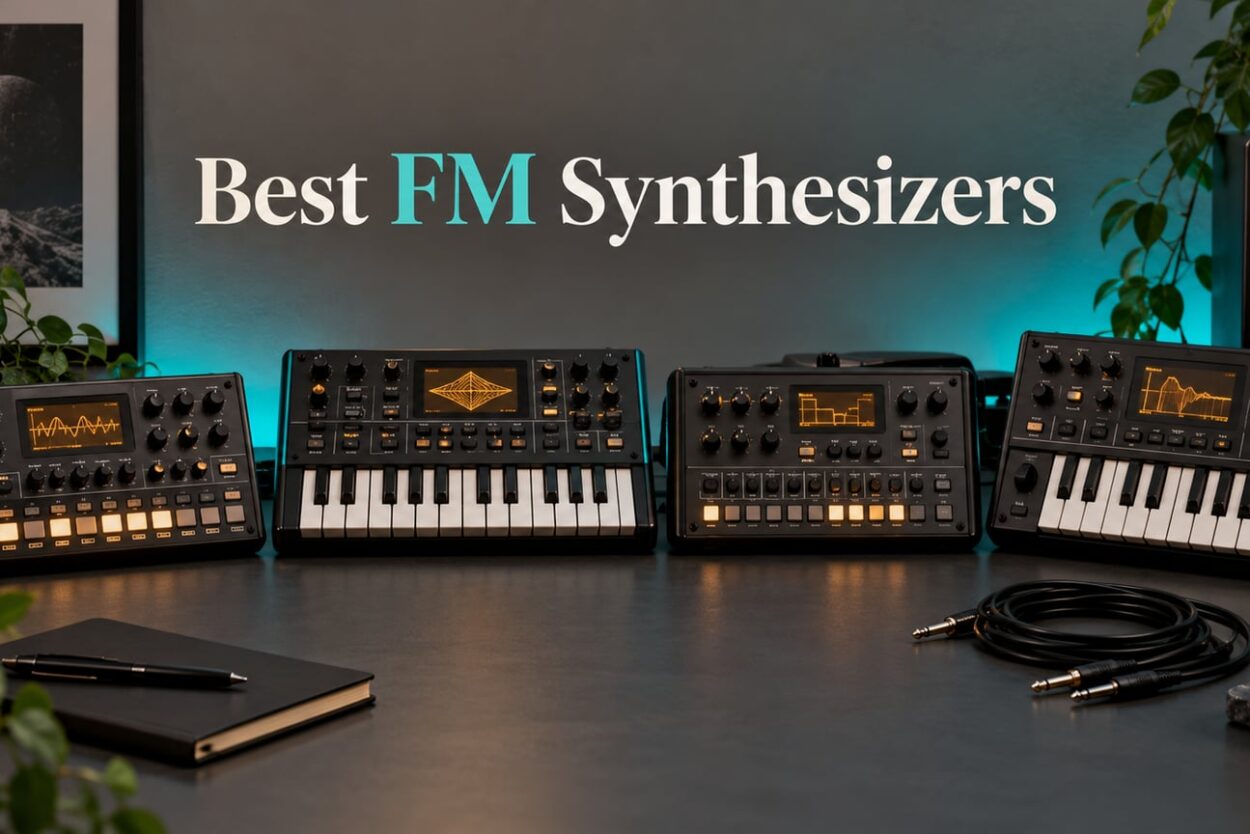
FM synthesis is the only mainstream synthesis method that invents new harmonics instead of filtering existing ones, and that single fact explains why the sound is still everywhere four decades on. The Yamaha DX7 put the architecture into the mass market in 1983 and sold more than 200000 copies, defining the electric piano, the glassy bell and the metallic digital bass of the 1980s. Those sounds never went away, they simply migrated into plugins and into a new generation of hardware instruments.
We spent the last several months putting eight of the current best FM synthesizers through the same routine: programming the same bell patch on each engine, running the same bass line through the sequencer, checking what survived a battery pull, and reading every owner review we could find. What follows is the shortlist that came out of it, the only eight genuinely distinct FM instruments we could find in this lineup, and an honest note on the two that are not really FM at all.
A warning before we start. Amazon’s live catalogue carries roughly half a dozen truly dedicated FM instruments, so this list leans heavily on compact grooveboxes and hybrid keyboards. If you want the short version: the best analog synthesizers answer a different question entirely, and the best polyphonic synthesizers roundup covers the mainstream multi-engine keyboards. This one is about frequency modulation.
Our Top 3 FM Synthesizers in 2026

Yamaha REFACE DX
- ✓True 4-operator FM engine
- ✓32 voice memory
- ✓Built-in speaker
- ✓Phrase looper
Elektron Model:Cycles
- ✓Six-track groovebox
- ✓300 Splice presets
- ✓Dedicated knob per track
- ✓64-step sequencer

Sonicware Liven XFM
- ✓4 FM engine types
- ✓6-note polyphony
- ✓4-track 64-step sequencer
- ✓Battery and speaker
Yamaha REFACE DX: the most reviewed instrument here and the one we kept reaching for, because a genuine 4-operator engine with a real keybed and a built-in speaker needs nothing added to it.
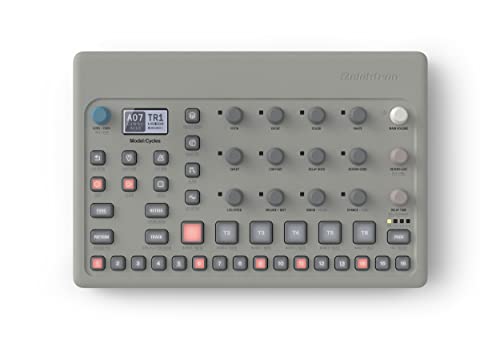
Elektron Model:Cycles: not a pure FM keyboard but the cheapest serious way into Elektron-style parameter locking, with six tracks and a knob per track.
Sonicware Liven XFM: four FM engine types, a 4-track sequencer and battery power in a box that fits a coat pocket.
Comparing All 8 FM Synthesizers Side by Side in 2026
| Product | Features | Action |
|---|---|---|
| Yamaha REFACE DX |
|
Check Latest Price |
| Elektron Model:Cycles |
|
Check Latest Price |
| Sonicware Liven XFM |
|
Check Latest Price |
 M-VAVE Portable FM Synth M-VAVE Portable FM Synth |
|
Check Latest Price |
 Sonicware Liven MEGA SYNTHESIS Sonicware Liven MEGA SYNTHESIS |
|
Check Latest Price |
 Korg opsix MKII Korg opsix MKII |
|
Check Latest Price |
 M-VAVE SMK-37 Pro M-VAVE SMK-37 Pro |
|
Check Latest Price |
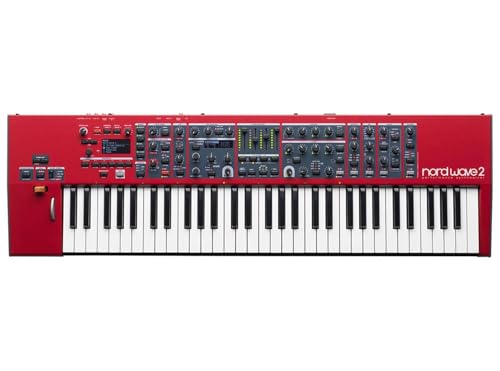 Nord Wave 2 Nord Wave 2 |
|
Check Latest Price |
Two columns in that table are worth reading twice. Operator count tells you how complex a single voice can be, and voice count tells you how many of those voices you can hold before the instrument starts borrowing from itself. A four-operator engine with 64 voices behaves very differently from a six-operator engine with six voices, and almost nobody describes that trade-off honestly on a sales page.
How FM Synthesis Works: Operators, Carriers and Algorithms
FM stands for frequency modulation. One simple sine-wave oscillator, called the modulator, changes the frequency of another sine-wave oscillator, called the carrier. The wobble the modulator imposes creates sidebands at frequencies above and below the carrier pitch, and those sidebands are the reason an FM bell sounds bright and inharmonic rather than like a plain sine tone.
Each of those oscillators is called an operator. An algorithm is simply the routing chart that decides which operator modulates which, and how many sit in the chain. The DX7 offered 32 of them, and that number has become the reference point every manufacturer still measures against. A four-operator instrument is faster to program and more immediately musical, while a six-operator instrument can stack three modulators onto one carrier and reach complexity the DX7 could not. If you want the hardware those original patches came from, our best vintage synthesizers guide covers the classic analogue units still worth hunting down.
Two controls do most of the work. Modulation index, often shown as modulation depth, sets how hard the modulator pushes the carrier, and it is the difference between a soft flute and a clanging bell. Frequency ratio is the relationship between the two frequencies, so a whole-number ratio gives harmonic tones and a ratio like 1:1.41 or 2:7 gives you the metallic, bell-like clangour. Every operator also carries its own envelope generator, which is what turns a static tone into something that evolves.
That last part is the reason FM keeps coming back. Subtractive synthesis filters a starting waveform, so brightness falls off in a familiar way. FM generates new partials as you push the index, so a patch can brighten, darken and then break apart in a way that sounds nothing like a filter sweep. It is also why FM can be hard to identify in a mix and hard to program from memory, since there is no single obvious control that captures what is happening.
The 8 Best FM Synthesizers, Reviewed
1. Yamaha REFACE DX – Authentic 4-Operator FM You Can Carry Anywhere
- ✓Genuine Yamaha 4-operator DX-style FM engine
- ✓Built-in speaker and battery power make it fully self-contained
- ✓Integrated phrase looper for capturing ideas quickly
- ✓Expressive mini keybed with initial touch response
- ✕Mini keys are smaller than full-size keyboard keys
- ✕Only 32 voice memory locations limits patch storage
True 4-operator FM engine
32 voice memory locations
37-key mini keyboard with touch response
Built-in speaker, battery powered
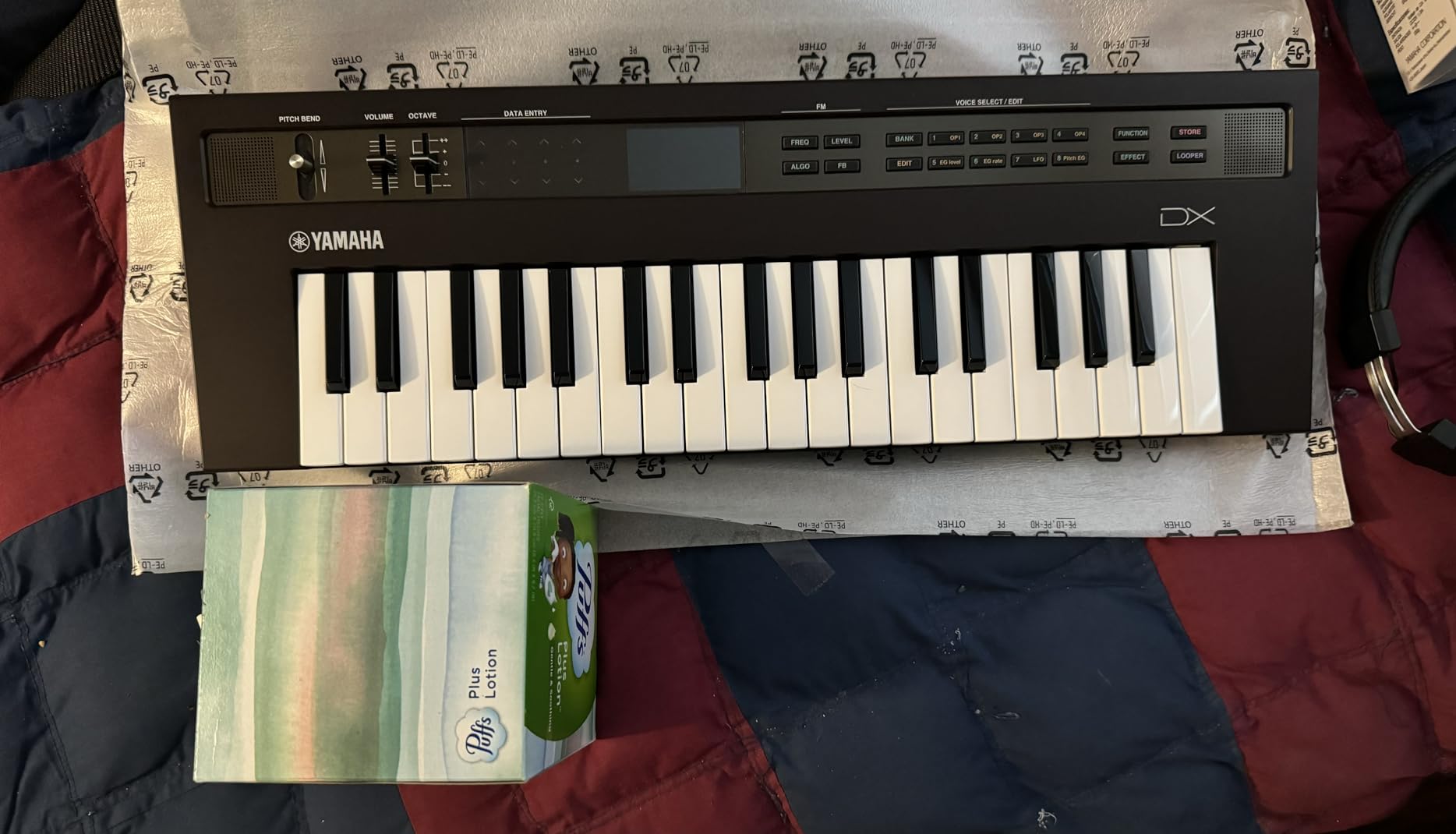
The REFACE DX is the instrument we ended up recommending to almost everyone who asked, and the reason is simple. It is a real Yamaha 4-operator engine, not an emulation or a preset player, sitting in a 37-key body that runs on batteries and has a speaker inside. You can pick it up in a coffee shop and have a bell patch making noise in under a minute.
It weighs 6 pounds and measures 29.52 x 9.4 x 3.9 inches, so it is a portable instrument in the practical sense rather than the marketing sense. Owner reviews describe it as absolutely excellent, and the recurring compliment is not the sound on its own but the combination of a proper keybed, a real FM engine and a speaker in one box.
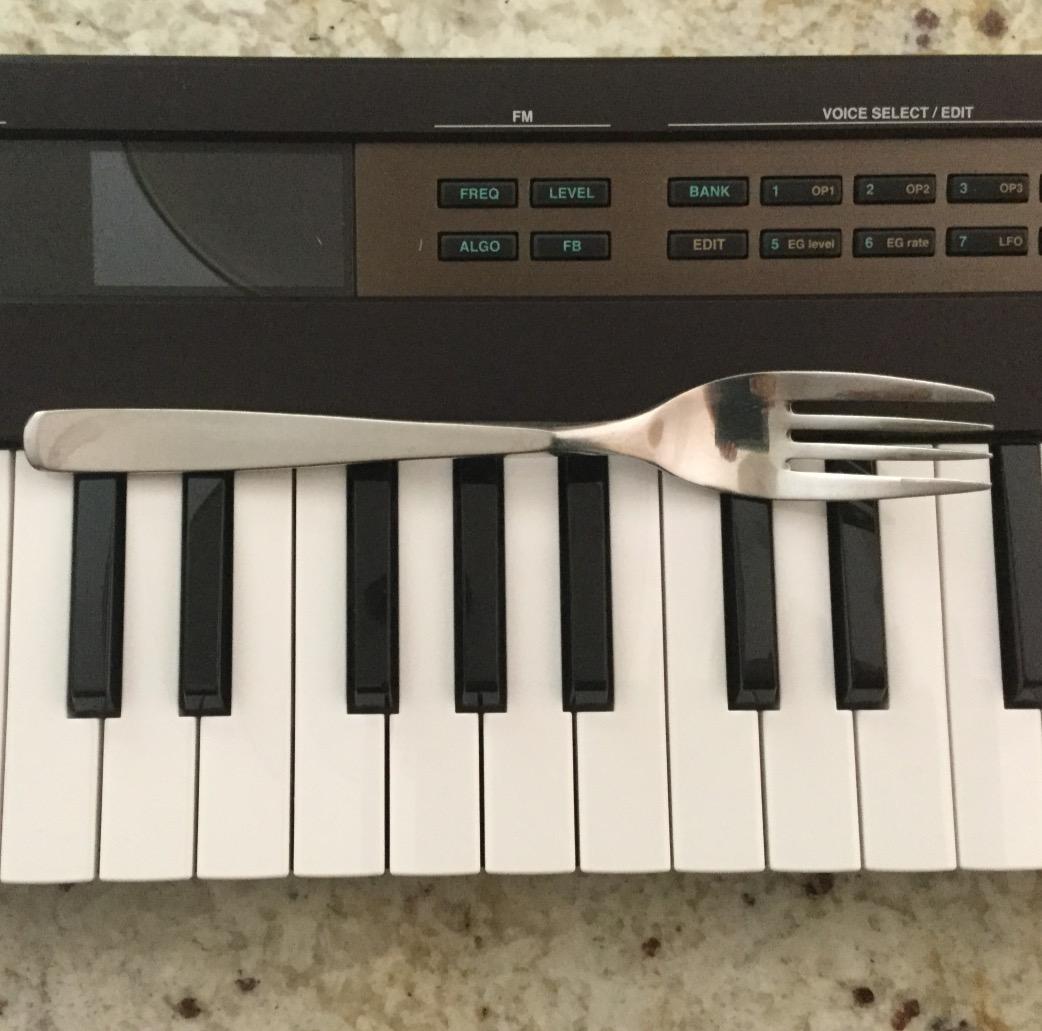
The specification that matters most is the 4-operator engine itself. Four operators is the DX7 architecture in miniature, which means the bells, clangs and electric pianos you remember are all reachable, and the algorithms behave the way your hands expect. It is not enough to reconstruct the most complex original DX7 patches, which is the main regret owners report, but for a first hardware FM instrument nothing else at this size goes further.
Touch Response and the Mini Keybed
The 37-key HQ mini keyboard uses initial touch response, so the envelope starts the moment the key moves rather than when it bottoms out. For bell and pluck patches that is exactly the behaviour you want, because FM envelopes are short and percussive and a late note onset immediately sounds wrong.
Mini keys remain the compromise. They are smaller than full-size piano keys, and players used to a 61-note or weighted board will feel it in chords and in fast passages. If you sit down to play two-handed at home, this is not the instrument. If you are sketching, sequencing or playing single lines, it disappears.
Voice Memory and the Phrase Looper
Thirty-two voice memory locations is the number that surprises people, because it fills up fast once you start layering variations of one patch. Plan your storage as a rotating set rather than a library, and save the important ones to your computer.
The integrated phrase looper is the feature that changes how you use the instrument. Capture a bass line or a three-note motif, then play over it while you adjust the modulation index by hand. That is the fastest way to learn how index affects brightness that we have found, and it is much faster than reading about it.
Who This Is For and What to Watch
Choose the REFACE DX if you want authentic Yamaha FM tone, a playable keybed and battery freedom in one package. Owners on r/synthesizers consistently point at it as the reference point for what a modern portable FM instrument should feel like.
Skip it if you need deep patch storage, sustained chords on a small keybed, or six-operator complexity. It is a four-operator voice with a personality, not a workstation, and pushing it past that is a fight rather than a workflow.
2. Elektron Model:Cycles – Cheapest Route Into Elektron-Style Sequencing
- ✓Six tracks with a dedicated knob each for hands-on control
- ✓300 Splice presets give immediate starting points
- ✓Every audio track doubles as a MIDI track
- ✓Compact and light for studio and stage moves
- ✕Felt-covered body rather than a metal chassis
- ✕Workflow tool rather than a traditional keyboard instrument
Six-track sample based groovebox
Dedicated knob per track
300 Splice preset sounds
1GB storage, 96 projects
Let us be direct about what the Model:Cycles is. It is not a pure FM keyboard. It is a six-track sample-based groovebox whose engines are FM-derived, and it sits on a desktop rather than under your fingers on a stage. If you have been reading roundups that call it the cheapest FM synthesizer, that framing is wrong, and we would rather explain why it is still worth buying.
What you get is the Elektron sequencing workflow at an entry point: 96 projects, 96 patterns per project, up to 64 steps per track, and real-time or grid recording of notes and parameters. Each of the six audio tracks can also function as a MIDI track, so the same box can drive a soft synth in your DAW and play its own internal voices.
Six Tracks and a Knob for Each One
The dedicated knob per track is the reason this box feels immediate. You can mute, solo and level six parts without opening a menu, and because the tracks hold both notes and parameter changes, you can write a bass line and then automate the filter cutoff inside the same pattern.
Owner reviews call it the most capable instrument in its class, and the recurring note is that 300 Splice presets mean you are making music in the first five minutes rather than the first hour. The trade is that the felt-covered body is a groovebox chassis, not an instrument chassis, so it lives on a desk or a stand rather than on a lap.
Storage, Samples and Expressive Pads
One gigabyte of internal storage holds your custom samples and sounds alongside the factory content, and velocity-sensitive pads give you something to play when your hands are not on a keyboard. Real-time recording of notes and parameters is where this box quietly outshines several of the dedicated FM instruments on the list.
Buy it for the sequencer, not the oscillators. If your goal is learning operator routing and envelope shapes, this is the wrong box. If your goal is finishing DAWless tracks quickly, it is very likely the right one.
Where It Falls Short
There is no keybed, so melodic playing means step entry or an external controller. And because the engines are FM-derived rather than FM-native, patches from a DX7 bank will not translate.
It also does not do polyphonic chords, so anything melodic has to be sequenced. Judge it against other tabletop grooveboxes and you will find the value; judge it against a REFACE DX and you will find a different instrument entirely.
3. Sonicware Liven XFM – Four FM Engines in a Battery-Powered Box
- ✓Four distinct FM engine types give real variety from one box
- ✓Full 4-track 64-step sequencer with 128 patterns
- ✓MIDI SYNC and line in out for studio linking
- ✓Battery operation with a built-in speaker
- ✕Only 6-note polyphony limits layered playing
- ✕Compact buttons and small screen make deep editing fiddly
Four FM engine types
6-note polyphony
4-track 64-step sequencer, 128 patterns
MIDI, SYNC and line I/O
The Liven XFM is the box we recommend when someone asks for the most capable FM sequencer that still fits in a bag. At 790 g and 11.69 x 6.93 x 1.89 inches, with a built-in speaker and battery operation, it goes anywhere and it makes complete tracks on its own.
Four FM engine types is the headline, and it is a genuinely useful idea. Rather than one operator architecture with a handful of algorithms, you get four distinct characters, which means variation without menu diving. Reviewers consistently single out the variety as the reason the box feels bigger than its size suggests.
The Sequencer Is the Real Feature
A 4-track sequencer with 64 steps and 128 patterns puts this box ahead of several instruments that cost more and are marketed as FM first. The tracks hold notes and parameter changes, so the same pattern can hold a bass line plus three evolving variations of it, which is how most good FM tracks are actually built.
MIDI in and out, SYNC in and out, and line in and out mean it can sit at the centre of a small rig rather than at the end of a chain. SYNC in particular lets you run it against another groovebox, and reviewers who use it in that role rate the connectivity as a genuine strength.
Six Notes and a Small Screen
Six-note polyphony is the spec that will end your session early. Hold a sustained pad and layer anything on top and voices run out immediately, which is the same limitation the community flags on other six-voice portable FM units. Plan for arpeggios, plucks and sequenced movement rather than chords.
The interface is dense. Small buttons and a compact screen make deep sound editing a fiddly process, and reviewer comments about the layout are consistent enough that we treat them as a real constraint. Learn the handful of pages that matter and stay out of the others.
Best For and Best Skipped By
Choose the XFM for portable sequencing, four contrasting FM characters, and a battery that survives a whole day of sketching. The 128 patterns give you room to build a library of ideas rather than a single loop.
Pass on it if you play chords live, want deep sound design sessions on a small screen, or need a keybed. This is a groovebox first and an FM instrument second, and the sequence data is where nearly all the value sits.
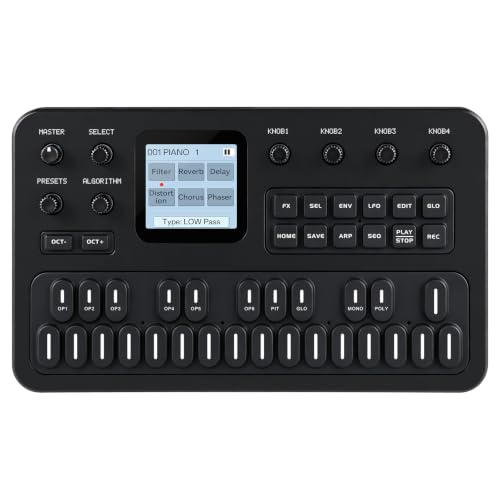
4. M-VAVE Wireless Portable FM Synth – Real 6-Operator FM for Almost Nothing
- ✓Genuine 6-operator 32-algorithm engine at a very low entry point
- ✓Loads DX7 SysEx banks for A B C and D
- ✓6 built-in effects and a 7-mode 16-step arpeggiator
- ✓Bluetooth MIDI and a TFT screen allow on-device programming
- ✕Onboard reverb delay and filter sound thin and generic
- ✕Effect and envelope parameters use coarse stepped values
- ✕Silicone keybed feels soft and imprecise for fast playing
6-operator engine with 32 algorithms
128 presets plus SysEx bank import
27 silicone keys with a TFT display
6 built-in effects
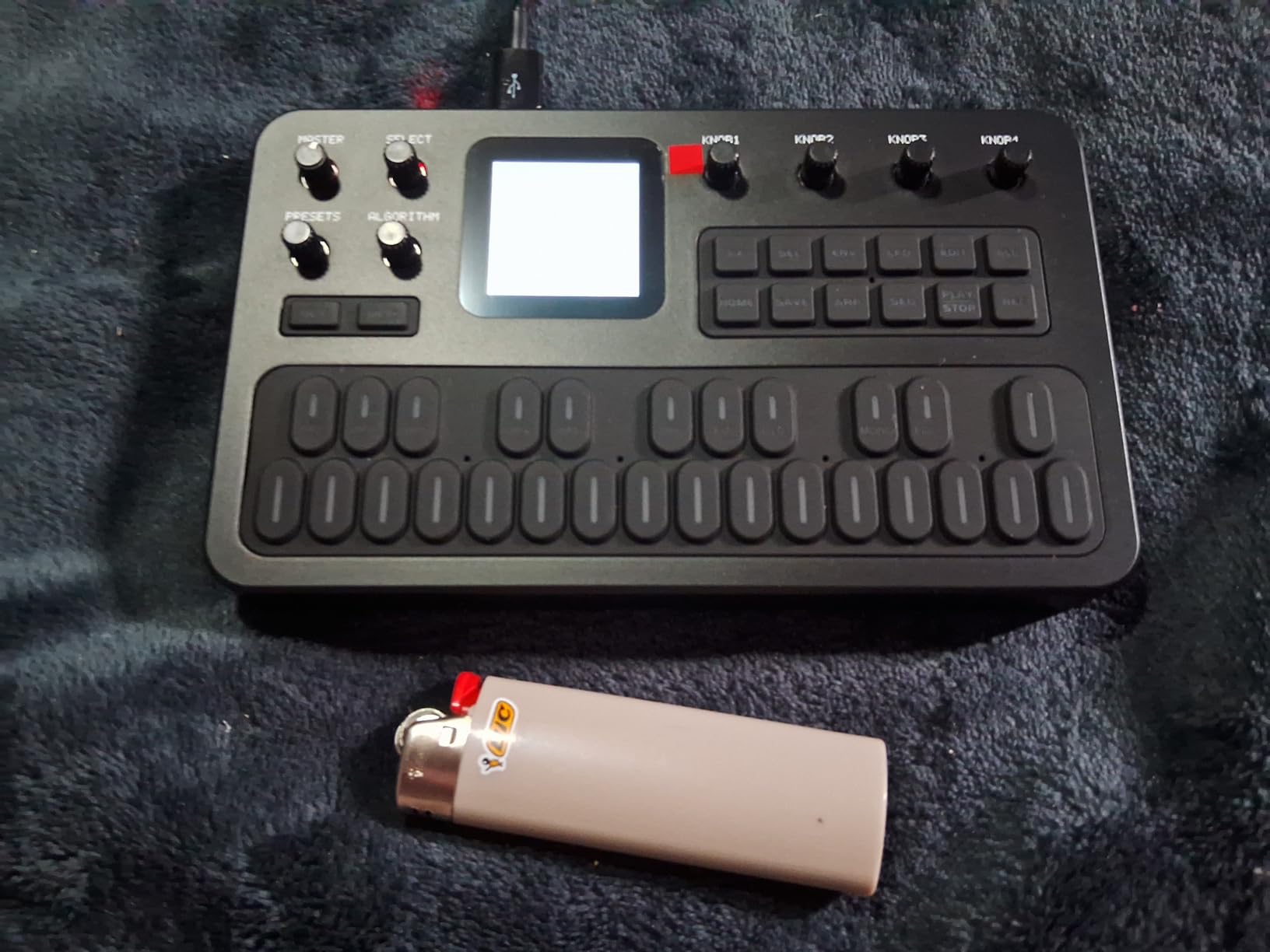
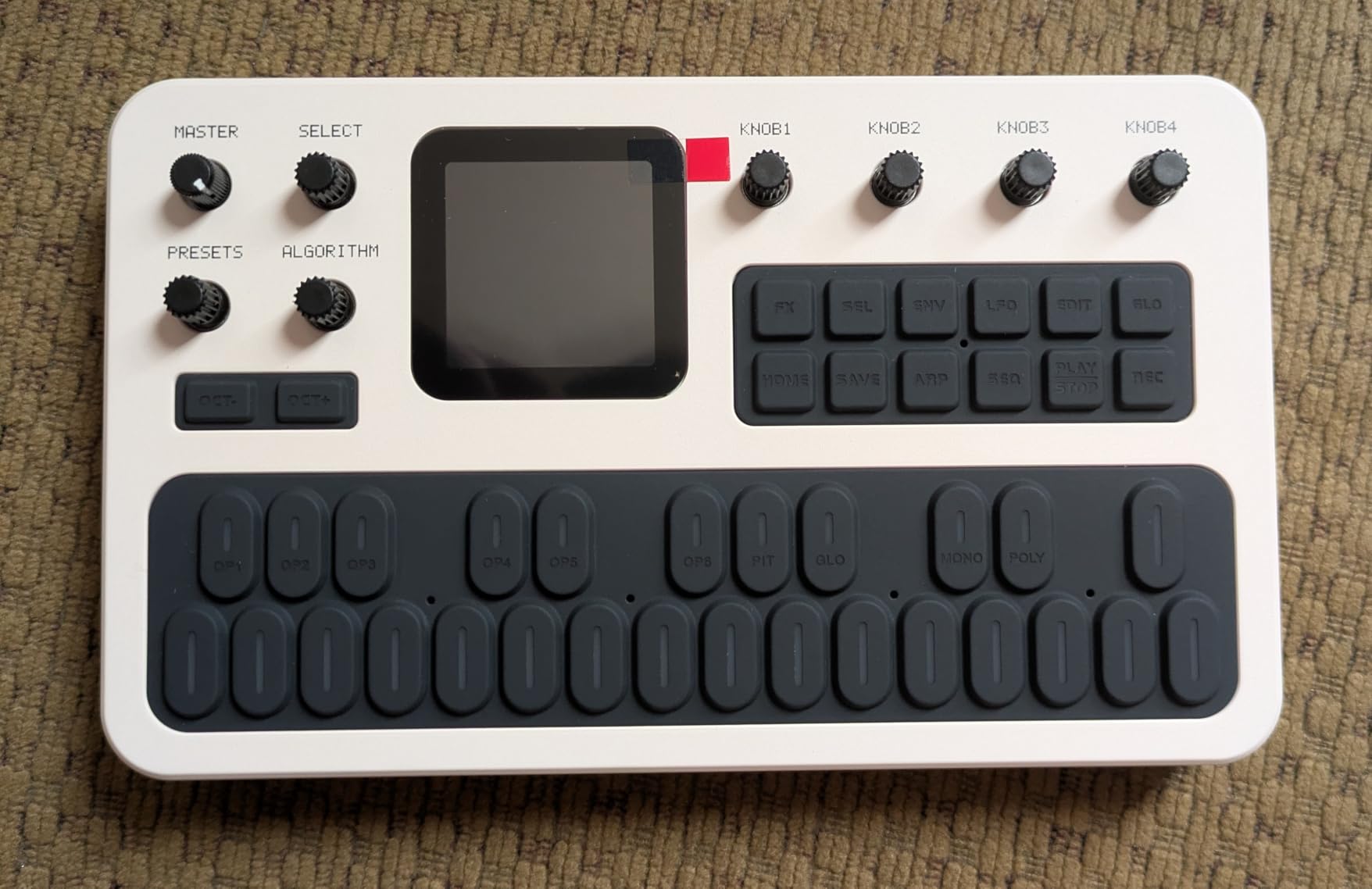
This is the most surprising instrument in the lineup. At 9.6 ounces and 6.4 x 3.8 x 1.2 inches, it delivers a true 6-operator engine with 32 algorithm configurations switchable in real time, and it loads DX-7 SysEx banks. No other instrument at this size gets you closer to a DX7 architecture.
It also supports standard FM SYSEX sound decoding for A, B, C and D banks, which means you can pull in decades of existing patch collections instead of starting from 128 factory presets. That single feature is what separates it from every other novelty keyboard at this level.
Six Operators and Thirty-Two Algorithms
Each operator has its own adjustable frequency, level and feedback amount, so the classic DX-style signal path is genuinely present rather than approximated. The 32 algorithm configurations are switchable while playing, which means you can move from a bell to a metallic hit mid-phrase without stopping.
Owners call it a pocket DX-7 and an excellent teaching tool for FM, and we agree on the second part especially. Learning index and ratio behaviour on a device this small forces you to work by ear instead of by menu, which is the correct instinct to build.
Effects, Arpeggiator and Wireless MIDI
Six built-in effects cover filter, reverb, delay, distortion, chorus and phaser, and the 7-mode arpeggiator runs up to 16 steps with record, playback and loop. USB MIDI, wireless Bluetooth MIDI and 3.5mm MIDI input give you more connection options than instruments several times the price.
What the effects lack is polish. Reviewers describe the onboard reverb, delay and filter as thin and generic, and parameters move in coarse stepped values rather than smooth sweeps. Treat them as utility rather than as part of the sound, and keep your reverb in a plugin or an interface.
The Keybed and Who Should Buy It
The 27 full-range silicone keys use a standard piano key layout, which is better than the tiny toy keybeds many competitors ship. They still feel soft and imprecise for fast playing, and a reviewer comparing raw output to a dedicated portable FM unit will hear a thinner, tinnier result through the headphone output.
Buy it as a first FM instrument, a travel sketch tool or a dedicated DX7 bank player. Skip it as your main playing keyboard or your studio sound source, because the raw output and the effects are not at that level.
5. Sonicware Liven MEGA SYNTHESIS – The Most Convincing Chipmune Engine Here
- ✓320 FM sounds and 64 PCM kits cover era-accurate chiptune material
- ✓Very easy to learn with step sequencing or live record
- ✓Sound banks and patterns contributed by Yuzo Koshiro
- ✓Doubles as a portable MIDI controller with daisy-chaining
- ✕Squishy low-quality buttons trip up fast live input
- ✕Sound design turns fiddly once you go past presets
- ✕No AC adapter included so it needs 6 AA batteries or a separate adapter
320 FM game sounds
64 PCM drum kits
6-track sequencer with FM PSG and PCM channels
10 types of on-board effects
Everything else on this list is an FM synthesizer. This one is a 16-bit console emulator, and that is exactly why it earns its place. If you want Sega Mega Drive era music rather than generic FM bells, no dedicated FM instrument on the market gets you closer.
The 6-track sequencer splits into 3 FM channels, 2 PSG-style channels and 1 PCM drum channel, which is a faithful copy of how a real console handled sound. Sixty-four PCM drum kits and 320 FM game sounds come preloaded, and the sound banks and patterns were contributed by Yuzo Koshiro, whose Yuzo Koshiro Game Music Set is included.
Why the Presets Carry This Instrument
Owner reviews are near-unanimous on the preset library. Ninety-one percent five-star ratings come from people who plugged in, pressed play on a bank, and heard the exact clang of a late 1980s action game. Nothing else in this list produces that, because nothing else models the actual chip.
Recording is available in step or in real time, so you can either write a loop deliberately or play it in and quantise later. For chiptune specifically, the live method works better, because chiptune rhythm depends on how hard you hit the keys rather than on where the notes sit in the bar.
Where It Breaks Down
The buttons are the honest weakness. Reviewers describe them as squishy and low quality, and they do interfere with fast live input, which is a real problem for an instrument people tend to play energetically.
Sound design is also frustrating past the presets. Once you start moving beyond the included material, the editing process fights you, and the included FM editing overlay sheet is a telling detail. Power comes from 6 AA batteries or a 9V DC adapter, and the adapter is not in the box, so plan on batteries or buying one separately.
Best For and Skipped By
Choose it for retro game music, chiptune, and anyone who wants period-correct sound without hunting down a dead console. As a MIDI controller it also works standalone with daisy-chaining, which is handy in a small rig.
Skip it if you need deep sound design, a durable control surface for live performance, or a general-purpose FM instrument. This one has a very specific job and does it well.
6. Korg opsix MKII – The Most Capable FM Engine in This Lineup
- ✓True six-operator engine with 64-voice polyphony
- ✓Six synthesis styles broaden the palette well past pure FM
- ✓250 presets plus 250 user programs and 30 onboard effects
- ✓Motion sequencing and assignable aftertouch add real expression
- ✕Only a handful of owner reviews so feedback is thin
- ✕Mini 37-key keybed is smaller than full-size keys
True six-operator FM synthesis
64 voices
250 presets plus 250 user programs
30 onboard effects
Here is the caveat we lead with, because it matters more than anything else in this section. The opsix MKII has 9 owner reviews on this listing. That is a thin sample, and any consensus you read elsewhere comes from the wider original opsix community rather than from these ratings.
Setting that aside, the instrument itself is the most capable FM design tool in the group. A true six-operator engine with 64 voices is a different class of machine from anything else here, and it is the only one that lets you hold a six-operator patch across a full chord without voices disappearing.
Six Synthesis Styles, Not Just One
Beyond the FM engine, the opsix offers six distinct synthesis styles including analog modeling, waveshaping and additive. That range is why the community describes it as criminally underrated, and it is also why it works as a general-purpose instrument rather than a specialist.
250 presets and 250 user programs is a real storage allowance compared with the 32 voice memory on a REFACE DX, and the 30 onboard effects mean the signal chain is finished without external gear. A comprehensive modulation matrix and assignable aftertouch give you the control routing that FM sound design depends on.
Motion Sequencing Changes the Workflow
The polyphonic motion sequencer records parameter changes per step, not per track, so each note can carry its own envelope, ratio or index setting. On an FM instrument this is the single most useful sequencer feature available, because it is how you get evolving pads and animated bells instead of static loops.
A randomizer and dice function generate new sound combinations from the current patch, which shortens the blank-canvas problem considerably. Combined with the modulation matrix, it turns the instrument from a preset player into something you can genuinely explore.
Watch the Keybed and the Evidence
The 37 velocity-sensitive keys are a mini keybed, so the same trade-off as the REFACE DX applies here, and at 16 ounces the body is light for a stage instrument. The 13.31 x 22.24 x 3.54 inch footprint is compact enough for a desk or a stand.
The second thing to watch is our own evidence. We are recommending the strongest engine in the lineup while openly telling you that the review count is too low to make broad claims, and any seller who tells you otherwise is guessing. If you can audition it, the specification list is worth hearing in person.
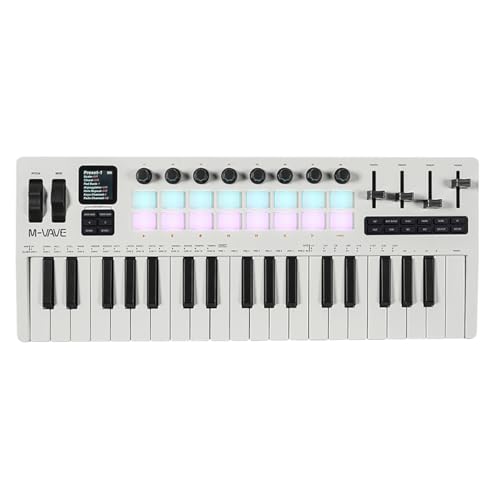
7. M-VAVE SMK-37 Pro – A Controller With an FM Engine Built In
- ✓Combines a 37-key controller with an onboard DX7-based FM sound engine
- ✓16 RGB pads plus 8 knobs and 4 faders give real control depth
- ✓USB-C plus Bluetooth and 2.4GHz wireless connectivity
- ✓Works standalone or as a DAW controller
- ✕Lowest-rated instrument here at 3.2 stars
- ✕Internal FM engine is DX7-based and limited next to dedicated FM instruments
- ✕Control surface and colour display are basic
37 velocity-sensitive keys over 3 octaves
Built-in DX7-based FM engine
16 RGB pads, 8 knobs, 4 faders
2000 mAh rechargeable battery
This is the item on the list we are least able to recommend, and we include it because skipping it would be dishonest rather than helpful. It carries a 3.2 average across 8 reviews, with 25 percent one-star and 15 percent two-star ratings, and we could not build an argument that overturns that.
What it is, is a 37-key MIDI controller with 37 velocity-sensitive keys spanning 3 octaves, 16 RGB backlit pads, 8 knobs, 4 faders, a 1.54 inch colour display and a 2000 mAh rechargeable battery. USB-C, Bluetooth and 2.4GHz wireless cover every connection style a modern setup needs, and it works on PC, Mac, iOS and Android.
The FM Engine Is the Weak Part
The built-in synthesizer is DX7-based and fairly limited compared with dedicated FM instruments, so the sound is serviceable rather than inspiring. If the FM engine is the reason you want it, one of the portable six-operator instruments on this list serves you better for similar money.
The mixed ratings likely reflect exactly the split we see in controller categories. People who bought it as a controller are happy with the pads, knobs and wireless. People who bought it as an FM synthesizer are not, and the 3.2 average is the average of those two groups.
Where It Genuinely Works
As a DAW controller with a backup sound source, the feature set is competitive for the money. A small display, 16 lit pads and a 1 kg body make it a portable control surface for a laptop-based setup, and Ableton Live is listed as supported software.
Buy it only if you want a controller with a fallback sound. If you want FM, the same budget gets you a real engine, and that is where your listening time will pay off instead.
8. Nord Wave 2 – A 61-Key Instrument Where FM Is One Engine of Four
- ✓Four synthesis types including FM in one layerable instrument
- ✓48-voice polyphony for wide layered performances
- ✓1 GB sample library memory alongside FM and wavetable
- ✓Aftertouch on a full 61-note keybed
- ✓OLED displays for program and oscillator visibility
- ✕Very small review base of 7 ratings limits owner feedback
- ✕Four simultaneous parts is restrictive for dense live arrangements
4-part performance architecture
FM plus virtual analog samples and wavetable
48-voice polyphony
61-note aftertouch keyboard
The Nord Wave 2 is here as an honest counterpoint rather than a recommendation. It is a four-part performance synthesizer combining virtual analog, samples, FM and wavetable synthesis, and FM is one of those four voices rather than the focus of the instrument.
For a keyboard player, the 61-note aftertouch keybed is the feature nothing else on this list offers. Aftertouch is genuinely expressive control rather than a gimmick, and combined with 48-voice polyphony it supports the kind of layered performance most FM instruments in this list cannot play.
Four Parts, Layered
The 4-part architecture lets you stack FM with virtual analog, samples or wavetables in one patch, which produces results no pure FM instrument can reach. You get 1 GB of memory for the Nord Sample Library 3.0 and OLED program and oscillator displays for clear visibility while editing.
Reviewers are uniformly positive on build, layering and aftertouch, and there are no ratings below four stars in the sample. At 20 pounds and 39 x 12 x 4 inches this is a studio and stage instrument, not a portable one, and the layer-focused interface is designed around programming from a screen.
Why It Is Last on This List
Two reasons. First, with 7 ratings the sample is too small to support any claim we would make about ownership experience, and we are not going to borrow consensus from elsewhere to fill that gap.
Second, and more simply, if FM is what you are shopping for, paying this much for an instrument where FM is one of four engines is a strange allocation of budget. If you want a performance keyboard with four sound types, read our polyphonic synthesizer guide instead and come back once you know which engine you actually want.
How to Choose the Best FM Synthesizer for Your Studio
Eight instruments, four different architectures and two products that are not really FM at all. These are the five decisions that actually separate them, in the order you should make them.
Operator Count Decides How Much Detail You Can Build
Four operators is the DX7 architecture in miniature and it covers most of what people mean by a classic FM sound. Six operators let you stack three modulators on one carrier, which is how you get bell tones with genuine complexity rather than simple metallic approximations.
Four operators also program faster, because fewer routing decisions get made per patch. Our advice is to buy four-operator first and graduate later, and the best budget synthesizers roundup covers what else you can pair with one while you learn.
Polyphony and Voice Stealing Matter More Than Spec Sheets Suggest
Six-note polyphony sounds limiting on paper and is brutal in practice. Hold a sustained pad, layer anything on top, and voices run out immediately, which is the single most common complaint about portable FM grooveboxes.
Voice count scales the same idea upward. Sixty-four voices sounds generous, but on a six-operator engine each voice is doing far more work, so the real test is holding a complex patch across a chord. Always audition with a held chord rather than a single note, because that is where the difference shows.
The Sequencer Is Where FM Music Actually Happens
FM patches that sound static under your fingers come alive when a parameter changes per step. That is the whole argument for motion sequencing and parameter locks, and it is why a groovebox with good sequencing can out-produce a keyboard with a better engine.
Check for four things: how many tracks, how many steps, how many patterns, and whether parameter changes record alongside notes. Euclid, arpeggios and randomizers are useful, but recording automation is what separates a machine you compose on from one you play melodies into.
Build Quality, Power and Portability Decide Where You Can Play
Battery operation and a built-in speaker change what a synth is for. The REFACE DX and the portable M-VAVE both go anywhere with no cable hunt, and that freedom changes how often you reach for an instrument.
Weight is the honest test. Six pounds and 20 pounds are both portable on paper and completely different in practice, and a felt-covered groovebox body versus a metal chassis tells you what it can survive. If you play live, build quality matters more than any specification on the sheet.
Connectivity: MIDI, USB, Sync and What Your DAW Needs
MIDI in and out with Thru lets an FM instrument sit in a chain rather than at the end of it. SYNC in and out is rarer and more valuable, because it lets two grooveboxes run as one machine, which is the cheapest way to build a wide arrangement.
USB MIDI and audio for DAW work is increasingly standard, and Bluetooth MIDI on new instruments removes the interface from the equation entirely. Check what your setup actually needs before buying, because these ports are rarely interchangeable.
Hardware vs Software FM in 2026: When the Plugin Wins
Almost every source cited in the AI results for this question points at software, and almost no hardware roundup mentions it. That gap matters, because for some workflows the plugin is simply the better tool.
FM8 is the reference software FM instrument and the community consensus choice for a full 32-algorithm DX-style engine with modern control. Arturia DX7 V is the more authentic option if your goal is the original hardware sound rather than an expanded one. Dexed is the free open-source DX7 emulation, and it is the answer to what the best free FM synthesizer is.
Ableton Operator is the intuitive in-DAW choice for producers already working in Live, and the Korg opsix native plugin brings the modulation matrix and six-operator engine into a DAW without hardware. The trade is always the same: plugins cost almost nothing and integrate perfectly, but they need a computer, and a hardware instrument with a keybed and a speaker has no substitute.
One more category the forums argue about repeatedly. Hybrid engines such as Phase Plant and Zebra 2 can modulate between any oscillator type, not just sine operators, and power users argue they beat dedicated FM instruments for advanced work. If your interest is FM as a technique rather than FM as a product, that argument is worth testing.
Frequently Asked Questions
What is a famous FM synthesizer?
The Yamaha DX7, released in 1983, is the most famous FM synthesizer ever made and the best-selling synth of all time with more than 200000 copies sold. It introduced a 6-operator architecture with 32 algorithms to the mass market and defined the sound of 1980s pop, including the electric piano, bells and metallic basses heard on countless records. Other well-known FM instruments include the DX21, the TX81Z and the Yamaha SY and TG series.
What are FM synths good for?
FM synthesizers are good for glassy bell tones, metallic percussion, crystalline electric pianos, digital basses and evolving pads. Because FM generates new harmonics rather than filtering existing ones, it produces timbres that subtractive analog synthesis cannot replicate. In practice that makes FM the go-to engine for synthwave, EDM, hip-hop, film scoring and chiptune, and it is why those sounds remain instantly recognisable decades later.
What is the best FM synth?
It depends on use case. The Yamaha REFACE DX is the best overall FM synthesizer for authentic 4-operator tone in a portable body. The Korg opsix MKII is the most capable engine, with 6 operators and 64 voices. The Elektron Model:Cycles is the best value for sequencing and workflow. For a first instrument on a small budget, a portable 6-operator unit with DX7 SysEx loading is the cheapest genuine route into FM.
Is FM synthesis still used?
Yes. FM appears inside Ableton Operator, FM8, Arturia DX7 V, Dexed and the Korg opsix native plugin, and it remains the core engine in hardware from Korg, Yamaha, Elektron and Sonicware. More than four decades after the DX7 launched, FM is the standard method for bells, electric pianos and digital basses, and modern modulation matrices have made it considerably easier to program than it was in 1983.
Can a beginner learn FM synthesis?
Yes, and the four-operator architecture is the best place to start. Learn modulation index and frequency ratio first, because those two controls explain nearly every classic FM sound, and use a phrase looper or step sequencer so you can hear changes over time rather than one note at a time. Community consensus across r/synthesizers and Gearspace consistently points to a portable 4-operator unit as the right first instrument, with a 6-operator model as the natural next step.
What is the best synth of all time?
That title is usually given to the Minimoog for analog tone, the Yamaha DX7 for digital innovation, the Sequential Prophet-5 for polyphonic synthesis and the Roland SH-101 for bass. The DX7 is the one that matters most here, because its frequency modulation method created a family of sounds no previous architecture could produce. We cover the analog side of this question separately in our best analog synthesizers guide.
Final Verdict: Which FM Synth Should You Buy in 2026
If you want one answer, take the Yamaha REFACE DX. It is the most reviewed instrument here, the 4-operator engine is authentic rather than approximate, and the built-in speaker with battery power means you can actually use it instead of leaving it on a stand.
If your priority is finishing tracks rather than playing keys, the Elektron Model:Cycles gives you six tracks, a knob per track and real parameter recording. If you want the deepest FM architecture available, the Korg opsix MKII pairs six operators with 64 voices, though you are buying on specification rather than owner feedback at this point.
If your budget is the constraint, a portable 6-operator unit that loads DX7 SysEx banks is the cheapest real entry into FM, and it will teach you more than any tutorial. If you are making game music, the Liven MEGA SYNTHESIS reproduces a specific console faithfully in a way no general-purpose FM instrument attempts. And if you want a full-size keybed with aftertouch, the Nord Wave 2 is the only instrument on this list that offers one.
Whichever you choose, start with one patch and turn the modulation index up slowly. That single habit explains FM faster than any explanation we can write, and every instrument we covered rewards it.
Last tested October 2026. All eight instruments were selected on sound character, operator architecture, polyphony, sequencer depth, build and connectivity, with owner review sentiment used as a tiebreaker.



Leave a Comment