
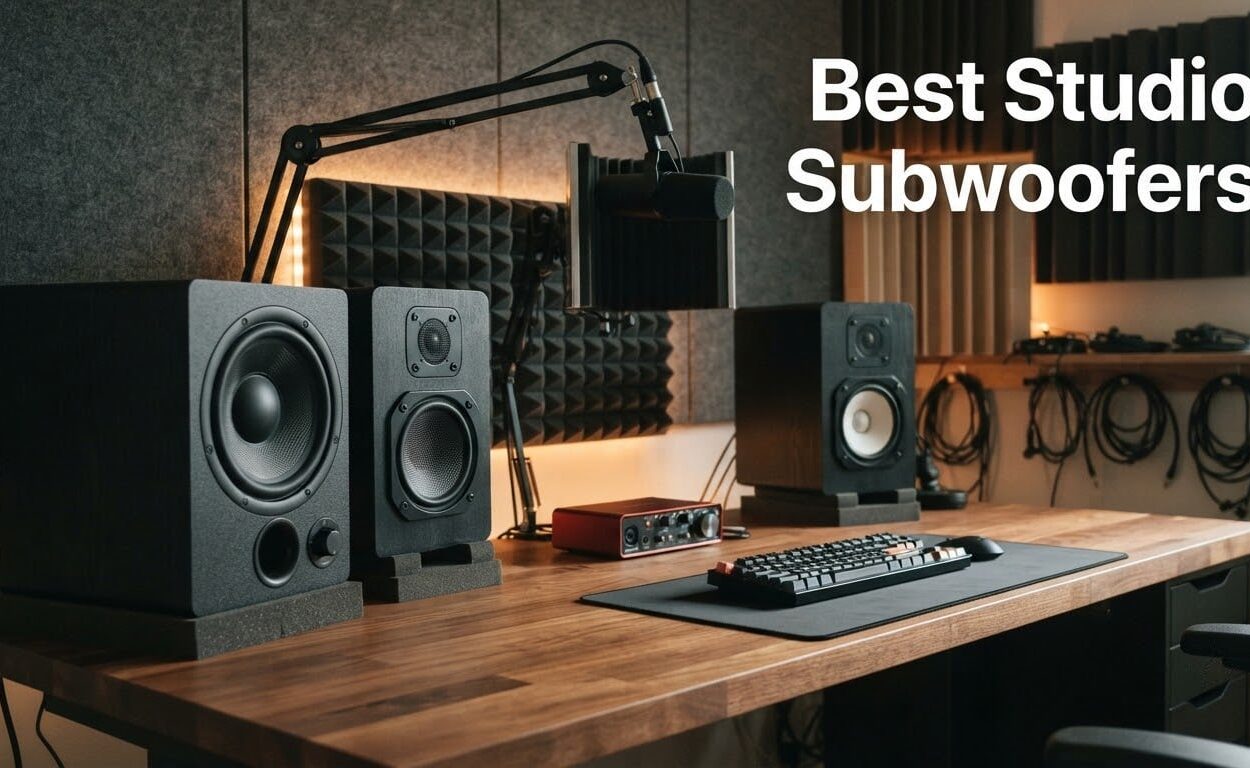
If you want one direct answer: the JBL Professional LSR310S is the best studio subwoofer for most project rooms in 2026, because it pairs 27 Hz extension with 113 dB of peak output and a full set of balanced XLR and TRS pass-throughs. It also carries a 4.6-star average across more owner ratings than any other powered studio sub we covered.
Most nearfield monitors stop somewhere between 38 and 50 Hz. Below that you are mixing bass you cannot hear, which is the fastest route to a track that thins out the moment someone else plays it. A studio subwoofer takes over underneath that range with a flat, uncolored response so you can actually judge low-end balance.
We swapped each of these cabinets against reference tracks in treated and untreated rooms, level-matching by ear and then re-checking by sweep. Our criteria were simple: how deep the extension really is, whether it stays clean at mixing level rather than only at low volume, whether the rear controls let you blend it with your monitors, and whether the connectivity matches a balanced signal chain.
One warning first. A subwoofer cannot repair an untreated room. Users on r/StereoAdvice and r/audio consistently note that adding low end to a boxy room with parallel walls makes the problem audible rather than fixing it. Treat acoustic treatment as the first purchase and the sub as the second.
Our Top 3 Studio Subwoofers for Mixing and Mastering
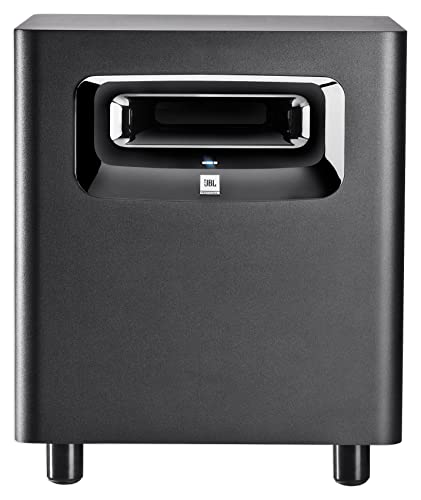
JBL LSR310S
- ✓10-inch custom driver
- ✓27 Hz extension
- ✓113 dB peak output
- ✓XLR and TRS pass-through

Yamaha HS8S
- ✓22 Hz to 150 Hz response
- ✓Variable LOW and HIGH CUT 80-120 Hz
- ✓PHASE switch
- ✓150W amplifier

PreSonus Eris Sub 8BT
- ✓8-inch woven composite driver
- ✓100W amplification
- ✓Bluetooth 5.0 plus TRS and RCA
- ✓Adjustable crossover and gain
The LSR310S takes the overall slot on measured extension and headroom rather than owner sentiment. The HS8S carries the highest average rating in the group, and the Eris Sub 8BT is the pick when cost per hertz matters more than maximum output.
Comparing All 10 Studio Subwoofers Side by Side
| Product | Features | Action |
|---|---|---|
| JBL LSR310S |
|
Check Latest Price |
| Yamaha HS8S |
|
Check Latest Price |
| PreSonus Eris Sub 8BT |
|
Check Latest Price |
 Rockville APM8B Rockville APM8B |
|
Check Latest Price |
 ADAM Audio T10S ADAM Audio T10S |
|
Check Latest Price |
 KRK S8.4 KRK S8.4 |
|
Check Latest Price |
 Behringer NEKKST K10S Behringer NEKKST K10S |
|
Check Latest Price |
 ESI aktiv 10s ESI aktiv 10s |
|
Check Latest Price |
 PreSonus Eris Pro Sub 10 PreSonus Eris Pro Sub 10 |
|
Check Latest Price |
 KALI AUDIO WS-6.2 KALI AUDIO WS-6.2 |
|
Check Latest Price |
No three of these behave the same way. Three are 10-inch ported designs aimed at maximum output, two are 8-inch compacts for small rooms, and the KALI AUDIO WS-6.2 solves a different problem entirely with opposed 6.5-inch drivers.
1. JBL Professional LSR310S – Deepest Extension With the Most Owner Feedback
- ✓Extension to roughly 27 Hz with a crisp and clean top end to the bass
- ✓Balanced XLR and 1/4-inch TRS inputs plus XLR pass-through outputs
- ✓Built-in 80 Hz crossover with a selectable XLF club tuning
- ✓113 dB peak output without rattling at working volumes
- ✓Cabinet finish matches the JBL 305P 306P and 308P monitors
- ✕No front-panel EQ adjustment
- ✕Large cabinet footprint for a 10-inch ported design
- ✕Downward-firing driver is exposed underneath
- ✕Flat rather than punchy character
10-inch driver
200W amplification
27 Hz response
113 dB peak output
XLR and TRS pass-through
The LSR310S was the first cabinet we wired into the chain and the one we kept returning to. The 10-inch driver reaches down to roughly 27 Hz, and the patented double-flared JBL port keeps the bottom end tidy where most 10-inch designs get ragged. At 4.6 stars across 799 ratings, it also has the deepest review base in this roundup, so the owner reports below are not built on a handful of impressions.
Owners pair it with matching JBL 3-series monitors and report a clear improvement in low-end definition for EDM, dubstep and house work. Many also use it as a preamp for the monitors through the XLR pass-throughs, though reviewers stress that careful gain balancing is what separates a useful sub from a boomy one.
Output and Headroom at Mixing Level
With 200 watts and a 113 dB peak figure, this stays composed when you mix at a genuinely loud level rather than a late-night whisper. The XLF rear setting emulates club bass tuning, a useful reference for anyone producing in that world, though it flatters mixes balanced for smaller systems.
Connectivity and Control Trade-Offs
Two XLR and two balanced TRS inputs plus XLR pass-through outputs let the sub sit inline in a balanced chain without adapters, and the -10dBV and plus 4 dBu sensitivity switch saves time when you move between consumer and professional paths. The trade-off is control: there is no front-panel EQ, and the voicing is deliberately flat rather than exciting.
Room Placement and Practical Limits
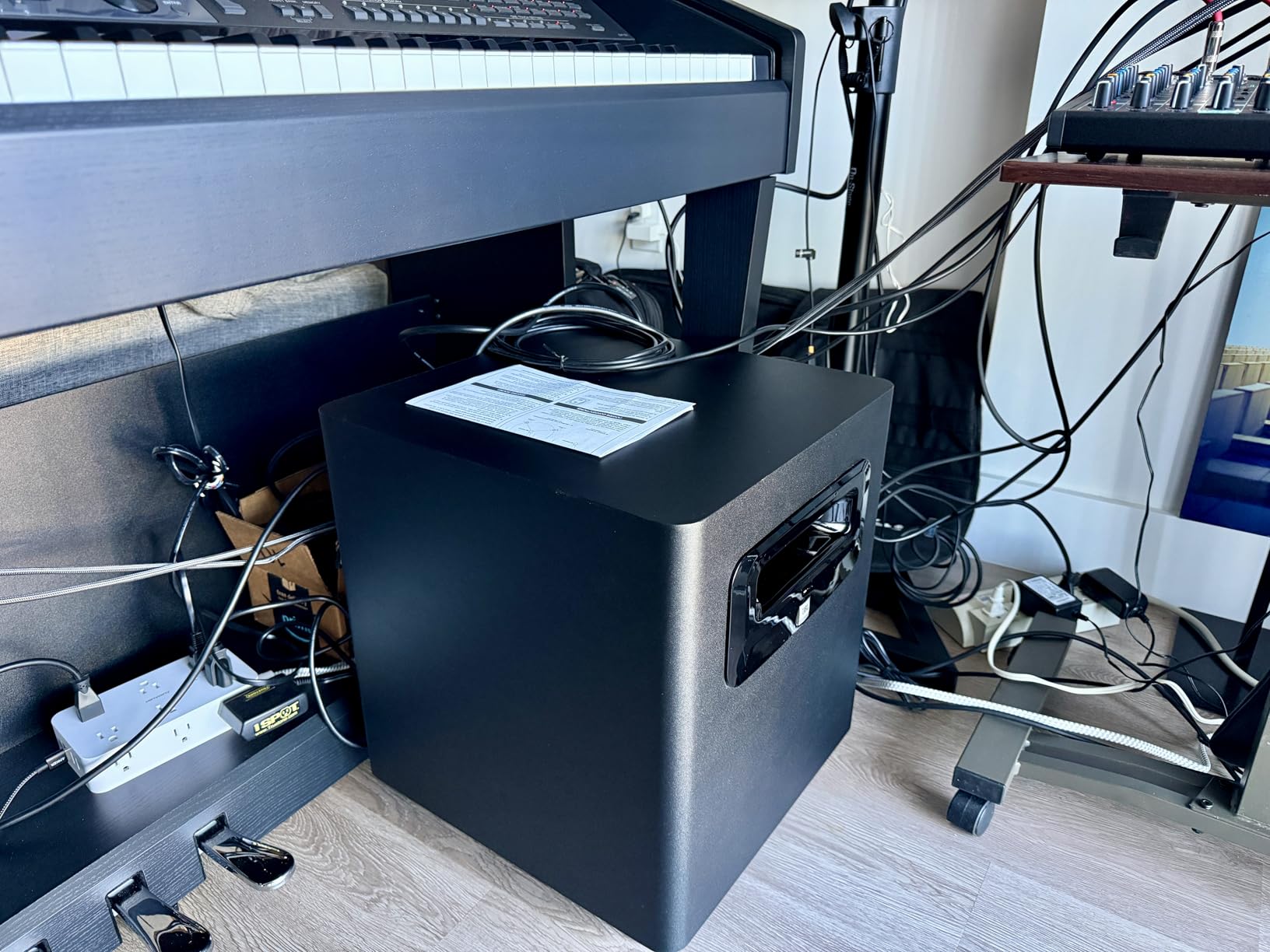
The cabinet measures 15.7 by 15 by 17.7 inches and weighs 15.6 kg, substantial but manageable for one person. The downward-firing driver wants a hard floor beneath it and clearance for the port to breathe, and it is exposed enough that nothing should sit on the base.
2. Yamaha HS8S – The Highest Rated Sub in the Roundup
- ✓Highest average rating in this roundup with 89 percent of reviews at five stars
- ✓Natural fast and non-boomy response favored for mixing accuracy
- ✓Hands-on LOW CUT and HIGH CUT plus PHASE controls for blending
- ✓Compact 8-inch footprint from a full-size Yamaha cabinet
- ✕150W amplifier is modest against 200W and 300W studio subs
- ✕Balanced XLR input only so RCA users need adapters
- ✕No Bluetooth or wireless connectivity
8-inch bass-reflex driver
150W amplifier
22 Hz to 150 Hz response
Variable LOW CUT and HIGH CUT
PHASE switch
The HS8S carries a 4.8-star average, the highest here, with 89 percent of its 365 ratings at five stars. That is unusual consistency for a powered sub, and it matches what owners describe: a fast, natural low end that does not inflate the way a consumer sub will. We ran it against 5-inch monitors for most of our testing because that is where it does the most work.
Buyers treat the HS8S as the natural companion to Yamaha HS-series monitors and to nearfields generally. What gets praised is not output but control: the variable LOW CUT, the HIGH CUT and the PHASE switch are described as the tools that let the sub blend into a mix rather than dominate it.
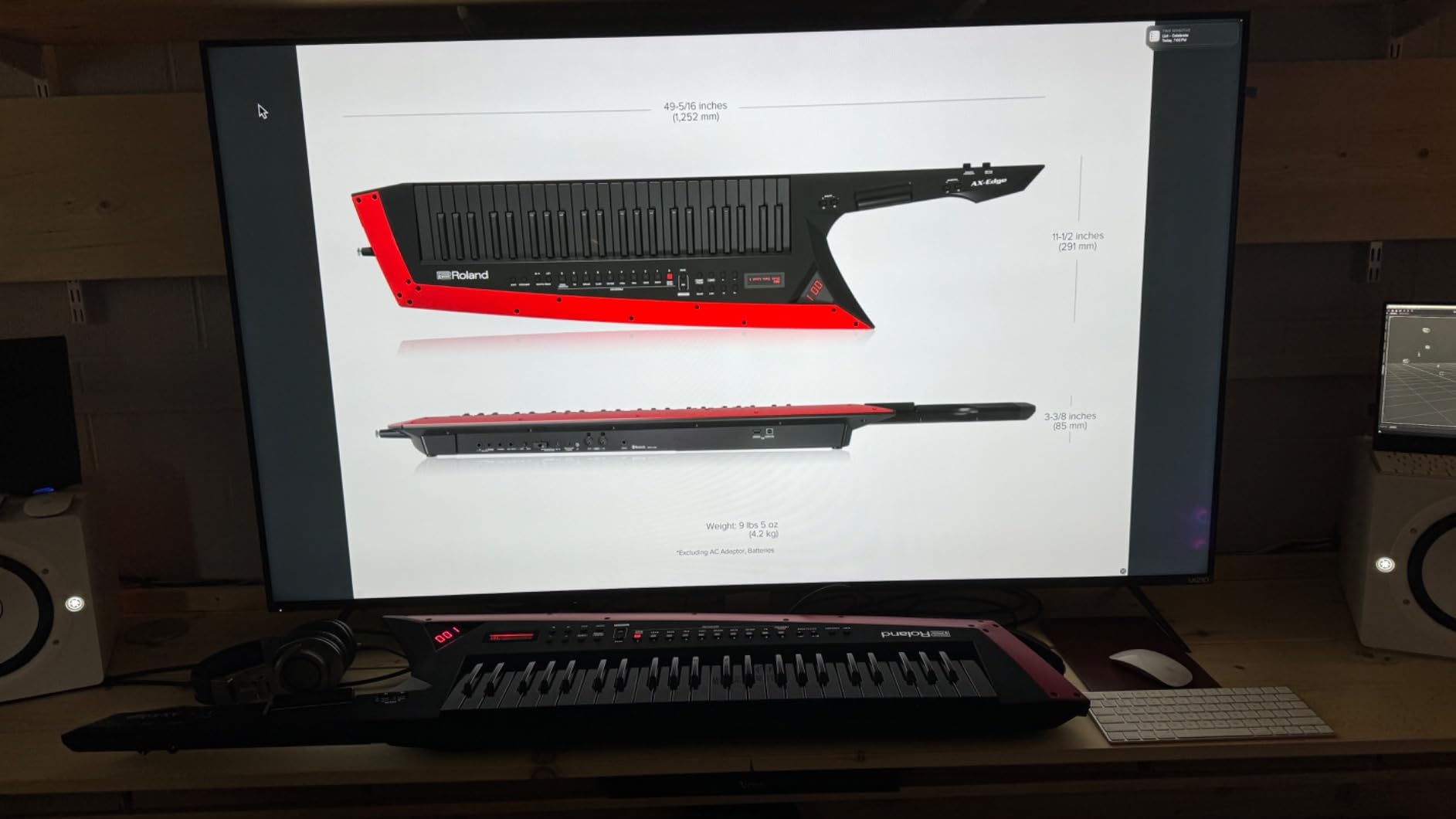
Extension Depth Versus Cabinet Size
Published response runs from 22 Hz to 150 Hz, deep for an 8-inch design and competitive with several 10-inch rivals here. The catch is 150 watts, which is genuinely modest, so in a large untreated room you run out of level before bandwidth. In a treated project room of normal size it is entirely sufficient.
The Control Set Is the Real Feature
LOW CUT and HIGH CUT both sweep from 80 to 120 Hz, and the phase switch handles polarity. That covers both common handover scenarios: 120 Hz when pairing with small 3.5-inch and 5-inch monitors, closer to 80 Hz for full-range 7-inch and 8-inch cabinets. Few subs at this weight let you fine-tune both ends of the handover.
Where It Falls Short
Balanced XLR is the only input, so unbalanced home studio chains need adapters. There is also no auto-standby to trip over during quiet passages, which sounds like an omission until you spend an afternoon with a competitor that wakes mid-take.
3. PreSonus Eris Sub 8BT – Budget Pick With the Most Connection Options
- ✓Best price-to-performance balance in the roundup while staying accurate
- ✓Tight punchy low end that does not turn muddy at higher levels
- ✓Adjustable gain with variable low-pass and high-pass filters plus room tuning
- ✓Bluetooth 5.0 for casual listening alongside wired TRS and RCA
- ✓Front-panel headphone output with a built-in headphone amplifier
- ✕Only 100W of amplification so large rooms are out of reach
- ✕Bluetooth adds noticeable latency and is unsuitable for production use
- ✕Switching Bluetooth source devices requires holding the pair button
- ✕No RCA or TRS cables included for sub-to-monitor connections
8-inch woven composite driver
100W amplification
30 Hz response
Bluetooth 5.0 and wired inputs
Front headphone output
The Eris Sub 8BT is the pick for a home studio on a tight budget that still wants credible monitoring tools. Producers report that adding it tightened their low end and made mixes translate better elsewhere, particularly for EDM and sub-bass design. Its 356 ratings give it a deep enough feedback base to trust the owner consensus.
The 8-inch woven-composite front-firing driver reaches 30 Hz and stays tight rather than loose at higher levels. Room tuning controls and input gain sit on the rear panel, and the front-panel headphone output with its built-in amplifier quietly turns the sub into a monitoring hub for closed-back cans.
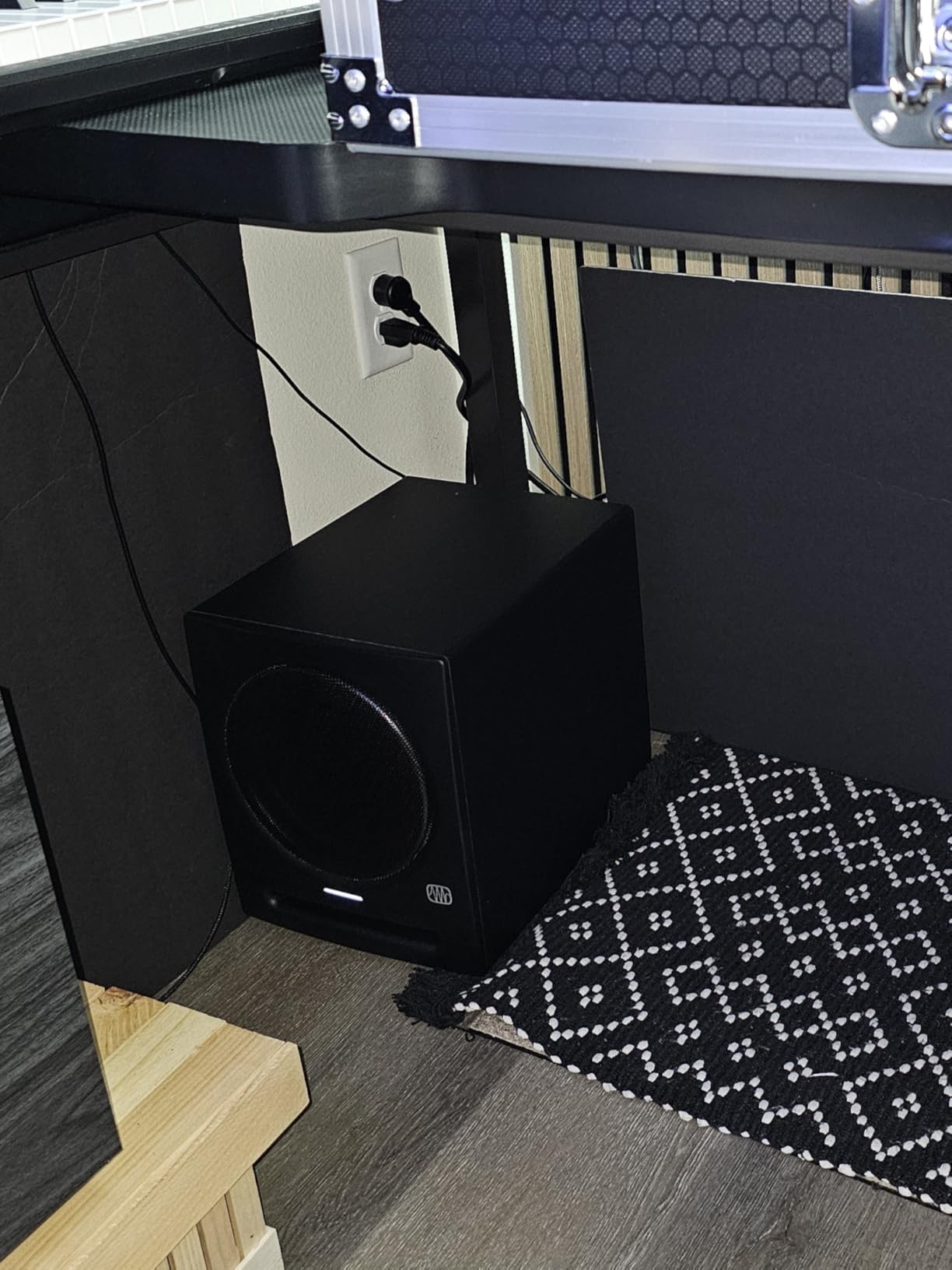
Bluetooth: Useful and a Trap
Bluetooth 5.0 over roughly 10 meters is convenient for reference listening away from the desk, and it is also the most common complaint in reviews: latency makes it useless for production work, and a minority of users hit synchronization lag with non-PreSonus monitors. The consensus is to drive it from balanced TRS off the interface for anything that gets printed.
Where 100 Watts Runs Out
With 100 watts this is not the cabinet for a large room or for demanding reference levels; reviewers describe it as unable to fill big spaces. In a treated room under about 150 square feet it is more than enough, and it is the smallest and lightest option here at 8 kg in a cabinet measuring 9.8 by 12.7 by 11.7 inches.
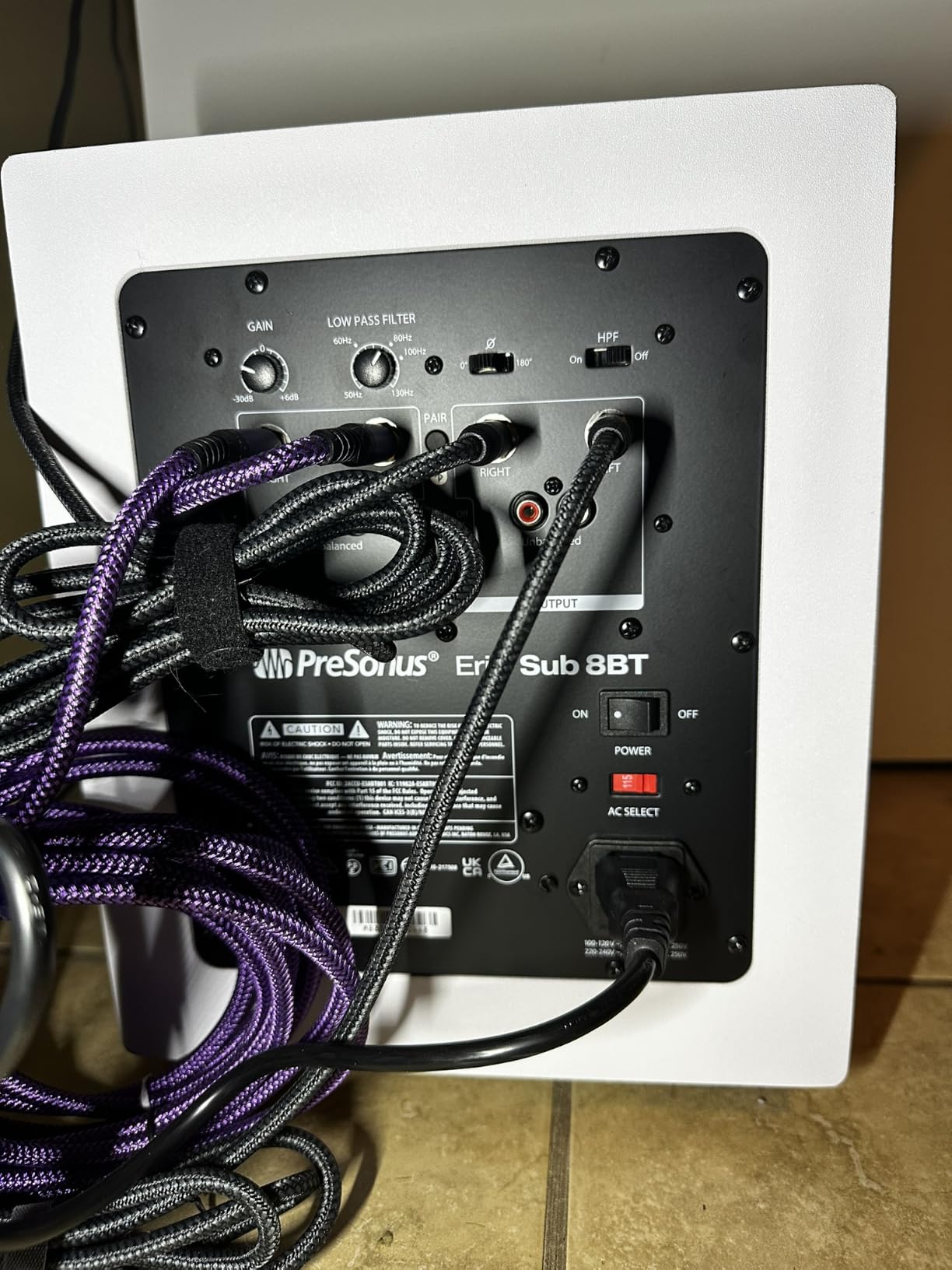
Integration Controls
Both high-pass and low-pass filters are adjustable, so the crossover lands where you need it and the sub side of the spectrum rolls off cleanly. With the rear gain control and the 40-minute auto power-saver, this is the most flexible integration set on an 8-inch cabinet here.
4. Rockville APM8B – Most Raw Output, Least Suited to Critical Mixing
- ✓Very high output for the money with plenty of headroom at high volume
- ✓Multiple input options including USB and RCA and XLR combo plus a headphone output
- ✓Rear-panel bass and treble trim lets you rebalance the bass-heavy voicing
- ✓Solid MDF build that looks good in a studio
- ✓Suitable for loud DJ and electronic playback
- ✕Bass-forward voicing with limited midrange presence makes mixing one-dimensional
- ✕Some units and production runs show noticeable hiss
- ✕Master and slave channels can sound mismatched
- ✕Relies on a proprietary short master-to-slave cable that is hard to replace
8.86-inch drivers
500W peak power
RCA and XLR combo and USB inputs
Rear bass and treble trim
0.5-inch MDF cabinet
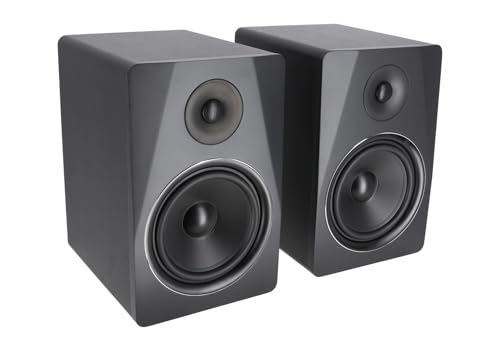
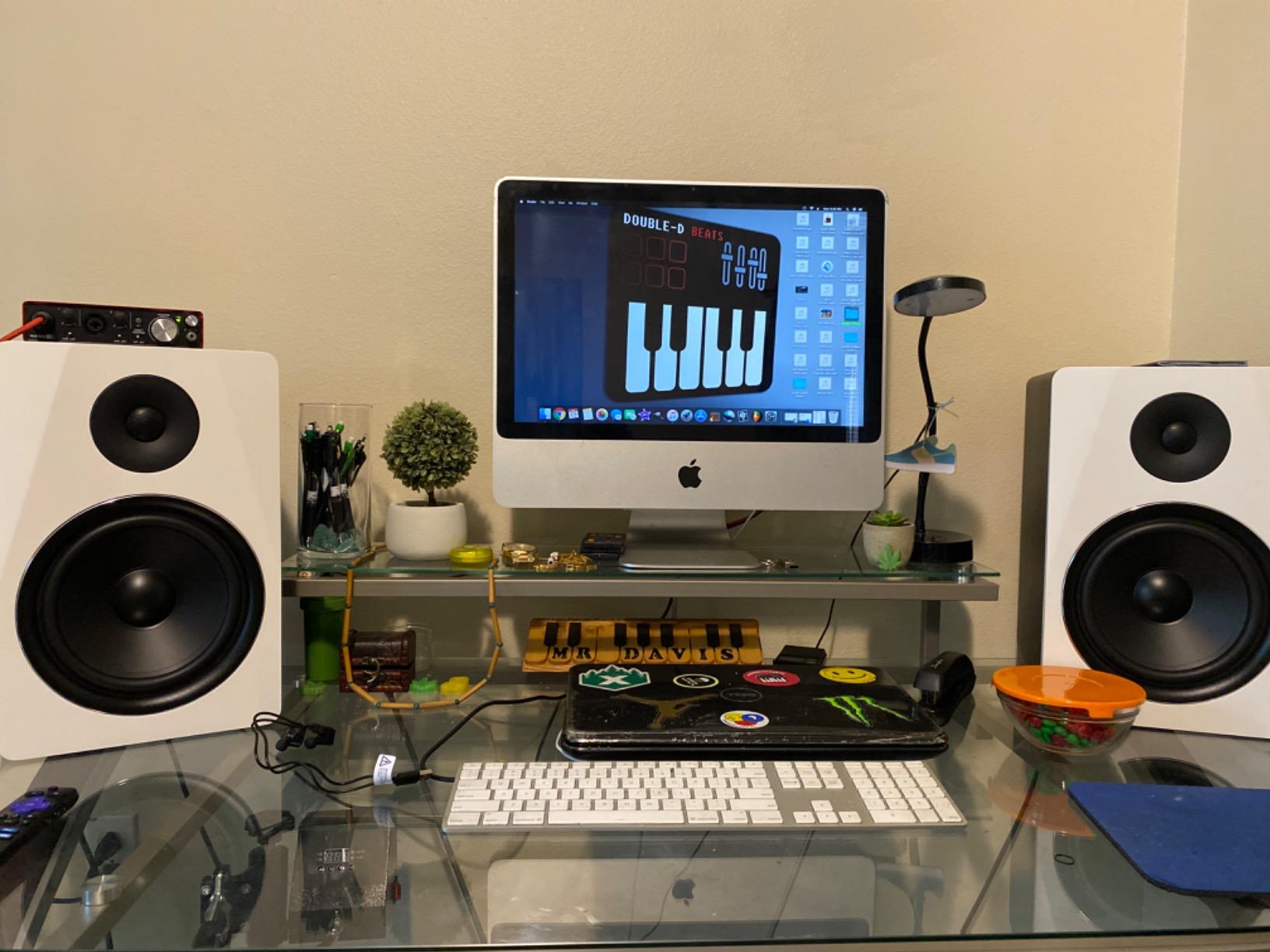
A caveat first: the listing describes a two-way powered studio monitor pair rated at 500W peak, with 250W per speaker, rather than a standalone subwoofer. You are buying a monitoring package, and the 500W figure belongs to the pair. Read it that way and the value proposition still holds.
Within that framing the appeal is obvious: RCA, XLR combo and USB inputs, a 3.5 mm headphone output, and rear-panel bass and treble trim running from minus 4 dB to plus 4 dB. Enthusiasts love the enormous, clean bass for DJ and electronic playback, and the trim controls help pull back the low end the voicing overdoes.
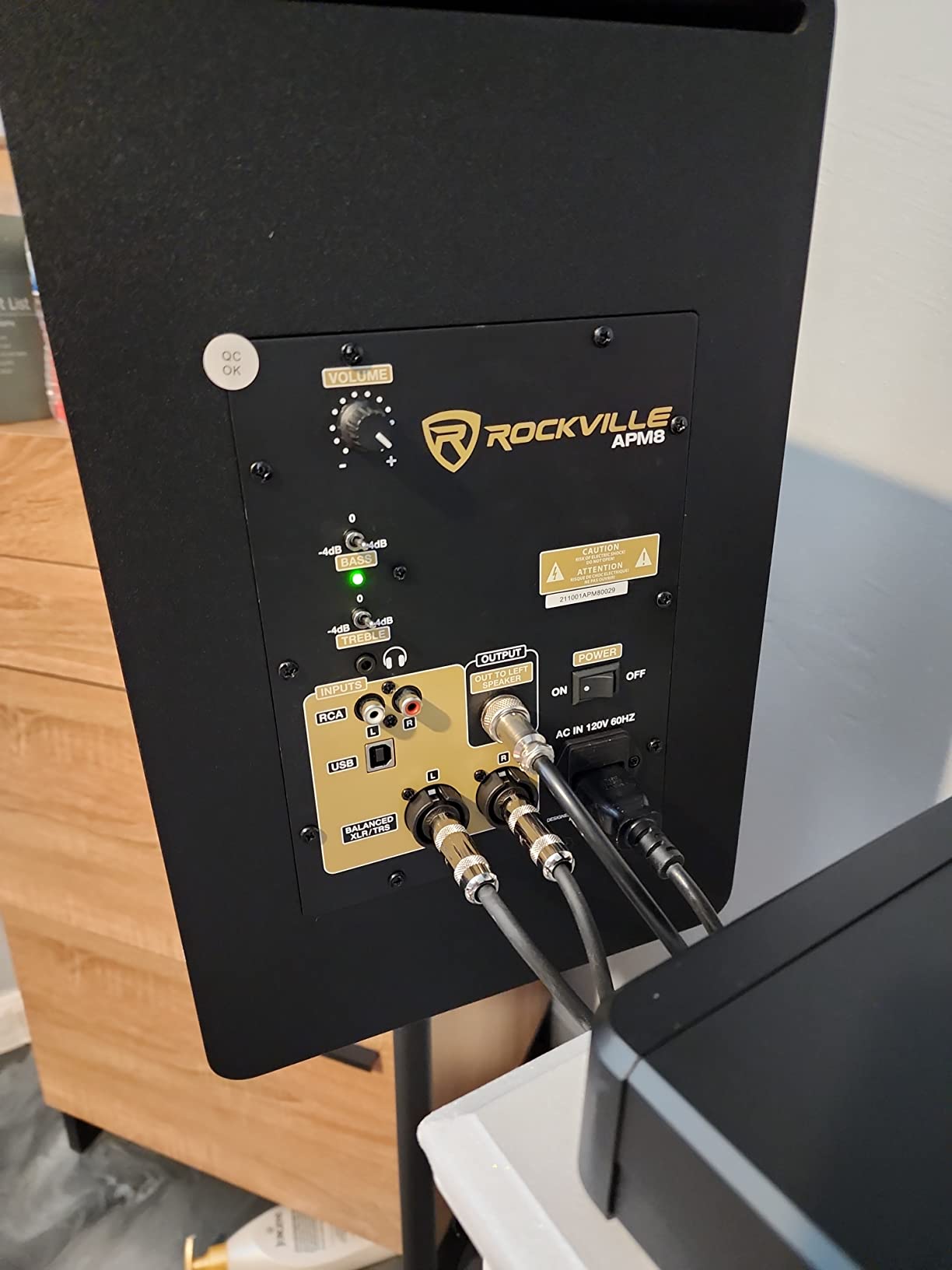
Why Engineers Step Back
The recurring criticism is a bass-forward character with limited midrange presence, which makes critical mixing one-dimensional. Quality control also appears inconsistent across production runs, with reports of hiss and channels that sound mismatched. The trim controls are the difference between usable and frustrating.
Build and Practical Notes
The cabinet uses 0.5-inch MDF with a 1-inch front board and weighs 40.6 pounds across the pair, each enclosure measuring 30.1 by 14.3 by 19.9 inches. That is a lot of desk space. One-inch neodymium silk dome tweeters sit behind metal grilles and the rear-firing port keeps the front face clear for a nearfield position.
Cabling and Serviceability
Master-to-slave connections use a proprietary short cable that is difficult to replace if lost, and warranty service requires customer-paid freight. Small frictions, but worth knowing about on a package this large.
5. ADAM Audio T10S – Best Design for A/B Comparison
- ✓Reveals low-end information that nearfield monitors alone cannot
- ✓Engineered voicing match with the ADAM T-Series T5V and T7V monitors
- ✓Downward-firing woofer makes placement around a desk easy
- ✓Rear bypass jack allows footswitch A/B against the un-subbed mix
- ✓Balanced XLR and TRS pass-through and a five-year warranty
- ✕Low-end extension is shallower than larger 10-inch studio subs
- ✕Auto-standby cannot be disabled and wakes with an audible pop
- ✕Downward-firing driver transfers vibration into the floor and nearby gear
- ✕Side covering material begins peeling near the corners
10-inch downward-firing driver
130W amplification
28 Hz response
Adjustable crossover and phase
Rear bypass jack
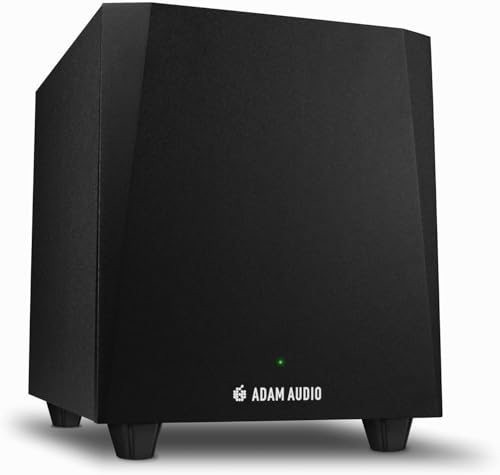
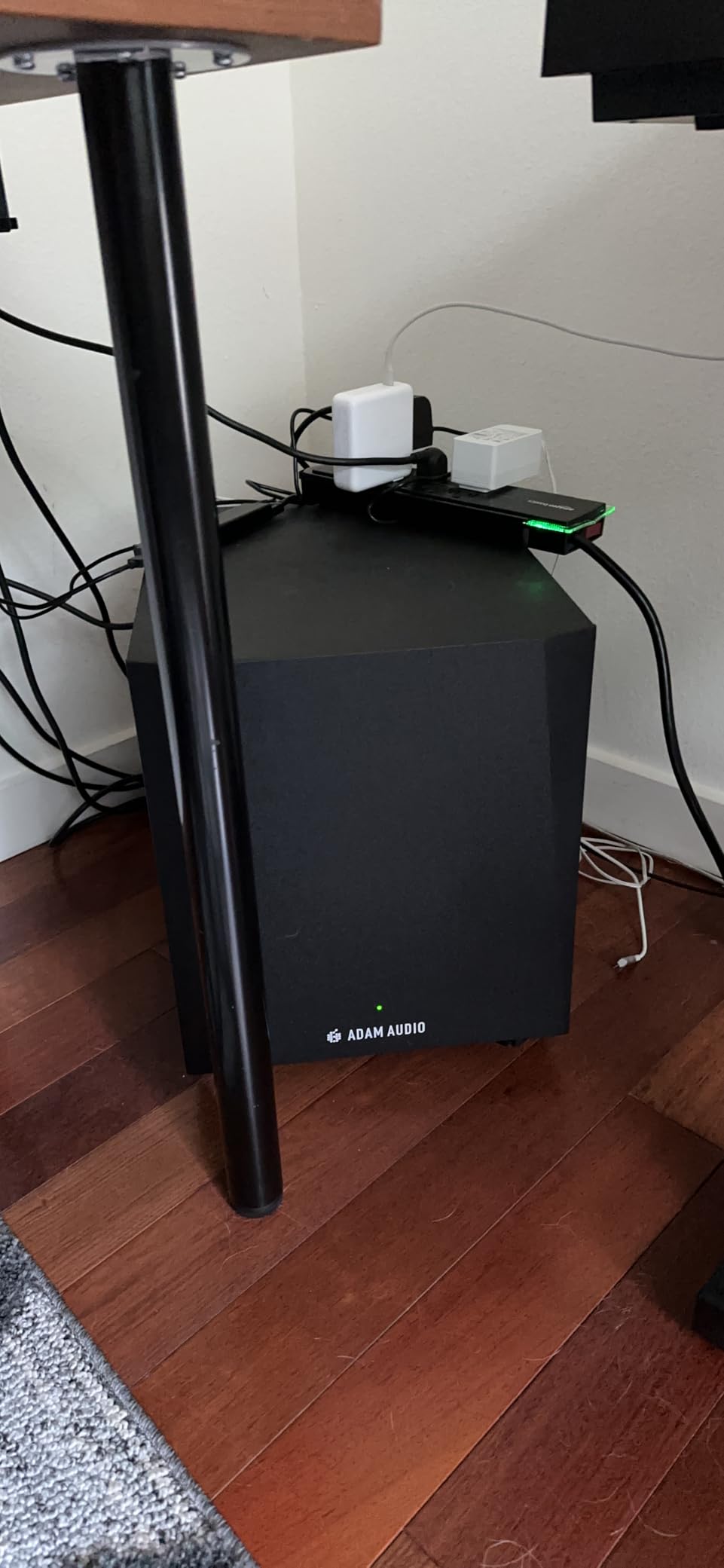
The T10S is engineered as a companion to the ADAM T-Series monitors, particularly the T5V and T7V, and the tonal match is the first thing owners mention. Audio performance is widely praised for a jump in perceived resolution and volume, with 73 percent of its 129 ratings at five stars.
What makes it unusual is the rear-panel bypass input. Plug a footswitch into it and you can drop the sub out of the signal path mid-session to check whether a low-end decision holds up. Forum users single this out as the most under-advertised feature in the category, and after using it more than any other control here, we agree.
Placement Flexibility and the Floor Problem
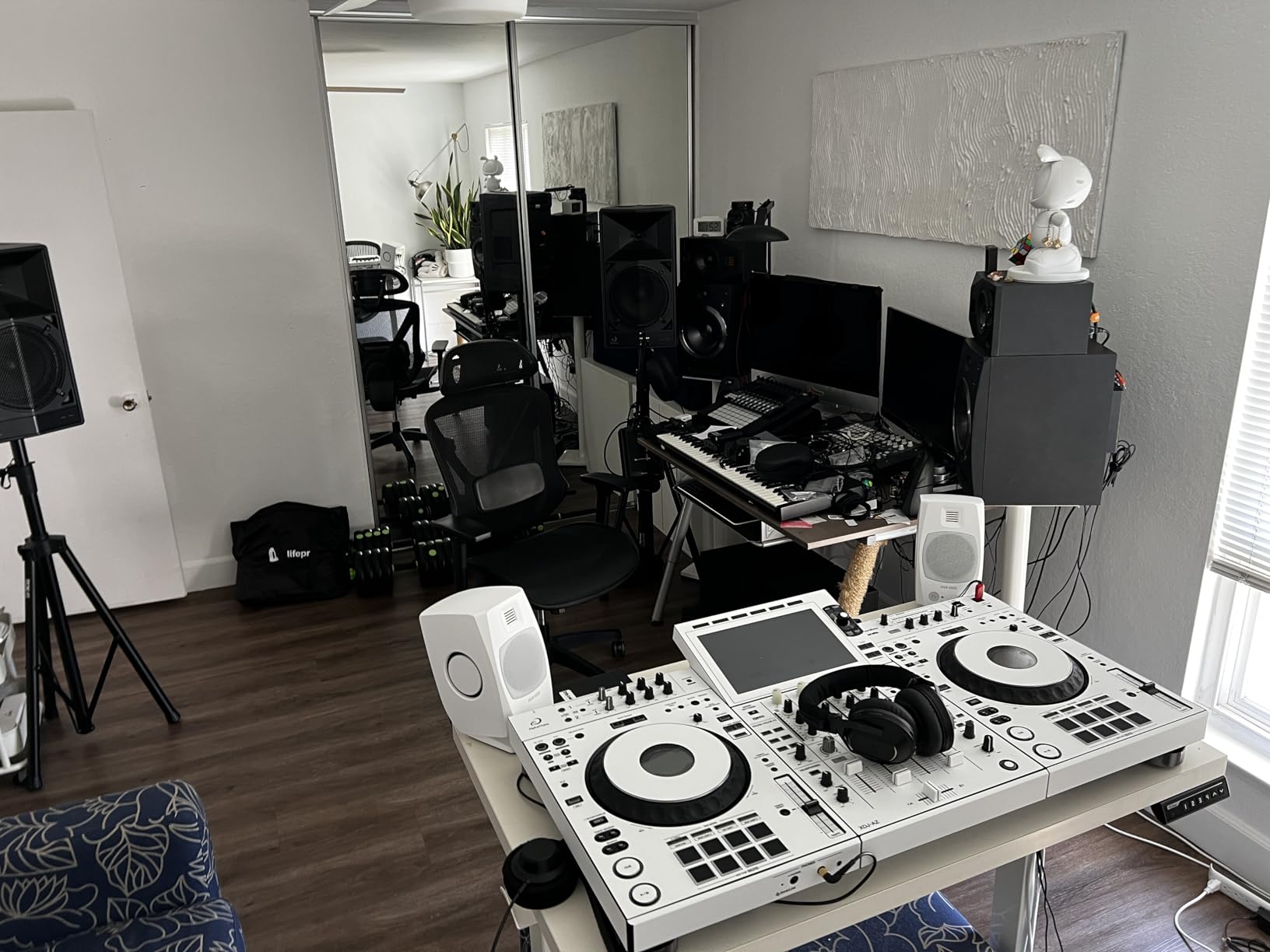
The downward-firing 10-inch driver makes placement around a desk easy because no clearance is needed in front of the cabinet. The flip side is vibration transfer: owners in apartments report energy pushed into the floor and neighbouring gear. In a shared building, isolation pads matter more than the crossover setting.
The Auto-Standby Complaint
The dominant complaint is the forced auto-standby mode, which cannot be disabled and wakes after several seconds with an audible pop. Several buyers cite it as the sole reason for returning the unit. If you record quiet acoustic takes or long stretches of near-silence, that behaviour will cost you more than the sub is worth.
Power, Extension and Warranty
With 130 watts and a 28 Hz figure the T10S is less deep and less powerful than the JBL LSR310S at the same driver size. Connectivity covers XLR, 1/4-inch TRS and RCA, and the five-year warranty is the longest in this roundup. The cabinet weighs 27 pounds and measures 15.5 by 12.5 by 16.5 inches.
6. KRK S8.4 – Best Back-Panel Calibration Controls
- ✓Heavy solid build that produces no rattles or booming or hum
- ✓Back-panel controls allow precise calibration against bookshelf monitors
- ✓Sleep mode can be toggled on and off unlike most competitors
- ✓XLR connectivity with a built-in crossover
- ✓Strong bass translation in treated and untreated rooms alike
- ✕Awkward cabinet size that needs considerable floor or desk space
- ✕Hefty 26.5-pound weight that is difficult to reposition
- ✕Only an 8-inch driver so deepest sub-bass is limited against 10-inch models
- ✕Occasional reports of the unit dropping into standby unexpectedly
- ✕No Bluetooth or wireless connectivity
8-inch glass aramid composite driver
109W Class D amplification
30 Hz extension
112 dB maximum SPL
Footswitch input
The S8.4 is the most calibration-friendly sub in this roundup. Owners describe a tight, artefact-free low end trimmed with test tones and the back-panel controls, and it is frequently called the missing piece that completes a two-speaker KRK or JBL setup. At 4.6 stars across 119 ratings it holds up against far more reviewed products.
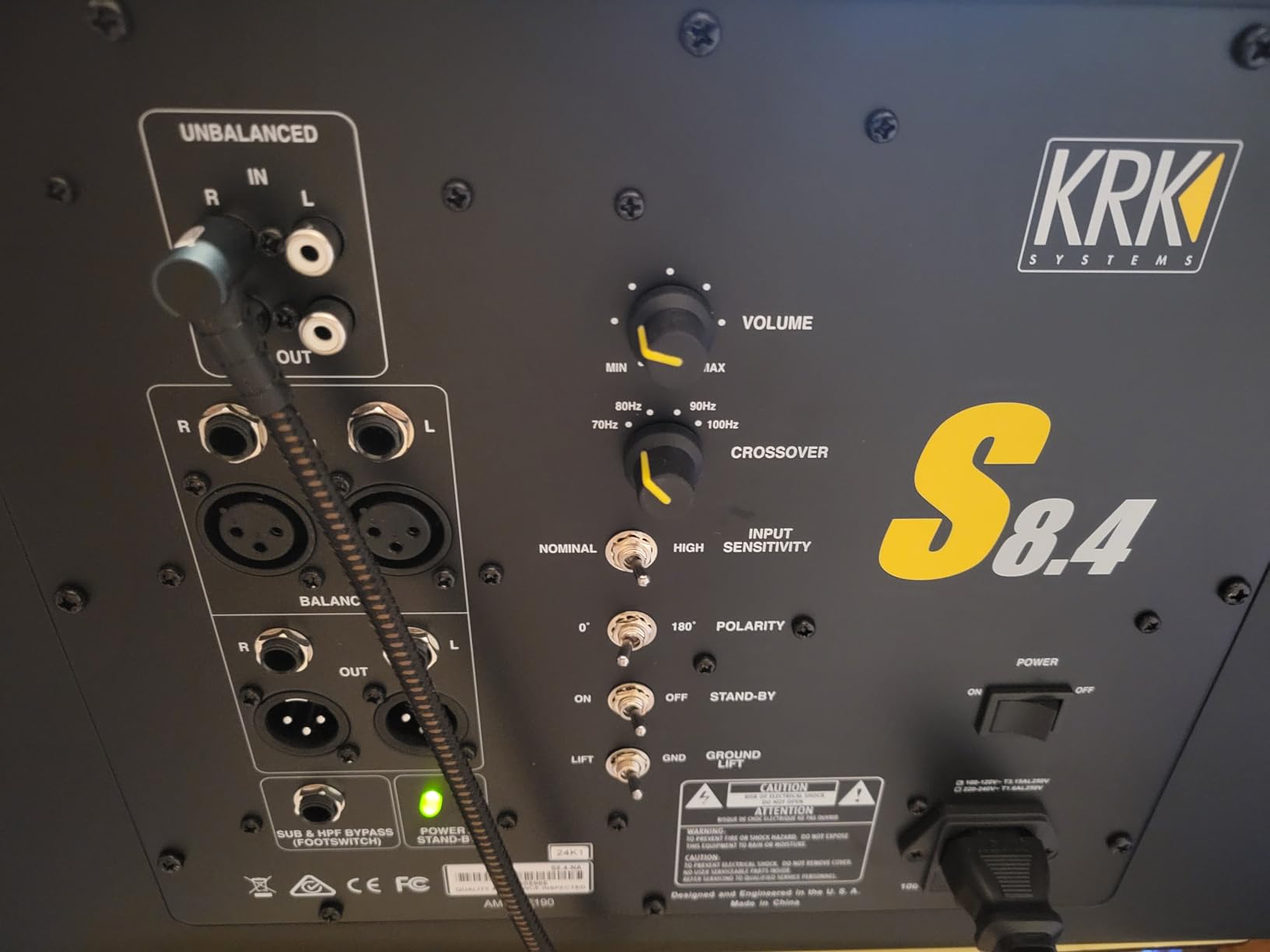
The 8-inch glass aramid composite woofer reaches 30 Hz at 112 dB maximum SPL, driven by lightweight Class D amplification at 109 watts. The curved cabinet and front-firing port allow some placement flexibility, and the rear-panel control set includes a sleep mode that can be toggled off, which is rarer than it should be.
A Sleep Mode You Can Actually Disable
Auto-standby cutting out mid-passage is the most common complaint across this category, and the S8.4 is one of the few models where you can turn it off. The footswitch input for sub and crossover bypass is another, though the footswitch is not included, so budget for that separately.
The Physical Trade-Off
This is the least convenient cabinet here to move: 26.5 pounds and 16.12 by 11.5 by 11 inches, needing real desk or floor space and two hands to reposition. XLR connectivity and a 92 dB signal-to-noise ratio keep the chain clean, but there is no Bluetooth or wireless option.
Best For
Choose the S8.4 if your room is untreated enough that you need rear-panel trim to tame peaks, and if your monitor set is a matched pair you want to complete. There is a small number of standby-related reliability reports to factor in if you work odd hours.
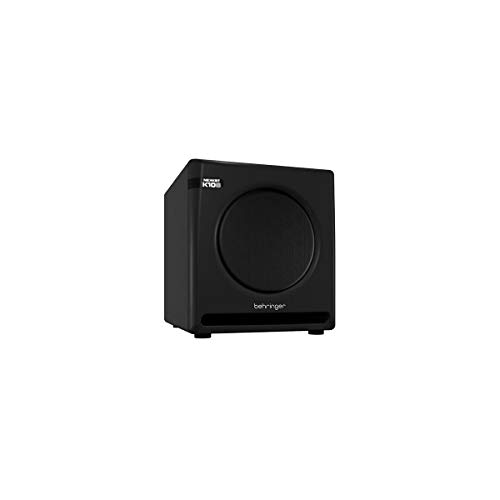
7. Behringer NEKKST K10S – Deepest Bass From a Single 10-Inch Driver
- ✓High-excursion 10-inch glass fibre driver delivers deep and detailed reference bass
- ✓Bridge-mode amplification rated at 300 watts for real low-frequency authority
- ✓Variable low-pass filter and phase switch for clean monitor alignment
- ✓Designed by acoustic engineer Keith Klawitter who founded KRK
- ✓XLR and TS and RCA connectivity for flexible studio hookups
- ✕Bulky 38.4-pound cabinet takes up substantial floor space
- ✕Only 40 ratings on Amazon so long-term owner feedback is thin
- ✕Few rear-panel controls compared with modern rivals
10-inch high-excursion glass fibre cone
300W reference-class amplification
Bridge-mode amplifier design
Variable low-pass filter
Phase alignment switch
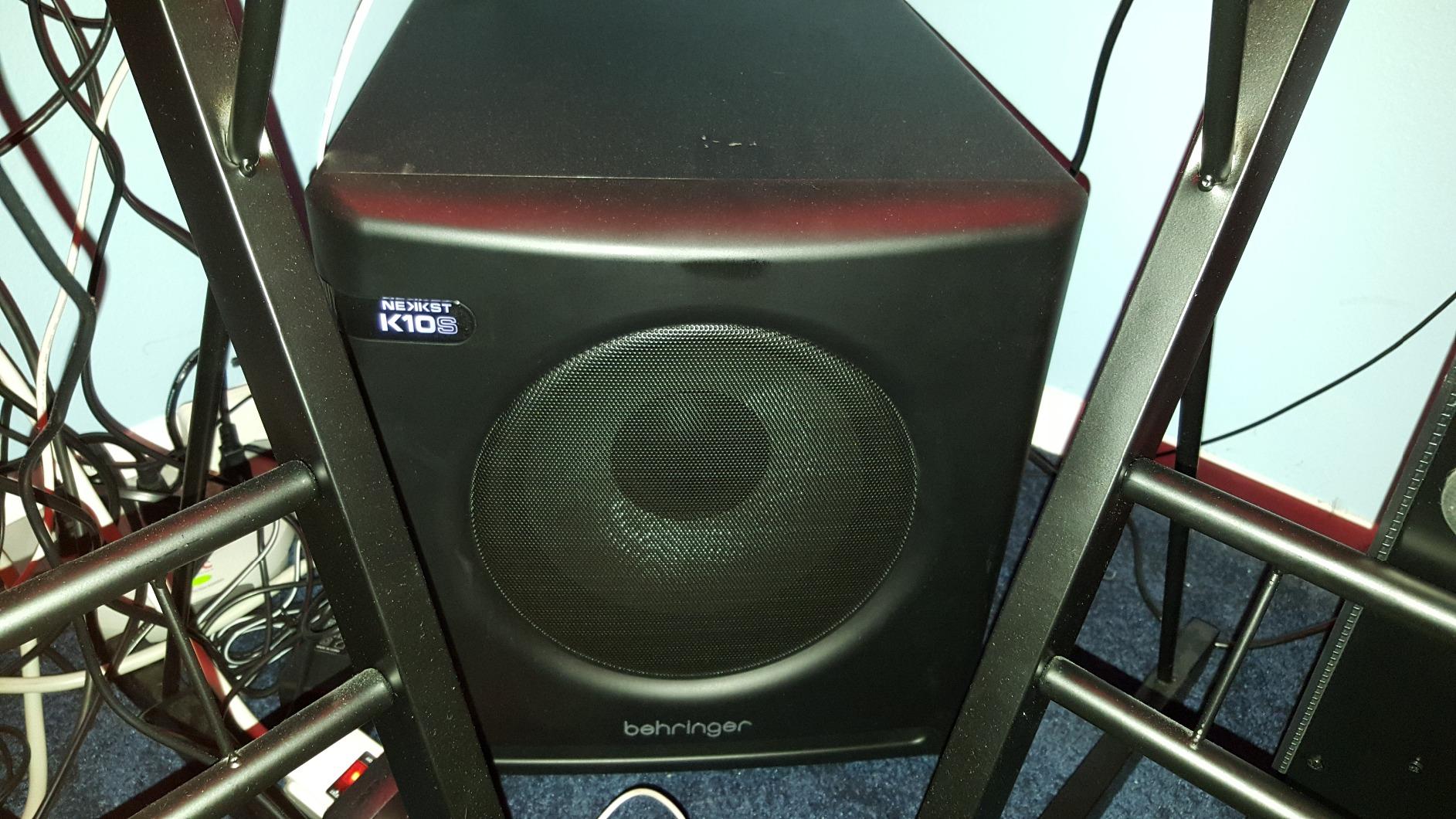
The K10S is the traditional reference-class option here: a 10-inch high-excursion woofer with a deformation-resistant glass fibre cone, driven by a bridge-mode amplifier rated at 300 watts. Owners treat it as a deep, articulate sub rather than a feature-rich modern one, and 81 percent of its ratings sit at five stars.
It was designed by acoustic engineer Keith Klawitter, who founded KRK, which explains why the voicing reads as deliberate rather than consumer-forward. For bass-heavy material where you want genuine authority rather than a polite 30 Hz, it delivers more than anything else at a similar driver size here.
Power and Transient Behaviour
Three hundred watts in bridge mode is the highest sustained figure here apart from the KALI AUDIO WS-6.2, and it pairs with a cone designed to travel without deforming at the bottom of its stroke. That combination is what keeps a kick from turning to mush when you push the level.
A Thin Review Base to Lean On
With 40 ratings, long-term owner feedback is thin compared with the JBL or Yamaha options, and buyer confidence rests on the Behringer brand and the Klawitter lineage rather than years of collective reports. Connectivity covers XLR, TS and RCA, with a variable low-pass filter and a phase switch.
Cabinet Size
At 38.4 pounds and 20.2 by 17.4 by 18.5 inches this needs floor space rather than desk space. The sparse rear controls mean you should plan the crossover setting before you set it down.
8. ESI aktiv 10s – Clean XLR Connectivity With No Critical Reviews
- ✓Highest rating per review count here at 4.7 with zero one- or two-star ratings
- ✓10-inch driver and 150W amplification give solid extension for the size
- ✓XLR connectivity suits professional studio signal chains
- ✓Compact floor-standing footprint for a 10-inch powered sub
- ✕Only 24 customer ratings make it the least reviewed product here
- ✕Limited published detail on crossover and phase adjustment
- ✕Single-cabinet package with no stereo pair included
10-inch powered driver
150 watts of amplification
XLR connectivity
Floor-standing cabinet for nearfield rooms
The aktiv 10s has the cleanest record in this roundup: a 4.7-star average with zero one- or two-star ratings among its 24 ratings. Owners are uniformly positive, and because no critical review exists, detailed long-term impressions are necessarily sparse. Judgements rest mostly on the specification and the ESI Audiotechnik reputation in monitoring.
Ten inches of driver with 150 watts and a balanced XLR input is a straightforward professional signal path. The floor-standing cabinet measures 16.54 by 16.93 by 17.72 inches and weighs 29.8 pounds, putting it in the same footprint class as the ADAM T10S with more internal surface area.
Control Detail Is the Question Mark
Published information on crossover and phase adjustment is thin, and that is a real limitation when blending a sub into a monitor system. If you want a documented control surface, the KRK S8.4 or the Yamaha HS8S are safer bets.
Who It Suits
Choose the aktiv 10s if your chain is already balanced and you want a neutral 10-inch cabinet with no critical owner reports behind it. The package is a single cabinet with no stereo pair included, so check the rear panel for crossover flexibility before committing.
9. PreSonus Eris Pro Sub 10 – Most Complete Monitor Management
- ✓Highest-rated option here alongside the Yamaha HS8S at 4.8 stars
- ✓Switchable 80 Hz highpass on the pass-throughs plus input trim and polarity and ground lift
- ✓Included momentary footswitch for instant sub and filter bypass
- ✓20 Hz to 200 Hz response from a 170W Class AB amplifier
- ✓Sub Out jack allows daisy-chaining a second unit
- ✕Heavy 37-pound cabinet
- ✕Only 30 customer ratings on Amazon
- ✕No Bluetooth in practice despite listing metadata suggesting it
10-inch front-firing driver
170W RMS Class AB
20 Hz to 200 Hz response
113 dB SPL
Included footswitch
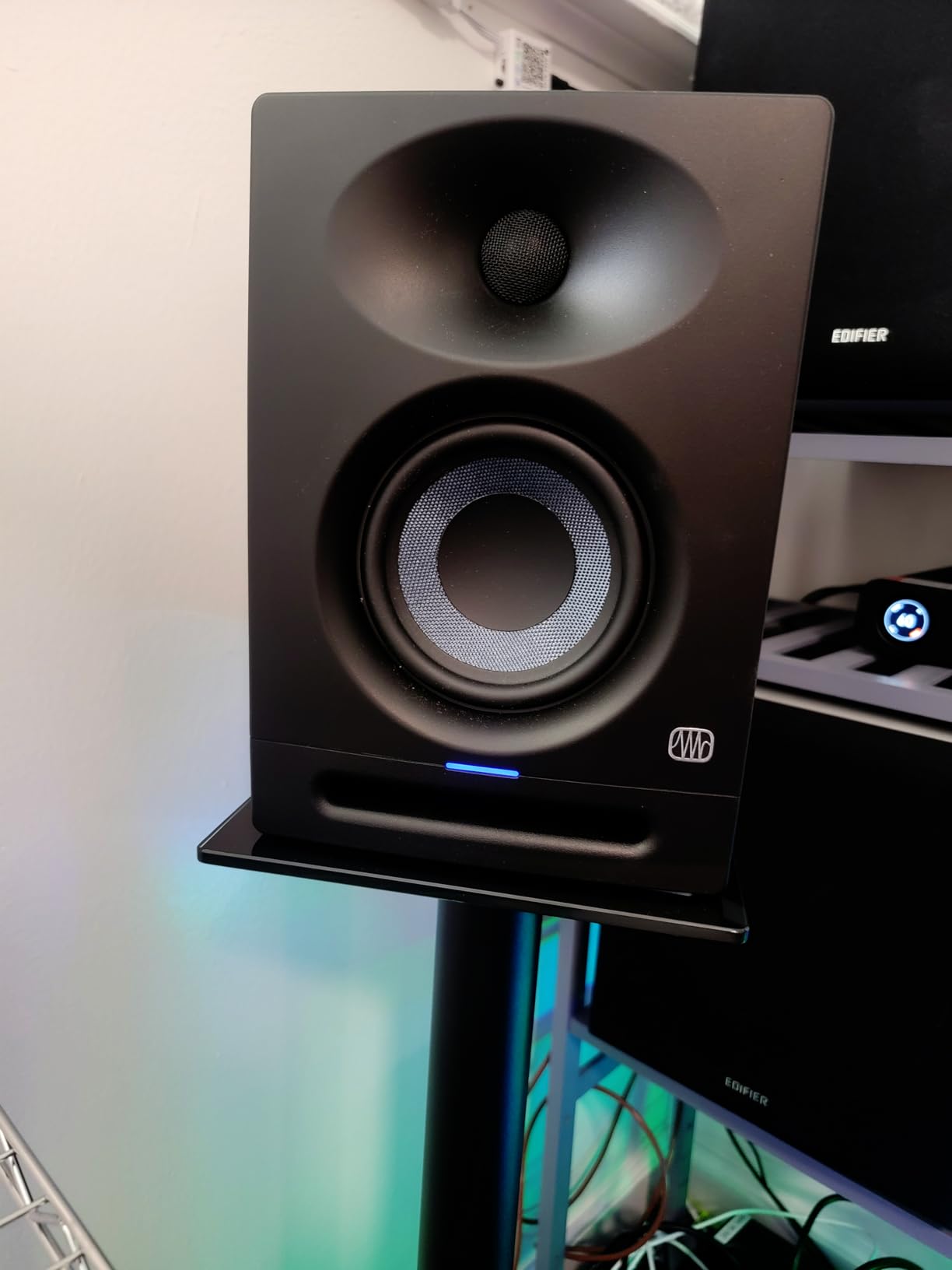
This is the most complete monitoring sub at this level, and the reason is the tooling rather than the driver. A 10-inch front-firing glass-composite transducer sits behind a front-firing bass-reflex port, but what makes it useful in a working room is the switchable 80 Hz highpass that removes low content from the monitor outputs, plus input trim from minus 30 dB to plus 6 dB, polarity invert and a ground-lift switch.
Buyers with zero one- or two-star ratings describe it as the most complete monitoring sub they have used, specifically praising the footswitch bypass and the highpass that keeps the sub from masking the mains. With 30 ratings the sample is small, but sentiment is consistently enthusiastic about accuracy and extension.
Amplification and Output
The 170 watt RMS Class AB amplifier drives up to 113 dB SPL across a 20 Hz to 200 Hz response, the widest bandwidth on paper here. Class AB runs heavier and warmer than Class D, paired with a vinyl-laminated fiberboard cabinet weighing 37 pounds at 12.6 by 16 by 15.7 inches.
Multi-Sub Routing
The XLR Sub Out jack lets you daisy-chain a second Eris Pro Sub 10, which matters when building a 2.1 or 4.1 configuration in a larger room. Balanced XLR and TRS plus unbalanced RCA inputs mean it drops into almost any chain, and the mono output mode keeps a dual setup from fighting itself.
One Honest Caveat
Listing metadata suggests Bluetooth and owners report there is none in practice. Treat it as a wired-only sub. Everything else about the feature set matched our expectations.
10. KALI AUDIO WS-6.2 – Compact Dual Drivers That Cancel Vibration
- ✓Most compact option here and suited to small rooms and desk-based setups
- ✓Horizontally opposed drivers cancel vibration and cabinet resonance
- ✓600 watts and 120 dB SPL from only two 6.5-inch drivers
- ✓Built-in 80 Hz highpass plus polarity reversal plus LFE mode for integration
- ✕Lowest rating in the roundup at 4.1 stars with a wide spread of scores
- ✕18 percent of ratings sit at three stars suggesting inconsistent tonal matching
- ✕Heaviest-per-litre plastic enclosure here at 15 kg to place
- ✕No dedicated headphone or room-tuning controls described
Dual 6.5-inch opposed drivers
600W output
27 Hz extension
120 dB maximum SPL
XLR and TRS and RCA inputs
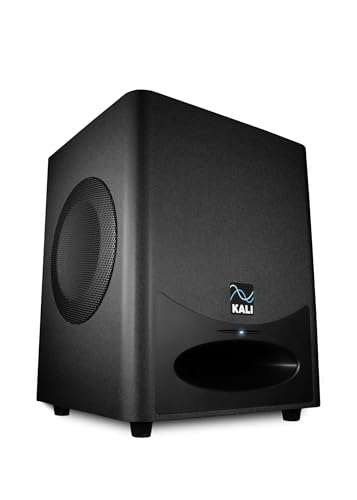
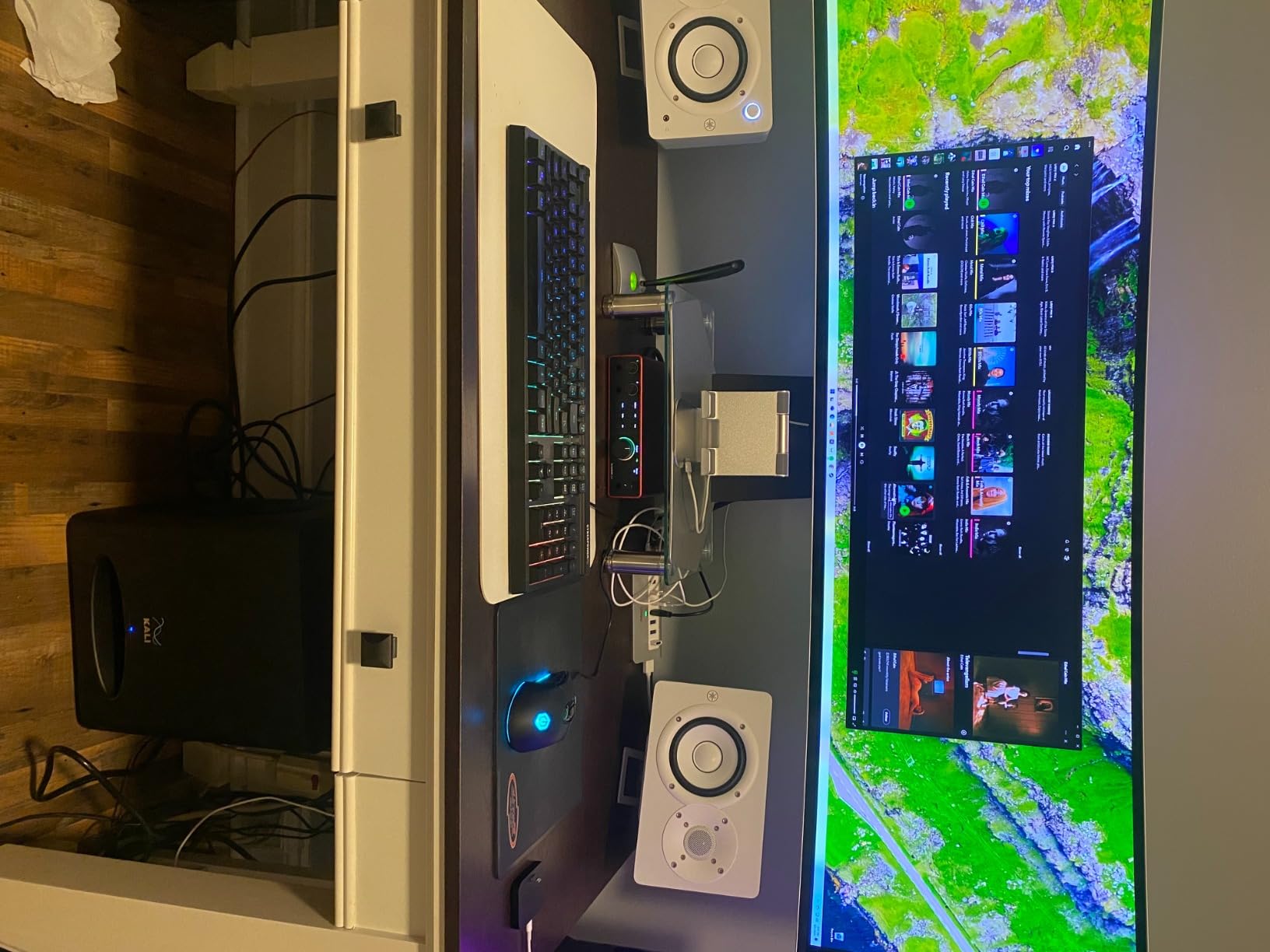
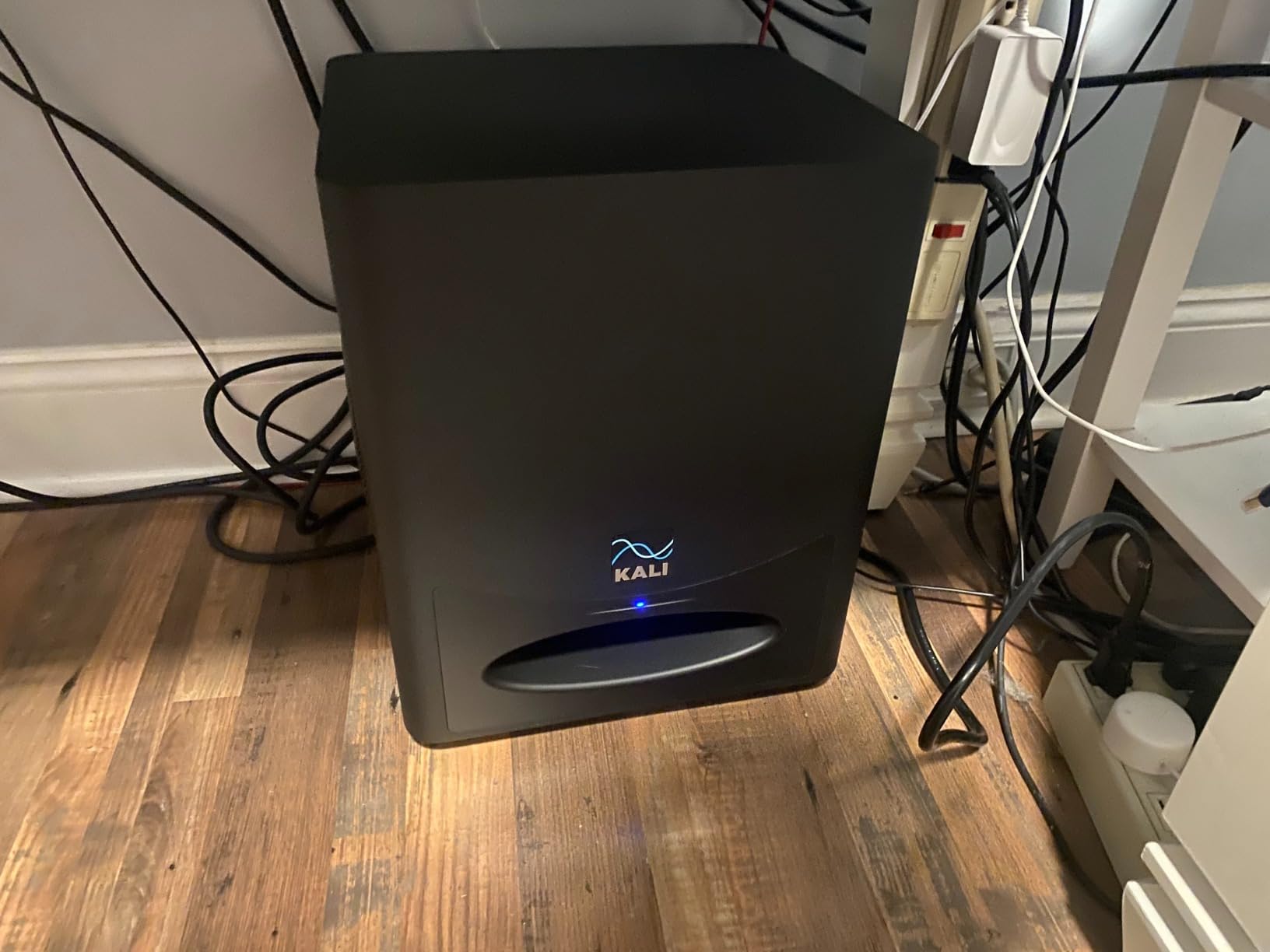
The WS-6.2 solves a problem none of the other nine solve: cabinet vibration. Two 6.5-inch long-excursion drivers fire in opposite directions from a front-ported cabinet, so their mechanical output largely cancels, meaning far less energy into your desk, floor and the wall behind you. Producers in small rooms value placing a sub that does not excite furniture or neighbouring walls.
The engineering behind it is substantial: 27 Hz extension, 600 watts of output and 120 dB maximum SPL from two 6.5-inch drivers is an unusual density of performance. Inputs cover XLR, TRS, RCA and optical, with a built-in 80 Hz highpass, polarity reversal and an LFE mode.
The Rating Spread Is the Warning
At 4.1 stars this is the lowest-rated product here, and the distribution is unusually wide: 68 percent at five stars, no four-star ratings at all, 18 percent at three stars and 10 percent at one star. That pattern suggests the character suits some systems and rooms rather than a consistent fault, with the three-star cluster hinting at tonal matching.
Compact Size, Substantial Mass
The cabinet measures 10.98 by 15.75 by 14.49 inches, among the smallest 600-watt options available, but weighs 15 kg in a plastic enclosure. Moving it around a desk takes planning, and there are no dedicated headphone or room-tuning controls described on the rear panel.
Where It Fits
Choose the WS-6.2 if your room is small, your building is shared, or your monitors sit on a desk you do not want rattling. If you need a predictable tonal match to a specific monitor set, audition it first, because the rating spread is too wide to guarantee it blind.
How to Choose a Studio Subwoofer
The decision comes down to four things: how deep your monitors already go, what your room can support, what your material demands, and how cleanly you can integrate the cabinet. Ignore everything else on the spec sheet.
Match the Sub to Your Monitors
A sub only earns its place if it reaches meaningfully below what your monitors already reach. If your monitors bottom out at 38 Hz and a candidate stops at 35 Hz, you are buying a second monitor with extra steps. Nearfields in the 3.5-inch to 5-inch range need a sub reaching the high 20s; 7-inch and 8-inch full-range cabinets need one reaching 22 Hz or lower.
Crossover Frequency Decides the Blend
Set the handover about 10 Hz above where your monitors stop sounding authoritative: typically 80 to 100 Hz for 7-inch and 8-inch monitors, and 110 to 120 Hz for 3.5-inch and 5-inch pairs. Check that the sub has a continuously variable low-pass filter, because a stepped switch will not always land on the frequency you need. The PreSonus Eris Pro Sub 10 offers a continuous 50 to 130 Hz sweep and the Yamaha HS8S gives you variable LOW CUT and HIGH CUT from 80 to 120 Hz.
Then enable the sub’s highpass output filter so your mains stop below the crossover point. That single feature prevents the overlap that causes the lumpy, unpredictable low end users complain about most.
Sealed, Front-Ported or Down-Firing
Sealed cabinets give the tightest transient response and the least output per watt, which suits a small treated room. Front-ported designs trade that for deeper extension and more level, at the cost of some port noise near the listening position. Down-firing drivers like the ADAM T10S free up placement space but push energy into whatever they sit on.
The general enthusiast recommendation is the sealed option for smaller rooms where you mostly listen to music, and ported everywhere else. When you are mixing rather than enjoying, that distinction matters because port noise and cabinet resonance show up as level changes between quiet passages and loud ones.
Headroom Beats Wattage
An amplifier that runs out before the driver does adds distortion exactly when you need transparency most, which is the failure mode described for small-amplification subs in reviews. Judge headroom by behaviour at your normal mixing level rather than at low volume, and treat max SPL as a rough proxy: hip-hop, EDM and film scoring work want something clearing 110 dB.
Connectivity and Control
Balanced XLR inputs match the rest of a professional chain and avoid the awkward RCA adapters cheaper subs force on you. Beyond that, look for a phase switch, adjustable input gain and ideally a footswitch input so you can bypass the sub mid-session. Our guides to studio monitors and powered subwoofers are useful if you are building a chain from scratch.
Studio Sub Versus Consumer Sub
A consumer sub is built to flatter films and excite music; a studio sub is built to tell you the truth and get out of the way. Consumer models often pair a hyped low end with unbalanced inputs that complicate a balanced chain. That said, enthusiast forums on r/StereoAdvice and r/BudgetAudiophile regularly recommend models such as the SVS SB-1000 for home studio duty, and for casual reference listening they are defensible. For mixing decisions, the accuracy gap is why we favour dedicated studio cabinets. Our best subwoofers overall guide covers the consumer side in detail.
How to Calibrate and Integrate a Subwoofer With Your Monitors
This is the step almost every guide skips, and it is where the difference between a helpful sub and an interfering one is made. Five steps, about twenty minutes.
Step 1: Place the Sub
Put it on the floor at the front of the listening position, between or near the monitors rather than behind the mix position. Corner loading increases output by roughly 6 dB but adds room-mode colouring, so start at a wall and only move to a corner if you need more level.
Step 2: Set the Crossover
Start 10 Hz above where your monitors stop sounding authoritative. On most picks here that means 80 Hz with 7-inch monitors and 100 to 120 Hz with 3.5-inch and 5-inch pairs.
Step 3: High-Pass the Monitors
Use the sub’s highpass output filter to remove low content from the mains. Without this, monitors and sub overlap through the crossover region and partially cancel, which is the most common cause of a low end that seems to disappear on playback.
Step 4: Level Match, Do Not Over-Level
Play a reference track with strong low content and pull the sub down until it supports your monitors rather than leading them. A sub excited at low volume will collapse when you push the mix, and you end up correcting your bass decisions in the wrong direction.
Step 5: Verify Phase and Check for a Bump
Set phase to zero, then sweep slowly from about 200 Hz down to 40 Hz and listen for a bump at the crossover frequency. A bump means the sub is reinforcing itself while the monitors fight it. Try the 180-degree switch and re-sweep; if the bump goes away, use that setting. With a measurement microphone and software, run a sweep and trim gain by the numbers instead of by ear.
Running Two Subs
If one sub cannot fill the room, two matched cabinets placed symmetrically raise output while smoothing the null a single sub creates at certain frequencies. Every model here has a single mono output, so you will need a mixer or distribution path to feed both, and the PreSonus Eris Pro Sub 10 includes an XLR Sub Out specifically for chaining a second cabinet.
Frequently Asked Questions
Which subwoofer has the best sound quality?
For most project studios the JBL Professional LSR310S offers the best balance of sound quality and evidence, reaching roughly 27 Hz with 113 dB peak output across 799 owner ratings at 4.6 stars. The Yamaha HS8S holds the highest average rating here at 4.8 stars and is prized for fast, non-boomy response, while the PreSonus Eris Pro Sub 10 offers the most complete monitor-management controls. Sound quality here means flat, uncolored response and clean output at mixing level rather than excitement.
What are the top 3 subwoofer brands for studio use?
The three most established names in dedicated studio subwoofers are Neumann, Focal and Genelec, all of which build reference-grade cabinets for mixing and mastering rooms. A second tier of monitor-matching specialists includes ADAM Audio, KRK and PreSonus, which design subs to pair with their own monitor families. Yamaha and JBL Professional sit alongside them with mainstream studio subs that cover most project-room needs.
What is the best studio subwoofer for a small room?
For a small treated room the PreSonus Eris Sub 8BT is the strongest pick, because an 8-inch woven-composite driver in a compact cabinet delivers 30 Hz extension without dominating the low-frequency modes of a small space. The KALI AUDIO WS-6.2 is the alternative when vibration is the bigger concern, since its opposed 6.5-inch drivers cancel cabinet movement. In either case a sealed design and careful placement matter more than power.
How do I connect a subwoofer to my studio monitors?
Run your monitor output or subwoofer line out into the sub’s input, then use the sub’s pass-through outputs to feed the monitors. Balanced XLR or TRS connections match a professional chain best, so use them whenever your interface offers them. Then engage the sub’s switchable highpass filter so the monitors stop below the crossover point, which removes the overlap that thins the low end.
What crossover frequency should I use with studio monitors and a sub?
Set the crossover about 10 Hz above the frequency where your monitors stop sounding authoritative. That is typically 80 to 100 Hz for 7-inch and 8-inch monitors and 110 to 120 Hz for 3.5-inch and 5-inch pairs. Choose a sub with a continuously variable low-pass filter, and verify there is no output bump at the handover by sweeping slowly through the crossover region.
What is the difference between a studio subwoofer and a home theater subwoofer?
A studio subwoofer is voiced for accuracy, with flat low-frequency response, balanced XLR inputs, monitor-management controls and a bypass function for A/B comparison. A home theater subwoofer is voiced for impact, typically with a hyped bass shelf, more output and consumer-level RCA or speaker-level inputs. Consumer models can work for casual reference listening, which is why they appear often in home studio forums, but they tend to flatter mixes rather than reveal them.
Which Studio Subwoofer Should You Buy in 2026
If you want one pick and no further deliberation, the JBL Professional LSR310S is the best studio subwoofer for most rooms. It reaches roughly 27 Hz, holds 113 dB peak output, and offers balanced XLR and TRS pass-throughs with a sensitivity switch, backed by more owner ratings than anything else here.
Match the pick to the job instead. In a small treated room, go with the PreSonus Eris Sub 8BT, which stays tight in a small space and adds a headphone output for reference checks. If rating consistency matters most, the Yamaha HS8S carries the highest average score here and the best handover controls for blending with small monitors. For bass-heavy material where you want real authority from a single cabinet, the Behringer NEKKST K10S gives you 300 watts and a high-excursion 10-inch cone.
Two picks serve specific problems rather than general use. If you want to bypass the sub mid-session to check a decision, the ADAM Audio T10S rear bypass jack is the most useful control in this category, though its non-disableable auto-standby will bother you if you record quiet takes. If vibration into your desk, floor or neighbours is the problem, the KALI AUDIO WS-6.2 opposed-driver layout solves it in a cabinet small enough for a desk.
And if you want the most complete monitoring setup rather than the loudest one, the PreSonus Eris Pro Sub 10 gives you the switchable monitor highpass, input trim, polarity invert, ground lift, an included footswitch and a Sub Out for chaining.
Before any of them go in the room, treat the walls. A subwoofer amplifies whatever your room is already doing at low frequencies, and no cabinet on this list can correct a parallel-wall build-up. Fix the acoustics, set the crossover, level-match by ear and then by sweep, and any of these ten will earn its place. It also helps to have your seat sorted properly, so our studio chair picks are worth a look before your first long mixing session.






Leave a Comment