
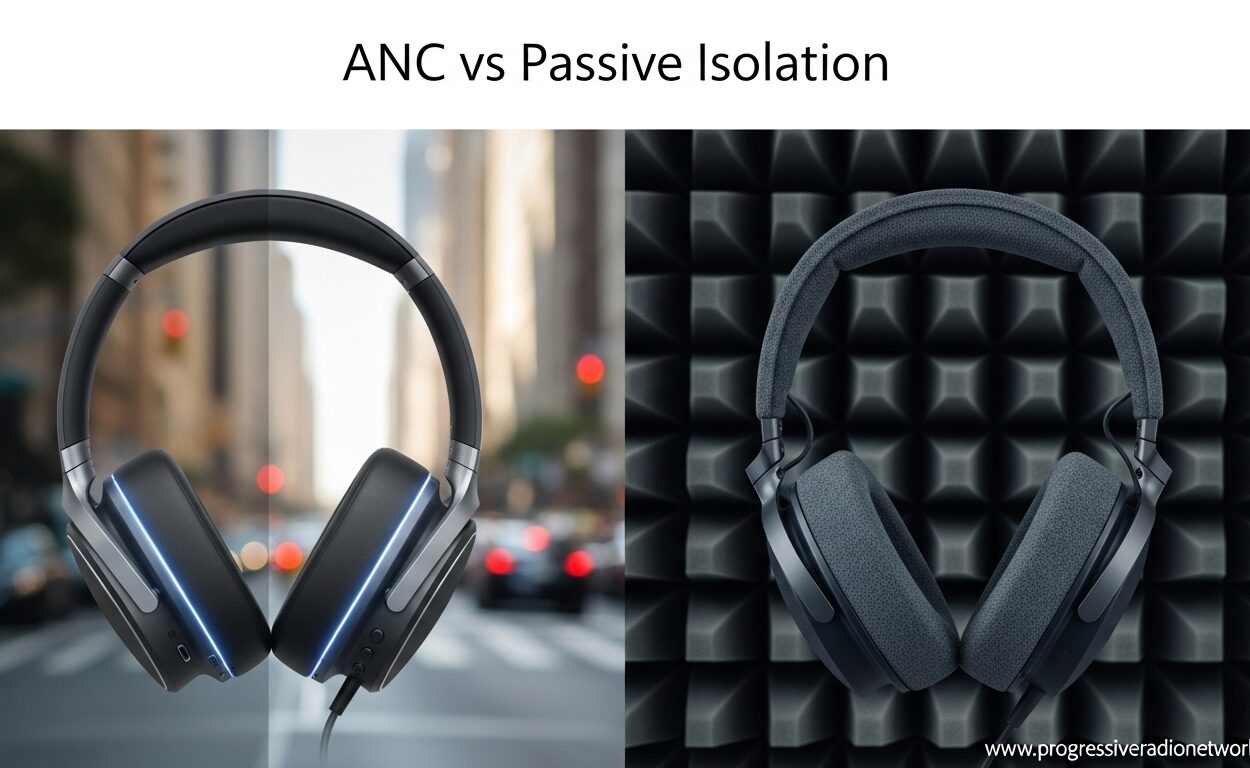
Imagine sitting on a plane, trying to enjoy your favorite album, but the constant drone of jet engines keeps pulling you out of the experience. You have two options: headphones that use electronic wizardry to silence the world, or ones that create a physical barrier between you and the noise. This is the core difference between ANC vs passive isolation, and understanding it can transform how you listen to music, work in noisy environments, or simply find peace and quiet.
Both technologies aim to reduce unwanted ambient sound, but they work through completely different mechanisms. Active Noise Cancellation uses microphones and digital processing to create anti-noise signals. Passive Isolation relies on physical materials and a proper seal to block sound waves naturally. Your choice depends on your specific needs, the environments you frequent, and whether sound quality or absolute silence matters more to you.
Our team has tested dozens of best noise cancelling headphones over the past year. We have experienced both technologies in planes, offices, gyms, and construction sites. In this guide, I will break down exactly how each method works, when to choose one over the other, and what safety considerations you should know before making your decision.
What Is Active Noise Cancellation (ANC)?
Active Noise Cancellation is an electronic technology that uses microphones, processors, and speakers to reduce unwanted ambient sound. Unlike traditional headphones that simply play audio louder to mask outside noise, ANC actively analyzes incoming sound waves and generates inverse signals to cancel them out before they reach your ears.
How ANC Works: The Science of Phase Inversion
The magic of ANC lies in a phenomenon called destructive interference. Here is the process in simple terms. First, tiny microphones on your headphones listen to the ambient noise around you. The internal processor then analyzes this sound and creates an inverted copy, flipping the sound wave 180 degrees out of phase.
When the original noise and the inverted anti-noise meet, they cancel each other out through phase cancellation. Think of it like adding +1 and -1 to get zero. The result is silence, or at least significantly reduced sound, reaching your eardrums. This happens in real-time, thousands of times per second, creating the quiet bubble you experience when wearing ANC headphones.
The effectiveness varies by frequency. ANC excels at reducing consistent, low-frequency noises like airplane engines, air conditioning units, and traffic rumble. These sounds have long, predictable wave patterns that the system can easily analyze and counter. Sudden, high-pitched sounds like car horns or sudden conversations are harder to cancel because the system cannot predict and generate anti-noise fast enough.
Types of ANC Technology
Not all ANC is created equal. Manufacturers use three main approaches, each with distinct advantages and trade-offs. Understanding these differences helps explain why some ANC headphones perform better than others in specific situations.
Feedforward ANC places microphones on the outside of the ear cups. These external mics pick up noise before it reaches your ears, giving the processor more time to generate anti-noise. This approach works well for mid-frequency sounds but can struggle with wind noise since the external microphones pick up air rushing past.
Feedback ANC positions microphones inside the ear cup, closer to your ear canal. These internal mics hear exactly what you hear, allowing for more precise cancellation of what actually reaches your eardrum. The downside is less time to process sounds, and the system can accidentally cancel parts of your music if not tuned properly.
Hybrid ANC combines both approaches, using external and internal microphones. This creates the most effective noise cancellation by covering all frequencies while minimizing the weaknesses of each individual method. Premium headphones from Sony, Bose, and Apple use hybrid systems, which explains their superior performance in mixed environments.
Adaptive ANC represents the latest evolution, using AI and machine learning to adjust cancellation strength based on your environment. These systems can detect when you are walking versus sitting, or when wind noise increases, and automatically optimize performance. This technology is becoming standard in flagship models released in 2026.
What Is Passive Noise Isolation?
Passive Noise Isolation is the original method of blocking sound, relying entirely on physical barriers rather than electronic processing. Also called Passive Noise Cancellation or simply noise isolation, this approach uses materials and design to create a seal that prevents sound waves from ever reaching your ears. No batteries, no microphones, no digital processing required.
How Passive Isolation Works: The Power of the Seal
The effectiveness of passive isolation depends on creating an acoustic seal. For over-ear headphones, this means cushioned ear cups made of memory foam or synthetic leather that conform to your head, creating a barrier around your entire ear. The quality of these materials and the clamping force of the headband determine how well external noise gets blocked.
For in-ear headphones and earbuds, passive isolation relies on ear tips that insert into your ear canal. The seal formed here is even more critical because sound has a direct path to your eardrum. Manufacturers offer multiple tip sizes (small, medium, large) and materials (silicone, memory foam) to help you achieve the perfect fit. Some high-end models even offer custom-molded tips for maximum isolation.
Unlike ANC, which struggles with high frequencies, passive isolation actually performs better against treble and mid-range sounds. The physical barrier naturally blocks the shorter wavelengths of high-pitched noises like conversations, keyboard typing, and crying babies. However, low-frequency rumble with long wavelengths can penetrate physical barriers more easily, which is where passive isolation falls short compared to ANC.
Materials and Design Matter
The construction of your headphones dramatically impacts passive isolation performance. Closed-back over-ear designs typically offer the best passive isolation because the ear cups completely enclose your ears with solid materials that reflect sound waves. Open-back designs, preferred by some audiophiles for their natural soundstage, offer minimal isolation since they intentionally allow sound to pass through.
Memory foam ear tips generally outperform silicone for in-ear models because they expand to fill every contour of your ear canal. The foam absorbs sound energy while creating a tighter seal. However, foam degrades faster and requires replacement every few months with heavy use. Silicone lasts longer but may not conform as perfectly to your unique ear shape.
Weight and clamping force also play roles. Heavier headphones with stronger headband pressure create better seals but can cause discomfort during long sessions. This is the classic trade-off between isolation effectiveness and comfort that anyone seeking earbuds with secure fit must navigate.
ANC vs Passive Isolation: Key Differences Compared
Now that you understand how each technology works, let us compare them directly across the factors that matter most when choosing headphones. The right choice depends on your priorities: sound quality, portability, battery life, or specific use environments.
Frequency Effectiveness: Where Each Technology Shines
ANC dominates low-frequency noise reduction. The consistent hum of airplane engines, the rumble of subway trains, and the drone of air conditioning all fall in the 20-500 Hz range where ANC can achieve 20-40 decibel reductions. This is why frequent travelers swear by ANC headphones on long flights.
Passive isolation excels at blocking high-frequency sounds. Conversations, keyboard clatter, and crying babies occupy the 1,000-4,000 Hz range where physical barriers work better than electronic cancellation. If you work in an open office and need to focus without the eerie silence of ANC, passive isolation often provides a more natural quiet.
The sweet spot comes from combining both technologies. Premium ANC headphones also feature excellent passive isolation through quality ear cups and seals. This hybrid approach blocks highs passively while electronically cancelling lows, delivering the most comprehensive noise reduction possible.
Sound Quality Impact
Here is where audiophiles often prefer passive isolation. ANC introduces a slight electronic signature to your audio. The anti-noise signal, while imperceptible as cancellation, can create a subtle background hiss or affect the frequency response of your music. Some listeners report ANC makes music sound slightly thinner or less dynamic.
Passive isolation preserves the pure audio signal from your source to your ears. Without electronic processing, you hear exactly what the artist and audio engineers intended. This purity is why many high-end studio headphones for critical listening skip ANC entirely, focusing instead on superior passive isolation and driver quality.
However, ANC technology has improved dramatically. Modern adaptive systems in 2026 models from Sony, Bose, and Apple introduce minimal distortion. For casual listening in noisy environments, the benefits of silence often outweigh the slight quality trade-off. The choice depends on whether you prioritize pure fidelity or practical silence.
Battery and Power Requirements
This is perhaps the most practical difference. ANC requires constant power to function. Once the battery dies, you lose noise cancellation entirely, and often the headphones themselves stop working. Most ANC headphones offer 20-40 hours of battery life, but forgetting to charge means compromised performance or silence.
Passive isolation works forever without charging. As long as the physical materials hold up, the noise blocking continues. This reliability makes passive isolation ideal for travel where power outlets are scarce, or for users who simply do not want to manage another device charging schedule.
Some ANC headphones offer wired listening without power, but you lose both the noise cancellation and often volume control or other smart features. Always check the specific power requirements of any ANC headphones you consider purchasing.
Quick Comparison Table
For quick reference, here is how the technologies stack up on key factors:
| Factor | ANC | Passive Isolation |
|---|---|---|
| Mechanism | Electronic phase inversion | Physical barrier/seal |
| Best For Frequencies | Low (20-500 Hz) | High (1,000-4,000 Hz) |
| Sound Quality | May add slight hiss | Pure, unprocessed audio |
| Power Required | Yes (battery dependent) | No (always works) |
| Effectiveness Range | 15-35 dB reduction | 10-30 dB reduction |
| Comfort Over Time | Can cause pressure sensation | Depends on fit/seal pressure |
| Cost | Higher (electronics add cost) | Lower (simpler construction) |
When to Use ANC vs Passive Isolation
Your specific use case should drive the decision between ANC and passive isolation. Different environments present different noise challenges, and matching the right technology to your situation maximizes both effectiveness and comfort.
Choose ANC For These Situations
Airplane travel is the classic ANC use case. The constant low-frequency drone of jet engines at 75-85 decibels is exactly what ANC was designed to combat. I have tested ANC on 12-hour international flights, and the difference in arrival fatigue is remarkable. Without the constant low-frequency stress, you arrive feeling significantly less drained.
Commuting by train or bus also benefits from ANC. The rumble of tracks, bus engines, and road noise all occupy the low-frequency range. Many modern ANC headphones include transparency modes that let you hear announcements when needed, then return to full cancellation for the journey.
Open offices with constant background chatter and HVAC systems are another ANC sweet spot. The technology lets you focus without completely removing your awareness of the environment. Many workers find noise cancelling earbuds for sleep also work well for office focus sessions.
Choose Passive Isolation For These Situations
Critical listening and audio production demand passive isolation. When you need to hear every detail of a recording without electronic processing coloring the sound, passive isolation provides the cleanest path from source to ear. Studio engineers and audiophiles consistently prefer passive designs for this reason.
Gym workouts and outdoor running often favor passive isolation. You need to maintain awareness of your surroundings for safety, and the sudden sounds of traffic or other gym users are not effectively blocked by ANC anyway. Many gym headphones prioritize secure fit and passive isolation over ANC for this reason.
Workplace hearing protection requirements also specify passive isolation. OSHA compliance for construction sites, manufacturing floors, and shooting ranges requires ANSI-rated hearing protection. ANC alone does not meet these safety standards. If you need hearing protection earbuds for compliance, passive isolation with proper NRR (Noise Reduction Rating) certification is mandatory.
The Hybrid Approach: Best of Both Worlds
After testing hundreds of headphones, our team consistently finds that the best solution combines both technologies. Premium ANC headphones with excellent passive isolation seals deliver superior results to either approach alone. The passive isolation blocks high frequencies naturally while the ANC handles the low-frequency rumble electronically.
When shopping, look for ANC headphones with quality ear cup materials, multiple ear tip options, and strong reviews for isolation even when ANC is turned off. This indicates good passive isolation design that will complement the electronic cancellation. The Sony WH-1000XM5 and Bose QuietComfort Ultra both exemplify this hybrid excellence.
Safety Considerations and Potential Side Effects
While noise cancellation technology is generally safe, some users experience side effects with ANC that deserve attention. Understanding these potential issues helps you make informed decisions and recognize when to adjust your usage.
The “Eardrum Suck” Sensation
Many ANC users report a pressure sensation similar to ascending in an airplane or diving underwater. Audio engineers call this “eardrum suck,” though your eardrums are not actually being pulled. The sensation comes from the phase cancellation creating a perception of pressure change in your ear canal.
This effect bothers approximately 15-20% of users significantly enough to avoid ANC entirely. Others adapt after a few days of use as their brain adjusts to the new auditory environment. If you experience this, try reducing ANC intensity through app settings, or consider headphones with adjustable cancellation levels.
Dizziness and Vertigo Concerns
A small percentage of users experience dizziness or vertigo with ANC, particularly when walking or turning their heads. This likely relates to how our vestibular system interprets the conflicting signals between the visual motion we see and the auditory silence ANC creates. The phenomenon is similar to motion sickness in some respects.
Medical research, including studies indexed on PubMed, has documented cases of benign paroxysmal positional vertigo triggered by ANC use. While rare, users with existing balance disorders should exercise caution. If you experience dizziness, discontinue use immediately and consult a healthcare provider.
Tinnitus Considerations
Tinnitus sufferers often ask whether ANC helps or worsens their condition. The answer depends on the individual. Some find ANC provides relief by reducing the environmental noise that makes their tinnitus more noticeable. Others report the electronic processing introduces new frequencies that trigger or amplify their symptoms.
If you have tinnitus, test ANC headphones in a store before purchasing, or buy from retailers with generous return policies. Start with short listening sessions and gradually increase duration as you assess your personal response. Passive isolation may be the safer choice for tinnitus-sensitive individuals since it introduces no electronic processing.
Hearing Protection and OSHA Compliance
Important distinction: ANC is not hearing protection. While it reduces perceived noise, ANC headphones are not certified to protect your hearing from damaging sound levels. For workplace environments exceeding 85 decibels, you need ANSI S3.19-1974 rated hearing protection with a published NRR (Noise Reduction Rating).
Some specialized products combine ANC with certified hearing protection for industrial use. These are specifically designed and tested for OSHA compliance. Do not assume your consumer ANC headphones provide adequate protection for shooting ranges, construction sites, or factory floors. Always verify NRR ratings and compliance certifications for workplace use.
Frequently Asked Questions
Which is better, active or passive noise cancellation?
Neither is universally better – it depends on your use case. ANC excels at reducing low-frequency constant noise like airplane engines and air conditioning, while passive isolation performs better against high-frequency sounds like conversations and typing. For travel and commuting, ANC is generally superior. For sound quality and battery-free reliability, passive isolation wins. The best solution often combines both technologies.
Is passive noise isolation the same as noise cancelling?
No, they are different technologies. Passive noise isolation uses physical barriers like ear cups and seals to block sound naturally. Active noise cancelling uses electronic processing with microphones to create anti-noise signals. The terms are often confused because both reduce ambient noise, but the mechanisms are completely different. Passive isolation requires no power while ANC needs batteries to function.
Can noise cancellation help with tinnitus?
Results vary by individual. Some tinnitus sufferers find ANC helpful because reducing environmental noise makes their tinnitus less noticeable. Others report ANC worsens their symptoms by introducing electronic artifacts or pressure sensations. If you have tinnitus, test ANC carefully with short sessions before committing. Passive isolation is often the safer choice since it adds no electronic processing that might trigger symptoms.
What are the downsides of ANC?
ANC has several potential downsides: requires battery power (stops working when depleted), can cause eardrum pressure sensation in some users, may trigger dizziness or vertigo in sensitive individuals, adds slight background hiss or audio quality reduction, is ineffective against sudden high-frequency sounds, and costs more than passive alternatives. Some users also report feeling disconnected from their environment in ways that passive isolation does not create.
Is it better to have ANC on or off?
Turn ANC on when dealing with constant low-frequency noise like airplanes, trains, or air conditioning. Turn it off when you need situational awareness for safety, when batteries are low, when audio quality is your priority, or if you experience discomfort like dizziness or eardrum pressure. Many modern headphones offer transparency modes that blend ANC with external sound for situations requiring partial awareness.
Conclusion
The choice between ANC vs passive isolation comes down to understanding your specific needs and priorities. Active Noise Cancellation uses sophisticated electronic processing to cancel low-frequency ambient noise, making it ideal for travel, commuting, and noisy offices. Passive Isolation relies on physical barriers to block high-frequency sounds naturally, offering superior sound quality and battery-free reliability.
In 2026, the best premium headphones combine both approaches. They provide quality passive isolation through proper seals and materials while adding ANC for electronic low-frequency cancellation. This hybrid approach delivers the most comprehensive noise reduction while maintaining reasonable audio fidelity.
Consider your primary use cases, budget, and any sensitivity to ANC side effects like eardrum pressure or dizziness. Test different options when possible, and remember that the goal is finding technology that helps you enjoy audio or find focus without compromising comfort or safety. Whether you choose ANC, passive isolation, or a combination of both, understanding these differences ensures you make an informed decision that serves your specific needs.


Leave a Comment