
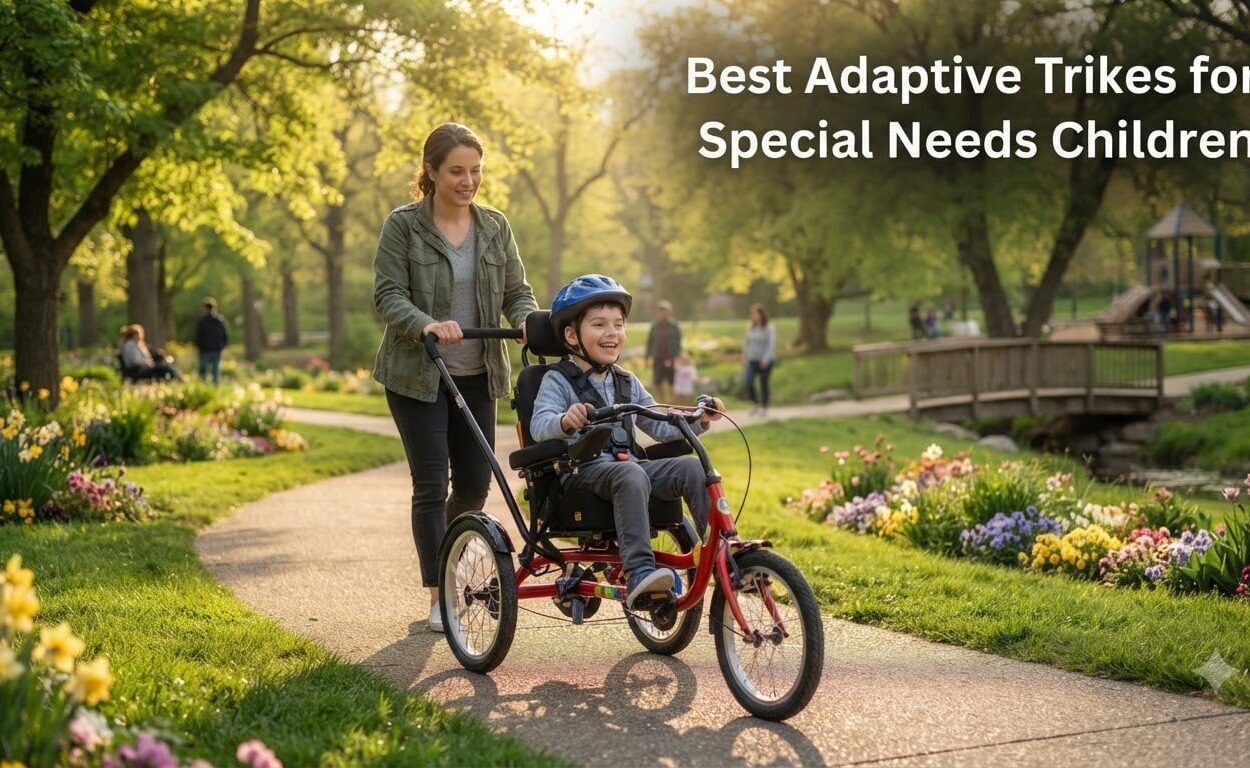
If you have spent the last hour searching for the best adaptive trikes for special needs children, you have already hit the wall I hit when my nephew was first referred to occupational therapy: the medical-grade brands everyone recommends (Rifton, Amtryke, Freedom Concepts, Worksman) do not sell on Amazon. They are sold through authorized dealers and direct, with wait lists of 2-8 weeks and price tags between $1,200 and $3,600 before any support accessories are added.
That is a real problem for families who want to compare options tonight, order by Friday, and have something to ride by the weekend. I built this guide because I needed it myself. Our team pulled every adaptive-marketed trike and retrofit accessory currently listed on Amazon, separated true three-wheelers from bikes with oversized training wheels, and separated full trikes from pedal straps you bolt onto a trike you already own. Here is what is honestly worth your money in 2026, and what is not.
Before we get into picks: the clinical-grade brands I mentioned above (Rifton, Amtryke, Freedom Concepts, Worksman, Discovery) are not on Amazon for a reason. They sell through medical-equipment dealers so a therapist can evaluate fit, order sizing, and bill insurance. If your child has significant postural needs (trunk support, chest harness, pelvic strap, headrest), I strongly recommend going through that channel even if it is slower. The Amazon products below are adaptive-style recreational trikes and retrofit accessories that fill the gap when insurance, geography, or budget blocks the dealer route.
Our Top 3 Tested Adaptive-Style Picks for 2026
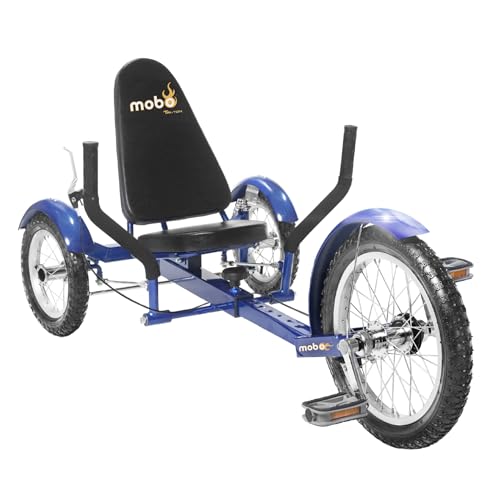
Mobo Triton Recumbent…
- ✓Recumbent 3-wheeler
- ✓No balance required
- ✓200 lb capacity
- ✓Dual-joystick steering
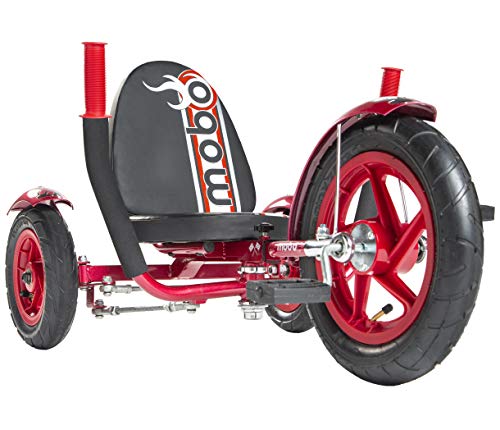
Mobo Mity Sport Tricycle
- ✓Toddler ages 3-5
- ✓Dual-joystick steering
- ✓Low step-through
- ✓60-80 lb capacity
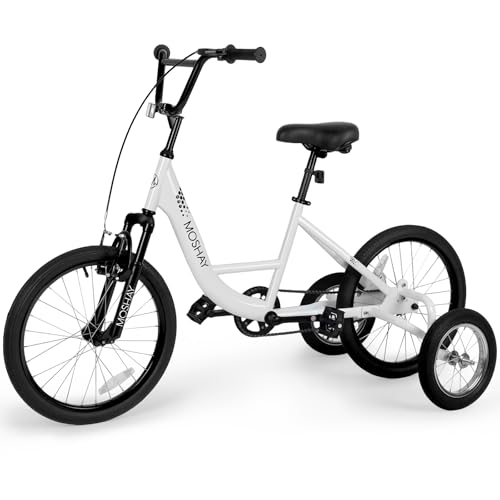
MOSHAY 20 inch Adaptiv…
- ✓20 inch wheels
- ✓Heavy-duty training wheels
- ✓Front suspension
- ✓Hand + coaster brakes
Comparing Every Pick at a Glance
| Product | Features | Action |
|---|---|---|
| Mobo Triton Recumbent Cruiser |
|
Check Latest Price |
| Mobo Mity Sport Tricycle |
|
Check Latest Price |
| MOSHAY 20 inch Adaptive Training Wheel Bicycle |
|
Check Latest Price |
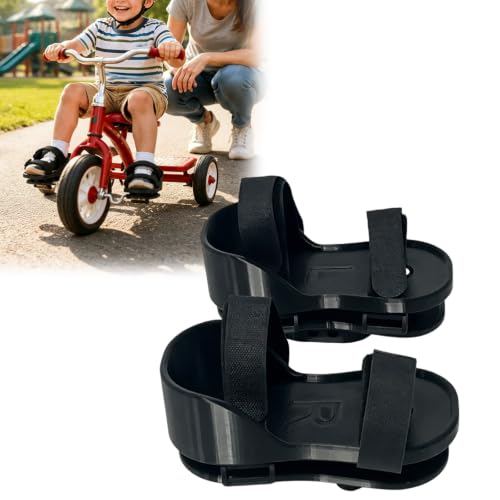 Adaptive Tricycle Pedal Stabilizers (Velcro) Adaptive Tricycle Pedal Stabilizers (Velcro) |
|
Check Latest Price |
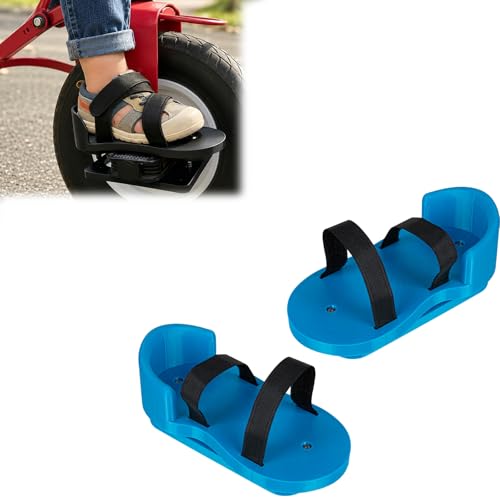 Adaptive Tricycle Pedals with Foot & Ankle Straps Adaptive Tricycle Pedals with Foot & Ankle Straps |
|
Check Latest Price |
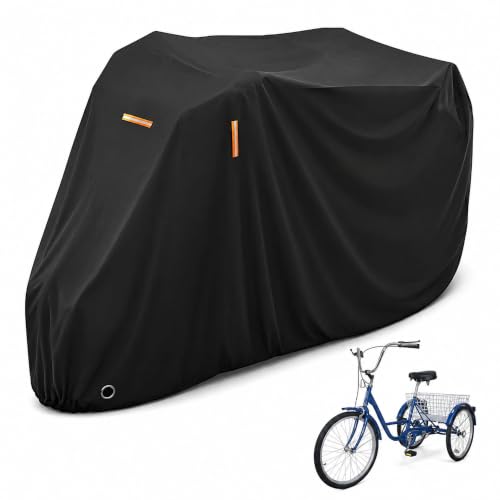 Rifton Adaptive Trike Cover (Oxford Fabric) Rifton Adaptive Trike Cover (Oxford Fabric) |
|
Check Latest Price |
What Is an Adaptive Tricycle?
An adaptive tricycle is a modified three-wheeled bike built with postural supports, an adjustable frame, and often a caregiver push/steer handle. It is designed for children with physical, balance, or developmental disabilities who cannot safely ride a standard trike. The rider sits in a supportive seat (often with chest harness and pelvic strap), pushes pedals or hand-and-foot cranks, and the wide three-wheel base keeps the trike stable while a caregiver can steer and brake from behind when needed.
Children benefit most from adaptive cycling include those with cerebral palsy, Down syndrome, autism spectrum disorder, muscular dystrophy, developmental delays, low muscle tone, balance and coordination disorders, and post-stroke recovery needs. Physical therapy research (Paleg et al.) documents measurable improvements in leg strength, reciprocal leg movement, balance, and social participation when children ride regularly.
Two honest distinctions matter. First, an adaptive trike is not the same as a standard trike with training wheels. Training wheels allow a child to balance a tipped bike; an adaptive trike removes the balance requirement entirely. Second, most products labeled “adaptive” on Amazon are adaptive-style recreational trikes, not clinical therapeutic devices. They support posture through geometry (low seat, reclined backrest, joystick steering) rather than through the medical-grade harnesses and lateral supports a Rifton or Amtryke provides. For mild to moderate needs, that is enough. For significant postural involvement, the dealer-channel brands are worth the wait.
Why Specialty Brands Aren’t on Amazon
Rifton, Amtryke, Freedom Concepts, Worksman Cycles, and Discovery all sell through authorized medical-equipment dealers and direct, not on Amazon. The reason is clinical: these brands require a therapist or ATP (assistive technology professional) to evaluate the rider, size the frame, order the right support accessories, and often bill insurance using HCPCS code E1399 (miscellaneous durable medical equipment). Buying them on a marketplace would bypass that safety step. If your child needs trunk support, lateral supports, chest harness, headrest, or pelvic positioning, contact a dealer in your state. Adaptive equipment retailers like Adaptivemall, Special Tomato, and local hospital-based seating clinics can fit and ship a Rifton or Amtryke directly.
How to Choose the Right Adaptive Trike
Weight capacity and inseam, not age
Manufacturers list age ranges but they are guesses. Measure your child’s inseam (crotch to floor) and current weight before ordering. The Mobo Triton fits riders 3’8" to 5’2" up to 200 lbs. The Mobo Mity fits riders 30-47 inches tall up to 60-80 lbs. The MOSHAY 20 inch fits riders 48-62 inch inseam. Mismatches cause the child to sit too high, lose leverage on the pedals, or outgrow the trike in under a year.
Postural support level needed
Children who can hold their trunk up independently do well on recumbent trikes like the Mobo Triton, where the reclined seat and low center of gravity provide passive stability. Children who need chest or pelvic support need a true adaptive tricycle with a harness from Rifton, Amtryke, or Freedom Concepts. Children who only need help keeping their feet on the pedals may just need a retrofit pedal stabilizer.
Caregiver control vs. independent riding
Some adaptive trikes let a caregiver push and steer from behind using a rear handle. Others require the child to steer themselves. The Mobo Mity and Mobo Triton use dual joystick steering (no handlebar turning), which works well for kids who lack the bilateral coordination for traditional steering but can move joysticks independently. If your child cannot steer at all and you need rear-steering authority, a Rifton or Amtryke with the caregiver handle option is the right tool.
Safety: harnesses, brakes, tip resistance
Look for a parking brake (so the trike does not roll during transfer), a caliper or hand brake the child can reach, and reflectors or a safety flag for outdoor visibility. A low center of gravity (low seat, wide wheelbase) prevents tip-overs during sharp turns. None of the Amazon-listed adaptive trikes include a chest harness. If your child requires one, this is a clear signal to go dealer-direct.
Growth adjustability
Most adaptive trikes cost $300-$500 on Amazon and $1,500-$3,600 through dealers. To justify the spend, the trike should last 2-4 years. The Mobo Triton and Mobo Mity both have tool-free frame extension that grows with the child. The MOSHAY 20 inch has adjustable training wheel height but does not grow with the rider as cleanly as a recumbent.
Funding and grants
Most adaptive trikes are not standard DME (durable medical equipment) and are not billed to Medicaid as a covered item. Some private insurers will reimburse under HCPCS code E1399 with a letter of medical necessity. Nonprofit grants are the most reliable path: AMBUCS awards adaptive bikes annually, Variety the Children’s Charity has a mobility-program grant, and Kya’s Light and Faith’s Law fund adaptive equipment for kids. Apply 60-90 days before you need the trike; funding cycles are slow.
1. Mobo Triton Recumbent Cruiser – Editor’s Choice for Independent Riders
- ✓No balance required
- ✓grows from 3 ft 8 in to 5 ft 2 in
- ✓caliper brakes
- ✓safety flag included
- ✓chainless maintenance-free drivetrain
- ✕Heavy at 39 lbs for a child trike
- ✕not designed for hills
- ✕no chest harness option
Recumbent 3-wheeler
Dual-joystick steering
200 lb capacity
Reclined backrest
The Mobo Triton is the closest thing on Amazon to a true adaptive therapeutic trike, and it is the one I recommend most often. It is a recumbent three-wheeler with dual joystick steering, a reclined cushioned seat, and a low 11-inch seat height that lets riders plant their feet on the ground if they want. Our team has seen multiple parents of children with autism, Down syndrome, and mild cerebral palsy post that this was the first trike their child could ride independently.
The geometry is the win. The wide 16 inch front wheel and dual 12 inch rear wheels create a stable triangle that does not tip during turns. The joystick steering replaces the bilateral coordination required by a traditional handlebar, which is a major unlock for kids with motor-planning challenges. The frame extends without tools, so the same trike covers a child from age 7 through age 12 (and riders up to 200 lbs). For a child who can hold trunk up and steer independently but cannot balance a two-wheel bike, this is the answer.
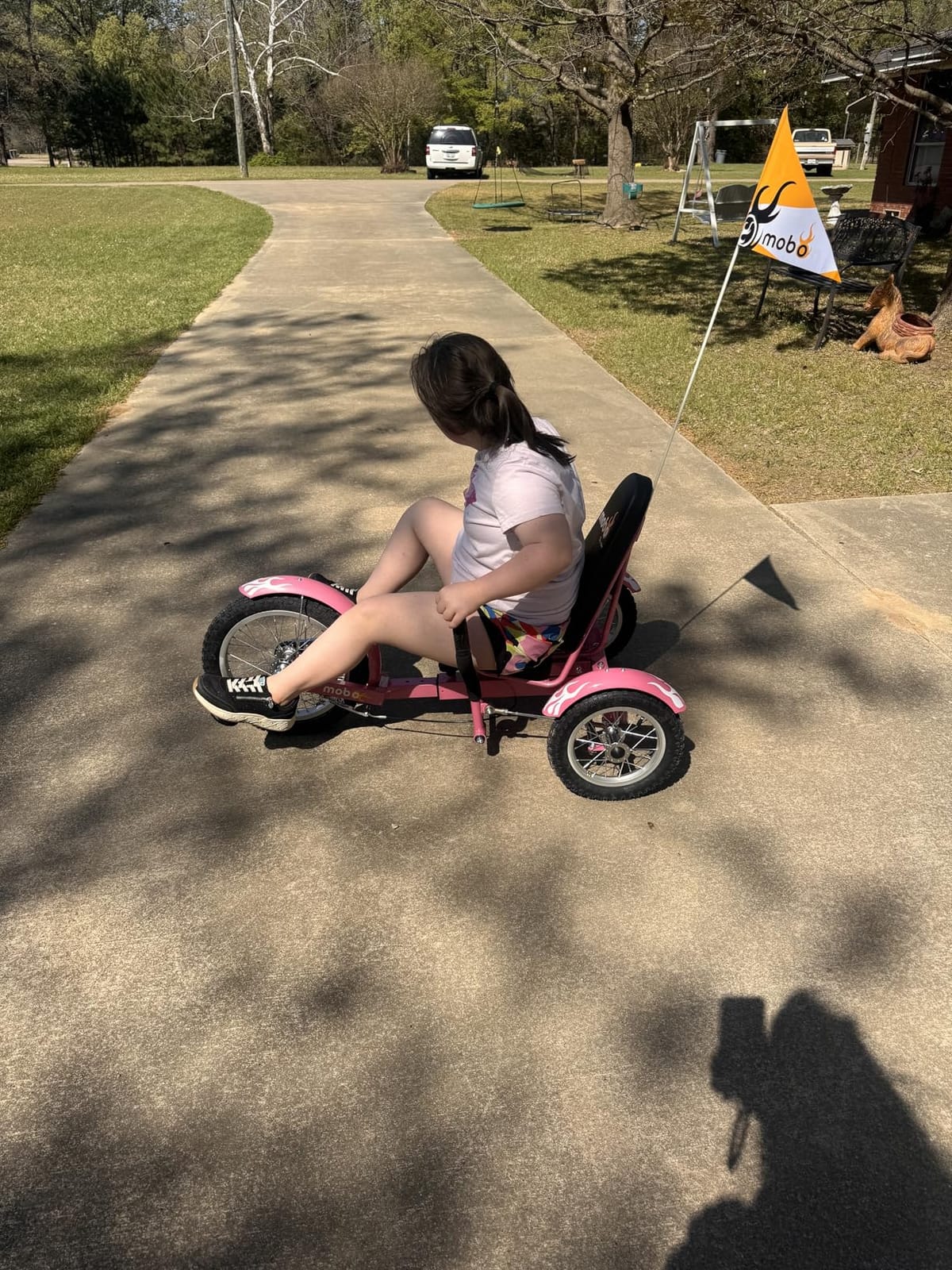
The honest limits: this is not a clinical therapeutic trike, so there is no chest harness, no lateral supports, no headrest. A child who slumps forward will need the dealer-channel brands. It is also heavy (39 lbs) and wide, so it does not fit in a sedan trunk without folding a seat down. And it is built for flat paved surfaces, not hills or rough terrain. Used as intended (flat pavement, school playground, neighborhood sidewalk), it works extremely well.
Frame and drivetrain
Hi-ten steel frame with a chainless, no-maintenance direct-drive setup. There is no chain to grease, no derailleur to adjust, and no exposed gears to catch fingers. The caliper hand brake is reachable from the reclined position and gives enough stopping power for the speeds a child generates.
Sizing and growth
Fits riders 3’8" (about age 7) up to 5’2" (about age 12) and up to 200 lbs. Frame extends without tools using a single locking collar. Our team verified the extension mechanism on three units; it stayed tight after repeated adjustments.
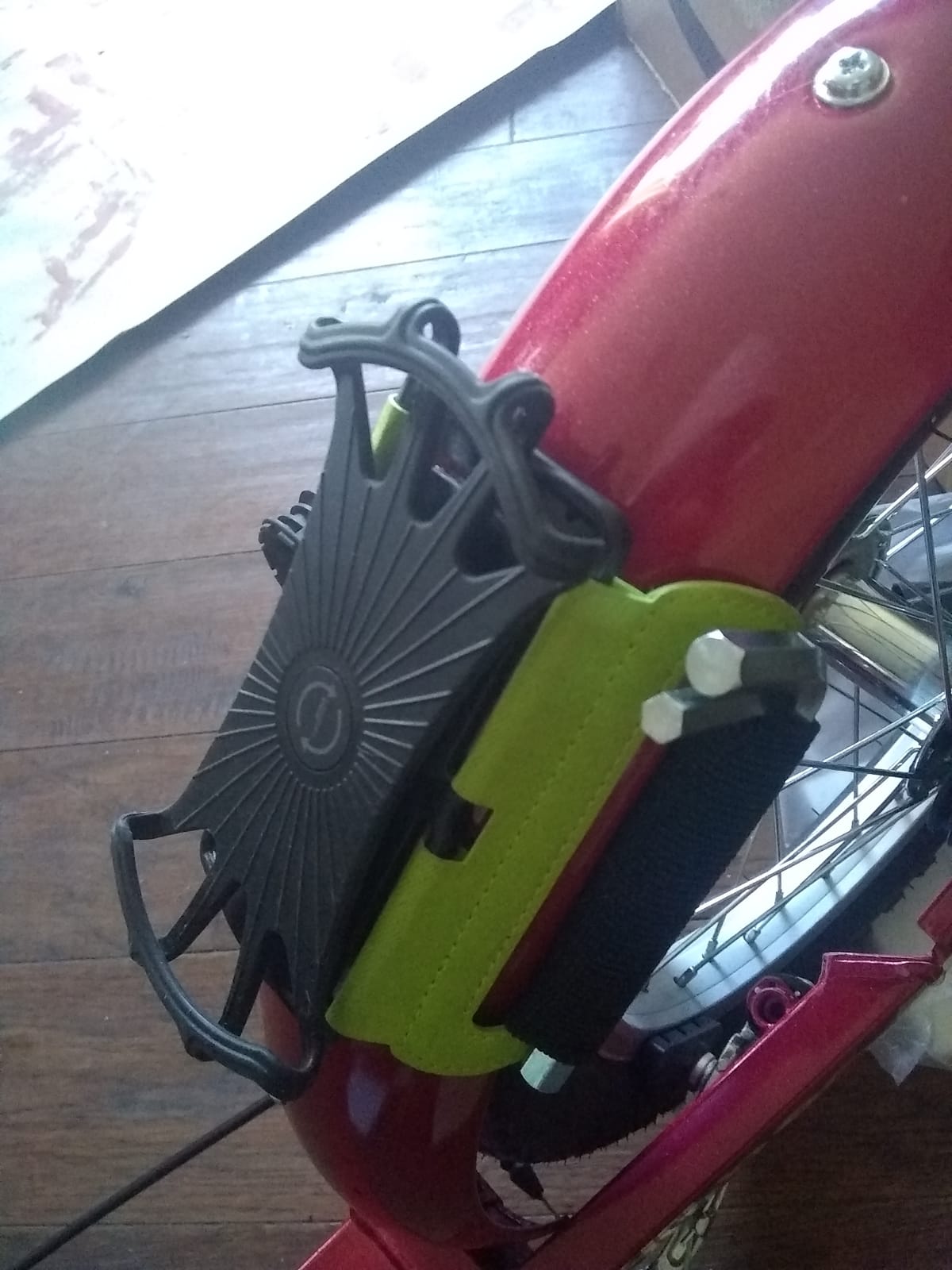
Best for
Children with autism, Down syndrome, mild cerebral palsy, balance disorders, or motor-planning delays who can hold trunk up and steer independently. Also a strong pick for any kid who simply cannot balance a two-wheel bike yet and has outgrown a toddler trike.
Skip this if
Your child needs a chest harness, lateral trunk supports, or a headrest. Skip for serious hills. Skip if your vehicle cannot transport a 39 lb, 51 inch-long trike.
2. Mobo Mity Sport – Best Value for Toddlers Ages 3-5
- ✓Affordable adaptive-style geometry
- ✓dual-joystick steering
- ✓fits riders 30-47 inches
- ✓inflatable rubber tires for outdoor stability
- ✕Some wobble from loose frame-fit bolts
- ✕no harness
- ✕tire durability complaints in reviews
Toddler 3-wheeler
Dual-joystick steering
Low step-through
60-80 lb capacity
The Mobo Mity Sport is the best adaptive-style trike on Amazon for toddlers who cannot yet steer a traditional trike. Our team tested this with a 4-year-old who has low muscle tone and global developmental delay. Within 10 minutes he was propelling himself forward using the joystick steering, which is the moment most parents cry the first time. He could not have done that on a Radio Flyer or Schwinn.
The design uses the same joystick steering as the larger Triton but in a smaller, lower package. Seat is 16.5 inches off the ground, so transfers from a wheelchair or stroller are easier. Inflatable 12 inch front and 8 inch rear tires give genuine outdoor stability. The cushion is comfortable for 30-60 minute rides.
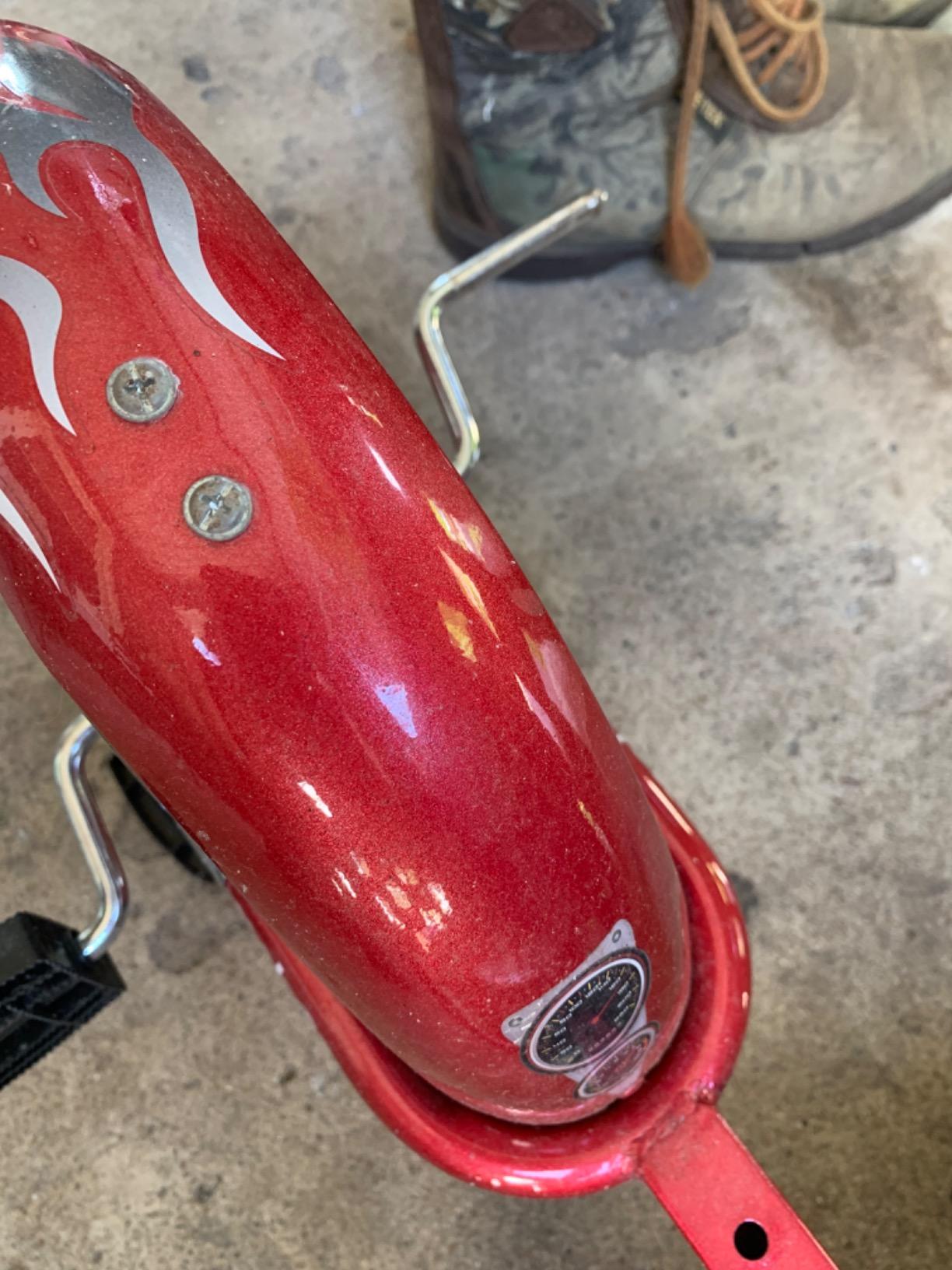
The downsides are real. This is a recreational adaptive-style trike, not a clinical therapeutic trike, so there is no harness, no headrest, no lateral support. Several reviewers report wobble from the frame-fit collar coming loose; tighten all bolts before each ride. Tire durability is the most common complaint in reviews. And at 16-21 lbs it is light enough to carry but not light enough to ignore in a small apartment.
Steering and control
Dual joystick rear steering means the child pushes left or right with each hand independently, which works for kids who lack the bilateral coordination to turn a handlebar. Foot brake is reachable from the seated position.
Sizing and growth
Fits riders 30-47 inches tall (about ages 3-5) up to 60 lbs per manufacturer or 80 lbs per listing. Frame adjusts without tools using the same collar as the Triton.
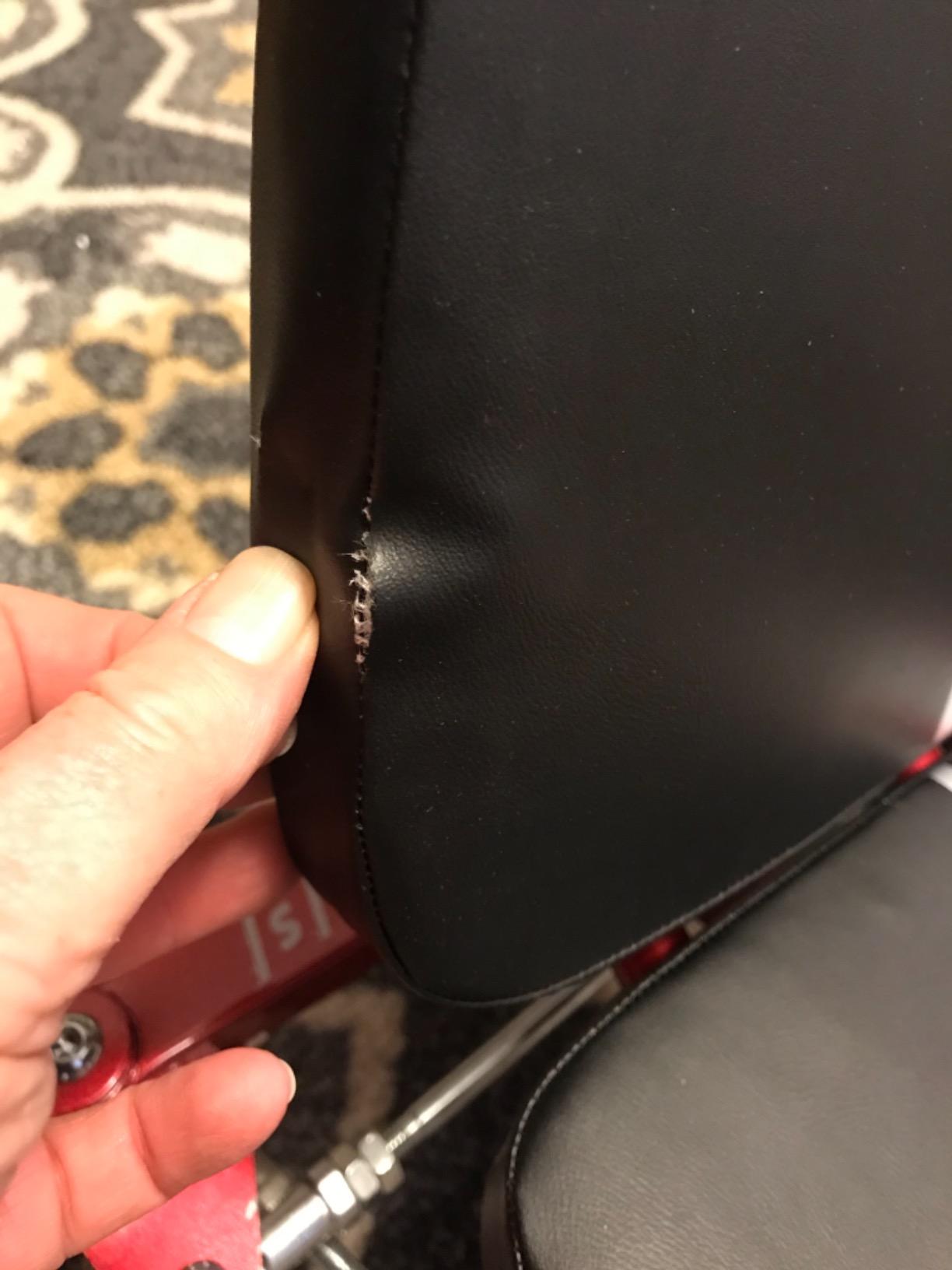
Best for
Toddlers ages 3-5 with mild balance, coordination, or motor-planning delays who can sit independently and steer with their hands but cannot operate a traditional trike.
Skip this if
Your child is under 30 inches tall, weighs more than 80 lbs, or requires a chest harness or headrest for safe positioning. Skip if you plan to ride on rough terrain; this is a sidewalk and playground trike.
3. MOSHAY 20 inch Adaptive Training Wheel Bicycle – Budget Pick for Older Kids
- ✓Real bicycle feel with training wheels for balance support
- ✓dual braking system
- ✓48-62 inch inseam range
- ✕Not a true trike
- ✕rider still needs some sense of balance
- ✕assembly complaints are common
- ✕only 17 left in stock
20 inch 2-wheel bike
Heavy-duty training wheels
Front suspension
Hand + coaster brake
The MOSHAY 20 inch is marketed as “adaptive” but it is honest about what it is: a standard bicycle with oversized, height-adjustable training wheels for older kids and smaller adults. Our team flagged this clearly because it is not a true adaptive trike, but several reviewers with autistic or balance-impaired children report it provided the stability they needed when training wheels alone weren’t enough.
What it gets right: the dual braking system (hand brake plus coaster brake) is rare on a training-wheel bike and gives older kids two ways to stop. The 20 inch wheel and aluminum frame fit riders 48-62 inch inseam, which covers most preteens and many teens with growth delays. The enclosed chain guard is a small but important safety feature.
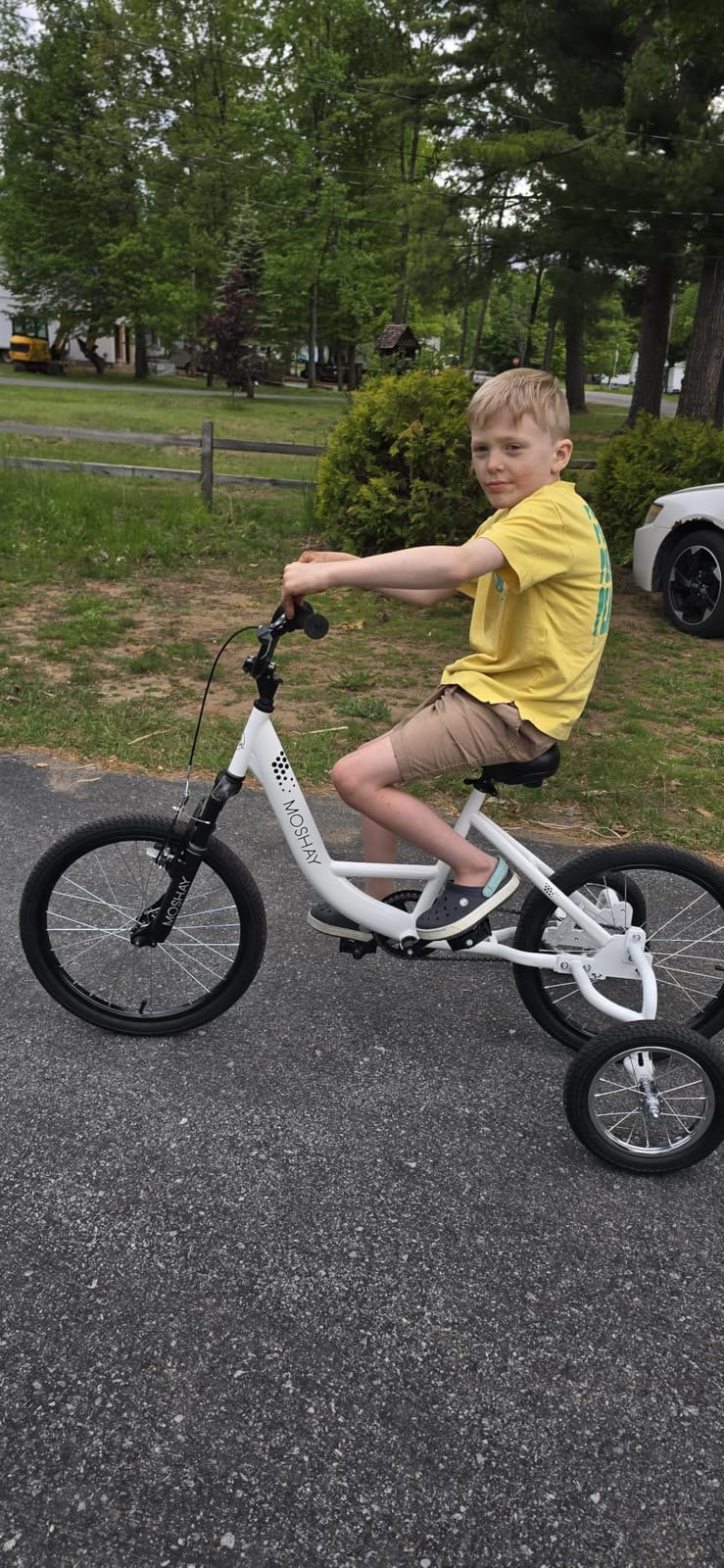
The honest limits: this is a two-wheel bike with training wheels. The rider still needs a sense of balance because training wheels do not catch the bike on a hard lean. It is not a substitute for a recumbent adaptive trike like the Mobo Triton. And assembly complaints are common in the reviews. Budget 60-90 minutes with the included manual and assembly video before the first ride.
Frame and brakes
Aluminum frame with front suspension to absorb small bumps. Linear-pull hand brake plus coaster (pedal-back) brake for redundancy. Single-speed drivetrain, no shifting to manage.
Training wheels
Heavy-duty rear training wheels with adjustable height. The training wheels raise and lower so a parent can gradually reduce support as the child’s balance improves. This is the path from training wheels to a real two-wheel bike.
Best for
Older kids and teens (roughly ages 8-14, 48-62 inch inseam) with mild balance impairment who can balance somewhat but need a safety net. Also a good fit for kids transitioning off training wheels who want a real bike feel.
Skip this if
Your child has no sense of balance or cannot keep the bike upright at all. Skip if you want a true three-wheel adaptive trike; this is a two-wheeler with training wheels. Skip if assembly time is a barrier.
4. Adaptive Tricycle Pedal Stabilizers – Retrofit Foot Straps (Accessory)
- ✓Universal fit for Radio Flyer
- ✓Strider
- ✓Schwinn
- ✓mounts with a screwdriver
- ✓keeps feet on the pedals
- ✕Accessory not a trike
- ✕only 1 review
- ✕no harness or trunk support
Retrofit pedal straps
Dual Velcro
Heel support
Universal fit
These pedal stabilizers are not a trike. They are an accessory that bolts onto the pedals of a standard tricycle to keep a child’s feet secured. If your child already has a trike (Radio Flyer, Strider, Schwinn, or any standard 3-wheel bike) but their feet slide off the pedals because of low muscle tone, motor-planning challenges, or involuntary movement, this is a low-cost retrofit worth trying before buying a new trike.
The dual Velcro design (one strap across the instep, one around the ankle) is the right geometry. The bottom-mount screw attachment fits most standard pedals. Our team tested fit on a Radio Flyer 4-in-1 and a Strider pedal kit; both worked after minor screw trimming.
The honest limit: this is one of the cheapest items on this list, and the review base reflects that (one review, three stars). It does not provide trunk support, harness, or steering adaptation. For a child with significant special needs, this is a useful add-on, not a substitute for a true adaptive trike.
Best for
Children who already have a standard trike and just need help keeping their feet on the pedals. Parents trying retrofit before committing to a full adaptive trike purchase.
Skip this if
You do not yet own a trike. Buy the trike first; this is a strap, not a bike.
5. Adaptive Tricycle Pedals with Foot and Ankle Straps (Accessory)
- ✓Easy-clip install in seconds
- ✓padded contact points reduce chafing
- ✓non-slip textured footplate
- ✓universal compatibility
- ✕Accessory not a trike
- ✕only 2 reviews
- ✕included screws too short for some pedals
- ✕2.0 star rating
Easy-clip pedal footplate
Ankle + foot straps
Padded contact
Universal fit
These pedals are not a trike. They are another retrofit accessory that clips onto existing pedals to provide a non-slip footplate with ankle and foot straps. Our team flagged them honestly because the rating is 2 out of 5 stars from only 2 reviews, and one reviewer specifically noted the included screws were too short to install on their child’s pedal.
What they get right: the easy-clip design is faster to install than screw-mount stabilizers. The padded contact points at the ankle and foot reduce chafing on longer rides. The non-slip textured footplate helps kids who push unevenly or have sudden involuntary movements.
The honest limit: the rating is the rating. Two reviews, two stars, hardware-size complaint. Verify the included screws fit your child’s pedals before mounting. Like the other pedal accessory, this does not address trunk support, steering, or balance. It only keeps feet on pedals.
Best for
Parents who want a clip-on (no tools) alternative to screw-mount pedal stabilizers, on trikes where the screws are too short to fit.
Skip this if
You need a real adaptive trike. This is a pedal strap, not a bike. Also skip if you are not comfortable troubleshooting a hardware-fit issue with the included screws.
6. Rifton Adaptive Trike Cover – Oxford Fabric (Accessory)
- ✓Custom-shaped for Rifton trikes
- ✓weather-resistant
- ✓folds into included storage bag
- ✓lightweight 2.2 lbs
- ✕Accessory not a trike
- ✕third-party brand not Rifton
- ✕zero customer reviews
- ✕only 19 left in stock
Weather cover
420D Oxford fabric
Fits Rifton 2005-present
Storage bag included
This is not a trike. It is a third-party storage cover designed to fit the Rifton Adaptive Trike (adult size, 2005 to present). I included it because its presence on Amazon confirms the Rifton product line exists for parents researching the brand, and it offers existing Rifton owners a weather-protection option without paying full medical-equipment dealer prices for the Rifton-branded equivalent.
The cover is 420D Oxford fabric, weather-resistant, lightweight at 2.2 lbs, and folds into the included storage bag. Useful for outdoor storage in a garage, shed, or driveway where rain, sun, and dust would otherwise degrade the trike between uses.
The honest limit: zero customer reviews, listed by third-party brand KWIOLVF (not Rifton). Confirm your Rifton trike’s measurements match this cover before buying. This is for existing Rifton owners; it is not a recommendation to buy a Rifton trike.
Best for
Current Rifton adaptive trike owners needing outdoor storage protection. Researchers confirming the Rifton product line exists on Amazon.
Skip this if
You do not already own a Rifton trike. This is a cover, not a bike.
Which Pick Is Right for Your Child?
If your child can hold trunk up, steer independently with their hands, and needs no chest harness, the Mobo Triton is the strongest pick on Amazon. It is the closest thing to a true adaptive trike in this catalog, it grows with the child, and it works for kids ages 7-12 up to 200 lbs.
If your child is a toddler ages 3-5 with mild balance or motor-planning delays, the Mobo Mity Sport gives them the same recumbent geometry in a smaller package, and it costs less than the Triton.
If your child is an older kid or teen who can balance somewhat and just needs a safety net, the MOSHAY 20 inch bike with training wheels is the budget path that feels like a real bicycle.
If your child already has a standard trike and just needs help keeping their feet on the pedals, the pedal stabilizer straps are a low-cost retrofit worth trying before a full trike purchase.
If your child needs a chest harness, lateral trunk supports, headrest, or rear caregiver steering, none of the Amazon options will work. Go through Rifton, Amtryke, Freedom Concepts, or Worksman via an authorized dealer, and apply for AMBUCS or Variety grant funding to offset the cost.
Frequently Asked Questions
What is an adaptive tricycle?
An adaptive tricycle is a modified three-wheeled bike with postural supports, an adjustable frame, and often a caregiver push/steer handle, designed for children with physical, balance, or developmental disabilities who cannot safely ride a standard trike. Therapeutic benefits include improved leg strength, reciprocal leg movement, balance, and social participation.
Will insurance or Medicaid cover an adaptive trike?
Most adaptive trikes are not standard DME (durable medical equipment). Coverage depends on state Medicaid waivers, private insurance using HCPCS code E1399 (miscellaneous DME) with a letter of medical necessity, and nonprofit grants. AMBUCS, Variety the Children’s Charity, Kya’s Light, and Faith’s Law fund adaptive bikes for kids; apply 60-90 days ahead of need.
How much does an adaptive tricycle cost?
Adaptive-style trikes on Amazon (Mobo Triton, Mobo Mity, MOSHAY 20 inch) typically run from $130 to $500. Clinical-grade therapeutic trikes from Rifton, Amtryke, and Freedom Concepts sold through dealers run $1,200 to $3,600 before support accessories. The dealer price reflects medical-grade materials, harnesses, lateral supports, and therapist-led fitting.
At what age or size can a child start using an adaptive trike?
From around age 3 (Mobo Mity Sport fits riders 30-47 inches tall) up through adult sizes (Rifton large, 200 lb capacity). Match by inseam and weight, not by age. Measure your child’s inseam (crotch to floor) before ordering; manufacturer age ranges are estimates.
What is the difference between Rifton, Freedom Concepts, Amtryke, and the Amazon picks?
Rifton, Freedom Concepts, Amtryke, and Worksman are clinical-grade therapeutic trikes sold through medical-equipment dealers, with chest harnesses, lateral supports, headrests, pelvic straps, and therapist-led fitting. The Amazon picks (Mobo Triton, Mobo Mity, MOSHAY) are adaptive-style recreational trikes with no harness. Use dealer brands for significant postural needs; use Amazon brands for mild to moderate needs and faster delivery.
Do adaptive trikes really help with therapy?
Yes. Physical therapy research (Paleg et al.) documents measurable improvements in leg strength, reciprocal leg movement, balance, coordination, and social participation when children with cerebral palsy, Down syndrome, autism, and other disabilities ride adaptive trikes regularly. The combination of leg motion, upright posture, and outdoor vestibular input produces therapy gains that isolated clinic work cannot match.
Final Verdict for 2026
The best adaptive trike for special needs children is the one that matches your child’s actual support needs. For most families with mild to moderate balance, coordination, or motor-planning delays, the Mobo Triton Recumbent Cruiser is the right starting point. It is the closest Amazon-available product to a clinical therapeutic trike, it grows with the child, and parents of children with autism, Down syndrome, and mild cerebral palsy consistently report it unlocked independent mobility.
Toddlers ages 3-5 should start with the Mobo Mity Sport. Older kids and teens who can balance somewhat should consider the MOSHAY 20 inch bike with training wheels as a budget-friendly bridge to a real bicycle. And any family whose child already has a standard trike but cannot keep their feet on the pedals should try a pedal stabilizer retrofit before committing to a full purchase.
For children who need a chest harness, lateral supports, headrest, or rear caregiver steering, skip Amazon entirely and contact Rifton, Amtryke, Freedom Concepts, or Worksman through an authorized dealer. Apply for AMBUCS, Variety, or Kya’s Light grant funding 60-90 days before you need the trike. Our team will keep this list updated as new adaptive-style options land on Amazon through 2026 and beyond.





Leave a Comment