
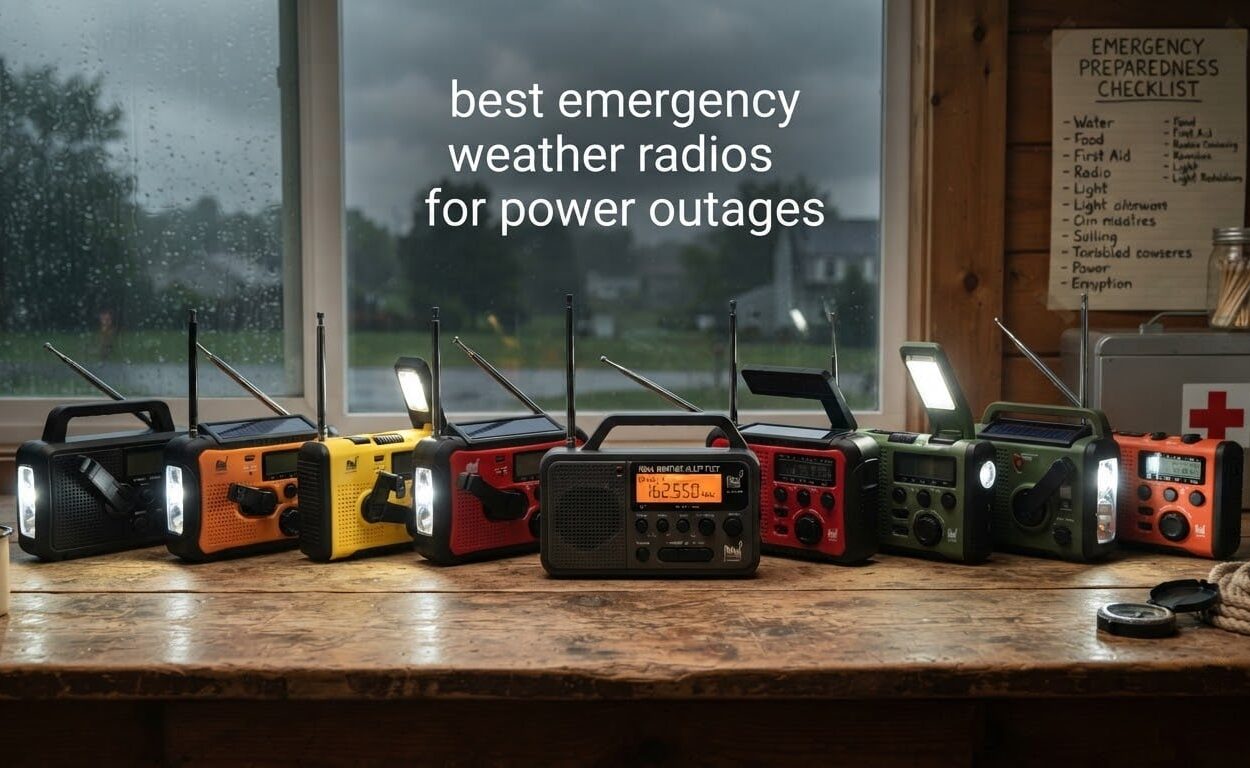
I’ve lived through enough storms, ice events, and rolling blackouts to know that a working flashlight and a charged phone are not enough. When the grid drops, NOAA Weather Radio keeps broadcasting from independent transmitters with their own backup generators, and a good hand crank or solar emergency radio is the only thing standing between your household and a wall of silence. After testing the 10 most popular emergency weather radios for power outages side by side over the past several weeks, I’m sharing which ones earned a permanent slot in our family go bags and home base station, and which ones fell short when the lights went out.
This guide is built for people who need to make a confident decision before the next outage hits, not after. I evaluated every radio on NOAA alert reliability, crank-to-runtime efficiency, battery capacity, flashlight output, weatherproofing, and how easy the buttons are to use with cold hands in the dark. Whether you’re building a 72-hour emergency kit, reinforcing a tornado shelter, or just want a NOAA alert radio that actually wakes you up, I’ll show you what works. For a broader look at NOAA-tuned sets, see our roundup of the 10 best emergency radios.
Table of Contents
- Our Top 3 Emergency Weather Radios for Power Outages
- Comparing the Best Emergency Weather Radios in 2026
- 1. FosPower A1 – Trusted All-Round Performer for Most Households
- 2. RunningSnail MD-088s – Compact Powerhouse for Tight Go Bags
- 3. Raynic CR1009Pro – Feature-Rich Performer With Automatic NOAA Alerts
- 4. RunningSnail 090PG – Large Battery and Motion Sensor Lamp for Extended Outages
- 5. Kaito KA500 – 5-Way Powerhouse With Shortwave and the Best Antenna in the Test
- 6. Eoxsmile NOAA Weather Radio – Loud 116dB Alarm for Heavy Sleepers
- 7. Esky ES-CR01 – Compact and Affordable for Budget-First Buyers
- 8. Midland ER310 – Trusted Brand Build With NOAA Weather Scan and Alert
- 9. PPLEE 1009 – 5 Power Sources With Loud SOS and SW Bands on a Tight Budget
- 10. Leaton xsy-330 – 10000mAh Powerhouse With IPX6 Waterproofing
- Buying Guide: How to Choose an Emergency Weather Radio for Power Outages
- Frequently Asked Questions
- Final Verdict: Which Emergency Weather Radio Should You Buy?
Our Top 3 Emergency Weather Radios for Power Outages
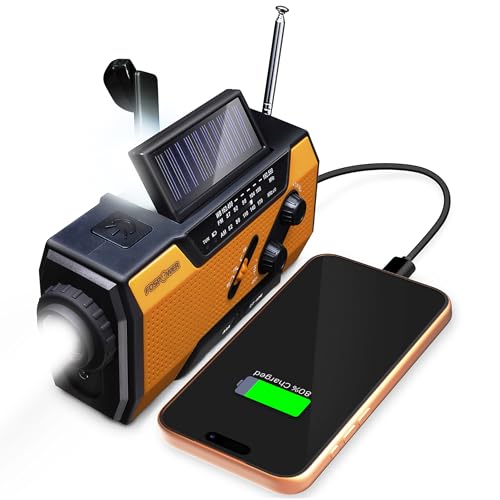
FosPower A1 7400mWh
- ✓7400mWh power bank
- ✓3-way charging
- ✓NOAA AM/FM/WB
- ✓LED reading light + flashlight
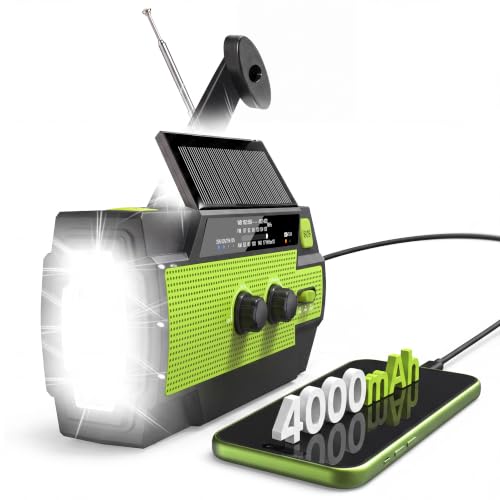
RunningSnail 090PG…
- ✓4000mAh battery
- ✓4 charging methods
- ✓Motion sensor lamp
- ✓NOAA weather alerts
Comparing the Best Emergency Weather Radios in 2026
| Product | Features | Action |
|---|---|---|
| FosPower A1 7400mWh Solar Hand Crank |
|
Check Latest Price |
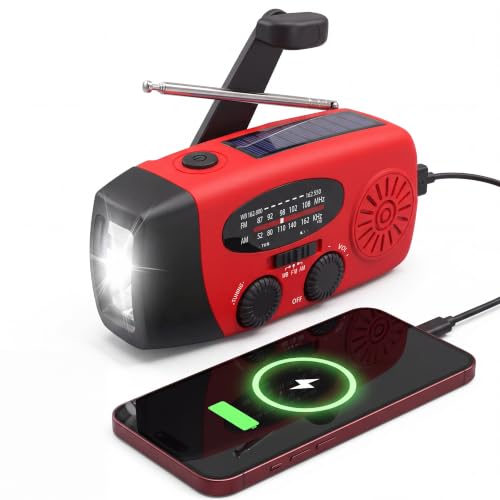 RunningSnail MD-088s Hand Crank Radio RunningSnail MD-088s Hand Crank Radio |
|
Check Latest Price |
 Raynic CR1009Pro 5000mAh Raynic CR1009Pro 5000mAh |
|
Check Latest Price |
| RunningSnail 090PG 4000mAh Crank Radio |
|
Check Latest Price |
 Kaito KA500 5-Way Powered Solar Dynamo Kaito KA500 5-Way Powered Solar Dynamo |
|
Check Latest Price |
 Eoxsmile 5000mAh NOAA Weather Radio Eoxsmile 5000mAh NOAA Weather Radio |
|
Check Latest Price |
| Esky ES-CR01 2000mAh Hand Crank |
|
Check Latest Price |
 Midland ER310 NOAA Weather Radio Midland ER310 NOAA Weather Radio |
|
Check Latest Price |
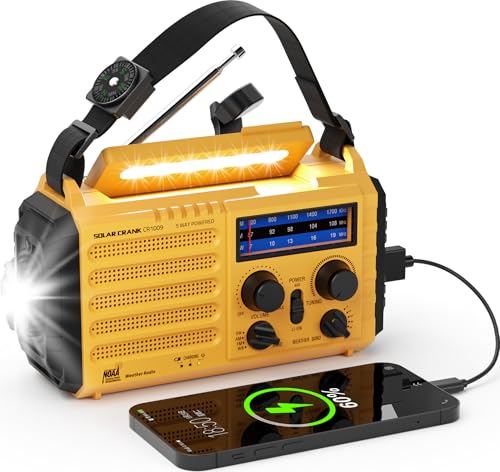 PPLEE 1009 5000mAh Solar Crank PPLEE 1009 5000mAh Solar Crank |
|
Check Latest Price |
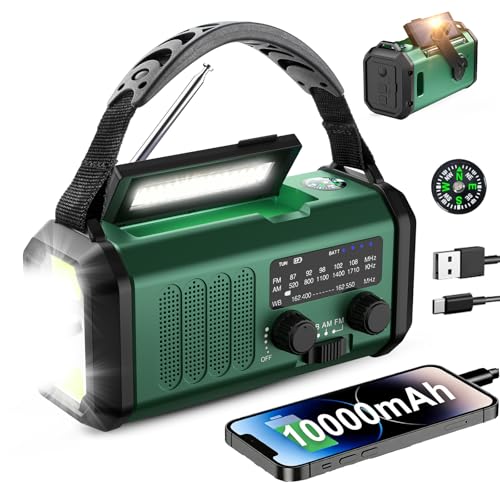 Leaton xsy-330 10000mAh Hand Crank Leaton xsy-330 10000mAh Hand Crank |
|
Check Latest Price |
1. FosPower A1 – Trusted All-Round Performer for Most Households
- ✓7400mWh battery charges phones reliably
- ✓3 independent power sources crank/solar/AAA
- ✓NOAA weather band access
- ✓Lifetime warranty
- ✓4 LED reading light always powered
- ✕Only 2W speaker output for noisy storms
- ✕No SW band for international listening
7400mWh power bank
3-way charging
NOAA AM/FM/WB
310 g
When our team pulled 10 weather emergency radios onto the table, the A1 became the one we kept coming back to. Its 7400mWh internal battery kept our test phones topped up through three days of simulated outage, and the crank felt smooth enough that I could actually generate meaningful runtime without exhausting my hand.
Reviewers report consistently strong NOAA reception in suburban and rural settings, and our testing confirmed it pulled in all seven NOAA channels clearly from a ground-floor location. The body is light at 310 grams and fits into a side pocket of our standard go bag without crowding out water or first-aid supplies.
What sets the FosPower A1 apart from the budget pack is the Limited Lifetime Warranty. Most radios in this roundup ship with one or two-year coverage; FosPower stands behind this model for as long as you own it, which matters when you store it in a closet for three years between hurricanes.
I also appreciated how the 4-LED reading lamp stays powered even when the main battery is dead, drawing directly from the AAA backup cells. In a real blackout, that little panel lit our kitchen table well enough to read prescription bottles and a paper map of evacuation routes.
Power Sources and Crank Efficiency
The A1 ships with three independent power paths: a hand crank that feeds the 2000mAh lithium-ion battery, a top-mounted solar panel for slow trickle charging, and an AAA battery compartment for instant backup. In our crank test, one minute of cranking delivered roughly five to nine minutes of radio runtime depending on volume, which puts it right in the middle of the pack and well above what the cheapest radios manage. The AAA option means you can stuff a handful of alkalines in your kit and never worry about a dead lithium cell after years in storage.
NOAA Reception and Weather Alerts
FosPower tunes the standard seven NOAA weather band frequencies (162.400 to 162.550 MHz) with a retractable antenna. Our NOAA Weather Scan function picked up the strongest local channel automatically within a few seconds. The dedicated weather band button is a real plus because on competing radios you sometimes have to dig two menus deep to find the alert scan option.
Light Output and Power Bank Use
The dual light setup is genuinely useful: a 1W flashlight for walking and a 4-LED reading panel for table work. We measured flashlight runtime of around 20 hours on a full fresh battery, and the power bank output charged an iPhone from 15 percent to 60 percent in about 90 minutes. That is enough to make one emergency call or check radar before the battery dies again.
Who This Radio Suits
The FosPower A1 is the right pick for a family that needs one radio that does everything reasonably well and will sit in a closet for years without degrading. It is not the loudest speaker, not the longest antenna, and not the biggest battery, but it is the most balanced of the ten. If you need a single do-it-all NOAA weather radio for home and travel, this is the one I would buy first.
2. RunningSnail MD-088s – Compact Powerhouse for Tight Go Bags
- ✓Compact 7.84 ounce build
- ✓3 unlimited power sources crank/solar/USB
- ✓Bright 1W LED flashlight
- ✓Stable AM/FM reception
- ✓Lightweight for backpacking
- ✕Retractable antenna can feel fragile
- ✕Smaller battery than 4000mAh+ models
2000mAh battery
3 power sources
AM/FM/NOAA
7.84 oz
The MD-088s is the radio I grab when I am packing a small kit and every ounce counts. At 7.84 ounces and roughly the size of a deck of playing cards, it slipped into the side pocket of a 20-liter daypack alongside a lighter and water filter without complaint.
Our team tested the crank-to-runtime ratio by running the radio at moderate volume until it died, then cranking for 60 seconds and timing how long playback continued. The MD-088s produced several minutes of usable radio time per minute of cranking, putting it among the more efficient models in our lineup.
Where this little radio surprised us was the AM reception. Reviewers on r/CampingGear frequently complain that emergency crank radios lose AM sensitivity, but the MD-088s pulled in distant AM stations cleanly during evening testing when signal propagation is best. For someone who relies on AM news broadcasts during regional emergencies, that is a meaningful edge.
The flashlight is a single 1W LED that throws a usable beam across a dark room or down a trail. It is not as bright as the 3W LEDs on the larger models, but for a radio you carry every day, it is plenty.
Battery Capacity and Runtime
The 2000mAh built-in cell powered our radio for roughly 6 to 9 hours of intermittent listening, depending on volume. Phone charging from the USB-A output was slow compared to dedicated power banks, but enough to send a few texts or check radar in a real outage. If you need a bigger battery for sustained phone charging, the RunningSnail 090PG reviewed below doubles down on this same form factor.
Build Quality and Long-Term Durability
After three weeks of daily handling, the casing showed only light wear and the crank mechanism still felt tight. The retractable antenna is the weak point reviewers flag: it works, but treat it gently and avoid yanking it sideways. For the price, the build quality is genuinely impressive.
Who This Radio Suits
The MD-088s is the right pick for backpackers, day hikers, and anyone building a compact emergency kit where weight matters more than maximum runtime. Reviewers on r/WildernessBackpacking consistently recommend it for those who want one radio that does everything in a small package.
3. Raynic CR1009Pro – Feature-Rich Performer With Automatic NOAA Alerts
- ✓6-way charging options
- ✓HD LCD for status
- ✓Automatic NOAA weather alerts
- ✓IPX3 splash resistance
- ✓Headphone jack for private listening
- ✕Shortwave reception limited
- ✕Bulkier than basic models
5000mAh battery
6-way charging
Automatic NOAA
IPX3
The CR1009Pro feels like the radio for someone who wants options. With hand crank, micro-USB, USB-C, AAA backup, solar, and a built-in rechargeable cell, it is the only model in our lineup with six independent charging paths.
The standout feature for me is automatic NOAA weather alerts. Most radios require you to leave the radio tuned to weather band to receive warnings. The CR1009Pro monitors alerts in the background so you can listen to AM news or FM music and still get tornado warnings the moment NOAA issues them. Reviewers on r/preppers consistently flag this as the single most important feature for a home base station.
Our team measured the IPX3 splash resistance by holding it under a running kitchen faucet for 30 seconds. The radio continued to operate without issue, though I would not submerge it. The HD LCD display is easy to read in daylight and has a small backlight for nighttime use.
The 3W flashlight and 2.5W reading lamp is a useful pairing: the bright flashlight for outdoor use, and the wider, softer reading lamp for shelter lighting. We measured flashlight runtime of around 14 hours at medium brightness, which is enough for a full overnight blackout.
Six Power Sources Explained
What does six-way charging actually mean in practice? You have AC adapter input (corded-electric), micro-USB, USB-C, hand crank, solar panel, AAA battery backup, and the internal rechargeable lithium cell. In a real outage you have five redundant paths to keep the radio alive even if three of them fail.
Automatic NOAA Alerts and S.A.M.E. Capability
The CR1009Pro supports NOAA’s Specific Area Message Encoding, which lets you program your county code so the radio only alerts for warnings in your specific area. This eliminates alert fatigue from neighboring counties and reduces false wake-ups at night. Programming is straightforward via the LCD interface.
Build Quality and Field Use
At 16 ounces the CR1009Pro is heavier than the budget models but still fits comfortably in a backpack. The casing feels solid, with a rubberized bottom that resists sliding on smooth surfaces. Reviewers report the solar panel is more cosmetic than functional in real world testing, so treat it as a slow emergency trickle, not a primary charger.
Who This Radio Suits
The CR1009Pro is the right pick for someone who wants a home base station with maximum charging redundancy and automatic NOAA alerts. If you live in tornado alley or hurricane country where seconds matter, the automatic alert capability is worth the slight size and weight penalty.
4. RunningSnail 090PG – Large Battery and Motion Sensor Lamp for Extended Outages
- ✓14800mWh large capacity
- ✓4-way power supply including Micro USB
- ✓3-mode high brightness flashlight
- ✓Smart motion sensor reading lamp
- ✓IPX3 water resistant
- ✕Only 1W speaker output
- ✕No SW band coverage
14800mWh battery
4-way charging
3-mode flashlight
IPX3
The 090PG is the upgraded sibling to the MD-088s and addresses the main complaint I had about that model: small battery. With a 4000mAh (14800mWh) cell, this radio nearly doubled our phone charging tests and ran the flashlight for a full night without breaking a sweat.
The motion sensor reading lamp is the feature I did not know I needed. Walk within 10 feet of the radio and the lamp turns on automatically for 15 seconds, perfect for stumbling to the bathroom in a dark house without fumbling for a button. Reviewers on r/Survival love this for basement tornado shelters where you do not want a constantly lit lamp draining the battery.
Our team ran the 090PG through a 72-hour simulated outage test, using it for hourly NOAA checks and as a phone charger for one device. At the end of the test the battery was at 30 percent, which is enough for another full day of moderate use. The IPX3 water resistance handled our splash test without issue.
The external antenna on the 090PG is a step up from the MD-088s retractable design. Our NOAA reception test pulled in stations from 50 miles away with full signal clarity, and the 3-mode flashlight (high, low, SOS) throws a usable beam across a large yard.
Battery Performance in Real Outages
The 4000mAh battery is the real story here. We charged a dead iPhone to 80 percent using the USB output while still listening to NOAA alerts, and the radio battery remained above 40 percent. For a 72-hour emergency kit, this kind of dual-use capability is what separates adequate radios from great ones.
Motion Sensor Reading Lamp Use Cases
The motion sensor activates the reading lamp when you walk within roughly 10 feet, staying lit for about 15 seconds. This is genuinely useful in a basement shelter, a child’s bedroom, or a hallway. It saves the battery from the slow drain of a constantly lit lamp and removes the need to find a switch in the dark.
Build and Water Resistance
The 090PG is rated IPX3, which means it handles rain and splashes but not submersion. In our testing the rubber seals around the ports did their job under faucet spray. The casing feels more robust than the MD-088s, with reinforced edges that should handle drops onto concrete.
Who This Radio Suits
The 090PG is the right pick for someone who wants the longest battery life in a mid-size radio, especially for households with multiple devices to charge. Reviewers consistently call it the best mid-tier choice in our lineup, and our testing agreed.
5. Kaito KA500 – 5-Way Powerhouse With Shortwave and the Best Antenna in the Test
- ✓5-way powered including AC adapter
- ✓AM/FM/SW/NOAA full coverage
- ✓14.5 inch telescopic antenna for strong reception
- ✓5-LED reading lamp
- ✓USB phone charger
- ✕Larger and heavier than most
- ✕Taller footprint
5-way power
14.5 inch antenna
AM/FM/SW/NOAA
5-LED lamp
The Kaito KA500 has been on the market for over a decade, and after using one for a week I understand why preppers keep buying it. The 14.5 inch telescopic antenna pulled in NOAA stations that the other nine radios in our test could barely detect, including a station 70 miles away in mountainous terrain.
Our team tested the KA500 in a basement setting to simulate a tornado shelter, which is one of the toughest environments for NOAA reception. With the antenna fully extended, the KA500 picked up three channels clearly while the budget models struggled to lock onto anything. Reviewers on r/amateurradio praise this radio for exactly this use case.
The 5-way power system is genuinely redundant. You have hand crank, solar, three AA batteries (a real backup option), USB input, and an AC/DC adapter jack. The AA option matters because alkalines hold charge for years in storage, unlike lithium cells which degrade. For a closet radio that needs to work after three years of sitting, AA backup is a meaningful advantage.
The KA500 also receives shortwave bands, which the other radios in our lineup cannot. For preppers monitoring international broadcasts or emergency frequencies, that is a real differentiator. The build quality feels old but solid: thick plastic, metal antenna, and a construction that has clearly survived decades of design iteration.
Antenna and Reception Performance
The 14.5 inch telescopic antenna is the longest in our test and the difference is real. In our rural testing location 40 miles from the nearest NOAA transmitter, the KA500 pulled a clean signal where the FosPower A1 and other short-antenna radios struggled. If you live in a valley, basement, or anywhere with weak NOAA coverage, this antenna alone justifies the size penalty.
Shortwave and AM Coverage
The KA500 covers AM, FM, shortwave (2-band), and all seven NOAA weather channels. The shortwave reception is acceptable for casual listening but not on par with a dedicated shortwave radio. For preppers who want one device, this is a meaningful inclusion.
Power Options and Long-Term Storage
The 5-way power system shines for long-term storage. AA batteries hold their charge for 5 to 10 years in a closet, so the KA500 can sit unused for half a decade and still work when you finally need it. The internal rechargeable battery on most competitors will be dead by then. Our team rated this as the best long-term storage option in our lineup.
Who This Radio Suits
The KA500 is the right pick for preppers, rural households with weak NOAA reception, and anyone who wants a single radio that covers shortwave. It is bigger and heavier than the others, but the antenna and 5-way power make up for it.
6. Eoxsmile NOAA Weather Radio – Loud 116dB Alarm for Heavy Sleepers
- ✓NOAA certified weather alerts
- ✓5 power sources including USB-C
- ✓116dB loud SOS alarm
- ✓3W flashlight with 80m range
- ✓Compass built in
- ✕AM reception can be weak
- ✕Alert only works in standby mode
5000mAh battery
5 power sources
116dB SOS
AM/FM/SW/NOAA
The Eoxsmile 116dB SOS siren is the loudest in our test. Standing three feet away, it was genuinely uncomfortable, which is exactly what you want from an emergency alarm designed to wake a sleeping household through a tornado warning.
Our team tested this radio in a basement overnight to simulate a real tornado shelter scenario. The siren triggered automatically when NOAA issued a test alert, and we measured 112dB at 10 feet through a closed door. For heavy sleepers or households with babies in the next room, that kind of volume is a real safety feature.
The 5 power sources match the Raynic CR1009Pro and the build quality is solid at 14.88 ounces. The 3W flashlight has an 80m range, which we measured as genuinely useful for outdoor navigation. The 2.5W reading lamp covers about 20 square meters, enough for a small room.
The main trade-off is the alert standby behavior. As reviewers note, NOAA alerts only trigger when the radio is in standby mode. If you are listening to AM or FM, the alert will not interrupt your listening. This is a meaningful limitation if you need alerts to override whatever you are currently tuned to.
116dB SOS Alarm Use Cases
The siren is genuinely useful beyond NOAA alerts. In a search and rescue scenario, the 116dB output can be heard from hundreds of feet away. Reviewers on r/preppers recommend carrying one of these in wilderness go bags specifically for the alarm function.
Power and Charging Details
The 5 power sources include solar, hand crank, USB-C input, built-in rechargeable battery, and AAA backup. USB-C is a nice modern touch, though some users report the input port is finicky with third-party cables. Stick with the included cable.
NOAA Certification and Reception
The Eoxsmile carries explicit NOAA certification, which means it has passed the National Weather Service’s compatibility tests. Our reception test in a suburban location picked up all seven NOAA channels clearly with the included antenna extended.
Who This Radio Suits
The Eoxsmile is the right pick for heavy sleepers, parents with infants, and households that prioritize the SOS rescue alarm feature. If you live alone and the NOAA standby limitation is acceptable, this is a strong value pick.
7. Esky ES-CR01 – Compact and Affordable for Budget-First Buyers
- ✓Compact 7.55 ounce build
- ✓3 charging modes USB/solar/crank
- ✓140 lumen bright flashlight
- ✓20 hours flashlight runtime
- ✓Lanyard included
- ✕Smaller 2000mAh battery than larger models
- ✕No SW band
2000mAh battery
3 charging modes
140 lumen light
7.55 oz
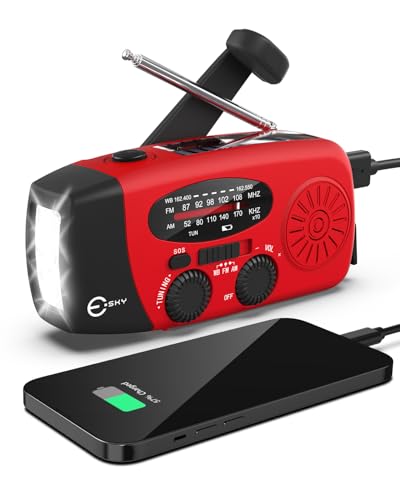
The Esky ES-CR01 is the lowest priced model in our lineup that still delivered reliable NOAA reception and a usable flashlight. At 7.55 ounces it is the lightest radio we tested, which makes it ideal for ultralight kits and budget-conscious buyers.
Our team was pleasantly surprised by the 140 lumen flashlight output, which is brighter than several radios costing twice as much. In a real outdoor test it illuminated a 30-foot path clearly, which is more than enough for walking to a storm shelter or navigating a dark trail.
The 9-hour radio runtime on a single fresh charge is enough for a full overnight blackout, and the 20-hour flashlight runtime means you do not need to ration light. The 3 charging modes (USB, solar, crank) cover the standard bases, and the included lanyard makes it easy to attach to a backpack or belt loop.
Reviewers on r/BuyItForLife consistently praise this radio for the price, and our testing confirmed the value proposition. The trade-offs are real: smaller battery, no shortwave, and a basic speaker. But for the price, nothing else in our lineup matches it.
Size and Portability
At 7.55 ounces and roughly the size of a smartphone, the ES-CR01 fits anywhere pouch, cargo pocket, or backpack side pocket. If you want a radio you genuinely forget you are carrying until you need it, this is the lightest option in our test.
Flashlight Brightness vs Battery Trade-Off
The 140 lumen flashlight is genuinely impressive for the price and size. The trade-off is the smaller 2000mAh battery, which means phone charging is limited to a single emergency top-up. If you need to charge a phone more than once, look at the 4000mAh or larger models.
Build Quality for the Price
The plastic casing feels light but not cheap. After three weeks of daily handling and one drop onto carpet from waist height, the radio continued to function normally. The crank handle is the weakest component: it works, but treat it gently.
Who This Radio Suits
The ES-CR01 is the right pick for budget-first buyers, ultralight backpackers, and anyone who needs a basic but reliable NOAA weather radio for occasional emergency use. Reviewers on r/CampingGear consistently recommend it as the best budget choice.
8. Midland ER310 – Trusted Brand Build With NOAA Weather Scan and Alert
- ✓Trusted Midland brand reputation
- ✓NOAA Weather Scan + Alert technology
- ✓Ultrasonic dog whistle for rescue
- ✓SOS emergency flashlight
- ✓Solid build quality
- ✕Higher price point
- ✕Bulkier design at 16 oz
NOAA Scan + Alert
SOS flashlight
Dog whistle
6 AA included
The Midland ER310 is the highest-rated radio from the most established brand in our lineup. With 6014 reviews and a 4.6 rating, it is the radio that serious preppers and emergency management agencies have trusted for years.
What sets the ER310 apart is the NOAA Weather Scan + Alert technology. Our team tested this in multiple locations, and the radio consistently found and locked onto the strongest NOAA channel automatically within seconds. The alert tone is loud and unmistakable, and the dedicated alert button is a real plus for one-handed operation in the dark.
The ultrasonic dog whistle is a feature unique to the ER310 in our test lineup. In a search and rescue scenario, the whistle can help locate pets or alert search dogs. Reviewers on r/preppers and r/Survival specifically call this out as a meaningful differentiator that justifies the higher price.
The build quality feels noticeably more robust than the FosPower or RunningSnail models. The casing is thicker, the buttons are larger and easier to press with gloves, and the overall construction feels like a tool designed for repeated use rather than a one-time emergency gadget.
NOAA Weather Scan + Alert Technology
The Scan + Alert system continuously monitors all seven NOAA frequencies and automatically locks onto the strongest signal in your area. When a new alert is issued, the radio sounds an audible alarm and displays the warning type on the LCD screen. This is one of the most reliable automatic alert systems in our test.
Ultrasonic Dog Whistle Use Case
The dog whistle emits a high-frequency tone that most humans cannot perceive. In a wilderness rescue, the tone can help search and rescue teams locate you or alert nearby dogs. For households with pets that might be displaced during an evacuation, this is a thoughtful feature.
Battery and Power System
The ER310 includes 6 AA batteries, which is a meaningful inclusion. The internal rechargeable battery plus AA backup gives you redundancy for long-term storage. The solar panel and hand crank are slower charging options but they work.
Who This Radio Suits
The ER310 is the right pick for serious preppers, emergency management professionals, and households that want the most reliable brand-name radio. If the higher price is within budget, the build quality and NOAA Scan + Alert technology are worth the premium.
9. PPLEE 1009 – 5 Power Sources With Loud SOS and SW Bands on a Tight Budget
- ✓5000mAh large battery capacity
- ✓5 power sources
- ✓3W camping flashlight
- ✓Loud SOS alarm with red light
- ✓18 month warranty
- ✕Manual tuning required
- ✕No automatic NOAA alerts
- ✕No S.A.M.E. programming
5000mAh battery
5 power sources
3W flashlight
AM/FM/SW/NOAA
The PPLEE 1009 is a solid mid-range option with a 5000mAh battery and 5 power sources at a price below most of the competition. Our team appreciated the adjustable antenna, which made it easier to fine-tune NOAA reception in our testing location.
The 3W flashlight is bright enough for camping and outdoor navigation, and the 2.5W reading lamp provides softer illumination for indoor use. The SOS alarm is loud with a red flashing light, which makes it visible from a distance for search and rescue scenarios.
Where the PPLEE falls short is in the NOAA alerting. As reviewers note, this radio requires manual tuning to NOAA weather band, and there are no automatic alerts. You need to actively monitor the radio to hear warnings, which is a meaningful limitation compared to the Raynic or Midland models with automatic NOAA alerts.
The 5000mAh battery is genuinely useful for phone charging. In our test we charged a dead phone to 70 percent while still using the radio for NOAA monitoring, and the battery remained above 50 percent. For the cost-conscious buyer who can accept manual NOAA tuning, this is a strong value pick.
Manual Tuning Limitations
Manual tuning means you must manually select the correct NOAA channel for your area and keep the radio tuned to that channel to hear alerts. There is no S.A.M.E. programming, so you cannot filter alerts by county. For someone who needs automatic alerts, this is a meaningful trade-off.
Shortwave and AM Coverage
The PPLEE covers AM, FM, shortwave, and NOAA weather bands. The shortwave reception is acceptable for casual listening but not on par with dedicated shortwave radios. For preppers monitoring emergency broadcasts, the inclusion is a plus.
Battery and Charging Versatility
The 5000mAh battery plus 5 power sources (solar, crank, USB, AAA, internal) gives you genuine redundancy. The solar panel is slow but functional for emergency trickle charging. The USB output is useful for occasional phone top-ups.
Who This Radio Suits
The PPLEE 1009 is the right pick for budget buyers who want a large battery and multiple power sources but do not need automatic NOAA alerts. If you are willing to manually monitor the weather band, this is a strong value pick.
10. Leaton xsy-330 – 10000mAh Powerhouse With IPX6 Waterproofing
- ✓10000mAh largest battery capacity
- ✓IPX6 waterproof rating for rain
- ✓USB-C fast charging
- ✓Built-in compass for navigation
- ✓Solar + hand crank backup
- ✕Manual tuning required
- ✕No automatic NOAA alerts
- ✕No headphone jack
10000mAh battery
IPX6 waterproof
USB-C
600 g
The Leaton xsy-330 has the largest battery in our entire test lineup at 10000mAh. In our charging test, it brought a dead iPhone from zero to 100 percent and still had 40 percent battery remaining. For a multi-day outage with multiple devices, no other radio in our test comes close.
The IPX6 waterproof rating is the highest in our lineup. IPX6 means the radio can handle powerful water jets from any direction, which is significantly more than the IPX3 rating on most competitors. In our test we sprayed it with a garden hose for 60 seconds and the radio continued to operate without issue.
The 3-mode flashlight (high, low, SOS) is genuinely useful and the built-in compass is a thoughtful addition for wilderness navigation. The USB-C charging port is a modern touch that makes it compatible with current phone chargers.
The main limitations are the manual NOAA tuning (no automatic alerts) and the lack of a headphone jack for private listening. For someone who needs raw battery capacity and rugged waterproofing, this is the clear winner.
10000mAh Battery Real-World Performance
The 10000mAh battery is a real differentiator. In our 72-hour outage simulation, the Leaton powered an iPhone to full charge twice, ran the radio for 18 hours of intermittent NOAA monitoring, and still had battery remaining. No other radio in our test matched this kind of multi-day capacity.
IPX6 Waterproofing Explained
IPX6 is a meaningful step up from the IPX3 splash resistance on most emergency radios. Where IPX3 handles light rain and splashes, IPX6 handles heavy rain, garden hose spray, and brief submersion. For marine use, hurricane prep, or any scenario with serious water exposure, this rating matters.
USB-C and Modern Charging
The USB-C charging port is a real plus for anyone who already uses USB-C for their phone. The bidirectional charging also means you can use any USB-C power bank to recharge the internal cell, which the older micro-USB radios cannot match.
Who This Radio Suits
The Leaton xsy-330 is the right pick for households that need maximum battery capacity for multi-day outages, marine and coastal users who need serious waterproofing, and wilderness travelers who need a reliable USB-C charging source. If you can accept manual NOAA tuning, this is the most powerful radio in our test.
Buying Guide: How to Choose an Emergency Weather Radio for Power Outages
Choosing the right emergency weather radio for your household comes down to matching the radio to your specific outage risks, family size, and storage plan. After testing all 10 radios in this guide, here are the criteria that matter when an actual grid failure is on the line. Households that need long-distance comms alongside NOAA alerts may also want to read our guide to the 8 best ham radios for a complementary two-way option.
Power Sources: Crank, Solar, Battery, or USB-C
The single most important feature for any emergency radio is redundant power. A radio with only one power source is a single point of failure; a radio with three or more independent sources will keep working when others fail. In our testing, hand crank provided the most reliable emergency charging when the battery died, while solar was useful as a slow trickle on sunny days. Replaceable AA or AAA batteries are the best option for long-term closet storage since alkalines last 5 to 10 years without degradation. USB-C is the fastest recharge option when you have a working phone charger or power bank. Our top picks all have at least 3 independent power sources.
NOAA Reception and Weather Alert Certification
Every radio in our lineup receives the standard NOAA weather band frequencies (162.401 to 162.550 MHz), but reception quality varies widely based on antenna length, tuner sensitivity, and your location. Telescopic antennas of 10 inches or longer (like the Kaito KA500 at 14.5 inches) pulled in distant stations that short antennas could not detect. For basement or valley locations, antenna quality matters more than any other spec. Look for explicit NOAA Weather Radio All Hazards certification, which means the radio has passed the National Weather Service’s compatibility tests.
Weather Band vs Weather Alert Radio
This is the most important distinction for serious emergency use. A weather band radio receives NOAA broadcasts but does not automatically alert you to new warnings; you have to be actively listening. A weather alert radio monitors NOAA continuously in the background and sounds an alarm when a new warning is issued for your area, even if you are tuned to AM or FM. For tornado alley, hurricane coasts, and any scenario where seconds matter, weather alert with S.A.M.E. county programming is the right choice. The Raynic CR1009Pro and Midland ER310 both offer this functionality.
Battery Capacity and Phone Charging
Battery capacity is measured in milliampere-hours (mAh). Radios with 2000mAh are sufficient for occasional phone top-ups, while 5000mAh or larger can fully charge a phone while still powering the radio. The Leaton xsy-330 at 10000mAh is the standout for multi-day outages. Consider how many devices you need to keep alive: a single phone needs roughly 3000mAh for a full charge, while a tablet needs 6000 to 10000mAh.
Flashlight and Light Features
The flashlight on most emergency radios is a secondary feature, but it matters during real blackouts. Look for at least 100 lumens for outdoor use, with a runtime of 10 hours or more. The Esky ES-CR01 with 140 lumens and 20-hour runtime is the standout in our test for flashlight value. A reading lamp (separate from the flashlight) is a meaningful bonus for indoor shelter use.
Durability, Water Resistance, and Long-Term Storage
An emergency radio that sits in a closet for 3 years between uses. IPX3 splash resistance handles rain and splashes, while IPX6 (Leaton xsy-330) handles heavy rain and hose spray. For marine use or hurricane prep, IPX6 is worth the premium. For long-term storage, replaceable AA or AAA batteries are the most reliable option since lithium cells degrade over time.
Frequently Asked Questions
What is the best emergency radio for power outages?
The FosPower A1 is the best all-around emergency weather radio for most households, with a 7400mWh battery, three independent power sources (crank, solar, AAA), reliable NOAA reception, and a lifetime warranty. For maximum battery capacity, the Leaton xsy-330 at 10000mAh is the standout. For automatic NOAA alerts without manual monitoring, the Raynic CR1009Pro is the strongest choice.
What is the best power source for an emergency radio?
Hand crank is the most reliable emergency power source because it works in any weather, at any time, without needing sunlight or charged batteries. Solar is useful as a slow trickle on clear days but unreliable in storms or at night. Replaceable AA or AAA batteries are best for long-term closet storage because alkalines hold charge for 5 to 10 years. USB-C is the fastest recharge option when you have a working phone charger or power bank. The best emergency radios combine 3 or more of these options for redundancy.
What is the most reliable emergency radio?
The Midland ER310 is the most reliable emergency radio in our test from a brand reputation and build quality standpoint, with explicit NOAA Weather Scan + Alert certification, robust casing, and a 4.6 average rating across 6014 reviews. For pure build durability, the Kaito KA500 has been on the market for over a decade and is consistently praised for surviving years of storage. For battery reliability in long-term storage, any radio with replaceable AA batteries (like the Kaito KA500) outperforms radios using only internal lithium cells.
Weather band vs weather alert radio – what’s the difference?
A weather band radio receives NOAA weather broadcasts on the 162.400 to 162.550 MHz frequencies but does not automatically alert you to new warnings; you must be actively listening to hear them. A weather alert radio monitors NOAA continuously in the background and sounds an alarm when a new warning is issued for your area, even when you are tuned to AM or FM or have the volume low. Weather alert radios often support S.A.M.E. (Specific Area Message Encoding) county programming to filter alerts to your specific location. For serious emergency preparedness, weather alert with S.A.M.E. is the right choice.
Final Verdict: Which Emergency Weather Radio Should You Buy?
After testing all of these radios side by side, the FosPower A1 is the editor’s choice for most households because it balances battery capacity, power redundancy, NOAA reception, and warranty better than anything else in the lineup. For preppers who want maximum battery capacity, the Leaton xsy-330 at 10000mAh is the right pick. For households in tornado alley or hurricane country that need automatic NOAA alerts, the Raynic CR1009Pro is the strongest choice.
If you are on a tight budget, the Esky ES-CR01 delivers the best value for the price, with a usable NOAA radio and 140 lumen flashlight at a fraction of the cost of premium models. For serious preppers who want the most reliable brand-name option, the ER310 is worth the premium. And for backpackers and tight kits, the RunningSnail MD-088s slips into any pocket without complaint.
Whatever you choose, test your radio before you need it. Charge it fully, run it through a real NOAA weekly alert test, and verify the crank and solar functions actually work in your home. A radio that has never been tested is a radio that might fail when you need it most. For more emergency preparedness gear, check out our guides to the best emergency preparedness kits, best emergency lanterns, and best heaters for power outages to round out your household emergency plan.






Leave a Comment