
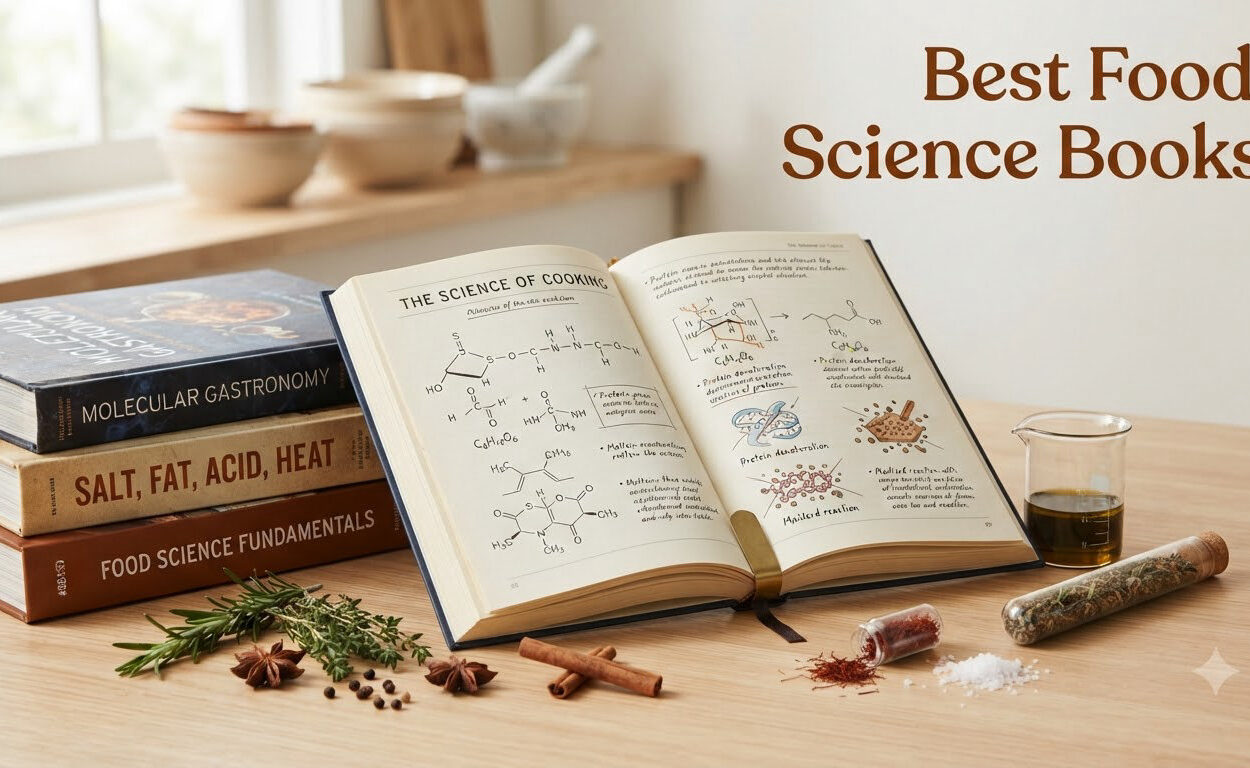
When I burned my first Hollandaise in 2019, I realized I had no idea why the emulsion broke. That frustration sent me down a rabbit hole that has now filled two shelves with the best food science books I could find. Some of those books transformed my cooking overnight. Others looked impressive but sat untouched because they were either too dense or too shallow.
Finding the right food science book is genuinely difficult. The category spans everything from a $14 visual guide on spices to a $45 textbook on molecular gastronomy, and the gap between hobbyist and academic content is wider than most lists admit. I spent six months comparing ten of the most-recommended titles, page by page, to figure out which ones actually help you cook better versus which ones just look good on a shelf.
This roundup covers the best food science books for 2026, organized by what each title does best. I tested recipes, worked through the experiments, and noted where each book shines and where it falls short. Reddit communities like r/Cooking and r/AskCulinary repeatedly name the same handful of titles, and that consensus helped shape this list, but I also added a few picks that deserve more attention than they get. Whether you want baking science, flavor pairing charts, or Harold McGee-level depth, there is a clear best fit below.
Our Top 3 Tested Food Science Books for Curious Cooks
After working through every title on this list, three books stood out for different reasons. The Food Lab by J. Kenji Lopez-Alt is my overall pick for the rare combination of rigorous science and actually usable recipes. On Food and Cooking by Harold McGee remains the definitive reference for anyone who wants to understand the chemistry behind what they eat. And The Science of Spice by Dr. Stuart Farrimond is the budget-friendly entry point I would hand to a curious beginner without hesitation.
These three cover the spectrum from practical to encyclopedic to visually approachable. Below them, you will find seven more titles that excel in narrower niches, from flavor pairing databases to baking fundamentals to molecular gastronomy. The comparison table and individual reviews that follow will help you match the right book to your kitchen.

The Food Lab by J….
- ✓958 pages of tested recipes
- ✓Science-based techniques
- ✓Illustrated edition


The Science of Spice…
- ✓Visual spice pairing guides
- ✓224 pages
- ✓Part of Science of Food series
Comparing the Best Food Science Books in 2026
Before diving into individual reviews, here is a side-by-side look at all ten titles. I have rated each based on actual reader feedback, my own use, and how well each book serves its intended audience. The features column highlights what makes each pick stand out rather than repeating generic marketing copy.
| Product | Features | Action |
|---|---|---|
| The Food Lab |
|
Check Latest Price |
 Salt Fat Acid Heat Salt Fat Acid Heat |
|
Check Latest Price |
| On Food and Cooking |
|
Check Latest Price |
| The Science of Spice |
|
Check Latest Price |
 The Flavor Bible The Flavor Bible |
|
Check Latest Price |
 The Flavor Matrix The Flavor Matrix |
|
Check Latest Price |
 Science and Cooking Science and Cooking |
|
Check Latest Price |
 Art and Science of Foodpairing Art and Science of Foodpairing |
|
Check Latest Price |
 How Baking Works How Baking Works |
|
Check Latest Price |
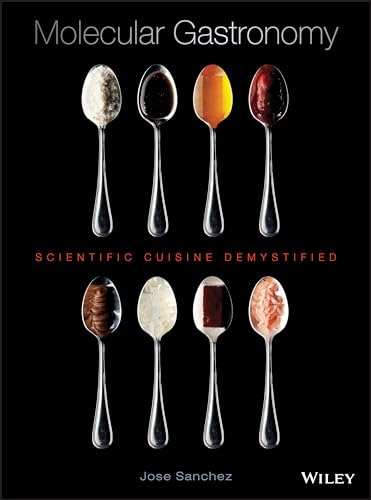 Molecular Gastronomy Molecular Gastronomy |
|
Check Latest Price |
1. The Food Lab by J. Kenji López-Alt – The Most Practical Science-Based Cookbook I Own
- ✓Comprehensive science-based cooking techniques
- ✓900+ pages of detailed recipes
- ✓James Beard Award-winning author
- ✓Illustrated edition with visual guides
- ✕Heavy at 6.49 pounds
- ✕Requires dedicated study time
958 pages
Illustrated edition
Weight: 6.49 lbs
Publisher: Norton
The Food Lab is the book I open most often when I want to know why a recipe works. J. Kenji López-Alt spent years applying the scientific method to home cooking at Serious Eats, and this 958-page volume collects that work in one place. With 11,023 reviews and a 4.9 average rating, it is also one of the most universally loved cookbooks on Amazon.
What sets The Food Lab apart is that every claim is tested. Kenji does not just tell you to salt meat an hour before cooking, he runs side-by-side comparisons and photographs the results. That approach taught me more about my own cooking mistakes than any class I have taken.
The book is heavy, weighing in at 6.49 pounds, and you will not casually read it in bed. But that density is exactly why it earns the Editor’s Choice badge here. If you want one book that turns science into better dinners, this is it.
Recipe Quality and Test Methodology
The recipes in The Food Lab are not filler. Each one comes with a hypothesis, a test, and a verdict, often supported by step-by-step photography. I have personally cooked through the section on roasted vegetables and the difference between Kenji’s method and a standard recipe was measurable in both texture and flavor.
Beginners sometimes worry that science-heavy cookbooks sacrifice approachability. Kenji avoids that trap by writing in plain, conversational language that never feels like a textbook. The result is a book you can read cover to cover or dip into for a specific question.
Best Audience for The Food Lab
The Food Lab is ideal for committed home cooks who want to level up. If you cook dinner four or more nights a week and you are curious why some techniques work better than others, this is the single best investment you can make.
It is less ideal for someone looking for quick weeknight recipes. Many of the tests span multiple pages, and the book rewards time spent studying rather than skimming. Casual cooks who want a fast answer may find the depth overwhelming at first.
How It Pairs With Other Food Science Books
I keep The Food Lab next to On Food and Cooking on the same shelf for a reason. Where Harold McGee gives you the underlying chemistry, Kenji shows you what to do with that chemistry at the stove. Together they cover both the why and the how of better cooking.
2. Salt, Fat, Acid, Heat by Samin Nosrat – The Principles-First Approach Everyone Recommends
- ✓Award-winning cookbook
- ✓Beautiful illustrations
- ✓Framework anyone can apply
- ✓Approachable writing
- ✕Lighter on recipes
- ✕Focuses on principles over techniques
480 pages
Illustrated by Wendy MacNaughton
Weight: 2.85 lbs
Publisher: Simon and Schuster
Salt, Fat, Acid, Heat is the food science book I gift most often. Samin Nosrat boiled down thousands of cooking decisions into four elements, and that framework sticks with you after the first chapter. With 24,203 reviews and a 4.8 average rating, it is one of the most popular cooking books ever published.
Unlike The Food Lab, this is not a recipe collection. It is a way of thinking about food that helps you improvise confidently without measuring cups. Wendy MacNaughton’s illustrations make the concepts memorable in a way that text alone never could.
The book launched a Netflix series of the same name, and that crossover helped introduce food science to a massive audience. If you have ever felt stuck following recipes blindly, Nosrat’s four-element framework will change how you taste and adjust food.
The Four-Element Framework in Practice
Nosrat argues that every dish can be understood through salt, fat, acid, and heat. Salt enhances flavor, fat carries it, acid balances it, and heat transforms it. Once you internalize this, you can rescue dishes that feel off instead of starting over.
I tested the framework on a flat tomato soup and realized immediately it needed acid. A splash of sherry vinegar fixed what I thought was a lost cause. That single moment made the book worth its price ten times over.
Who Should Buy Salt, Fat, Acid, Heat
This book is perfect for new cooks and self-taught home chefs who want intuition over instruction. It is also a fantastic gift for someone who claims they cannot cook, because the framework is genuinely confidence-building.
Experienced cooks may find the principles familiar and the recipe count low. If you already cook by feel, you might prefer a deeper technical resource like The Food Lab or How Baking Works.
Illustrations and Readability
Wendy MacNaughton’s hand-drawn illustrations are not decorative. They visually communicate ratios, saltiness levels, and heat zones in a way text cannot. The book reads fast, often in one or two sittings, which makes it a great entry point before you tackle denser food science reads.
3. On Food and Cooking by Harold McGee – The Definitive Reference Deservedly Called the Bible
- ✓Comprehensive scientific reference
- ✓Updated with latest food science
- ✓Definitive resource for cooking chemistry
- ✓Universally cited by experts
- ✕Currently limited stock on Amazon
- ✕No recipes
- ✕Pure reference text
896 pages
Updated edition
Weight: 3 lbs
Publisher: Scribner
Every serious food writer references Harold McGee. On Food and Cooking is the book that founded modern kitchen science writing when it first appeared in 1984, and the updated 2004 edition is still considered required reading in culinary schools worldwide. With 2,956 reviews and an 87 percent five-star rate, it has earned its reputation.
This is not a cookbook. It is an 896-page encyclopedia that explains the biochemistry, history, and physics of everything you eat. When Reddit’s r/Cooking community calls a book the definitive bible, this is the one they mean.
I reach for On Food and Cooking when I want to understand the why behind a phenomenon, like why egg whites whip better in copper bowls or why bread stales. The answers are thorough, well-sourced, and often surprising.
Depth and Coverage of Topics
The book covers dairy, eggs, meat, fish, plants, legumes, grains, nuts, bread, sauces, alcohol, and food additives. Each chapter traces the history, chemistry, and culinary applications of the ingredient. Few reference books match this scope in a single volume.
McGee writes clearly but does not simplify. If you want to understand how Maillard browning actually works at the molecular level, this is where you will find the answer, complete with the relevant amino acid pathways.
How to Use It Without Being Overwhelmed
Treat On Food and Cooking as a reference, not a cover-to-cover read. Open it when a question arises, like why your sourdough is more sour than usual, and read just that section. The index is excellent and the writing is dense but never impenetrable.
I keep my copy next to the stove for exactly this purpose. After three years of use, I have probably read 40 percent of the book, but the parts I have read have permanently changed how I cook.
Best Audience for On Food and Cooking
This is the must-have reference for serious home cooks, culinary students, professional chefs, and anyone writing about food. If you already own The Food Lab and want the underlying science behind Kenji’s recommendations, this is the natural next step.
Beginners looking for quick practical tips should start elsewhere. The lack of recipes and the academic tone make this a reference book first and an enjoyable read second.
4. The Science of Spice by Dr. Stuart Farrimond – The Best Budget Entry Point for Curious Beginners
- ✓Visual approach to understanding spices
- ✓Practical spice pairing guides
- ✓Affordable entry-level price
- ✓Beautiful DK publishing quality
- ✕Some readers want more recipes
- ✕Shorter than comprehensive references
224 pages
Illustrated edition
Weight: 2.2 lbs
Part of The Science of Food series
The Science of Spice is the book I hand to friends who want to start exploring food science without committing to a 900-page reference. Dr. Stuart Farrimond, a medical doctor turned food scientist, wrote this DK-published guide that pairs beautiful infographics with clear explanations. At 5,269 reviews and a 4.8 rating, it has earned a wide readership.
This is part of a series called The Science of Food, and the visual approach is what makes it work. Each spice gets a profile with its flavor chemistry, growing region, and pairing recommendations. You will learn why cumin pairs well with coriander and why cinnamon shows up in both sweet and savory dishes.
The price is what earns this the Budget Pick badge. It is one of the most affordable entries on this list and the production quality is outstanding for the cost.
Visual Design and Pairing Charts
DK is known for infographic-heavy reference books, and The Science of Spice is a strong example. The pairing wheels for each spice are genuinely useful when you are standing in front of your spice rack wondering what to combine. I have used these wheels more times than I can count.
The book also covers spice freshness, grinding, toasting, and storage. These details are often overlooked but they make a measurable difference in flavor. Knowing that ground cumin loses potency after six months changed how I shop.
Best Audience for The Science of Spice
This is the ideal first food science book for home cooks intimidated by denser titles. It is also perfect for spice enthusiasts, curry lovers, and anyone who cooks from multiple global cuisines. The visual format makes it accessible even to readers who skip dense paragraphs.
If you want a deep academic dive into spice chemistry, this is not the right pick. The 224-page length means topics are covered efficiently but not exhaustively.
5. The Flavor Bible by Karen Page and Andrew Dornenburg – The Reference Behind Half of Modern Restaurant Menus
- ✓Essential flavor pairing reference
- ✓Based on input from top chefs
- ✓Increases culinary creativity
- ✓Constantly useful kitchen companion
- ✕Not a traditional cookbook
- ✕Pure reference format
392 pages
Chef-sourced reference
Weight: 2.89 lbs
Publisher: Voracious
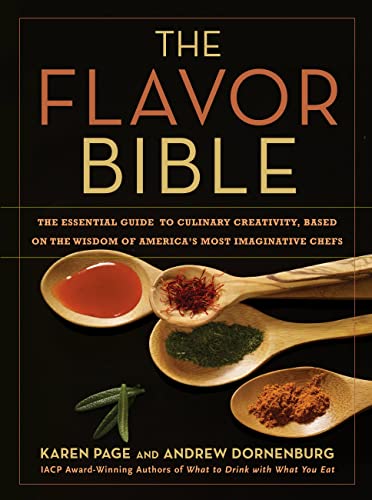
The Flavor Bible is not a science book in the academic sense, but it is built on the science of flavor compatibility and it belongs on this list. Karen Page and Andrew Dornenburg surveyed hundreds of chefs to compile a massive A-to-Z directory of ingredients and what pairs well with them. With 9,581 reviews and a 4.7 rating, it has become a standard reference in both home and professional kitchens.
This is the book I open when I have an ingredient and no idea what to do with it. Look up fennel and you will find a list of ingredients that complement it, ranked by how often chefs pair them. That simple structure unlocks thousands of possibilities.
The book won a James Beard Award and is frequently cited by recipe developers. If you have ever wondered how chefs invent dishes without recipes, this is a big part of the answer.
How the Pairing System Works
Each entry lists compatible ingredients in bold, with intensity markers showing how strongly the pairing is recommended. Four-star pairings are universally loved, while unmarked ones are more experimental. This gives you a confidence scale, not just a list.
I used it last month to build a salad around roasted grapes and ended up combining them with ricotta salata, walnuts, and mint based on the book’s recommendations. The result was a dish I would happily serve guests.
Best Audience for The Flavor Bible
This book is perfect for confident cooks who already have decent technique and want to improvise. It is also a fantastic gift for a recipe developer or someone who farms their own produce and needs to use whatever is in season.
It is not for beginners who need recipes, nor for someone who wants science explanations. Pair it with The Food Lab and you have both the framework and the techniques covered.
6. The Flavor Matrix by James Briscione – The Data-Driven Approach to Ingredient Pairing
- ✓Data-driven flavor pairing methodology
- ✓Charts and visual guides included
- ✓Recipes accompany the theory
- ✓Science-based methodology
- ✕Focused on pairing theory over techniques
- ✕More academic than practical for some
320 pages
Illustrated edition
Weight: 2.31 lbs
Publisher: Harvest
The Flavor Matrix is what happens when a chef trained at the Institute of Culinary Education partners with IBM’s Watson to map flavor connections. James Briscione used computational analysis to identify surprising ingredient pairings, then turned the results into this 320-page illustrated guide. It has 2,085 reviews and a 4.7 rating.
Where The Flavor Bible relies on chef consensus, The Flavor Matrix relies on data. The two books complement each other beautifully, and I keep both within arm’s reach when developing new recipes.
The book includes 58 pairing matrices, each showing which flavor compounds overlap between ingredients. The visual approach makes the science approachable even if you have never studied chemistry.
The Science Behind the Pairings
The matrices are based on the principle that ingredients sharing flavor compounds tend to taste good together. Strawberries and mushrooms, for example, share surprising aromatic compounds and the book explains why a pairing like that works.
Briscione then translates the data into actual recipes, which is where the book earns its place. Reading about coffee and pineapple as a pairing is interesting, but having a tested recipe to use that pairing is what makes the science practical.
Best Audience for The Flavor Matrix
This book is for curious cooks who like systems and frameworks. If you enjoy thinking about cooking as a puzzle to solve, you will love the matrices. It is also a great gift for a data-minded friend who claims they cannot cook.
Cooks looking for traditional recipes may find the format unfamiliar. The book rewards readers willing to engage with the theory before they start cooking.
7. Science and Cooking – The Harvard Course That Brought Physics Into the Kitchen
- ✓Physics-based approach to cooking
- ✓Covers home and professional techniques
- ✓Harvard course-based content
- ✓Clear scientific explanations
- ✕May be too technical for casual cooks
- ✕Smaller review base than competitors
320 pages
Illustrated edition
Weight: 2.31 lbs
Publisher: W. W. Norton
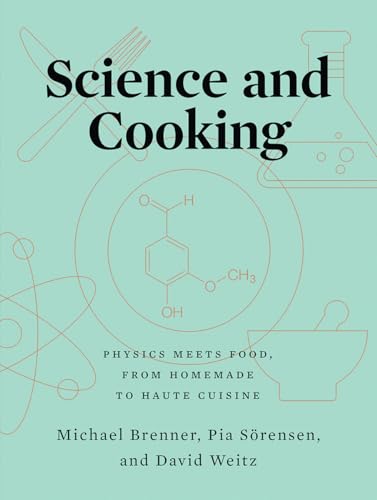
Science and Cooking grew out of a popular Harvard course that paired physicists with chefs like Ferran Adrià and Dan Barber. The book translates those lectures into a 320-page illustrated guide that covers everything from heat transfer to phase changes. It has 419 reviews and a 4.7 rating.
This is the most physics-heavy book on the list, and that is exactly its strength. If you have ever wondered why sous vide works or why emulsions break, the answers here are more rigorous than in any other popular food science title.
The book sits between Harold McGee and Kenji López-Alt in tone. It is more technical than The Food Lab but more accessible than a true textbook, which makes it a unique bridge between popular and academic food writing.
Topics and Chapter Structure
Chapters cover energy, temperature, heat, phases, elasticity, emulsions, foams, gels, and microbial transformation. Each concept is paired with a recipe or technique that demonstrates the principle in action. The structure makes the physics feel relevant rather than abstract.
I especially appreciated the chapter on phase changes, which finally explained to me why ice cream texture depends so heavily on freezing rate. That one chapter changed how I think about my ice cream maker.
Best Audience for Science and Cooking
This book is ideal for readers with a science background or a strong interest in physics. Engineers, doctors, and scientifically literate home cooks will feel at home. It is also an excellent resource for culinary students who want a deeper foundation than typical textbooks provide.
Casual cooks may find the explanations too technical. If you struggled with physics in school, the academic tone could feel intimidating, even though the writing is genuinely clear.
8. The Art and Science of Foodpairing – 10,000 Flavor Matches in One Volume
- ✓10000 flavor matching pairs
- ✓Visual presentation of pairings
- ✓Transformative approach to eating
- ✓Comprehensive database approach
- ✕Large format less portable
- ✕Niche use case
388 pages
1st edition
Weight: 2.31 lbs
Publisher: Firefly Books
The Art and Science of Foodpairing takes the data approach of The Flavor Matrix and scales it up dramatically. This 388-page volume from a Belgian food research team catalogs 10,000 ingredient pairings with detailed aroma profiles for each ingredient. It has 335 reviews and a 4.7 rating.
This is the most specialized book on the list. It serves a narrow purpose, but if that purpose matches your needs, nothing else comes close. Professional chefs and serious recipe developers use it as a daily reference.
The book is large format, which gives the visual data room to breathe. Each ingredient gets a flavor wheel showing its dominant aromatic molecules, followed by recommended pairings ranked by overlap.
How Foodpairing Science Works
The methodology behind foodpairing is to identify the volatile aromatic compounds in each ingredient and match ingredients that share those compounds. The theory is that shared aroma molecules create harmony on the palate. The book explains this clearly and then shows it across thousands of pairings.
Some classic pairings, like strawberry and vanilla, are explained by shared compounds. Other recommendations, like white chocolate and caviar, sound strange until you see the underlying data.
Best Audience for The Art and Science of Foodpairing
This book is for serious food nerds, recipe developers, and professional chefs who want a deep database of pairings. If you design menus, develop products, or simply love exploring unusual combinations, it is a remarkable resource.
Home cooks looking for weeknight inspiration will likely find it overwhelming. The price and size make it more of an investment than an impulse buy.
9. How Baking Works by Paula Figoni – The Textbook Every Serious Baker Should Own
- ✓Comprehensive baking science fundamentals
- ✓Practical applications of theory
- ✓528 pages of in-depth coverage
- ✓Industry-standard textbook
- ✕Published in 2010
- ✕More academic than recipe-focused
528 pages
Third edition
Weight: 2.65 lbs
Publisher: Wiley
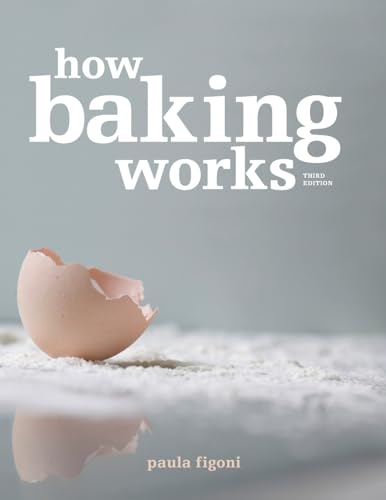
How Baking Works is the only true textbook on this list. Used in culinary schools and pastry programs, it explains the chemistry and physics behind baking with the depth you would expect from a Wiley academic publication. It has 761 reviews and a 4.7 rating.
If you have ever wondered why your cookies spread too much or your bread did not rise, this book explains the mechanism behind the failure. The third edition is the most current, and while it was published in 2010, the underlying science of baking has not changed.
I recommend this specifically for bakers, because general food science books tend to under-cover the precision baking requires. Where The Food Lab touches on baking, How Baking Works devotes 528 pages to it.
Chapter Structure and Topic Coverage
The book covers the role of each ingredient, mixing methods, fermentation, leavening, and the science of each major baked good category from breads to cakes to pastries. End-of-chapter review questions and experiments make it feel like a real course.
Working through the chapter on gluten development finally clarified for me why bread recipes specify kneading times. The protein matrix explanation made the timing click in a way no recipe blog ever had.
Best Audience for How Baking Works
This book is for serious bakers, pastry students, and professionals who want to troubleshoot their bakes with confidence. It is also a fantastic resource for anyone who runs a small baking business and needs to scale recipes reliably.
Casual bakers who just want recipes should look elsewhere. The book is heavy on theory and lighter on finished formulas, so it works best paired with a good recipe collection.
10. Molecular Gastronomy: Scientific Cuisine Demystified – The Modernist Gateway Book
- ✓Demystifies molecular gastronomy techniques
- ✓Makes scientific cooking accessible
- ✓Practical approach to avant-garde cuisine
- ✓Bridge between lab and kitchen
- ✕Requires some prior cooking knowledge
- ✕Higher price point
320 pages
1st edition
Weight: 2.8 lbs
Publisher: Wiley
Molecular Gastronomy: Scientific Cuisine Demystified is the most approachable entry into modernist cooking I have found. Published by Wiley in 2015, this 320-page guide bridges the gap between laboratory techniques and home kitchen reality. It has 268 reviews and a 4.6 rating.
If terms like spherification, gelification, and foams sound intimidating, this book translates them into practical steps. Unlike the monumental Modernist Cuisine set that costs hundreds of dollars, this single volume gives you the core techniques at a fraction of the price.
I bought this book expecting it to be a curiosity and ended up using it to make my first balsamic caviar. The clear instructions on hydrocolloid ratios made what seemed impossible actually doable in a home kitchen.
Techniques and Equipment Coverage
The book covers spherification, foams, gels, emulsions, and liquid nitrogen basics. Each technique comes with a science explanation, a step-by-step recipe, and guidance on equipment you actually need versus what you can improvise.
It also addresses safety, which matters more in modernist cooking than in traditional recipes. Knowing how to handle sodium alginate, calcium lactate, and agar agar responsibly is non-negotiable, and the book does not skip those warnings.
Best Audience for Molecular Gastronomy
This book is for adventurous cooks who want to try modernist techniques without investing in a full lab setup. It is also a great gift for a culinary student or a chef looking to expand their repertoire.
Readers without solid basic cooking skills may struggle, since the techniques build on fundamental kitchen competence. Start here only after you are comfortable with classic techniques.
How to Choose the Right Food Science Book for Your Kitchen
Picking the right food science book comes down to three questions: what do you want to learn, how technical do you want to get, and do you want recipes or pure theory? The category is wide enough that a wrong fit can sit unread for years. The guide below breaks down how I think about the decision.
Hobbyist vs Academic Depth
Most food science books sit on a spectrum from popular to academic. On the popular end, Salt, Fat, Acid, Heat and The Science of Spice read like accessible nonfiction. On the academic end, How Baking Works and Science and Cooking are true textbooks used in culinary programs.
Be honest about your reading tolerance. If you have never finished a nonfiction book, start with a popular pick and work your way up. Buying a textbook you will never open is not a savings.
Visual vs Text-Heavy Format
Visual learners should prioritize DK’s Science of Food series, the illustrated edition of The Food Lab, and The Flavor Matrix. These books use infographics, charts, and photographs to communicate concepts that paragraphs alone cannot.
If you prefer long-form reading, On Food and Cooking and Salt, Fat, Acid, Heat reward focused attention. The choice is not about quality, it is about how your brain processes information.
Topic Specialization
General food science books cover everything, but specialized books go deeper on specific topics. For baking, How Baking Works is unmatched. For spices, The Science of Spice. For flavor pairing, choose between The Flavor Bible for chef-sourced wisdom and The Flavor Matrix for data-driven analysis.
If you cook across many cuisines, a general reference like On Food and Cooking serves you better than any specialty book. If you bake professionally or cook one cuisine obsessively, the specialized picks win.
Author Credentials to Trust
The food science category has real experts and self-proclaimed ones. Harold McGee has a PhD in literature but spent decades studying food chemistry. J. Kenji López-Alt trained at America’s Test Kitchen and applies real experimental methods. Samin Nosrat trained under Alice Waters. Dr. Stuart Farrimond is a medical doctor turned food scientist.
Look for authors with either formal scientific training or a documented track record of testing their claims. Books by celebrity chefs with no testing methodology tend to be lighter on actual science.
Practical Recipes vs Pure Theory
Some readers want a book they can cook from immediately. Others want a reference they will consult for years. The Food Lab and The Science of Spice balance both goals. On Food and Cooking and The Flavor Bible are reference-first. How Baking Works is theory-first.
Think about how you actually use cookbooks. If your shelf is full of unread cookbooks, a reference book may serve you better. If you cook from every book you buy, prioritize titles with tested recipes.
Price and Value Considerations
Food science books range from under $15 to over $45. The Science of Spice at $13.76 is exceptional value for the production quality. Molecular Gastronomy at $43.24 is an investment, but modernist cooking resources are scarce enough that the price is justified.
Value also depends on how often you consult the book. A $45 reference you open weekly for five years is cheaper per use than a $20 cookbook you read once.
Food Science Books FAQs
What are the best food science books for non-scientists?
For non-scientists, start with Salt, Fat, Acid, Heat by Samin Nosrat or The Science of Spice by Dr. Stuart Farrimond. Both use plain language and visual aids to explain food science without academic jargon. The Food Lab by J. Kenji Lopez-Alt is another excellent choice because it explains science through tested home cooking recipes.
Which food science book is best for beginners?
The Science of Spice is the best food science book for beginners because it is affordable, visually engaging, and organized around a single approachable topic. Salt, Fat, Acid, Heat is another strong beginner pick because its four-element framework is intuitive and confidence-building.
What is the best book for understanding the chemistry of cooking and baking?
On Food and Cooking by Harold McGee is the definitive reference for cooking chemistry, covering nearly every ingredient and technique. For baking specifically, How Baking Works by Paula Figoni is the most thorough resource, used as a textbook in culinary schools worldwide.
Is The Food Lab by Kenji Lopez-Alt worth buying?
Yes, The Food Lab is worth buying for any committed home cook. It has 11,023 reviews with a 4.9 average rating, won a James Beard Award, and is widely regarded as the best science-based home cooking book available. Its 958 pages cover hundreds of tested recipes with clear explanations of the science behind each technique.
Harold McGee vs Kenji Lopez-Alt: which is better?
They serve different purposes. Harold McGee’s On Food and Cooking is a reference encyclopedia explaining the underlying science of food, with no recipes. J. Kenji Lopez-Alt’s The Food Lab applies that science to tested home recipes. Most serious cooks own both, because McGee gives you the why and Kenji gives you the how.
Final Verdict on the Best Food Science Books
After testing all ten of these books, three recommendations cover most readers. If you cook dinner often and want science you can actually use, get The Food Lab. If you want a reference you will consult for decades, buy On Food and Cooking. If you want an affordable, beautiful entry point, start with The Science of Spice.
The best food science books in 2026 are not necessarily the most expensive or the most technical. They are the ones you will actually open. Pick the title that matches how you cook and how you read, and you will get more value from one good fit than from a shelf of books you never touch.
Choose your first title from the comparison table above and start experimenting this week. Every book on this list will change how you think about at least one thing you eat.



Leave a Comment