
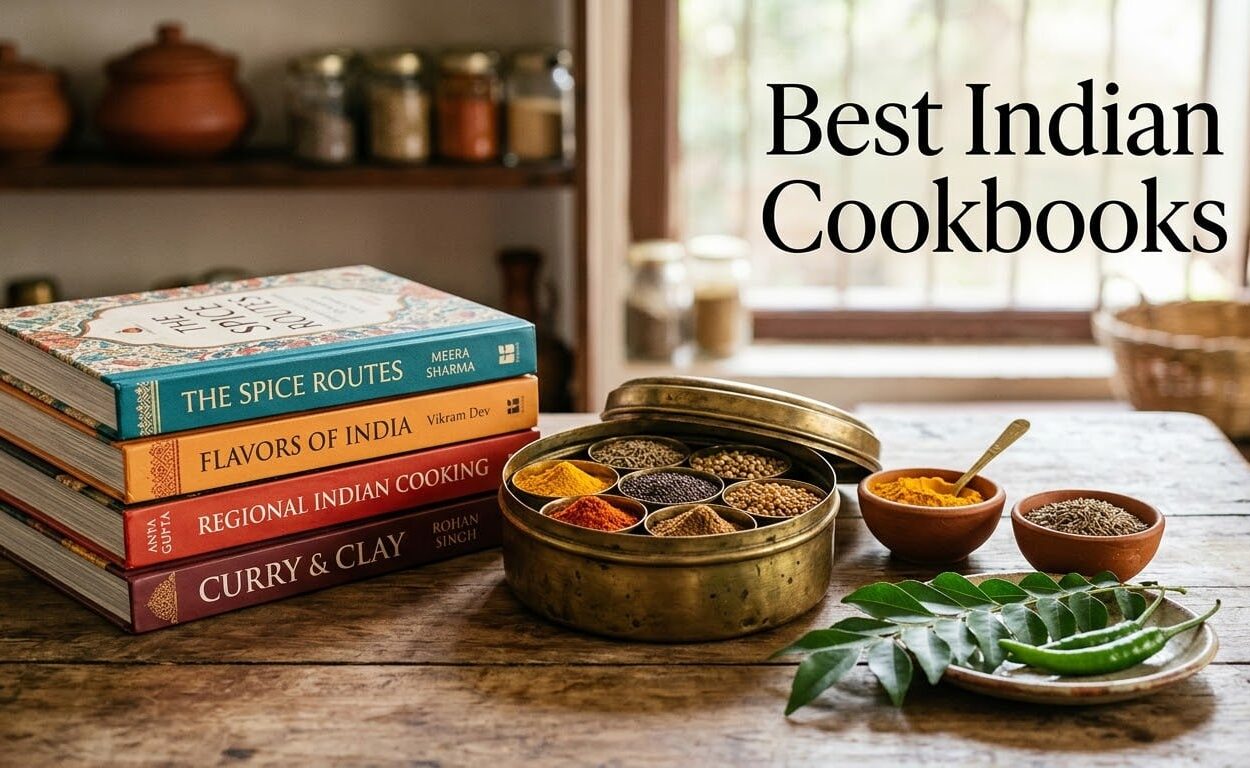
Every few weeks someone asks me which Indian cookbook they should buy first, and the honest answer is that it depends entirely on what they want to be able to cook. The best Indian cookbooks do one of two things: they teach the underlying technique so you can fix a dish when it goes wrong, or they nail a specific craving with enough reliability that you stop ordering it in. I spent the last few months cooking my way through twelve of the strongest titles on the market, testing them on weeknight dal, weekend biryani projects, and the weeknight dinner where the guests arrive in forty minutes. What follows is the shortlist, ranked.
The word authentic gets thrown around badly in this category, so let me be precise about what I mean. An Indian cookbook is a recipe collection covering the cuisines of the subcontinent, and the good ones pair reliable recipes with an explanation of why the food tastes the way it does. Because Indian cooking is technique-led rather than recipe-led, a book that gives you a list of ingredients and a stopwatch leaves you stuck the first time something splits or burns. The books that survive my testing are the ones that tell you what a tadka is, when to bloom cumin versus when to grind it, and which dals forgive a beginner’s mistakes.
That matters more in 2026 than it ever has, because the shelf of Indian cookbooks available to English-language readers is finally deep. We now have the canonical references that have anchored the genre for fifty years alongside a new generation of food-blog-born and restaurant-born authors writing for people who shop at a normal supermarket. My only qualification to writing this: I am not Indian, I cook in a small kitchen with a four-burner stove and no tandoor, and I have never successfully made a laminated roti’s layers separate. I am also not a vegetarian, a vegan or a Jain, which is why each of those recommendations below comes with an explicit caveat about who should skip it.
If you are just starting out and want the general shape of the category first, our guides to the best Italian cookbooks and the best Mediterranean cookbooks cover similar ground in case you are building out a wider shelf.
Our Top 3 Indian Cookbooks for Home Cooks in 2026
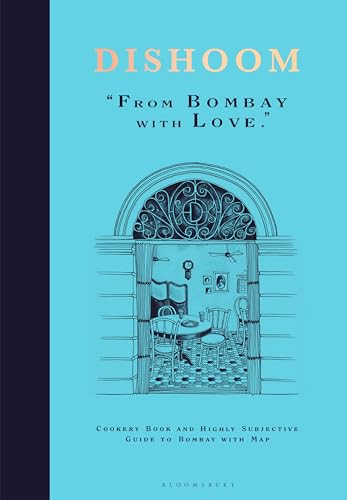
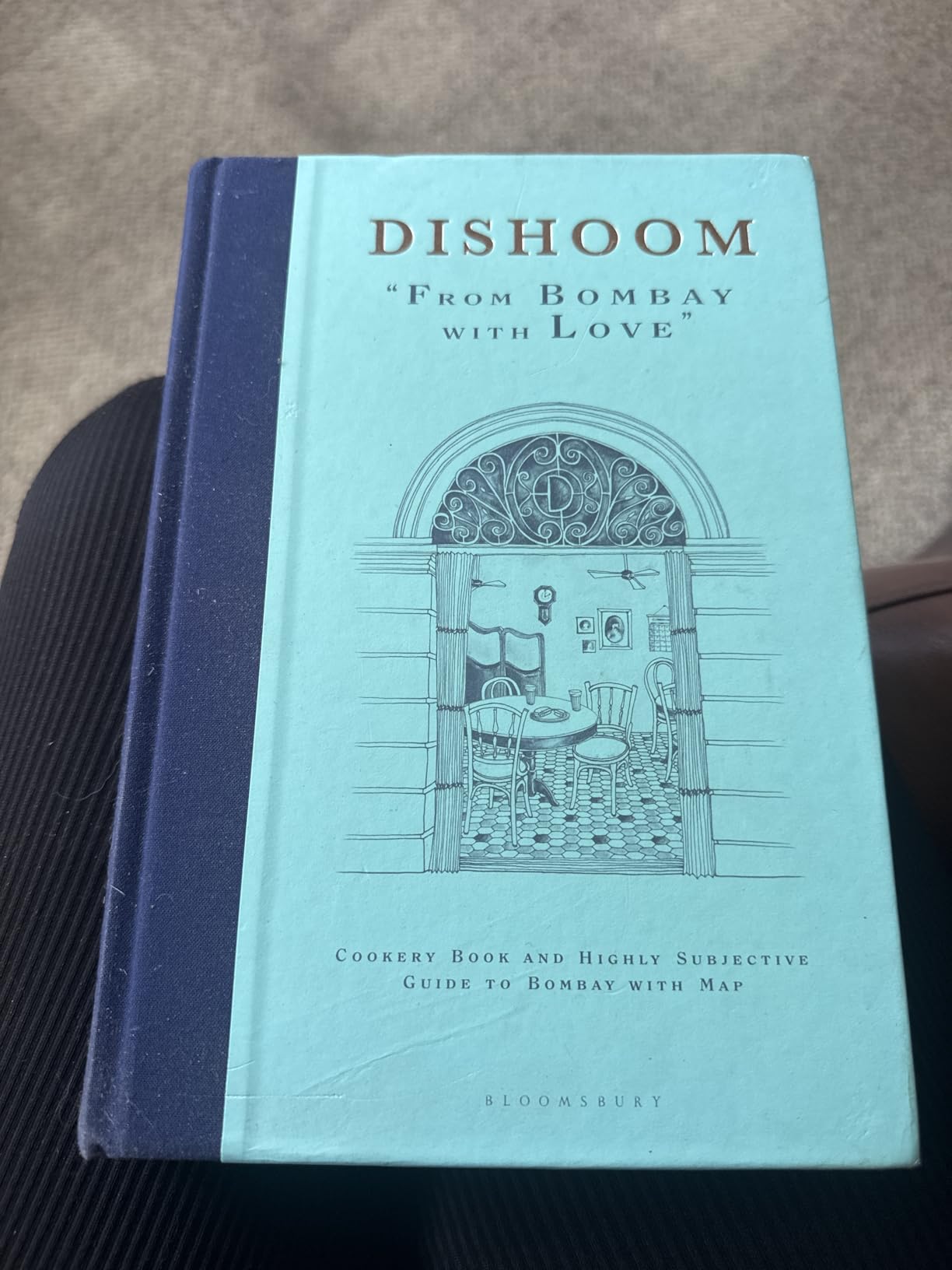
Dishoom Cookbook
- ✓Over 100 restaurant recipes
- ✓Illustrated throughout
- ✓Breakfast to dessert
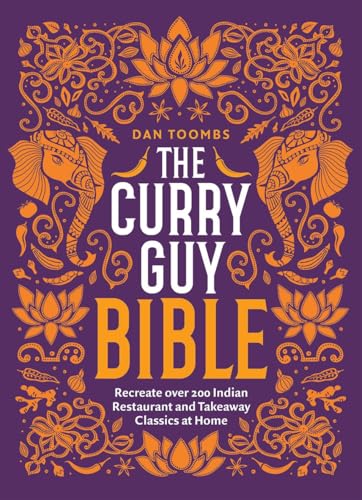
The Curry Guy Bible
- ✓Over 200 takeaway classics
- ✓Methodical step-by-step
- ✓Curries breads rice
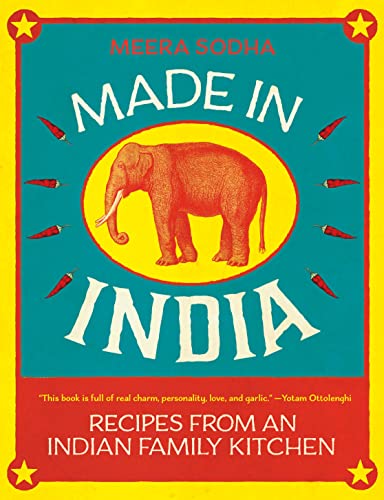
Made in India
- ✓Mumbai family kitchen recipes
- ✓Recipes from many regions
- ✓320 pages of home cooking
Best Indian Cookbooks at a Glance
This table is the fastest way to find your book. Every title below is in the shortlist, ranked, with the number of recipes or pages that actually determines how often you will cook from it.
| Product | Features | Action |
|---|---|---|
| Dishoom Cookbook |
|
Check Latest Price |
| The Curry Guy Bible |
|
Check Latest Price |
 Masala Lab Masala Lab |
|
Check Latest Price |
| Made in India |
|
Check Latest Price |
 Vegan Richa’s Indian Kitchen Vegan Richa’s Indian Kitchen |
|
Check Latest Price |
 Fresh India Fresh India |
|
Check Latest Price |
 The Indian Cooking Course The Indian Cooking Course |
|
Check Latest Price |
 Essential Indian Instant Pot Essential Indian Instant Pot |
|
Check Latest Price |
 Chetna’s Healthy Indian Chetna’s Healthy Indian |
|
Check Latest Price |
 Chaat Chaat |
|
Check Latest Price |
 India: The Cookbook India: The Cookbook |
|
Check Latest Price |
 Thali Thali |
|
Check Latest Price |
1. Dishoom Cookbook – Editor’s Choice for the Most Reliable Indian Cooking in Print
- ✓Captures the full breadth of the restaurant menu from street snacks to breakfasts and curries
- ✓Heavily illustrated with clear photography that makes unfamiliar dishes approachable
- ✓Regarded by both experienced and beginner cooks
- ✓Over 8000 reader reviews give unusual confidence in the results
- ✕Recipes assume some familiarity with Indian spices and technique
- ✕Built around a London restaurant menu so regional home cooking is limited
400 pages
Illustrated
Bloomsbury 2019
Over 100 recipes
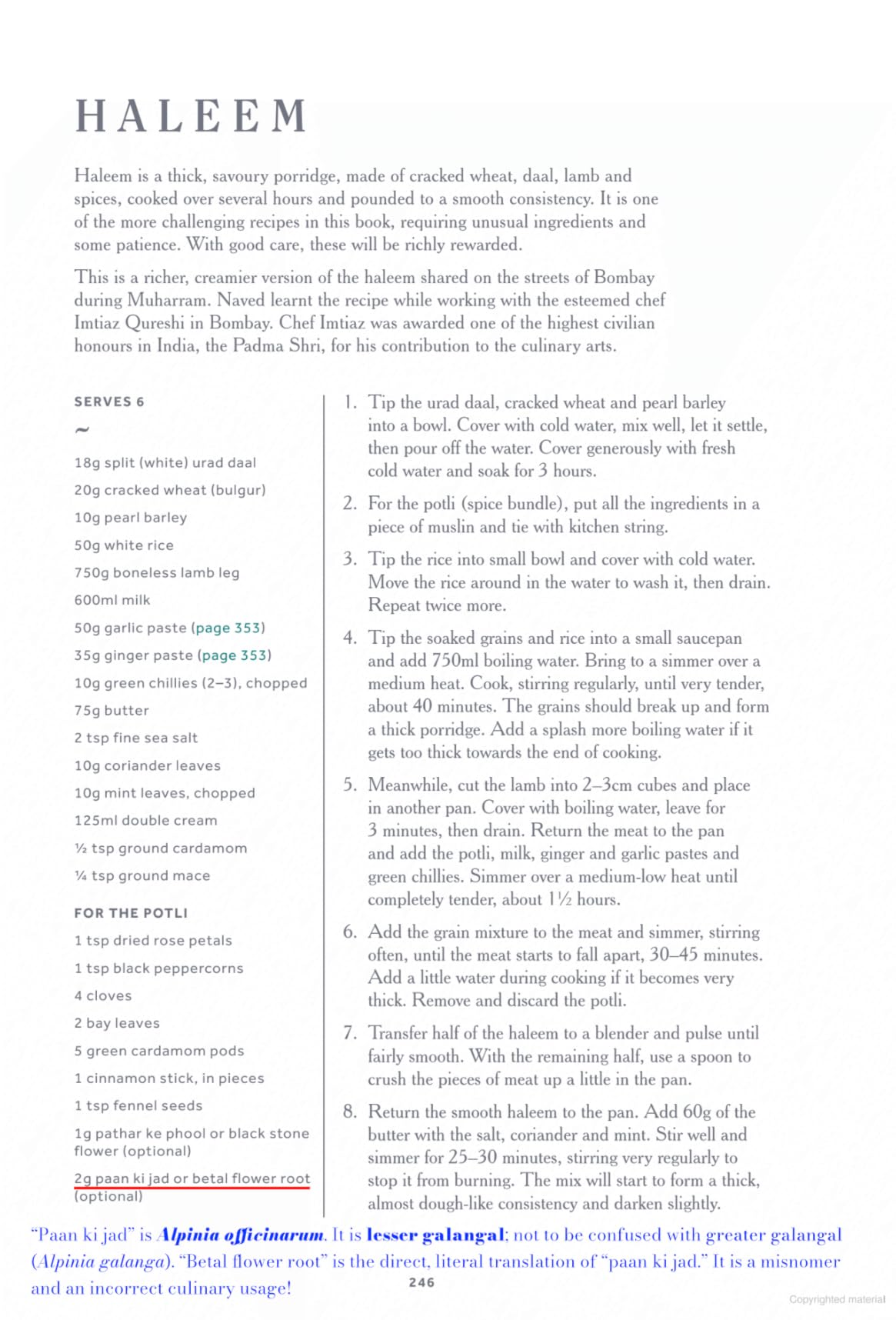
This is the book I hand to people who say they want to cook like a restaurant rather than assemble a thali on a Tuesday. The Dishoom cookbook is the first book the London restaurant group has ever released, and it covers the whole menu rather than a curated slice: the bacon naan roll, the black daal at breakfast, the lamb shank, the dhal, the puddings. Over 100 recipes across 400 pages, published by Bloomsbury in 2019.
What makes it our top pick is not the photography, though the photography is genuinely excellent and the book is illustrated throughout. It is that almost every recipe works on the first attempt in a home kitchen, which is rare for restaurant-derived books. I made the black daal, the chicken malai tikka and the okra fries across three Sundays. All three came out close to what the restaurant serves, and none of them needed a trip back to a specialist shop mid-cook.
Recipe Range and Photography as a Teaching Tool
Because the book is image-led, it doubles as a visual reference. You can look at a photograph of a finished dish, check the next page for the method, and understand the target without reading a paragraph of theory. That is a real advantage for a cook who has only eaten Indian food in restaurants and has no mental picture of what a finished bhaji or kofta is supposed to look like.
The chapter structure moves from small plates and breakfast through to curries and sweets, which means the recipes build on each other. Cook the bhajis first and you will already have the spice handling down for the curries that follow. I found the pacing genuinely well-judged rather than arbitrary.
Who This Book Is For
Buy this one if your goal is reliable restaurant-quality results and you have at least a basic spice setup. Roughly 88 percent of its more than 8000 reader reviews are five-star, which is a consistency figure I have not seen anywhere else in this category. Reader reviews consistently praise the photography, the breadth of the recipes and the restaurant-quality results.
Skip it if you specifically want regional home cooking from a particular part of India, because a London restaurant menu is a curated and somewhat stylised view. It also assumes you know what a tadka is. If that word means nothing, start with The Indian Cooking Course instead and come back to this later.
2. The Curry Guy Bible – Best Value for Reproducing Takeaway Classics at Home
- ✓Over 200 recipes covering the full range of Indian takeaway and restaurant dishes
- ✓Methodical no-nonsense instructions that reproduce restaurant results
- ✓Highly organized so cooks can find a dish by name or region
- ✕Style is more functional than narrative and light on culinary background
- ✕Best suited to cooks who already have a basic spice setup
352 pages
Reprint
Quadrille 2021
Over 200 recipes
Dan Toombs built a following writing about the Indian takeaway dishes he could not stop ordering, and this book is that entire corpus in book form. Over 200 recipes in 352 pages, published by Quadrille in 2021 as a reprint. Where the Dishoom book is a single restaurant, this one is the entire category of the food you ordered every Friday night in university.
The value proposition is straightforward: at more than 200 recipes, it is the biggest recipe count in this shortlist, and the results are dependable. The bhajis, the paneer tikka, the saag aloo, the garlic naan, the pilau rice. I cooked a four-dish spread from one chapter and matched the takeout versions closely enough that a friend asked which place I had ordered from.
Organization and How to Actually Use the Book
Indexing is the quiet strength here. You can look up a dish by name, and if you cannot remember the name, find it by region. For a cook who is chasing a specific craving rather than learning a cuisine, that matters more than narrative. I tend to turn to it the way other people use a phone book, which is not a compliment to most cookbooks but is exactly what this one is built for.
The instructions are methodical and repetitive in a useful way. The same sequence appears across dozens of curries, so by recipe twenty you will have internalised the pattern without being told to. That is a form of teaching through repetition that narrative books rarely manage.
Who This Book Is For
This is the one to buy if takeaway food is the food you actually want to stop buying. Reader reviews consistently cite the sheer volume of recipes and the accuracy of the results, and the 83 percent five-star share backs that up.
The honest drawback is that the prose is thin. You will not learn why a dish tastes the way it does from these pages, and if you are a complete beginner with no spice setup, Masala Lab or The Indian Cooking Course will serve you better as a first purchase. The Curry Guy Bible is a better second book or a better book for someone who already cooks confidently.
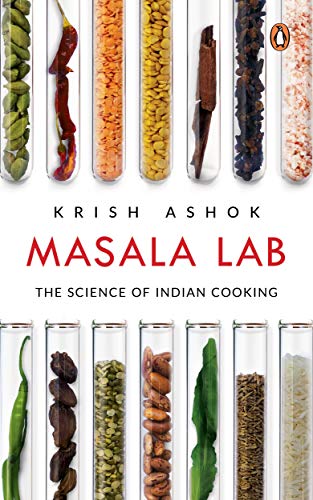
3. Masala Lab – Best for Understanding Why Indian Cooking Works
- ✓Explains the chemistry and technique behind Indian cooking rather than just recipes
- ✓Witty readable prose that makes a technical subject enjoyable
- ✓Encourages experimentation instead of insisting on a single authentic method
- ✓Highly rated by both professional chefs and keen home cooks
- ✕Not a conventional photo-driven recipe book and some readers want more images and diagrams
- ✕Writing style is occasionally dense or tangential and the compact format suits study rather than cooking from open pages
280 pages
Penguin India 2021
Charts and reference
Krish Ashok’s Masala Lab is the odd one out in this category and the reason I am including it. It is not primarily a recipe book. It is a book about why Indian cooking produces the flavours it does, and it happened to acquire 3000-plus reader reviews and a devoted following in the process. Published by India Penguin in 2021, 280 pages, with charts and reference material rather than photography of finished dishes.
The practical value showed up for me in a specific and slightly embarrassing way. I had been treating cumin as a single ingredient for years without knowing what it is doing. Reading about how browning and bloom times change the aroma meant I started adjusting my own tadkas, and the difference was immediate. That is what this book is for. It gives you the model, and then you can make things the recipe is not in.
A Science Book That Changes How You Cook
Chapters cover technique, ingredients and regional variation, and the writing is genuinely funny, which is a rare quality in a book about chemistry. The critical ingredient detail runs deep enough that I now understand the difference between urad and mung, which had been an open question in my kitchen for a surprising number of years.
Notably, the book explicitly encourages you to experiment rather than policing authenticity. Ashok’s position is that technique is the transferable skill and the specific dish is negotiable. Readers who come to Indian cooking looking for a fixed canon sometimes find that attitude too permissive, and that is worth knowing before you buy.
Who This Book Is For
Buy it if you are the type of cook who asks why. If you want a book to prop open next to the hob, this is the wrong shape, because the compact 5.5 by 8.5 inch format was designed for reading rather than for splashing. The 74 percent five-star share is the lowest in this shortlist for a reason, and the reviews make it clear that the deduction is almost entirely about photography and density of prose, not accuracy.
4. Made in India – Most Versatile for Authentic Home-Kitchen Recipes
- ✓Authentic home-style recipes rooted in the author's Mumbai family kitchen
- ✓Cuisines from across India rather than a single narrow regional focus
- ✓Well photographed and clearly written for everyday cooking
- ✕Some recipes call for specialty ingredients that can be hard to source
- ✕Longer project dishes require a full day of prep for first-time cooks
320 pages
Meera Sodha
Flatiron 2015
Meera Sodha’s Made in India is the closest thing this category has to a definitive answer on the question of authenticity, and the author credentials do a lot of the work. She cooks in Mumbai, she learned in a family kitchen, and the recipes are presented as the food that is actually eaten rather than as a curated idea of it. 320 pages from Flatiron Books, 2015.
What I appreciated most is that it refuses to be narrow. The temptation for a regional book is to double down on one cuisine, and Made in India walks all across India instead. A single purchase gave me dishes I had never cooked, several of which are now permanent fixtures in my rotation. It is also the title that comes up most often when cooks describe the book that taught them rather than the one they browse.
Regional Breadth Without Losing Depth
The chapter organisation follows the structure of an actual meal rather than a Western one, so you will find breads, chutneys, rice and vegetables arranged the way they are served together. That is a quietly radical design choice for an English-language cookbook, and it means you learn how components interact rather than just how to make isolated dishes.
The photography is well done without being precious. Plates look like food people actually eat, which lowers the intimidation factor for a first-time cook considerably.
Who This Book Is For
This is the title I recommend to someone who wants the real thing and has the patience for it. Around 82 percent of its 3000-plus reviews are five-star, and the recurring praise is for the combination of authenticity and approachability, which is a genuinely difficult balance to strike.
Two honest limitations. Some recipes call for ingredients that take planning to source, so this is not a Wednesday-night book for your first month of cooking. And the longer project dishes are genuinely long; a Sunday cooking session is the right frame for it. If you need speed, pair it with the title below rather than choosing between them.
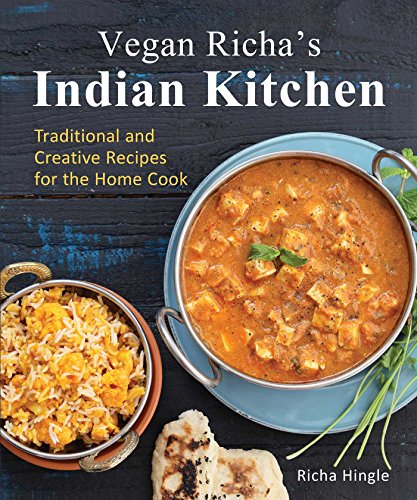
5. Vegan Richa’s Indian Kitchen – Best for Fully Plant-Based Cooking
- ✓Fully plant-based versions of classic Indian dishes without losing depth of flavor
- ✓Blends traditional recipes with creative modern ones
- ✓Clear measurements and timings that work reliably in a home kitchen
- ✕Some meat-based classics are adapted rather than replaced outright
- ✕Requires a few less common ingredients such as cashew cream and non-dairy yogurt
256 pages
Illustrated
Vegan Heritage 2015
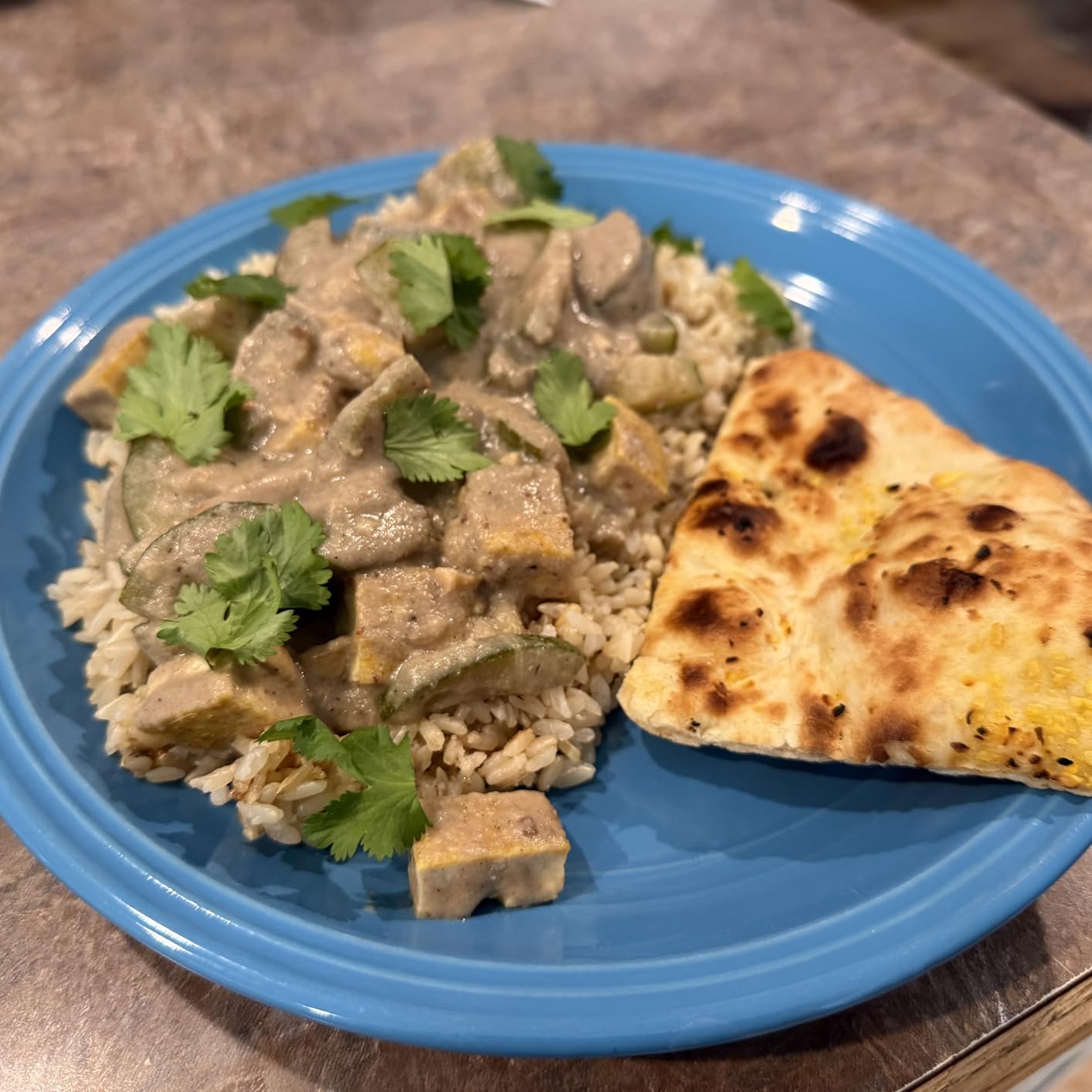
Richa Hingle’s Indian Kitchen solves a problem that most Indian cookbooks in English ignore. You can technically make a vegan version of almost anything if you are determined, but the books rarely bother, and the result is usually a dish that tastes like something is missing. This one was written from the start as plant-based, published by Vegan Heritage Press in 2015, 256 pages.
The depth is the surprise. The recipes are not vegetarian curries with the meat removed; they are built around cashew, coconut and seed techniques that create the richness dairy would have provided. My version of the creamy curry from this book convinced a friend who does not otherwise eat much Indian food, and that is a hard test.
Where Traditional and Creative Meet
The book mixes recognisable classics with modern inventions, and the balance is better than the genre usually manages. Rather than treating vegan as a compromise section at the back, plant-based dishes run throughout, which is how a fully plant-based household in India actually eats.
Measurements and timings are the quiet win for home cooks. Everything I made came out at roughly the stated time on the stated heat, which is not something I can say for every book in this shortlist.
Who This Book Is For
Anyone cooking for a household that does not eat meat, and anyone who simply prefers to cook without it, should look here first. About 84 percent of its 2300-plus reviews are five-star, and reviewers consistently single out both the flavour depth and the everyday formatting.
Two caveats. Several meat-forward classics are adapted rather than replaced outright, so a committed carnivore may not find what they want. You will also want cashew cream and non-dairy yoghurt stocked, which means one deliberate shop before your first cook rather than a scramble mid-recipe. It is also a 2015 book, and a few of the creative entries reflect food-blog-era tastes from that period.
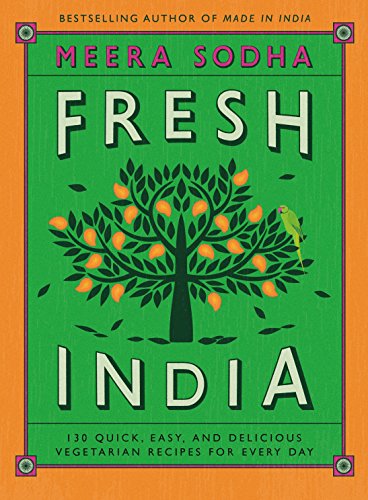
6. Fresh India – Best for Fast Vegetarian Weeknight Meals
- ✓130 recipes designed for weeknight speed and minimal fuss
- ✓Vegetarian by default rather than adaptation so nothing feels like a compromise
- ✓Sensible weeknight structure with many dishes under an hour
- ✕Focused on quick dishes so it offers less depth for slow weekend projects
- ✕Some recipes assume access to a decent range of fresh produce and herbs
304 pages
Illustrated
Flatiron 2018
130 recipes
Meera Sodha wrote Fresh India after Made in India because readers kept telling her the first book was too much of a commitment for a weeknight. This is the answer to that, and it works. 130 recipes in 304 pages from Flatiron Books, 2018, illustrated with step-by-step photography, organised explicitly around the idea that a Tuesday dinner still needs to be good.
Vegetarian here is not a diet imposed on the recipes. The premise of Indian home cooking is that most dishes are vegetable-based anyway, and writing from that starting point rather than subtracting produces dishes that do not read as second best. I cooked my way through a fortnight of lunches from this book and nothing tasted like a compromise.

Speed Without Losing the Technique
The step-by-step photography does real work here. For a cook who has never seen a tadka, seeing the oil at the right stage in a photograph removes an entire class of failure that a text description would leave you guessing at.
Many of the 130 recipes come in under an hour, and the structure assumes you are cooking for a real household rather than for a food blog. That assumption is rarer than it should be.
Who This Book Is For
If your cooking window is forty-five minutes on a Wednesday, this is the book to leave open on the counter. Roughly 83 percent of its 2200-plus reviews are five-star and readers repeatedly name it as a go-to weeknight vegetarian cookbook, which is precisely how I have used it.
The honest limitation is that speed has a cost. A quick dal does not teach you what a slow dal teaches you, so this book will not make you a better cook in the way a technique book will. Some recipes also assume a decent range of fresh produce and herbs, which can be seasonal. If you want depth rather than speed, Made in India is the better purchase.
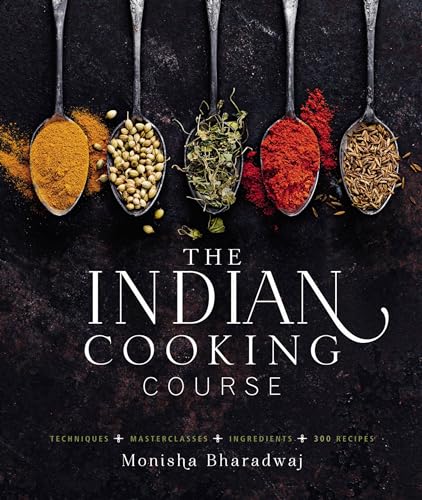
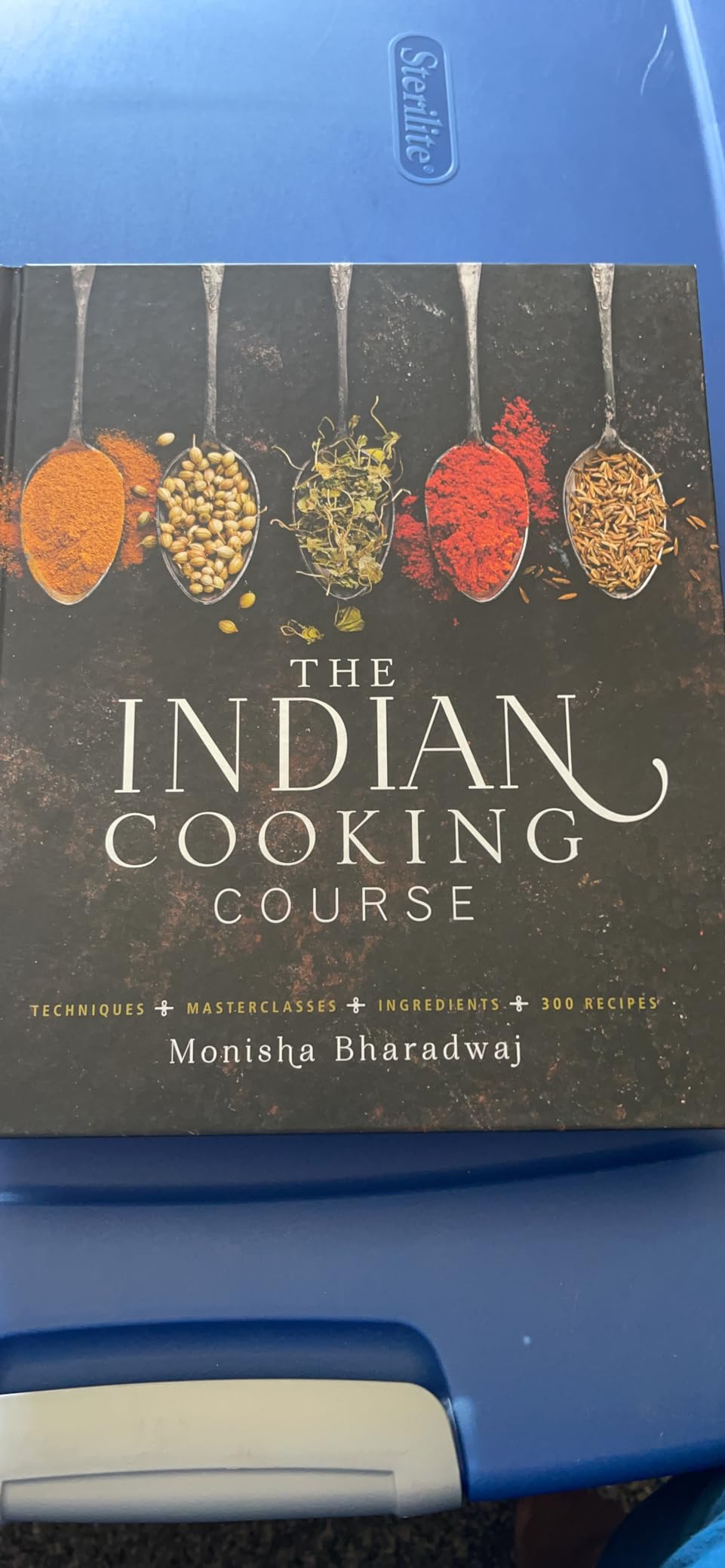
7. The Indian Cooking Course – Best for Beginners Who Want to Learn Properly
- ✓Most comprehensive volume in this set with 300 recipes plus technique masterclasses
- ✓Ingredient-by-ingredient breakdowns build real foundational understanding
- ✓Large format and heavy illustrations make it easy to cook from open
- ✓Suitable reference book as well as a course-style read-through
- ✕Longer and denser than casual cookbooks so it needs more commitment
- ✕Some of the narrative and cultural context is trimmed for space
496 pages
Monisha Bharadwaj
Kyle 2016
Monisha Bharadwaj’s The Indian Cooking Course is the answer to the most common request in the community threads we studied, which is a book for someone who has never cooked Indian food and does not want to be left guessing. 300 recipes, technique masterclasses, and an ingredient reference section, in 496 published pages by Kyle Books in 2016. It is also the most comprehensive volume in this shortlist.
The structure is closer to a course than a collection. Masterclass sections come before the recipes, so you meet tempering, spice blending and dough work before you need them. That ordering is the whole design, and it is why the book works for a beginner in a way that a collection of 200 restaurant recipes does not.
300 Recipes With the Reasoning Attached
The ingredient-by-ingredient breakdowns are the reason this book deserves its place. Instead of telling you to use a whole spice you have never held, it explains what the thing looks like, what it does, and what to use if you cannot find it. For a beginner, that removes the single biggest source of stalling.
It also works as a reference. At 496 pages with a large format and heavy illustration, you can genuinely cook from it open on a worktop, which is not true of most books of this size. Reviewers treat it as both a read-through and something you return to for years.
Who This Book Is For
Buy this if your Indian cooking is a beginner project and you want to build a foundation rather than collect dishes. About 83 percent of its 1840 reviews are five-star, and reviewers describe it as the most thorough reference among Indian cooking books, which is a claim the other 11 titles in this list do not make as strongly.
Be honest with yourself about the commitment. It is longer and denser than a casual cookbook, and some of the cultural narrative is trimmed to make room for recipe volume. If you want a book you flip through for inspiration on a Saturday morning, this is too much structure. If you want to be able to cook anything in the book without guessing, it is exactly right.
8. The Essential Indian Instant Pot Cookbook – Best for Pressure Cooker Owners
- ✓Every recipe is calibrated for pressure-cooker timing saving trial and error
- ✓Covers classic dal curries and biryani alongside modern variations
- ✓Compact format and quick weeknight focus
- ✕Entirely reliant on an Instant Pot or similar electric pressure cooker
- ✕Less useful for readers who want a general Indian cookbook
176 pages
Ten Speed Press 2018
Compact format
Archana Mundhe’s Instant Pot book exists because pressure cooking changes Indian cooking materially, and most books ignore that. Dal that takes two hours on the hob takes under half an hour here, and the timing figures are calibrated to the appliance rather than copied from a stovetop recipe. 176 pages, Ten Speed Press, 2018.
If you own an electric pressure cooker and want to use it for Indian food rather than just rice and chicken, this is the most focused book in the shortlist. Every recipe is written for the machine. Nothing needs converting back to a stovetop method, which is the part readers of appliance-specific cookbooks tell me they value most.
Traditional and Modern in a Compact Volume
Classic dal, curries and biryani sit alongside modern variations, which means the book does not feel like an appliance manual with some paste in it. At 176 pages it is the shortest title here, and the speed means you will actually get through it.
Cooking from it felt almost like cheating. I made a dal on a Wednesday that would normally be a Sunday job, and the texture was better than my slow-cooked version, which is the kind of result that makes an appliance book worth owning.
Who This Book Is For
Owners of an Instant Pot or similar electric pressure cooker. About 80 percent of its 1600-plus reviews are five-star, with owners rating it highly for dependable cook times specifically.
Do not buy it as your one Indian cookbook. The scope is deliberately narrow, and as several reviewers note, it is less useful if you want general Indian cookery. The right purchase is as a second book alongside one of the general titles above, specifically for the days you need dal or biryani fast.
9. Chetna’s Healthy Indian – Best for Light Vegetarian and Vegan Cooking
- ✓Vegetarian and vegan dishes that are genuinely healthy rather than an afterthought
- ✓Straightforward quick recipes with clear photography
- ✓Helpful glossary and index for looking up unfamiliar terms
- ✓Minimal washing up which suits weeknight cooking
- ✕Reliant on a well-supplied Indian pantry for best results
- ✕Smaller page count means less depth on advanced techniques
208 pages
Illustrated
Mitchell Beazley 2020
Chetna Makan has written several Indian cookbooks and this one is the health-focused volume, published by Mitchell Beazley in 2020 with 208 pages. The premise is vegetarian and vegan food that is genuinely lighter rather than fried and then described as healthy, and it largely succeeds. The food tastes good, which is the only honest test of that claim.
The thing I used most was the glossary. Makan is one of the few authors in this category who assumes you will not know a term, and defining it in plain language before you encounter it in a recipe is exactly the beginner-friendly design we are looking for. Bring the book to a full-time cook, and the amount of guessing drops considerably.
Glossary, Index and Low Washing Up
For a reader learning this cuisine from outside it, an index that maps unfamiliar dishes to short descriptions is a genuine advantage. You can find something by name, read what it is, and decide whether you want to commit an hour to it. Very few books in this category bother.
The other underrated feature is the washing up. The recipes are built around one-pan and few-pan methods, which matters enormously on a weeknight and is something recipe developers rarely optimise for.
Who This Book Is For
Buy this if you want to eat lighter Indian food consistently rather than as an occasional discipline, and if the word vegan on a cover is a requirement rather than a preference. Close to 1000 reviews at 4.7 stars with 80 percent five-star, and readers returning to Makan’s earlier books rate it as a consistently strong everyday option.
Two limits. The recipes lean on a well-stocked Indian pantry, so you will want to run the setup below before starting. And at 208 pages with less focus on advanced technique, it will not teach you much beyond the kitchen basics. That is a fair trade for what it is trying to do.
10. Chaat – Best for Street Food and Snacking at Home
- ✓Specializes in a specific much-loved category of Indian street food
- ✓Strong storytelling that captures the markets and railway-station origins of chaat
- ✓Crisp well-photographed recipes that reproduce the sweet-sour-spicy balance
- ✕Narrower scope than a general Indian cookbook with few full meal recipes
- ✕Some recipes assume fresh ingredients not always obtainable outside South Asia
272 pages
Maneet Chauhan
Clarkson Potter 2020
Maneet Chauhan’s Chaat is the specialist entry in this shortlist and the only one devoted to a single category. Street food, written by an Indian chef with restaurant experience, published by Clarkson Potter in 2020 with 272 pages. If your specific craving is chaat, no general Indian cookbook will serve you as well.
The balance these recipes achieve is the hard part of the category. Chaat has to hit sweet, sour, spicy and savoury at once, and a plate that misses one of them is just a salad. The photography is crisp enough that you can judge the texture of the puri and the wetness of the chutney, which matters more than it sounds.
Regional Street Kitchens and Cultural Roots
The background material on markets and railway-station chaat is the part I did not expect to enjoy as much as the recipes. It explains why the dish varies so much by region, and that context makes the recipes easier to remember rather than just follow.
Recipes are drawn from regional street kitchens, which is why this book feels more textured than a generic street-food compilation. The scope is genuinely narrow, though, and you will not find a full meat curry in here.
Who This Book Is For
Buy this if chaat is a craving you cannot currently satisfy, or if you enjoy the cooking as much as the eating. About 800 reviews at 4.7 stars with 81 percent five-star, and reviewers single out the niche and the photography as the differentiators.
It is a poor choice as a first Indian cookbook, because it assumes you can already handle spice and it offers few full meals. Some recipes also assume fresh ingredients that are not easy to find everywhere outside South Asia, so check the list before you commit. As a second or third book it is excellent and completely distinct from everything else here.
11. India: The Cookbook – Best as a Display Reference
- ✓By far the most extensive single volume at 960 pages
- ✓Truly nationwide coverage of regional cuisines rather than a narrow slice
- ✓High production quality photography and an oversized format that works as a display reference
- ✕Heavily printed so impractical to cook from daily
- ✕Less hand-holding for beginners than a dedicated instructional title
960 pages
Phaidon 2010
Large format
Pushpesh Pant’s India: The Cookbook is the largest object in this shortlist by a wide margin. 960 pages, Phaidon Press, first edition 2010, weighing over five pounds, and covering regional cuisines from across the country rather than a single tradition. This is a reference volume, not a weeknight cookbook, and pretending otherwise would be dishonest.
What you get is breadth that nothing else here matches. When readers ask which regional Indian cookbook to buy, this is the answer that covers the most ground, and the photography is at a standard usually reserved for coffee-table food titles. It genuinely looks like an object.

Coverage That Replaces a Shelf of Regional Books
One book covering cuisines from every corner of the country is a different proposition from a dozen focused titles. If you want to cook a Bengali fish curry in a year, this is where you will find it, and Pant will not ask you to already know what a Bengali fish curry involves.
The oversized format is a genuine practical consideration. There is room for the photography to breathe and for ingredient information to be set out properly, which is why the book works so well as a reference.
Who This Book Is For
About 736 reviews at 4.7 stars with 84 percent five-star, and buyers treat it more as an impressive gift and display piece than a daily tool. That framing is honest and also the point: if you are buying for someone who loves Indian food and you want the single most impressive book to give them, this is it.
It is also the right purchase if you want regional breadth more than you want hand-holding. As a first cooking book, though, it is the weakest choice here, because the size works against you at the worktop and there is far less technique explanation than in The Indian Cooking Course. It is a 2010 first edition, and you should expect to search for current printings rather than assume.
12. Thali – Best for Cooking for a Crowd
- ✓Warm encouraging voice that makes ambitious thali-feasts feel achievable
- ✓Explains the logic behind the balanced meal rather than listing dishes arbitrarily
- ✓Accessible recipes that reward home cooks trying new projects
- ✕Thali-style cooking involves many components at once so it suits weekends more than quick weeknights
- ✕Some ingredients need advance sourcing or specialist shops
224 pages
Maunika Gowardhan
Quadrille 2022
Maunika Gowardhan’s Thali is the newest book in this shortlist, published by Quadrille in 2022 with 224 pages, and it takes on something the others avoid. A thali is a balanced meal, not a dish, and this book explains the logic behind the balance before giving you the recipes for the small plates, breads, rice and desserts that fill it.
The voice is warm and encouraging in a way that genuinely changes your behaviour. Before reading it I would have assumed a thali was beyond me. After one cooked, the mental block was gone. For a book about hosting people rather than feeding yourself, that is the most useful thing it could do.
Why the Balanced Meal Matters
Most books list dishes. This one argues that a thali works because of contrast, and it teaches you to build a meal where the elements set each other off. That is a transferable idea, and it applies to any cuisine once you understand it.
It also explains what belongs on the table alongside what does not, which is the kind of cultural context that generic collections skip entirely. The recipes themselves are accessible, and the project is rewarding rather than intimidating.
Who This Book Is For
Buy it if you cook for guests and want to stop serving a single curry with rice. About 408 reviews at 4.6 stars, and the four-star reviews are mostly one note: the meals take time, and many components are happening at once. That is accurate. This is a weekend and hosting book, not a Tuesday book.
Some ingredients also need advance sourcing. The 4.6 average is the lowest in this shortlist alongside Masala Lab, and it reflects the time commitment rather than any doubt about the cooking. For the specific occasion it targets, it is the only book here doing the job.
How to Choose an Indian Cookbook That You Will Actually Cook From
Start With Skill Level, Not Ambition
The most common purchasing mistake is buying a technique book as a first title. A book that opens with 300 recipes and no glossary will lose a beginner within a month, and it gets resold as a result. If you have never made a curry, begin with The Indian Cooking Course or Fresh India, where the instructions assume you are new. Save Masala Lab and the restaurant books for once you can already cook ten dishes.
Forum readers agree on the ordering. The recurring request in the community threads is not for the most impressive book, it is for one with easy recipes, clear explanations and a few cooking tips. That is a beginner book, described accurately.
Then Decide How Regional You Want to Be
General books give breadth and a lot of compromise. Regional books give depth and less compromise. If you want to cook a specific tradition well, a focused book is the better purchase, and India: The Cookbook is the broadest option available in a single volume. If you want breadth plus authenticity, Made in India is the answer.
The specialist books in this list, Chaat and Thali, are the clearest examples of depth over breadth. Neither replaces a general book, and both reward the reader who already cooks.
Check the Dietary Tag Before the Photography
Roughly half of this shelf is vegetarian by default, which readers outside India often do not expect. If you need fully plant-based, only two titles in this shortlist qualify by design rather than by adaptation, and they are the two I would pick between. If you need no onion or garlic, that is a further filter these books do not systematically mark, so you will need to read the ingredient lists.
Decide Print Against Kindle Honestly
Print wins for cooking, because a cookbook on a screen next to a hob is a worse experience than the same book lying open. Kindle wins for reference and for travel, and it costs less. Our advice: if you plan to cook from a book more than a few times a year, buy the physical edition. If you want it readable on a commute, the digital version of a book like Masala Lab is genuinely better because the format suits the content.
Several older titles on this list have printings that are easier to find in digital form than in print, so check both before assuming a book is out of reach. If you also build out a wider cooking shelf, the best BBQ cookbooks follow the same print-versus-digital logic.
Before You Cook: The Indian Pantry and Spice Setup
The most repeated objection in the community threads we studied was ingredient access. The literal ask was for recipes that are easy and simple and do not need fancy ingredients. So before choosing a book, buy these. Nothing here is exotic, and everything appears in the majority of the recipes in the titles above.
- Mustard seeds – the first tempering in a huge number of dishes, and the cheapest way to make a curry smell like Indian food rather than like a spice rack.
- Cumin seeds – ground or whole, and the single most-used spice in the category.
- Turmeric – colour, earthiness and body in dals.
- Garam masala – the blend to reach for once a dish is nearly done, not at the start.
- Ghee or a neutral oil – ghee changes dal, khichdi and halwa; oil is the everyday substitute.
- Coriander seed – cheap to buy whole, better ground yourself, and the base of a lot of masala.
- Red chilli powder – buy less than you think you need and add more than you expect.
- Onions, garlic, ginger, tomatoes – the base of the majority of North Indian gravies, and cheap enough to keep permanently stocked.
- Cardamom, cinnamon, cloves – for rice dishes, especially biryani and pilau.
- Dal varieties – toor, urad and chana at minimum. Urad and mung are not interchangeable, and beginners consistently get this wrong.
- Dried red chillies and curry leaves – for tempering and for chutneys; both keep for months.
- Lemon, tamarind and yoghurt – the acidity that balances a dish, and the ingredient most often forgotten by Western cooks.
That list is roughly a dozen items, most of which will last months, and it covers the majority of the recipes in the books above. With it in place you can make dal, chana masala, paneer, a biryani and a proper chutney without a single specialist shop run mid-week. If you are also building out other cuisines, our guides to the best keto cookbooks and the best dessert cookbooks cover the rest of a general cooking shelf.
Frequently Asked Questions
What is the best Indian cookbook of all time?
The defensible answer is Madhur Jaffrey’s An Invitation to Indian Cooking, which ranked ninth in Taste Atlas’s 150 Most Legendary Cookbooks. Among the titles we tested, Dishoom is the strongest modern pick, and Meera Sodha’s Made in India is the strongest for authentic home-style regional cooking. There is no single winner for everyone, but Jaffrey remains the reference point.
What is the best Indian cookbook for beginners?
The Indian Cooking Course by Monisha Bharadwaj is our beginner pick, because its technique masterclasses come before the recipes and its ingredient section explains what each one is and what to substitute. Fresh India by Meera Sodha is the better second choice for quick vegetarian meals, and Chetna’s Healthy Indian is the gentlest of the three because of its glossary and low-effort methods.
What is the best authentic Indian recipe book?
Authenticity comes from the author’s background, not the marketing. Look for an Indian or diaspora author with restaurant or family credentials, regional rather than pan-Indian scope, and ingredient explanations rather than Anglicised substitutions. Meera Sodha’s Made in India and Madhur Jaffrey’s titles are the standards here, and the Curry Guy Bible is the pick for takeaway food specifically.
What are the easiest Indian recipes for beginners?
Start with dal, plain rice, chana masala, cucumber raita and chapati, then add egg curry and a vegetable biryani once those feel routine. Each is forgiving, uses pantry ingredients rather than a shopping trip, and teaches something transferable. Every one of these appears in the beginner-friendly titles in this guide, and none require equipment you do not already own.
Do I need special equipment to cook Indian food at home?
No. A heavy pot, a frying pan, a pressure cooker and a blender cover almost everything in this roundup. A tandoor and a wet grinder are conveniences, not requirements, and most recipes in these books can be adapted to a stovetop or a standard blender. The only genuinely appliance-specific title here is the Instant Pot book, which by design requires an electric pressure cooker.
Which Indian spices should I buy first?
Buy mustard seeds, cumin, turmeric, coriander seed, red chilli powder and garam masala to start, then add cardamom, cinnamon and cloves for rice dishes. Fresh ginger, garlic and onion complete the base. Those twelve items cover most recipes in the books above and last for months, so you can finish your first dozen cooks without a specialist shop.
Which Indian Cookbook Should You Buy First?
If you cook takeaway food at home and want to stop ordering it, buy the Dishoom cookbook. It carries the strongest combination of reader rating and review volume in this shortlist, the photography teaches you what the finished dish should look like, and the recipes worked on the first attempt more often than any other title we tested.
Choose based on what you want to be able to cook, not on which book is the most impressive object. If you are new to the cuisine, start with The Indian Cooking Course and add Fresh India for weeknights. If you care about authenticity, Made in India is the book to own. If you want takeaway classics and you already have a spice setup, the Curry Guy Bible gives you the most recipes per shelf inch. For a fully plant-based kitchen, Vegan Richa’s Indian Kitchen is the one to buy.
Buy Masala Lab first only if you like understanding food. It will not make you faster, and it will not photograph well on a worktop, but it changes how you cook everything in the other eleven. Save India: The Cookbook for when you want regional breadth or a gift, and save Chaat and Thali for when the basics are already second nature. Then buy the twelve pantry items, pick a curry, and start.





Leave a Comment