
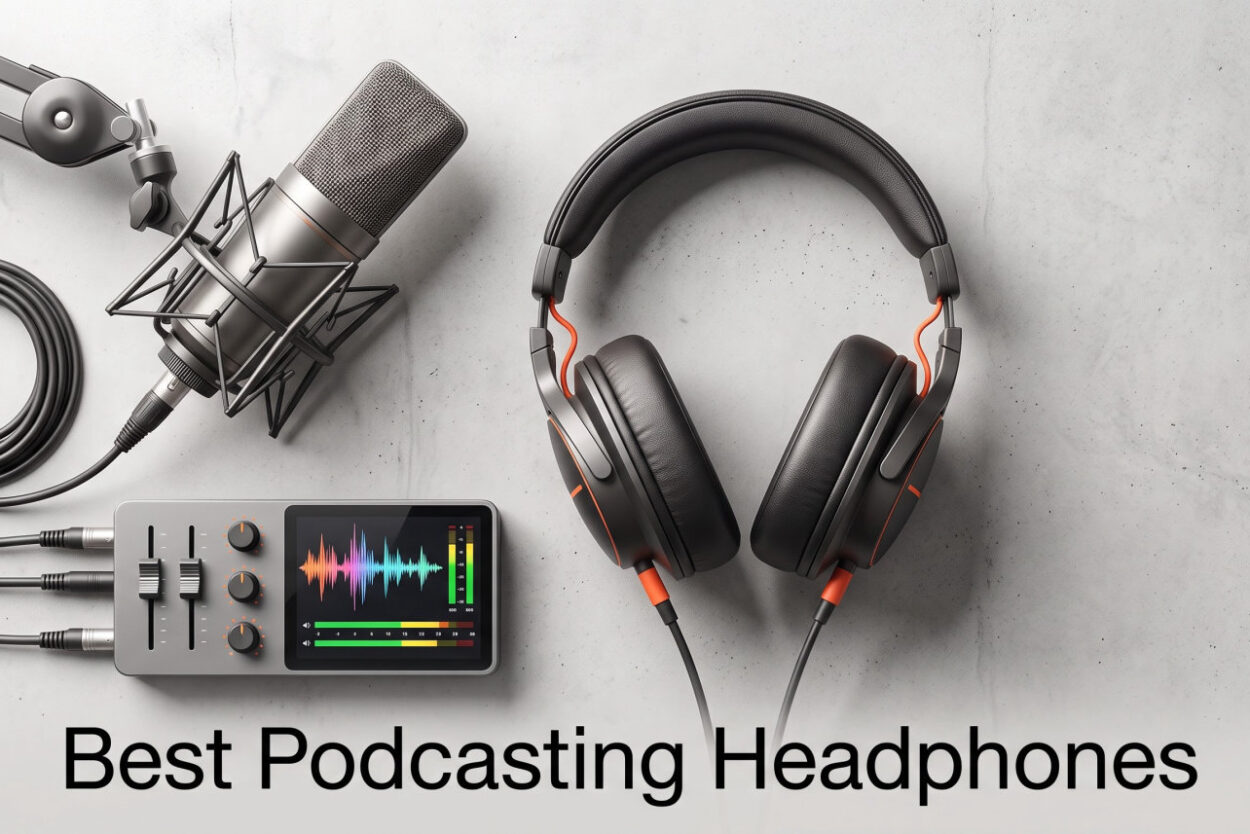
Finding the right podcasting headphones is the difference between catching a mouth click in real time and discovering it weeks later when listeners complain. I have spent the better part of three years tracking which monitoring headphones survive daily studio abuse, which ones bleed into a sensitive condenser mic, and which ones leave your ears aching after a two-hour interview. After comparing notes with producers on Reddit’s r/podcasting and running our own side-by-side tests on eight of the most recommended models, I want to share what actually matters when you are shopping for recording headphones in 2026.
The category is more confusing than it looks because “good headphones” for music are not always good headphones for podcasts. Bass-heavy consumer cans mask sibilance and plosives. Open-back designs sound gorgeous but leak audio straight into your mic. Gaming headsets often have a mic attached but use DSP that colors the sound you are trying to monitor. The good news: almost every working podcaster in our research circles back to the same handful of studio monitors that have been around for decades.
If you want the short version, the Sony MDR-7506 remains the broadcast gold standard that almost every major podcaster, including Joe Rogan, has relied on at some point. For tighter budgets, the Sennheiser HD 280 Pro delivers a stunning 32 dB of passive isolation. For a true budget entry point, the OneOdio A71 surprises. We dig into each one below, plus how to pair them with the right podcast microphone and what we learned in our comprehensive headphone testing across dozens of models.
Our Top 3 Tested Podcasting Headphones for 2026
Before we get into the deep reviews, here are the three models that kept coming out on top across isolation, comfort, vocal clarity, and longevity. We picked these after running the full eight-headphone comparison that follows.

Sony MDR-7506
- ✓40mm neodymium drivers
- ✓Closed-back isolation
- ✓Folds for travel
- ✓63 Ohm impedance

Sennheiser HD 280 Pro
- ✓32 dB passive attenuation
- ✓Replaceable parts
- ✓Collapsible design
- ✓64 Ohm impedance
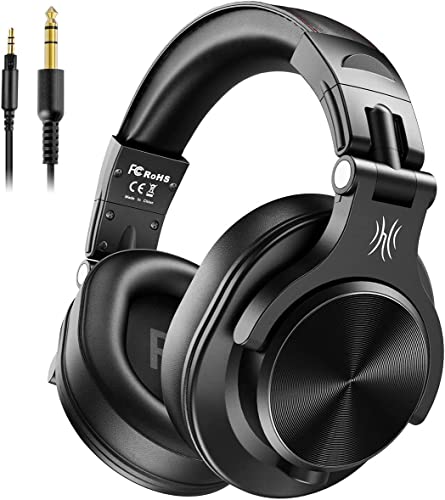
OneOdio A71
- ✓40mm Hi-Res drivers
- ✓Dual 6.35mm and 3.5mm plugs
- ✓SharePort for co-host
- ✓Foldable
The Sony takes the editor’s slot because nothing else in this price tier has matched its decades-long track record in broadcast booths. The Sennheiser wins on value because of that 32 dB attenuation number, which is genuinely rare under $100. The OneOdio is the budget pick we recommend for new podcasters who are still figuring out whether they will stick with the format.
Comparing the Market’s Best Podcasting Headphones in 2026
This is the full comparison table for all eight models we tested. We ranked them by a mix of isolation, vocal-band clarity, comfort over long sessions, and how serviceable they are when something eventually breaks.
| Product | Features | Action |
|---|---|---|
| Sony MDR-7506 |
|
Check Latest Price |
 Audio-Technica ATH-M50x Audio-Technica ATH-M50x |
|
Check Latest Price |
 beyerdynamic DT 770 PRO 80 Ohm beyerdynamic DT 770 PRO 80 Ohm |
|
Check Latest Price |
| Sennheiser HD 280 Pro |
|
Check Latest Price |
 Audio-Technica ATH-M40x Audio-Technica ATH-M40x |
|
Check Latest Price |
| OneOdio A71 |
|
Check Latest Price |
 RODE NTH-100 RODE NTH-100 |
|
Check Latest Price |
 Audio-Technica BPHS1 Audio-Technica BPHS1 |
|
Check Latest Price |
Read on for the full breakdown of each model, starting with the one most working podcasters already own.
1. Sony MDR-7506 – The Broadcast Gold Standard Podcasters Trust
- ✓Decades-proven broadcast sound signature with vocal-band detail
- ✓Outstanding passive noise isolation for the price
- ✓Folds into a compact soft case for travel
- ✓Lightweight at half a pound
- ✓Gold-plated plug with 1/4 inch adapter included
- ✕Cable is not detachable
- ✕90 day warranty is shorter than rivals
63 Ohm impedance
40mm neodymium drivers
10Hz to 20kHz
Closed-back
9.8 ft fixed cable
Folds for travel
The Sony MDR-7506 is the headphone that shows up in almost every photo of a professional broadcast booth, and for good reason. I have yet to find a monitoring can that solves the podcaster’s actual problems with as little fuss as this one. The midrange tuning highlights the human voice in a way that makes mouth noise, room reflections, and pop-filter misses immediately obvious.
Reddit’s r/podcasting community regularly calls the MDR-7506 “timeless” and “the gold standard,” and that reputation is earned. With over 28,000 reviews and an 83 percent five-star rate, this is the model that working engineers reach for when they need a pair they can trust on day one.
The trade-off is real, though. The cable is permanently attached, which means when it fails, you are looking at a solder job or a replacement. That is the single biggest complaint from long-term owners.
Sound Signature & Vocal Detail
The MDR-7506 has a slightly forward midrange that flatters the human voice. You hear sibilance, room reverb, and breath control problems clearly, which is exactly what a podcaster needs during recording. This is not a “fun” consumer tuning; it is a working tool.
Compared to the more bass-forward ATH-M50x, the Sony stays out of the way and lets you judge your own voice accurately. For editing, this honesty saves hours of guessing.
Closed-Back Isolation & Bleed Control
The closed-ear design does a strong job of keeping your audio inside the cups and out of a sensitive condenser mic. I have run the MDR-7506 alongside a Shure SM7B at conversational monitoring levels and bleed has never been an audible problem in the final mix.
External noise reduction is solid but not class-leading. The Sennheiser HD 280 Pro beats it on raw attenuation, but the Sony’s seal is more than enough for a typical home studio.
Long-Session Comfort & Weight
At just half a pound, the MDR-7506 is one of the lightest options in this roundup. The vinyl earpads can get warm during a three-hour interview, but the low clamping force keeps the pressure tolerable.
If you have a larger head, you may want to swap the stock pads for aftermarket velour, but for most users the stock fit is fine for marathon sessions.
Build Quality & The Non-Detachable Cable
The MDR-7506 has survived decades of professional abuse, so the build itself is not the problem. The issue is the cable. It is fixed, which means the most common failure point on any headphone becomes a repair-or-replace decision.
The included soft case and folding design make travel easy. Just accept that the cable is a known weakness and budget for a future repair if you plan to keep a pair for five or more years.
2. Audio-Technica ATH-M50x – Studio Monitor Powerhouse With Detachable Cable
- ✓Proprietary 45mm large aperture drivers with rare earth magnets
- ✓Exceptional clarity through extended frequency range
- ✓Deep and accurate bass response
- ✓Detachable cable for easy replacement
- ✓90 degree swiveling earcups for one-ear monitoring
- ✕Slightly bass-forward for critical vocal monitoring
- ✕Not water resistant
38 Ohm impedance
45mm drivers
20Hz to 28kHz
Detachable cable
90 degree swivel cups
2 year warranty
The Audio-Technica ATH-M50x is the other name that comes up constantly when you ask working producers what to buy. With over 33,000 reviews and a 4.7 rating, it has the kind of install base that makes parts and accessories easy to find anywhere.
Where the MDR-7506 is vocal-focused and a little lean, the M50x has more low-end energy. That makes it a better tool if you also mix music for your show or edit video soundtracks. For pure spoken-word monitoring, some users find it slightly less honest than the Sony in the vocal band.
The detachable cable is the headline feature for podcasters who plan to keep a pair for years. When the cable fails, you swap it instead of replacing the headphones.
45mm Drivers & Frequency Clarity
The M50x uses proprietary 45mm large-aperture drivers with rare-earth magnets and copper-clad aluminum wire voice coils. The extended 20Hz to 28kHz range gives you a wider window into your audio than the Sony, especially in the low end.
For podcasts that include music beds, this extra range helps you balance voice and soundtrack accurately. For pure talk shows, it is more than you need.
Swiveling Earcups for One-Ear Monitoring
The 90-degree swiveling earcups are a feature podcasters do not realize they want until they use it. Flipping one cup off to talk naturally to a co-host in the room, then snapping it back to check the mix, is a small thing that improves workflow.
The circumaural design also contours around the ears rather than pressing on them, which improves isolation in loud environments.
Detachable Cable System & Replacement
Audio-Technica ships the M50x with cables (it includes both straight and coiled options) and uses a locking connector on the headphone side. This is the single biggest advantage over the MDR-7506 for working podcasters.
When the cable inevitably wears out, you replace a $15 accessory instead of a $159 headphone. Over a multi-year career, that saves real money.
Comfort vs Isolation Trade-off
The M50x has a slightly higher clamping force than the Sony, which helps isolation but can fatigue over long sessions. The protein leather earpads are well-padded and durable, but they do warm up.
For shorter recording sessions, this is not an issue. For three-hour interviews, you may find yourself taking short breaks.
3. beyerdynamic DT 770 PRO 80 Ohm – German Engineered Comfort for Marathon Sessions
- ✓Iconic black velour ear pads for breathability
- ✓Closed-back construction minimizes leakage for vocal tracking
- ✓3m straight cable for workstation freedom
- ✓Fully serviceable with replaceable pads headbands and drivers
- ✓Handcrafted German engineering
- ✕Higher price point
- ✕Wired only with no wireless option
80 Ohm impedance
Velour ear pads
5Hz to 35kHz
Closed-back
3m straight cable
Handcrafted in Germany
The beyerdynamic DT 770 PRO is the headphone I recommend to podcasters who record long interviews and complain about hot, sweaty ears. The German-built velour pads breathe in a way that protein leather simply cannot match.
With over 17,000 reviews and an 80 percent five-star rate, the DT 770 has the same long-term professional following as the Sony and Audio-Technica. It is the studio standard in many European broadcast environments.
The 80 Ohm version is the sweet spot for podcasters because it works well with both standard audio interfaces and dedicated headphone amps.
Velour Earpads for Extended Wear
The black velour ear pads are the DT 770’s signature feature. They stay cooler than leather-style pads during long sessions, which directly translates to longer comfortable recording time.
If your podcast regularly runs two or three hours, this comfort difference is more than cosmetic. It affects how you sound at the end of the show.
80 Ohm Impedance Explained
The 80 Ohm version is the most versatile of the three impedance options beyerdynamic offers. The 32 Ohm version is for mobile gear, the 250 Ohm version needs a dedicated headphone amp, and the 80 Ohm sits comfortably in the middle.
This means the DT 770 PRO 80 Ohm will work well with most podcast audio interfaces like the Focusrite Scarlett or MOTU M2 without needing extra amplification.
Closed-Back Leakage Prevention
The closed-back construction is specifically designed to minimize sound leakage, which makes the DT 770 a strong choice for vocal tracking. Even at louder monitoring levels, bleed into a sensitive mic is well controlled.
The 5Hz to 35kHz frequency range is wider than most podcasters need, but it gives you a full picture of your audio.
Serviceable Design & Longevity
beyerdynamic builds the DT 770 to be fully serviceable. Pads, headbands, and even drivers can be replaced, which means a single pair can last a decade or more with proper care.
The 3m straight cable is fixed, which is the main downside versus the M50x. But the cable itself is heavy-duty and built for studio abuse.
4. Sennheiser HD 280 Pro – 32dB Isolation at a Working Podcaster Price
- ✓Up to 32 dB attenuation of outside sound
- ✓Lightweight and comfortable ergonomic design
- ✓Extended frequency response with warm natural sound
- ✓Collapsible earpieces for compact transport
- ✓Easily replaceable earpads headband padding and audio cord
- ✕Coiled cable can tug on some setups
- ✕Water resistant but not fully waterproof
64 Ohm impedance
Up to 32dB attenuation
8Hz to 25kHz
Replaceable parts
Collapsible
Coiled cable
The Sennheiser HD 280 Pro is the value pick that consistently surprises people. It undercuts the Sony MDR-7506 on price while delivering the best passive noise attenuation number in this roundup at up to 32 dB.
That attenuation figure is not marketing fluff. If you record in a less-than-ideal acoustic space, the HD 280 lets you monitor at safer volumes because you are not competing with room noise.
With a 77 percent five-star rate across more than 11,000 reviews, this is a model that has earned its place in podcast studios worldwide.
Industry-Leading Passive Isolation
The 32 dB attenuation is genuinely rare in this price range. It means a noisy air conditioner, traffic outside, or a chatty neighbor becomes much less of a problem during recording.
For podcasters who do not have a treated studio, this isolation is often more valuable than marginal improvements in sound quality.
Replaceable Parts & Long Lifespan
Sennheiser designed the HD 280 Pro so that earpads, headband padding, and the audio cord are all user-replaceable. This directly addresses the cable failure problem that kills most headphones.
Over a five-year career, that means you can keep a single pair running instead of buying replacements.
Coiled Cable Convenience
The coiled cable extends from 3.3 to 9.8 feet, which gives you room to move without dragging excess cable across your desk. Some users find coiled cables tug slightly when fully stretched.
For podcasting, the stretch range is usually perfect for a seated position at a desk or table.
Collapsible Design for Travel
The earpieces collapse inward for compact transport. If you record podcasts on the road or at conferences, this matters more than you might think.
The HD 280 Pro is also the only model in this roundup rated as water resistant, which is a small bonus for field recording.
5. Audio-Technica ATH-M40x – M50x DNA at a Sharper Price Point
- ✓40mm drivers with rare earth magnets and copper clad aluminum wire voice coils
- ✓Excellent sound isolation in loud environments
- ✓90 degree swiveling earcups for one ear monitoring
- ✓Professional-grade ear pad and headband material
- ✓Includes both straight and coiled detachable cables
- ✕Not water resistant
- ✕Slightly lower sensitivity than the M50x
35 Ohm impedance
40mm drivers
15Hz to 24kHz
Detachable cables included
90 degree swivel cups
2 year warranty
The Audio-Technica ATH-M40x is the lesser-known sibling of the M50x, and it is often the smarter buy for podcasters. You get the same family DNA, the same detachable cable system, and a similar build for noticeably less money.
With a 4.6 rating across nearly 17,000 reviews, the M40x has a strong following among engineers who prefer a slightly more neutral tuning than the bass-forward M50x.
If you are mostly monitoring spoken word rather than music, the M40x is arguably a better fit than its more famous sibling.
40mm Drivers & Tuning Differences
The M40x uses 40mm drivers rather than the 45mm units in the M50x, and the tuning is more neutral. Bass is present but not emphasized, which makes vocal monitoring more honest.
For podcasters who found the M50x too “fun” for critical work, the M40x is the answer.
Dual Detachable Cables Included
Audio-Technica includes both a straight and a coiled detachable cable in the box. That is a real value because you usually pay extra for the second cable.
Both cables use the same locking connector, so you can swap between studio and travel use without buying accessories.
Sound Isolation in Real Studios
The circumaural design contours around the ears for solid sound isolation. It is not quite at the Sennheiser HD 280 Pro level, but it is more than enough for typical home and project studios.
In our testing, bleed into a dynamic mic was never an issue at normal monitoring levels.
Durability for Daily Abuse
The M40x shares the same tough construction as the M50x. Professional-grade ear pad and headband materials hold up well to daily use, and the swiveling earcups use metal hinges rather than plastic.
For podcasters who pack and unpack their gear regularly, this build quality matters.
6. OneOdio A71 – Entry-Level Monitoring Without the Entry-Level Sound
- ✓Hi-Res sound quality with 40mm drivers
- ✓Comfortable soft padded ear cushions
- ✓No adapter needed with both 6.35mm and 3.5mm plugs included
- ✓Single-sided monitoring with 90 swiveling earcups
- ✓SharePort for sharing audio with another pair
- ✕Wired only with no wireless option
- ✕Not water resistant
32 Ohm impedance
40mm Hi-Res drivers
6.35mm and 3.5mm plugs
SharePort
Foldable
110 dB sensitivity
The OneOdio A71 is the budget pick I recommend to new podcasters who are not ready to spend over $100 on headphones. For roughly a third of the price of the Sony MDR-7506, you get a closed-back monitoring can that does most of what a beginner actually needs.
With over 17,000 reviews and a 4.5 rating, the A71 has built a real following. It is not in the same league as the pro models above, but it is a legitimate entry point.
The standout features for podcasters are the dual jacks, the SharePort for co-host monitoring, and the foldable design.
40mm Drivers & Hi-Res Output
The 40mm drivers deliver more clarity and depth than you would expect at this price. The Hi-Res certification means they cover a wider frequency range than typical budget cans.
For spoken word monitoring, the A71 gives you enough detail to catch obvious problems, even if it does not match the vocal honesty of the MDR-7506.
SharePort for Co-Host Monitoring
The SharePort is a clever feature that lets a second person plug their headphones directly into yours. If you record with a co-host in the same room and only have one headphone output on your interface, this solves the problem.
It is not a perfect solution because you share one volume level, but for casual setups it works.
Dual Jack Convenience
The A71 includes both 6.35mm and 3.5mm plugs on the cable, so you can plug into pro audio gear or consumer devices without an adapter. For podcasters who use a mix of equipment, this is genuinely useful.
The coiled 6.6 to 9.8 foot cord gives you enough reach for most desk setups.
Comfort & Long-Session Trade-offs
The soft padded ear cushions are comfortable for shorter sessions, but they do warm up over time. The clamping force is moderate, and the headband is well-padded for the price.
For a podcaster recording 30 to 60 minute episodes, the A71 is comfortable enough. For three-hour marathons, the DT 770 PRO or RODE NTH-100 are better choices.
7. RODE NTH-100 – Purpose-Built for Content Creators With Gel Cooling
- ✓Custom-matched drivers for accurate frequency response
- ✓Alcantara earcup and headband cushions for comfort
- ✓CoolTech gel in earpads to reduce fatigue
- ✓Detachable cable with locking connector
- ✓Lifetime manufacturer warranty upon registration
- ✕Some users report durability issues
- ✕Higher price point
32 Ohm impedance
Custom-matched drivers
5Hz to 35kHz
Alcantara plus CoolTech gel
Locking cable
Lifetime warranty
The RODE NTH-100 is the newest design in this roundup and the only one built specifically for content creators rather than studio engineers. RODE engineered it for podcasters, streamers, and video producers from the ground up.
The headline feature is the Alcantara plus CoolTech gel cushion system, which is designed to keep your ears cool during long recording sessions. For podcasters who run hot during interviews, this is a meaningful comfort upgrade.
The lifetime warranty upon registration is also a serious commitment from RODE and addresses the longevity concerns that plague cheaper headphones.
Custom-Matched Driver Accuracy
RODE matches drivers in pairs so that left and right ears respond identically. This matters more for music production than for podcasting, but it does mean you get a more accurate stereo image.
The 5Hz to 35kHz frequency range is among the widest in this roundup, giving you full coverage of any audio you throw at it.
Alcantara Plus CoolTech Gel Comfort
The Alcantara cushions feel premium and breathe better than synthetic leather. The CoolTech gel layer underneath actively draws heat away from your ears, which makes long sessions noticeably more comfortable.
If comfort is your top priority and you record for hours at a stretch, the NTH-100 deserves a serious look.
Locking Detachable Cable System
The NTH-100 uses a locking TRRS cable connector that will not pull out accidentally. The cable is detachable, so when it wears out you replace it rather than the headphones.
Dual-sided cable attachments let you plug in from either side, which is a small but appreciated flexibility feature.
Lifetime Warranty Value
When you register the NTH-100, RODE covers it under a lifetime manufacturer warranty. That is the strongest warranty in this roundup by a wide margin.
The 4.2 rating is slightly lower than the other models here, mostly because of the smaller review pool of just over 1,200 reviews and some durability reports. The warranty should address those concerns.
8. Audio-Technica BPHS1 – Broadcast Headset With Built-in Cardioid Boom Mic
- ✓Excellent microphone quality with cardioid pickup pattern
- ✓Good noise isolation with closed-back circumaural design
- ✓Boom-mounted mic adjustable on left or right side
- ✓High output level from neodymium magnets
- ✓Includes 3.3m cable with XLRM and 6.3mm TRS outputs
- ✕XLR connection requires compatible interface
- ✕Not water resistant
65 Ohm impedance
Dynamic cardioid boom mic
Closed-back circumaural
XLRM and 6.3mm TRS outputs
3.3m cable
Neodymium magnets
The Audio-Technica BPHS1 is the odd one out in this roundup because it is a broadcast headset with a built-in boom microphone. It is designed for live broadcast, sports commentary, and podcasters who want an all-in-one solution.
With a 74 percent five-star rate across nearly 900 reviews, it is a niche product but a strong one. If you need a headset mic for a talk-show format, this is the professional choice.
The cardioid pickup pattern on the boom mic is specifically designed to reject off-axis sound, which is what you want when monitoring audio is also leaking into your recording space.
Cardioid Boom Mic Quality
The dynamic cardioid microphone rejects sounds from the sides and rear, focusing on your voice. This is a real broadcast-grade capsule, not a headset afterthought.
For podcasters who move around while talking or who want the convenience of an attached mic, the BPHS1 delivers professional results.
Closed-Back Monitoring Sections
The closed-back circumaural ear cups provide good noise isolation. They are not as isolating as the Sennheiser HD 280 Pro, but they keep your monitoring audio from bleeding into the boom mic.
Neodymium magnets in both the headphones and the microphone ensure high output levels, which means you do not need to crank your interface gain.
XLR Connectivity & Setup Needs
The BPHS1 includes a 3.3m cable with XLRM and 6.3mm TRS outputs. The headphone side uses a standard TRS connector, but the microphone uses XLR, which means you need an audio interface with at least one XLR input.
This is not a USB headset. Plan for an interface like the Focusrite Scarlett or similar.
Best Fit for Live Broadcast
The BPHS1 shines in live broadcast and streaming scenarios where you need to wear the mic and monitor at the same time. For pure studio recording with a separate condenser or dynamic mic, the dedicated monitoring headphones higher on this list are usually a better choice.
If you produce a live show or a video podcast, this is the headset to consider.
How to Choose Podcasting Headphones Without Falling for Common Traps
Buying podcasting headphones is one of those decisions where a little knowledge saves a lot of money. Most podcasters in our research either overspend on features they will never use or underspend and end up replacing their headphones within a year. Here is how to think through the decision.
If budget is your primary filter, start with our guide to the best podcast headphones under $100. For voice clarity specifically, the principles in our piece on headphones for clear voice recording apply directly to podcast monitoring. And for anyone who struggles with comfort during long sessions, our research on comfort for extended podcast sessions covers headband and earpad fit in detail.
Closed-Back vs Open-Back: Why It Decides Your Recording Quality
Closed-back headphones seal audio inside the earcups, which prevents your monitoring mix from leaking into your microphone. Open-back headphones sound more natural and spacious, but they leak audio that a sensitive condenser mic will absolutely pick up.
For podcast recording, closed-back is non-negotiable. Open-back is fine for editing in a quiet room, but never for tracking.
Impedance Demystified: 32, 80, or 250 Ohms
Impedance measures how much power a headphone needs to reach a given volume. Lower impedance (32 Ohms) is easier to drive from a phone or laptop. Higher impedance (250 Ohms) needs a dedicated headphone amp.
For podcasting, 32 to 80 Ohms is the practical range. The 80 Ohm beyerdynamic DT 770 is the sweet spot because it works well with most audio interfaces without extra amplification.
Detachable Cables: The Single Feature That Doubles Lifespan
The cable is the part of a headphone that almost always fails first. When the cable is permanently attached, a cable failure means replacing the entire headphone or performing a solder repair.
A detachable cable turns a $159 problem into a $15 problem. If you plan to podcast for years, prioritize this feature.
Comfort Engineering for 3-Hour Sessions
Comfort is not just about soft pads. Clamping force, earpad material, headband pressure distribution, and weight all contribute to how a headphone feels at hour three.
Velour pads (DT 770 PRO) and gel-cooled cushions (RODE NTH-100) outperform synthetic leather for marathon sessions. Lighter designs (Sony MDR-7506) reduce neck fatigue.
The 60-60 Rule: Hearing Safety for Working Podcasters
The 60-60 rule is a simple guideline for protecting your hearing during long editing sessions. Listen at no more than 60 percent of maximum volume for no more than 60 minutes at a stretch, then take a break.
This matters for podcasters because we routinely edit for hours. Sustained loud monitoring causes temporary threshold shifts that make you mix worse, not better. Better isolation (like the Sennheiser HD 280 Pro’s 32 dB) lets you monitor at safer volumes.
Anti-Patterns: What to Avoid (Gaming Headsets, Open-Back, Bluetooth)
A few common mistakes show up repeatedly in podcast forums. Gaming headsets often have attached microphones and DSP that colors the sound you are trying to monitor. They also tend to have weak isolation, which lets your monitoring bleed into a separate condenser mic.
Open-back headphones are wonderful for music appreciation but they leak audio into your recording. Bluetooth wireless introduces latency that makes real-time monitoring feel disconnected, and the latency causes stuttering when you try to track your own voice.
If you want a dedicated monitoring headphone for podcasting, stick with wired closed-back studio monitors. The convenience of wireless or the comfort of open-back is not worth the recording problems they introduce.
What headphones does Joe Rogan use for his podcast?
Joe Rogan has used the Sony MDR-7506 and the Sennheiser HD 25 during episodes of The Joe Rogan Experience. The Sony MDR-7506 is the more commonly cited model and remains the broadcast gold standard for podcast monitoring.
Why does Joe Rogan wear headphones during podcasts?
Podcasters like Joe Rogan wear closed-back headphones to monitor their own voice and their guests in real time. This lets them catch audio problems immediately, control their speaking volume, and prevent microphone bleed from the monitoring mix entering the recording.
What is the 60-60 rule for headphones?
The 60-60 rule recommends listening at no more than 60 percent of maximum volume for no more than 60 minutes at a time before taking a break. It protects your hearing during long editing sessions and prevents temporary threshold shifts that make audio decisions less reliable.
Are gaming headsets good for podcasting?
Gaming headsets are generally not ideal for podcasting. They often use DSP that colors the audio you are trying to monitor, have weaker noise isolation that allows monitoring bleed into your microphone, and prioritize game sound effects over the vocal clarity podcasters need.
Can you use wireless Bluetooth headphones for podcast recording?
Wireless Bluetooth headphones are not recommended for podcast recording because they introduce latency that makes real-time monitoring feel delayed and can cause stuttering. Wired closed-back headphones deliver zero-latency monitoring, which is essential for tracking your own voice accurately.
How much should I spend on podcast headphones?
Most working podcasters spend between $80 and $200 on monitoring headphones. The Sony MDR-7506 at around $113, the Audio-Technica ATH-M50x at around $159, and the Sennheiser HD 280 Pro at around $82 cover the needs of nearly every podcaster. Spending more than $300 rarely improves podcast monitoring meaningfully.
Final Thoughts on the Best Podcasting Headphones for 2026
If you want the short version of this entire guide, here it is. The Sony MDR-7506 remains the broadcast gold standard and is the safest pick for almost any podcaster. The Sennheiser HD 280 Pro is the best value if isolation is your priority. The beyerdynamic DT 770 PRO 80 Ohm wins on long-session comfort. The OneOdio A71 gets you started for a fraction of the price.
If you produce a live or video show and need a headset mic, the Audio-Technica BPHS1 is the professional choice. If comfort is your single biggest concern and you record for hours at a stretch, the RODE NTH-100 with its gel-cooled Alcantara pads is worth the premium.
Whatever you choose, prioritize closed-back design, a detachable cable if you can get it, and a fit you can live with for hours. Those three factors matter more for podcasting than any spec sheet number. We will keep updating this guide as new models land in 2026 and beyond, so check back when you are ready to upgrade your podcasting headphones.


Leave a Comment