
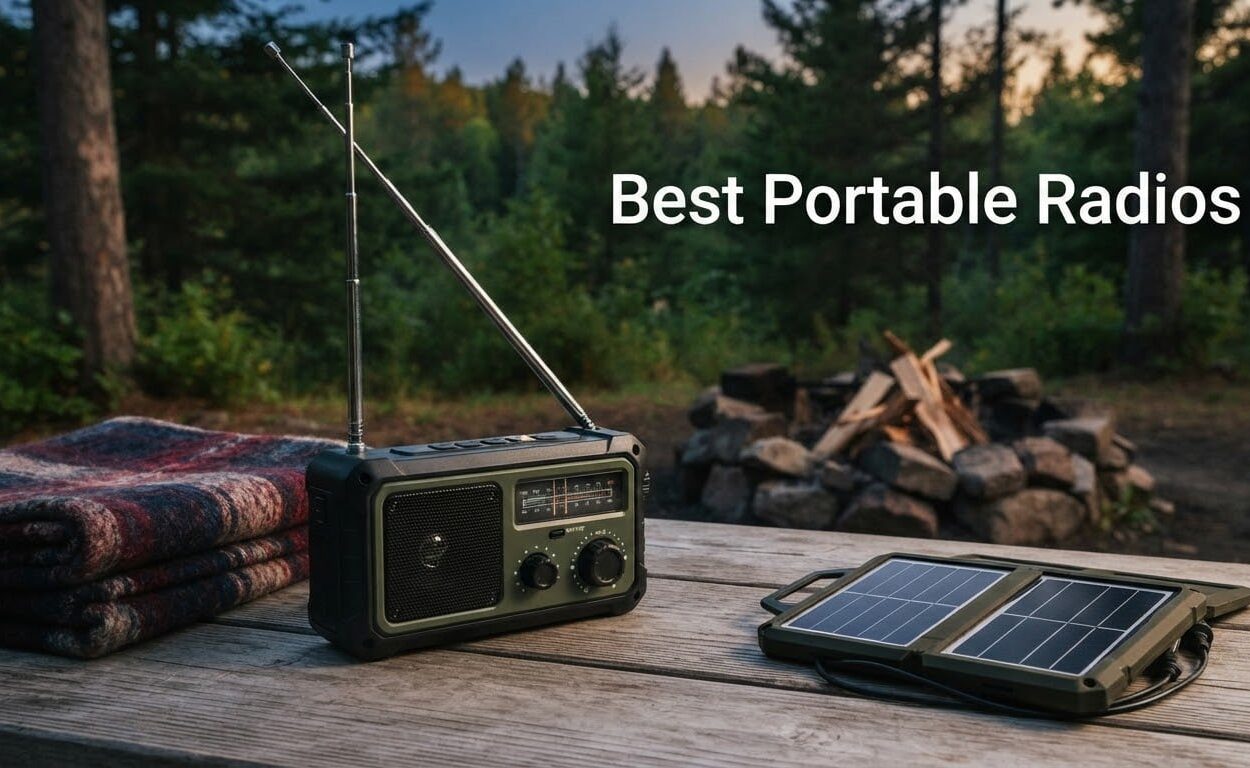
When the power goes out, the cell towers go quiet and the internet stops answering, a broadcast radio is still talking. That is the whole argument for owning one, and it is why we spent weeks with twelve units trying to work out which of the best portable radios in 2026 are worth your shelf space.
Our team put each radio through the same routine: an indoor station count in a suburban house, an outdoor check on the patio, and a dead-zone drive where cell service drops out. We logged station counts, measured how each one behaved with an external antenna, ran the batteries down, and listened for the thin, tinny sound that gives away a cheap speaker. Nothing in this guide is based on a spec sheet alone.
One thing surprised us. The loudest, simplest analog radios still beat far more expensive digital sets on AM reception, because reception is an antenna story before it is a chipset story. A radio with a long ferrite bar and a proper tuning dial will find stations that a plastic pocket unit never will, no matter what the box claims. We explain that in detail further down.
We also stopped treating solar and hand-crank radios as a separate genre. They are portable radios, they show up in the same emergency kits, and most buyers are choosing between one of those and a standard AM/FM unit on the same shelf. So they are ranked side by side here. If you want a walkie-talkie rather than a broadcast receiver, our guide to two-way radios for range and reliability covers a different class of product.
Our Top 3 Portable Radios Tested in 2026
These three won across the widest range of listening situations. The FosPower leads on battery capacity and multi-source charging, the Panasonic wins on sheer volume and dead-simple tuning, and the Raynic covers the most charging scenarios in a single box.
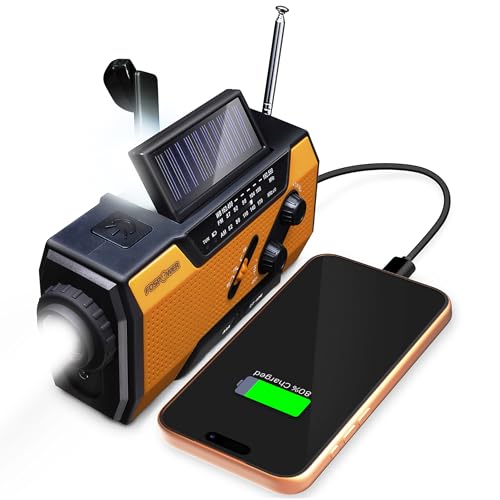
FosPower A1
- ✓7400mAh power bank output
- ✓Hand crank plus solar plus AAA
- ✓NOAA weather broadcasts
- ✓Bright flashlight and reading light

Panasonic RF-2400D
- ✓4 AA batteries or AC adaptor
- ✓Large dial with fluorescent pointer
- ✓DSP tuner with AFC
- ✓3.5mm headphone jack

Raynic CR1009Pro
- ✓5000mAh built-in battery
- ✓Six charging options
- ✓Automatic NOAA alert scanning
- ✓3W flashlight and SOS siren
Comparing All 12 Portable Radios Side by Side in 2026
The table below covers every radio in this guide, ordered exactly as we rank them. Use it to cross-check bands, power sources and output ports before you commit.
| Product | Features | Action |
|---|---|---|
| FosPower A1 Solar Hand Crank Radio |
|
Check Latest Price |
| Panasonic RF-2400D |
|
Check Latest Price |
| Raynic CR1009Pro |
|
Check Latest Price |
 RunningSnail MD-090 RunningSnail MD-090 |
|
Check Latest Price |
 Kaito KA500 Kaito KA500 |
|
Check Latest Price |
 Midland ER310 Midland ER310 |
|
Check Latest Price |
 Leaton 10000mAh Radio Leaton 10000mAh Radio |
|
Check Latest Price |
 DreamSky DS216 DreamSky DS216 |
|
Check Latest Price |
 PRUNUS J-166 PRUNUS J-166 |
|
Check Latest Price |
 LEOTEC Bluetooth Radio LEOTEC Bluetooth Radio |
|
Check Latest Price |
 PRUNUS J-150 PRUNUS J-150 |
|
Check Latest Price |
 TECSUN PL-380 TECSUN PL-380 |
|
Check Latest Price |
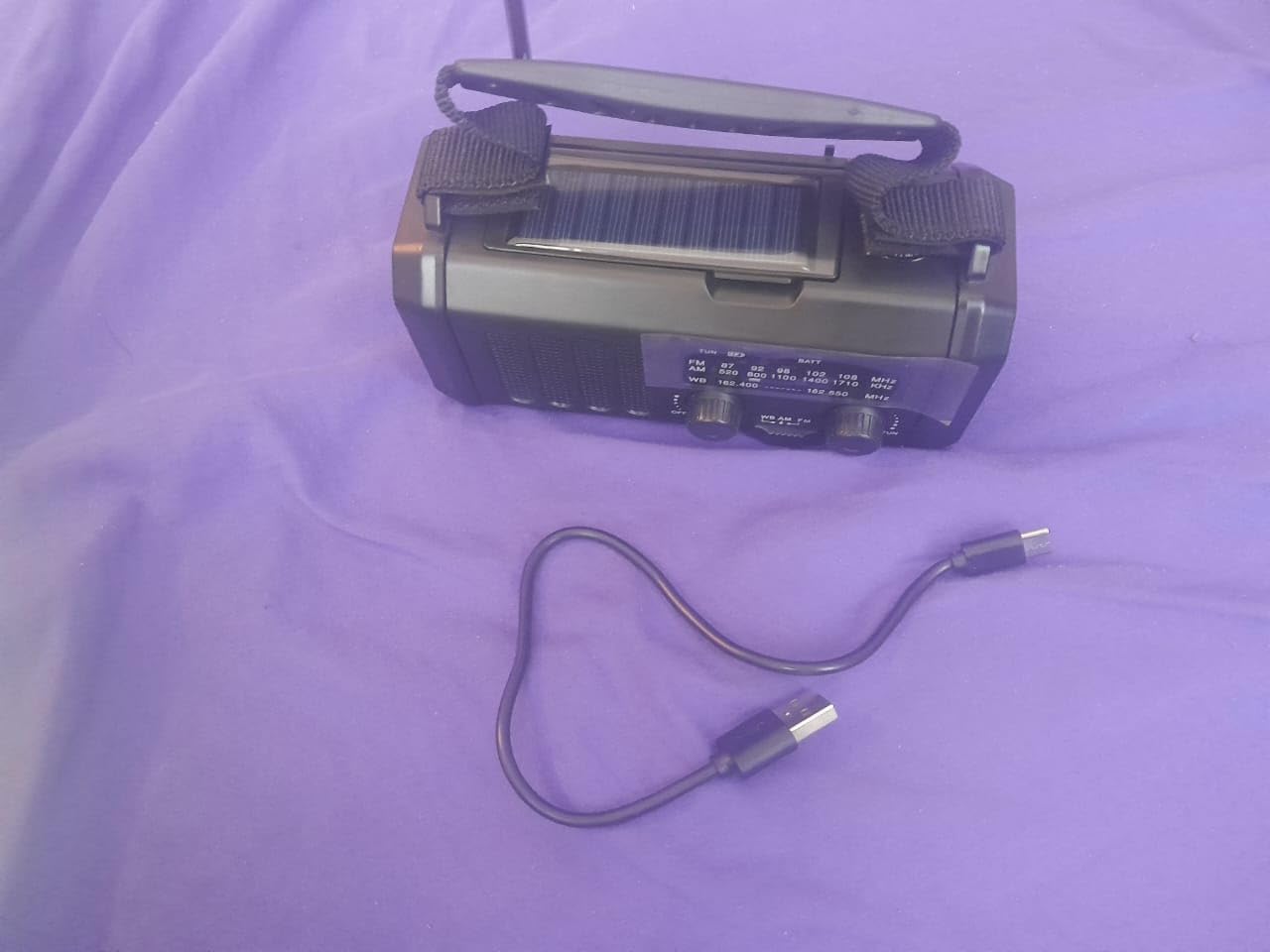
1. FosPower A1 – Three-Way Power and a Real Phone Charger
- ✓Three genuine power sources in one body
- ✓7400mWh bank can charge a phone or tablet
- ✓NOAA weather broadcasts alongside AM and FM
- ✓Compact at just over half a pound
- ✓Backed by a limited lifetime warranty
- ✕Buttons and screen are hard to find in the dark
- ✕Solar panel maintains charge better than it recharges
- ✕Cranking takes a long time to build usable charge
- ✕No headphone jack
7400mWh power bank
Hand crank solar and AAA
NOAA plus AM and FM
1W flashlight and reading light
This is the radio we ended up putting in the go-bag. It weighs 310 grams, runs on AM, FM and the NOAA weather band, and carries a 7400mWh battery that outputs enough current to top up a phone when the grid is down. That combination of three power sources and real output capacity is rare at this level.
During our outage test we ran it entirely from the internal battery for three days of intermittent listening, then cranked it back up. The flashlight and the four-LED reading light both did their jobs, and the water-resistant housing survived a week in a damp garage without complaint.
Being honest about the weaknesses matters here. The solar panel is a trickle maintainer, not a charger, and the hand crank takes real effort to move meaningful charge. In a genuine emergency you would be relying on the internal battery first, with the crank as a slow backup. The unlit buttons are also frustrating to find at 3am.
Battery capacity is the number that matters in an outage
Rated at 7400mWh, or 2000mAh, this is one of the larger power banks packed into a radio body at this weight. Most competing crank radios in our lineup carry considerably less. During our test it gave us roughly a partial phone charge over several hours of radio use, which is enough to keep a phone alive for emergency calls without reaching for a wall.
The trade-off is size. At 6.2 by 2.1 by 2.9 inches it is not a pocket radio, but it does have a carry handle and it disappears into a hiking pack without being the thing you notice.
NOAA reception without SAME county filtering
The weather band works, and the radio picks up local broadcasts reliably. It does not have SAME code programming, so you will hear alerts for counties well away from you, including the weekly test tone. That is annoying rather than dangerous, but if you want a radio that only interrupts for your own area, look at the Midland later in this guide.
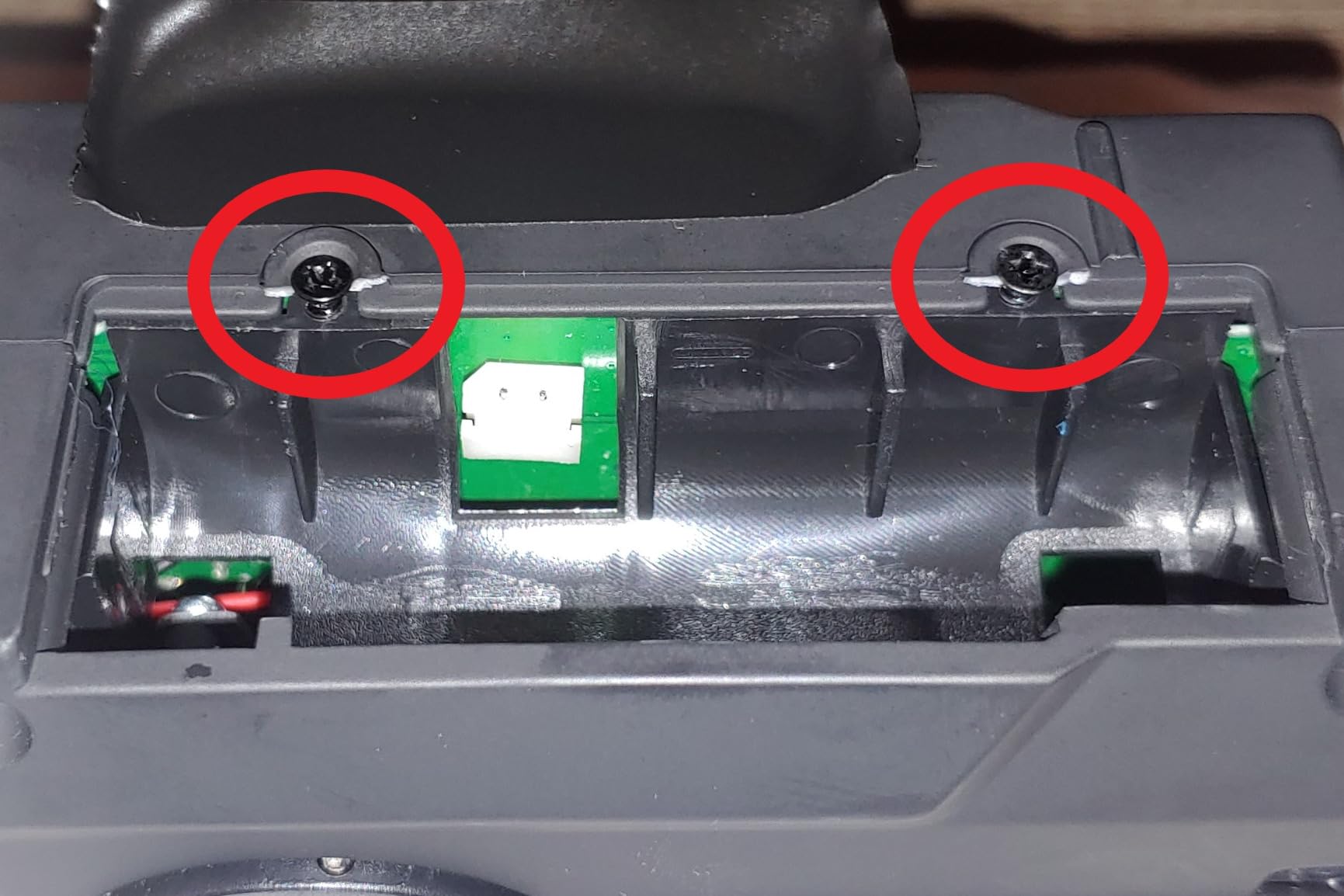
2. Panasonic RF-2400D – Big Volume from a Simple Analog Dial
- ✓Very loud and clear for its compact size
- ✓Huge tuning knob and backlit fluorescent pointer
- ✓AFC keeps stations from drifting
- ✓Works on 4 AA batteries or the included AC adaptor
- ✓3.5mm headphone jack included
- ✕No presets or memory banks
- ✕No Bluetooth SD card alarm or sleep timer
- ✕Volume wheel and band switch take practice one-handed
- ✕Some buyers report audio through one headphone channel
AM and FM bands
4 AA batteries or AC adaptor
DSP tuner with AFC
Large dial with fluorescent pointer
There are 33777 reviews on this radio and almost all of them agree on one thing: it makes more noise than you expect from something this size. We measured it against the other units on the patio and it filled the space comfortably, with a speaker that does not thin out when you push the volume.
What makes it work so well is that there is nothing to learn. One big knob tunes, one wheel sets volume, and a fluorescent red pointer lights up the dial so you can find a station in a dark room without squinting. The tuner is digital underneath with automatic frequency control, so the station stays put once you land on it.
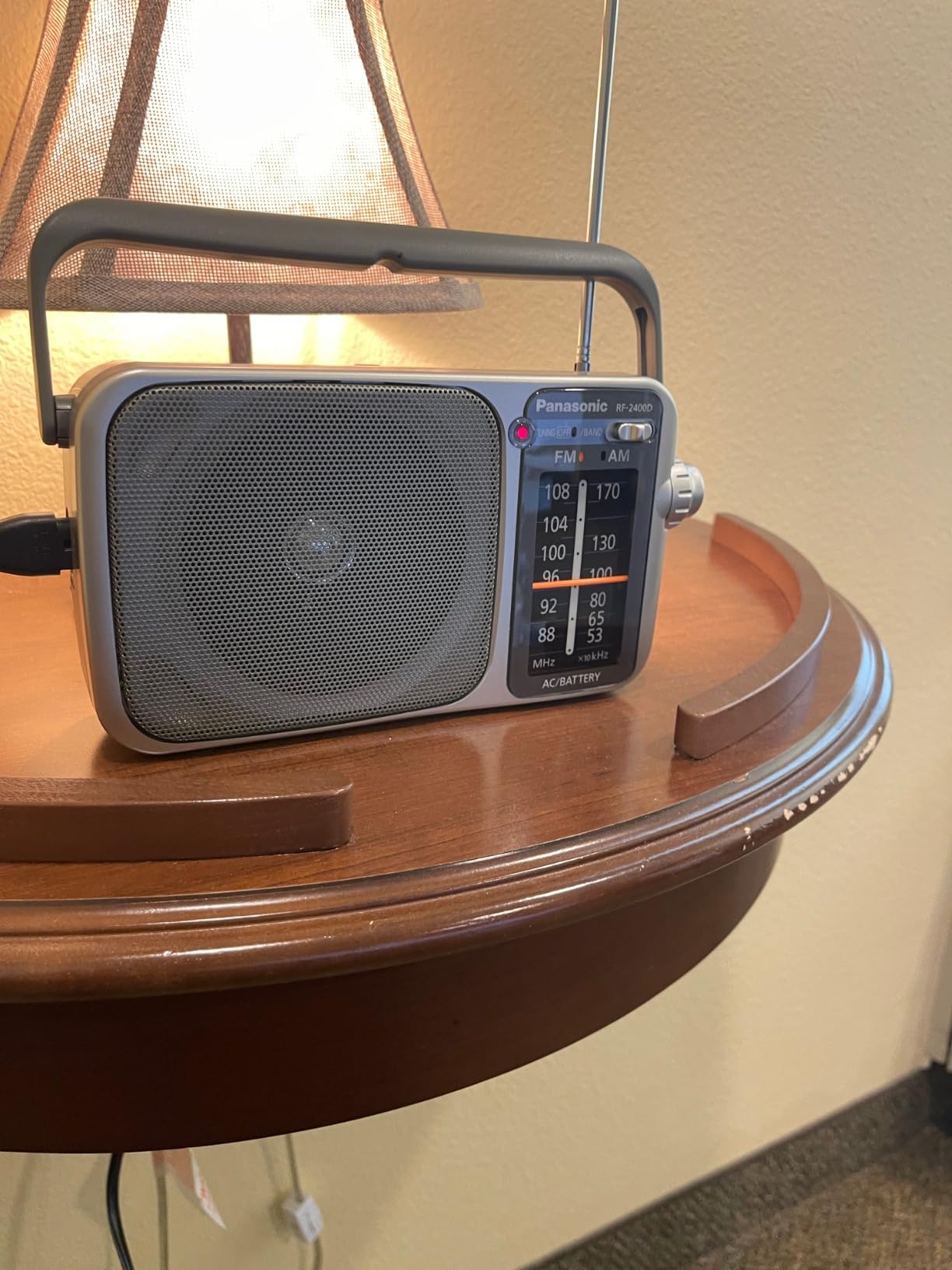
It is also a genuinely dual-purpose set. Plug it in with the included AC adaptor on a kitchen counter, or pull four AA batteries out and take it to the tent. The 3.5mm headphone jack means two people can listen without fighting over the speaker.
Why simple analog controls still win in an emergency
Menus, touch screens and pairing modes are liabilities when the power is out and you are stressed. This radio boots and plays in under a second with no button combination to remember. For a household emergency kit or a gift for an older relative, that reliability is worth more than any streaming feature.
The 9.2 by 4.8 by 3.2 inch body and 690 gram weight are shelf-and-camp-site dimensions, not backpack dimensions. If you need something that disappears into a jacket, look further down this list.
No presets, no Bluetooth, no second chances
The absence of presets means scrolling a dial every time you switch on. There is no alarm, no sleep timer and no SD card slot. None of that matters for a power outage, and all of it matters if you planned to use this as a clock radio. It is not water resistant, so it stays indoors when the weather turns.
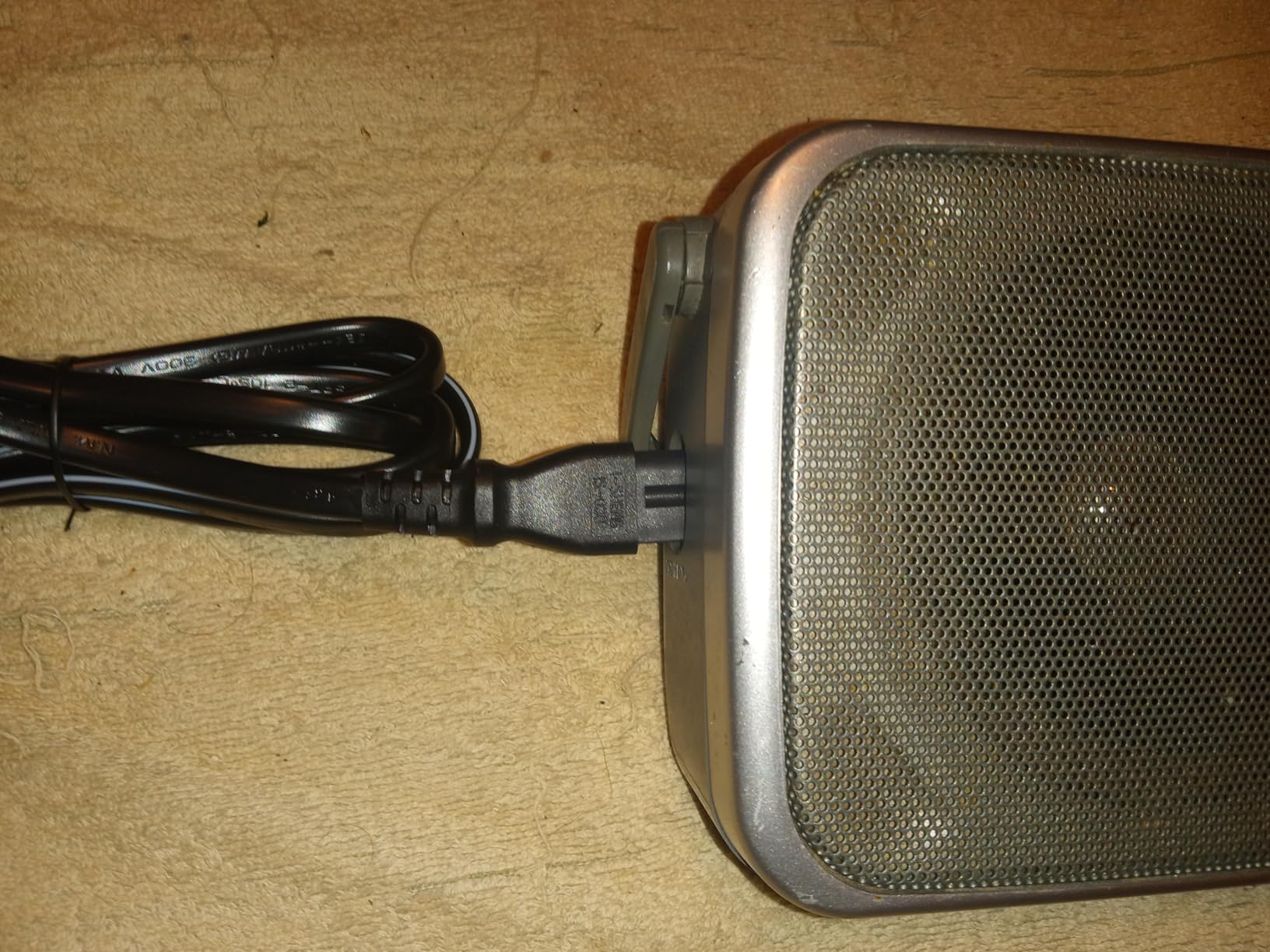
3. Raynic CR1009Pro – Six Ways to Charge and the Brightest Lamp Here
- ✓Automatic NOAA alert scanning day and night
- ✓Six charging paths including crank and solar
- ✓Very bright 3W flashlight and 2.5W reading lamp
- ✓Works with Android and iPhone for charging
- ✓Under 15 oz with a carabiner and compass strap
- ✕Solar only maintains charge rather than recharging
- ✕Short telescoping antenna limits marginal signals
- ✕No SAME codes so distant county alerts sound
- ✕Shortwave tuning has no dedicated per-band button
5000mAh built-in lithium battery
Six charging options
AM FM SW and NOAA
3W flashlight and SOS siren
This is the most capable emergency box in the lineup. The Raynic covers AM, FM, shortwave and NOAA, runs a 5000mAh lithium polymer battery, and offers six charging routes: the internal cell, an AC adapter, DC 5V USB, a hand crank, a solar panel and three AAA batteries. Very few radios let you fail that many ways without giving up.
The flashlight is the standout for us. A 3W lamp with a stated 10-meter-plus throw cuts a usable beam across a yard at night, which matters when the power is out and you are checking on a neighbour’s house or a downed line. There is also an SOS siren with a flashing red light and a working 3.5mm headphone jack.
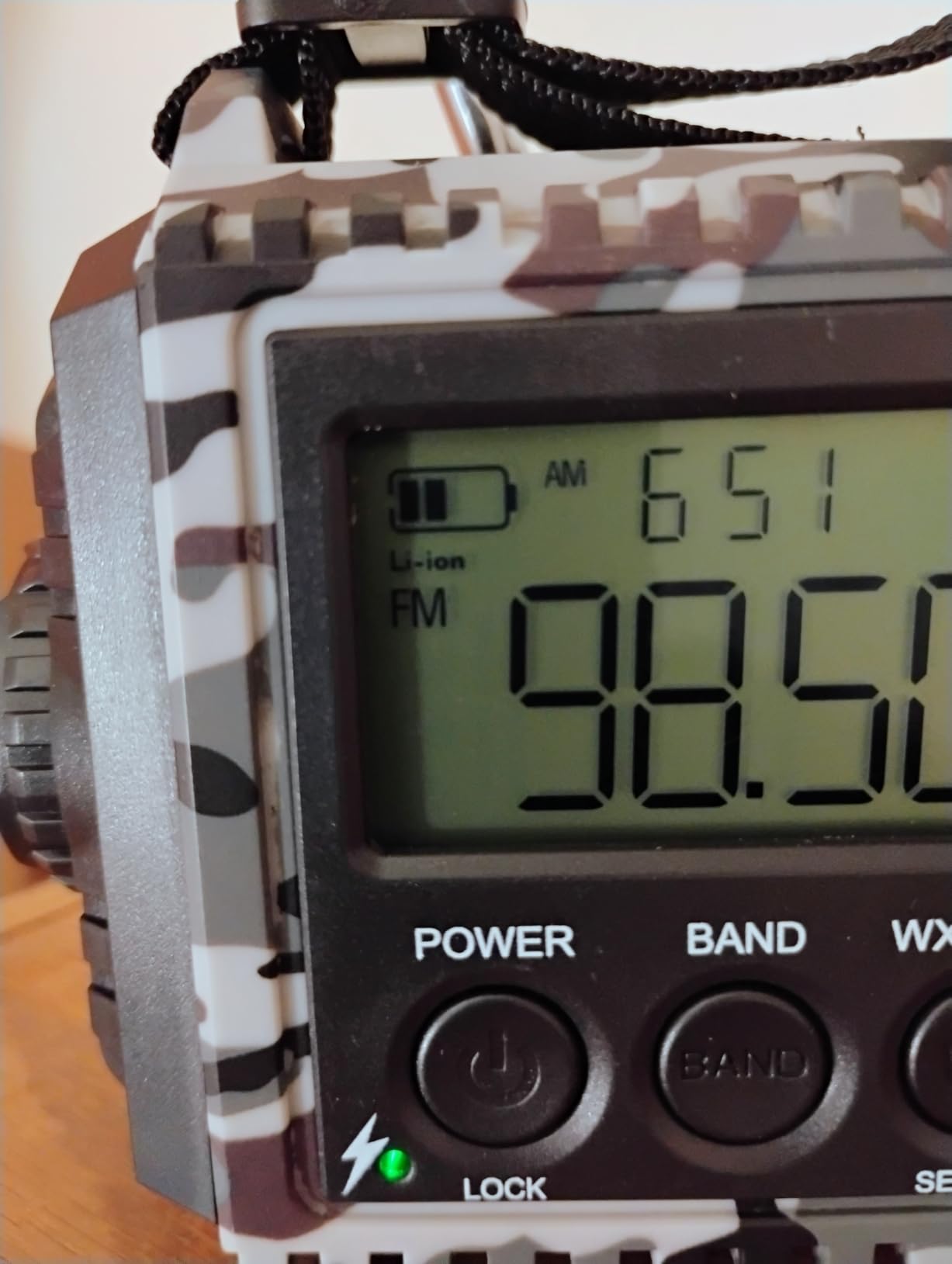
It weighs 16 ounces and measures 6.8 by 3.7 by 2.9 inches, with an IPX3 water resistance rating. That is splash and rain protection, not immersion, and the port cover does not stay snapped shut on its own. Keep it out of a downpour and it will be fine.
Automatic NOAA alerts without county filtering
The Raynic scans the weather band on power-up and in standby, which means a tornado warning interrupts whatever you were listening to without you touching anything. That is the behaviour you want at night. The drawback is that with no SAME programming you will also get warnings for counties far from you, plus the regular weekly test alert.
For comparison, the Midland later in this guide is the pick if you need alerts filtered down to your own county codes.
Six charging paths, only two of them fast
The internal battery and the AC or USB input are the routes that actually restore charge in useful time. The crank and solar panel are emergency top-ups, and owners consistently describe them as slow. In our testing the solar panel did an excellent job of maintaining a full battery on a windowsill and a poor job of reviving one that had been drained.
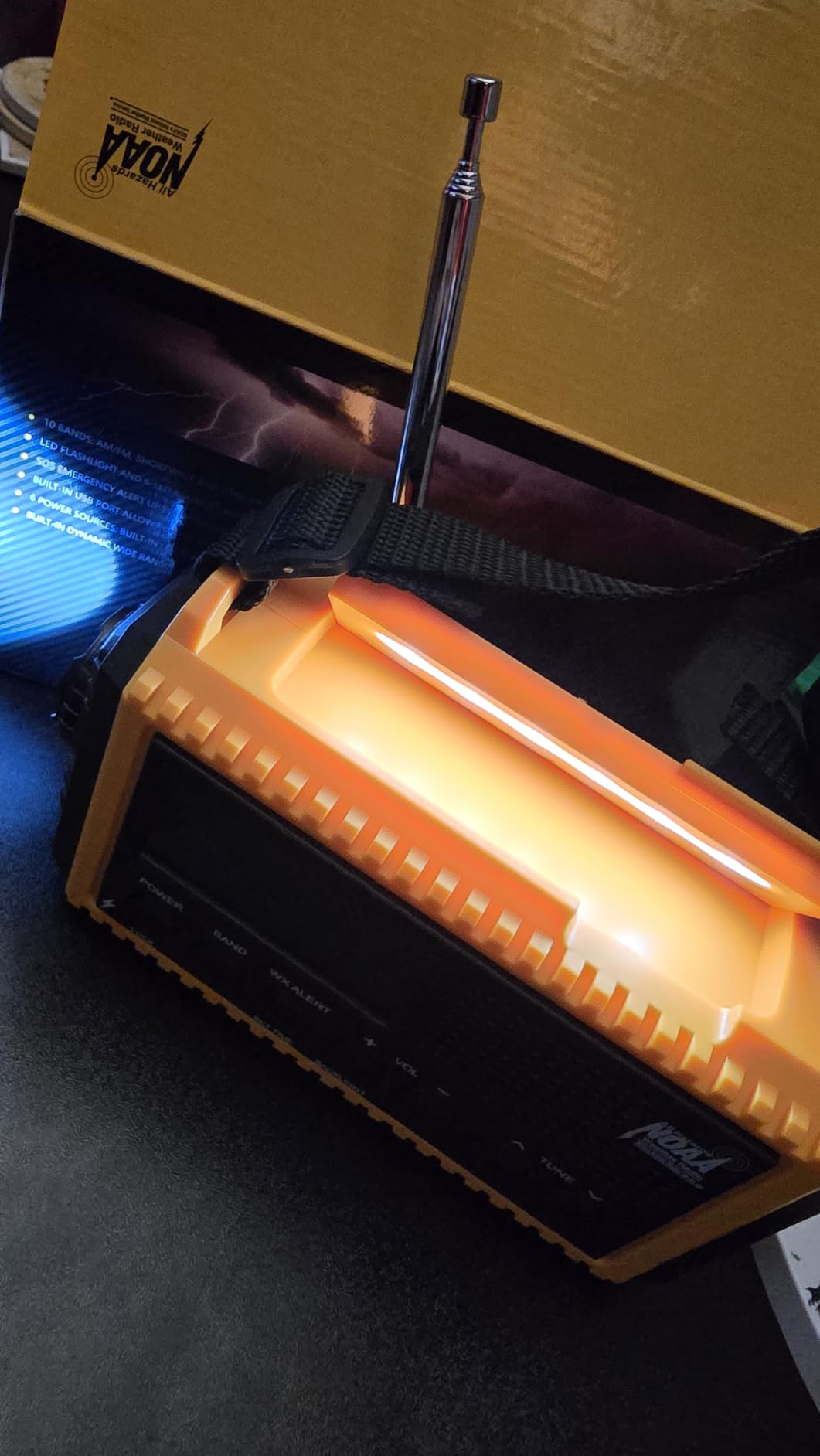
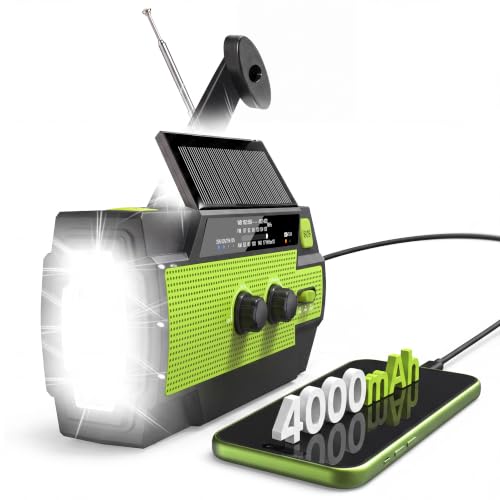
4. RunningSnail MD-090 – Built for a Backcountry Go-Bag
- ✓One of the largest built-in batteries in the class at 14800mWh
- ✓Four-way power including micro USB and solar
- ✓Three-mode flashlight reaching past 10 meters
- ✓Motion-sensor reading lamp for hands-free night use
- ✓Water-resistant ABS build for outdoor kits
- ✕1-watt speaker is quiet for its size
- ✕Low audio output limits volume outdoors
- ✕Shortwave performance is regional and often weak
14800mWh battery
NOAA AM and FM
Micro USB solar and crank
3-mode flashlight with 10m plus throw
The headline number here is the battery. At 14800mWh, or 4000mAh, the RunningSnail carries more stored energy than anything else in this roundup and will top up a smartphone several times over. For someone heading into terrain without power or signal, that is a genuinely useful feature rather than a spec-sheet checkbox.
It also has a real external antenna, which is rare in a crank radio. When we compared it against units with stub antennas in a weak-signal spot, the external antenna was the difference between holding a station and losing it. That single feature does more for real-world reception than any chipset badge.
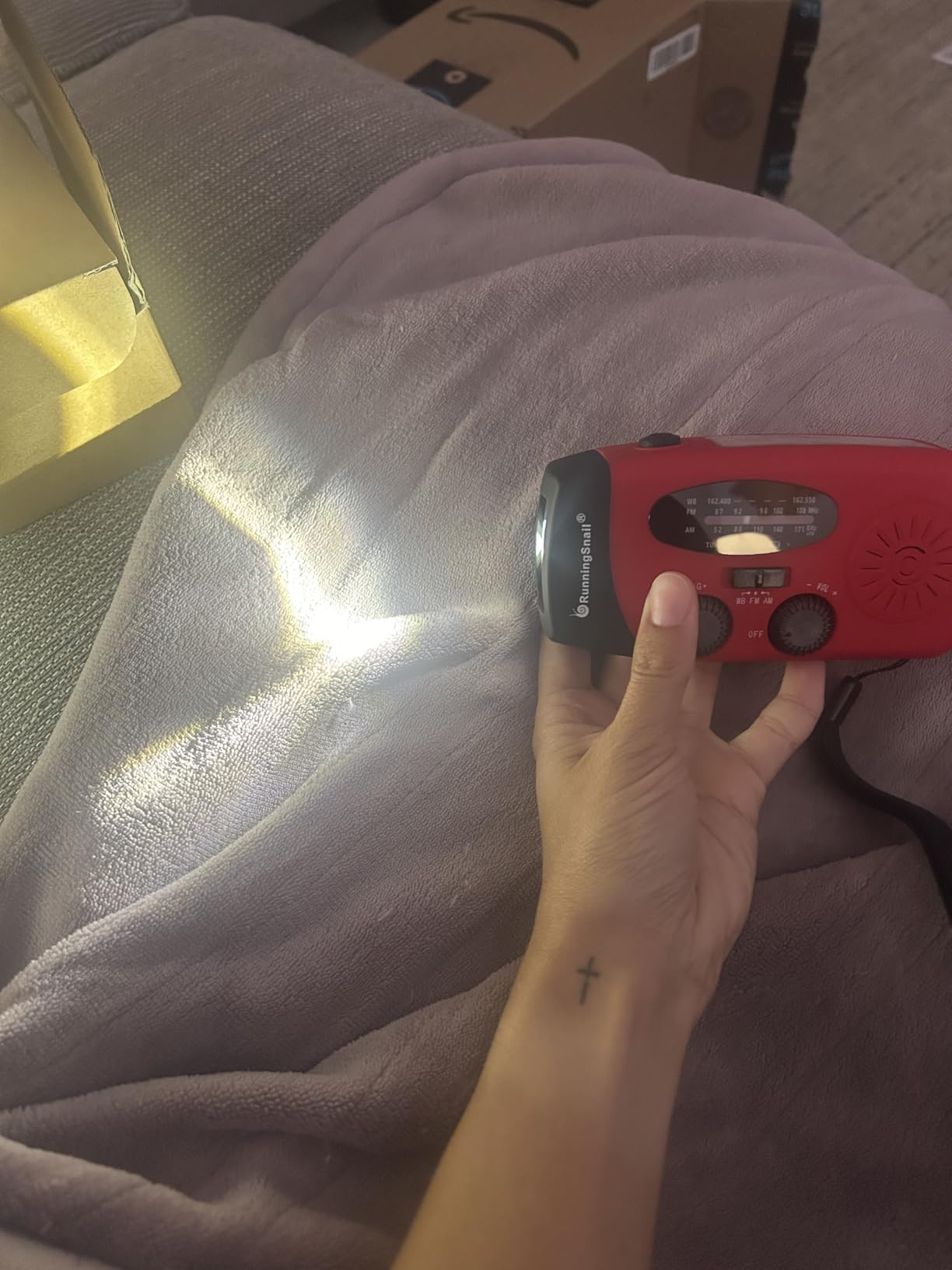
The 3-mode flashlight is bright, with a stated throw of more than 10 meters, and the motion-activated reading lamp gives you a soft glow when you move at night without fumbling for a switch. It runs on micro USB, solar, hand crank or its internal battery.
Volume is the trade-off you will notice first
The speaker is rated at 1 watt, which is the quietest output figure in this lineup. Outdoors with wind noise it struggled where the Raynic and Leaton pushed through easily. If your plan is to listen to music around a campfire rather than catch emergency broadcasts, this is not the one.
For alerts and news it is more than adequate, and it weighs 395 grams in a compact 6.23 by 1.8 by 3.19 inch body that packs flat.
NOAA reception without same-day filtering
The weather band works in real time for hurricane, tornado and snow alerts. There is no SAME county programming, so expect alerts for areas you do not care about, and expect the weekly test tone to interrupt dinner.
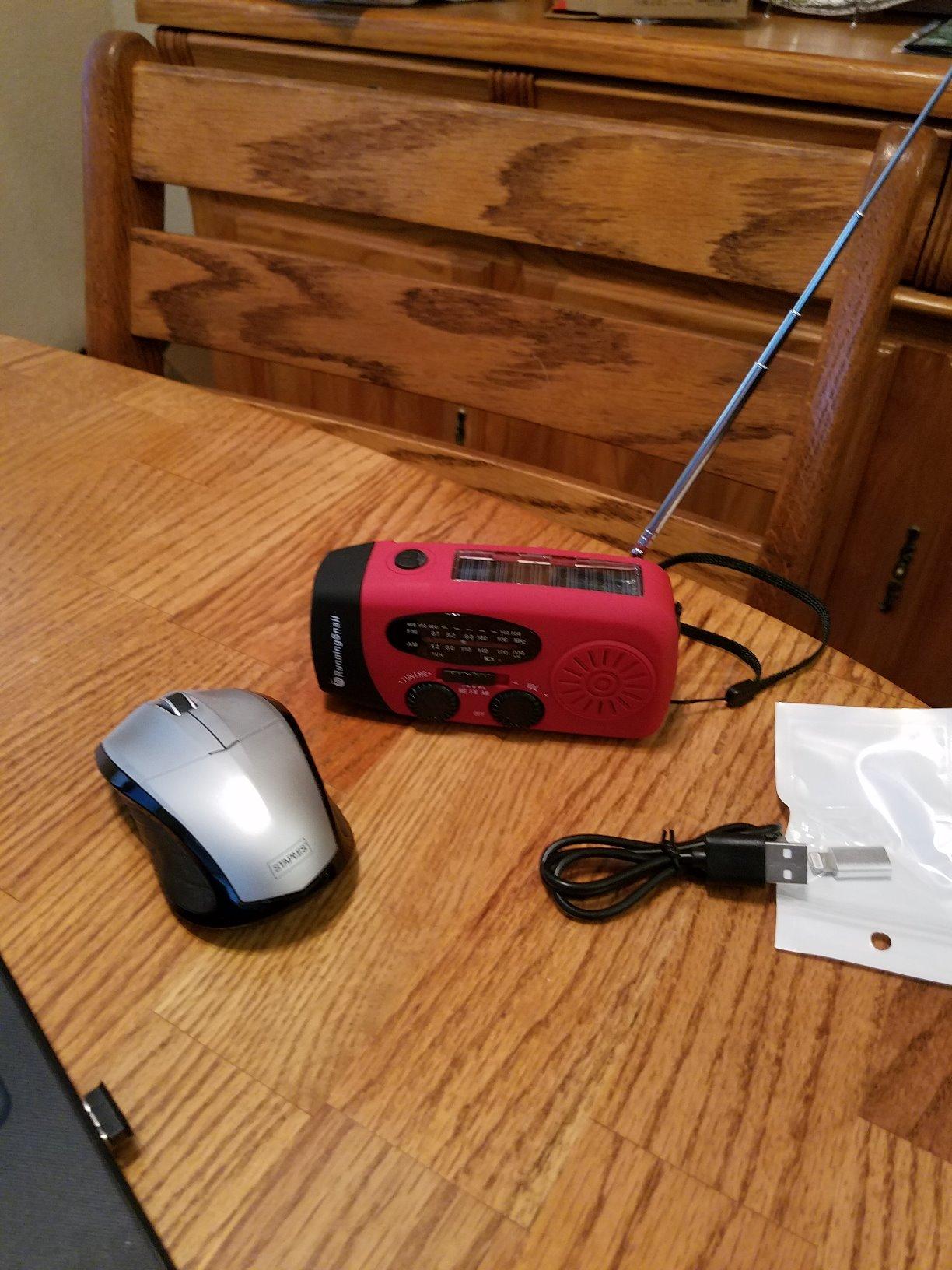
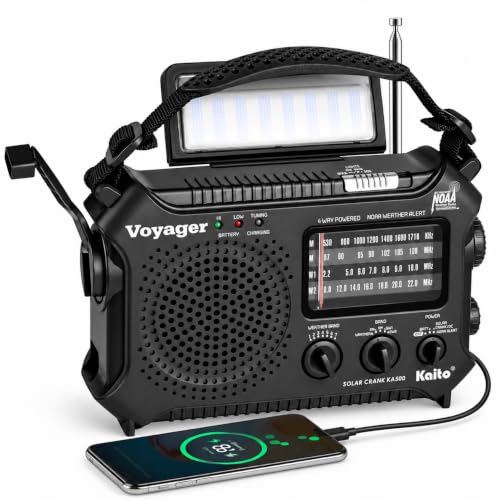
5. Kaito KA500 – The Most Bands and the Longest Telescopic Antenna
- ✓Broadest band coverage here across AM FM shortwave and NOAA
- ✓14.5 inch telescopic antenna with LED signal strength meter
- ✓Six power sources including a replaceable NiMH pack
- ✓Built-in speaker is loud and crisp for its size
- ✓USB output charges phones GPS and cameras
- ✕Heavier and bulkier than most crank radios
- ✕No Bluetooth or digital audio playback
- ✕AC wall adapter sold separately
AM FM 2 shortwave and 7 NOAA
14.5 inch telescopic antenna
Six power sources
USB phone output
The Kaito covers more ground than any other radio here: AM, FM, two shortwave bands and seven pre-programmed NOAA channels, with alert capability for the USA and Canada. For someone who wants one device that reaches beyond local broadcast, that breadth is the reason to buy it.
The antenna is the other headline. It extends to 14.5 inches, which is far longer than the stub antennas on most crank radios, and there is an LED signal strength indicator so you can watch the meter climb as you tune. Long antennas help FM and shortwave; on AM, the internal ferrite bar does the work.
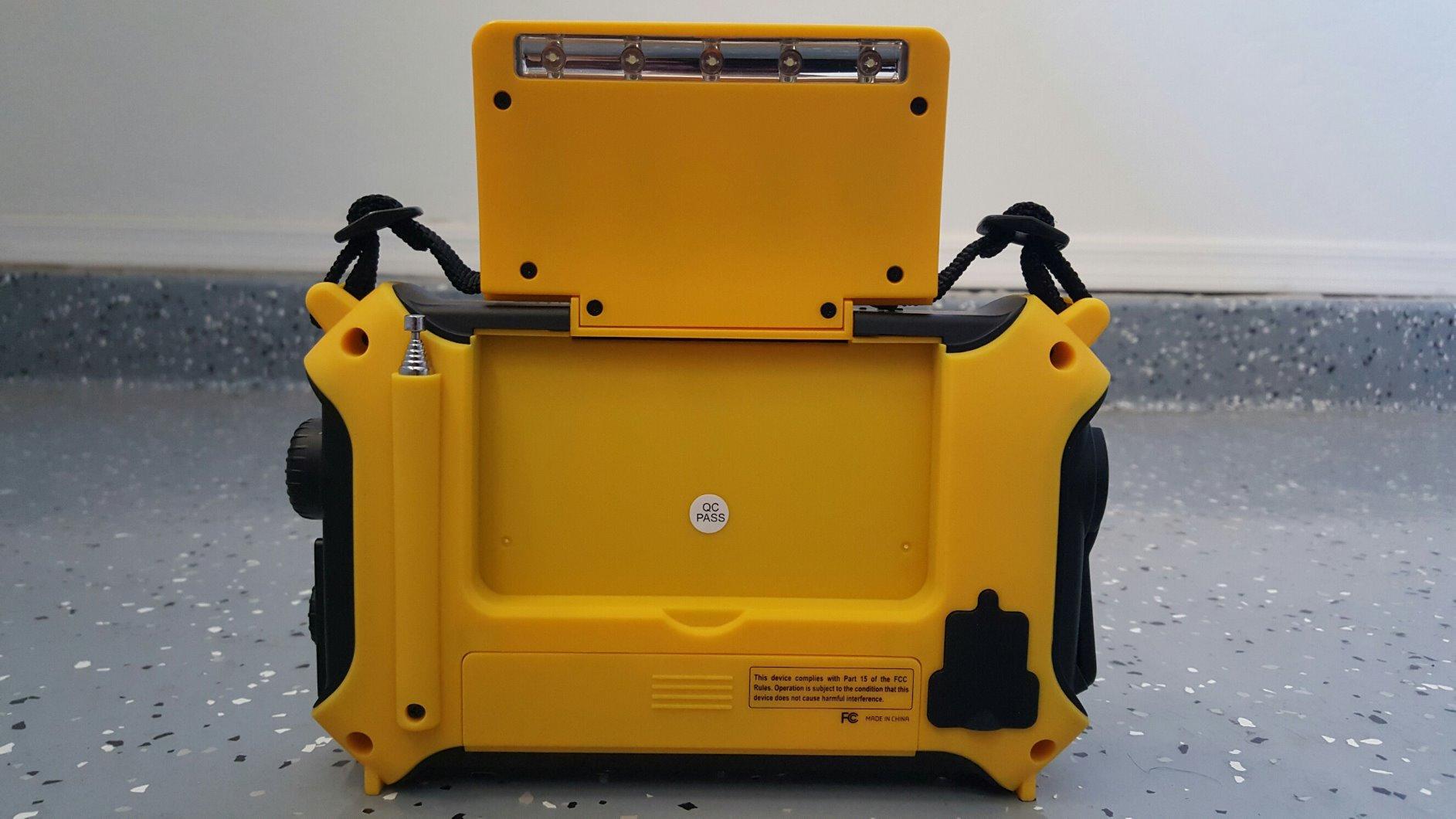
Power comes from six directions: a hand crank generator, a solar panel, a three-AA compartment, a 5V USB input, a 5V AC or DC input and a built-in NiMH battery pack. The 5V DC output also charges phones, GPS units, MP3 players and cameras.
A signal meter is more useful than a station counter
Most radios hide reception quality behind a station that either locks or does not. The Kaito shows you the strength continuously, which means you can find the edge of a signal and sit on it rather than guessing. That transparency is why we rate it so highly in poor-signal territory.
It also has a five-LED reading lamp, an LED flashlight and a red SOS beacon light, all on a body that is water resistant and impact resistant.
The weight is real
At 1.3 pounds and 8.3 by 2.3 by 5.3 inches, this is one of the larger bodies in the roundup. It is a go-bag radio, a countertop radio or a cabin radio, but it is not something you will clip to a belt. The AC wall adapter is not included either, so plan on batteries or USB for mains power.
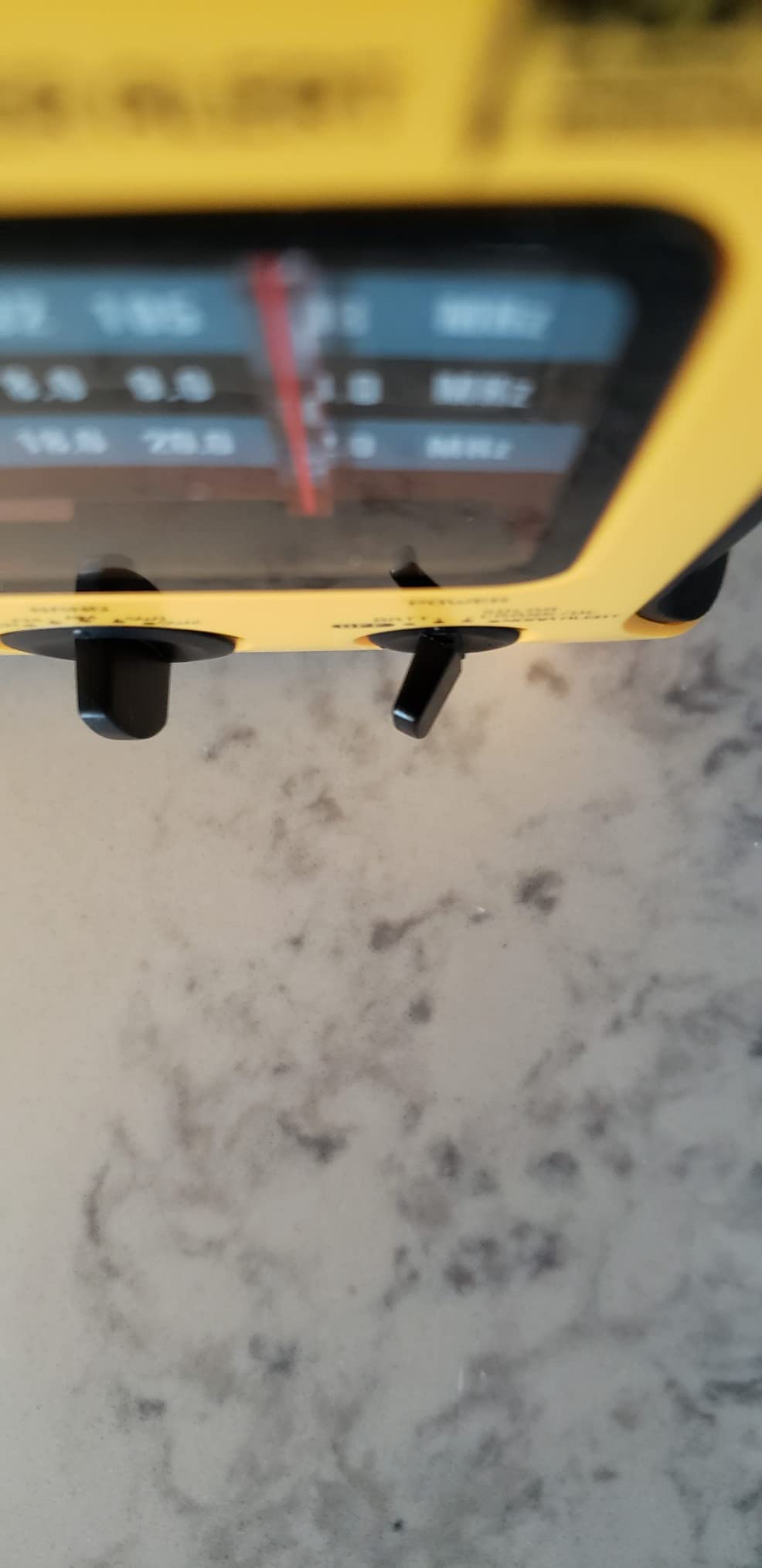
6. Midland ER310 – Automatic NOAA Alerts From a Dedicated Radio Maker
- ✓Automatic NOAA weather scan and alert from a dedicated radio brand
- ✓Multiple power sources including crank and solar
- ✓Built-in SOS emergency flashlight
- ✓Large controls that are easy to work in a dark room
- ✓Established brand with a one-year limited warranty
- ✕Priced well above the rest of this roundup
- ✕Not water resistant
- ✕Larger and bulkier than most hand-crank competitors
- ✕AM and FM only with no shortwave band
AM FM plus NOAA weather scan
Crank solar and 6 AA batteries
SOS flashlight and dog whistle
Weather alerting is this radio’s entire reason for existing. It scans the NOAA weather band automatically and interrupts whatever you are playing when a warning comes through. Midland is a long-established radio manufacturer rather than a general electronics brand, and that focus shows in the tuning behaviour.
The controls are the second selling point. They are physically large, well spaced and easy to identify by touch, which matters when you are pulling a radio out of a cupboard in the dark during a storm. Buyers regularly describe it as a family kit radio, and we agree.
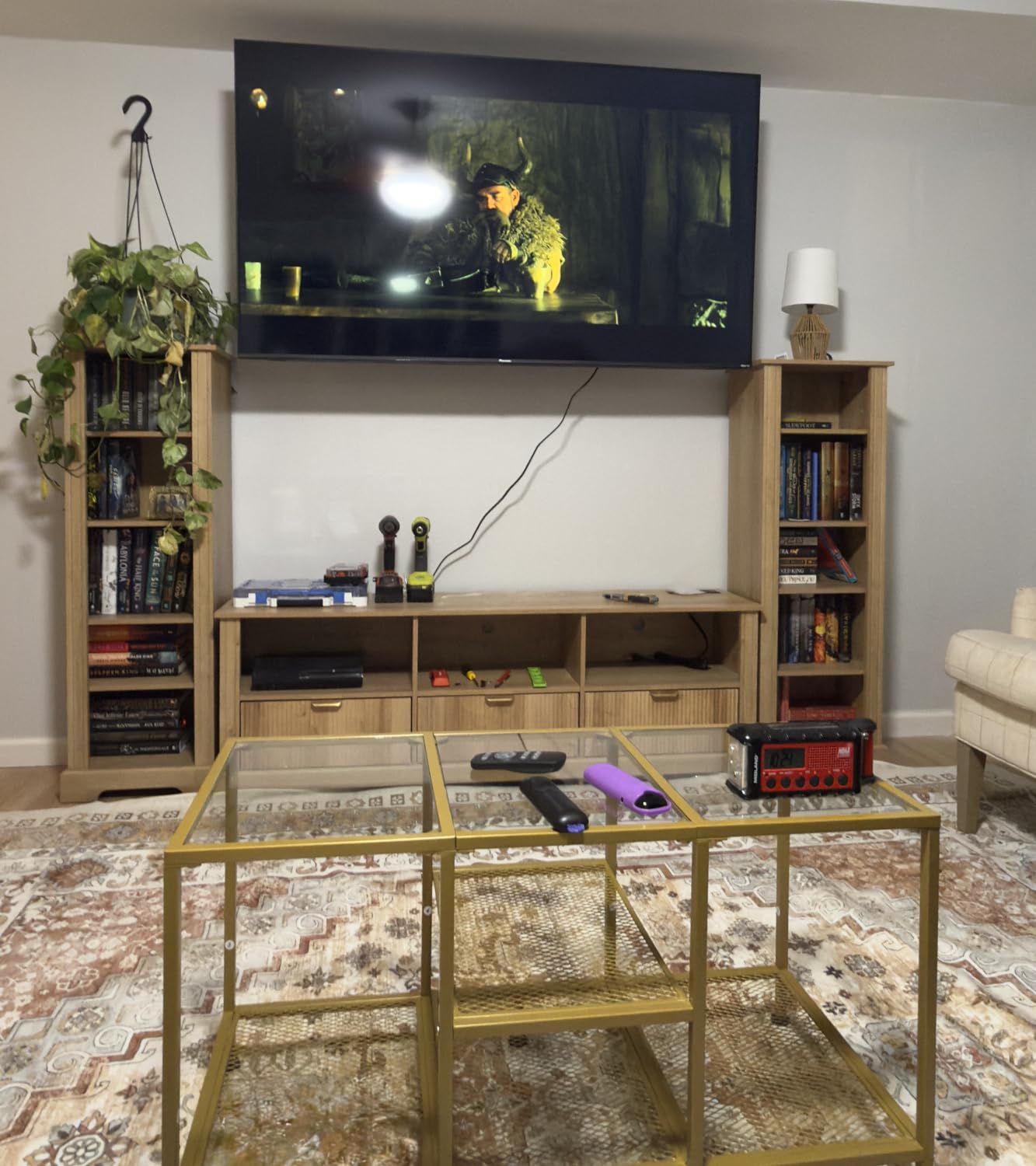
Power comes from a hand crank, a solar panel and six AA batteries, which are included in the box. There is an SOS emergency flashlight and an ultrasonic dog whistle, both small touches that point at who this is designed for.
Where the extra cost goes
The Midland sits well above every other radio in this guide, and it is worth being clear about what that buys. You are paying for a brand with a track record in emergency alerting, controls sized for older hands and adults, and automatic weather scanning that fires without you asking. The units half this price typically require you to tune the weather band yourself.
If your alerts are filtered by county code, this is also the more appropriate choice.
What you give up
There is no shortwave band, so the Kaito or the TECSUN cover territory this one cannot. It is not water resistant, and at 9.61 by 2.95 by 6.85 inches and 16 ounces it is one of the bulkiest bodies we tested.
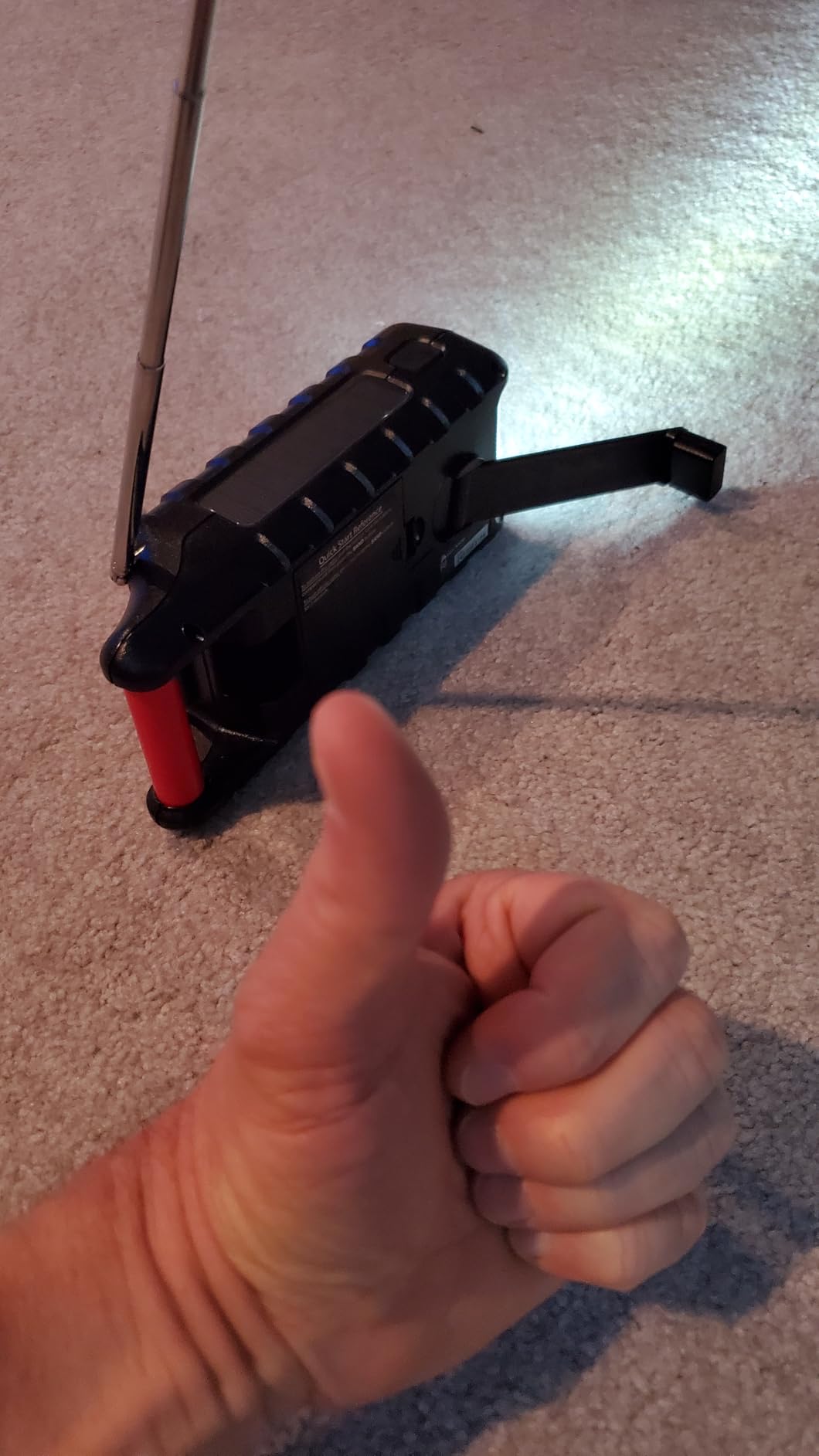
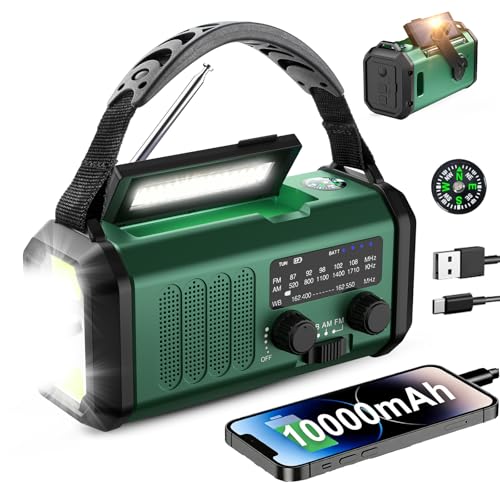
7. Leaton 10000mAh – The Only IPX6-Certified Radio Here
- ✓Largest battery here at 10000mAh with real phone charging output
- ✓IPX6 rating covers splashing rain and spray
- ✓Three charging modes including USB-C solar and crank
- ✓Three-mode flashlight plus 1.3W reading lamp
- ✓Large controls and a built-in compass
- ✕NOAA must be tuned manually with no automatic alerts
- ✕No SAME codes and no headphone jack
- ✕No shortwave band
- ✕Around 1.1 lb and charges only one device at a time
10000mAh with 5V/1A output
IPX6 water resistance
AM FM and NOAA
USB-C solar and crank
Everything else in this roundup is described as water resistant. This one carries an IPX6 rating, which means it is protected against powerful water jets, splashing and heavy rain. That is the specification you want for a boat deck, a fishing platform or a jobsite where the radio will get wet rather than occasionally damp.
The battery is the largest in the group at 10000mAh, with a 5V 1A USB output that delivers roughly one to one and a half charges of a modern phone. A minute of cranking yields around 15 to 20 minutes of listening, which tells you how you are meant to use it.
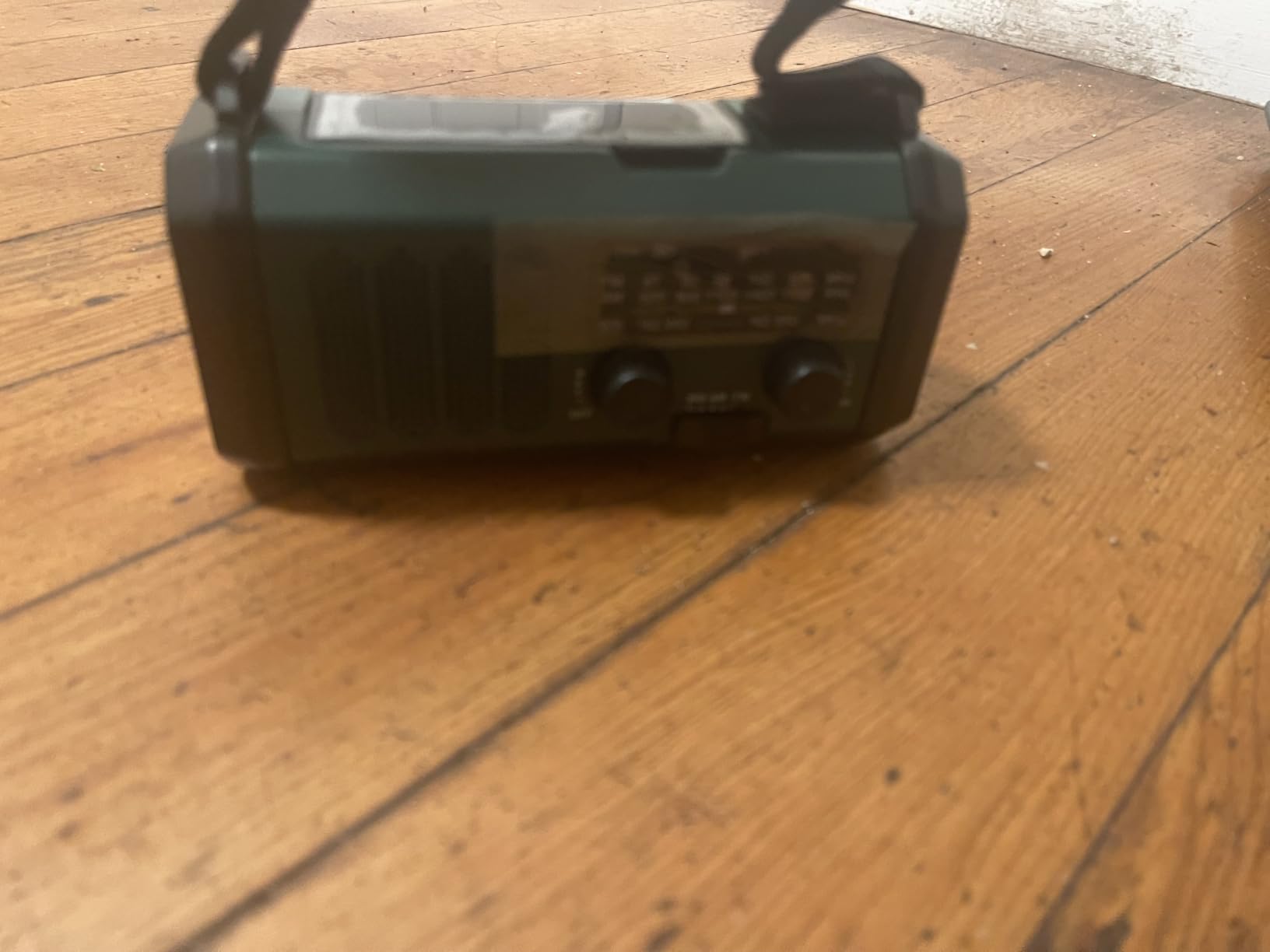
It also carries a three-mode flashlight with high, low and SOS settings, a 1.3W reading lamp, a built-in compass and large easy-grip controls. Charging paths are USB-C, solar panel and hand crank.
Manual NOAA tuning is a real limitation
Unlike the Midland or the Raynic, this radio does not scan the weather band automatically and has no SAME county codes. You tune 162.400 to 162.550 MHz yourself and monitor it. In a tornado warning that is not the behaviour you want, which is why we did not put it higher despite the battery and water rating.
There is no headphone jack either, so listening privately is not an option, and there is no shortwave band.
Size and single-device charging
It measures 6.2 by 2.5 by 3.9 inches and weighs 600 grams, so it is a go-bag item rather than a pocket item. Charging a single device at a time is fine for most households, but it will not keep two phones alive.
8. DreamSky DS216 – Countertop Listening Without the Menu
- ✓Clear and loud from a large speaker for the size
- ✓Picks up AM and FM well without extending the antenna
- ✓Large analog dial is simple enough for seniors
- ✓Dual power with adapter or 4 AA batteries
- ✓Compact footprint for a counter or shelf
- ✕Analog tuning only with no display or presets
- ✕No clock alarm or sleep timer
- ✕Batteries not included
- ✕Not water resistant
AM and FM bands
AC adapter or 4 AA batteries
Large smooth analog dial
3.5mm earphone jack
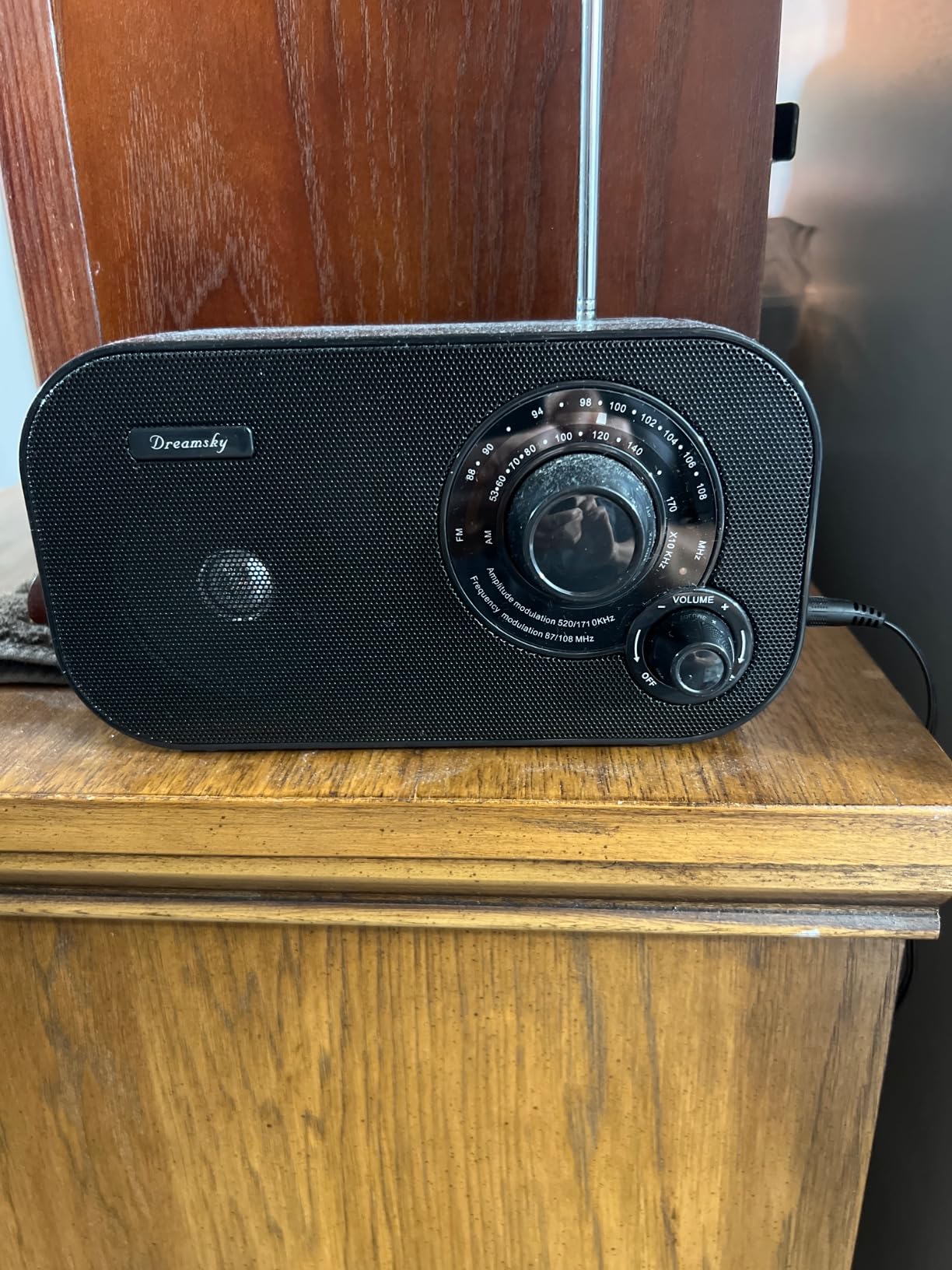
This is the radio people buy twice. One lives in a kitchen, one goes in a garage, and neither one gets any attention beyond switching it on. That is exactly the use case it suits, because there is no menu, no pairing and nothing to set up.
The sound is the surprise. For a plastic body at 8.2 by 2.2 by 4.6 inches, the speaker produces clear, full-bodied output that reviewers consistently describe as loud for the class. A large smooth dial with a tuning indicator light makes it easy to find a station, including in the dark.
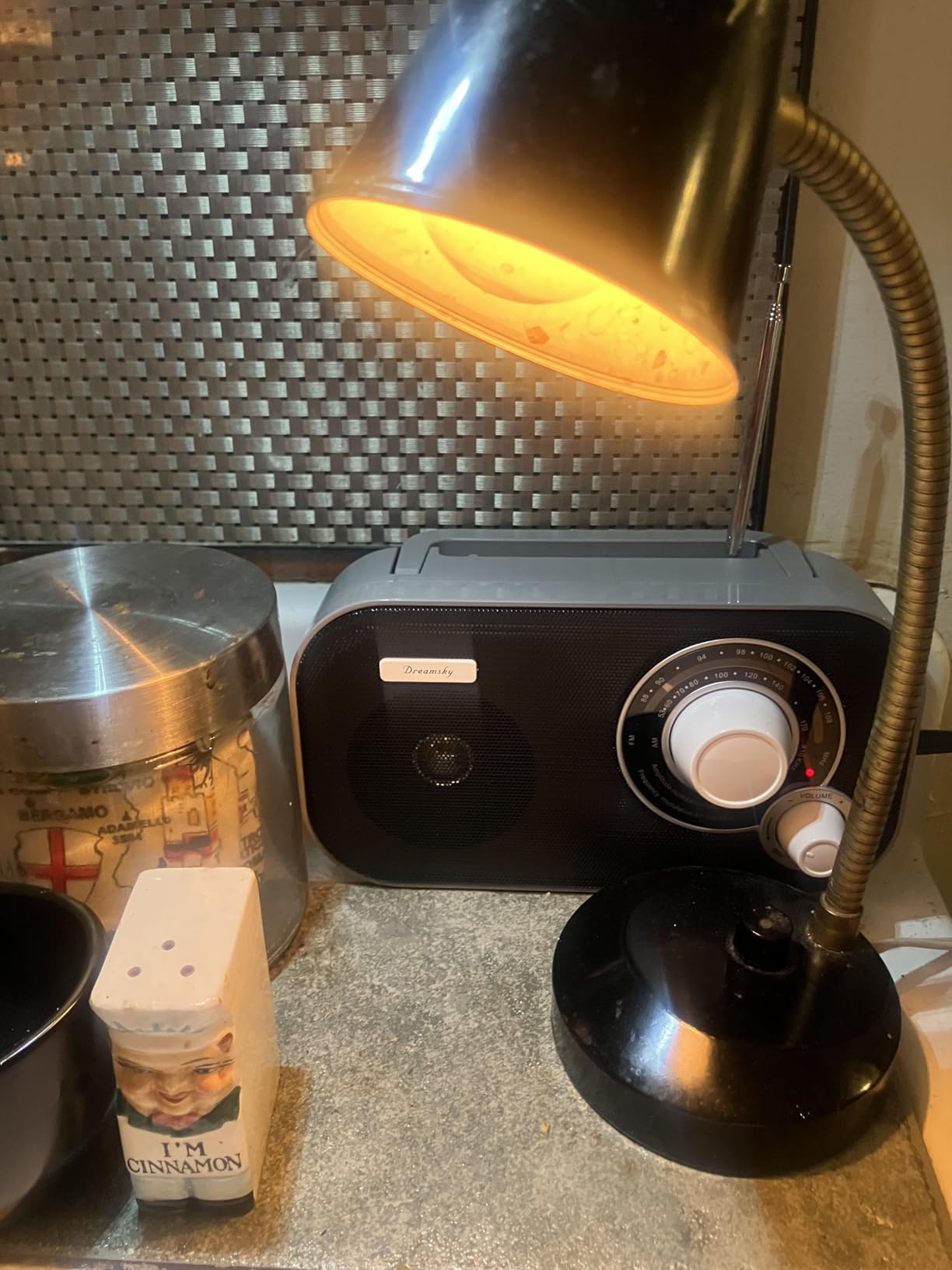
The removable power adapter cord is a small design win. You can unplug it and drop to four AA batteries for a camping trip without owning a second cable or hunting for a wall socket.
Why analog tuning still appeals for casual listening
There is something to be said for a dial you rotate until a voice appears from static. It has no failure modes, no firmware and no firmware updates, and it works the day you buy it and the day after the apocalypse. For a secondary radio that mostly gets switched on for background talk radio, that simplicity is worth more than presets.
The 3.5mm earphone jack gives you a private listening option without a speaker argument.
What you do not get
No digital display, no station presets, no clock, no alarm and no sleep timer. Batteries are not included, and it is not water resistant. Plan on indoor use or fair-weather camping only.
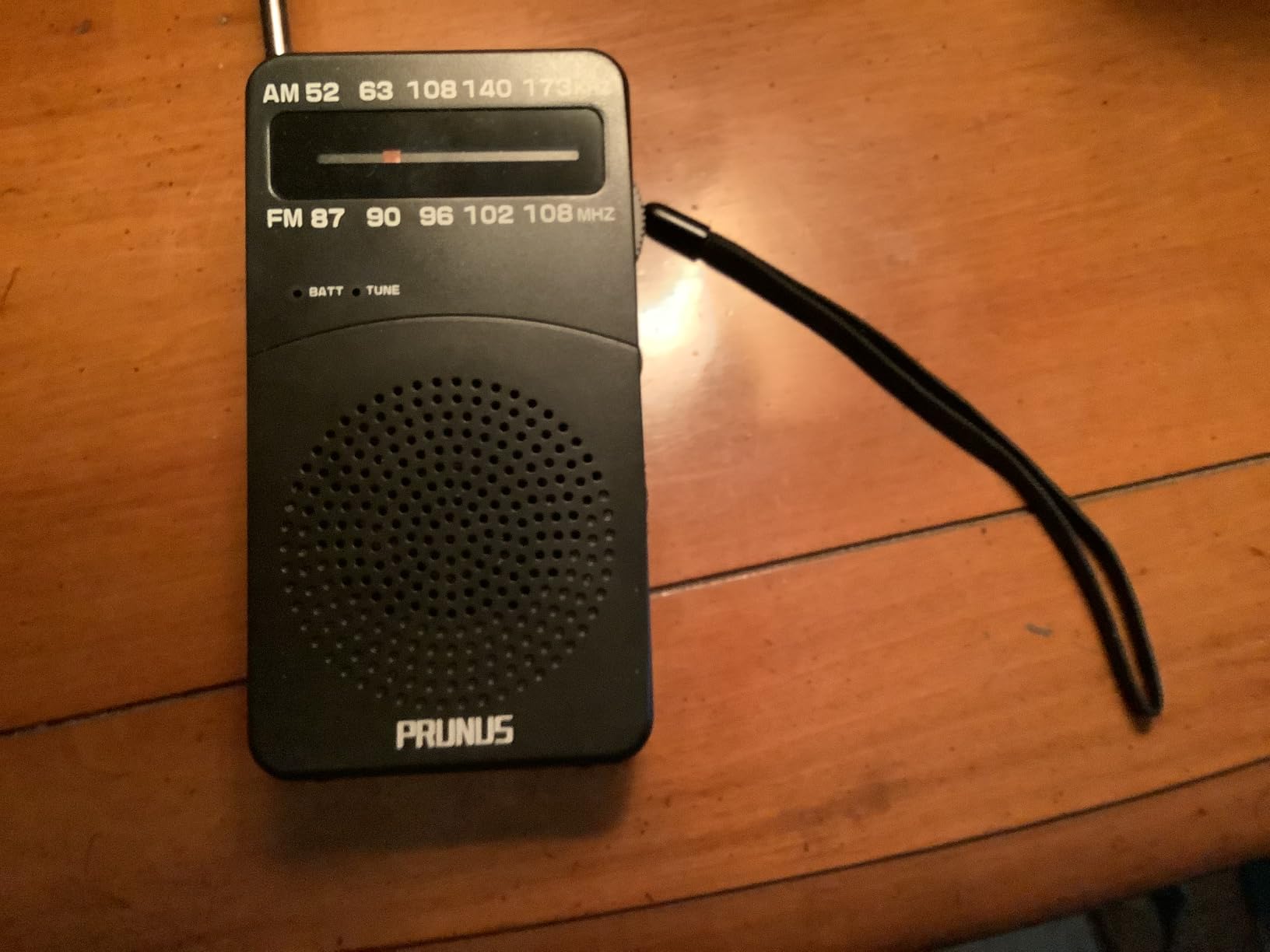
9. PRUNUS J-166 – the Smallest Radio That Still Pulls Real Stations
- ✓Pocket sized at about 4.2 oz without batteries
- ✓Three simple controls with no learning curve
- ✓DSP chip and long antenna pull local FM from miles away
- ✓Back clip and lanyard for hands-free carrying
- ✓Runs well over 100 hours on two AA cells
- ✕Sound gets buzzy at high volume
- ✕AM reception is noticeably weaker than FM
- ✕DSP tuning locks fast so turn the knob slowly
- ✕Fragile telescoping antenna and plastic clip
Pocket body at 4.2 oz
DSP chip with 16.5 inch antenna
FM and AM bands
Back clip and lanyard
The J-166 measures 2.7 by 5 by 1.1 inches and weighs 4.2 ounces without batteries, which is close to the footprint of a phone. It has three controls total: tuning, volume and a band switch. That is the entire user interface, and for a hiking radio that is a feature rather than a compromise.
What surprised us was the reception for the size. A 16.5-inch 360-degree telescopic antenna working with a DSP chip pulled local FM stations cleanly across our test area, and reviewers report similar distances of 30 to 40 miles in open terrain. The green signal indicator and red low-battery light give you status at a glance.
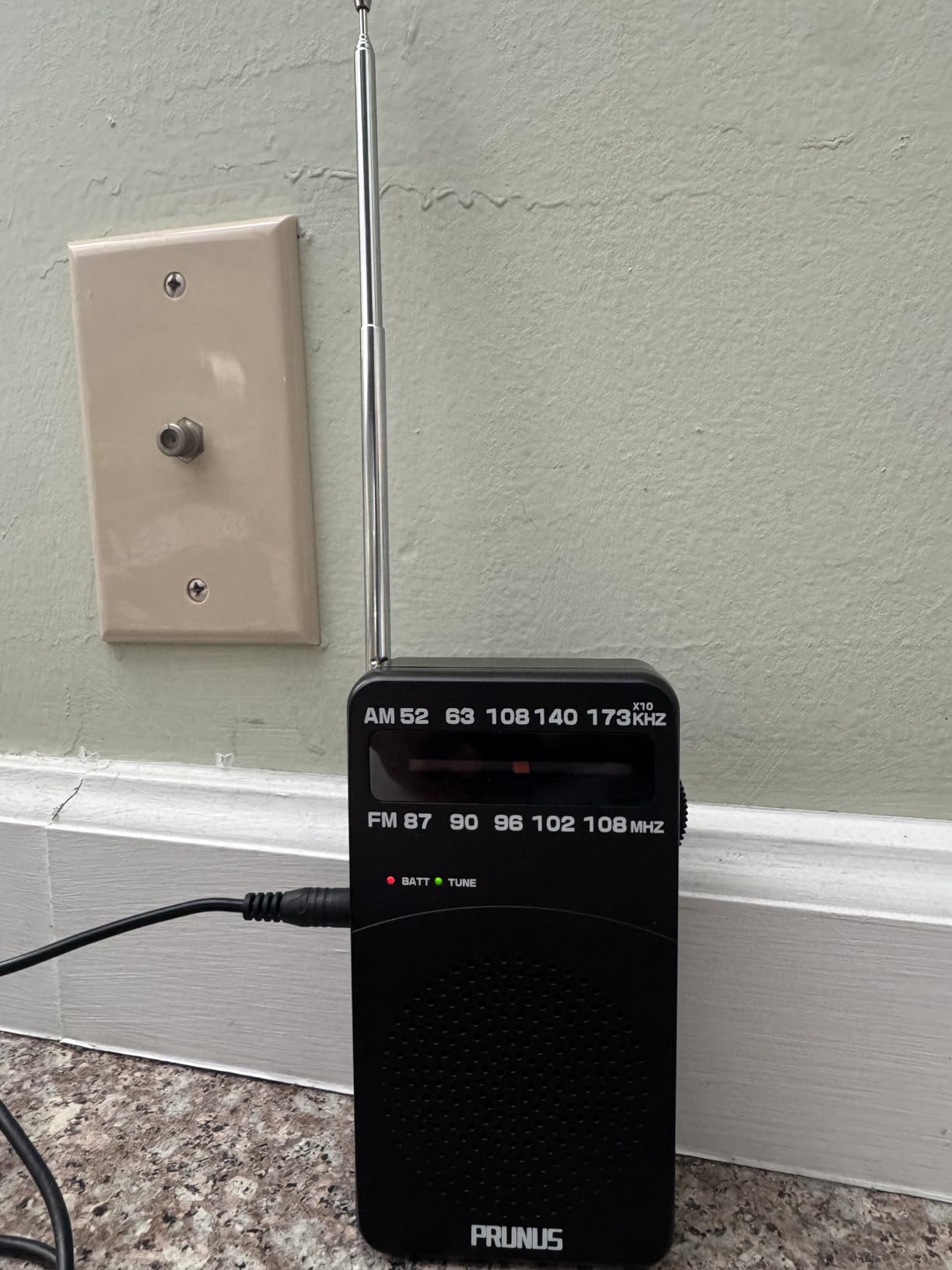
Battery life is genuinely excellent. Two AA cells carry it well past 100 hours of listening, which means it can live in a pocket or a pack for a whole season of trips before you think about replacements.
FM is strong, AM is not
AM reception is noticeably weaker than FM, particularly away from local transmitters. If your listening plan involves talk radio on the AM band in a rural area, this is not the radio. If it is local FM music and news, the DSP chip handles it well.
The DSP also changes how you tune. It locks onto a station faster than an analog set, so the knob has to move more slowly or you will blow past the frequency. Owners mention this constantly, and it takes about a minute to adapt to.
Fragile is the word for the antenna
The long telescoping antenna is the same part that gives it its reach, and it is also the part most likely to snap if it is bent in a bag. The back clip is plastic for the same reason of weight, and neither is repairable if it goes.
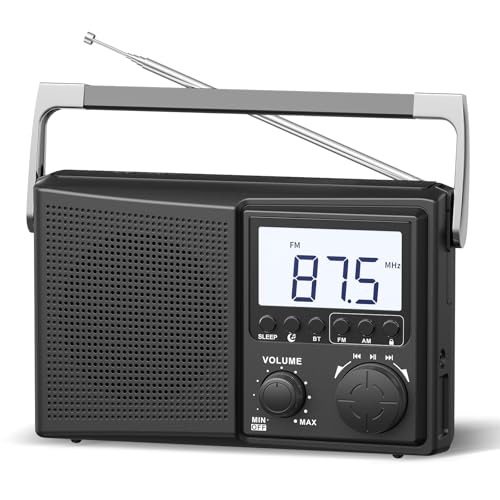
10. LEOTEC Bluetooth Radio – Add Streaming and a Sleep Timer
- ✓Bluetooth streaming means it is not limited to broadcast audio
- ✓Volume goes louder than most radios at this size
- ✓Adjustable sleep timer from 5 to 90 minutes
- ✓White noise and nature sounds for sleep or focus
- ✓Works on the included cord or 4 AA batteries
- ✕Larger footprint than most portable radios here
- ✕Heavier at 1.6 pounds and less backpack friendly
- ✕Some owners report persistent loud static
- ✕Occasional faint clicking at high volume
AM and FM bands
Bluetooth streaming
White noise and nature sounds
Sleep timer 5 to 90 minutes
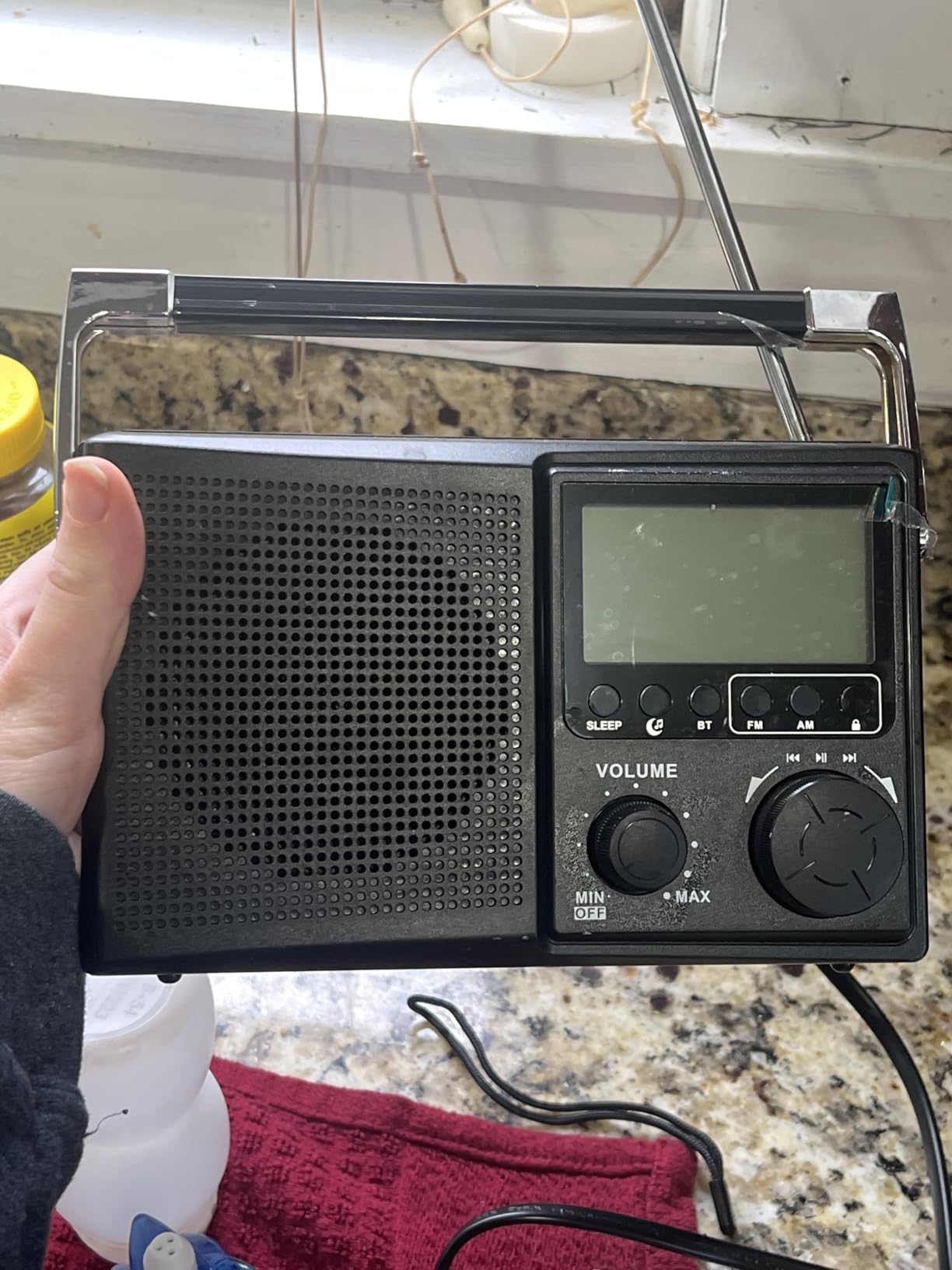
The LEOTEC does something none of the other battery-only radios here do: it accepts Bluetooth audio from a phone alongside its AM and FM reception. That turns a broadcast receiver into a general-purpose speaker for playlists, podcasts or audio files when the signal is good and power is on the grid.
It also has a sleep timer adjustable from 5 to 90 minutes in ten-minute steps, plus built-in white noise and nature sounds such as waves, rain and birds. That combination makes it the only radio in this roundup we would happily leave running on a bedside table.
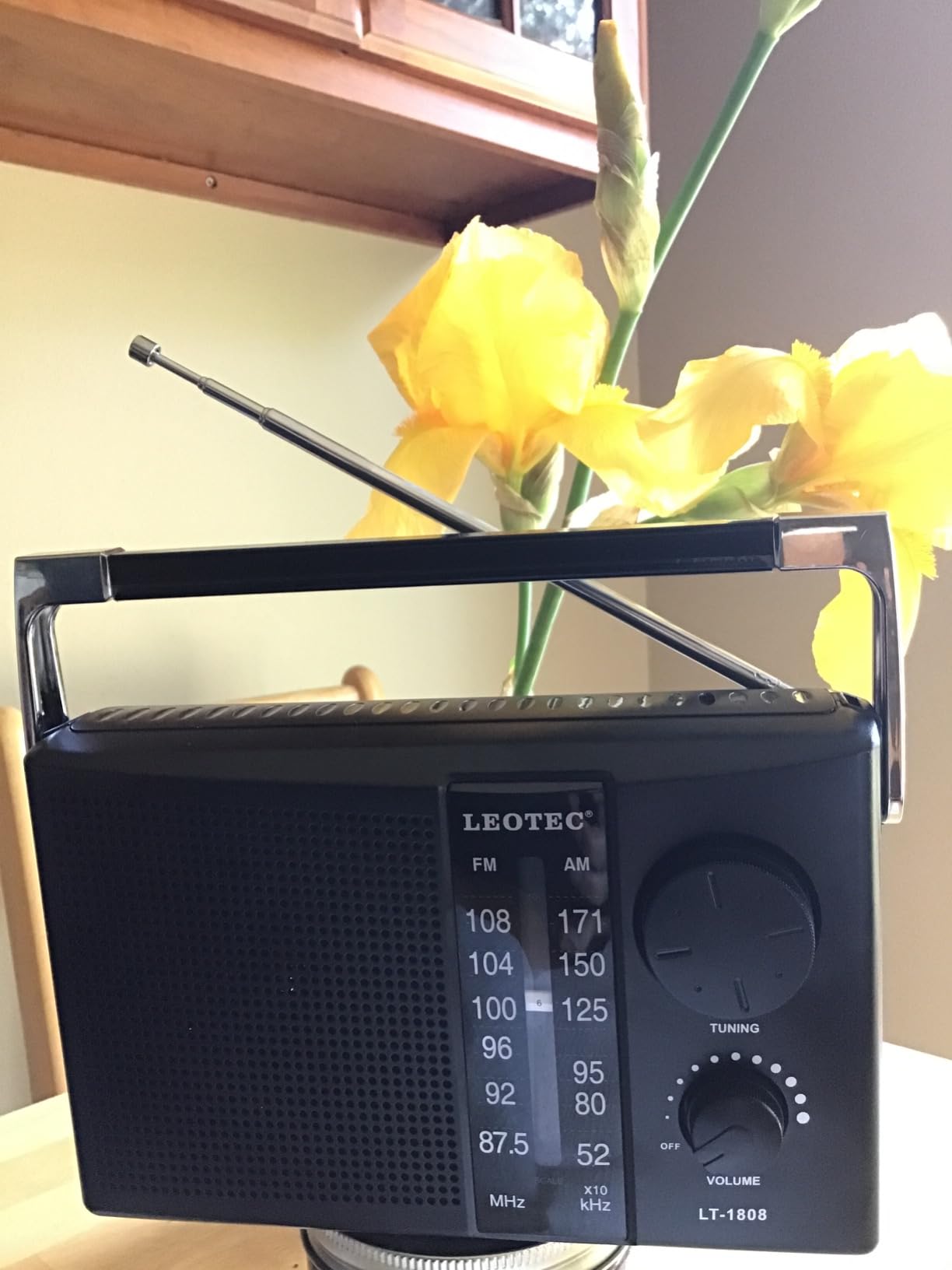
The large LCD display and clear dial are easier to read than the tiny screens on some of the smaller units, and the carry handle makes moving it between rooms simple. Power comes from the included cord or four AA batteries.
Bluetooth is a convenience, not a replacement
Streaming still depends on your phone, which depends on cell signal or Wi-Fi, which is exactly what fails in the situation you bought a radio for. Treat Bluetooth as an indoor convenience and the AM and FM tuner as the part that matters.
A minority of owners report heavy static that persists regardless of where the radio is placed, and some mention a faint clicking at high volume. If static is your main sensitivity, test it before committing.
It is a tabletop radio in disguise
At 8.46 by 2.95 by 5.16 inches and 1.6 pounds, this is the second-heaviest unit here. It is not water resistant, so it stays on the counter. For a garage, kitchen or bedside, that is a fine place for it to live.
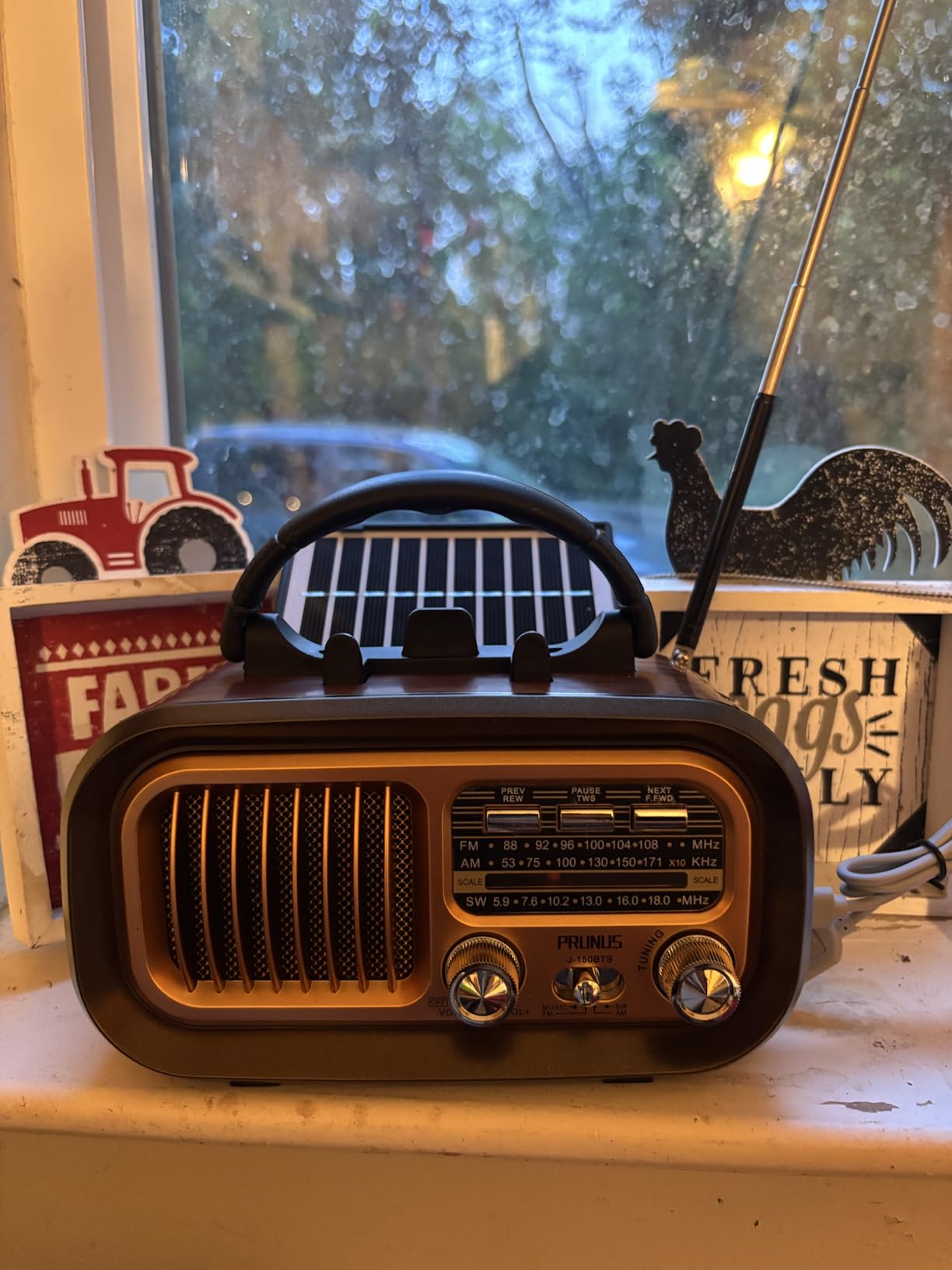
11. PRUNUS J-150 – Shortwave and Solar in a Retro Cabinet
- ✓Retro faux wood-grain cabinet doubles as interior decor
- ✓FM AM and shortwave with a 13.7 inch antenna and DSP
- ✓Three power options including 2 D cell backup
- ✓Large solar panel that charges on cloudy days
- ✓Loud and clear sound for its compact size
- ✕No headphone jack
- ✕No AC power brick included only a USB cable
- ✕No presets so tuning to a specific station is fiddly
- ✕Single speaker unless you pair two units with TWS
FM AM and shortwave
Bluetooth 5.0 plus TF and USB
1200mAh battery plus 2 D cells
The J-150 is the only radio in this roundup that looks like furniture. A faux wood-grain cabinet, two chunky tuning knobs and a carry handle give it a 1970s transistor appearance, and several owners describe buying it as much for the decor as for the reception. It ranks among the highest-rated units we tested.
Underneath the cabinet is a real shortwave receiver. It covers FM 88 to 108 MHz, AM 530 to 1710 kHz and shortwave from 5.9 to 18.0 MHz through a DSP chip and a 13.7-inch telescopic antenna, which is a lot of listening territory for a compact body.
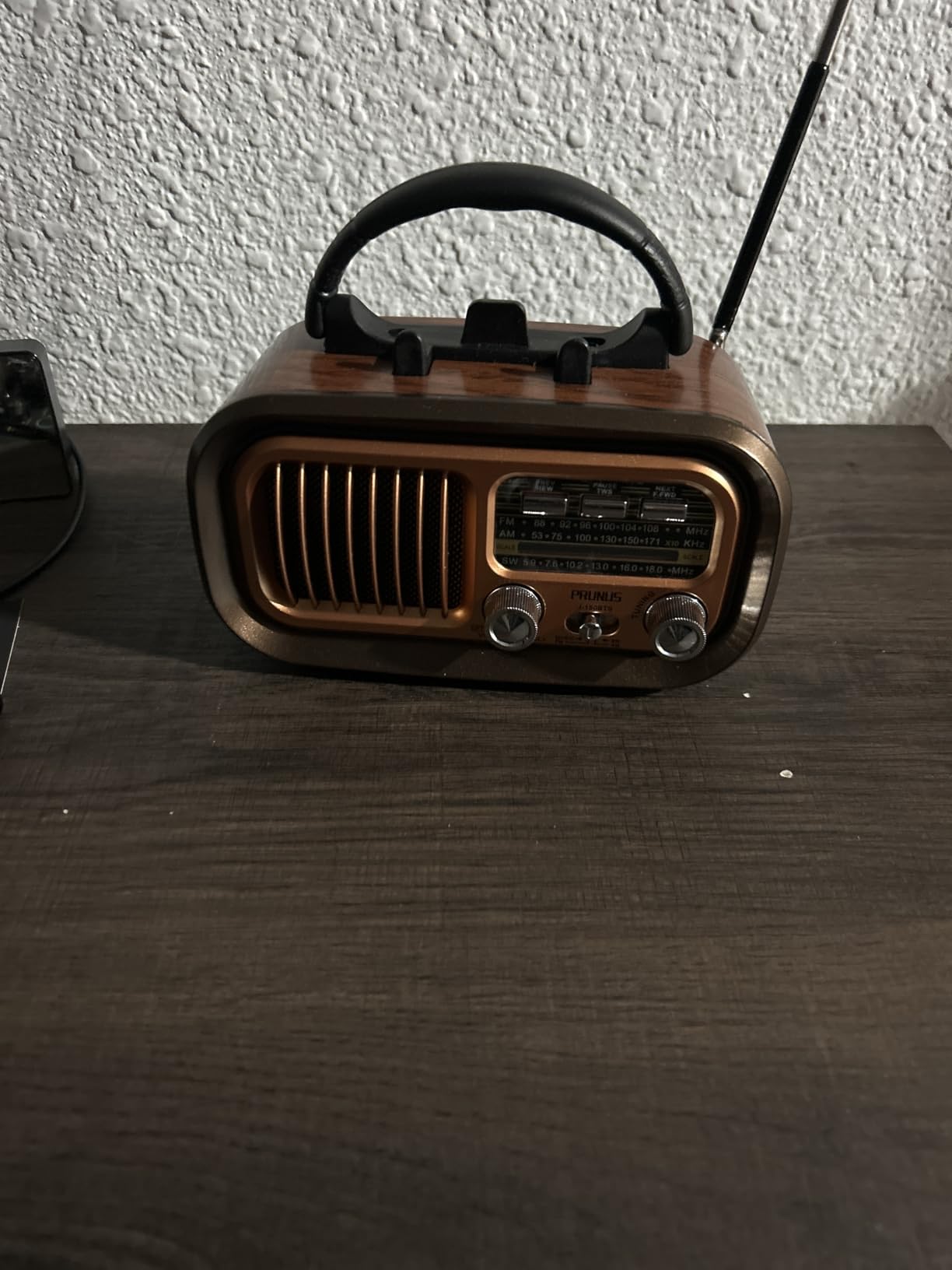
It also accepts Bluetooth 5.0 audio, TF card and USB drive playback, and it can pair with a second unit for true wireless stereo. Power comes from USB, a 1200mAh removable 18650 solar battery with a 4.1 by 2.3 inch panel, or two D cells.
Solar that does more than maintain
Most crank radios use a solar panel as a trickle maintainer. This one has a panel large enough that owners report it continuing to charge through cloudy days. Combined with two D cells, it means the radio can genuinely run for weeks without mains power.
The single built-in speaker produces more volume than the cabinet size suggests.
Fiddly tuning without presets
There are no preset buttons, so finding a specific station means turning a knob and waiting. That is the most common complaint in the reviews. There is also no headphone jack, and the AC power brick is not included, only a USB cable.
If you like our other retro-styled picks, the vintage style radio guide covers the design end of this category in more depth.
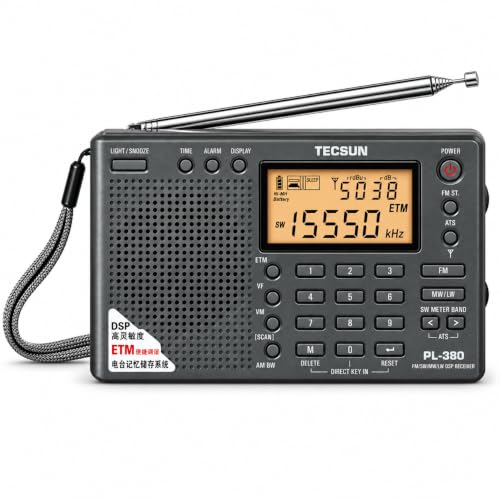
12. TECSUN PL-380 – the Enthusiast Shortwave Pick
- ✓Si4734 DSP gives class-leading selectivity for the price
- ✓Experienced reviewers rank FM performance above far costlier sets
- ✓550 presets with thumbwheel tuning and ETM scanning
- ✓Adjustable bandwidth plus signal strength and S/N meters
- ✓Long runtime on Ni-MH cells with in-radio USB charging
- ✕Tiny buttons and cramped screen text need the manual
- ✕No single sideband USB or LSB reception
- ✕No NOAA weather band reception
- ✕No external antenna jack
- ✕Long-wave reception is very insensitive
Si4734 DSP across MW FM SW and LW
550 preset memories with ETM
Adjustable 1-6 kHz bandwidth
7 oz body with folding stand
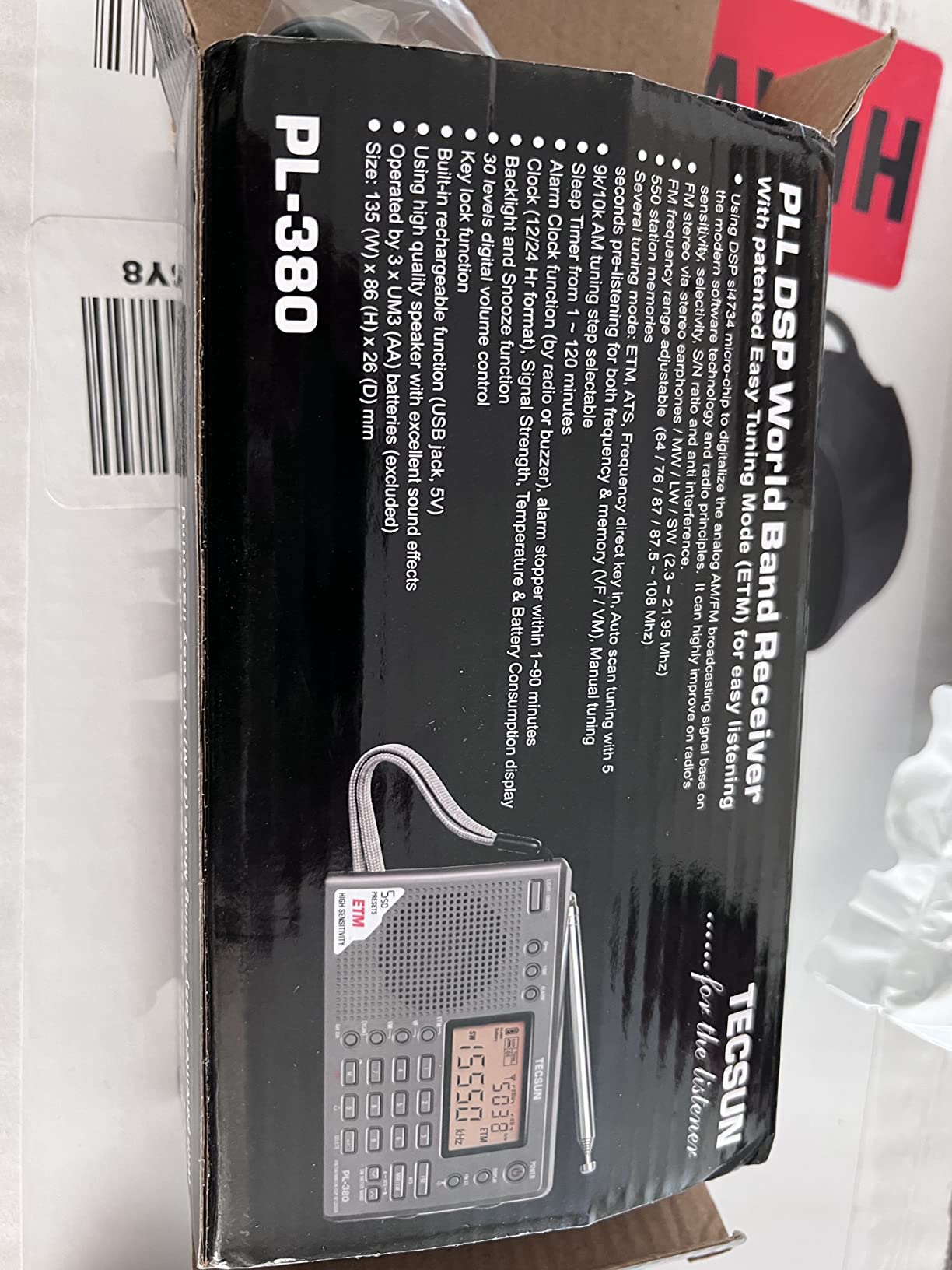
The PL-380 is the only radio here that a shortwave listener would take seriously. A Silicon Labs Si4734 DSP digitalises the medium wave, FM, shortwave and long wave bands, and experienced listeners routinely put its performance above sets costing several times more. Adjustable bandwidth from 1 to 6 kHz lets you narrow the channel and pull a signal out of interference that would defeat a fixed-width radio.
Storage is exceptional. There are 550 preset memories split across FM, AM, shortwave and long wave, with a thumbwheel for stepping through them and an ETM easy tuning mode that scans and sorts automatically. Signal strength and signal-to-noise meters sit alongside the frequency readout.
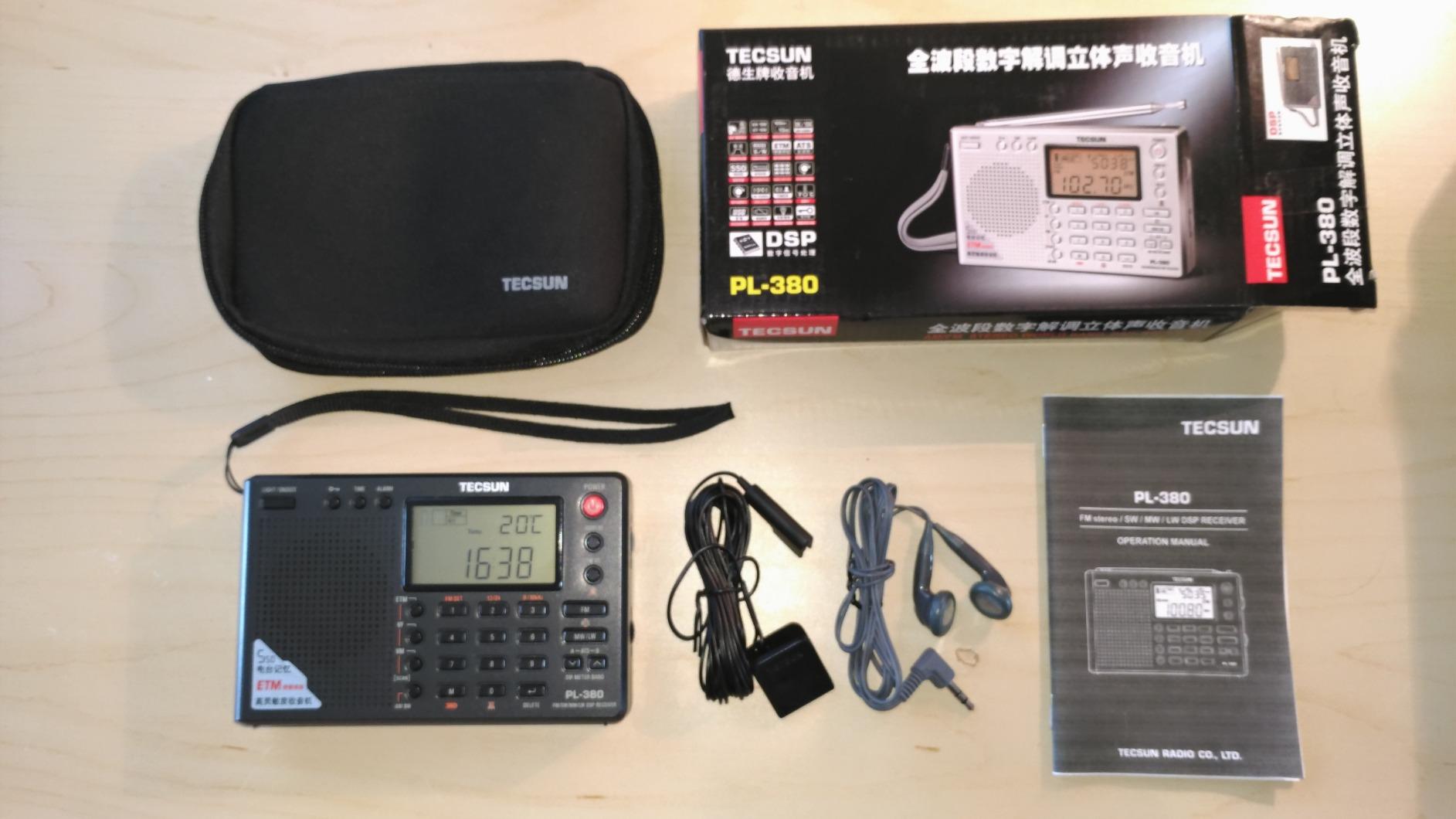
It runs on two lithium-ion cells that recharge inside the radio over a 5V DC USB jack, and it ships with a neoprene case, stereo earphones, an external wire antenna, a wrist strap and a folding table stand. At 7.04 ounces it is genuinely portable.
Usability is the price of the feature set
Every reviewer we looked at mentions the same problem. The buttons are small, the screen text is cramped and you will need the manual to change settings. That is a fair trade for a radio aimed at people who already know what a bandwidth setting does, and a poor trade for anyone who does not.
There is also no single sideband reception, which matters only to ham operators. If that is what you need, our ham radio guide is the right place to start.
No weather band and no antenna jack
The PL-380 does not receive NOAA weather broadcasts, so it is not an emergency-alert radio in the way the FosPower or Midland are. There is no external antenna jack either; the supplied wire antenna clips onto the telescoping whip, which limits how you can experiment with long wires for weak-signal work.
Long-wave reception is very insensitive, so treat LW as a bonus band rather than a serious one.
How to Choose a Portable Radio: Bands, Antenna, Power and Form Factor
The reason most people buy the wrong radio twice is that they read feature lists instead of antenna specs. Reception is decided by the antenna and the bandwidth setting long before any chipset gets a vote. Decide these four things in order and the rest of the choice takes five minutes.
The bands you actually need
AM broadcast covers talk radio and emergency information and uses a directional ferrite bar antenna. FM covers music and local stations with a telescopic whip and delivers the best sound. Shortwave reaches international stations and needs time and patience to tune. NOAA or weather band carries continuous weather alerts, which is a North American service. Medium wave and long wave are European and Asian legacy bands you will rarely touch. HD Radio exists in North America while DAB plus is the European standard, so a UK or European buyer should check for DAB support specifically.
If you only listen to music and talk locally, AM and FM is genuinely enough. Add the weather band if you live somewhere with tornadoes, hurricanes or flash flooding.
Antenna design predicts reception better than any other spec
A ferrite bar antenna is a coil of wire wound around a bar, and it works by a magnetic field, so AM stations arrive much better when the bar points at the transmitter. Bigger bars and twin-coil layouts pull distant stations that small ones miss. A telescopic whip works electrically for FM and shortwave, and the length of the whip matters more on those bands than on AM. An external antenna connector, usually a 3.5mm or SMA socket, lets you run a long wire to a window or a mast, which is the single most effective upgrade available.
Also check whether bandwidth is adjustable. A wideband setting lets more signal through and sounds noisier; a narrowband setting rejects interference and sounds cleaner, and it is the difference between a usable and unusable station in a crowded band.
Power source: batteries, USB, solar or hand crank
Disposable AA or D cells are the most reliable option because they do not degrade and you can buy them anywhere. A built-in lithium battery is lighter and rechargeable but ages over time and needs a charger. USB charging is the most convenient when the grid is up and the least useful during an outage. A solar panel maintains charge well but recharges a depleted battery poorly unless the panel is large. A hand crank is a last resort: it produces small amounts of energy slowly, useful for minutes of listening rather than hours.
For cold-weather use, lithium-ion cells lose a significant share of their capacity in freezing conditions, which is a good argument for a radio that takes AA cells. Battery runtime claims should be read sceptically in general.
Form factor: pocket, carry or tabletop
Pocket radios weigh under a pound and clip to a strap or lanyard. Carry radios run from roughly a pound to a pound and a half and include a handle, a bigger speaker and more battery. Tabletop units are for a counter and usually prioritise sound over weight. Water resistance matters if the radio lives on a boat, and IPX ratings are the standard to read; if you listen near water, our marine VHF radio guide covers the marine band specifically.
How to Get Better Reception in a Weak-Signal Area
Before blaming the radio, check what is reaching you. Electrical interference destroys reception more often than weak transmitters do, and a camera battery charging in the next room can wipe out stations entirely. Fix the environment first, then judge the hardware.
1. Look up your local coverage before you buy. A radio locator map shows every AM, FM and NOAA transmitter within range of your address. If there is nothing within 30 miles on the band you want, no radio will help you.
2. Move away from interference. Unplug chargers, switch off LED lamps and wifi routers, and pull the radio away from computers and switching power supplies. Many users report stations returning the moment a phone charger leaves the room.
3. Rotate the radio rather than the antenna. On AM, the internal ferrite bar picks up strongest when it points directly at the station. Turning the set a few degrees can double what you hear.
4. Extend the telescopic whip fully for FM and shortwave, vertically. Then try again at 45 degrees. Propagation changes by band, by time of day and by season.
5. Use narrowband bandwidth when stations crowd each other. It will not create a station that is not there, but it will pull a weak one out of its neighbour.
6. Add an external antenna if the radio has a connector. A long wire run to a window or an outdoor mast beats any internal antenna change, and it is the upgrade experienced listeners make first.
7. Compare bigger bodies, not better spec sheets. A physically larger radio often wins on AM reception despite an unimpressive feature list, because it has room for a longer ferrite bar. That is why several top-ranked units in this guide weigh well over a pound.
Frequently Asked Questions
What is the best portable radio to buy?
For most households the FosPower A1 is the best portable radio because it combines three power sources, a 7400mWh battery that can charge a phone, and NOAA weather broadcasts. If you want simple controls instead of emergency features, the Panasonic RF-2400D is the easiest radio to operate in this guide.
Which portable radio has the best sound quality?
The Panasonic RF-2400D produces the most output for its size, with a full speaker that stays clear when pushed. The PRUNUS J-150 is the strongest-sounding option if you also want shortwave and a retro cabinet, and it holds up well on a counter or shelf.
Which portable radio has the best reception?
Reception is decided mainly by antenna design, so the Kaito KA500 and the TECSUN PL-380 pull in the most distant stations. The KA500 offers a 14.5 inch telescopic antenna and an LED signal strength meter, while the PL-380 adds adjustable bandwidth for crowded bands. Both need an external antenna for serious weak-signal work.
What is the best portable radio for areas with poor reception?
Start with the radio, not the antenna alone. The FosPower A1 and the RunningSnail MD-090 both include external antenna connectors, and the Kaito KA500 has the longest telescopic antenna here. Moving away from chargers and routers and rotating the set for a better ferrite bar angle often improves things as much as buying a different radio.
Are AM radios being phased out?
AM broadcast is not being phased out. Many emergency and weather services still broadcast on AM, and talk radio remains heavily AM based in North America. Some countries are reducing the number of AM stations, so check your local transmitter coverage before choosing an AM-heavy radio.
How long do AA batteries last on a portable radio?
At normal listening volume, a typical AA powered portable radio runs for roughly 40 to 80 hours. The volume setting makes the biggest difference, as does using features like an LCD backlight. The PRUNUS J-166 is rated for more than 100 hours on two AA cells, which is among the strongest figures in this roundup.
The Best Portable Radios to Buy in 2026
If you want one radio for a household emergency kit, take the FosPower A1. Three power sources, the largest practical power bank in this group and automatic-capable weather alerts make it the most complete package, and it is our top pick among the best portable radios in 2026.
If your priority is volume and simplicity, the Panasonic RF-2400D cannot be beaten. If you need alerts filtered to your own county code, the Midland ER310 is the dedicated choice. For shortwave listeners, the TECSUN PL-380, and for a radio that survives rain on a deck, the Leaton 10000mAh. Whatever you pick, test it where you live before you need it.






Leave a Comment